
For any motor trade professional, the best cheap small cars aren't just the ones you see everywhere. They're the ones that promise a quick, profitable sale. Of course, models like the Ford Fiesta, Vauxhall Corsa, and Volkswagen Polo are consistent winners for a reason—low running costs, broad appeal, and solid residual values make them prime stock for any forecourt.
For any motor trade professional, the best cheap small cars aren't just the ones you see everywhere. They're the ones that promise a quick, profitable sale. Of course, models like the Ford Fiesta, Vauxhall Corsa, and Volkswagen Polo are consistent winners for a reason—low running costs, broad appeal, and solid residual values make them prime stock for any forecourt.
Pinpointing Profitable Small Cars for Your Forecourt
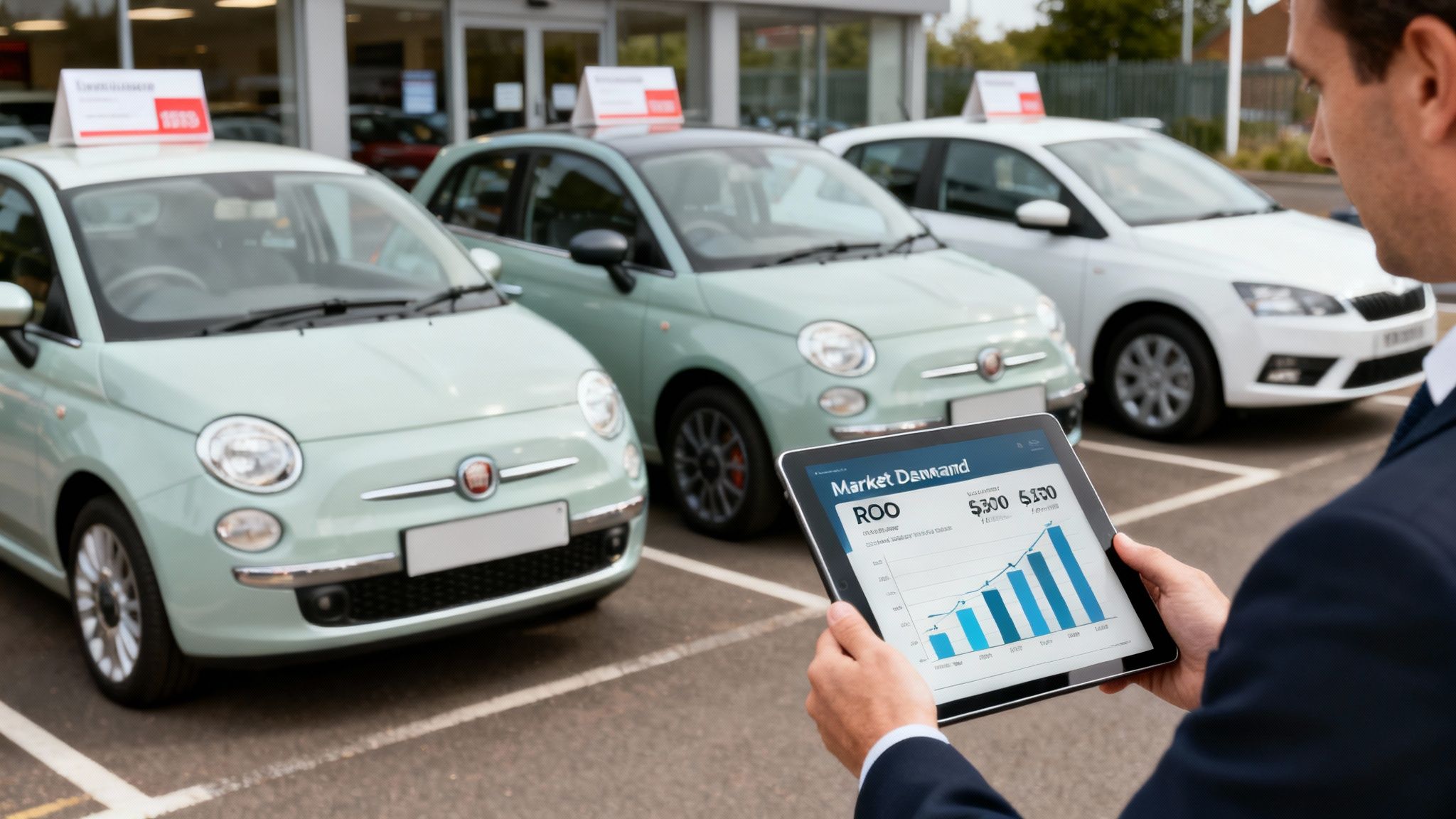
Spotting the truly profitable small cars for your dealership means looking past the usual popularity contests. Real success comes from a data-driven approach, carefully balancing market demand with your potential profit margins. It's about knowing what customers are actively searching for and, just as importantly, which of those cars will give you the best return on your investment.
The supermini segment has always been a powerhouse in the UK used car market, and it’s not slowing down. Recent data shows that in the second quarter of 2025, superminis made up a massive 31.8% of all used car sales, cementing their spot as the most in-demand vehicle type. This kind of sustained demand makes them a relatively safe bet for your stock.
Looking Beyond the Obvious Metrics
While high sales volume is a great starting point, you have to dig deeper to protect your margins. A car that flies off the forecourt but costs you a fortune in prep work is a bad investment, plain and simple. Your selection criteria should be built on profitability, not just quick turnover.
To build a solid stocking strategy that works, you need to weigh up these crucial factors:
- Common Running Costs: Think about what the new owner will face. Cars with high road tax, poor fuel economy, or pricey consumables are a much harder sell.
- Insurance Groups: A vehicle in a low insurance group is instantly more attractive to first-time drivers and budget-conscious buyers—a huge part of the small car market.
- Typical Repair Expenses: Do your homework on common failure points. A car that’s cheap to buy but known for expensive gearbox or ECU problems can quickly become a liability.
Using Data to Calculate True ROI
This is where detailed vehicle intelligence from AutoProv becomes absolutely essential. Before you even think about heading to an auction or looking at a part-exchange, a comprehensive vehicle check can uncover all those hidden costs. An AutoProv report, for example, gives you instant access to the full MOT history, flagging recurring advisories that might point to chunky repair bills down the line.
By analysing a vehicle’s full history—including service gaps and past MOT failures—you can accurately forecast reconditioning costs and calculate a far more realistic potential ROI. This transforms buying from a gut-feel decision into a calculated business move, powered by AutoProv's insights.
Understanding a vehicle's full provenance is critical, too. A car with a clean bill of health, verified by a trusted source like AutoProv, not only minimises your risk but also becomes a powerful selling point on the forecourt. You can price the vehicle with confidence, justify its value to customers, and protect your dealership’s hard-earned reputation for quality.
For more ideas on specific models to watch out for, have a look at our guide on the best second-hand cars under £5,000 in the UK. This initial, data-led diligence is the first step to making sure every small car you stock is a profitable one.
How to Source and Negotiate Smarter

Spotting a car with good margin potential is one thing; actually buying it at the right price is a different game entirely. Your sourcing strategy is the lifeblood of your business, making sure your forecourt is always stocked with the kind of affordable small cars that fly off the forecourt. The real pros master several sourcing channels and know exactly how to tailor their approach to each one.
The traditional trade auctions are still a go-to for a reason – you get a huge volume of vehicles all in one place. But it’s a fast-paced environment where you can’t afford to make mistakes. The key to winning here is doing your homework beforehand. Set a non-negotiable top price for every lot and have the discipline to walk away. It’s all too easy to get swept up in a bidding war and end up with a car that’s got no profit left in it.
Then you have your part-exchange networks and direct dealer-to-dealer trades. This is all about relationships. Building a reputation as a fair, decisive buyer who doesn't mess about goes a long way. A quick, clean deal is often worth more to another dealer than holding out for every last pound.
Leveraging Provenance Data in Negotiations
This is where you can really get an edge. Walking into any negotiation armed with a vehicle’s full history completely changes the dynamic. Before you even think about making an offer, running a quick AutoProv report lays all the cards on the table, turning guesswork into solid facts.
Let’s say you’re eyeing up a low-mileage Vauxhall Corsa that looks like a steal. The seller is standing firm on their price, talking up its pristine condition. But your AutoProv check, done before you even left the office, shows it was a driving school car or has a suspicious gap in its MOT history. That’s not just info for your files; it’s your best negotiation tool.
When you have verified data in your hands, you can confidently bring up discrepancies that directly affect a car’s real market value. A hidden write-off category or an outstanding safety recall gives you a solid, legitimate reason to lower your offer, turning a potential headache into a profitable piece of stock.
Spotting Bargains and Dodging Money Pits
Telling the difference between a genuine bargain and a future money pit is a skill you develop with experience, but having the right data seriously speeds up the learning process. A car can look spotless on the surface while hiding some very expensive secrets.
Think about these common scenarios where an AutoProv check is your first line of defence:
- Outstanding Finance: An AutoProv check will immediately flag any existing finance agreements. Buying a car with finance still on it is a massive risk—it could be repossessed, leaving you with nothing.
- Mileage Discrepancies: "Clocking" is still a huge problem. Verified mileage records from multiple sources protect you from paying a premium for a car with a rolled-back odometer.
- Write-Off History: Knowing a vehicle's MIAFTR status is absolutely critical. A Category S or N write-off is worth significantly less, and you need to build that fact into your purchase price from the start.
By making these checks a standard part of your sourcing process, you’re always negotiating from a position of power. For more sourcing tips, check out our deep dive into the 7 platforms to find the best used car to buy in 2025. Ultimately, this approach cuts your risk right down and maximises your chances of securing stock with healthy margins, time and time again.
Conducting Rigorous Vehicle Inspections
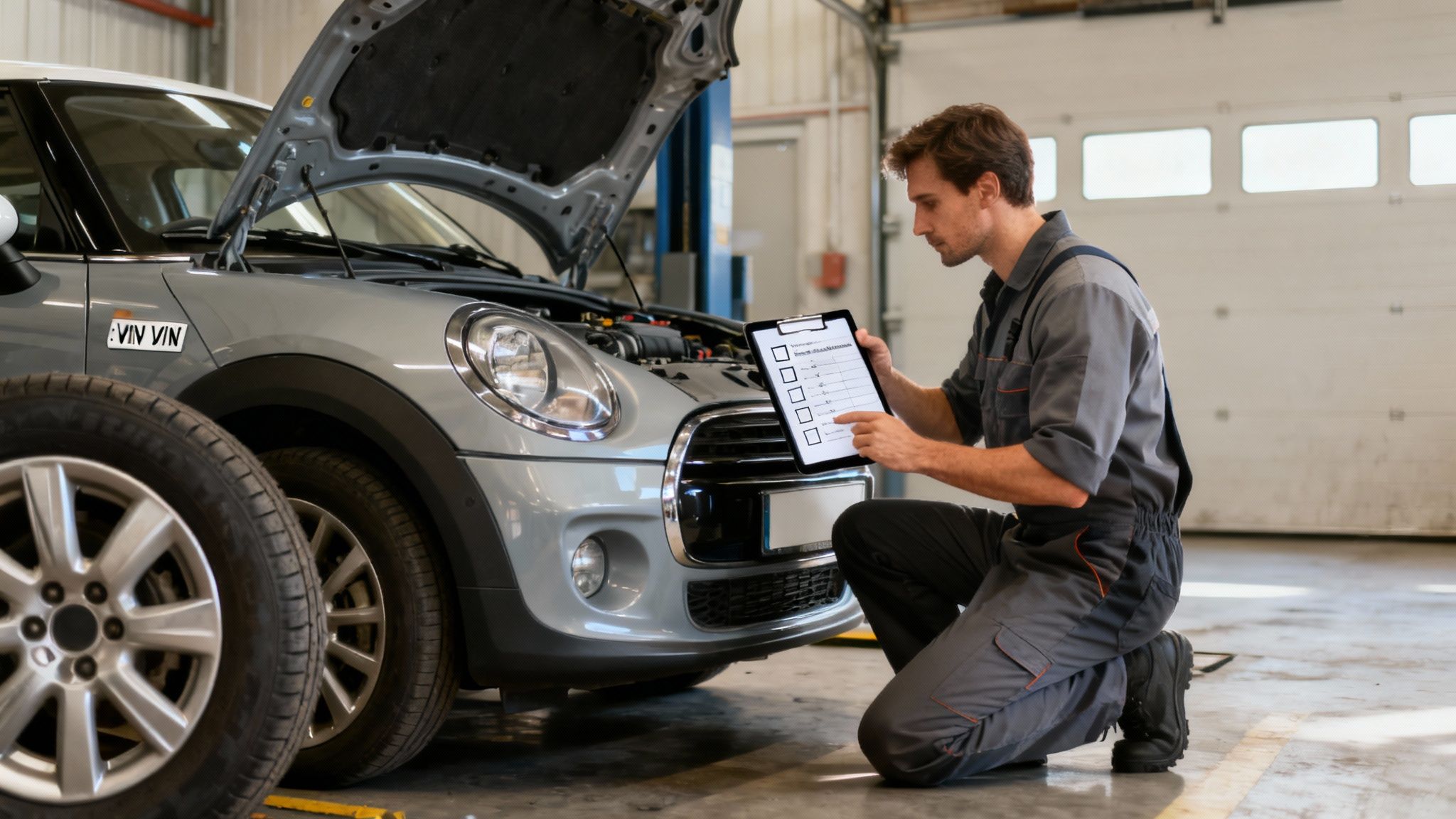
Getting a potential car at the right price is one thing, but the real work starts with the inspection. This is where you find out if you’ve got a genuine profit-maker or a ticking time bomb on your hands. A quick walk-around just isn’t going to cut it; you need a proper, systematic process that combines a hands-on physical check with some sharp digital digging.
This two-pronged attack is absolutely non-negotiable, especially with the kind of small, affordable cars we’re talking about. These cars have often been put through their paces, so uncovering their true condition is the only way to protect your margins and, just as importantly, your reputation. The physical once-over is your first chance to spot the tell-tale signs of a hard life.
The Essential Physical Checklist
When you’re looking at dozens of cars a week, it’s easy to let something slip. That’s why having a solid mental checklist for the models you see most often is vital. Take the Vauxhall Corsa, for instance. It's a constant fixture in the UK's top-seller lists, a testament to its enduring appeal—you can see just how popular by looking at the latest new car sales figures.
But with popularity comes volume, and older examples have their own well-known quirks. Any thorough inspection must cover:
- Engine Bay: Get your torch out and look for the classic signs of oil leaks around the rocker cover gasket. Have a look in the coolant expansion tank, too – any oily residue could be a red flag for head gasket trouble.
- Suspension and Brakes: On the test drive, listen out for any knocking or clonking sounds over bumps. It's often just worn drop links or strut top mounts, a common ailment on many superminis, but you need to factor in the repair cost.
- Bodywork and Rust: Pay really close attention to the rear wheel arches and sills. These are the usual spots for corrosion to take hold, and a proper repair can be expensive.
Having a routine is everything. You need a process you can trust every single time, which is why we've put together Your Ultimate Used Car Inspection Checklist to help you nail it.
Beyond the Physical: The Power of Provenance Data
Here’s the thing: a car can look absolutely mint on the surface and still be hiding a history that will tank its value and your credibility. This is where digital due diligence becomes your single most powerful tool for managing risk. The physical check tells you the car's condition right now; the data tells you its entire life story.
A pristine body can easily mask a Category S write-off history, and a freshly valeted interior won’t tell you about the outstanding finance agreement tied to the vehicle. Relying only on what you can see is a high-stakes gamble.
This is exactly where an AutoProv report completely changes the game. In less than 30 seconds, you get the solid proof you need to verify all the critical information a physical check could never uncover. Frankly, it’s not just best practice anymore; it's a fundamental part of any professional vehicle appraisal.
With a comprehensive report from AutoProv, you can instantly confirm:
- Outstanding Finance: Dodge the nightmare of buying a car that could be repossessed, leaving you massively out of pocket.
- Write-Off Status: See instantly if the car is on the MIAFTR database as a total loss. That’s information that completely changes its market value and how you sell it.
- Mileage Discrepancies: Cross-reference MOT and service records to spot any signs of "clocking," making sure the price you pay matches the car's genuine mileage.
By building this digital step into every single inspection, you shift from making an educated guess to making a data-backed decision. It protects your investment, builds your dealership’s reputation for being straight-up and transparent, and makes sure every cheap small car you stock is a sound, profitable asset.
Using Market Data for Smart Pricing
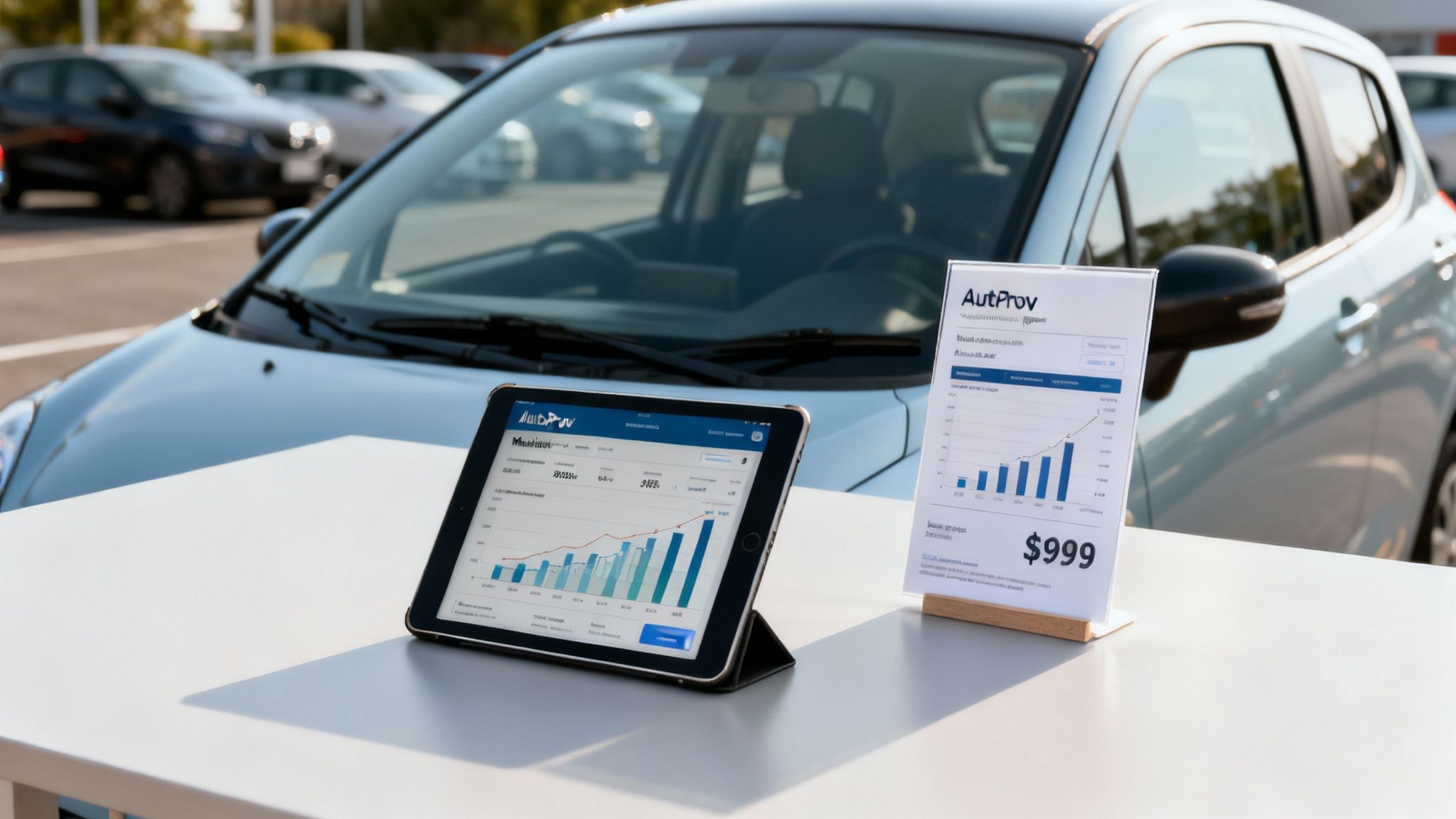
You’ve sourced the right car, you’ve put it through its paces in the workshop, and now comes the critical part: putting a price on it. Get it wrong, and you're either leaving money on the table or watching a car gather dust on the forecourt.
Pricing isn't a dark art or a gut feeling. It’s a strategic decision that makes or breaks your profitability. In today's market, relying on old book values is a fast track to falling behind. You need live, accurate data that tells you what a car is worth right now.
Unlocking a Car's True Retail Value
Live market data gives you an instant, clear picture of a vehicle's current worth. Tools like AutoProv are no longer a 'nice-to-have'; they're essential. They give you immediate access to current trade and retail valuations, letting you see the potential margin before you even write the advert.
This completely removes the guesswork. You can price with confidence, knowing you haven’t undersold a great bit of stock or slapped an unrealistic ticket price on a car that just won't shift.
Think about it: two seemingly identical Ford Fiestas can have wildly different values. One might have desirable factory extras and a perfect main dealer service history. The other could have a mileage discrepancy hiding in its past. A live valuation tool like AutoProv sees these differences and gives you a precise figure that reflects the car's genuine position in the market.
For a deeper dive, check out our full guide to market insights for vehicle pricing.
Building a Smarter Stocking Strategy
A sharp pricing strategy goes hand-in-hand with smart stocking. You need a forecourt with a balanced mix of makes and models that appeals to a broad range of customers. Your bread-and-butter petrol superminis are always a safe bet, but the market never stands still.
The UK's shift towards electrification is a perfect example. In the first ten months of 2025, battery electric vehicles (BEVs) hit 22.4% of all new car registrations, a significant jump from 18.1% during the same period in 2024. As these cars start hitting the used market in greater numbers, having a data-led strategy from AutoProv to price them correctly will be crucial.
A successful forecourt isn't just full of popular cars; it's stocked with vehicles priced at the sweet spot where customer desirability meets healthy profit margins. This balance is only achievable through consistent use of accurate, real-time market data.
Using Provenance to Justify Your Price
Finally, don’t ever underestimate the power of being transparent. A clean vehicle history report is one of the best sales tools you have.
When you can sit with a customer and show them a clean AutoProv report—confirming no outstanding finance, no write-off history, and verified mileage—you build instant trust. It changes the conversation completely.
This level of transparency does more than just put the buyer at ease. It gives you a rock-solid foundation to justify your asking price. You’re not just selling a car; you’re selling peace of mind and a guarantee of its history. This confidence helps you hold firm on your price, close deals more quickly, and cement your reputation as a dealer who sells quality, honestly-represented vehicles.
Building Your Reputation, One Quality Car at a Time
In this game, success with the best cheap small cars isn't a fluke. It's built on a solid, repeatable process that blends smart selection, eagle-eyed inspections, and data-backed commercial decisions every single time you buy. It’s the difference between gambling on stock and making calculated investments.
Building a name people trust means consistently putting reliable, honestly-represented cars on your forecourt. That reputation is your most valuable asset, and you build it one sale at a time. The absolute bedrock of this entire strategy? Getting your hands on complete and accurate vehicle data from AutoProv.
The AutoProv Advantage: Your Secret Weapon
This is where integrating a professional-grade tool like AutoProv into your daily workflow becomes a non-negotiable. Think of it as your digital due diligence partner, verifying every critical detail before you even think about committing a single pound.
From flagging outstanding finance that could come back to bite you, to uncovering a hidden write-off history, a comprehensive data check is your first and best line of defence against a bad buy. This isn't just about avoiding disaster; it's a proactive strategy for protecting your margin with AutoProv.
By making these checks a mandatory part of your process, you start hitting several key business goals at once:
- Slash Your Financial Risk: You sidestep the nightmare of buying cars with hidden histories that torpedo their value and your profit.
- Maximise Your Margins: Armed with solid proof of a car's quality and clean history, you can price your stock with total confidence.
- Build Real Customer Trust: Being transparent with buyers doesn't just speed up sales. It cuts down on comebacks and builds a brand reputation that brings people back.
At the end of the day, this disciplined, data-first approach is the blueprint for long-term success. It ensures every small car you stock is a genuine asset, not a lurking liability, helping you build a dealership known for quality and integrity.
Frequently Asked Questions
When you're in the business of stocking affordable small cars, a few questions always crop up. We get it. You need practical answers to make smarter buys and shift stock faster. Let's tackle some of the most common queries we hear from traders like you.
Which Small Cars Consistently Hold Their Value?
It's no secret that certain models are perennial favourites, and for good reason. Japanese mainstays like the Honda Jazz and Toyota Yaris are titans of reliability with rock-bottom running costs, a combination that keeps their residual values strong.
Over in the German camp, you’ve got models like the Volkswagen Polo, which often fetches a higher price thanks to its solid build quality and more refined feel.
But here’s the thing: depreciation is never that simple. A car’s history is the real game-changer. A model with a flawless service record and a clean provenance check from a service like AutoProv will always be a more attractive proposition. It’ll hold its value far better than an equivalent car with a murky past.
How Should I Handle Higher Mileage Vehicles?
A high number on the odometer isn't the deal-breaker it used to be, especially on cars known for going the distance. Your job is to pivot the conversation from the mileage itself to the quality of the car's upkeep.
Frankly, a car with 100,000 miles and a glovebox stuffed with service receipts is often a much safer bet than a 60,000-mile motor with big gaps in its history.
This is where you bring in the evidence. Use the vehicle’s MOT history, which you’ll find on an AutoProv report, to paint a clear picture of its life. Consistent passes and minor advisories that were sorted out quickly are signs of a diligent owner. This kind of documented proof is your golden ticket to reassuring a buyer and holding firm on your price.
A detailed vehicle history report transforms a higher-mileage car from a potential risk into a transparent, verifiable bargain. You're not just selling the mileage; you're selling the car's story with proof from AutoProv.
How Can a History Report Build Trust With Buyers?
Think of a vehicle history report from AutoProv as your ultimate trust-building tool. It cuts right through the natural scepticism every used car buyer has. When a customer is on the fence, walking them through a clear, easy-to-read report offers that crucial third-party validation. It proves you're offering a straight-up, quality vehicle.
Don't just tell them the car is provenance-clear—show them.
Point directly to the verified mileage, the confirmation of no outstanding finance, and the all-clear on the write-off check provided by AutoProv. This level of transparency instantly shows you’ve got nothing to hide and marks you out as a dealer they can trust. It shifts the entire dynamic from a haggle over price to an appreciation of the car's proven quality, helping you seal the deal faster and at your full asking price.
For more answers to common questions from the trade, feel free to explore the full AutoProv FAQ section.
Frequently Asked Questions
AI-Generated Content Notice
This article was created with the assistance of artificial intelligence technology. While we strive for accuracy, the information provided should be considered for general informational purposes only and should not be relied upon as professional automotive, legal, or financial advice. We recommend verifying any information with qualified professionals or official sources before making important decisions. AutoProv accepts no liability for any consequences resulting from the use of this information.
From our AI insights
- Essential Pre-Purchase Checklist for UK Motor Traders
Ensure a seamless vehicle acquisition with our detailed pre-purchase checklist tailored for UK motor traders.
- Leveraging Auction Data for Strategic Car Purchases
Discover how to use auction data effectively to make profitable car buying decisions.
- Auction Pitfalls: Avoiding Costly Mistakes
Navigate UK car auctions with confidence by avoiding finance, write-off, and mileage risks.
Related Articles

Your Ultimate Guide to Buying a Used Car in the UK
Navigate the UK used car market with confidence using our comprehensive buying guide. Tips, checks, and AutoProv Provenance insights included.

Difference Between MOT and Service: What You Need to Know
An MOT is a mandatory legal inspection that every car on UK roads needs to pass.Think of it as the government's way of ensuring your vehicle meets the absolute minimum safety and environmental standards to be considered roadworthy. A service, on the other hand, is a completely different beast. It's the proactive maintenance routine recommended by the people who built your car, designed to keep it running smoothly and catch problems before they start. In short, an MOT is a pass-or-fail exam required by law. A service is a comprehensive health plan for your car.
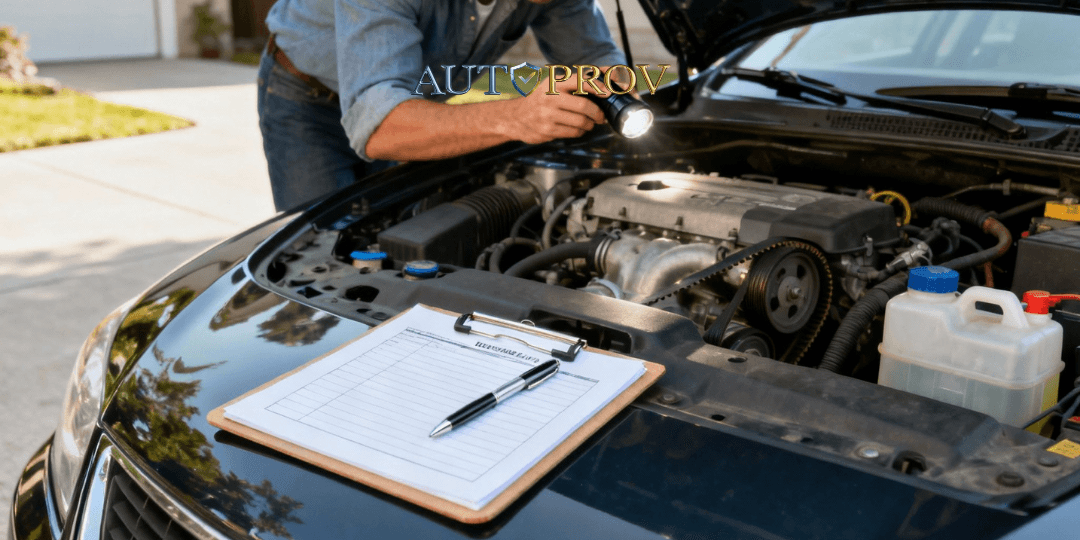
Your Ultimate Used Car Inspection Checklist
A solid used car inspection checklist is the single most powerful tool you have to avoid buying a lemon. It gives you a methodical way to look past the shiny paint and assess a car's real condition, helping you spot hidden problems and get a fair price before you shake hands on the deal.
Published by AutoProv
Your trusted source for vehicle intelligence