

Most dealers still ask the wrong question about used car extended warranty cost. They ask what the warranty costs, as if the answer sits on a fixed tariff card. In practice, the more useful question is what the quote says about the vehicle. A warranty price is often a risk signal. It reflects age, mileage, likely claim behaviour, coverage scope, and the provider's appetite for that unit.
For the UK motor trade, that matters because warranty spend doesn't sit in isolation. It affects margin, pricing confidence, customer disputes, and whether a stock unit remains economically sensible once post-sale risk is factored in. A cheap car with an expensive warranty can be worse stock than a stronger car with a firmer buy-in.
Why Warranty Cost Is a Risk Metric Not a Price Tag

A warranty quote isn't just a retail add-on. It's a commercial view of future failure risk.
That's the gap in most discussions of used car extended warranty cost. Dealers often treat warranty as a pass-through product, or a sales aid, when it's better understood as a pricing output from an underwriter or administrator assessing expected claims. If the quote is high, the message may be that the vehicle carries more technical or behavioural risk than the screen price suggests.
The complaints backdrop supports that wider point. In the UK, 20% of consumer vehicle-service complaints in 2023 related to extended warranties, and the same market context notes that the Financial Conduct Authority scrutinises add-on insurance products for value, which is one reason cost and disclosure matter so much in practice (ConsumerAffairs summary of the market context).
What the trade often misses
A warranty provider doesn't care what margin you want on the car. It cares what the car is likely to cost after sale.
That's why the same forecourt category can produce very different warranty economics. Two similar vehicles can look close on age and retail value, yet attract very different treatment once the provider considers usage profile, likely claim exposure, or policy limitations.
Practical rule: When a warranty quote looks out of line, don't start by negotiating the product. Reassess the vehicle.
Why this matters to margin control
For a dealer, warranty cost feeds into at least three commercial decisions:
- Stock acquisition discipline. If cover looks disproportionately expensive, the vehicle may already be telling you it's weak stock.
- Retail pricing. Thin-margin units get thinner when post-sale protection costs more than expected.
- Complaint risk. Misunderstood cover causes friction, especially where exclusions, excesses, and expiry triggers weren't weighed properly at purchase.
A useful way to think about warranty pricing is this. The provider is placing a bet on the car's future reliability. Your job is to decide whether you want to place capital alongside that bet.
Understanding the Key Drivers of Warranty Pricing

Warranty pricing starts with a simple commercial model. The provider estimates expected repair claims, adds administration and overheads, then prices for profit and acceptable risk.
That's why warranty cost changes from unit to unit. It's not arbitrary. The underlying model is actuarial, and the main technical drivers are vehicle age, mileage, and coverage breadth, with broader plans costing more because they expose the provider to expensive systems such as engines, transmissions, steering, and electrical components (Endurance explanation of warranty pricing factors).
The main variables that move the quote
Some variables hit price directly. Others affect whether the cover has practical value at all.
- Age of vehicle. Older units carry a higher probability of failure and a greater chance that deterioration arguments will arise.
- Mileage profile. Higher use increases wear exposure and shortens the remaining protected life of time-and-mileage contracts.
- Coverage scope. Drivetrain-only cover sits in a different risk bracket from broader mechanical and electrical cover.
- Failure type exposure. Cars with more complex electrical systems or costly major components give providers more to worry about.
- Exclusions. Wear-and-tear exclusions keep premiums lower, but they also narrow how useful the contract may be in real disputes.
What works and what doesn't
Dealers usually do better when they assess the warranty in the same language as the provider.
What works is checking the stock unit's recent maintenance pattern, likely claim areas, and service evidence before trying to choose a plan. A proper service history check can help frame whether the car supports extensive cover, limited cover, or no warranty strategy beyond statutory obligations and sensible reserve planning.
What doesn't work is buying warranty by label alone. “Extensive” sounds safe, but if the contract excludes the failure modes most likely on that vehicle, the extra premium may buy less protection than the headline suggests.
The cheapest warranty can be overpriced if it excludes the faults the vehicle is most likely to suffer.
Real-World UK Warranty Cost Benchmarks
Benchmarks are useful, but only if they're read properly. Dealers want a number. The market gives ranges. The problem is that broad annual figures don't explain enough about how one stock unit becomes insurable and another becomes poor risk.
Across general market commentary, used-car extended warranty pricing is often discussed in a broad range of about £600 to £2,000 per year, but that headline only becomes meaningful once you tie it to mileage, coverage scope, excess, and contract end conditions. The sharpest real-world signal is mileage sensitivity. One market survey found quotes at around $70 per month for an 80,000-mile car and more than $300 per month for a 140,000-mile car (NerdWallet market survey reference).
Why mileage changes everything
Mileage doesn't just increase the chance of a claim. It also compresses the useful life of the policy when the contract ends at the earlier of time or mileage.
That means two costs are moving at once. The headline premium rises, and the period of effective protection may shrink.
For UK dealers, that's where used car extended warranty cost becomes a stock appraisal issue rather than an F&I issue. A vehicle can look attractively bought, then lose much of that edge once warranty economics are factored into the full holding and post-sale risk picture.
Sample UK used car warranty costs annual estimate
Vehicle Profile Low Mileage (e.g., 40k) Medium Mileage (e.g., 80k) High Mileage (e.g., 120k) Newer mainstream stock Typically at the lower end of market ranges Usually moves into mid-range pricing Often materially higher, depending on cover breadth Older mainstream stock Can still be insurable on reasonable terms Cost usually rises sharply as claim risk grows May become poor value once exclusions and expiry limits are applied Premium or complex vehicles Higher than simple equivalents even at lower mileage Often sensitive to electrical and component exposure Commonly difficult to justify on broad cover terms This table is deliberately qualitative. That's the right way to use it. It gives a pricing shape, not a tariff.
Dealers should read benchmarks alongside market position. If you're retailing a higher-mileage vehicle in a price-sensitive bracket, the better question may be whether the car still stacks up once warranty cost, likely claims friction, and future discounting pressure are added in. That's where vehicle valuations and market insights become useful. They help place the warranty cost against expected retail tolerance, not just against the buy price.
A warranty quote only makes sense when you compare it with the unit's realistic retail ceiling.
How to Calculate Your True Warranty Expense

The headline warranty price is the least useful number in the file.
What matters is the true cost of protection across the period the vehicle is covered, adjusted for excesses, exclusions, claim limits, and whether the contract stops at a time limit or mileage cap. That's why broad annual comparisons often mislead. As noted in Carfax's discussion of warranty value, most content doesn't convert pricing into cost per mile or account properly for contracts that expire by time or mileage first.
A practical calculation framework
Dealers don't need a complicated model. They need a repeatable one.
Use this sequence:
- Start with total contract cost. Ignore the monthly sales framing and look at the full amount payable.
- Check the stopping point. If the policy ends at the earlier of term or mileage, identify which limit the car is likely to hit first.
- Add the excess effect. A lower premium with a painful excess can distort the apparent value of the cover.
- Review claim caps and exclusions. Cover that won't meaningfully respond to likely faults isn't cheap, even if the premium is low.
- Estimate £ per month of real cover. Work from the actual likely life of the contract, not the advertised term.
- Estimate £ per risk-mile. Divide total effective cost by the realistic miles covered before the policy ends.
Where dealers get caught out
The biggest error is treating all annual prices as comparable.
A contract that appears cheaper can become more expensive in use if it ends early on mileage, applies a restrictive excess, or excludes the fault categories most likely to arise on that stock profile. That's particularly important when you're carrying older or higher-mileage units.
A second oversight is VAT treatment and accounting presentation. Warranty and insurance-related products can create confusion in reporting and margin analysis, so finance teams should align commercial decisions with the bookkeeping treatment. For a useful reference point, Stewart Accounting Services has a clear guide to insurance VAT.
Put the warranty into the full unit economics
Warranty cost shouldn't sit outside valuation. It belongs inside the vehicle's complete profit model, alongside prep, advertising, finance costs, and depreciation risk. If you're reviewing how margin erodes over time, this piece on how to calculate vehicle depreciation is relevant because the warranty decision often becomes irrational on a unit that is already sliding faster than expected.
If the warranty only works on paper, it doesn't work.
The Link Between Vehicle Provenance and Warranty Risk
A warranty can't repair a bad buying decision.
That's where provenance becomes commercially important. A vehicle with unclear background, inconsistent mileage, short ownership cycles, or other unusual history signals may already sit outside the profile that makes paid cover worthwhile. The issue isn't just failure risk. It's dispute risk. If the provider sees signs that point to pre-existing faults, poor maintenance, or ambiguous usage history, the contract may exclude precisely the problem that later causes the complaint.
Recent consumer guidance touches the core issue for dealers. A key unanswered question is whether a warranty is sensible on a vehicle showing red flags such as inconsistent mileage or short ownership cycles, because contracts may exclude pre-existing faults or wear-and-tear, making the cover an expensive and ineffective response to a higher-risk provenance profile (Car and Driver discussion of warranty limits).
Red flags that change the warranty decision
A basic vehicle history check UK search won't always give enough context. Dealers need to look at how the facts connect.
Consider these patterns:
- Mileage irregularity. A mileage check UK result that doesn't sit cleanly against MOT timing or usage pattern can increase the chance of later dispute.
- Rapid ownership turnover. Repeated short-term keepers can indicate a vehicle people didn't want to retain.
- Weak document trail. Gaps around V5C status or registration history often make the wider story less comfortable.
- Repair-heavy narrative. Service evidence may exist, but the pattern can still point to recurring faults rather than careful ownership.
Provenance affects both price and usability
This is why a used car history report shouldn't be treated as a compliance tick box. It's a risk input.
Where the paper trail is weak, even a reasonably priced warranty may prove poor value because the likelihood of argument increases at the exact point you need clarity. For traders reviewing document risk, CarForms.co.uk's guide for motorists is a useful reminder of how ownership paperwork issues can complicate the position around a vehicle.
A stronger approach is to assess vehicle provenance before deciding how much warranty the car deserves. That's the difference between buying protection and buying false comfort. Tools built for trade vehicle intelligence, such as a detailed vehicle provenance report, help dealers assess whether the stock itself supports the warranty strategy.
A Strategic Approach to Managing Warranty Costs
The most effective way to control warranty cost is to control what you buy.

Dealers can't force a provider to love risky stock. They can reduce exposure by sourcing vehicles with cleaner histories, more coherent maintenance narratives, and fewer signs of behavioural or provenance risk. That shifts the whole commercial position. Better stock tends to support more rational warranty terms, fewer post-sale disputes, and stronger margin retention.
A workable trade process
A practical framework looks like this:
- Filter earlier. Screen vehicles before purchase, not after prep money has already gone in.
- Price the risk, not just the car. If warranty cover looks awkward, bake that into the acquisition decision immediately.
- Separate saleability from insurability. A car can be retailable and still be poor warranty stock.
- Review claims friction. Look beyond premium and ask how likely the product is to respond cleanly when something fails.
- Track cost discipline. Admin and finance teams should streamline business expense management so warranty-related costs, recoveries, and exceptions are visible at unit level.
Where better vehicle intelligence fits
Effective dealer vehicle checks need to go beyond standard pass-or-fail history products. A trader needs context around ownership patterns, mileage anomalies, and rapid resale signals before deciding whether a unit deserves broad cover, limited cover, or a more cautious stocking position.
One trade-focused option is AutoProv's guide to used car warranty companies, alongside its wider vehicle history, provenance, and risk assessment tools. Used properly, that sort of trade vehicle intelligence helps at the point of decision, where margin is won or lost.
The dealers who manage used car extended warranty cost best usually aren't negotiating harder. They're buying better.
If you want a clearer view of how vehicle provenance, mileage patterns, ownership timelines, and hidden risk signals affect stock decisions, AutoProv provides UK-focused vehicle history and risk intelligence built for the motor trade. It helps dealers assess the quality of the unit before warranty cost becomes a margin problem.
Frequently Asked Questions
AI-Generated Content Notice
This article was created with the assistance of artificial intelligence technology. While we strive for accuracy, the information provided should be considered for general informational purposes only and should not be relied upon as professional automotive, legal, or financial advice. We recommend verifying any information with qualified professionals or official sources before making important decisions. AutoProv accepts no liability for any consequences resulting from the use of this information.
From our AI insights
- Spotting Insurance Frauds: Key Indicators UK Dealers Need
Learn to identify insurance frauds with key risk indicators using AutoProv.
- Navigating Insurance Write-Offs in 2024: What UK Traders Need to Know
Explore how UK traders can navigate insurance write-offs using provenance intelligence in 2024.
- Impact of Write-Off Categories on Car Values in 2024
Explore how Cat S, Cat N, Cat A, and Cat B write-offs affect UK vehicle pricing and trader responsibilities.
Related Articles

Understanding UK Car Insurance: Types and Legalities
Explore the UK car insurance sector, types of coverage, and the legal implications of incorrect coverage.
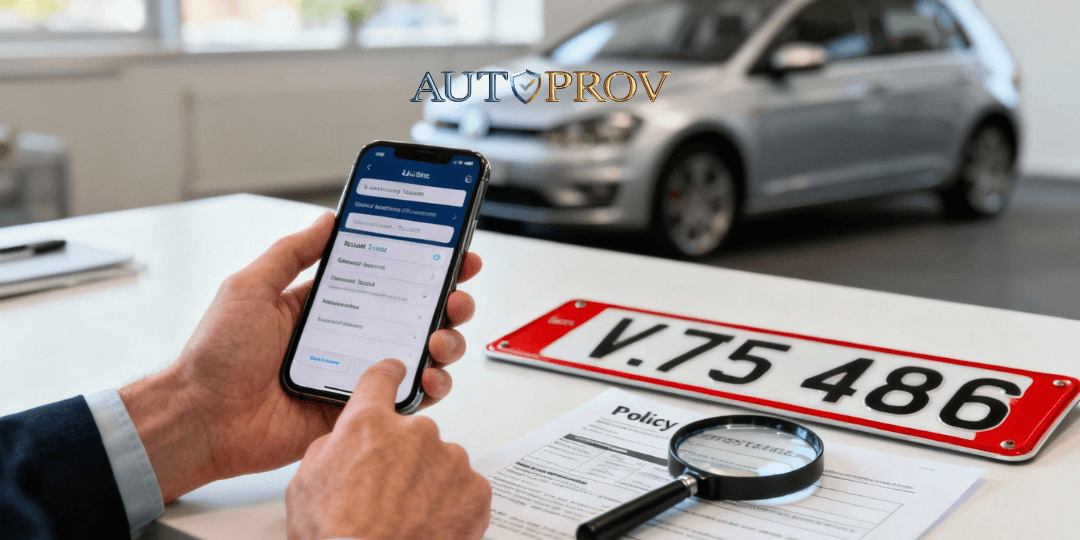
How to Check If a Car Is Insured in the UK | Easy Guide
The quickest and most reliable way to check if a car is insured is by using the Motor Insurance Database (MID) online. All it takes is the vehicle's registration number to see if a valid insurance policy is on record. Remember, driving without at least third-party insurance is a serious offence here in the UK.
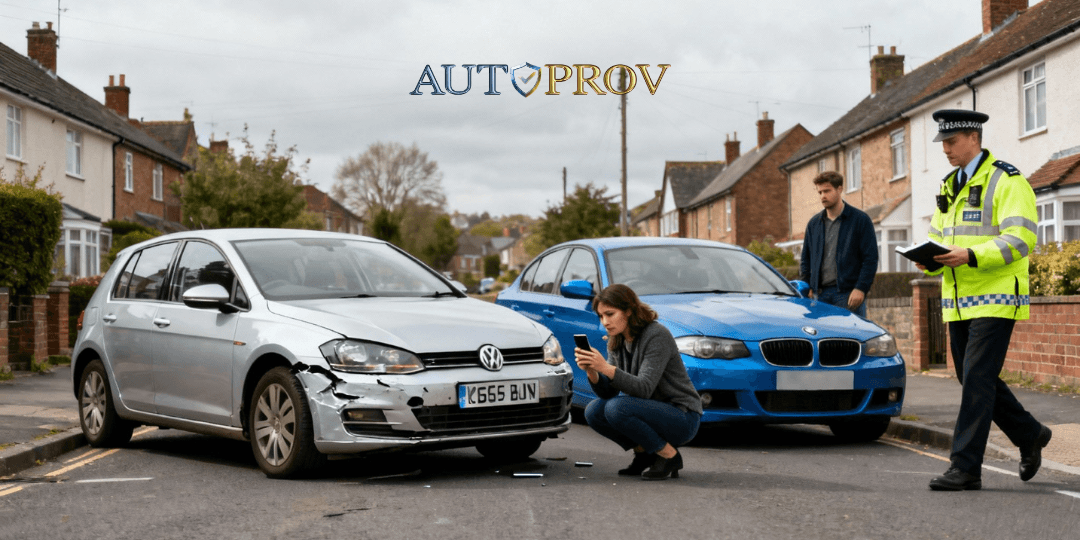
Hit by an uninsured driver: UK accident rights & claim guide
Being hit by an uninsured driver is a deeply frustrating experience. The shock of the accident is bad enough, but finding out the other party has no insurance just adds a whole new layer of stress and confusion. Suddenly, the straightforward path to getting your car fixed seems to vanish. This guide is here to cut through that noise and show you that you're not out of options.
Published by AutoProv
Your trusted source for vehicle intelligence
