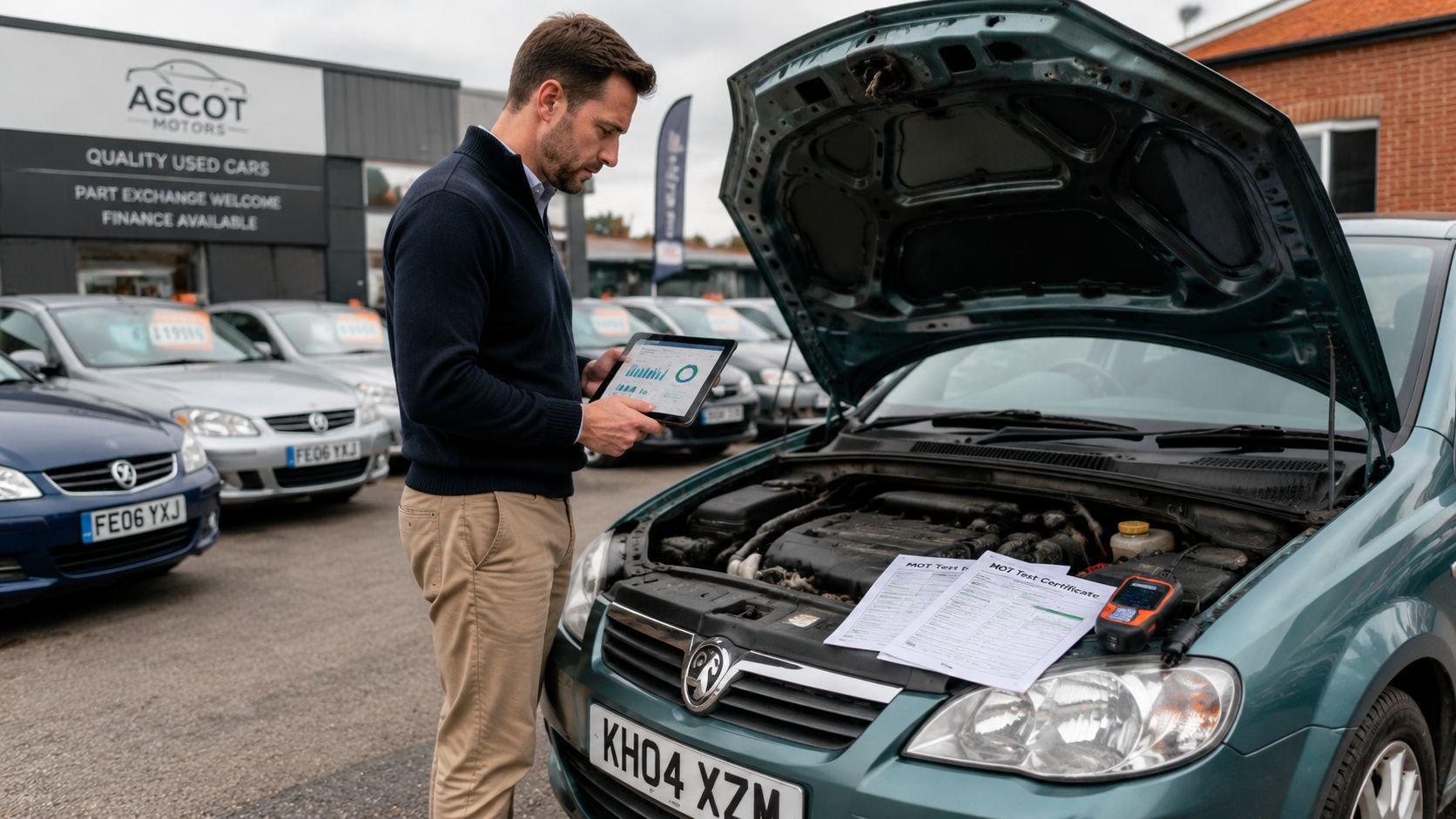
A used car under 3000 can still earn money. It can also burn time, swallow preparation budget, and create the sort of comeback that costs more than the metal was worth in the first place.
Most traders know the feeling. A tidy-looking hatchback turns up cheap, the MOT expiry looks workable, the seller sounds straightforward, and the price leaves room on paper. That paper margin is where people get caught. In this bracket, the job isn't finding a cheap car. It's working out whether the car is cheap for a reason you can manage, or cheap for a reason you'll end up owning.
Beyond the Price Tag The Real Risk in Sub-£3k Stock

The first mistake in this market is treating price as the main signal. It isn't. In sub-£3k stock, risk is the product. Price only tells you how cheaply that risk is being offered.
The UK market is large and fast-moving. The Society of Motor Manufacturers and Traders reported 7.53 million used-car transactions in 2024, 5.5% higher than in 2023, which matters because older, cheaper vehicles sit inside a highly liquid market where cars can change hands repeatedly and history can get messy according to this market reference. That's why a used car under 3000 often looks straightforward at first glance but carries more uncertainty than stock at a higher retail point.
Cheap stock moves fast, but not always cleanly
Low-price cars attract urgency. Buyers chase entry-level affordability, part-exchanges get pushed out quickly, and auction catalogues are full of stock that somebody else has already decided not to prep. None of that makes the car bad by default. It does mean a trader has to assume less and verify more.
A few patterns come up again and again:
- Frequent keeper changes can point to unstable ownership, unresolved faults, or cars that were bought to move on quickly.
- Long MOT certificates can create false confidence. A fresh pass doesn't tell you how much was ignored, delayed, or only just got through.
- Cosmetic tidiness often hides mechanical drag. A clean cabin and polished bodywork don't pay for tyres, suspension, leaks, or warning lights.
Practical rule: In this price band, buy the story as much as the car. If the story doesn't make sense, the margin usually won't either.
Margin protection starts before the viewing
The traders who do well here don't rely on instinct alone. They use a repeatable filter before they travel, before they bid, and before they talk themselves into a deal because the metal “looks honest”.
That's why the process matters more than the model. A cheap Fiesta, Corsa, Yaris or Focus can all be viable. Any of them can also be a bad buy if the ownership pattern, MOT progression and likely prep spend don't stack up.
A disciplined approach to risk mitigation strategies for used vehicle buying matters more here than almost anywhere else in the trade. In this segment, protecting cash and protecting reputation are the same task.
Strategic Sourcing and Initial Vetting
Where you buy a used car under 3000 changes the type of risk you're taking on. Trade auction stock, private cars, and franchised dealer part-exchanges can all work. None should be treated the same.
Auction cars are efficient, but they're also easy to overrate from a lane description and a few photos. Part-exchanges from dealer groups can be cleaner on paperwork and easier to appraise if the chain of custody is clear. Private purchases can offer margin, but they also demand sharper questioning because the seller usually frames the car around convenience rather than trade reality.
Questions that save wasted journeys
Before viewing, ask direct questions and keep them tight. If the answers are vague, that's useful in itself.
- Why is it being sold now? A normal answer sounds consistent. A rehearsed answer often doesn't.
- How long has the current keeper had it? Short ownership isn't always a problem, but it does need context.
- What has it failed or been advised on recently? Most sellers will downplay. Listen for hesitation more than wording.
- Are there any warning lights, fluid leaks, overheating issues, gearbox faults or starting problems? Ask each item separately.
- Has it got both keys, the V5C, and service paperwork? Missing admin doesn't always kill a deal, but it changes how you value it.
- Is it ULEZ or Clean Air Zone friendly for the likely retail area? If the seller doesn't know, check yourself.
Early filters that matter more than the advert
Cheap cars can become hard stock for reasons that have nothing to do with whether the engine runs well. Low-price vehicles are often older and higher-emission, and market coverage has noted that Clean Air Zone enforcement and running-cost sensitivity are pushing traders towards cars with clearer provenance and lower compliance risk. A low entry price can still be offset by weaker demand and longer time-to-sell in this market discussion.
That's why the first checks should happen before you set off:
Check What you're looking for Why it matters MOT history Repeated advisories, odd mileage progression, recurring failures Helps spot recurring cost centres Registration details Basic identity consistency Avoids wasted time on obvious mismatches Seller information Keeper story, location, paperwork readiness Tests whether the transaction feels clean Compliance fit Clean Air Zone suitability for your market Affects resale speed and buyer pool If the car only works because your buyer ignores emissions charges, patchy history, and a rough advisory trail, you haven't found stock. You've found an argument waiting to happen.
Buyers who want to operate consistently in this end of the market usually benefit from a tighter intake process like the one outlined in a used car outlet stocking workflow. The point is simple. Disqualify quickly, then inspect properly.
The Trader's Pre-Purchase Inspection Checklist
Once the car is in front of you, stop thinking like a shopper. Think like a prep manager holding the invoice that hasn't arrived yet.
UK vehicle age and mileage profiles explain why this bracket gets dangerous quickly. The average car on UK roads is roughly 9.9 years old, and Department for Transport MOT data shows many failures and advisories are tied to age-related wear on items such as suspension, brakes and tyres, which is why a low purchase price can be wiped out by reconditioning spend as noted in this reference on cheap used cars.

What deserves your attention first
Start with the expensive faults, not the visible ones.
- Engine behaviour matters more than presentation. Check cold start quality, smoke, idle stability, tappet noise, chain or belt rattle, and whether the cooling system is pressurising too quickly.
- Gearbox and clutch feel will decide whether the car has room in it. A biting point on the limit, difficult selection, slipping under load, or automatic hesitation can wipe out the deal.
- Structural corrosion is a different conversation from surface rust. Sills, floor edges, mounts, brake line routes and rear axle areas need proper scrutiny.
- Suspension and steering tell you how honest the previous maintenance has been. Knocks, wandering, uneven tyre wear and steering play often come bundled rather than alone.
Build a cost-to-retail view on the spot
A physical inspection should leave you with one question answered. Can this car pass a fresh retail standard without consuming the margin?
Use a simple mental split:
Area Manageable if Walk-away territory if Service items Wear is expected and priced in Neglect points to broader poor maintenance MOT consumables Limited and predictable Multiple categories stack up together Body and trim Cosmetic only Structural rust or poor repair history appears Diagnostics Minor and explainable Fault pattern suggests deeper electrical or engine issues A basic scan tool helps. Pending and stored fault codes often reveal more than the dash does, especially where warning lights have been cleared ahead of sale. I also check every electric window, blower speed, locking function, heater output and screen demist. Small faults matter in budget retail because buyers in this bracket are paying for use, not aspiration.
Workshop view: The bad cheap car rarely has one big problem. It has six medium ones that each look survivable until you add them together.
If you can't inspect the car yourself to trade standard, independent pre-purchase car inspections can be a sensible support option on remote or higher-risk buys. The useful part isn't the headline verdict. It's getting another set of trained eyes on the hidden spend.
For teams who want a tighter appraisal routine, a structured trade buyer vehicle appraisal checklist helps stop the same avoidable misses happening across multiple buyers.
Uncovering Hidden History with Vehicle Provenance Checks
A clean-looking car with a basic pass on a standard vehicle history check UK search isn't the same thing as low-risk stock. In this market, that difference matters.
The trade problem isn't just whether the car has recorded finance, theft markers or insurance flags. Those checks are necessary. They're not enough on their own for older, cheaper stock where the danger lies in patterns. A proper used car history report for trade buying should help you understand how the vehicle has moved through time, not just whether a headline marker appears.

Basic checks answer one question. Provenance answers several.
For a used car under 3000, the most useful signals often come from inconsistencies across datasets. A data-led buying method combines DVLA checks with MOT-history anomaly screening, because the primary risk isn't age alone. It's the mismatch between mileage progression, test outcomes and ownership timeline. UK VIN and plate-level provenance becomes especially useful where a car shows short keeper spans or mileage plateaus followed by sudden jumps, patterns that often correlate with undisclosed issues in this provenance-focused guidance.
That's where vehicle provenance becomes more useful than a simple pass or fail screen.
Look for combinations such as:
- Short-term keeper changes plus repeated advisories. That can suggest a car that keeps moving before anyone absorbs the proper repair bill.
- Mileage pauses followed by large increases. Sometimes there's a clean explanation. Sometimes there isn't.
- MOT gaps with no obvious ownership narrative. Cars don't disappear from use without a reason.
- Improving presentation alongside worsening historical consistency. Fresh photos don't fix a confused paper trail.
Read the history as a narrative
Good dealer vehicle checks don't just return data fields. They help you ask better questions at the point of decision.
If a car has had several recent keepers, ask why each ownership period was short. If mileage progression looks odd, compare it against service records, old invoices and wear inside the car. If MOT advisories repeat across years, assume the maintenance style is reactive until proved otherwise. Mileage check UK work becomes particularly valuable. You're not hunting for one dramatic discrepancy every time. You're checking whether the whole record behaves like a believable life story.
A profitable cheap car usually has faults you can see. A dangerous one often has a history that doesn't add up cleanly.
That's the difference between raw history data and trade vehicle intelligence. The first gives you records. The second helps you judge whether the records make sense together. When a car sits on the line between viable and non-viable, that context often decides whether you buy, discount hard, or leave it alone.
For traders who need a fuller view before committing capital, a dedicated vehicle provenance report for UK trade buying is the right sort of tool. It supports the decision that a basic check can't make for you.
Valuation Negotiation and Finalising the Purchase
The right valuation on a used car under 3000 isn't the lowest number you can get accepted. It's the number that leaves enough room for prep, warranty exposure, comeback risk, and a saleable retail position.
That's why negotiation should start with evidence, not theatre. Once you've inspected the car and reviewed its history signals, your offer should follow from what the vehicle is likely to cost you, not what the seller hopes it's worth.

The deal only works if the numbers survive preparation
The key trade question is whether a sub-£3k car is still economical after repair risk is included. With average UK used-car asking prices still around £17,000-plus, this price band sits far out on the age and mileage curve, where MOT advisories, mileage pattern risk and predictable faults matter more commercially than model-name reliability as discussed in this market reference.
A seller may say, “It only needs a couple of bits.” That's not a valuation method.
Use a working structure like this:
- List known defects from the inspection. Don't round them down.
- Add likely follow-on spend where one issue commonly travels with another.
- Adjust for history risk if provenance signals are weak, even if the car drives well.
- Consider retail resistance if compliance, ownership pattern or presentation will make the car harder to stand behind.
- Set your number and stop there.
Negotiate with facts, then check the paperwork properly
The strongest offers are usually calm ones. Show the seller what you found. Point to tyre condition, advisories, corrosion points, gearbox behaviour, warning codes, keeper pattern, or missing paperwork. You're not trying to win an argument. You're pricing risk.
A short negotiation table helps keep discipline:
Finding Effect on offer Immediate MOT-related work Reduces available prep margin Poor provenance consistency Requires stronger discount or exit Missing documents or keys Adds friction and resale risk Compliance concerns Narrows buyer pool Buying rule: Don't negotiate from advertised value. Negotiate from cost of acquisition plus the risk you're taking on after handover.
Before payment, verify the V5C against the car and the seller. Check that VIN locations match the paperwork. Confirm the seller's identity and address details make sense with the registration document. Put the transaction on a proper purchase invoice with date, registration, VIN, agreed price, and both parties' details. If anything in the paperwork feels improvised, slow the deal down.
A tighter cost of acquisition framework for used vehicles helps here because purchase price is only one line in the total exposure.
Conclusion Building a Resilient Buying Process
The sub-£3k market doesn't reward optimism. It rewards process.
A profitable used car under 3000 usually comes from the same sequence every time. Source selectively. Disqualify poor candidates early. Inspect the car like a prep bill is attached to every fault, because it is. Read the history for patterns, not just markers. Then negotiate from evidence and complete the paperwork like the vehicle may be questioned later, because sometimes it will be.
Gut feel still has a place. Experienced traders spot honest metal quickly. But gut feel on its own won't catch a mileage narrative that doesn't stack up, a weak keeper pattern, or a compliance issue that makes the car awkward to retail. That's where disciplined motor trade risk management separates decent buying from expensive gambling.
The traders who hold margin in this bracket usually aren't buying the cheapest car. They're buying the clearest proposition. Clean identity, believable history, manageable prep, sensible exit. That's what protects reputation as well as profit.
Good buying systems don't remove risk. They make it visible early enough to price properly or walk away.
If you want stronger point-of-decision intelligence on older, higher-risk stock, AutoProv gives UK motor traders deeper vehicle history, provenance analysis, mileage pattern insight, and risk signals that support better buying calls. For dealers who need more than a basic vehicle history check UK result, it's a practical way to tighten acquisition standards and reduce avoidable exposure.
Frequently Asked Questions
AI-Generated Content Notice
This article was created with the assistance of artificial intelligence technology. While we strive for accuracy, the information provided should be considered for general informational purposes only and should not be relied upon as professional automotive, legal, or financial advice. We recommend verifying any information with qualified professionals or official sources before making important decisions. AutoProv accepts no liability for any consequences resulting from the use of this information.
From our AI insights
- Essential Pre-Purchase Checklist for UK Motor Traders
Ensure a seamless vehicle acquisition with our detailed pre-purchase checklist tailored for UK motor traders.
- Leveraging Auction Data for Strategic Car Purchases
Discover how to use auction data effectively to make profitable car buying decisions.
- Auction Pitfalls: Avoiding Costly Mistakes
Navigate UK car auctions with confidence by avoiding finance, write-off, and mileage risks.
Related Articles

Your Ultimate Guide to Buying a Used Car in the UK
Navigate the UK used car market with confidence using our comprehensive buying guide. Tips, checks, and AutoProv Provenance insights included.

Difference Between MOT and Service: What You Need to Know
An MOT is a mandatory legal inspection that every car on UK roads needs to pass.Think of it as the government's way of ensuring your vehicle meets the absolute minimum safety and environmental standards to be considered roadworthy. A service, on the other hand, is a completely different beast. It's the proactive maintenance routine recommended by the people who built your car, designed to keep it running smoothly and catch problems before they start. In short, an MOT is a pass-or-fail exam required by law. A service is a comprehensive health plan for your car.

Your Ultimate Used Car Inspection Checklist
A solid used car inspection checklist is the single most powerful tool you have to avoid buying a lemon. It gives you a methodical way to look past the shiny paint and assess a car's real condition, helping you spot hidden problems and get a fair price before you shake hands on the deal.
Published by AutoProv
Your trusted source for vehicle intelligence