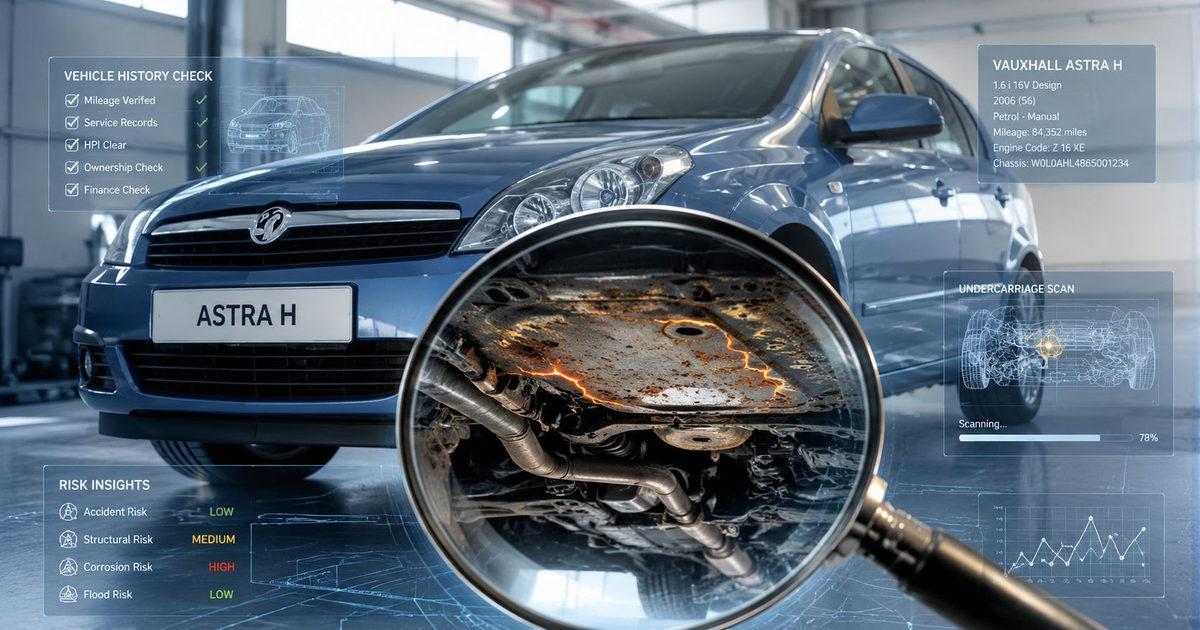
A Vauxhall Astra H still turns up in the same places it always has. Part exchange lanes, local auctions, regional dealer forecourts, and trade disposals where the photos look tidy enough and the price leaves room for margin. On first glance, it's easy stock. Familiar shape, broad buyer base, cheap enough to move, and old enough that many traders think they already know the model.
That's where mistakes creep in.
The profitable Astra H isn't merely the one that presents well. It's the one whose mechanical condition, mileage story, ownership trail, and identity data all line up. Plenty of these cars are now deep into the stage of life where deferred maintenance, patchwork repairs, and weak paperwork create more risk than the panel condition suggests. A clean bonnet and a fresh MOT don't tell you whether the car has been flipped quickly, whether the mileage pattern makes sense, or whether a known engine issue has already started to develop.
Table of Contents
- The Hidden Risks in a Workhorse Model
- Astra H Model Matrix A Trade Perspective
- Vauxhall Astra H Engine Risk Matrix
- What the matrix means in practice
- Common Mechanical and Electrical Faults
- Drivetrain
- Electrical systems
- Chassis and suspension
- High Risk Years and Problematic Variants
- Variants that deserve tighter appraisal
- Why emissions claims now matter more
- Analysing Vehicle Provenance Beyond Basic Checks
- Where basic checks stop
- Signals that change the buying decision
- Valuation Context and Negotiation Intelligence
- Turning risk into buying position
- What works in negotiation
- An Integrated Astra H Inspection Checklist
- Physical and mechanical inspection
- Provenance and data verification
The Hidden Risks in a Workhorse Model
You're standing in front of a Vauxhall Astra H on a wet Tuesday morning. The paint still catches light well enough, the interior is cleaner than expected, and the seller has the usual line ready: good runner, honest car, nothing to worry about. If you only appraise what's visible in the first three minutes, this model can look like straightforward stock.

The trouble is that older volume cars often carry the widest gap between appearance and risk. The Astra H was sold in strong numbers, used hard, passed through mixed ownership, and maintained to very different standards. That makes it exactly the kind of vehicle where a trader needs more than a surface appraisal.
According to RAC car data check research, 1 in 3 cars checked in the UK have a hidden history, and 1 in 11 show inaccurate mileage records. For an Astra H buyer, that matters because this model often sits in the overlap between ageing mechanical wear and weak provenance.
Practical rule: If the car is old enough to have passed through several owners, workshops, and sales channels, assume the paperwork needs proving rather than trusting.
Astra H risk usually hides in four places:
- Mileage narrative: Recorded figures can appear plausible while still being inconsistent when viewed across MOT entries, ownership timing, and sale intervals.
- Service evidence: A stamped book helps, but it doesn't prove key work was done at the right time or to the right standard.
- Usage pattern: A diesel that has spent its life on short trips won't behave like one that covered regular motorway miles.
- Identity detail: Plate changes, keeper shifts, and patchy document history can point to problems the walk-around won't expose.
Physical inspection still matters. So does a proper road test. But if you're buying an Astra H without looking at the deeper provenance picture, you're guessing. That's how traders end up absorbing faults that were visible in the data trail before they ever turned the key. The broader point is covered well in this breakdown of hidden costs of buying without provenance checks.
Astra H Model Matrix A Trade Perspective
A trader buys two Astra Hs on the same day. Both look tidy, both drive well enough around the block, and both sit in the same retail price band. Six weeks later, one has sold cleanly and the other is back with margin gone in diagnostics, electrical faults, and a gearbox complaint. The difference usually starts at model and usage profile, then gets confirmed by the paperwork trail.
From a trade point of view, the Astra H range makes sense once you sort it by stock behaviour rather than brochure position. SXi, SRi, Design, and Sportive badges still matter, but mainly because they hint at prior driver type, likely use cycle, and how the car was maintained. A modest-spec car with clean provenance often carries less downside than a higher-spec example with a harder life and a weaker paper trail.
Vauxhall Astra H Engine Risk Matrix
Engine Power Output Commonly Found In Primary Trade Risk Signal 1.6 Turbo petrol Performance petrol output Sportive models Hard use, inconsistent servicing, and expensive catch-up prep if boost or fuelling issues are developing 1.9 CDTI Lower-output diesel tune Mainstream diesel hatch and estate stock EGR contamination, short-run diesel use, and evidence of fleet-style wear 1.9 CDTI Higher-output diesel tune Higher-spec diesel stock, stronger valuation candidates Better resale appeal, but turbo, clutch, and gearbox exposure can wipe out the margin Lower-output petrols and other volume variants Varies by trim and year SXi, Design, SRi and mixed trim stock Risk comes more from neglect, weak history, and repeated low-budget ownership than from the badge The trade split is straightforward. Petrol stock usually gives fewer diesel-system concerns at point of sale. Diesel stock can still be the better unit if the ownership pattern, service record, and mileage story line up.
What the matrix means in practice
The 1.6 Turbo is attractive for the wrong reasons. It still feels lively enough to distract a buyer from the risk signals that matter more in stock appraisal. On these cars, headline performance often sits alongside deferred maintenance. If the seller cannot support the servicing properly, assume the next owner will find the bill.
The 1.9 CDTI remains the core trade engine in this range because it can retail well and still makes sense to practical used buyers. The catch is provenance. A diesel Astra H that spent its life on longer runs, had regular servicing, and shows consistent mileage progression is a different proposition from one that has bounced between keepers and local traders. Mechanical checks pick up the current condition. The history file shows whether that condition is likely to hold.
Trim should be treated as evidence, not value in itself. SRi and Sportive cars deserve closer scrutiny for harder use, modified parts, and cheaper repair decisions. Design and SXi examples often come from less ambitious ownership, which can help, but only if the documents support that impression. I would rather buy a plain car with a believable file than a better-looking one with gaps in timing, invoice quality, or keeper pattern.
Electrical risk also varies by stock type. Higher-spec cars bring more convenience kit, more switchgear, and more scope for low-voltage faults to be misread as isolated issues. Before chasing modules, confirm charging health first. A weak battery or unstable alternator output can produce symptoms that look bigger than they are, and this guide on battery versus alternator fault symptoms is useful if the car is showing erratic warning lights or intermittent electrical behaviour.
Good Astra H stock usually looks ordinary. The profitable car is the one where engine type, trim level, usage pattern, and provenance all tell the same story.
That is the complete model matrix on this car. It is not just engine versus trim. It is engine, trim, owner type, service discipline, and whether the data trail supports the way the car presents in the metal.
Common Mechanical and Electrical Faults
Astra H problems rarely arrive one at a time. The risky cars show a pattern. A faint gearbox whine, patchy charging voltage, a dashboard with old warning light history, and tyres wearing in ways the mileage does not justify. That combination matters more than any single fault code.
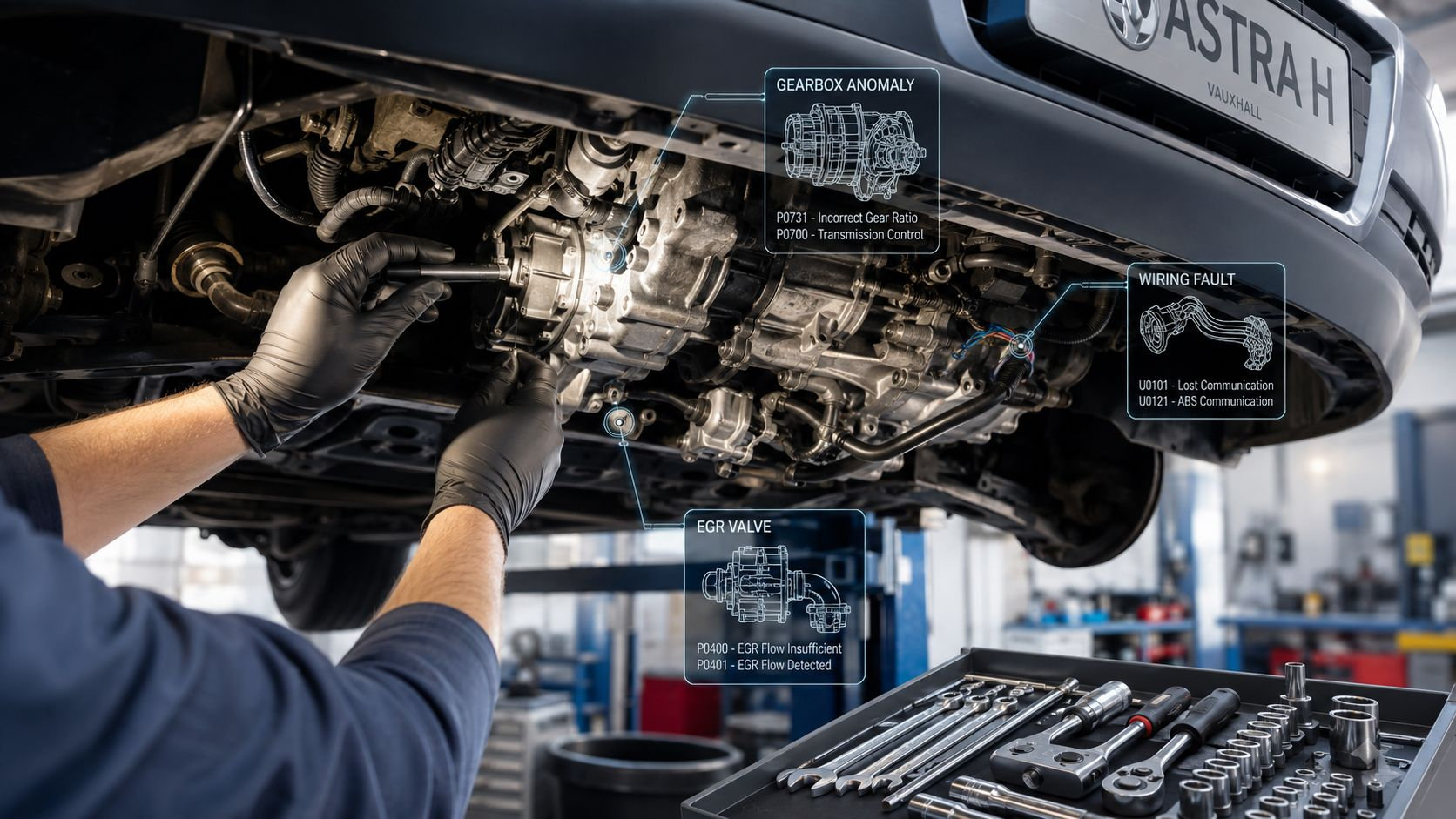
Mechanical inspection still does the heavy lifting on this model, but provenance sharpens the decision. A car with repeat advisories, inconsistent mileage progression, or invoice gaps around known wear points is usually telling you what the workshop will find next. On an Astra H, that data trail often exposes risk before the road test confirms it.
Drivetrain
The best-known transmission issue is M32 gearbox bearing wear. Traders know to listen for noise, but the useful distinction is whether the noise matches the car's history. A whine in fifth or sixth on a car that has spent years doing motorway work can still be manageable at the right money. The same noise on a lower-mileage car with patchy servicing and several short-term keepers is a different risk, because it suggests deferred repair rather than honest wear.
Check for:
- Whine under load or on lift-off in higher gears
- Gear lever movement that increases with throttle input
- Shift quality that worsens once the drivetrain is hot
- Clutch or dual mass flywheel symptoms that muddy the appraisal
If more than one of those signs is present, price it as a gearbox case, not a minor annoyance.
Diesels need context, not optimism. The 1.9 CDTI can still make sense in stock, but only where the service file supports how the car has been used. EGR fouling, turbo wear, boost leaks, and tired flywheels are familiar issues. What separates a saleable unit from a comeback risk is whether the car shows evidence of sustained main-road use and timely servicing, rather than stop-start local use with long oil change gaps.
Petrol cars are usually simpler buys, but not all petrol Astras carry the same exposure. Turbocharged examples deserve tighter scrutiny for boost-related faults, neglected oil quality, and signs of previous enthusiastic use. If the advert talks about performance parts but the paperwork does not show disciplined maintenance, walk away or buy very cold.
Electrical systems
Electrical faults on the Astra H are often symptoms, not root causes. The CIM unit gets the attention because it can trigger steering column and switchgear complaints, but low voltage is still the first thing to rule out. A weak battery or unstable alternator can create intermittent faults that send buyers and workshops in the wrong direction. This guide to battery versus alternator fault symptoms is a useful check before you start blaming modules.
Use the first ten minutes with the car properly:
- Test steering wheel buttons, horn, indicators, and self-cancel function
- Watch for warning lights that clear, then return after lock-to-lock steering or a short drive
- Operate windows, central locking, heater speeds, rear wash-wipe, and wipers one by one
- Check charging behaviour with lights, blower, and rear screen load applied
Intermittent faults matter more on paper than many buyers realise. A car with repeated electrical advisories, battery replacements without charging repairs, or recent module swapping in the invoice file can consume workshop time fast. The issue is not only repair cost. It is handover delay, avoidable prep labour, and the chance of a retail return when the fault reappears cold or wet.
Chassis and suspension
Most Astra H chassis faults are predictable ageing wear. That makes them easy to underestimate. Front bushes, drop links, top mounts, rear axle bush wear, and tired dampers can combine to make the car feel older than its mileage suggests, even when no single part has completely failed.
Judge the underpinnings against the story the car is trying to tell. Uneven front tyre wear on a supposedly cherished example usually points to a longer period of deferred maintenance. A car that drives straight, settles cleanly after bumps, and carries even tyre brands across an axle is often the one with the more believable ownership pattern.
Pay attention to:
- Knocks over broken surfaces rather than smooth roads
- Steering that fails to self-centre cleanly
- Tyre shoulder wear, feathering, or mismatch across the same axle
- Braking feel that suggests tired suspension rather than brake-only issues
The profitable Astra H is rarely the freshest-looking one. It is the one where the faults make sense for the age, the history supports the wear you can see, and the likely next bill is still under your control.
High Risk Years and Problematic Variants
Not every Vauxhall Astra H deserves the same buying confidence. Some are straightforward ageing hatchbacks. Others carry a stack of risk signals before you even reach the road test. Traders who treat the whole range as one generic stock type usually overpay for the wrong examples and underappraise the ones worth having.
Variants that deserve tighter appraisal
Start with the combinations that bring performance appeal, diesel complexity, or unusual claims in the advert. The 1.6 Turbo petrol sits firmly in that first group. It can still be a desirable retail proposition, but only when the service record supports the engine and the car hasn't spent its life as hard-used fleet or enthusiast stock.
The stronger 1.9 CDTI variants can also divide into two very different assets. One will be a usable, credible workhorse with stable resale demand. The other will be a tired diesel with mounting emissions and turbo-related risk hidden behind a clean-up valeting job. The buying decision depends less on badge level than on whether the car's age, use pattern, and document trail agree with each other.
Cars that raise the most concern usually share one or more of these traits:
- Performance trim with thin service evidence
- Diesel stock showing signs of low-speed, short-run use
- Recent cosmetic preparation without matching mechanical proof
- Seller language that leans heavily on “rare”, “future classic”, or emissions claims rather than maintenance detail
Why emissions claims now matter more
An emerging issue in this segment is the sale of older cars with aftermarket emissions narratives attached to them. According to this UK trade report on unverified retrofits, 28% of pre-2016 used cars now have such modifications, and pre-2016 Astra H models are among those being sold as “Euro6 ready” despite unverified retrofit status.
That matters because the problem isn't just technical. It becomes a post-sale dispute risk. If a buyer believes the car meets a standard it can't properly evidence, the trader may be dragged into a complaint that could have been avoided at acquisition.
If an older Astra H is marketed around compliance language, treat that wording as a risk trigger, not a selling feature.
The practical answer is simple. If the compliance story is central to the sale, the proof needs to be stronger than verbal reassurance, informal paperwork, or a previous seller's advert copy. Without that, the safer valuation position is to treat the claim as unverified.
Analysing Vehicle Provenance Beyond Basic Checks
A lot of Astra H buying errors happen because traders still separate the car into two halves. They inspect the vehicle properly, then treat the paperwork side as an admin step. On older volume stock, that approach is backward. The data trail often tells you where to focus the physical inspection before you've even seen the car.
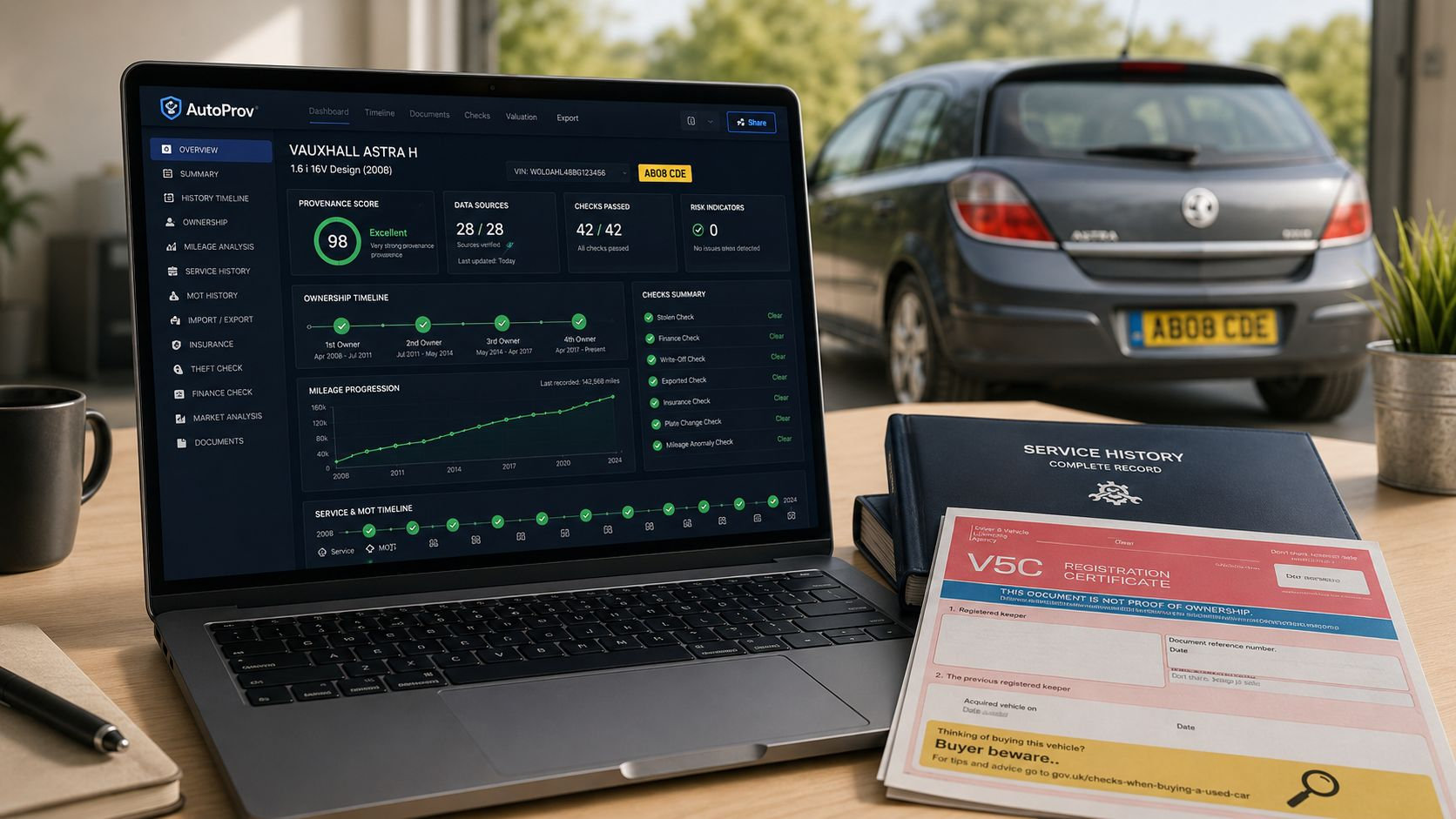
Where basic checks stop
Mileage fraud on this model isn't a fringe issue. UK trade platform data shows 12% of used cars sold via trade platforms have inconsistent mileage patterns, with the Astra H identified as a top model for such fraud due to its age and volume.
That single point changes how you should read an Astra H file. A tidy MOT sequence doesn't automatically mean the mileage story is clean. Seller-supplied MOT slips, service stamps, and dashboard figures can all look plausible in isolation. The risk emerges when the chronology doesn't fit.
Basic checks also miss identity complications. The Car Expert's review of UK car history checking notes that 27.5% of vehicles checked had plate change issues, while RAC data referenced there reports 1 in 5 cars in the UK have had at least one number plate change. On an Astra H, plate changes aren't proof of fraud, but they are a signal that the identity trail needs closer reading.
Signals that change the buying decision
A proper vehicle provenance review is about context, not isolated flags. When the history aligns, older stock becomes easier to buy. When it doesn't, even a mechanically decent car can become awkward stock.
Key signs to examine:
- Ownership rhythm: Rapid resale patterns can indicate a car that nobody wants to hold for long.
- Mileage logic: Readings should fit the age, use case, and keeper timeline. A plausible number isn't enough.
- Registration consistency: Plate changes need explanation, especially where the timeline feels busy or incomplete.
- Document alignment: MOT history, V5 details, service entries, and sale narrative should support the same story.
For dealers reviewing paperwork changes more broadly, this guide to 2026 vehicle registration changes is useful context because document handling and registration understanding now have a more direct bearing on trade due diligence than many buyers assume.
The strongest used car history report doesn't just list records. It shows whether those records make sense together.
Trade vehicle intelligence becomes more useful than a pass/fail approach. A dealer doesn't only need to know whether there's a recorded event. They need to know whether the pattern around that event makes the unit safer or riskier to buy. That's the difference between routine dealer vehicle checks and a more complete vehicle provenance report that helps identify hidden narrative breaks.
Valuation Context and Negotiation Intelligence
Astra H buying decisions don't break on gross asking price. They break on how much uncertainty is sitting behind that price. Two cars can look identical in photos and still deserve very different bids once the fault profile and provenance picture are understood.
Turning risk into buying position
A trader doesn't need every issue resolved before making an offer. But you do need a disciplined way to convert risk signals into a valuation stance.
That usually means separating findings into three groups:
- Routine prep items: Wear you'd expect on age and can plan into stock prep.
- Conditional risks: Problems that may not be confirmed yet but are strongly suggested by symptoms or history gaps.
- Walk-away indicators: Identity concerns, unresolved emissions claims, or a story that doesn't hold together.
The mistake is treating all red flags as equal. A suspension knock is one thing. A mileage narrative that feels engineered is another. The first affects prep budget. The second affects confidence in the entire deal.
What works in negotiation
The strongest negotiation position is specific and evidence-led. Vague concerns don't move a seller. A clear list of inconsistencies usually does.
Useful lines of negotiation include:
- History-led price adjustment: If the ownership pattern or recorded use suggests increased motor trade risk, price for that uncertainty rather than hoping it disappears in retail.
- Mechanical contingency: Where the test drive points to likely gearbox, turbo, or EGR-related work, bid on the basis that further inspection may confirm additional spend.
- Spec realism: Don't pay a trim premium if the variant carries a known risk profile and the supporting maintenance evidence is weak.
A disciplined buyer doesn't argue over the seller's opinion of the car. They buy on what can be evidenced and leave margin for what can't.
This is why a proper vehicle history check UK traders can rely on is tied directly to margin control. Better context sharpens the initial offer, helps justify a reduced bid, and avoids paying strong money for a unit that only looked clean because the data trail wasn't interrogated. For broader stock planning, vehicle valuations and market insights can support that pricing discipline.
An Integrated Astra H Inspection Checklist
The safest way to appraise a Vauxhall Astra H is to treat it as two inspections happening at once. One is physical and mechanical. The other is documentary and behavioural. Ignore either side and you can still buy a liability.
Physical and mechanical inspection
Use the on-site check to confirm whether the car behaves like its age and history suggest it should.
- Road test the gearbox properly: Listen for bearing-related whine and don't rely on a short spin around the block.
- Assess diesel behaviour carefully: Uneven running, smoke, hesitation, or sluggish response can support concerns around EGR or turbo condition.
- Check electrical functions one by one: Steering controls, warning lights, central locking, windows, and wipers all help build a fuller picture.
- Read tyre and suspension clues: Uneven wear, front-end knocks, and vague steering usually say as much about ownership quality as they do about parts required.
Provenance and data verification
This is the part many traders still underweight, even though it often determines whether the buy is safe.
Car history data source analysis from Car Owl makes the limitation clear: free car history checks in the UK access only government data (DVLA/DVSA) and omit critical databases from finance companies and insurers, meaning they cannot confirm outstanding finance or insurance write-off status (Cat S/N).
That matters because a serious mileage check UK process and proper used car history report need more than MOT visibility. They need the broader context around finance exposure, insurance markers, ownership change patterns, and anomaly detection.
Before committing to stock, verify:
- Identity integrity: Registration, VIN, and any plate history should align cleanly.
- Ownership pattern: Short holds and quick re-sales need an explanation.
- Mileage consistency: Look for chronology, not just a believable odometer figure.
- Risk markers outside DVLA-only data: Free checks won't give the whole acquisition picture.
For teams that want a more repeatable appraisal process, this complete vehicle appraisal checklist for trade buyers is a practical reference point.
AutoProv supports UK motor traders with advanced vehicle history, provenance, and risk intelligence that goes beyond basic checks. If you're buying stock where mileage patterns, ownership changes, identity signals, and hidden background issues can affect margin, AutoProv helps you assess the vehicle's story before you commit capital.
Frequently Asked Questions
AI-Generated Content Notice
This article was created with the assistance of artificial intelligence technology. While we strive for accuracy, the information provided should be considered for general informational purposes only and should not be relied upon as professional automotive, legal, or financial advice. We recommend verifying any information with qualified professionals or official sources before making important decisions. AutoProv accepts no liability for any consequences resulting from the use of this information.
From our AI insights
- Auction Pitfalls: Avoiding Costly Mistakes
Navigate UK car auctions with confidence by avoiding finance, write-off, and mileage risks.
- Mastering Paint Code Checks: Detecting Hidden Car Repairs
Discover how to use paint code verification to identify hidden car repairs and ensure a smarter purchase.
- UK Part-Exchange Checks: Protecting Dealer Margins
Explore essential part-exchange checks for UK dealers to safeguard profit margins, including provenance and finance verification.
Related Articles

Your Ultimate Guide to Buying a Used Car in the UK
Navigate the UK used car market with confidence using our comprehensive buying guide. Tips, checks, and AutoProv Provenance insights included.

Difference Between MOT and Service: What You Need to Know
An MOT is a mandatory legal inspection that every car on UK roads needs to pass.Think of it as the government's way of ensuring your vehicle meets the absolute minimum safety and environmental standards to be considered roadworthy. A service, on the other hand, is a completely different beast. It's the proactive maintenance routine recommended by the people who built your car, designed to keep it running smoothly and catch problems before they start. In short, an MOT is a pass-or-fail exam required by law. A service is a comprehensive health plan for your car.

Your Ultimate Used Car Inspection Checklist
A solid used car inspection checklist is the single most powerful tool you have to avoid buying a lemon. It gives you a methodical way to look past the shiny paint and assess a car's real condition, helping you spot hidden problems and get a fair price before you shake hands on the deal.
Published by AutoProv
Your trusted source for vehicle intelligence