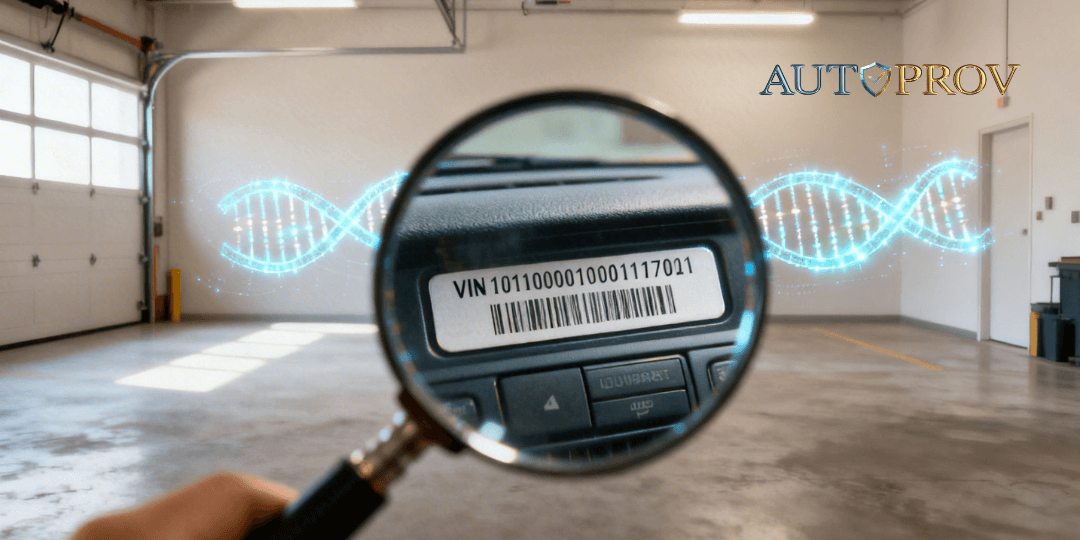
The Vehicle Identification Number, or VIN, is a vehicle's unique identity code. It's a 17-character sequence that acts as a lifelong fingerprint. For any professional in the UK motor trade, it is the single most critical piece of data for assessing risk and confirming a vehicle’s provenance before acquisition.
The VIN Explained: A Vehicle's Core Identifier
This standardised 17-character sequence is the foundation of professional vehicle due diligence. From the moment a vehicle leaves the production line, its VIN is used to record every significant event in its life.
The structured format has been mandatory for vehicles built since 1981, providing the motor trade with a consistent method for identification. For UK dealers and wholesalers, this consistency is vital. It enables a reliable connection between a physical vehicle and its digital records, forming the basis of every robust vehicle history check UK.
This diagram illustrates how the 17-character code is structured.

The code is segmented into three logical parts: the manufacturer’s details (WMI), the vehicle's specific attributes (VDS), and its unique production number (VIS).
Deconstructing a UK VIN: What Each Section Means
Understanding this structure is essential for spotting discrepancies that could signal a cloned or tampered vehicle. Each segment provides specific information that can be cross-referenced to verify a vehicle's authenticity.
The table below breaks down what each part of the code reveals.
VIN Section Characters What It Reveals World Manufacturer Identifier (WMI) 1-3 The country of origin and the specific manufacturer (e.g., 'S' for the UK, 'W' for Germany). Vehicle Descriptor Section (VDS) 4-9 The vehicle’s key features, including its model, body style, engine type, and safety systems. Vehicle Identifier Section (VIS) 10-17 A unique serial number for the vehicle, which includes its model year and the specific factory of manufacture. This encoded information is registered with the DVLA, linking the VIN to a vehicle's registration mark (VRM). With over 40.8 million licensed vehicles in Great Britain, this system underpins the entire vehicle history framework.
A thorough understanding of what a VIN is and how it’s structured is fundamental for any motor trade professional. It’s the starting point for uncovering a vehicle’s true history, enabling smarter buying decisions and protecting your business from the risks of fraudulent stock. You can find out more about where this number is physically stamped on a car by checking our guide on VIN plates.
How to Locate and Verify a VIN on Any UK Vehicle
Knowing what a VIN is represents the first step; locating and verifying it on a vehicle is the critical, hands-on part of any appraisal. Relying solely on the V5C logbook or the dashboard plate is a significant oversight that exposes your business to unnecessary risk. Proper due diligence requires a physical, multi-point check to confirm a vehicle’s identity.

Manufacturers deliberately place the VIN in several locations to deter fraud. During any inspection, finding and comparing every instance of this number is non-negotiable.
Common UK VIN Locations
You must know where to look. Any difference between the VINs you locate is an immediate, major red flag that requires further investigation.
- Windscreen Plate: The most obvious location, usually visible from the outside at the bottom of the windscreen on the passenger side.
- Door Jamb Sticker: Found on the B-pillar when the driver or passenger door is open. This sticker also details vehicle weights and paint codes.
- Stamped Chassis Number: This is the most difficult VIN to tamper with and the primary point of verification. Common locations include the engine bay bulkhead, under the carpet beneath the driver’s seat, or stamped directly into the floor pan.
A core part of any professional appraisal is ensuring the VIN on the V5C, the dashboard plate, and the door sticker perfectly matches the one stamped on the chassis. The chassis stamp is your ultimate source of truth.
Your Verification Process
Locating the numbers is not sufficient. A systematic verification process is required. This involves more than just spotting a mismatch; it's about looking for physical signs of tampering that point to sophisticated fraud like VIN cloning.
Your on-site verification should always include these steps:
- Check Every Location: Methodically find every VIN on the vehicle. Do not stop at the easy-to-read dashboard plate.
- Compare and Match: Confirm that every character of the VIN is identical across all locations and that it matches the V5C logbook precisely.
- Inspect for Tampering: Examine the stamped chassis number closely. Look for signs of grinding, welding, or paint overspray. Check the VIN plates for non-standard rivets or evidence they have been removed and re-applied.
This hands-on process is your best defence against fraud. For a more detailed walkthrough, you can learn more about where to find the VIN number in our expanded guide. These few extra minutes can protect your business from significant financial loss.
From a Simple Code to Actionable Intelligence
On its own, a Vehicle Identification Number is just a 17-character code. Its real power comes from the web of information it unlocks. For a motor trader, that VIN is the master key to a vehicle's entire recorded history, transforming a simple code into powerful vehicle provenance. This is the difference between simply checking a vehicle and truly understanding it.
When a VIN is processed through a professional-grade system, it queries multiple official UK sources simultaneously, with each one providing a critical piece of the puzzle.
Connecting the Data Points
The value of a VIN-driven check is its ability to collate disparate records into a single, chronological history. This is where context is built, revealing the full narrative behind a vehicle’s life.
- DVLA Registration Data: The VIN instantly pulls fundamentals like the date of first registration, colour changes, and the number of previous keepers.
- MOT History: Every MOT test is logged against the VIN, providing a public record of mileage readings, test results, and advisory notices that can indicate recurring issues. This is a goldmine for any mileage check UK.
- Manufacturer Specifications: A VIN check can retrieve the vehicle's original factory build sheet, confirming its engine, transmission, trim level, and optional extras.
- Insurance Events: Crucially, the VIN is tied to the insurance industry’s central database, flagging incidents like write-offs that may not be physically apparent.
The goal is not just to collect this information but to analyse how these data points intersect. A conflict between the manufacturer's specification and the vehicle in front of you, or an unexplained drop in mileage between MOTs, are major risk signals a basic check can miss.
This analytical process is what elevates a simple code into powerful trade vehicle intelligence.
For example, a standard check might report that a vehicle has had five keepers. Deeper analysis tied to the VIN could show that three of those keepers owned the vehicle for less than six months each. This is a classic indicator of a problem vehicle being passed through the trade—an insight that protects your capital.
Platforms like AutoProv are built for this purpose. We use the VIN as the anchor point to connect these datasets, building a detailed picture of a vehicle's past. By analysing ownership patterns, mileage progression, and recorded events, our system moves beyond a simple data lookup to provide a genuine risk assessment. To see how these elements combine, you can learn what a complete vehicle provenance report should contain. This approach turns a string of characters into a clear, contextual history, equipping you to spot the hidden risks that others will miss.
Exposing Common VIN-Related Risks in the Motor Trade
A VIN is the key to a vehicle's history, but it's also a target for sophisticated criminal activity. These threats extend beyond simple discrepancies to include deliberate fraud designed to deceive even experienced traders. Understanding these risks is the first step toward defending your business.

The financial and reputational damage from acquiring just one vehicle with a compromised identity can be severe. This is why a surface-level dealer vehicle check is no longer sufficient to counter the growing prevalence of vehicle fraud.
The Threat of VIN Cloning
VIN cloning is one of the most significant threats. Criminals steal a vehicle and assign it the identity of a legitimate, legally owned vehicle of the same make, model, and colour. They forge V5C documents, apply new number plates, and physically swap the VIN plates on the stolen car to complete the disguise.
The 'cloned' car is then sold to an unsuspecting buyer, often a dealership. When a basic history check is run on the cloned VIN, it returns a clean result because it is linked to a genuine vehicle. This leaves the dealer with a stolen car they cannot legally sell and a total loss on their investment.
Physical Tampering and Mismatches
Beyond cloning, you must also be alert for signs of physical VIN tampering. This is often a less sophisticated but equally damaging form of fraud.
- VIN-to-V5C Mismatch: The most basic red flag. If the VIN on the vehicle does not match the V5C logbook, it’s an immediate deal-breaker. The appraisal should stop.
- Physical Alterations: Closely inspect VIN plates and chassis stamps. Warning signs include non-standard rivets, scratches, grind marks, or fresh paint around the VIN area, all suggesting an attempt to alter or replace the original number.
A critical part of any motor trade risk assessment is understanding that over 99% of UK vehicles built after 1981 have a 17-digit VIN etched into the chassis for tamper-proof identification. VIN cloning is involved in an estimated 2,000 cases annually, costing the industry around £30 million.
Why Basic Checks Are Insufficient
The reality is that criminals are becoming more adept at fooling standard checks. A basic used car history report can confirm if a VIN is linked to reported theft or outstanding finance, but it is blind to a well-executed clone.
This is where multi-layered verification becomes essential. It’s not just about what the data says, but about what it doesn’t say. Advanced trade vehicle intelligence, like that provided by AutoProv, analyses ownership patterns and data anomalies that basic checks miss, giving you a crucial second line of defence. Your due diligence must evolve to counter these modern threats.
A Professional VIN Verification Workflow for Dealers
For a professional motor trader, a VIN isn't just a string of characters; it's the bedrock of your due diligence. Building a repeatable, robust VIN verification process into your daily buying practice is the system that protects your capital and your reputation. This consistent approach moves you from simple data gathering to genuine risk assessment.
Your process should create a layered defence against fraud, starting with the physical vehicle and ending with digital verification. This framework ensures every vehicle receives the same level of scrutiny before you commit capital.
An Actionable Verification Workflow
The goal is to create a seamless process that your entire buying team can follow every time. It removes guesswork and ensures no critical step is missed, especially when working at pace.
A dependable workflow should always look like this:
- Physical Inspection First: Before running any digital checks, inspect the vehicle. Physically locate and examine every VIN – the windscreen plate, the door jamb sticker, and most importantly, the stamped chassis number. Look for signs of tampering, such as scratches, non-standard rivets, or fresh paint.
- Cross-Reference All Sources: Meticulously compare the VINs from all physical locations with the V5C document. All 17 characters must be a perfect match. Any discrepancy is a major red flag that stops the process.
- Run a Comprehensive Digital Check: Once the physical VINs align, use that number to run a professional vehicle history check UK. This must go beyond a basic check to pull in data from the DVLA, the full MOT history, and insurance databases.
- Analyse for Anomalies: Scrutinise the report for risk signals. Actively look for a thin or suspiciously clean history on an older vehicle, manufacturer data that doesn't match, or patterns of short-term ownership that suggest the vehicle has been passed around the trade.
True due diligence isn't just about finding a match. It's about interpreting the entire story the VIN tells and actively looking for clues that suggest underlying risk. A "clean" report on a cloned vehicle is worthless.
From Process to Intelligence
This systematic approach turns a simple what is VIN query into a powerful decision-making tool. When a VIN check returns a report showing an unusually short MOT or ownership history for its age, that warrants a deeper investigation. It could be a sign of a recent import, a previously unregistered write-off, or a cloned identity.
Advanced platforms like AutoProv are designed to support this level of deep analysis. Our system uses the VIN to build a complete vehicle provenance picture, automatically flagging the anomalies and risk signals that protect your buying decisions. By integrating these best practices, you create a repeatable, evidence-based method for assessing every vehicle, ensuring you only invest in stock you can trust. For those looking to refine their process, our guide on how to perform a free VIN check UK is a useful starting point.
Frequently Asked Questions (FAQs) for the Motor Trade
Here are answers to common questions about the Vehicle Identification Number that arise in the trade. Clarifying these points is vital for ensuring your due diligence process is as robust as possible.
What if a Vehicle's VIN Is Not 17 Characters Long?
If you encounter a VIN that is not exactly 17 characters long, it requires immediate investigation.
For any UK-market vehicle built after 1981, a 17-character VIN is the mandatory standard. A shorter number typically indicates a pre-1981 classic, which used various chassis number formats and requires specialist provenance checks.
A VIN that is longer than 17 characters is always a serious red flag as it does not conform to any official standard. It could be a typographical error on the paperwork, but it could also signal sophisticated fraud. Your first action must be to locate the stamped VIN on the vehicle's chassis and check it against a trusted data source to confirm its true identity before proceeding.
Is the VIN the Same as the Chassis Number?
For modern vehicles—those built after 1981—the terms VIN and chassis number are used interchangeably. For all practical purposes, they are the same thing. The VIN is the official, standardised 17-character code.
The most important version of this code is the one physically stamped or etched into the vehicle’s chassis or monocoque frame, as it is the most difficult to tamper with. During a professional appraisal, this stamped chassis number must be considered the ultimate source of truth for the vehicle's identity. A fundamental part of any inspection is making sure the VIN on the V5C and dashboard plate is a perfect match for the one on the chassis.
Does a Basic Provenance Check Fully Verify a VIN?
A basic provenance-style check is a useful first step, but it is not a full verification of a VIN's integrity. These checks are effective for flagging major issues like outstanding finance, reported theft, or an insurance write-off.
However, relying solely on this level of check is no longer sufficient to protect your business. It can easily miss sophisticated VIN cloning, where criminals have copied the identity of a legitimate, 'clean' vehicle to hide a stolen one.
More importantly, these simple checks lack the deeper analysis needed to spot subtle but critical risk signals. They will not analyse ownership timelines to flag rapid resale patterns or cross-reference all historical mileage entries to identify potential clocking. Proper due diligence means going beyond a simple "pass/fail" and using a professional trade vehicle intelligence platform that analyses the full story behind the VIN.
How Does AutoProv Use the VIN for Deeper Intelligence?
At AutoProv, we use the VIN as the master key to unlock and analyse data from multiple trusted UK sources, including the DVLA, MOT history, and insurance industry records. We go beyond presenting raw data; we apply analytical models to the VIN's history to uncover the hidden risk patterns that are often missed.
Our system is built specifically to support motor trade professionals by:
- Analysing ownership timelines: We automatically flag vehicles with multiple short-term keepers—a classic indicator of a problem vehicle being passed around the trade.
- Cross-referencing mileage records: We compare mileage entries from every available source to detect potential tampering or "clocking" that a simple mileage check UK might overlook.
- Verifying vehicle specifications: We check the vehicle's current state against its original factory specifications recorded against the VIN, highlighting any discrepancies.
This process transforms the VIN from a simple ID number into the foundation for a complete vehicle provenance and risk assessment. It gives traders the crucial intelligence needed to make safer, more profitable buying decisions.
Ready to turn every VIN into a powerful risk assessment tool? AutoProv delivers the advanced vehicle history and provenance intelligence UK motor traders need to buy with confidence. Protect your capital and enhance your due diligence by visiting https://autoprov.ai to see how our platform can support your business.
Frequently Asked Questions
AI-Generated Content Notice
This article was created with the assistance of artificial intelligence technology. While we strive for accuracy, the information provided should be considered for general informational purposes only and should not be relied upon as professional automotive, legal, or financial advice. We recommend verifying any information with qualified professionals or official sources before making important decisions. AutoProv accepts no liability for any consequences resulting from the use of this information.
From our AI insights
- Navigating ULEZ Compliance for Used Car Dealers
A deep dive into ensuring your used car stock meets ULEZ standards, avoiding costly fines.
- Mastering Paint Verification with VIN Decoding
Learn how UK traders verify original paint using VIN decoding and provenance data.
- Understanding VIN Decoding: Avoid Misleading Imports
Learn how VIN decoding reveals vehicle origins and specs, preventing import pitfalls.
Related Articles

Car Specs by Reg: Instantly Find Vehicle Details & MOT History
Trying to find the full car specs by reg? In the UK, that little number plate is the key to unlocking a huge amount of information about a vehicle. From the exact engine size and CO2 emissions to its MOT history and tax status, it's all tied to the registration.
How to Check Previous Owners of a Car in the UK
Before you even start thinking about how to check the previous owners of a car, you need to get your head around why it's so important. This isn't just about being nosy; it’s a non-negotiable step that protects you from serious financial headaches and safety risks lurking under a shiny bonnet.

How to Check Service History in the UK
Think of a car's service history as its detailed CV, not just some dusty folder in the glovebox. To check service history is to get the real story behind a vehicle, digging into everything from its routine oil changes to any major surgery it's had. For any savvy car buyer in the UK, this record is the single most important document you can get your hands on.
Published by AutoProv
Your trusted source for vehicle intelligence