
You're on the forecourt with a clean-looking 2016 Range Rover Sport in front of you. The tyres have decent tread, the paint presents well, and the seller is talking up a full service file. That's exactly when traders get caught, because premium SUVs hide their problems until the test drive, the first warranty claim, or the first awkward call from the next buyer.
The 2016 Range Rover Sport is not a mainstream stock car. It needs proper vehicle history check UK discipline, a tighter vehicle provenance read, and a more sceptical view of trim, engine choice, recall exposure and mileage pattern. A basic used car history report tells you too little on its own, and a quick glance at a clean V5C tells you even less. Use dealer vehicle checks properly here, because the wrong assumption turns a promising unit into motor trade risk fast.
Table of Contents
- The Trade Reality Behind a Clean-Looking 2016 Range Rover Sport
- The buying problem most dealers miss
- What this guide is really for
- Understanding the 2016 Range Rover Sport Lineup and Build Data
- Read the factory numbers before you read the advert
- Use the shape of the vehicle to read its life
- Powertrain and Trim Choices From a Trade Value Perspective
- Buy the version your customer base can actually retail
- Why a Basic History Check Is Not Enough on This Model
- Read the pattern, not just the record
- Frame damage, repairs and what a clean sheet can hide
- Use provenance as a commercial tool
- Common Mechanical and Electrical Issues Traders See
- What to check before you start the engine
- What the test drive should expose
- Keep the comparator honest
- Recalls, Write-Off Categories and Insurance Exposure
- VIN first, model year second
- Write-off markers need more respect on premium stock
- Treat insurance exposure as part of the offer
- A Pre-Purchase Checklist for Trade Buyers
- Run the car through a practical buying sequence
- Use the provenance check as a valuation tool
- Using Enhanced Provenance Intelligence to Reduce Stock Risk
The Trade Reality Behind a Clean-Looking 2016 Range Rover Sport
A 2016 Range Rover Sport can look like easy money from ten paces. It sits tall, the stance is right, and the market knows the badge, so the asking price often looks defendable before you've even opened the door. Then the vehicle gets into your hands, the warning lights start doing their thing, and the “minor” issues begin to eat the margin one invoice at a time.
That's the trap with this car. Traders buy the presentation, then discover the vehicle wants more work than the shiny body suggested. A good-looking premium SUV can still be the wrong stock if the provenance doesn't fit the story, the engine variant doesn't suit your customer base, or the recall and mileage pattern points to a harder life than the seller admits.

Practical rule: If a premium SUV feels cheap for its age, assume the market has already priced in the risk and the seller is hoping you won't see why.
The buying problem most dealers miss
The mistake is treating this model like a standard luxury 4x4. It isn't. A 2016 range rover sport needs a wider inspection because the value sits on a stack of details, not just the badge and the trim level. You need to ask whether the car's history, usage and specification all line up with the way it presents today.
That means checking the vehicle history check UK result, but not stopping there. It means reading the service file, looking at how quickly keepers changed, and comparing the mileage trend with the car's age and role. It also means asking whether the vehicle's build, engine and trim support the value the seller is asking for.
A clean body and a clean advert don't tell you whether the car has been used hard, repaired badly or simply maintained badly.
What this guide is really for
The right way to buy one is to work through four risk pillars in order, spec and variant literacy, mechanical and electrical fault patterns, recall and insurance exposure, and provenance context. Get those right and you'll know whether the vehicle deserves a strong offer or a hard pass. Miss them and you'll end up taking a premium-unit problem into stock.
Understanding the 2016 Range Rover Sport Lineup and Build Data
The 2016 UK-market Range Rover Sport is built on a 115.1-inch wheelbase, 2,923 mm, with a body that's roughly 4,850 mm long, 1,983 mm wide and 1,780 mm high, plus about 200 mm of unladen ground clearance and a 12.10 m turning circle. Those dimensions matter because they explain why the car feels planted at speed, capable off road and awkward in tight urban spaces. The long wheelbase helps stability, but the high ride height and broad body make slow-speed precision a proper consideration in forecourts and car parks. AutoProv build spec sheet report helps you confirm whether the car you're viewing matches the factory shape and specification you expect.

Read the factory numbers before you read the advert
Land Rover's 2016 UK brochure lists a 3.0L SDV6 diesel at 6.8 seconds for 0 to 60 mph and 130 mph top speed, a 3.0L SDV6 Hybrid at 6.4 seconds and 140 mph, and a 4.4L SDV8 at 6.5 seconds. That spread tells you the Sport was engineered as a performance SUV first and a luxury 4x4 second. It also tells you the badge alone doesn't define the way the vehicle drives or the way the market values it. Land Rover 2016 UK brochure
The factory data gives you a baseline. If a seller is describing the car as a motorway cruiser, a tow vehicle or a lightly used school-run car, the dimensions and published performance figures should make sense alongside that claim. If they don't, keep digging.
Use the shape of the vehicle to read its life
A tall, wide, long-wheelbase SUV can be used in ways that leave subtle signs. Repeated kerb contact, poor parking alignment and cosmetic edge wear are all more believable on this body style than on a smaller car. The point isn't to chase every stone chip, it's to decide whether the vehicle's physical condition fits the supposed usage pattern.
The 2016 range rover sport platform rewards stability and refinement, but it doesn't forgive vague paperwork. Trade buyers should use the original build data as the starting point for any mileage, usage or provenance claim. If the basics don't match, the rest of the advert deserves scepticism.
Powertrain and Trim Choices From a Trade Value Perspective
Start with the engine, because it sets the tone for the whole stock decision. The 3.0-litre supercharged V6 produces 340 hp, the Td6 diesel produces 254 hp and 440 lb-ft, and the 5.0-litre supercharged V8 reaches 510 hp or 550 hp in SVR form, all with an 8-speed automatic and four-wheel drive. That spread is a trade planning issue, not a brochure detail. The diesel is torque-led and easier to place with the right buyer. The V8s are about pace and appetite, which means stronger attention on fuel use, upkeep and who you are trying to retail the car to. Edmunds features and specs
Powertrain Power Torque (lb-ft) 0 to 60 mph approx. Combined MPG approx. Trade Note 3.0-litre supercharged V6 340 hp 332 Not stated in verified data About 19 mpg Petrol appeal, but watch fuel sensitivity in mixed-use stock Td6 diesel 254 hp 440 Not stated in verified data About 21/27 mpg Better fit for motorway and towing buyers, but keep a close eye on running costs 5.0-litre supercharged V8 510 hp, 550 hp in SVR 461, 502 in SVR Not stated in verified data About 14/19 mpg Stronger performance, higher exposure to fuel economy pushback and maintenance heat
Buy the version your customer base can actually retail
The Td6 diesel is usually the cleanest trade fit in the UK, because the torque suits long-distance use and the efficiency figures sit better than the big petrols. It also gives you more room with the sort of buyer who wants a Range Rover Sport for daily use rather than weekend noise. The V8s are sharper and more dramatic, but you need the right buyer on the hook and a car that has not been bought on badge first, cost second. Mixed driving is where the penalty shows up fastest on the larger supercharged engine.
Trim matters just as much as engine choice. HSE and HSE Dynamic are easier to position if the equipment list is sensible and the car presents accurately. Autobiography and SVR can still move well, but they bring more risk around missing options, overblown adverts and buyers walking away when the spec does not match the pitch. For a tidy-looking car, the prep question is simple, and the answer should be commercial, not cosmetic. If you are weighing whether to spend on presentation, is car detailing worth it is a useful outside check, because the spend only makes sense if it helps the retail outcome rather than hiding faults.
A clean body and a clean advert don't tell you whether the car has been used hard, repaired badly, or maintained badly. Keep the trim level, engine choice and stated use aligned with the actual condition of the car, then price the stock from there.
Why a Basic History Check Is Not Enough on This Model
A basic pass or fail report is too blunt for a car like this. It may show the vehicle is not stolen or under finance, but it will not tell you whether the keeper pattern looks normal, whether the mileage progression makes sense, or whether the car's past use matches the way it is being sold now. That is where trade vehicle intelligence earns its keep, because a simple green tick is no substitute for a proper buying decision.
Read the pattern, not just the record
Two cars can produce almost identical used car history report results and still carry very different risk. One may have had three long-term keepers and a steady mileage climb. The other may have bounced through multiple short stays, with odd gaps between servicing and a mileage trail that does not sit comfortably with the age of the vehicle.
That is the sort of detail a proper mileage check UK process should surface. Look at keeper duration, local registration movement, MOT mileage changes and whether the story stays consistent across paperwork. If the vehicle's background feels fragmented, the sale risk is higher even when the basic data looks tidy.
Practical rule: When the records are neat but the ownership pattern is messy, price the car as if the market will spot the same weakness later.
Frame damage, repairs and what a clean sheet can hide
A clean history printout does not tell you whether a car has suffered structural damage, a repair history issue or a category marker in its past. A broader check matters here, because understanding frame damage reported is a useful reminder that structural context can sit behind a tidy headline report. On a premium SUV, that kind of issue affects retail confidence and later liability.
The useful habit is simple. Treat the history report as a filter, not a conclusion. Then cross-check the V5C, MOT trail and servicing evidence against the car's visible condition. If the papers, mileage and physical wear do not line up, walk away or discount hard.
The difference between digital service history vs paper logbooks matters. Digital records can show service timing, dealer visits and gaps that a paper logbook can hide, while a stamped book can look tidy even when the underlying pattern is weak.
Use provenance as a commercial tool
AutoProv-style provenance analysis earns its keep. The point is not to collect more data for its own sake, it is to spot patterns that a standard check misses. If you are buying a premium SUV with expensive repair exposure, context is what separates decent stock from a future comeback.
Common Mechanical and Electrical Issues Traders See
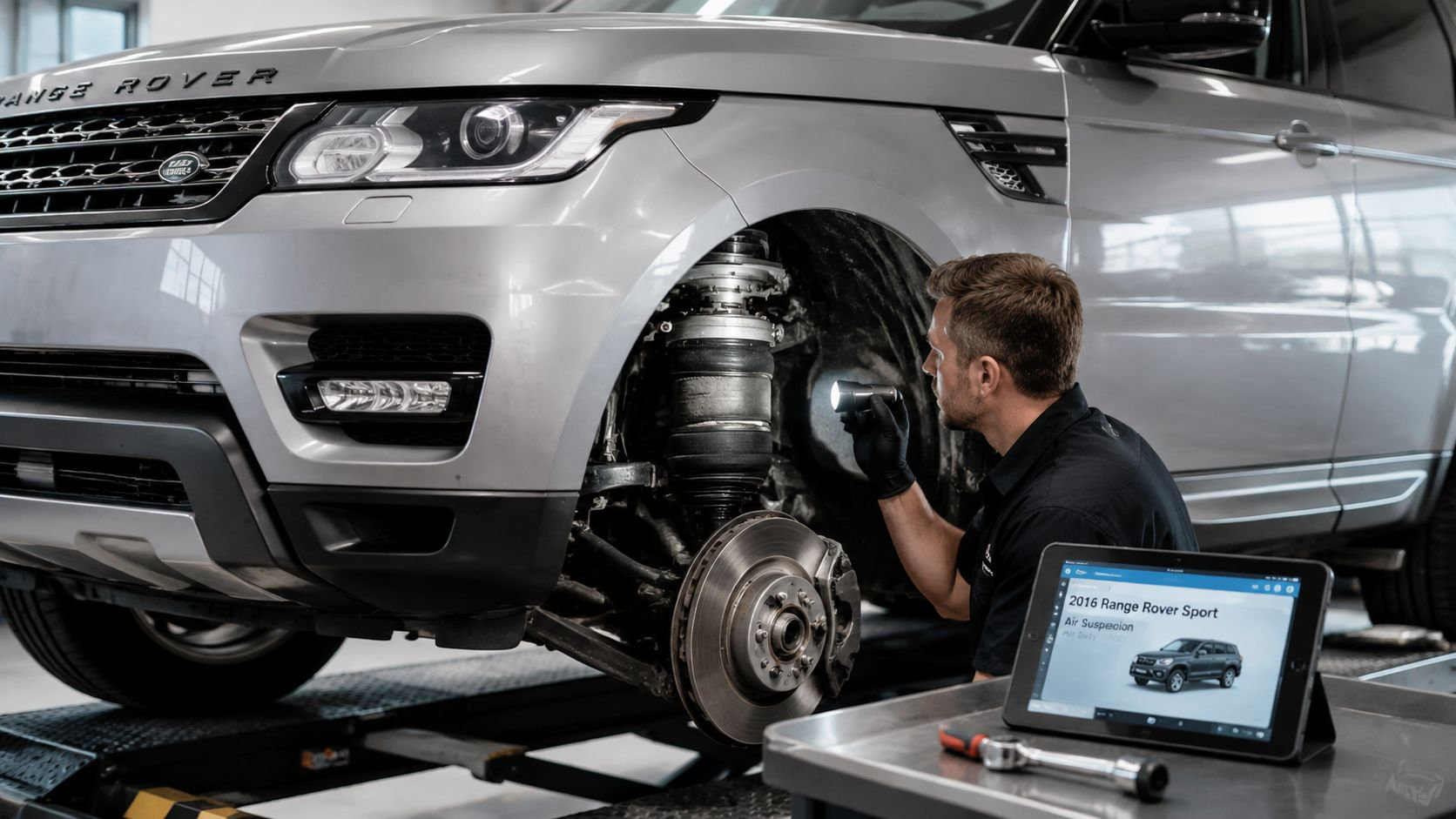
The 2016 Range Rover Sport has a familiar pattern of issues that show up with age and mileage. UK road testing highlighted weak standard active safety equipment, slow infotainment and heavy option dependence, while owner-data summaries keep flagging expensive suspension, electrical and transmission complaints as mileage builds. That combination is exactly why a trader needs to test the car properly, not just admire the spec list. Land Rover model-year announcement
What to check before you start the engine
Look at the stance first. Uneven ride height, a lopsided corner or a car that sits too low after standing can point to suspension trouble. Air suspension faults can be expensive enough to wipe out the margin on a supposedly strong retail unit, so don't ignore a car that looks a little wrong at rest.
Then scan the cabin and dash for warning lights, slow screen response and any odd behaviour from the climate or infotainment system. A sluggish system may look like a nuisance, but on this model it often sits alongside deeper electrical irritations that take time to diagnose. If the seller says it's “just one of those things”, treat that as a warning, not an explanation.
What the test drive should expose
Drive it cold if you can. Listen for hesitation from the 8-speed automatic, delayed engagement and any awkward shift quality when the car moves from gentle throttle to a more decisive input. You're not looking for perfection, you're looking for signs that the drivetrain is beginning to cost money.
On petrol cars, check carefully for oil seepage and the sort of heat-related behaviour that shows up after a longer run. On diesel variants, pay more attention to how the car pulls under load and whether it feels right at steady motorway speeds. If a Td6 feels tired, rough or inconsistent, the economics of the unit start to weaken fast.
Keep the comparator honest
If you want a sense of how ownership complaints can shape a used premium SUV's resale story, even on a different badge, fixing a 2012 Cadillac SRX is a good reminder that complex luxury SUVs tend to punish casual buying. The lesson carries across brands, once the electrical, suspension and drivetrain bills start arriving, the retail narrative changes.
For diesel stock, don't overlook emission system behaviour. If you're dealing with warning lights or poor regeneration clues, use AutoProv's DPF warning light guidance as part of your technical screening. A diesel that looks tidy but has unresolved after-treatment issues can turn into a hard-to-move unit quickly.
Recalls, Write-Off Categories and Insurance Exposure
Recall exposure on this model is build-specific, not badge-wide. Consumer Reports records a 2016 to 2017 Range Rover and Range Rover Sport seat-belt recall and a 2013 to 2017 latch-related recall, while owner-reporting sites summarise 11 recalls affecting the 2016 Range Rover Sport, many tied to specific production windows. That's the point trade buyers need to respect, because a VIN can be affected even if another 2016 badge sits clean. Consumer Reports reliability page
VIN first, model year second
A recall check is only useful if you run it against the exact vehicle. One 2016 build may be affected, the next may not. That's why a model-level assumption is lazy buying, and lazy buying is how dealers end up with stock that should never have entered the pitch in the first place.
Use how to check car recalls as part of your normal acquisition process, then pin the result to the VIN and build date. If the seller can't produce clean evidence that the vehicle has been checked properly, make it your problem before it becomes your customer's complaint.
Write-off markers need more respect on premium stock
UK insurance categories matter because they change the shape of the risk. Cat A and Cat B are effectively end-of-road markers for retail purposes. Cat S and Cat N can be bought and sold, but they need a harder valuation, sharper disclosure and more confidence in the repair story, especially on a premium SUV where buyers expect unambiguous confidence.
A clean-looking repaired Range Rover Sport can still carry a market penalty if the marker is sitting in the background. The badge helps, but it doesn't erase structural history or the questions that come with it. If the paperwork is incomplete, or the story around the damage is vague, assume your buyer will ask harder questions than the seller did.
Treat insurance exposure as part of the offer
Don't separate recall risk, repair history and insurance marker logic. They all affect the same thing, how easy the car is to retail and how much explaining you'll need to do later. On this model, that explanation burden is real, so price it in early rather than trying to defend it later.
A Pre-Purchase Checklist for Trade Buyers
Start with the documents. Check the V5C, service book or digital service trail, MOT history, invoice file and any repair evidence before you get lost in the cosmetics. If the paperwork doesn't support the seller's story, don't let a polished exterior distract you from the risk.
Run the car through a practical buying sequence
- Confirm the identity: Match VIN plates, V5C details and the advertised trim against the car in front of you.
- Check mileage progression: Compare the MOT trail with service entries and the physical wear inside the cabin.
- Inspect the body carefully: Look for uneven panel gaps, poor paint blending, wheel damage and signs of careless repair.
- Test the electrical load: Cycle the infotainment, climate control, seats and warning systems.
- Drive it in mixed conditions: Idle, low-speed manoeuvres and a proper stretch of road all reveal different faults.
If the car pulls cleanly but the paperwork doesn't, trust the paperwork problem. If the paperwork looks fine but the car behaves badly, trust the mechanical evidence. On a model like this, both need to agree before you should sharpen your pencil.
Use the provenance check as a valuation tool
Cross-check keeper history against the V5C, then compare that with the mileage pattern and the engine variant. A diesel car with the right usage story may suit your stock plan, while a petrol V8 with no convincing retail audience may need a different pricing approach. That's where dealer vehicle checks stop being a compliance exercise and start becoming a buying tool.
Practical rule: The first acceptable offer is the one that still leaves room for a comeback, because this car can create one if you buy it too close to the edge.
For traders who want a structured way to do this, a service history check by VIN is useful when the maintenance timeline is available, because it ties the vehicle to a verifiable record rather than a seller's summary. Use that alongside your physical inspection, not instead of it.
Using Enhanced Provenance Intelligence to Reduce Stock Risk
The safest way to buy a 2016 Range Rover Sport is to stop treating each data source as a final answer. DVLA records, MOT history, keeper timing, mileage progression, recall status and insurance exposure all point to the same commercial question, can you retail this car without a nasty surprise. A strong vehicle provenance process gives you that answer earlier, and earlier is cheaper.
That's the point of combining records into one view. You move faster on clean stock, you negotiate harder when the pattern looks wrong, and you avoid the sort of post-sale dispute that chews up time and reputation. AutoProv's advanced vehicle provenance checks are built around that kind of trade decision support, not around vague reassurance. AutoProv advanced vehicle provenance checks bring the pattern together so a buyer can act on risk instead of guessing at it.
If you're running this model through your stock system, make provenance checks part of the gate, not the afterthought. Use them before you buy, use them before you price, and use them again if the car's story changes. That's how you keep premium SUV stock moving without letting hidden history set the terms.
If you're buying 2016 Range Rover Sport stock, AutoProv gives you the provenance context that a basic report misses, including keeper patterns, mileage signals and build-specific risk indicators. Visit AutoProv and use it as part of your next acquisition check, before you put money on a unit that still needs proper scrutiny.
Frequently Asked Questions
AI-Generated Content Notice
This article was created with the assistance of artificial intelligence technology. While we strive for accuracy, the information provided should be considered for general informational purposes only and should not be relied upon as professional automotive, legal, or financial advice. We recommend verifying any information with qualified professionals or official sources before making important decisions. AutoProv accepts no liability for any consequences resulting from the use of this information.
From our AI insights
- Auction Pitfalls: Avoiding Costly Mistakes
Navigate UK car auctions with confidence by avoiding finance, write-off, and mileage risks.
- Mastering Paint Code Checks: Detecting Hidden Car Repairs
Discover how to use paint code verification to identify hidden car repairs and ensure a smarter purchase.
- UK Part-Exchange Checks: Protecting Dealer Margins
Explore essential part-exchange checks for UK dealers to safeguard profit margins, including provenance and finance verification.
Related Articles

Your Ultimate Guide to Buying a Used Car in the UK
Navigate the UK used car market with confidence using our comprehensive buying guide. Tips, checks, and AutoProv Provenance insights included.

Difference Between MOT and Service: What You Need to Know
An MOT is a mandatory legal inspection that every car on UK roads needs to pass.Think of it as the government's way of ensuring your vehicle meets the absolute minimum safety and environmental standards to be considered roadworthy. A service, on the other hand, is a completely different beast. It's the proactive maintenance routine recommended by the people who built your car, designed to keep it running smoothly and catch problems before they start. In short, an MOT is a pass-or-fail exam required by law. A service is a comprehensive health plan for your car.

Your Ultimate Used Car Inspection Checklist
A solid used car inspection checklist is the single most powerful tool you have to avoid buying a lemon. It gives you a methodical way to look past the shiny paint and assess a car's real condition, helping you spot hidden problems and get a fair price before you shake hands on the deal.
Published by AutoProv
Your trusted source for vehicle intelligence