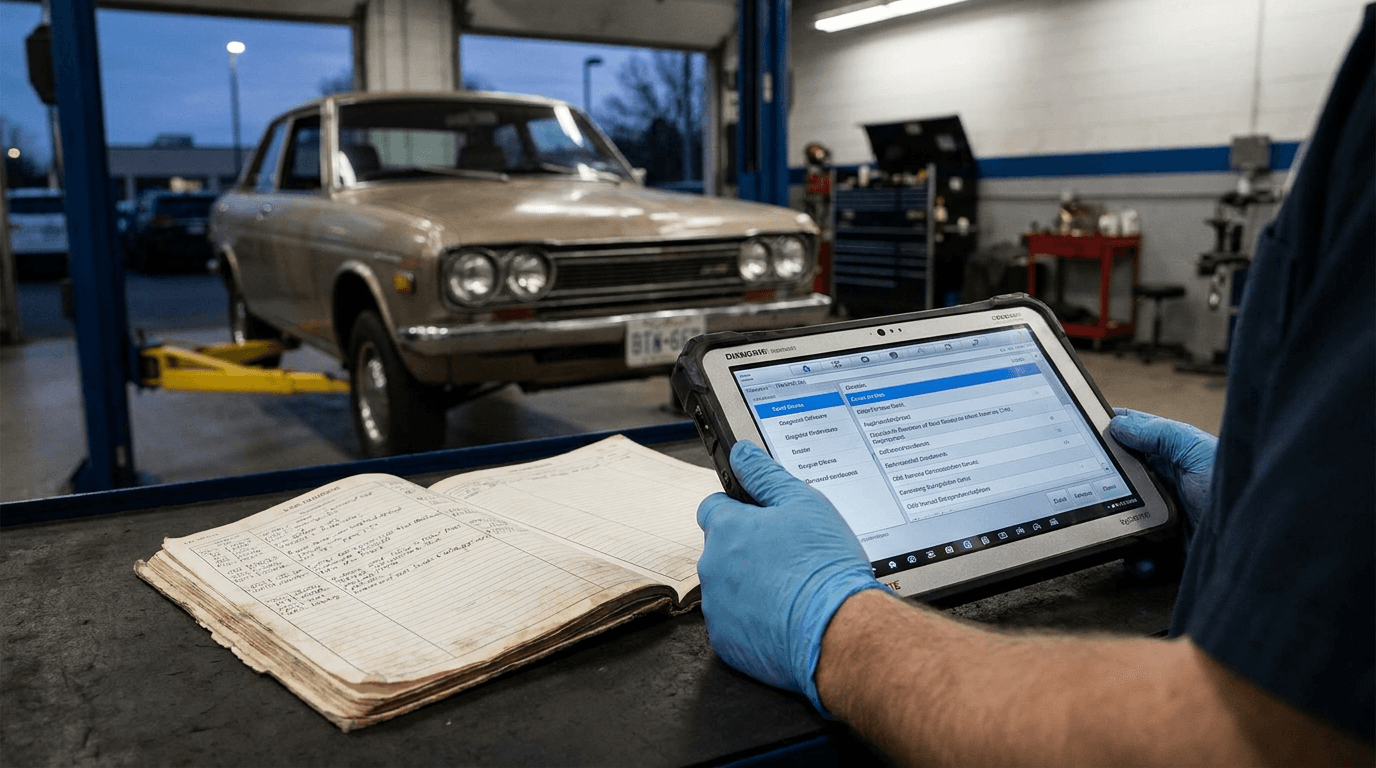
Digital service history offers verifiable manufacturer records that paper logbooks cannot match. Learn how UK dealers can leverage digital data for better stock
By CiteFlow
The Fundamental Difference Between Digital and Paper Records
Digital service history consists of electronic maintenance records stored directly in manufacturer databases, whilst paper logbooks are physical booklets stamped by service centres. The critical distinction is verifiability: digital records can be independently confirmed through manufacturer systems using the VIN, whereas paper stamps can be forged, lost, or fabricated with minimal effort. For dealers, this means digital service history provides a level of due diligence that stamped books simply cannot deliver.
The shift from paper to digital represents more than a change in format. When a franchised dealer services a vehicle, the work is logged into the manufacturer's central database with date, mileage, work carried out, and the servicing dealer's identity. This creates an immutable record that cannot be altered retrospectively. A paper service book, by contrast, is only as reliable as the integrity of whoever stamped it, and the motor trade knows exactly how little that can mean when margins are tight.
Manufacturers began introducing digital service records in the mid-2010s, and adoption has accelerated rapidly. Many premium brands no longer issue physical service books at all for new vehicles. This transition has created a two-tier system in the used market: vehicles with verifiable digital histories command stronger prices and sell faster, whilst those relying solely on paper documentation face increasing buyer scepticism.
Why Paper Service Books Are Vulnerable
Paper service books fail as reliable evidence because they are trivially easy to manipulate. Blank service stamps can be purchased online for a few pounds, and creating convincing forgeries requires nothing more than a stamp, a pen, and basic knowledge of service intervals. The physical book travels with the vehicle rather than being held by an independent third party, making tampering straightforward and detection difficult.
Lost service books present another common problem. When a genuine service history exists but the physical book has been misplaced, there is no practical way to recover that evidence using paper systems alone. The dealer who serviced the vehicle may have closed, been acquired, or simply lack the records from years past. The result is a vehicle that has been properly maintained but cannot prove it, creating a valuation penalty that punishes the current owner and complicates the dealer's purchasing decision.
The verification burden with paper books falls entirely on the dealer. You can telephone the servicing garage listed on each stamp to confirm authenticity, but this is time-consuming, often impossible for older entries, and still relies on the honesty of whoever answers the phone. Most dealers lack the resources to verify every stamp on every vehicle, which means paper service books are accepted largely on trust, a position that carries obvious risks when buying stock.
How Digital Service History Delivers Verifiable Evidence
Digital service history solves the verification problem by storing records in manufacturer databases that dealers can query directly. When you check a vehicle's digital service history using the VIN, you receive data directly from the manufacturer's system showing every recorded service event, including date, mileage, work description, and the dealer who performed it. This data cannot be forged because it never passes through the seller's hands.
The verification process is instant rather than requiring telephone calls to multiple garages. Manufacturer database coverage varies by brand, but the principle remains consistent: you query the VIN, and the system returns whatever service records exist. For vehicles with comprehensive digital histories, this provides complete transparency. For vehicles with gaps, those gaps are immediately visible, prompting further investigation rather than being hidden behind plausible-looking stamps.
Digital records also capture mileage at each service interval, creating a verifiable mileage history that is far more reliable than MOT records alone. This allows dealers to identify discrepancies that might indicate clocking or odometer tampering. When service records show 45,000 miles at a service date, and the vehicle now shows 38,000 miles, you have clear evidence of a problem that a paper book would never reveal.
Coverage Limitations You Need to Understand
Digital service history is not universal, and understanding coverage limitations is essential for making informed purchasing decisions. Manufacturer databases only contain records from franchised dealer networks and, in some cases, approved independent specialists who have access to the manufacturer's systems. Work performed at non-approved garages, even if completed to high standards, will not appear in digital records.
Older vehicles present particular challenges. Many manufacturers only began systematic digital record-keeping in the 2010s, meaning vehicles from earlier production years may have incomplete or non-existent digital histories even if they were serviced correctly throughout their lives. This creates a transition period where partial digital records must be interpreted alongside paper documentation, requiring dealers to assess which evidence is more credible.
Certain manufacturers maintain more comprehensive databases than others. Premium brands typically offer the most complete digital service history coverage, whilst some volume manufacturers have been slower to implement or maintain robust systems. Understanding what you can verify and what you cannot for each brand prevents unrealistic expectations and helps you assess the significance of missing data.
The Commercial Impact on Stock Valuation
Vehicles with verified digital service history command measurable price premiums in the retail market. Buyers increasingly understand that digital records provide stronger evidence than paper stamps, and this understanding translates directly into willingness to pay. A three-year-old premium vehicle with full digital service history will typically achieve a higher sale price and sell faster than an identical vehicle relying on a stamped book, even when both claim complete service histories.
This premium flows through to wholesale values as well. When you are buying stock, vehicles with digital service history carry lower risk and higher retail potential, justifying stronger bids. Conversely, vehicles without digital records require a discount to compensate for the verification uncertainty and the reduced retail appeal. The margin difference can easily reach several hundred pounds on a typical used vehicle, making service history verification a material factor in profitability.
The trend is accelerating as digital-native buyers enter the market. Younger customers who have grown up with digital verification in other contexts expect the same transparency when buying vehicles. They view paper service books with the same scepticism they would apply to any unverifiable claim, and this generational shift is permanently changing the value equation. Dealers who continue to accept paper documentation at face value will find themselves holding stock that is increasingly difficult to retail at competitive prices.
Combining Digital Records with Traditional Due Diligence
Digital service history should complement, not replace, comprehensive vehicle checks. Traditional provenance checks verify finance status, write-off history, and stolen vehicle records, none of which are addressed by service history data. A vehicle can have impeccable digital service records and still be on finance or have a hidden insurance write-off category. Effective due diligence requires both service history verification and provenance checks.
MOT history provides an independent mileage verification source that should be cross-referenced against digital service records. When MOT data and service records align, you have strong evidence of mileage integrity. When they conflict, you have an immediate red flag requiring explanation. This triangulation between manufacturer data, DVSA records, and the vehicle's current odometer reading creates a robust verification framework that is far more reliable than any single data source.
Physical inspection remains essential regardless of digital service history quality. Service records confirm that work was performed, but they do not tell you whether the vehicle was subsequently damaged, poorly repaired, or neglected between service intervals. The combination of verified digital history and thorough physical inspection provides the most complete risk assessment, allowing you to make informed purchasing decisions based on comprehensive evidence rather than partial data.
Practical Verification Process for Dealers
Verifying digital service history requires access to manufacturer databases, either directly through franchised dealer relationships or through aggregated platforms that query multiple manufacturer systems simultaneously. Direct manufacturer access typically requires brand-specific credentials and may be restricted to franchised dealers, making this approach impractical for independent traders working across multiple brands.
Aggregated platforms solve the multi-brand access problem by maintaining connections to numerous manufacturer databases through a single interface. When you enter a VIN, the platform queries the relevant manufacturer's system and returns available service records. This approach provides the verification benefits of digital service history without requiring separate credentials for each manufacturer, making it practical for independent dealers who stock diverse inventories.
The verification process should be performed before committing to purchase, not afterwards. Digital service history checks take seconds to complete and can be performed on-site at auctions or private seller locations using mobile devices. This allows you to factor verified service history into your bidding strategy or negotiation position, rather than discovering gaps or discrepancies after you have already committed to the transaction.
What to Do When Digital Records Are Incomplete
Incomplete digital service history does not automatically disqualify a vehicle, but it does require careful assessment. First, determine whether the gaps result from non-franchised servicing, database limitations, or genuine service neglect. A vehicle with regular MOT passes, consistent mileage progression, and evidence of maintenance spending may have been properly serviced outside the franchised network, creating a legitimate explanation for missing digital records.
Request supporting documentation for any periods not covered by digital records. Invoices from independent garages, receipts for parts and consumables, or service stamps from reputable independents can provide partial verification even when digital records are absent. Whilst these documents lack the verification strength of manufacturer data, they are still more credible than blank service books or unsupported claims.
Adjust your valuation to reflect the verification gap. Vehicles without complete digital service history carry higher risk and reduced retail appeal, which must be reflected in the price you pay. The discount should account for both the direct risk of hidden maintenance issues and the indirect cost of reduced retail marketability. This pragmatic approach allows you to trade vehicles with incomplete histories whilst protecting your margins against the additional uncertainty.
How the Trade Is Adapting to Digital-First Verification
The motor trade is increasingly treating digital service history as the baseline expectation rather than a premium feature. Franchised dealers have led this transition, with many now refusing to retail vehicles that lack verifiable digital service records from their brand. This creates a two-tier market where vehicles with digital histories flow through franchised channels, whilst those without are pushed into independent trade or lower-value segments.
Independent dealers face a strategic choice: adapt verification processes to prioritise digital service history, or accept the margin compression that comes with trading vehicles that franchised dealers reject. The most successful independents are adopting the same verification standards as franchised dealers, using digital service history as a competitive advantage rather than treating it as optional. This approach allows them to compete for the same quality stock and justify premium retail pricing based on verified provenance.
Buyer education is accelerating the transition. As consumers become aware that digital service history can be independently verified whilst paper stamps cannot, they actively seek vehicles with digital records and discount those without. This demand-side pressure reinforces the supply-side trend, creating a market dynamic where digital verification becomes the norm and paper documentation becomes the exception requiring explanation.
The Future of Service History Verification
Digital service history coverage will continue to expand as older vehicles with paper-only records age out of the mainstream used market and newer vehicles with digital-first systems become the dominant stock profile. Within five years, the majority of vehicles in active trade circulation will have at least partial digital service histories, making verification through manufacturer databases the standard due diligence approach.
Manufacturer databases are also improving in scope and accessibility. Some manufacturers now include independent specialist garages in their digital ecosystems, allowing approved independents to log service work into the same systems used by franchised dealers. This expansion reduces the coverage gaps that currently limit digital service history utility, particularly for older vehicles or brands with historically limited database coverage.
Integration between service history data and other vehicle intelligence sources will deepen. Platforms that combine manufacturer service records, MOT history, finance checks, and specification data into unified reports provide the comprehensive verification that professional traders require. This integrated approach represents the direction of trade due diligence, moving away from fragmented checks towards holistic vehicle intelligence that addresses all material risk factors in a single query.
FAQs
Can digital service history be faked or manipulated?
Digital service history stored in manufacturer databases cannot be forged because the records are created and held by the manufacturer, not the vehicle seller. Only authorised franchised dealers and approved service centres can add entries to these systems, and each entry is logged with the dealer's identity, making fraudulent entries traceable. This is fundamentally different from paper service books, which can be stamped by anyone with access to a blank stamp.
What should I do if a vehicle has both paper stamps and digital records that do not match?
Conflicting service records are a significant red flag requiring immediate investigation. The digital records are almost always more reliable because they cannot be retrospectively altered, so discrepancies typically indicate fraudulent paper stamps or attempts to conceal service gaps. Request an explanation from the seller, verify the digital records independently, and adjust your valuation to reflect the credibility issues. In most cases, vehicles with conflicting service evidence should be avoided unless the price compensates for the elevated risk.
Do all manufacturers offer digital service history verification?
Not all manufacturers maintain equally comprehensive digital service history systems. Premium brands typically offer the most complete coverage, whilst some volume manufacturers have more limited databases or only began systematic digital record-keeping in recent years. Coverage also varies by vehicle age, with newer vehicles far more likely to have complete digital records than older models. The only way to know what is available for a specific vehicle is to query the manufacturer's database using the VIN.
How much does digital service history verification cost?
Verification costs vary by provider and volume. Some platforms charge per check, typically between a few pounds for basic service history queries and higher amounts for comprehensive reports that include multiple data sources. Others offer unlimited access through monthly subscriptions, which can be more cost-effective for dealers checking high volumes. The cost is negligible compared to the financial risk of buying a vehicle with hidden service issues or the margin impact of mis-assessing a vehicle's service history quality.
Can I verify digital service history for vehicles serviced outside franchised dealers?
Digital service history verification is generally limited to work performed by franchised dealers and approved service centres that have access to manufacturer systems. Independent garages that are not part of the manufacturer's approved network cannot typically add entries to digital service history databases, even if they perform work to high standards. This means vehicles serviced exclusively by independents will have incomplete or absent digital records, regardless of actual maintenance quality. Some manufacturers are expanding database access to approved independents, but coverage remains primarily focused on franchised networks.
Frequently Asked Questions
AI-Generated Content Notice
This article was created with the assistance of artificial intelligence technology. While we strive for accuracy, the information provided should be considered for general informational purposes only and should not be relied upon as professional automotive, legal, or financial advice. We recommend verifying any information with qualified professionals or official sources before making important decisions. AutoProv accepts no liability for any consequences resulting from the use of this information.
From our AI insights
- The Impact of EV Service Records on Resale Value
Discover how electric vehicle service records affect resale value and buyer confidence in the UK market.
- The Importance of Tyre Verification for UK Motor Traders
Discover why verifying tyre specs is crucial for UK traders to ensure safety and compliance.
- Decoding CO2 Emissions: A Trader's Guide
Learn how traders can verify CO2 data using factory build sheets to prevent disputes.
Related Articles

The Importance of Car Maintenance and Provenance Checks
Discover why regular car maintenance and proper provenance checks are essential for vehicle quality and longevity.

Essential Car Maintenance Tips for UK Drivers
Discover vital car maintenance tips to keep your vehicle roadworthy and compliant in the UK.
How Much Is a Car Service? Complete UK Price Guide
Trying to pin down exactly "how much is a car service?" can feel a bit like asking "how long is a piece of string?". Prices vary quite a bit, but to give you a ballpark figure, an interim service will usually set you back around £100 to get started. A more thorough full service often begins at £180, while a major service for many cars can easily top £300.
Published by AutoProv
Your trusted source for vehicle intelligence