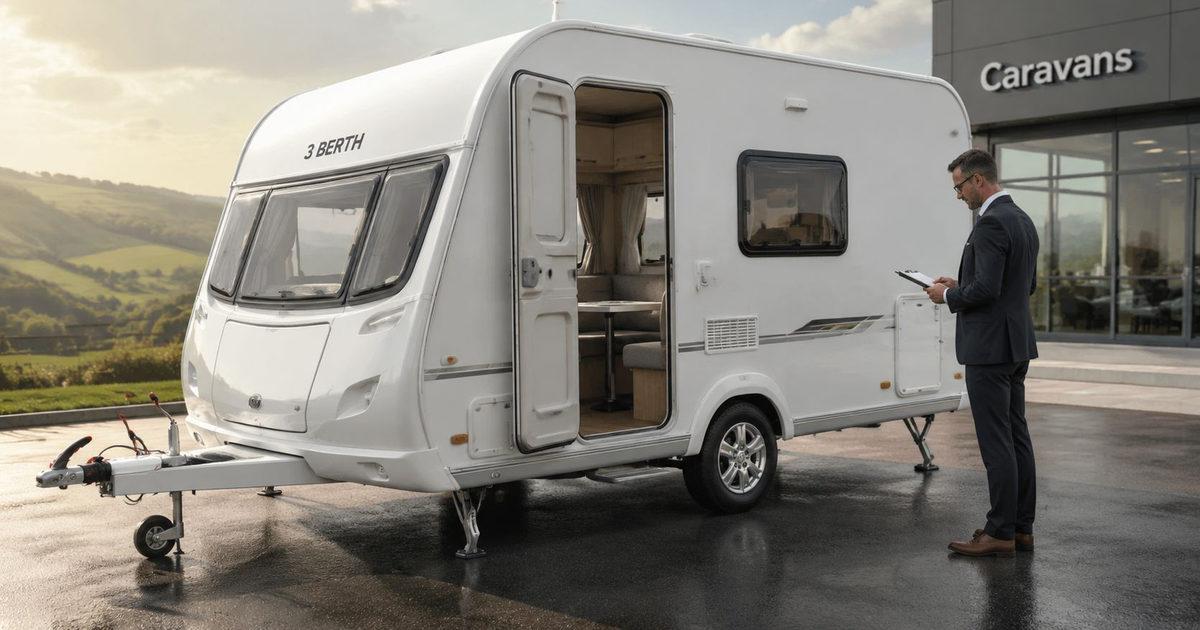
A 3 berth caravan can look like tidy stock on paper, especially when it lands on your forecourt through part-exchange or turns up at auction with a decent presentation.
The trap is that the seller is often trading on layout, not evidence, and the gap between a saleable unit and a slow mover usually sits in the paperwork, the weight plate, and the hidden history. For a dealer, that difference matters because the UK leisure-vehicle sector is still large enough to support compact touring units, with the caravan market estimated to contribute over £6 billion annually and 47% of UK adults saying they've taken a caravan, motorhome club, or camping holiday in the past three years (Parklink industry statistics).
That demand creates opportunity, but only for traders who price risk properly. A small caravan can be easier to place when the buyer wants flexibility, storage savings, or a simple towable unit, yet the same compactness can also hide tight payload margins and awkward layout compromises. If you're assessing stock decisions rather than shopping for a weekend van, the right question isn't whether a 3 berth caravan is popular, it's whether the unit is clean enough, documentable enough, and correctly described enough to make money without dragging your stock turn.
A useful starting point is to compare the caravan as a stock asset against other niche leisure units and decide where it fits in your remarketing plan. A good market-insight resource for that sort of thinking is strategic business growth with self storage, because space planning, seasonal storage, and stock holding costs all affect what a smaller touring caravan is really worth to your business. For a broader valuation lens, the trade data and stock positioning approach at AutoProv's market insights is the kind of analysis that helps separate a tempting purchase from a sensible one.
Table of Contents
- The 3 Berth Caravan as a Stock Opportunity
- Why smaller touring units can work
- What the trade should look for first
- Decoding Layouts for Accurate Trade Appraisal
- Side dinette, fixed beds, and end washroom trade-offs
- What affects desirability most
- Weighing the Commercial Pros and Cons
- The commercial strengths
- The commercial weaknesses
- Pros and cons at a glance
- Towing Weight and Licence Compliance Risks
- What the numbers mean in practice
- Licence and tow match checks
- The Essential Pre-Acquisition Due Diligence Process
- Stage one, the physical inspection
- Stage two, the unseen history
- What good trade intelligence should answer
- Valuation Maintenance and Resale Strategy
- What lifts value
- How to market it without wasting time
- Frequently Asked Questions for Motor Traders
- How should I handle a 3 berth caravan in part-exchange
- What matters most when valuing one for retail
- Are there specific disclosures I should keep in mind
- What's the quickest way to reduce buying risk
The 3 Berth Caravan as a Stock Opportunity
A 3 berth caravan can be a useful stock line if it arrives with the right paperwork, a believable ownership trail, and condition that matches the asking price. In practice, I've seen traders dismiss them because they do not present as obviously “family” stock as a larger layout, then spend time chasing wider, harder-to-store units that are no easier to retail. The better commercial view is to treat it as a defined asset with a specific buyer profile, not a generic leisure vehicle.
Why smaller touring units can work
Smaller touring stock can make sense because it gives you more control over storage, movement, and preparation. A compact unit is often easier to slot into a mixed forecourt, easier to inspect properly, and less awkward to move around site than a larger twin-axle caravan. That matters if you are holding seasonal stock or working from a yard where space pressure affects turnover.
The demand case is still there, but it should be read carefully rather than assumed. The broader UK leisure market supports compact touring stock, and industry reporting shows the caravan and camping sector remains active across a wide base of users (Parklink industry statistics). That does not make every 3 berth caravan straightforward to retail. It does mean there is a recognisable pool of buyers looking for a simple touring option, especially when the unit is easy to understand and the presentation is clean.
For traders, the commercial advantage is usually tied to practicality rather than headline appeal. A smaller unit can reduce storage friction, lower the space it occupies in the stock plan, and make reconditioning easier to manage if the caravan is not loaded with complicated specification items. If your operation depends on keeping stock moving, those are real margins-related benefits, not minor conveniences. The same logic applies to dealers who use off-site storage, because a caravan that is easier to hold can be a better fit for strategic business growth with self storage.
What the trade should look for first
The first appraisal pass should stay commercial. Check whether the caravan has a clear story a customer will understand quickly, whether the layout is easy to explain, and whether the condition supports a retail offer without awkward caveats. If the unit looks uncertain on any of those points, the fact that it sleeps three will not protect your margin.
A trader also needs to check whether the stock prospect matches the market price band it is likely to sit in. A tidy, honest unit with a sensible specification can be easier to retail than a larger caravan with more complexity and more repair risk. That is where the main trade opportunity sits, because a cleaner presentation often reduces the amount of explanation needed at point of sale and lowers the chance of a customer pulling out after inspection.
Practical due diligence starts with provenance, not polish. Paperwork, layout, and physical condition should tell the same story before money changes hands. If those elements do not line up, the caravan needs to be priced as a problem unit, not as easy stock.
Practical rule: a compact caravan only becomes good stock when its paperwork, layout, and physical condition all tell the same story.
The strongest units are the ones that feel straightforward from first glance. That is why a tidy 3 berth caravan can sometimes outperform a bigger, more complicated alternative, particularly when the market is looking for easier ownership rather than maximum floor space.
Decoding Layouts for Accurate Trade Appraisal
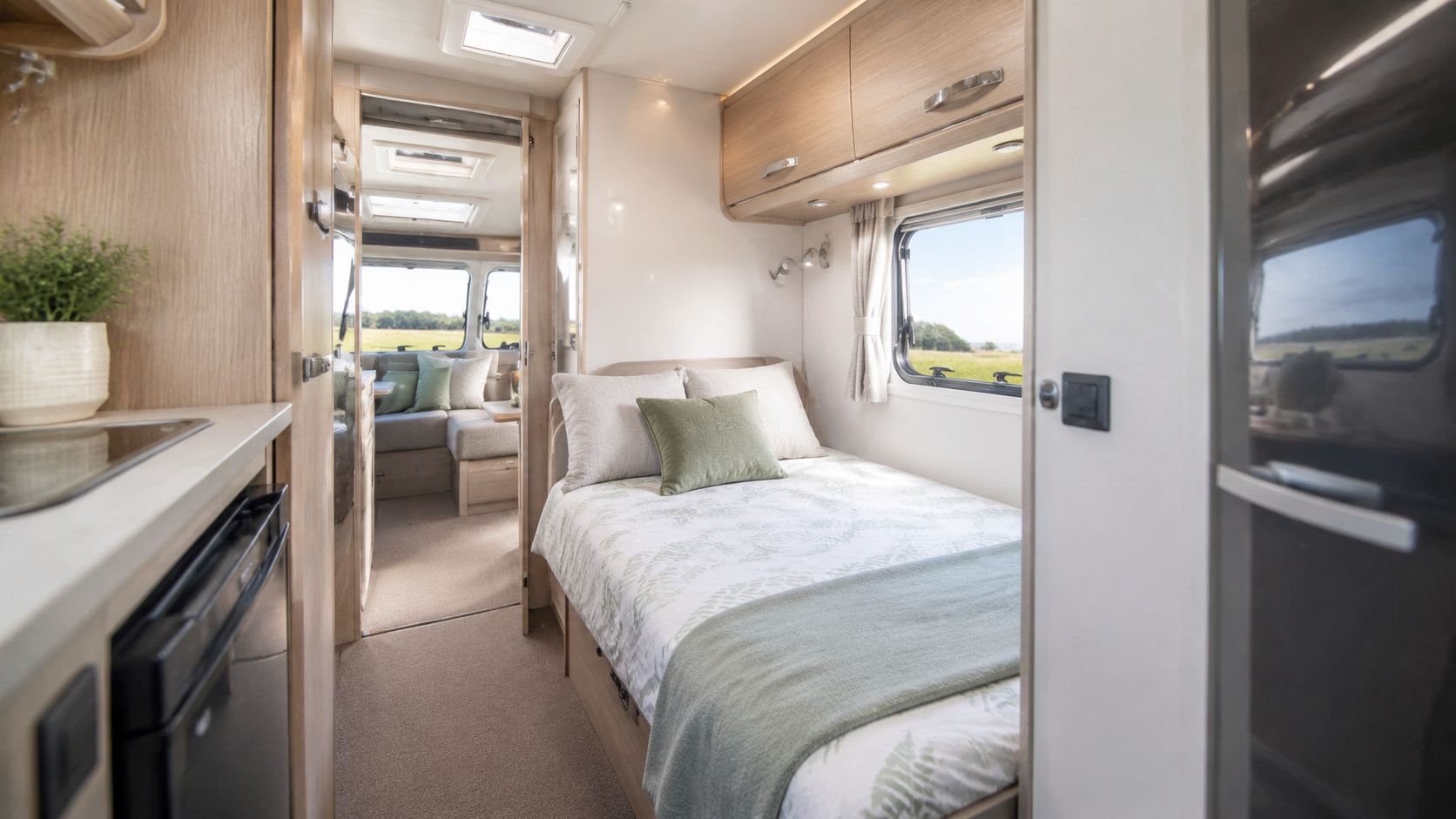
Berth count is only the starting point. In UK caravan specification tools, berth count sits alongside axle type, weight, and dimensions because it's a core technical classification, not a marketing label (Caravan Talk specifications). For a trader, that means the layout has to be read as part of the valuation, because the sleeping arrangement affects how the unit is used, who it appeals to, and which parts are likely to wear first.
Side dinette, fixed beds, and end washroom trade-offs
A side dinette that converts into a third bed is often the most obvious 3 berth layout. It usually appeals to families or buyers who want a flexible sleeping arrangement without moving into a larger caravan. The trade-off is that daytime living space can feel tighter once the bed is made up, so the cabin needs to be clean, bright, and well presented to avoid feeling cramped.
A fixed bed layout tends to suit buyers who value convenience. It can hold its value well when the rest of the caravan supports that premium feel, but it also means inspection needs to be more careful around mattress wear, under-bed storage, and water ingress around the bed area. The layout often narrows the buyer pool slightly, but it can be easier to market as a comfort-led unit.
An end washroom design is often the strongest presentation piece because it separates washing, sleeping, and sitting zones more clearly. That can make the caravan feel bigger than it is. The downside is that the trade needs to check seals, fittings, and damp-prone areas carefully, because the back of the caravan often carries the most service-sensitive features.
What affects desirability most
The wrong layout doesn't always kill a deal, but it can flatten interest. A couple might pay more for a sensible end washroom and a cleaner living area, while a buyer with occasional child accommodation may prefer a dinette conversion that gives them a usable third berth. Your appraisal should reflect that the same caravan can be right for one buyer and awkward for another.
For build-sheet verification and matching the layout to the correct spec, use AutoProv's build sheet check as part of your buying process. That's especially useful where the seller's description feels vague or the interior has been altered from its original specification.
A berth count tells you how many people can sleep there. It doesn't tell you how the caravan will feel at 8am on a wet Saturday with the kettle on and the bed still made up.
Weighing the Commercial Pros and Cons
A 3 berth caravan is rarely a broad-market stock item, so the buying decision needs tighter discipline than a standard family unit. The upside is there when the caravan is clean, correctly described, and supported by clear paperwork. The downside shows up fast when the layout is niche, the condition is average, or the seller expects mainstream money for a unit that will take longer to place.
The commercial strengths
The main strength is focus. A 3 berth caravan suits buyers who want more than a basic two-berth but do not want the bulk or cost profile of a larger family caravan. That creates a workable lane for couples, grandparents who host occasional guests, and smaller households that want flexibility without stepping into a bigger tow and storage commitment.
It can also work well on holding costs. Smaller units are often easier to move, easier to photograph, and easier to keep presentable on a crowded forecourt. If your business already handles mixed leisure stock or has limited display space, that matters. Trade buyers should compare purchase price, prep cost, and storage friction before committing, and cost of acquisition thinking helps keep that discipline in place.
The commercial weaknesses
The buyer pool is narrower than for a more broadly usable family caravan. That means presentation and pricing have to be sharper, because vague descriptions or weak photos slow enquiries and weaken early interest. Seasonality also bites harder in this niche. Recent market data for 2026 shows touring caravan prices under pressure, with an average selling price of £15,629, down 5.6%, and an average of 44.1 days to sale (2026 leisure vehicle market update). For traders, that points to a price-sensitive market where poor stock choices can sit longer than expected.
A slower turn is not just an inconvenience. It ties up money, space, and attention that could have gone into easier stock. If the caravan is awkwardly laid out, tired inside, or overpriced against comparable units, the risk is not only a weaker margin, it is a longer holding period and a harder negotiation when the first serious buyer arrives.
Pros and cons at a glance
- Pros: A clear niche buyer profile, easier physical handling, and a simpler ownership story when the unit is well spec'd.
- Pros: Potentially lower entry cost than bigger caravans, which helps if you want to protect gross margin.
- Cons: A smaller target market, especially if the layout is awkward or presentation is weak.
- Cons: Slow turn can appear quickly if the caravan is overpriced against comparable stock.
The best performers are usually the ones that are easy to explain in a sentence and straightforward to inspect in person. If a caravan needs a long sales pitch, it is probably not the right unit to own.
Towing Weight and Licence Compliance Risks
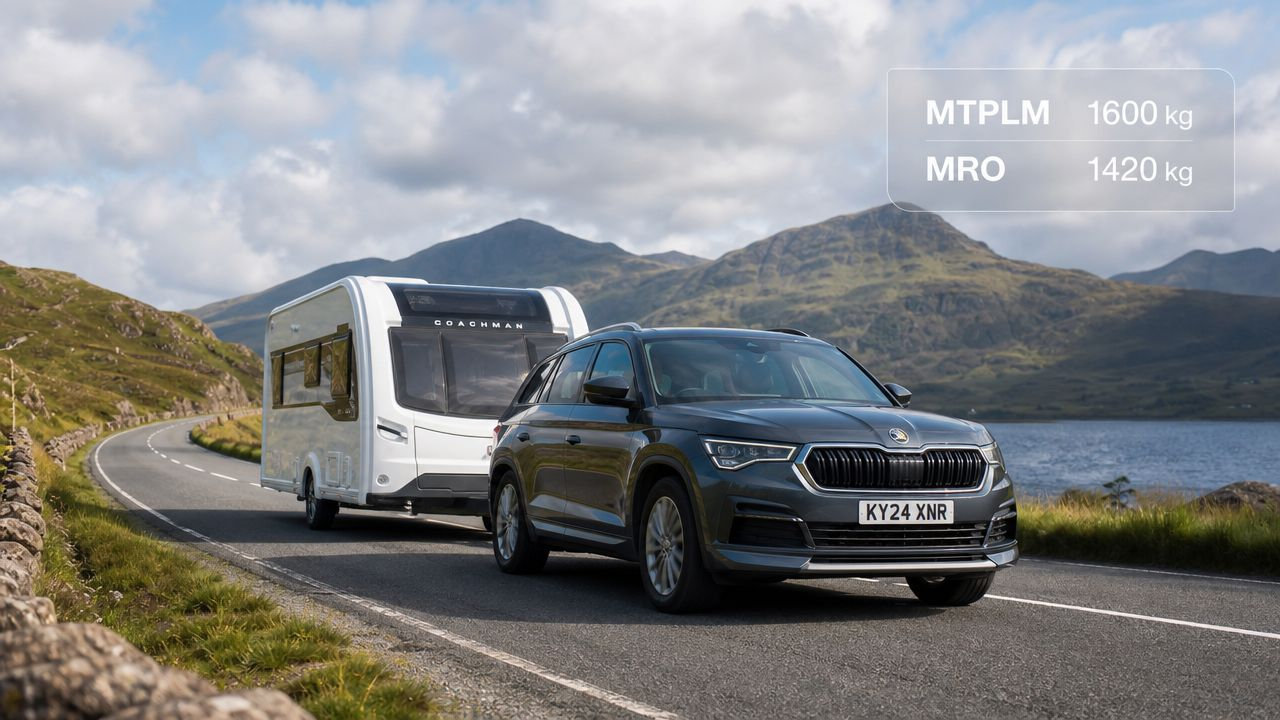
Weight is where small caravans stop being simple. A 3 berth caravan can look modest on site, but the legal and practical questions sit in the numbers on the plate and the tow car's capability, not in how compact it appears. One UK example from Bailey shows why this matters, with a caravan spec carrying an MTPLM of 1500 kg, MRO of 1346 kg, and only 154 kg of user payload (Bailey Unicorn Vigo spec).
What the numbers mean in practice
MTPLM is the maximum laden mass the caravan is allowed to reach. MRO is the mass in running order, which helps you see how much reserve remains before the caravan is overloaded. If the payload allowance is tight, ordinary ownership items like water, awnings, bedding, tools, and personal kit can eat into that reserve fast.
That's why the payload question matters so much in this segment. Smaller layouts often trade sleeping capacity for tighter mass budgets, and a dealer who ignores that is taking on avoidable risk. In practice, a caravan can be technically saleable and still be a poor fit for a customer's tow car or expected loadout.
Licence and tow match checks
The customer conversation should never stop at “it sleeps three”. You need to know whether the buyer's licence category and towing setup match the caravan they're being sold. A mismatch creates post-sale friction, weakens trust, and can leave the dealer explaining why the advice didn't line up with the vehicle.
For a quick framework on the tow vehicle side, use car towing guidance as a reference point in your sales process. It helps anchor the conversation around compatibility rather than assumption.
If the caravan is light on paper but heavy in real life once loaded, the wrong tow car turns it into a liability fast.
The safest trade habit is simple. Check the plated weights, check the buyer's stated use case, and never let a sale move forward on guesswork.
The Essential Pre-Acquisition Due Diligence Process

A clean caravan can still be a bad buy. Dealers who rely on cosmetics alone end up missing damp, prior damage, finance risk, or a history pattern that doesn't make sense. The RAC is clear that basic checks can miss hidden risk and that a detailed history check is essential for any used vehicle bought or sold in the UK (RAC guidance), and that logic applies just as much to caravans as it does to cars.
Stage one, the physical inspection
Start with the visible and measurable. Check for damp, inspect the chassis, look at tyre age and condition, and run every appliance you can reasonably test. If the caravan smells musty, shows soft panels, or has obvious seal failure, the price has to reflect that or you should walk away.
A careful physical inspection also helps you separate proper retail stock from a unit that only looks tidy in photos. That matters when the seller has added accessories, changed the upholstery, or presented the caravan after a quick valet. For any trade buyer, the aim is not to admire it. The aim is to find the repair liability before it lands on your forecourt.
Stage two, the unseen history
A physical check is only half the job. The hidden side of a used caravan purchase is where dealer vehicle checks earn their keep, because you need to see ownership patterns, registration consistency, and any risk signals that won't show up on a walkaround. That's where a proper vehicle history check UK process earns its place in your buying workflow, especially if you're trying to avoid a unit that has been turned over quickly or presented too neatly.
The same due diligence mindset applies when a caravan has had body damage or a suspicious repair trail, which is why a specialist service such as professional RV collision repair can be useful context when assessing whether visible repairs make commercial sense. If the story doesn't stack up, the unit shouldn't be bought on hope.
What good trade intelligence should answer
- Who has owned it: A sensible ownership pattern is easier to trust than a rushed resale chain.
- Does the record make sense: Mileage-style anomalies and unexplained gaps should be treated as risk signals.
- What's missing: Service paperwork, damp reports, and registration details matter because absence often says more than presence.
For a more structured process, use proper due diligence guidance as part of your acquisition routine. The goal is simple, buy on evidence, not on the shine of the upholstery.
Valuation Maintenance and Resale Strategy
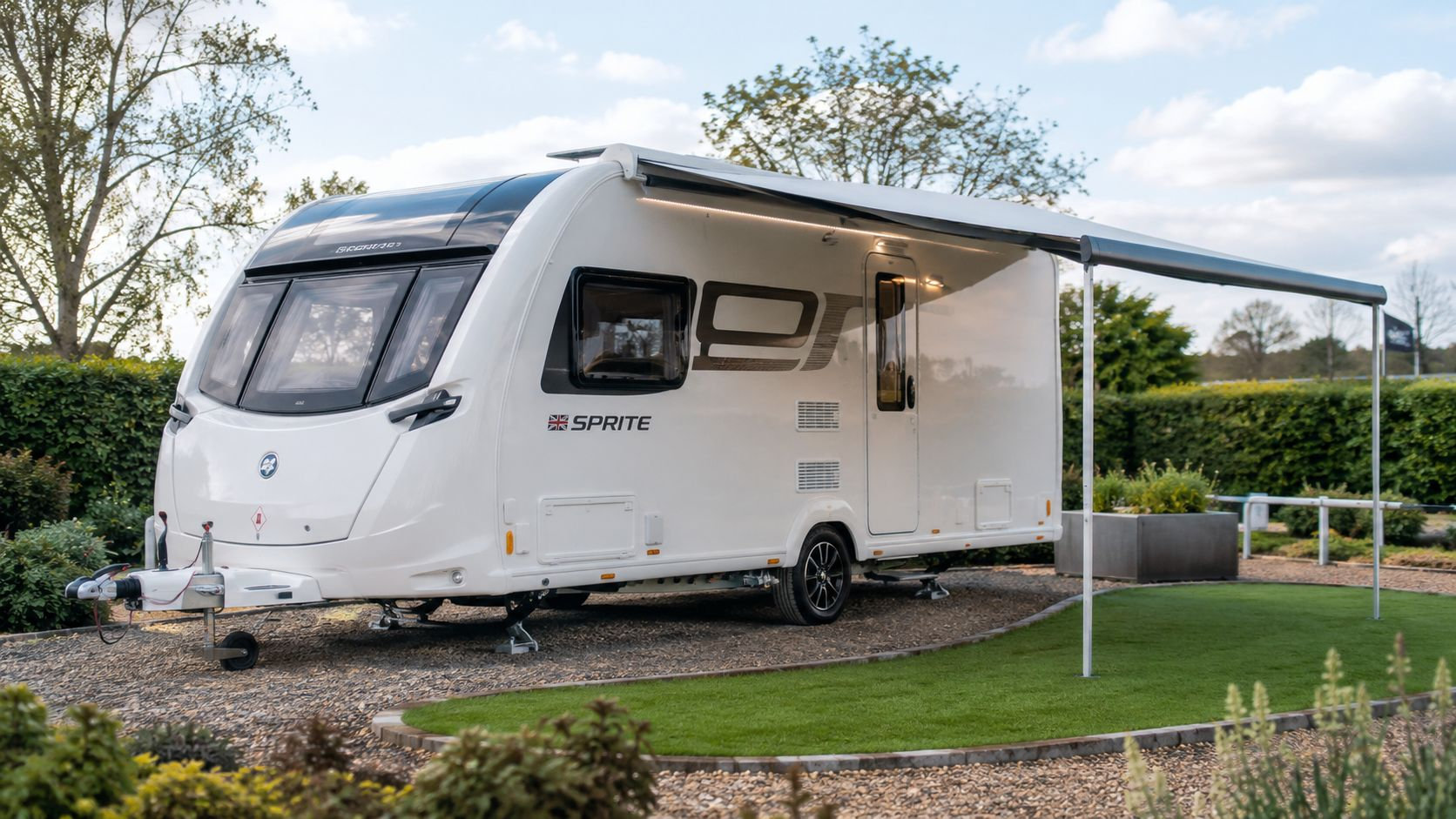
A 3 berth caravan holds value best when the retail story is easy to believe. Buyers pay attention to whether it looks clean, ready to tow, and straightforward to put into use, and they move away quickly if they think the first owner has deferred too much work. Data from the 2026 UK touring caravan market so far shows average selling prices around £15,629, down 5.6%, with average days to sale at 44.1 days (2026 leisure vehicle market update), which is a useful reminder that presentation and pricing discipline matter just as much as the badge on the side.
What lifts value
The strongest value signals are the ones a buyer can see or verify without argument. A full service history, clean damp reports, working appliances, presentable upholstery, and tidy exterior panels all reduce friction at the point of sale. Accessories can help as well, but only where they are serviceable and match the likely buyer's use.
Small prep spend usually works best when it removes objections rather than tries to dress the unit up as something it is not. A professional valet, minor cosmetic fixes, and a clean presentation inside and out usually support a firmer advert. If the caravan has a motor mover or awning, show it clearly and describe it accurately, because buyers pay attention to features they can see and test.
How to market it without wasting time
Lead with utility, not romance. A 3 berth caravan should be pitched as flexible stock for couples who want room for an occasional guest, or a smaller household that values compact touring. That angle is stronger than broad lifestyle language because it matches a real buying decision.
Price to the unit in front of you, not to the best possible outcome you hope to achieve next month.
If the caravan has a weaker history or a patchier specification, deal with it directly. A measured, accurate description sells better than a padded one, especially in a market where buyers are already cost-conscious. The faster the story makes sense, the sooner the unit turns back into cash.
Frequently Asked Questions for Motor Traders
How should I handle a 3 berth caravan in part-exchange
Treat it like any other trade-in with a provenance file, not a bonus throw-in. Get the registration details, inspect the physical condition, check the paperwork trail, and confirm whether the layout and weights match the description. If the seller can't support the story, price it as risk stock or pass.
What matters most when valuing one for retail
Condition, paperwork, and layout usually matter more than age alone. A tidy caravan with a sensible layout and clean history can outperform a newer unit with unclear provenance. If the service history is thin or the damp evidence is weak, the retail margin has to absorb that uncertainty.
Are there specific disclosures I should keep in mind
Yes, the caravan should be described accurately and consistently across the advert, handover, and invoice trail. If there are prior repairs, missing equipment, or caveats about loading or towing, they need to be clear before sale. That's basic motor trade discipline, and it prevents avoidable dispute later.
What's the quickest way to reduce buying risk
Use a physical inspection, then back it with a proper provenance check. The physical side catches obvious damage, but it won't tell you whether the ownership trail, registration story, or mileage pattern is odd. That's where a trade-grade vehicle history check UK process makes the difference.
If you're stocking, pricing, or buying a 3 berth caravan and want fewer surprises at handover, use AutoProv to add provenance intelligence to your next acquisition and tighten the way you judge risk before money leaves the business.
Frequently Asked Questions
AI-Generated Content Notice
This article was created with the assistance of artificial intelligence technology. While we strive for accuracy, the information provided should be considered for general informational purposes only and should not be relied upon as professional automotive, legal, or financial advice. We recommend verifying any information with qualified professionals or official sources before making important decisions. AutoProv accepts no liability for any consequences resulting from the use of this information.
From our AI insights
- Essential Pre-Purchase Checklist for UK Motor Traders
Ensure a seamless vehicle acquisition with our detailed pre-purchase checklist tailored for UK motor traders.
- Leveraging Auction Data for Strategic Car Purchases
Discover how to use auction data effectively to make profitable car buying decisions.
- Auction Pitfalls: Avoiding Costly Mistakes
Navigate UK car auctions with confidence by avoiding finance, write-off, and mileage risks.
Related Articles

Your Ultimate Guide to Buying a Used Car in the UK
Navigate the UK used car market with confidence using our comprehensive buying guide. Tips, checks, and AutoProv Provenance insights included.

Difference Between MOT and Service: What You Need to Know
An MOT is a mandatory legal inspection that every car on UK roads needs to pass.Think of it as the government's way of ensuring your vehicle meets the absolute minimum safety and environmental standards to be considered roadworthy. A service, on the other hand, is a completely different beast. It's the proactive maintenance routine recommended by the people who built your car, designed to keep it running smoothly and catch problems before they start. In short, an MOT is a pass-or-fail exam required by law. A service is a comprehensive health plan for your car.

Your Ultimate Used Car Inspection Checklist
A solid used car inspection checklist is the single most powerful tool you have to avoid buying a lemon. It gives you a methodical way to look past the shiny paint and assess a car's real condition, helping you spot hidden problems and get a fair price before you shake hands on the deal.
Published by AutoProv
Your trusted source for vehicle intelligence