
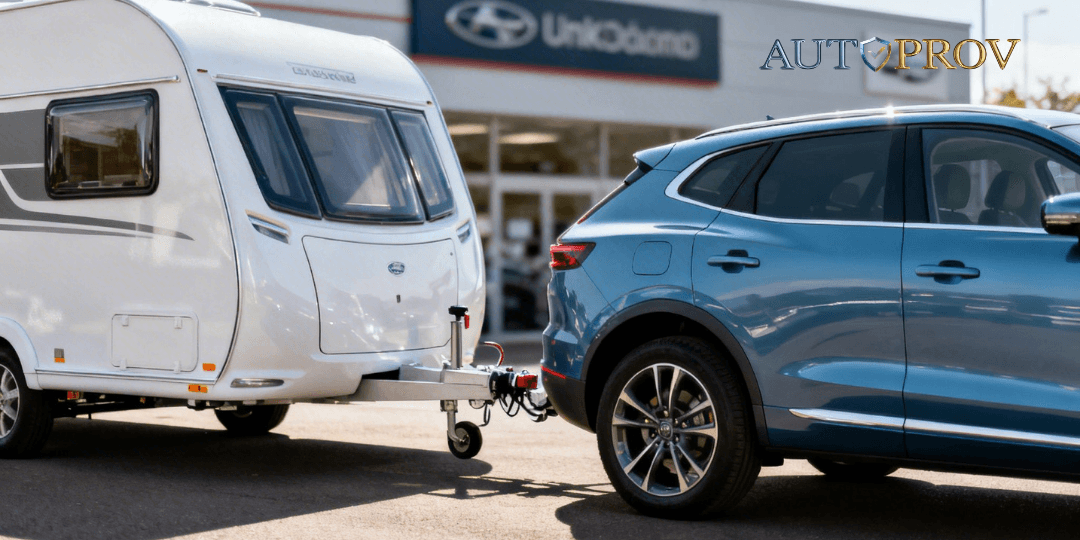
Sourcing the right car to tow a caravan represents a significant retail opportunity for the UK motor trade. Capable towing vehicles are a valuable commodity, but they also introduce a distinct set of risks when buying for stock. For the trade professional, understanding these vehicles is not merely about retail; it's about mitigating risk, accurate valuation, and compliance.
The Towing Boom: Opportunity and Risk for Dealers
The sustained growth in UK domestic tourism has profoundly impacted the used car market. This trend has created consistent demand for vehicles with strong towing credentials, from large SUVs and estates to commercial-grade pick-up trucks.
This presents a profitable niche for dealers who can effectively source and retail these vehicles. However, this opportunity carries inherent risk. A vehicle fitted with a towbar has likely been subjected to greater mechanical stress than a standard car. The strain of towing, even within legal weight limits, accelerates wear on critical components.
Key areas of concern include:
- Drivetrain Stress: The engine, clutch (in manual vehicles), and gearbox operate under increased load, which can lead to premature failure.
- Suspension and Brakes: Towing significantly increases the wear rate of suspension components and braking systems compared to normal use.
- Chassis Fatigue: Over time, the dynamic forces involved in towing can affect the vehicle's structural integrity.
The Scale of the Market—and the Associated Risk
The demand for tow-capable vehicles is set to continue. Projections indicate a substantial increase in UK residents planning camping and caravanning holidays, which will sustain the flow of these vehicles into the used market, primarily as part-exchanges.
This influx of stock presents a challenge: many of these vehicles will have a hidden history of heavy use. A standard vehicle history check UK is often insufficient, as it typically fails to reveal the context behind the data. Patterns like short-term ownership cycles or unusual mileage accumulation—classic indicators of a vehicle being used intensively for towing and then sold on—can be easily overlooked without deeper analysis.
This is where advanced vehicle provenance analysis becomes an essential component of the vehicle acquisition process. Accessing and interpreting underlying data enables smarter buying decisions, effective risk management, and the protection of profit margins.
Decoding UK Towing Weights and Legal Frameworks
Accurate assessment of a vehicle's towing capability is fundamental to motor trade operations. It impacts valuation, retail strategy, and legal compliance. Misinterpreting weights and limits can lead to retailing an unsafe vehicle combination or undervaluing a genuinely capable part-exchange. A professional appraisal requires a firm grasp of the specific terminology.
Essential Towing Terminology for Motor Traders
Mastering the following terms, found on the vehicle's VIN plate or in the manufacturer's handbook, is critical for any professional assessment. They form the legal and safety foundation of vehicle towing in the UK.
Term What It Means for Your Business Kerbweight The weight of the vehicle with all standard equipment, a full tank of fuel, but without a driver, passengers, or cargo. It is a key reference for assessing a stable towing match. Gross Vehicle Weight (GVW) Also known as Maximum Authorised Mass (MAM). This is the maximum legal weight of the vehicle itself, including the driver, passengers, and all onboard luggage. Exceeding the GVW is a legal offence. Gross Train Weight (GTW) The maximum legally permitted combined weight of the fully-loaded vehicle and the fully-loaded trailer (caravan). This is the definitive figure for establishing a vehicle’s legal towing limit. A comprehensive understanding of these three figures is the first step in any professional appraisal of a potential tow car. For a broader perspective on the regulatory environment, our guide on understanding UK automotive regulations provides further detail.

The current market dynamics mean a higher volume of part-exchanges arriving on forecourts with an undisclosed history of heavy towing. This can translate to accelerated wear on the clutch, gearbox, and suspension that a standard appraisal may not detect.
The 85% Guideline and Driving Licences
The "85% rule" is a well-regarded safety guideline within the caravanning community, but it is not a legal requirement. It recommends that the actual laden weight of the caravan should not exceed 85% of the car’s kerbweight. The principle is that a heavier tow car maintains better control over the trailer, particularly in adverse conditions such as crosswinds or during emergency braking.
A vehicle may be legally permitted to tow a specific weight, but if the weight ratio is poor, the combination can be unstable. Knowledge of the 85% guideline allows for more responsible vehicle positioning and customer advice.
Driving licence categories are another critical factor that directly influences a vehicle's target market.
Drivers who passed their test before 1 January 1997 are generally entitled to drive a vehicle and trailer combination up to 8,250kg GTW. Those who passed on or after this date face greater restrictions and typically require an additional B+E test to tow heavier combinations. This detail is crucial during appraisal, as it may limit the retail viability of a vehicle for a significant segment of the market.
How to Calculate a Vehicle's Towing Capacity
Manufacturer marketing materials should be disregarded in favour of the official data stamped on the vehicle's VIN plate. This plate, typically located in a door jamb or under the bonnet, is the definitive source for GVW and GTW figures. For motor trade professionals, interpreting this data is a fundamental aspect of risk management.

The Calculation for Maximum Towing Capacity
A vehicle's maximum braked towing capacity is determined by a straightforward calculation based on its official weight limits.
Gross Train Weight (GTW) - Gross Vehicle Weight (GVW) = Maximum Braked Towing Capacity
This formula provides the exact weight the vehicle is legally permitted to tow when the car itself is fully loaded to its own GVW. This calculation should be a standard procedure during the appraisal of any vehicle with towing potential. For dealers seeking to automate data retrieval, our guide on how to get car specs from a registration number offers further insight.
Practical Application
Consider the following examples for two common vehicle types. The results demonstrate why visual assessment is an unreliable valuation method.
- Example 1: A Large SUV
- Gross Train Weight (GTW): 4,950kg
- Gross Vehicle Weight (GVW): 2,950kg
- Calculation: 4,950kg - 2,950kg = 2,000kg
- The maximum braked towing capacity is 2,000kg.
- Example 2: A Popular Estate Car
- Gross Train Weight (GTW): 3,940kg
- Gross Vehicle Weight (GVW): 2,140kg
- Calculation: 3,940kg - 2,140kg = 1,800kg
- The maximum braked towing capacity is 1,800kg.
While the SUV has a higher capacity, the estate car is also highly capable. This quick verification enables accurate assessment of stock, mitigates purchasing errors based on assumptions, and ensures any vehicle sold for towing is fit for purpose.
Anatomy of a Superior Tow Car
Moving beyond the numbers on the VIN plate is essential for distinguishing an adequate tow car from a superior one. For a motor trader, identifying the right mechanical and structural features is key to accurately appraising a vehicle's real-world towing performance and its subsequent market value. A great tow car's value lies not just in its GTW but in its holistic engineering.

Power Delivery and Engine Characteristics
For towing applications, torque is more critical than BHP. While high horsepower is a marketable figure, it is the engine's torque—particularly at low RPM—that enables a vehicle to pull a heavy caravan from a standstill and maintain momentum on inclines. High torque delivery results in an effortless and stable towing experience, a significant retail advantage.
- Diesel Engines: Traditionally the preferred choice, diesel engines produce high torque at low revs, making them highly efficient for pulling heavy loads. Their superior fuel economy during long-distance towing is also a major benefit.
- Petrol Engines: Modern turbocharged petrol engines are capable, but they often require higher revs to access their peak torque. This can negatively impact fuel consumption and increase engine strain.
- Hybrid & PHEV: This segment is growing rapidly. Plug-in hybrids, in particular, offer a compelling combination of instant electric motor torque for initial pulling, supported by a petrol engine for sustained driving. Their increasing popularity is matched by their mechanical complexity, demanding careful appraisal.
Transmission and Drivetrain
The transmission is a primary point of stress in a tow vehicle. Its type and condition are critical determinants of its suitability.
An automatic transmission, specifically a traditional torque converter type, is generally preferable for heavy towing. It provides smooth power delivery and eliminates the risk of clutch wear associated with manual gearboxes in demanding situations like hill starts.
Continuously Variable Transmissions (CVTs) are typically not well-suited to heavy towing, as they can be susceptible to overheating and premature wear under sustained load. A four-wheel drive (4WD) system is a highly desirable feature, providing the additional traction often required on wet or uneven surfaces, such as grass pitches on campsites.
Chassis, Suspension and Towbar Fitment
A vehicle's underlying structure is as important as its powertrain. A robust chassis provides the stable platform required for safe towing, while a well-engineered suspension system ensures comfort and control. Self-levelling suspension is a particularly valuable feature to identify, as it automatically compensates for the vertical load on the towball, maintaining a level vehicle posture.
The towbar itself is a crucial piece of evidence during any dealer vehicle check.
- Factory-Fitted Towbar: This is the ideal scenario. It indicates the vehicle was likely specified for towing from new, which often includes integrated wiring and potentially an uprated cooling system. This can be verified by cross-referencing the original specification with a vehicle build spec sheet report.
- Aftermarket Towbar: These require close inspection. A professionally installed, type-approved towbar is acceptable. However, a poorly fitted or non-approved unit is a significant red flag, indicating potential electrical issues and even chassis stress.
Identifying the Most Sought-After Tow Cars
Stocking desirable vehicles requires an understanding of market demand. In the caravanning sector, certain models gain a reputation for stability, power, and practicality, making them prime stock for a dealer's forecourt. Industry awards and reviews directly influence buyer preference.
What Defines a Desirable Tow Car?
The Volvo XC60 T6 Plug-in Hybrid, an overall winner in the Caravan and Motorhome Club’s Towcar of the Year awards, exemplifies current market trends. Its ability to competently tow a 1,224kg caravan at an ideal 85% weight match highlights the appeal of powerful hybrid SUVs. For traders, this popularity is coupled with a caution: the vehicle's complex powertrain and its proven use as a tow car can introduce unique wear that a basic vehicle history check UK would not identify. The full list of winners offers valuable insight into current top-performing models.
For a dealer, an award-winning vehicle like the XC60 represents both high retail demand and elevated risk. Its complex hybrid system and confirmed towing history necessitate a more in-depth appraisal than an average vehicle.
Key Vehicle Categories and Their Buyers
Demand for tow cars is concentrated in three main vehicle types, each appealing to a different buyer profile:
- Large SUVs: The dominant category in the towing market. Models like the Land Rover Discovery and Kia Sorento offer the ideal combination of a high kerbweight for stability, powerful diesel or hybrid engines, and 4x4 traction. They are the preferred choice for owners of large, heavy twin-axle caravans.
- Estate Cars: A highly capable and often underestimated category. Vehicles such as the Skoda Superb or Volkswagen Passat frequently offer substantial towing capacities combined with better fuel economy and driving dynamics when not towing. They appeal to buyers seeking a versatile daily vehicle that can also handle a medium-sized caravan.
- Pick-up Trucks: With their robust ladder-frame chassis and high towing capacities, pick-ups like the Ford Ranger are exceptionally durable. While they may offer less interior refinement, their raw capability and practicality make them highly sought-after for towing the largest trailers.
The Hidden Risks in Used Tow Cars and How to Identify Them
A vehicle's specification sheet provides only part of its story. A popular SUV may have an impressive towing capacity, but if it has a history of heavy use, its mechanical condition may be significantly poorer than its cosmetic appearance suggests. For motor trade professionals, identifying these hidden risks is critical for protecting margins and business reputation.

Towing subjects a vehicle to immense and sustained stress, causing accelerated wear that is often not visible during a standard walk-around appraisal. These are not minor issues but potential component failures waiting to occur.
Common problems observed in former tow cars include:
- Transmission and Clutch Failure: The high torque required for pulling away with a heavy load places extreme stress on the transmission, particularly the clutch in manual vehicles.
- Chassis and Suspension Fatigue: Sustained towing loads lead to premature wear of suspension components, resulting in compromised handling and ride height.
- Electrical Faults: Improperly installed aftermarket towbar wiring is a common source of complex electrical issues that can interfere with modern vehicle CAN bus systems.
- Engine and Cooling System Strain: Towing increases engine operating temperatures, placing the entire cooling system under significant stress.
Beyond the Basic Vehicle Check
A standard vehicle history check UK is effective for identifying major issues like 'write-off' status or outstanding finance but will not flag the subtle indicators of a hard towing life. This is where detailed vehicle provenance intelligence becomes indispensable. It requires looking beyond a simple data report to analyse historical patterns and properly assess motor trade risk.
A clean history report on a three-year-old SUV with a towbar and 60,000 miles may seem attractive. However, if provenance data reveals three ownership changes within that period, it becomes a significant red flag for a vehicle that has been used intensively and sold on as wear-related issues begin to manifest.
Uncovering Red Flags with Provenance Intelligence
Advanced dealer vehicle checks are designed to identify these patterns, building a comprehensive risk profile before acquisition. By analysing historical data, it is possible to spot the warning signs that are otherwise missed.
Effective analysis focuses on:
- MOT History Analysis: Scrutinising past MOT records for recurring advisories on brakes, suspension, and tyres provides a clear indication of a vehicle subjected to high loads.
- Mileage Discrepancy Analysis: A thorough mileage check UK can identify inconsistencies that may point to 'clocking', a practice sometimes used to conceal a high-mileage towing history. A free VIN check UK can be a starting point for this process.
- Ownership Pattern Evaluation: Frequent ownership changes or a history of short-term keepers are significant risk signals. This pattern often suggests that previous owners have divested from the vehicle as towing-related wear became apparent.
By leveraging this level of trade vehicle intelligence, dealers can accurately assess the true condition and risk profile of any potential tow car. This data-driven approach supports confident purchasing, accurate pricing, and the avoidance of costly vehicles with a hidden history of arduous use.
Common Questions About Sourcing Tow Cars
When appraising potential tow cars for stock, several key questions consistently arise. Incorrectly answering them can lead to poor acquisition decisions that impact profitability and reputation.
Is a Factory-Fitted Towbar a Positive Indicator?
Initially, yes. A factory-fitted towbar suggests the vehicle was specified for towing from new, often including enhancements like an uprated cooling system and correctly integrated electrics.
However, it is also a clear indicator that the vehicle has likely been used for its intended purpose. This makes a deep-dive vehicle provenance check non-negotiable. An aftermarket towbar, particularly a low-quality installation, is a major red flag that warrants close inspection for potential electrical faults or chassis stress.
Are Electric Vehicles Suitable for Towing a Caravan?
While some modern EVs have high torque figures and are type-approved for towing, the practical implications for caravanners are significant. Towing a caravan can reduce an EV's operational range by as much as 50%. This severely impacts its viability for the long-distance touring central to caravanning.
For dealers, the key is managing customer expectations. An EV's practical range limitations when towing make it a niche choice for dedicated caravanners, which directly affects its desirability and resale value within this specific market.
How Does Towing Affect a Vehicle's Service History?
Towing places increased demands on all major systems, including engine oil, transmission fluid, brakes, and tyres. A vehicle used regularly for towing requires a more comprehensive and frequent service history than a standard car, with documented evidence of fluid changes and component inspections.
When appraising a vehicle with a towbar, gaps in the service record or evidence of only minimum-standard maintenance should be considered a major risk. It signals that critical components may have been subjected to significant wear without appropriate upkeep—a risk that a standard used car history report is unlikely to reveal.
Gain a crucial advantage when buying trade stock. AutoProv delivers the advanced vehicle provenance intelligence you need to assess the true risk of any potential tow car. Make smarter, more profitable decisions at https://autoprov.ai.
Frequently Asked Questions
AI-Generated Content Notice
This article was created with the assistance of artificial intelligence technology. While we strive for accuracy, the information provided should be considered for general informational purposes only and should not be relied upon as professional automotive, legal, or financial advice. We recommend verifying any information with qualified professionals or official sources before making important decisions. AutoProv accepts no liability for any consequences resulting from the use of this information.
From our AI insights
- Auction Pitfalls: Avoiding Costly Mistakes
Navigate UK car auctions with confidence by avoiding finance, write-off, and mileage risks.
- Mastering Paint Code Checks: Detecting Hidden Car Repairs
Discover how to use paint code verification to identify hidden car repairs and ensure a smarter purchase.
- UK Part-Exchange Checks: Protecting Dealer Margins
Explore essential part-exchange checks for UK dealers to safeguard profit margins, including provenance and finance verification.
Related Articles
Your Ultimate Guide to Buying a Used Car in the UK
Navigate the UK used car market with confidence using our comprehensive buying guide. Tips, checks, and AutoProv Provenance insights included.
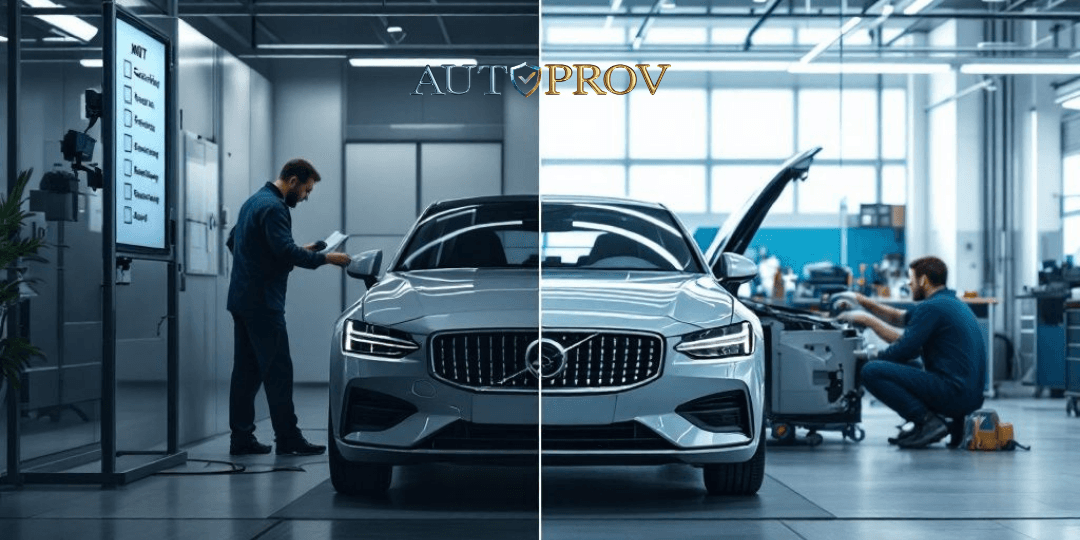
Difference Between MOT and Service: What You Need to Know
An MOT is a mandatory legal inspection that every car on UK roads needs to pass.Think of it as the government's way of ensuring your vehicle meets the absolute minimum safety and environmental standards to be considered roadworthy. A service, on the other hand, is a completely different beast. It's the proactive maintenance routine recommended by the people who built your car, designed to keep it running smoothly and catch problems before they start. In short, an MOT is a pass-or-fail exam required by law. A service is a comprehensive health plan for your car.
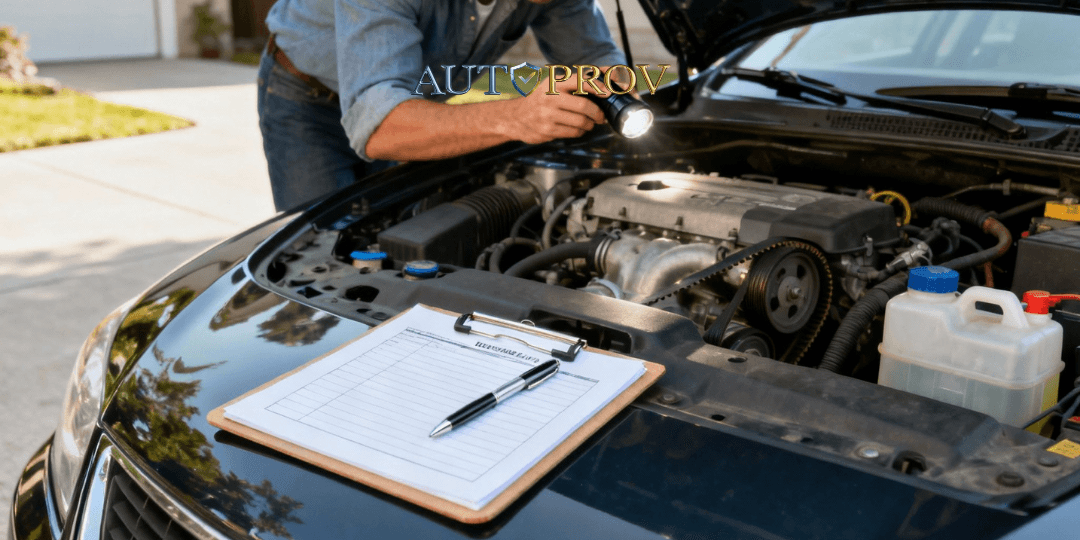
Your Ultimate Used Car Inspection Checklist
A solid used car inspection checklist is the single most powerful tool you have to avoid buying a lemon. It gives you a methodical way to look past the shiny paint and assess a car's real condition, helping you spot hidden problems and get a fair price before you shake hands on the deal.
Published by AutoProv
Your trusted source for vehicle intelligence
