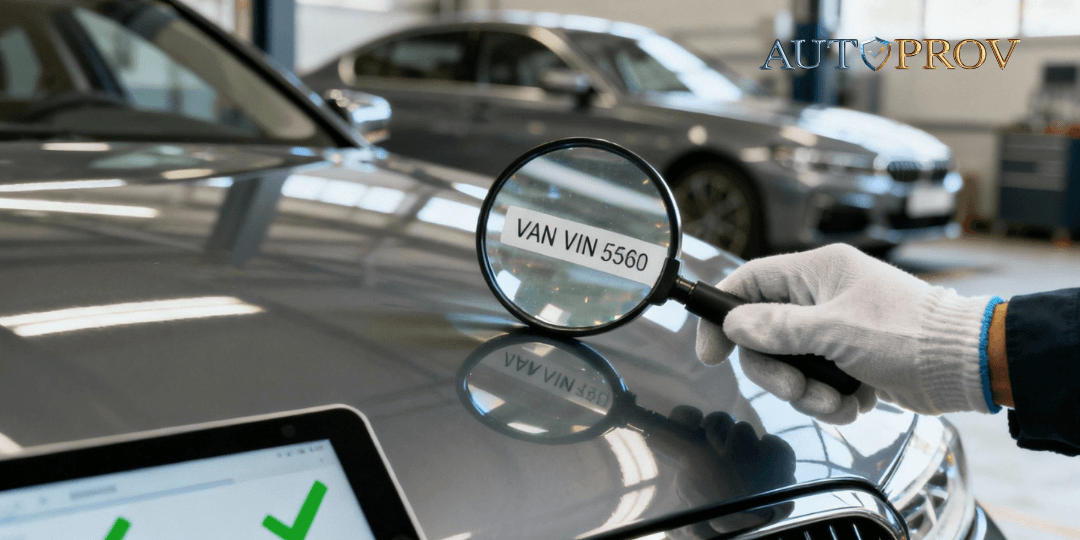
For any professional in the UK motor trade, unknowingly buying a stolen car is a catastrophic risk. The fallout isn't just about losing your investment—though you will. It drags your dealership into police investigations, leads to the immediate seizure of the vehicle with zero compensation, and can land you in serious legal trouble. The financial hit is direct and often painful.
For any professional in the UK motor trade, unknowingly buying a stolen car is a catastrophic risk. The fallout isn't just about losing your investment—though you will. It drags your dealership into police investigations, leads to the immediate seizure of the vehicle with zero compensation, and can land you in serious legal trouble. The financial hit is direct and often painful.
But the damage usually cuts much deeper than that. Word gets around fast. The news that you've handled stolen goods, even by accident, can shatter the trust you’ve spent years building with your customers. In a market where your reputation is everything, that kind of incident can cause long-term damage that’s incredibly difficult to come back from.
More Than Just a Box-Ticking Exercise
It’s a dangerous mistake to see a stolen car check as just another piece of admin. You need to think of it as a cornerstone of your risk management and stock acquisition strategy. Every vehicle on your forecourt is a significant capital investment, and this one simple check is your primary insurance policy against that investment being completely worthless.
This single check offers protection on multiple fronts:
- Financial Security: It stops you from paying good money for an asset you can never legally own or sell.
- Legal Compliance: It proves you’ve done your due diligence, protecting you from any accusations of negligence or, worse, complicity.
- Reputation Management: It reinforces your professional integrity and gives your customers confidence that they're buying from a trustworthy source.
A comprehensive check is your proof of professional diligence. It’s not just about avoiding a stolen car; it’s about building a business resilient to the sophisticated threats present in the used vehicle market.
Integrating Checks Into Your Workflow
Let's be honest, the challenge for busy dealers has always been the time it takes to pull all the necessary information together. Juggling different databases—from the Police National Computer (PNC) to insurance records on the MIAFTR—is clunky and leaves too much room for error. This is exactly where modern tools make all the difference.
Services like AutoProv are built to solve this problem. By pulling dozens of critical data points from all the right sources into a single, instant report, they turn what was a complex investigation into a simple, one-click verification. This efficiency doesn't just save you time; it ensures nothing gets missed. For a deeper look at the specifics, have a read of our guide to checking used car history. This approach means you can make buying decisions quickly and, most importantly, with total confidence, safeguarding your inventory from day one.
Navigating the UK's Vehicle Theft Hotspots
To properly manage risk when bringing in new stock, you’ve got to understand the geography of vehicle crime in the UK. It’s a simple fact: some areas are far more problematic than others. This reality should directly shape how you approach your due diligence.
A car that’s spent its life in a known hotspot automatically warrants a closer look. This isn’t about prejudice; it’s about smart, data-driven risk assessment. The data shows clear regional patterns, with major cities consistently topping the charts for vehicle theft. This isn't a coincidence.
High population density, sprawling road networks perfect for a quick getaway, and the presence of organised criminal gangs all create the ideal conditions for these high-risk zones. Approaching a vehicle from one of these areas with an extra dose of caution is just good business.
The Epicentre of UK Vehicle Crime
There's no getting around it—London is the undisputed hotspot for vehicle theft in the country. The sheer volume of cars, combined with its unmatched transport links, makes it a magnet for thieves.
According to recent statistics, the Metropolitan Police recorded over 105,100 vehicle thefts in the year to September 2024, accounting for more than a quarter of all thefts nationwide. That breaks down to a rate of 11.7 thefts per 1,000 people, which is more than double the national average for England and Wales.
But the capital isn't the only problem area. Other major cities share many of the same risk factors, making them fertile ground for criminals. Greater Manchester is in a constant battle with high vehicle crime rates, especially for high-value and commercial vehicles. The West Midlands, including Birmingham, is another densely populated region that sees thousands of thefts every year, often with links to organised crime rings. Being so close to London also makes the Home Counties particularly vulnerable, with Essex alone reporting over 5,000 vehicle thefts annually.
Knowing where a vehicle has spent its life is a crucial piece of the provenance puzzle. A car registered in Bromley, Croydon, or Tower Hamlets should immediately prompt a more thorough investigation than one from a quiet rural postcode.
Actionable Insights for Your Dealership
This geographical data isn’t just trivia; it's actionable intelligence that should directly influence your buying strategy. When a vehicle's V5C logbook shows a history in one of these hotspots, it’s your cue to dig much deeper.
This is where a comprehensive report from a service like AutoProv becomes absolutely essential. It instantly cross-references police and insurance databases, giving you the solid answers you need to proceed with confidence.
Being aware of these regional risks also gives you a great starting point for training your staff and even educating customers. For more on that, you can check out our guide on keeping your car secure and safe.
Conducting a Comprehensive Vehicle History Check
A proper stolen car check is much more than just a quick search on a single database. For any professional in the trade, it's about piecing together the vehicle's complete, verified history. This layered approach is the only real way to protect your business from the financial disaster of buying a car with a criminal past.
You have to think like a detective, really. It's all about cross-referencing information from several official sources, because a small discrepancy in one report can expose a massive problem in another. This doesn't have to be a slow or painful process, but it absolutely has to be thorough.
Interpreting Police and Insurance Records
Your first port of call, always, should be the Police National Computer (PNC). A check here instantly tells you if the vehicle has an active theft marker against its registration. If a car is flagged as stolen on the PNC, the conversation is over. That’s a definitive red flag that means you report it immediately, not try to negotiate a better price.
Just as important is the Motor Insurance Anti-Fraud and Theft Register (MIAFTR). This database is managed by the Motor Insurers' Bureau and logs any vehicle that's been subject to an insurance claim for theft or damage. It's a crucial second check because a car might show up on MIAFTR even if the PNC is clear—say, if it was stolen and recovered before the police officially logged it.
A hit on the MIAFTR database signals a complex history that demands a closer look. It could mean the vehicle was previously stolen and recovered, or worse, written off and unscrupulously put back on the road.
Scrutinising DVLA and MOT History
The DVLA and MOT history is essentially the car's life story, and any plot holes are a major cause for concern. When you pull this data, you’re looking for a logical, continuous timeline. Big gaps in the MOT history, bizarre drops in mileage, or a flurry of keeper changes in a short space of time should set alarm bells ringing.
For instance, a car that's had three owners in the last six months is a huge red flag. Why is it being passed around so quickly? Likewise, an unexplained gap of a year or more in its MOT history could mean it was off the road—perhaps because it was stolen, cloned, or being rebuilt after a nasty accident.
Here’s what to zero in on:
- Mileage Discrepancies: Look for illogical jumps or, more tellingly, drops in the recorded mileage between MOT tests. A sudden decrease is a classic sign of clocking.
- Keeper Changes: A high turnover of owners is not normal for a decent car. It’s a sign that something is wrong, and you need to find out what.
- MOT Gaps: Any significant period where the vehicle has no valid MOT needs a rock-solid explanation from the seller.
This is where services like AutoProv come into their own. Instead of you manually pulling data from the PNC, DVLA, and MIAFTR, AutoProv consolidates over 40 business-critical data points into a single, straightforward report. You get an instant, clear picture of the vehicle’s real story, letting you spot the red flags in seconds. To get deeper into what these checks involve, have a look at our guide on conducting a vehicle check with a VIN number. This kind of integrated approach makes your due diligence faster, more accurate, and a whole lot safer.
Spotting Red Flags Before You Buy
You’ve been in the motor trade for years, and your professional instinct is a sharp tool. But when you’re running a stolen car check, that gut feeling needs to be backed up by a methodical eye for detail. The warning signs are often hiding in plain sight, and spotting them is what separates a savvy buyer from the next victim.
These red flags go way beyond what any database can tell you. They're about the physical vehicle, the paperwork (or lack of it), and the person trying to sell it. A seller who’s a bit too eager, cagey with answers, or pushing for cash in a public car park should have alarm bells ringing immediately.
Paperwork Problems and Evasive Sellers
The V5C logbook is the absolute cornerstone of a vehicle's identity. Any issues with it are a massive red flag. A classic line from a crook is that the V5C is "lost" or "in the post." While genuine sellers can misplace documents, you have to treat this excuse with extreme caution. Don’t even think about finalising a purchase without the original V5C in your hand.
Just as worrying is a seller who can't—or won't—answer basic questions about the car's history. A genuine owner knows how long they've had the vehicle, where it was last serviced, and the real reason they're selling. An evasive seller often trips up under the simplest of questions.
Keep a sharp eye out for these tell-tale signs: a missing or photocopied V5C, as criminals simply won't have the original document. Be wary of pressure for a quick sale, often paired with a "cash only" demand, which is a classic tactic to rush you into a bad decision. Finally, an unusual meeting location is a major warning; a legitimate seller should be happy for you to view the car at their home, which ought to match the address on the V5C.
Physical Vehicle Inspection Clues
Beyond the paperwork, the car itself can tell you a story. Criminals frequently try to alter a vehicle's identity to match a legitimate one—a process known as cloning. This nearly always involves messing with the Vehicle Identification Number (VIN) plates.
A professional stolen car check must include a hands-on physical inspection. Always check that the VIN etched into the windscreen, stamped on the chassis, and displayed on the door jamb all match each other—and the V5C. Any evidence of scratching, tampering, or poorly fixed plates is a dead giveaway.
If your suspicions are raised, the best move is to professionally stall the deal. Politely explain you need to run some final checks and will be back in touch. This buys you time to document everything—registration, VIN, seller details—and report your concerns to the police.
This is exactly where a service like AutoProv proves its worth, creating a timestamped audit trail of your due diligence. This digital proof shows you performed a professional check, which is vital if a vehicle is later flagged. For a deeper dive, our guide on the importance of a provenance check for a used car is a must-read.
How Modern Tech Is Fuelling Vehicle Crime
The relationship between car thieves and security systems has always been an arms race. But forget the old days of a smashed window and some crossed wires. Today’s vehicle theft is a different beast entirely—it’s slick, professional, and often carried out by organised gangs using tech that can defeat factory security in seconds.
This professionalisation of theft has completely changed the game for motor traders. The convenience of keyless entry, for instance, has become a massive liability. Criminals are now masters of the relay attack. It's brutally effective: one thief stands near the owner's home with a device that picks up the key fob's signal, even from inside the house. That signal gets boosted to an accomplice next to the car, tricking it into unlocking and starting. No broken glass, no fuss.
The Soaring Cost of High-Tech Theft
You can see the impact of these high-tech methods in the national figures. After dipping to a low of just 70,000 thefts in 2013/14, the numbers have crept back up, hitting 129,159 by 2023/24. That resurgence isn't a coincidence; it’s driven almost entirely by these new technological exploits. Relay attacks are now behind a huge chunk of all stolen vehicles. For a deeper dive, these UK car theft statistics paint a pretty stark picture.
The financial damage is staggering, costing the UK economy an estimated £1.6 billion every year. That’s not just the value of the cars themselves. It’s the knock-on effect of rising insurance premiums for everyone and the immense strain it puts on police resources.
Why Your Due Diligence Must Evolve
For anyone in the trade, this should be a wake-up call. A quick visual inspection and a check of the V5C just doesn't cut it anymore. And with recovery rates hovering around a measly 40%, once a car's gone, it’s usually gone for good. Many are whisked away in containers or broken down for parts within hours, their identity wiped clean.
A car stolen using modern techniques can look completely legitimate. No signs of forced entry, no damage, nothing to suggest it's anything other than a clean part-exchange. This is precisely why a digital, data-driven stolen car check has moved from a 'nice-to-have' to an essential part of the job.
You have to understand the risks you're now facing. Criminals are constantly innovating, and your business needs a defence that can actually keep up. That’s where a proper, comprehensive check from a service like AutoProv becomes so vital. By pulling real-time data from the PNC, MIAFTR, and other key sources, it gives you an instant, authoritative answer. It’s about getting ahead of the criminals, not becoming their final customer.
Your Questions on Stolen Car Checks Answered
Even the most seasoned hands in the motor trade run into questions about stolen car checks. The finer points matter, and getting the right answers is crucial for protecting your business and your reputation. Here are our answers to some of the most common queries we hear.
What Should I Do If a Car Is Flagged as Stolen?
This is one of those moments where you have to act fast and follow the book. If your check lights up with a stolen marker on the Police National Computer (PNC), the deal is off. Full stop. Do not proceed with the purchase under any circumstances.
Your professional and legal duty is crystal clear: report it. Dial 101 and give the police the vehicle’s registration, the VIN, and any details you have on the seller. Whatever you do, don't try to play the hero by confronting the seller or securing the vehicle yourself. That’s a job for the authorities. This approach keeps you safe and proves you’ve done your due diligence.
How Long Is a Vehicle Check Valid For?
A vehicle check is a snapshot in time—nothing more. It’s only valid for the exact moment you run it. A car can pass a check with flying colours and be reported stolen ten minutes later. It happens.
This is why embedding checks right at the point of purchase is so critical to any professional workflow.
The smartest play is to run your final, comprehensive check just before any money changes hands. This shrinks that window of risk down to almost nothing, ensuring the decision you're making is based on the freshest data possible.
Why Are Instant Digital Checks Better?
Think back to the old days. Verifying a vehicle’s history was a slow, clunky process that meant juggling multiple sources and still ending up with an incomplete picture. An instant digital check, like the ones we provide at AutoProv, changes the game completely. It pulls together dozens of data points from the PNC, DVLA, and MIAFTR into a single, easy-to-digest report that lands in your inbox in seconds.
In the fast-paced world of the motor trade, that speed and depth are your best assets. It means you can make confident buying decisions on the spot, backed by a complete, auditable report. You can dive deeper into how these reports are structured in our practical guide to provenance checks for traders.
Ultimately, a digital check isn't just about being quick. It’s about being accurate, secure, and making smarter, safer acquisitions for your dealership.
Frequently Asked Questions
AI-Generated Content Notice
This article was created with the assistance of artificial intelligence technology. While we strive for accuracy, the information provided should be considered for general informational purposes only and should not be relied upon as professional automotive, legal, or financial advice. We recommend verifying any information with qualified professionals or official sources before making important decisions. AutoProv accepts no liability for any consequences resulting from the use of this information.
From our AI insights
- Navigating UK Grey Imports: A Trader's Guide
Understand the complexities and opportunities of UK grey imports for savvy motor traders.
- Navigating Private Plate Challenges in UK Vehicle Checks
Learn how private plates affect UK vehicle checks and how traders verify provenance and spot cloning risks.
- Navigating VIN Checks Post-Brexit: What UK Traders Need to Know
Discover how Brexit impacts VIN checks for UK traders and the crucial data to review.
Related Articles

Essential Vehicle Checks Before Buying a Used Car
Learn essential checks to ensure your used car purchase is safe and sound in the UK market.

Why a Provenance Check is Essential for Used Car Buyers
Ensure your used car is a smart investment by understanding the importance of a provenance check and how AutoProv can help.
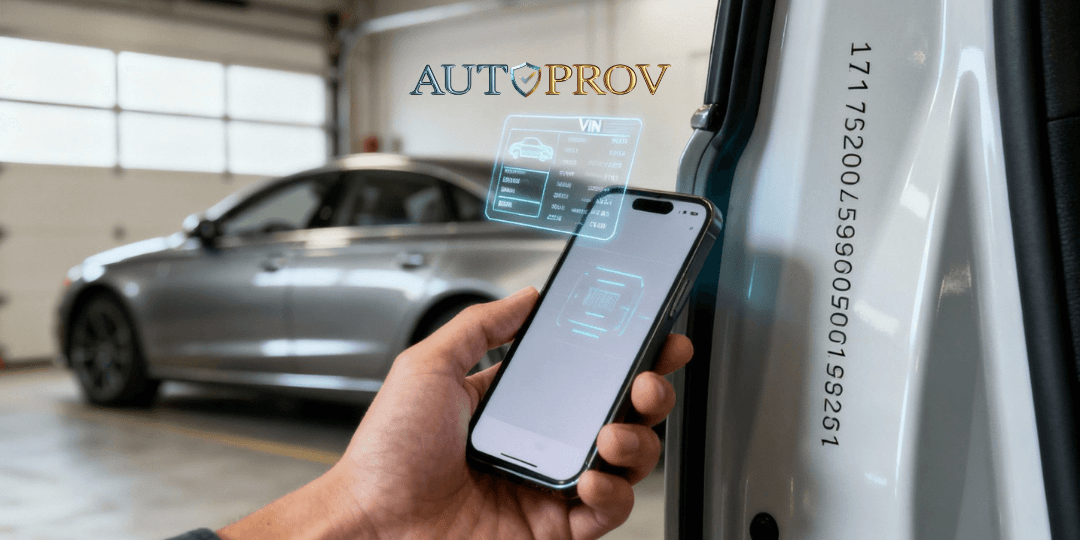
A Guide to Vehicle Check with VIN Number
A vehicle check with vin number is easily the most important thing you can do before buying a used car. Think of it as your first line of defence—a quick, simple step that pulls back the curtain on a vehicle's past, protecting you from expensive mistakes, legal headaches, and downright dangerous cars.
Published by AutoProv
Your trusted source for vehicle intelligence