
In the fiercely competitive UK used car market, viewing HPI checks for traders as a simple precaution is a mistake. In reality, they're a cornerstone of any profitable dealership. An HPI check is your first line of defence, protecting you from buying vehicles with hidden, expensive baggage like outstanding finance or a murky past involving theft. AutoProv provides integrated HPI checks as a core part of its vehicle management service, ensuring traders have this crucial information at their fingertips.
In the fiercely competitive UK used car market, viewing HPI checks for traders as a simple precaution is a mistake. In reality, they're a cornerstone of any profitable dealership. An HPI check is your first line of defence, protecting you from buying vehicles with hidden, expensive baggage like outstanding finance or a murky past involving theft. AutoProv provides integrated HPI checks as a core part of its vehicle management service, ensuring traders have this crucial information at their fingertips.
The Trader's Essential Tool for Due Diligence

As a professional trader, you know every vehicle appraisal is a calculated risk. The biggest threats to your profit margins aren't always market swings; often, they’re the skeletons hiding in a car’s history. A vehicle that looks perfect on the surface could be a costly insurance write-off or, even worse, legally belong to a finance company.
This is precisely why HPI checks for traders are now a non-negotiable part of daily operations.
Think of it as pure business intelligence for your forecourt. An HPI check from a service like AutoProv goes far beyond a basic background search. It’s a deep dive into a vehicle's life story, flagging the kind of red flags that can lead to major financial losses or legal headaches down the road. Skipping this step is like buying shares without knowing who owns them or what they're truly worth—it's a gamble no serious business can afford.
Protecting Your Investment From the Start
Every car you bring into stock is an investment. Protecting that investment starts the second you begin an appraisal. A thorough HPI check uncovers the critical details that directly affect a car's real value and its appeal to buyers.
A professional check will nail down key information for you. It confirms if there is any outstanding finance; a vehicle with an active finance agreement is still the property of the lender. Buy one by mistake, and you risk it being repossessed, leaving you massively out of pocket. You can learn more about why this is so critical in our detailed guide on finance checks. The system also cross-references the vehicle with the Police National Computer (PNC) to confirm it hasn't been reported as a stolen vehicle. It instantly identifies if a vehicle has been declared a write-off (like a Cat S or Cat N), which seriously impacts its valuation and how you market it. Finally, the check compares the current mileage against a database of millions of records to flag potential "clocking" and protect you from mileage discrepancies and fraud.
By integrating HPI checks directly into your appraisal workflow, you shift from reactive problem-solving to proactive risk management. It transforms due diligence from a chore into a strategic advantage, ensuring every decision is backed by solid data.
Modern platforms like AutoProv make this incredibly straightforward. Instead of running separate checks and juggling different reports, the full HPI data is pulled into a single, unified overview of the vehicle. This doesn't just save valuable time; it standardises your buying process, safeguarding your dealership's reputation and financial health with every single car you consider.
What an HPI Check Actually Reveals
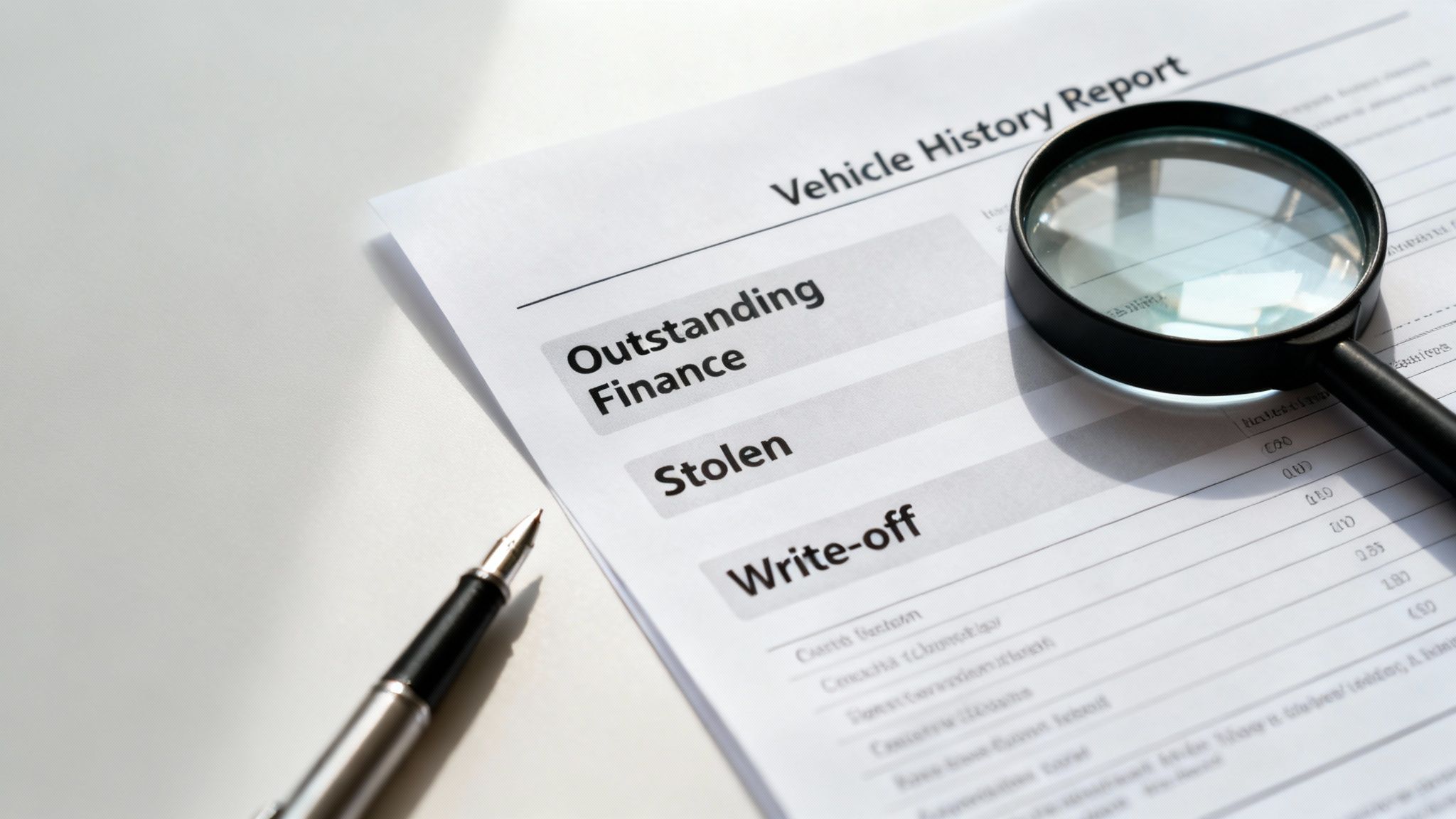
To really get why an HPI check is so critical for traders, stop thinking of it as just another document. It's more like a car's complete medical history and CV rolled into one. It’s a proper forensic dive into a vehicle's past, digging up the crucial details you need before you sink your capital into new stock.
Each piece of data tells a story. Knowing how to read that story—understanding the 'why' behind each check—is what separates a good trader from a great one. The report methodically pulls apart the risks, one by one, starting with the biggest threat to your bottom line.
Uncovering Financial Entanglements
The number one reason traders run an HPI check? To flag up outstanding finance. It's a simple but brutal truth: a car with an active finance agreement legally belongs to the lender, not the person trying to sell it.
If you buy a car like this without knowing, the finance company can show up and repossess it at any moment. That leaves you out of pocket with a massive hole in your finances and no car to show for it.
An HPI check is your only reliable way to confirm that a vehicle is free and clear of any financial claims. It’s the essential shield that protects your cash flow from someone else's unpaid debts.
This isn’t just about protecting your money; it’s about trading professionally. The UK’s Department for Business and Trade (DBT) often stresses the importance of this kind of due diligence, especially in a competitive field like the motor trade.
Decoding a Vehicle's History and Condition
Beyond the finance side, a solid check digs deep into a car's life story, giving you a crystal-clear picture of its history and overall integrity. This is vital for pricing it right and selling it honestly. You can learn more about the different kinds of checks in our detailed guide on how to check vehicle history in the UK.
A professional HPI report will verify several key areas. A stolen vehicle check instantly cross-references the registration with the Police National Computer (PNC), making sure the vehicle isn't listed as stolen. Simple, but essential. An insurance write-off status check is where you find out if it's been in a serious bump. The report decodes insurance categories like Cat S (structurally damaged but repairable) and Cat N (non-structurally damaged), which directly hammers the vehicle's market value. With mileage verification, the check runs the mileage against the National Mileage Register to spot potential 'clocking'. A big discrepancy is a huge red flag for fraud. Finally, the report confirms the V5C logbook integrity, checking that its details are legitimate and that the document itself hasn't been reported stolen. This is your best defence against buying a cloned vehicle.
By uncovering these hidden truths, an HPI check gives you the full story. It turns potential disasters into manageable information, letting you buy stock with real, genuine confidence.
Why Smart Traders Never Skip an HPI Check
We've covered the 'what', but the 'why' is where you see the real value of an HPI check. For any serious dealership, running these checks isn't just a box-ticking exercise—it's the bedrock of a sound business. Success in the motor trade really boils down to three things: protecting your cash, staying on the right side of the law, and building a reputation people trust. A proper HPI check nails all three.
Honestly, skipping this step is just rolling the dice with your capital. It’s an open invitation for disastrous, and completely avoidable, costs to walk right through your door, turning a promising car into a financial nightmare.
Shielding Your Dealership from Financial Catastrophe
The biggest and most immediate threat an HPI check defends you against is buying a car with a hidden past. Just imagine shelling out thousands for a vehicle, only to find out it has outstanding finance. That car doesn't belong to the seller; it belongs to the finance company, and they have every right to come and take it back. You're left with a huge hole in your accounts and nothing to show for it.
It's a similar story if you unknowingly buy a stolen car. You'll lose every penny of your investment and could find yourself answering some very awkward questions. Think of an HPI check as your financial shield—it confirms the asset you're about to buy is clean and free from anyone else's claim before a single pound leaves your bank account.
Upholding Your Legal Obligations
As a trader, you're not just selling cars; you're operating under a strict set of legal duties. The Consumer Rights Act 2015 is crystal clear on this: every vehicle you sell must be of "satisfactory quality," "fit for purpose," and "as described." A massive part of that is ensuring the car comes with a clean, undisputed title.
Selling a car with outstanding finance or a dodgy past isn't just bad form—it's a direct breach of your legal obligations. An HPI check is your number one tool for due diligence. It gives you documented proof that you took the proper steps to verify the car's legal status, protecting you from bitter customer disputes and unwanted attention from Trading Standards.
This paper trail is your best defence. It proves you've acted with professional integrity and are committed to running a transparent, lawful business, which is the only way to build something that lasts.
The screenshot below shows how modern platforms are making this process dead simple.
This clean layout shows how vital data, including HPI status, can be pulled into one easy-to-read system.
Building Trust and Protecting Your Reputation
In this business, trust is everything. It's your most valuable asset. Every glowing review, every customer who comes back or sends a friend your way, is built on a foundation of transparency and honesty. Offering a clear HPI report with every car isn't just good practice; it's a brilliant marketing move. It tells customers you've done your homework and have nothing to hide.
That kind of transparency fosters the loyalty that leads to repeat business and a strong name in your local area. On the flip side, selling just one car with a hidden history can wreck your reputation overnight thanks to angry online reviews and bad word-of-mouth.
By making HPI checks for traders a non-negotiable part of your buying process, you turn simple due diligence into a real competitive advantage. Platforms like AutoProv make this completely seamless, building comprehensive checks right into your daily workflow. It's not just about protecting your money and staying legal; it's about building the solid foundation of trust that every successful dealership depends on.
Integrating HPI Checks Into Your Appraisal Workflow
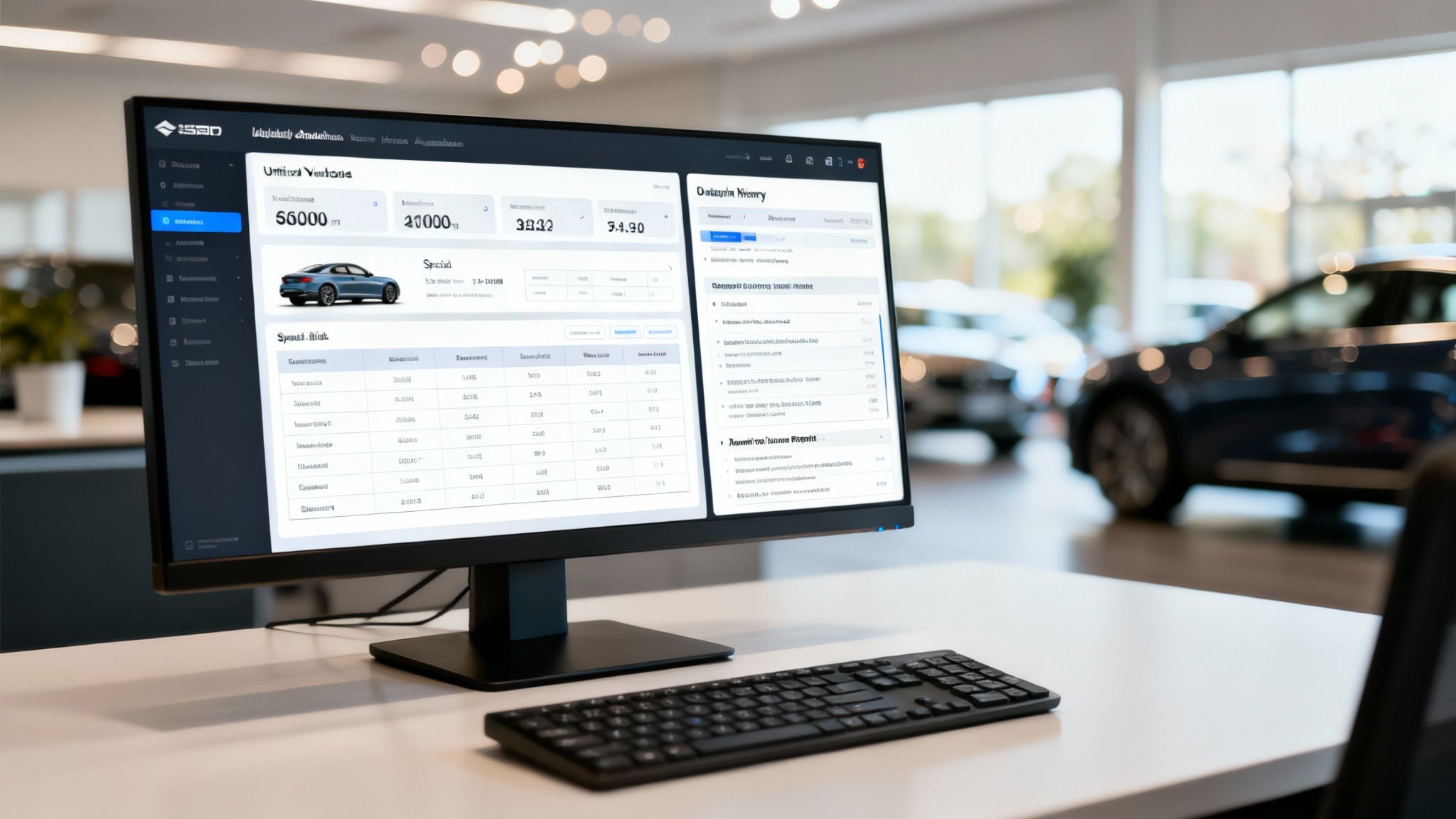
Knowing you need to run HPI checks for traders is one thing. Actually weaving them into your buying process so they’re foolproof and efficient? That's a different game altogether.
The old-school method is a real momentum killer. You appraise a car, then trudge back to the office to log into another website and run the numbers. It’s slow, clunky, and leaves a massive gap for mistakes or missed opportunities. True efficiency comes from integration.
This is where the game changes for the modern trader. Instead of treating an HPI check as another box to tick later on, it becomes an instant, automatic part of every single vehicle appraisal from the moment you key in the reg. The AutoProv platform is built on this principle.
Picture this: you're standing at an auction or on a seller's driveway. You punch the registration number into your app to pull up its spec and market value. Instantly, the full HPI report appears right alongside it. No faffing about with different tabs, no typing in the same details twice, and definitely no waiting around.
The Power of a Unified Workflow
Bringing everything together like this connects the dots between a vehicle's past, its present condition, and its current market value—all on a single screen. It’s a huge leap from juggling disjointed manual steps to working with a single, data-rich tool.
This unified approach gives you a few massive advantages. Firstly, it boosts speed and efficiency, shaving precious minutes off every appraisal. That means you can assess more vehicles and make faster, more confident buying decisions on the spot. Secondly, it creates standardised due diligence. By baking the HPI check into your appraisal system, you guarantee it never gets skipped. It builds a consistent, professional standard for every car you look at. Finally, you get immediate context. Seeing a red flag like outstanding finance right next to the car's trade valuation gives you all the context you need. You can either walk away immediately or start negotiating from a much stronger position.
This integration stops due diligence from being a boring admin task you do later. It becomes a proactive, strategic tool that helps you make smarter buying decisions, right there and then, with the full picture in front of you.
This clear, consolidated view ensures that critical history alerts are impossible to miss, sitting right there with the valuation and spec data, preventing those costly oversights.
From Data Points to Decisions
By pulling all the vital information into one place, platforms like AutoProv help you connect the dots in seconds. A mileage discrepancy flagged by the HPI check can be instantly cross-referenced with the MOT history and the physical condition of the car, giving you the complete story without breaking a sweat.
This level of integration is fundamental to managing your stock effectively. For traders looking to really sharpen their operations, understanding how this fits into the bigger picture is key. You can explore this in more detail in our guide to UK vehicle inventory management software, which breaks down how joined-up systems drive profit.
Ultimately, integrating HPI checks isn’t just about making life easier; it's about building risk management directly into the foundations of your business.
How to Read an HPI Report Like a Pro
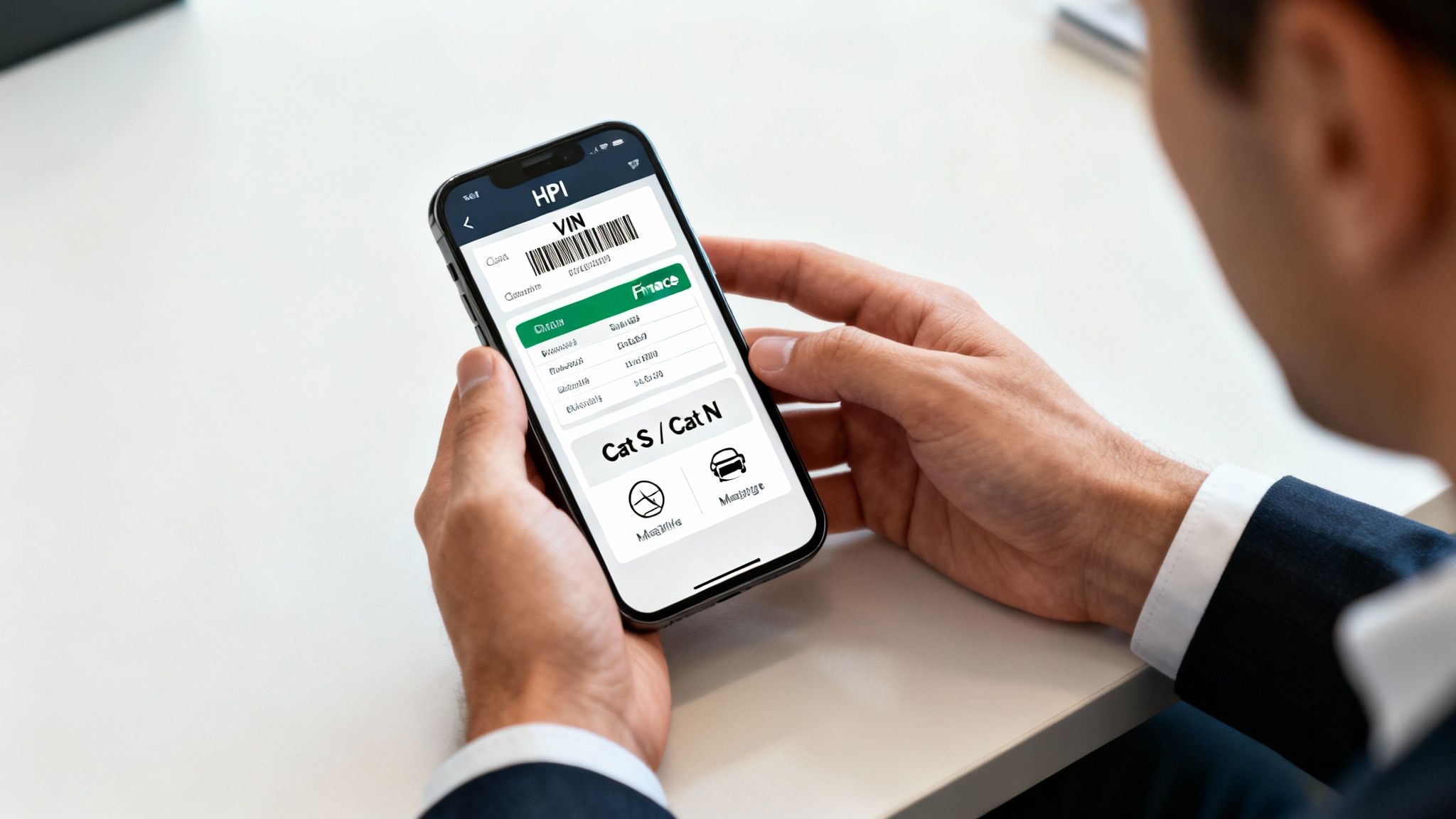
An HPI report isn't just a simple pass-or-fail slip of paper. Think of it more like a detailed road map of a vehicle's life, filled with data that gives you a massive advantage in the trade. But having the data is one thing; knowing how to read it is another.
Decoding a report correctly is what turns raw information into profit. It’s about more than just spotting red flags—it's about understanding the subtle details that affect a car's genuine value and appeal, helping you protect your bottom line and make smarter buys.
The Finance Section: Your First Stop
Always, always start with the outstanding finance check. This is the single most critical part of any HPI check for traders. If finance is flagged, it means the vehicle legally belongs to a lender, not the person selling it.
Treat this as a hard stop. Until you have concrete proof that the finance has been fully settled by the seller, don't even think about proceeding.
Once that's clear, it's time to dig into the car's past life by checking the condition alerts. This is where you’ll find any officially recorded incidents that you need to know about.
Decoding Write-Off Categories
Understanding the difference between insurance write-off categories is absolutely vital for pricing a car accurately and selling it transparently. They are not all the same, and knowing the distinction is key to your appraisal.
Category S (Structural) is a flag that tells you the vehicle has suffered damage to its structural frame or chassis. While it has since been professionally repaired and passed an inspection to be deemed roadworthy, its history will have a significant impact on its resale value.
Category N (Non-Structural) points to cosmetic or non-structural damage—things like bumpers, body panels, or electrical systems. It's generally seen as less severe than a Cat S, but it still affects the car's value and absolutely must be declared to any future buyer.
A Cat N vehicle might be a profitable buy if you can get it for the right price, whereas a Cat S requires a much closer look at the quality of the repairs and how easy it will be to sell on. This data directly shapes your offer price and any repair strategy you might have.
Interpreting these categories correctly helps you work out a fair purchase price that accounts for the vehicle's diminished value, turning a potential risk into a calculated opportunity.
Verifying Mileage and Identity
Mileage discrepancies are a massive red flag for fraud. The HPI report cross-references the car's recorded mileage with millions of records from sources like past MOTs and service histories. Any big inconsistency is a strong signal that the car might have been "clocked."
Just as important is confirming the vehicle's identity. The final step is to physically match the Vehicle Identification Number (VIN) on the report with the one on the car itself, which you'll usually find on the windscreen or a sticker in the door jamb. This confirms you're checking the right vehicle and not a clone. For more on this critical step, you might find our buyer's guide to using a vehicle chassis number helpful.
By methodically working through these key areas, you're not just reading a report; you're translating its data into actionable intelligence. When you build this systematic approach into your appraisal process with a platform like AutoProv, you can buy with confidence, price with precision, and sell with total integrity.
Build a Profitable Dealership on Trust
At the end of the day, an HPI check for traders isn't just another line item on your expenses sheet. Think of it as a core investment in your dealership's integrity, its profitability, and its future. When you make these checks a standard part of every appraisal, you’re not just buying data; you’re building a powerful shield against financial risk.
But you're also building something far more valuable: a reputation for honesty and transparency that customers will remember. In a market this competitive, trust is the real currency that fuels repeat business and gets people talking. Making proper due diligence a non-negotiable part of your process shows a commitment to quality that truly sets you apart from the crowd.
Mastering vehicle due diligence is the cornerstone of any modern, profitable dealership. It transforms potential liabilities into manageable data, ensuring every vehicle you stock is a sound investment.
Here’s an example from the AutoProv site showing how we encourage traders to get in touch and learn more.
This simple, direct approach makes it easy for dealers to take the next step towards sharpening up their operations. If you want to dig deeper into this topic, our guide on the importance of a provenance check for a used car offers some great additional insights.
The final message is clear. To future-proof your business, you need the right tools in your corner. See how AutoProv’s integrated appraisal and HPI solution can transform your process and secure your place in a demanding market.
Your HPI Check Questions Answered
Let's clear up some of the common questions we hear from traders about HPI checks. Here’s the straightforward advice you need to keep your business protected.
Are All Vehicle History Checks the Same as an HPI?
Not even close. While you'll find plenty of services offering background reports on cars, the term 'HPI Check' is a brand name that’s become shorthand for the most comprehensive data in the UK.
Think of it like this: you wouldn't call any vacuum cleaner a Hoover. Cheaper alternatives often cut corners and can miss critical red flags, especially when it comes to outstanding finance agreements. For any professional dealer, sticking with a proven, in-depth provider is the only real way to guarantee you’re fully covered. AutoProv partners with leading data providers to deliver this level of assurance directly within its platform.
What Should I Do if a Car Has Outstanding Finance?
If a car you’re looking at has finance owing on it, you need to stop and think. Until that debt is settled, the finance company is the legal owner of the vehicle, not the person trying to sell it to you.
You absolutely must make sure the seller clears the finance and gives you concrete proof of settlement before any money changes hands. Never, ever take their word for it.
An integrated platform like AutoProv flags outstanding finance the moment you run an appraisal. This gives you the power to walk away from the deal instantly or, if you choose to proceed, negotiate a secure settlement process with total clarity. It protects your capital from day one.
How Often Should I Run HPI Checks?
Simple: on every single vehicle you even consider bringing into stock. There are no exceptions.
This check has to be a non-negotiable step baked right into your appraisal process, long before you commit to buying. When you integrate this into a system like AutoProv, it becomes a seamless, automatic part of every valuation. It guarantees that nothing slips through the net. This kind of disciplined approach is the bedrock of a secure and profitable dealership.
Frequently Asked Questions
AI-Generated Content Notice
This article was created with the assistance of artificial intelligence technology. While we strive for accuracy, the information provided should be considered for general informational purposes only and should not be relied upon as professional automotive, legal, or financial advice. We recommend verifying any information with qualified professionals or official sources before making important decisions. AutoProv accepts no liability for any consequences resulting from the use of this information.
From our AI insights
- MOT Retests: What You Need to Know
Discover the ins and outs of MOT retests in the UK. Learn about costs, timelines, and how to avoid common pitfalls.
- Understanding HPI Checks: A Critical Tool for Used Car Buyers
Discover why HPI checks are essential for used car buyers in the UK. Learn how to protect your investment with this vital tool.
- Understanding Regional Variations in UK Vehicle Checks
Explore how regional differences affect vehicle checks across the UK.
Related Articles

Essential Vehicle Checks Before Buying a Used Car
Learn essential checks to ensure your used car purchase is safe and sound in the UK market.

Why a Provenance Check is Essential for Used Car Buyers
Ensure your used car is a smart investment by understanding the importance of a provenance check and how AutoProv can help.
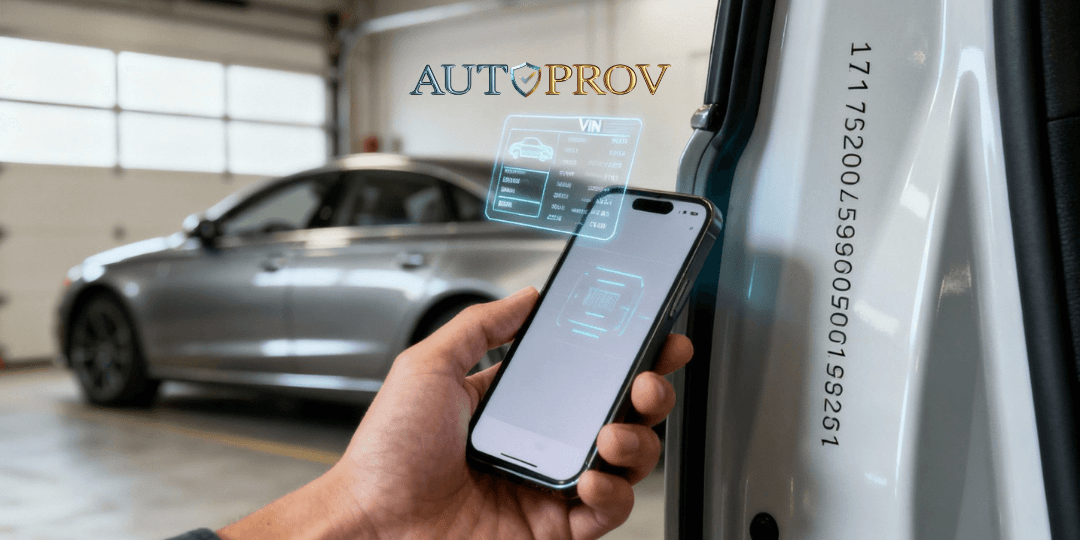
A Guide to Vehicle Check with VIN Number
A vehicle check with vin number is easily the most important thing you can do before buying a used car. Think of it as your first line of defence—a quick, simple step that pulls back the curtain on a vehicle's past, protecting you from expensive mistakes, legal headaches, and downright dangerous cars.
Published by AutoProv
Your trusted source for vehicle intelligence