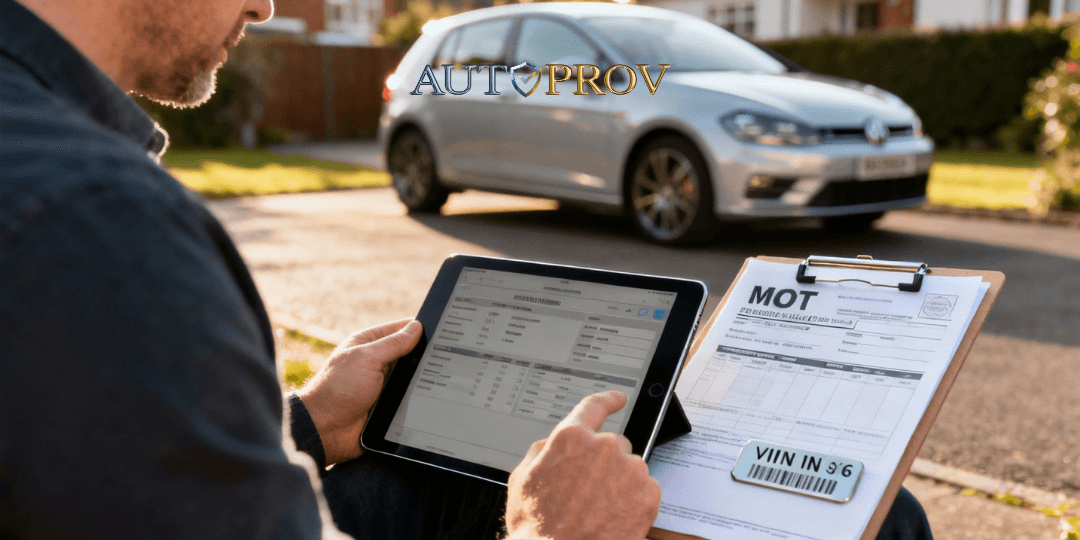
To check a vehicle's history in the UK, you just need its registration number. Your first port of call should always be the free DVLA and MOT history checkers on GOV.UK. These give you the basics on tax, MOT status, and recorded mileage. But for the full picture—the stuff that really matters, like outstanding finance, insurance write-offs, and stolen status—a comprehensive check from a service like AutoProv is absolutely essential. Our service is designed to give you a clear, comprehensive understanding of a vehicle's past, ensuring you buy with complete confidence.
To check a vehicle's history in the UK, you just need its registration number. Your first port of call should always be the free DVLA and MOT history checkers on GOV.UK. These give you the basics on tax, MOT status, and recorded mileage.
But for the full picture—the stuff that really matters, like outstanding finance, insurance write-offs, and stolen status—a comprehensive check from a service like AutoProv is absolutely essential. Our service is designed to give you a clear, comprehensive understanding of a vehicle's past, ensuring you buy with complete confidence.
Your Essential First Step Before Buying a Used Car
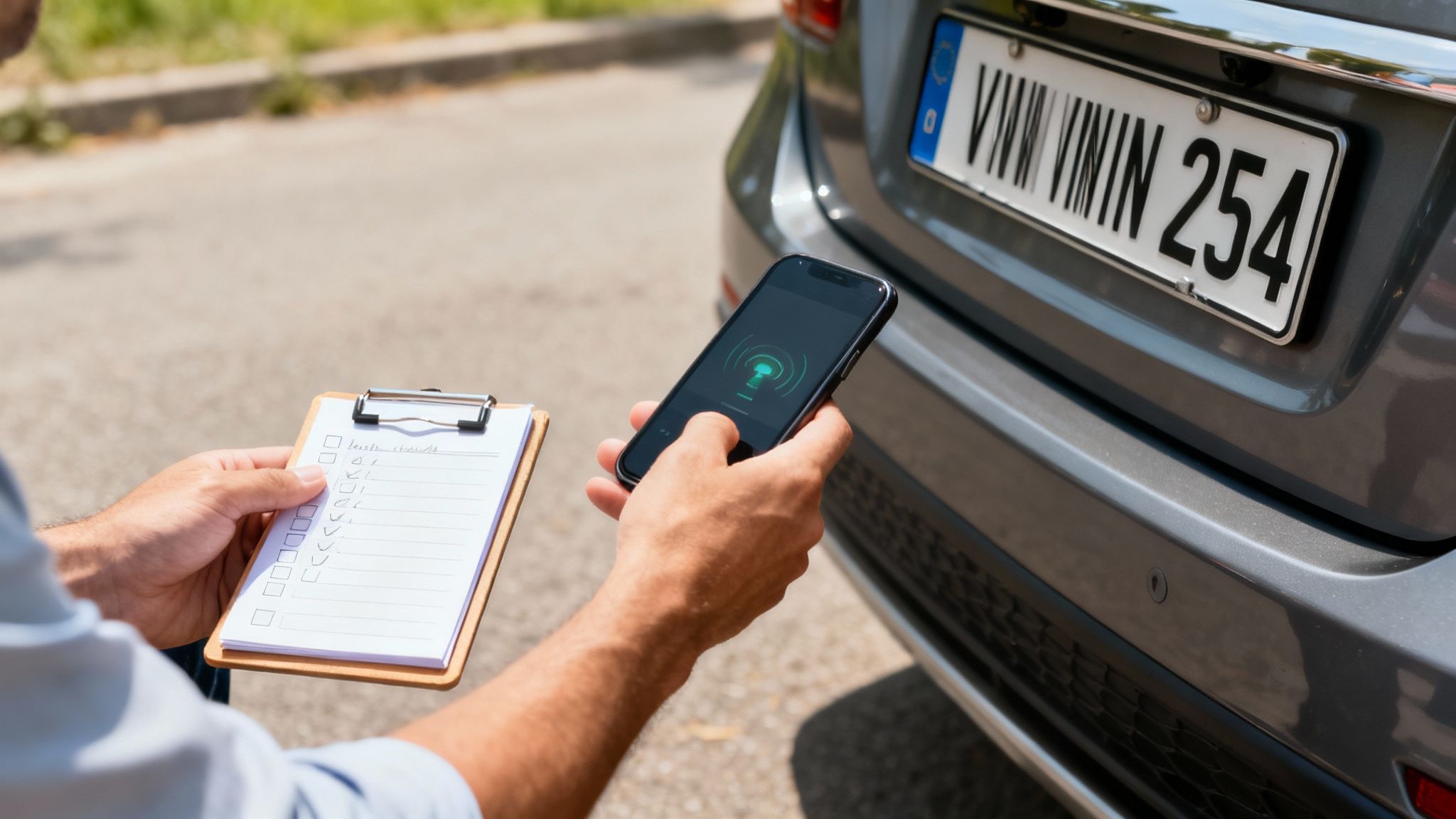
Buying a used car is a big deal, but that shiny paintwork and spotless interior only tell you a fraction of the story. What if the car you’ve set your heart on is hiding a dodgy past? It happens all the time. Thousands of UK buyers get caught out every year by undisclosed issues like outstanding finance or previous accident damage, turning a bargain into a long-term financial headache.
This guide is here to walk you through exactly how to check a vehicle's history, giving you the confidence to buy smartly. We'll start with the free government resources that provide a quick overview, but more importantly, we’ll show you why those initial checks are just the beginning of the story and how a dedicated service like AutoProv provides the crucial details you need.
Why a Deeper Dive is Non-Negotiable
A quick glance online might confirm the car's make and model, but it won't uncover the critical details that truly protect your investment. Think of a proper vehicle history check as a pre-purchase inspection for the car’s paperwork. It lays out the vehicle's complete, unabridged story before a single penny changes hands. This isn't just about avoiding a lemon; it's about making a genuinely informed decision.
Here are just a few of the bombshells that only a full check can uncover.
- Outstanding Finance: A shocking number of used cars are still technically owned by a finance company. If you buy one without knowing, the lender could legally repossess it, leaving you with no car and no money.
- Insurance Write-Offs: A vehicle that’s been declared a write-off (like a Category S or N) could have sustained serious structural damage. Even if it's been repaired, its safety and value might be permanently compromised.
- Mileage Discrepancies: "Clocking" – the illegal act of rolling back the odometer to inflate a car's value – is still surprisingly common. A history check cross-references mileage records from MOTs, services, and sales to flag any suspicious drops.
- Stolen Vehicle Status: The worst-case scenario is accidentally buying a stolen car. The police will seize it, and you'll lose every penny you paid.
A proper check isn't just about avoiding risk; it's about empowerment. Knowing a vehicle’s full history gives you serious negotiating power and the certainty that you're paying a fair price for its true condition.
This is exactly where services like AutoProv come in. We compile data from insurers, finance houses, the police, and the DVLA into a single, easy-to-read report that exposes any hidden secrets. To get a better sense of what a professional report includes, check out our guide on essential vehicle checks before buying. Honestly, it's not an optional extra; it’s the most crucial step you can take in your car-buying journey.
Starting with Free Government MOT and Tax Checks
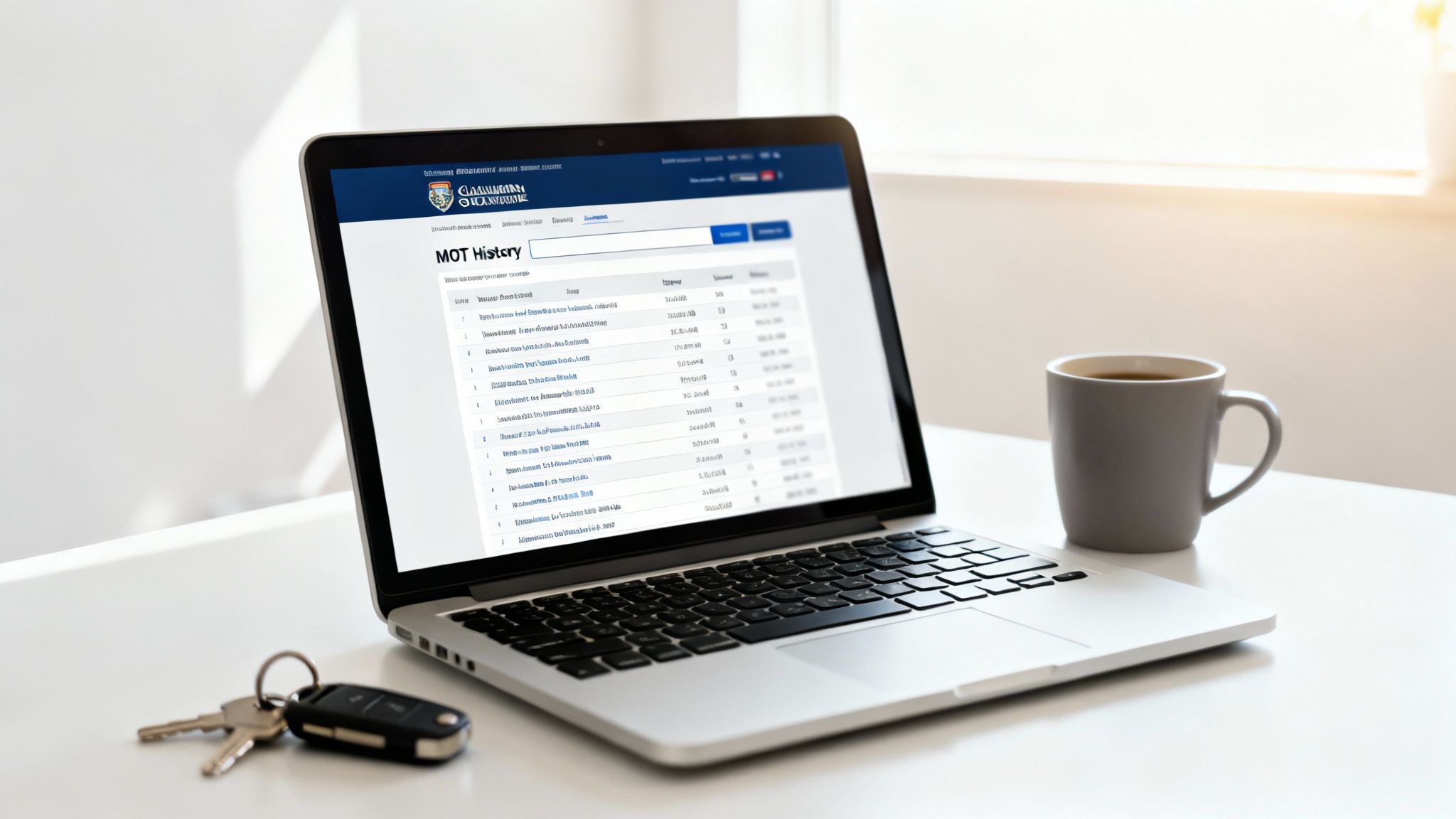
Before you even think about paying for a vehicle history report, your first port of call should always be the free resources from the UK government. The Driver and Vehicle Licensing Agency (DVLA) and the Driver and Vehicle Standards Agency (DVSA) provide a surprising amount of detail with just a registration number.
This isn’t just a box-ticking exercise; it’s your foundational due diligence. It's fast, costs nothing, and can instantly throw up red flags that let you walk away from a bad deal without wasting a penny or another minute of your time. Think of it as the first line of defence in your car-buying journey.
What the Free MOT History Check Reveals
The government's online MOT history checker is a genuinely powerful tool, and frankly, it's one of the best things you can do before viewing a car. It gives you a complete timeline of a vehicle's life from its very first MOT. The real gold here isn't just seeing a 'pass' or 'fail' certificate—it's in the nitty-gritty details.
For every single test, the report lays out the result, mileage at the test, the test centre location, defects found, and advisory notices. The advisories are where you strike gold. These are issues that weren't bad enough to fail the MOT but were flagged by the tester as needing attention soon.
A pattern of the same advisory popping up year after year—like 'slight play in steering rack'—is a huge clue. It suggests a persistent problem that the owner has been kicking down the road. It offers a window into how well (or how poorly) the car has been looked after. For a deeper dive, our complete MOT history guide shows you exactly how to read between the lines.
Using Mileage Records to Spot Discrepancies
The mileage recorded at each MOT is one of the most valuable bits of data you'll get. You can quickly map out the car's mileage progression over the years to see if it adds up. If you spot a sudden drop or a long period with no change, that's a massive red flag.
For example, if a car’s mileage was 60,000 miles in 2022 and then suddenly drops to 55,000 miles at its 2023 test, something is seriously amiss. This is a classic sign of clocking, an illegal practice designed to make the car seem less used and more valuable. AutoProv's intelligent analysis is designed to spot these inconsistencies automatically, saving you the manual effort.
Confirming Tax Status and Vehicle Details
Alongside the MOT history, the DVLA's free vehicle information checker lets you instantly confirm other core details. You can see if the vehicle has valid tax and when it expires.
While a car being untaxed isn't always a deal-breaker (sellers often declare it SORN when it's off the road), it’s another piece of the puzzle. The check also confirms the date of first registration, engine size, colour, and CO2 emissions, so you can make sure the seller's advert matches the official records.
The Limitations of Free Checks
As essential as these government tools are, they only tell part of the story. They simply don't have access to the most critical financial and safety information that could make or break your purchase.
Specifically, the free checks will not tell you if the car has outstanding finance attached to it, if it's ever been declared an insurance write-off, whether it has been reported as stolen, or any history of private plate changes.
These are the hidden dangers that can turn what looks like a bargain into a complete nightmare. That’s precisely why, once you’ve used the free resources to confirm the basics, your next move must be a comprehensive check from a provider like AutoProv that exposes these critical details.
Uncovering the Full Story with a Comprehensive Check
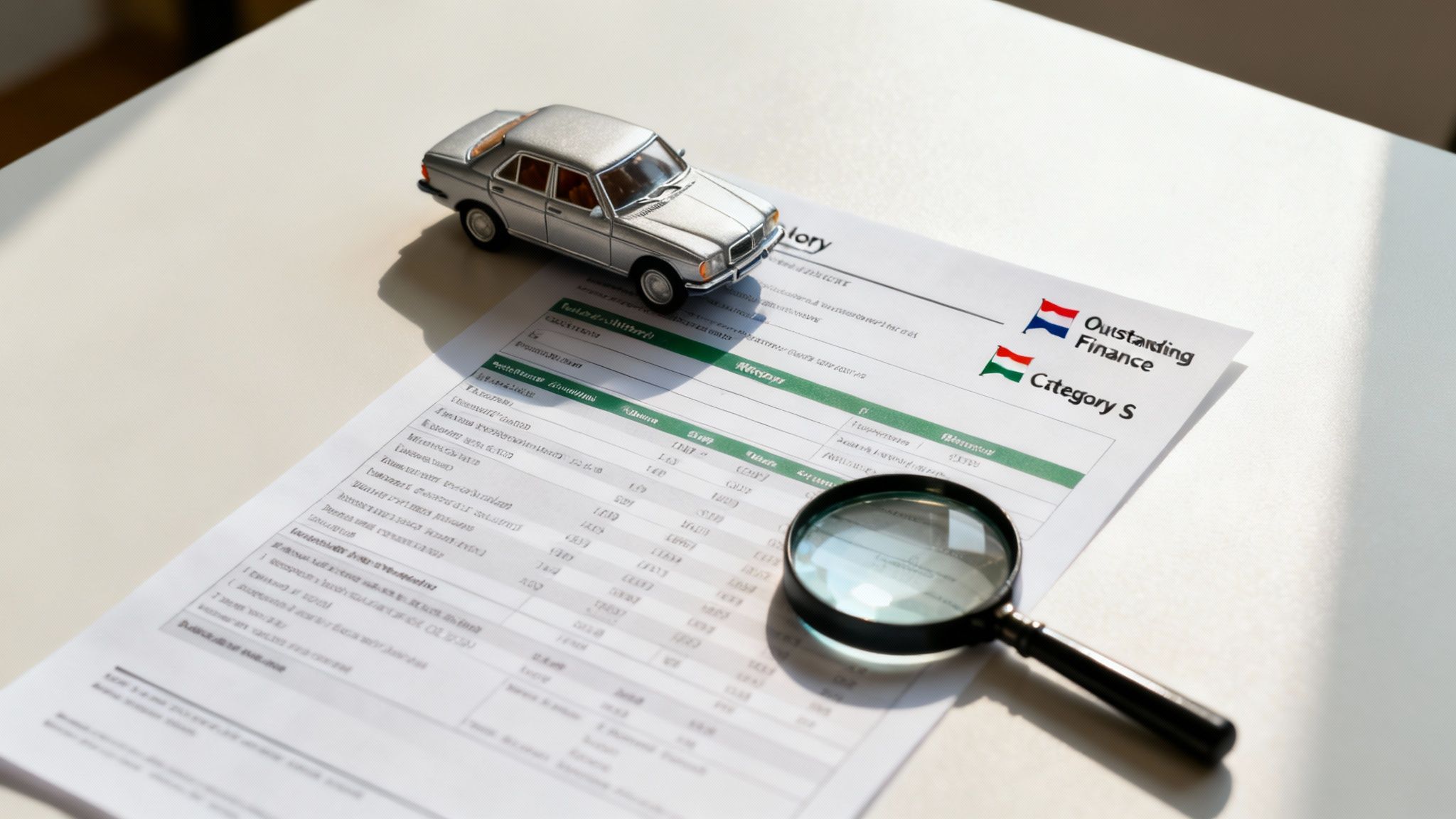
Those free government checks are a great starting point, but they really only scratch the surface. To truly get to know the car you’re thinking of buying, you have to dig a bit deeper. This is where you find the potential deal-breakers—the hidden nasties that can turn your dream car into a recurring nightmare for your bank account.
An AutoProv check is where the real detective work begins. It pulls back the curtain on the critical data that the DVLA and DVSA simply don’t track, giving you a complete biography of the car's life so far. This isn't just about buying peace of mind; it's about protecting yourself from some very real legal and financial risks.
The Critical Threat of Outstanding Finance
One of the biggest gambles in buying a used car privately is outstanding finance. It’s a dangerously common misconception that when you buy a car, any existing finance agreement is automatically sorted. It isn't. If a vehicle still has an active finance agreement, it legally belongs to the finance company, not the person selling it.
If you buy a car with outstanding finance, the finance company has every right to repossess the vehicle at any time, leaving you with no car and no money. A government check will never tell you this; only a full report from a service like AutoProv can confirm if the car is free and clear.
A comprehensive vehicle check from AutoProv is your only real defence against accidentally buying a car that someone else technically still owns. It verifies whether the vehicle is clear of any hire purchase, personal contract purchase (PCP), or logbook loan agreements.
This isn't a rare problem, either. Recent industry reports suggest that almost 52% of all used cars in the UK have some kind of hidden history, and outstanding finance is a huge part of that. When you consider our checks are a tiny investment, it’s a small price to pay to avoid a potentially devastating financial hit.
Demystifying Insurance Write-Off Categories
Another vital bit of information an AutoProv check uncovers is whether a car has ever been declared an insurance write-off. When a car gets damaged, the insurer works out if it’s economical to repair. If the numbers don't add up, it's "written off" and given a category.
Getting your head around these categories is key. Category S means the car has taken a knock to its core frame or chassis. It can be professionally repaired and put back on the road, but its fundamental structural integrity might have been affected. Category N is for vehicles where the damage wasn't structural, but the repair bill was still more than the car was worth. This could be anything from cosmetic issues to problems with the electrics.
A seller is legally required to tell you if a car is a Cat S or Cat N write-off, but not everyone is upfront. An AutoProv report cuts through any potential dishonesty and tells you definitively if the car has been written off and why. This is absolutely essential for your safety and for negotiating a fair price, as written-off cars are always worth significantly less.
Stolen Vehicle and Plate Change Alerts
The absolute worst-case scenario? Accidentally buying a stolen car. If that happens, the police will eventually find it and seize it, and you’ll lose both the car and every penny you paid for it. Criminals often try to disguise a stolen car's identity by fitting it with registration plates from a similar, legitimate vehicle—a trick known as 'cloning'.
An AutoProv history check compares the car's registration number and its unique VIN (Vehicle Identification Number) against the Police National Computer (PNC). It will immediately flag if the car has been reported stolen, giving you a crucial layer of protection.
This is exactly where AutoProv proves its worth. By pulling together data from the police, finance companies, insurers, and the DVLA, it creates a single, trustworthy picture of the car. We gather information from dozens of trusted sources, putting everything into one straightforward report. For a full breakdown of where this information comes from, you can explore our detailed overview of our trusted vehicle data sources. This ensures you have all the facts you need to make a purchase you can feel good about.
Why an AutoProv AI Check Gives You a Serious Edge
Let's be honest, not all vehicle checks are created equal. Most services just dump a load of raw data on you and expect you to play detective. You get a list of dates, warnings, and advisories, and it's left entirely up to you to figure out what it all means. This is precisely where an AutoProv report changes the game.
We don't just give you the data; we give you the story behind it. AutoProv uses advanced AI to dig deeper, providing insights that go way beyond a simple pass or fail on a checklist. Think of it as having an expert mechanic and a data scientist sitting next to you, analysing the vehicle's entire life to spot the subtle, unusual patterns that the human eye would almost certainly miss.
This isn't just about getting information. It's about getting genuine intelligence that you can actually use.
From Raw Data to Real Insight
Imagine you're looking at a standard report. It flags a minor MOT advisory for brake wear one year, then another for thinning tyre tread the next. On their own, these look like normal, everyday maintenance items. Nothing to worry about, right?
But our AI doesn't just see isolated events. It connects them with other data points, like a recent change in ownership or a sudden spike in mileage between tests.
Suddenly, a pattern starts to take shape. A string of minor but persistent issues could be a sign of a car that's been driven hard and maintained on the cheap. This points to bigger, more expensive problems potentially hiding just out of sight.
That’s the kind of insight a traditional check simply can't offer. They hand you the puzzle pieces; AutoProv shows you the finished picture.
This intelligent analysis is what separates a standard data dump from a truly insightful vehicle provenance report. It’s the difference between seeing a list of facts and understanding the story they tell.
Making Sense of the Complexity
The world of vehicle data is a messy, complicated web of jargon and codes. Information is pulled from all over the place, including insurance databases (MIAFTR), Police National Computer (PNC) records, DVLA and DVSA databases, leading finance houses, and official manufacturer recall notices.
An AutoProv report cuts through all that noise. It takes this tangled mess of information and translates it into a simple, easy-to-digest format. You won’t need a dictionary to figure out our findings. We lay everything out clearly, highlighting the most critical information so you know exactly what needs your attention. This clarity gives you the confidence to ask the seller the right questions, negotiate a better price, or simply walk away from a bad deal.
Spotting the Subtle Red Flags
Sometimes, the biggest risks aren't the ones screaming at you in big red letters like "STOLEN" or "OUTSTANDING FINANCE". They're hidden in the small details of a vehicle's past. Our AI is specifically trained to hunt for these less obvious, but equally crucial, red flags.
Our AI analysis can bring to light real-world scenarios like suspicious plate changes, where frequent swaps can be a deliberate attempt to muddy a car's history. It also flags unusual MOT gaps, where a long period off the road could hide major, unrecorded repairs. Our system is also smart enough to spot more subtle tricks with mileage, like the odometer barely increasing between tests, which might suggest the car was used sparingly and possibly neglected.
By analysing dozens of these data points at once, we can flag anomalies that demand a closer look. You can learn more about the sophisticated processes we use by exploring how AutoProv's AI system works. It’s this forensic level of detail that gives you an unmatched layer of protection.
Your Ultimate Negotiation Tool
At the end of the day, knowing a vehicle’s complete, unvarnished story gives you incredible leverage. An AutoProv report isn't just a safety net; it's a powerful tool for your negotiation toolkit. A clean, verified report can confirm the seller's asking price is fair, giving you the peace of mind to move forward.
On the other hand, if our report turns up a few minor advisories, a patchy service history, or a past non-structural write-off (Cat N), you now have solid evidence to negotiate a fairer price—one that truly reflects the car's condition and value. It arms you with the facts you need to have a calm, informed conversation with the seller, ensuring you pay what the car is actually worth.
How to Read and Act on Your Vehicle History Report
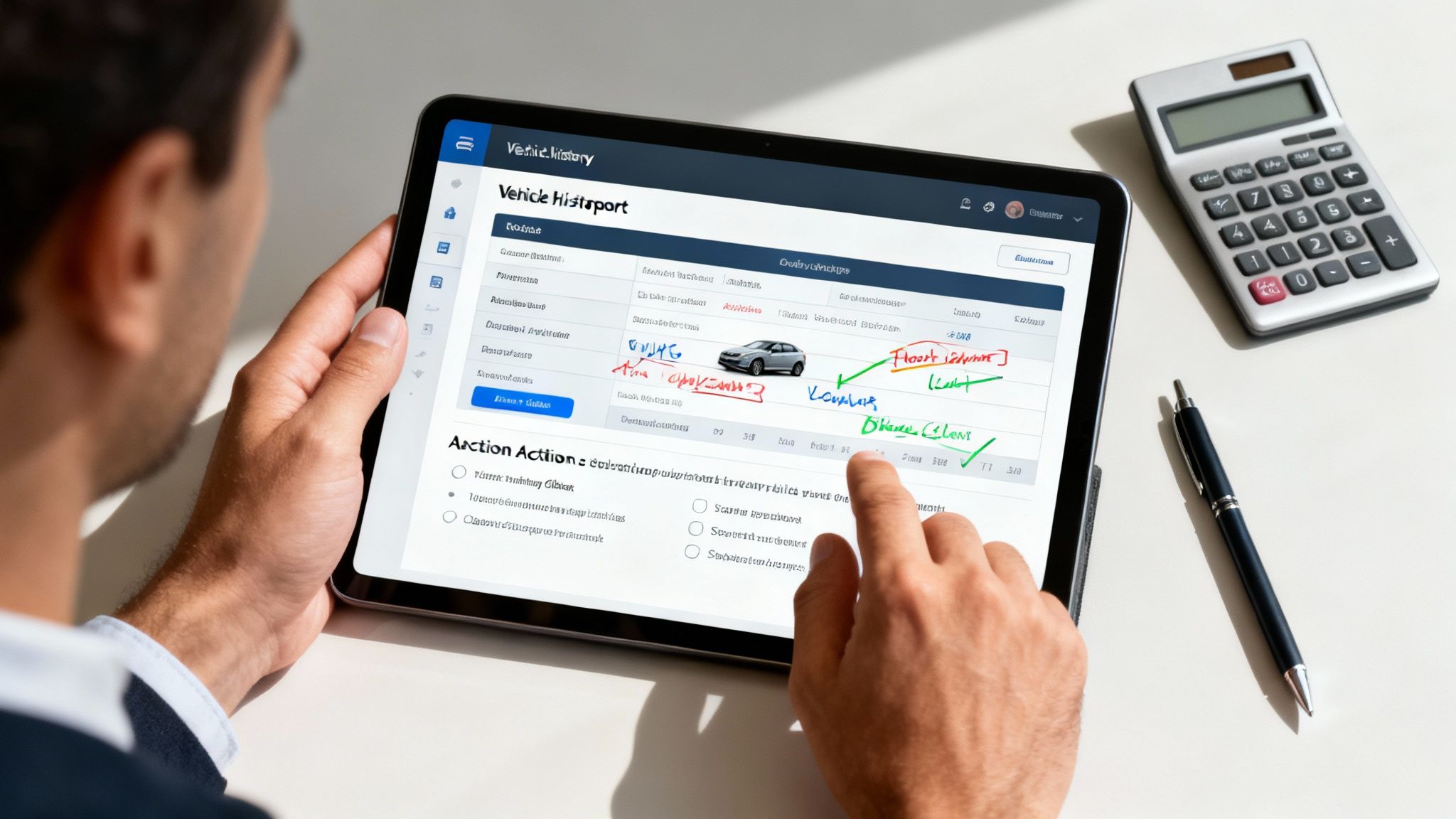
Getting your hands on a comprehensive vehicle history report is a fantastic first step, but the real magic happens when you know what to do with it. An AutoProv report isn't just a list of facts; it’s a powerful tool for your negotiation toolkit. Knowing how to interpret its findings is what separates a savvy buyer from someone who’s walking into a costly mistake.
Think of this section as your practical guide to turning that data into confident, clear decisions. We'll break down the key markers, explain what they really mean, and outline the exact steps you should take to protect your wallet and get the best possible deal.
Decoding the Critical Red Flags
When your AutoProv report pops up, your eyes will probably jump straight to any big, bold warnings. These are the potential deal-breakers, and they need your immediate and careful attention. Don't panic—instead, use them as a roadmap for your next conversation with the seller.
Here’s how to handle the most common alerts.
- Outstanding Finance: If the report flags an active finance agreement, you need to hit the brakes. The car legally belongs to the finance company, not the seller. Your next move is simple: insist that the seller provides a "settlement letter" from the lender, proving the finance has been fully paid off before a single penny changes hands.
- Stolen Vehicle Marker: This one is non-negotiable. If the report shows the vehicle is on the Police National Computer, you walk away from the deal immediately. No questions asked.
- Insurance Write-Off (Cat S/N): A Category S (structural) or Category N (non-structural) marker isn't always a complete deal-breaker, but it demands some serious detective work. The car's value will be significantly lower, and you absolutely need proof of professional, high-quality repairs.
When you see a write-off category, your mindset has to shift from buying to interrogating. The burden of proof is now entirely on the seller to prove that the vehicle has been repaired to a safe and professional standard.
For any write-off, you must ask the seller for detailed invoices and, ideally, photos of the repairs. Who did the work? Were genuine parts used? Without this paper trail, you have no real way of knowing if the car is safe to drive, and you should be fully prepared to walk away.
Using Minor Issues as Negotiation Leverage
Not every blip on an AutoProv report is a reason to run for the hills. In fact, some of the smaller details can become your most powerful negotiation tools. A clean slate on the major checks is great and might justify the asking price, but minor historical issues can give you the leverage you need to bring it down.
Dive into the MOT history. Look for patterns, like recurring advisory notices for "slight play in steering rack" or "corrosion on brake pipes." These are clues that point to ongoing issues the previous owner has likely ignored. While not failures, they signal future expenses that you will almost certainly have to cover.
You can bring this up calmly with the seller. A good approach is: "The AutoProv report is clean on finance and theft, which is great. I did notice, though, that the front brake discs have been an advisory for the last two MOTs. I'll need to get those replaced soon, so would you be willing to adjust the price to reflect that upcoming cost?"
This fact-based approach shifts the conversation away from opinion and towards a fair price based on the car's true condition. It gives you a solid foundation for any discussion. This isn't about being confrontational; it's about being informed. By systematically working through the report—addressing the big red flags first and then using the smaller details for negotiation—you transform the document from a simple check into a powerful asset that ensures you pay the right price for the right car.
Common Questions About Checking a Car's History
Even after going through all the steps, it's completely normal to have a few last-minute questions before you commit your hard-earned cash to a used car. Let's tackle some of the most common queries that pop up for buyers. These are the final pieces of the puzzle that will give you total confidence in your purchase.
Think of this as a quick-fire round to clear up any lingering doubts.
How Quickly Can I Get a Vehicle History Report?
This is a big one, especially when you’ve found a car you love and don't want to miss out. The great news? You won't be left waiting around. Comprehensive reports are pretty much instant.
Using a service like AutoProv, you can punch in the registration number and get a full, detailed report back in under 30 seconds. That kind of speed is a massive advantage in a fast-moving market. It means you can do your due diligence right there on the spot, whether you're at an auction or standing on a seller's forecourt.
Do I Still Need a Check If Buying From a Main Dealer?
It's a fair question. Main dealers have a reputation to protect, and they usually put their cars through rigorous multi-point inspections. But the answer is still a firm yes.
While dealers are generally a safe bet, nobody's perfect. Mistakes can happen, details can be missed, and their internal checks might not pull from the same wide-ranging data sources as a dedicated history check service like AutoProv.
An independent check from AutoProv is your personal safety net. It verifies the dealer's information and makes sure nothing has slipped through the cracks. It’s a simple, objective assessment that provides the ultimate peace of mind.
Look at it as the old 'trust but verify' approach. Any reputable dealer won't have the slightest problem with you running your own check. In fact, they should see it as a sign you're a serious, well-informed buyer.
What If a Seller Is Reluctant to Share the Registration Number?
This is probably the biggest red flag you'll ever see when buying a car. If a seller is cagey about giving you the registration number, your alarm bells should be screaming. There is absolutely no good reason for a genuine seller to hide it.
The registration number is the key to unlocking everything we've talked about, from the free government MOT history to a full AutoProv report. A refusal to share it almost always means they're hiding something serious, like outstanding finance, a write-off history, or a clocked mileage they're desperate for you to miss. It could also be an outright scam or a sign the car's details are wrong.
Your reaction here needs to be simple and immediate: walk away. A car purchase that starts with a lack of transparency is only going to lead to trouble. A trustworthy seller will give you the registration without a second thought, knowing it's just a standard part of the process.
Frequently Asked Questions
AI-Generated Content Notice
This article was created with the assistance of artificial intelligence technology. While we strive for accuracy, the information provided should be considered for general informational purposes only and should not be relied upon as professional automotive, legal, or financial advice. We recommend verifying any information with qualified professionals or official sources before making important decisions. AutoProv accepts no liability for any consequences resulting from the use of this information.
From our AI insights
- Navigating UK Grey Imports: A Trader's Guide
Understand the complexities and opportunities of UK grey imports for savvy motor traders.
- Uncovering the Real Costs of Vehicle Intelligence Services
Discover hidden fees and data quality issues in vehicle intelligence services.
- Decoding UK Auction Vehicle Histories
Understand how to assess UK auction vehicle histories and uncover hidden risks.
Related Articles

Essential Vehicle Checks Before Buying a Used Car
Learn essential checks to ensure your used car purchase is safe and sound in the UK market.

Why a Provenance Check is Essential for Used Car Buyers
Ensure your used car is a smart investment by understanding the importance of a provenance check and how AutoProv can help.
A Guide to Vehicle Check with VIN Number
A vehicle check with vin number is easily the most important thing you can do before buying a used car. Think of it as your first line of defence—a quick, simple step that pulls back the curtain on a vehicle's past, protecting you from expensive mistakes, legal headaches, and downright dangerous cars.
Published by AutoProv
Your trusted source for vehicle intelligence