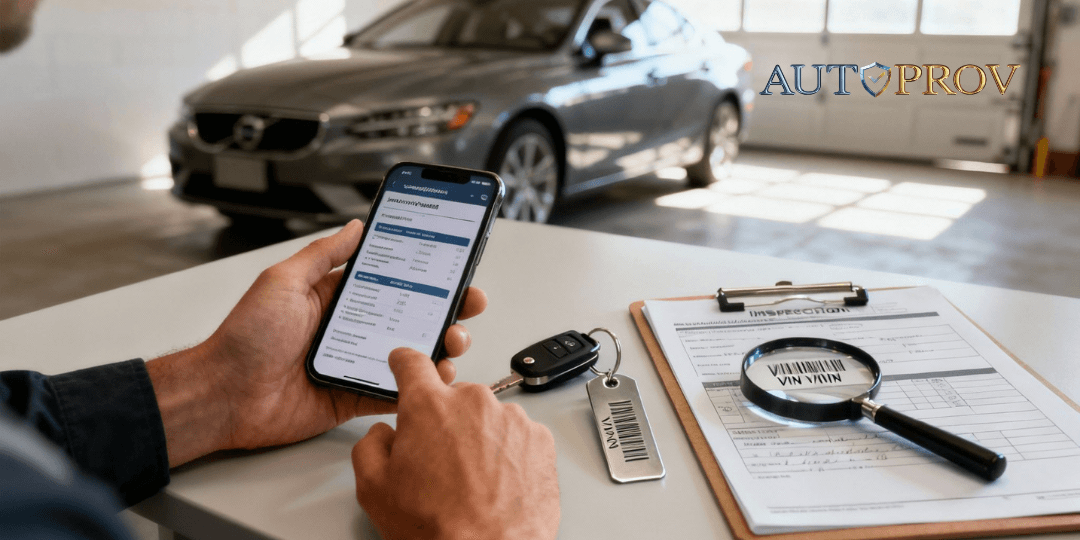
That shiny used car sitting on the forecourt looks perfect, doesn't it? But it could be hiding a very expensive secret. Let's be blunt: checking a used car’s history isn't just a good idea—it's a non-negotiable step in the UK. What you don't know can hurt you, leading to financial nightmares and even serious legal trouble. It’s all about uncovering the car’s real story before you put your money down.
That shiny used car sitting on the forecourt looks perfect, doesn't it? But it could be hiding a very expensive secret. Let's be blunt: checking a used car’s history isn't just a good idea—it's a non-negotiable step in the UK. What you don't know can hurt you, leading to financial nightmares and even serious legal trouble. It’s all about uncovering the car’s real story before you put your money down.
What Every Buyer Must Know Before a Purchase

Buying a used car is an exercise in trust, but taking the seller's word for it is a gamble you can't afford to take. The UK's used car market is massive, and unfortunately, it's filled with traps that can catch out even the most careful buyers. We're talking about things like undisclosed accident damage, outstanding finance agreements, and illegally altered mileage—all far more common than you might think.
Imagine driving away in your new car, only to find out weeks later it was declared a write-off after a major smash. Those cosmetic repairs could be hiding serious structural weaknesses, making the car unsafe and almost impossible to sell on for what you paid. This is a grim reality for thousands of buyers every single year.
The Most Frequent and Expensive Hidden Problems
Some hidden issues are more dangerous than others, often leading to thousands of pounds in unexpected costs or legal headaches you never saw coming. Getting to grips with these common red flags is your first line of defence.
You absolutely need to be looking for issues such as outstanding finance. If a car still has finance owing on it, the finance company is its legal owner. Simple as that. If you buy it, the lender has every right to repossess the vehicle, leaving you with no car and no money. Also, be aware of previous write-offs. A car that an insurer has written off (you'll see it categorised as Cat S or N) might have been repaired and put back on the road. Without knowing this, you could easily overpay for a vehicle with compromised safety and a heavily reduced value. Finally, watch out for mileage discrepancies. "Clocking," or illegally winding back the odometer, makes a car seem like it's done fewer miles. This doesn't just inflate the price—it means crucial maintenance has likely been missed, setting you up for premature mechanical failures down the line.
These aren't just hypotheticals. In the UK, hidden problems affect nearly 1 in 3 used vehicles. A proper history check pulls critical data from official sources like the Police National Database and DVLA records to give you the complete picture. While a basic government MOT check is free, a paid report from a service like AutoProv is the only way to uncover risks like outstanding finance or theft. It's a small price for a vital safeguard. You can read the full research about these crucial vehicle checks and see why they matter so much.
A vehicle history check isn't just about avoiding a lemon; it's about confirming you're buying a genuinely good car. The small upfront cost of a report is nothing compared to the financial devastation of a bad purchase.
Why a Professional Check Is Essential
The sheer amount of data involved and the complexity of these hidden issues make a professional-grade history check indispensable. A quick look around the car and a short test drive will never reveal its past. You can't see a lingering finance agreement or verify the mileage log just by popping the bonnet.
This is where modern tools bring clarity and confidence. At AutoProv, we cut through the noise by using advanced AI to analyse data from over 10 trusted sources in an instant. Our platform is built for motor trade professionals who can't afford to get it wrong, delivering the certainty needed to buy with complete peace of mind. By automating the heavy lifting of checking used car history, we let you focus on what really matters—making a sound investment, without worrying about what secrets might be lurking in the past.
Gathering Your Essential Vehicle Details

Before you can dig into a car’s past, you need to get the basics right. Every solid vehicle history check starts with gathering the fundamental identifiers, and getting this part wrong can send you down a rabbit hole. This isn't just admin; it's your first chance to spot discrepancies that could signal trouble.
The two details that matter most are the car’s registration number (its number plate) and the Vehicle Identification Number (VIN). While the reg is easy enough to spot, the VIN is the vehicle's unique 17-character fingerprint. Verifying it properly is a non-negotiable part of your due diligence.
Locating and Verifying the VIN
Think of the VIN as the key that unlocks a car's entire story. Your first job is to confirm that the VIN physically stamped on the vehicle is an exact match for the one on its paperwork. If they don't line up, that's an immediate red flag—you could be looking at a stolen or 'cloned' car.
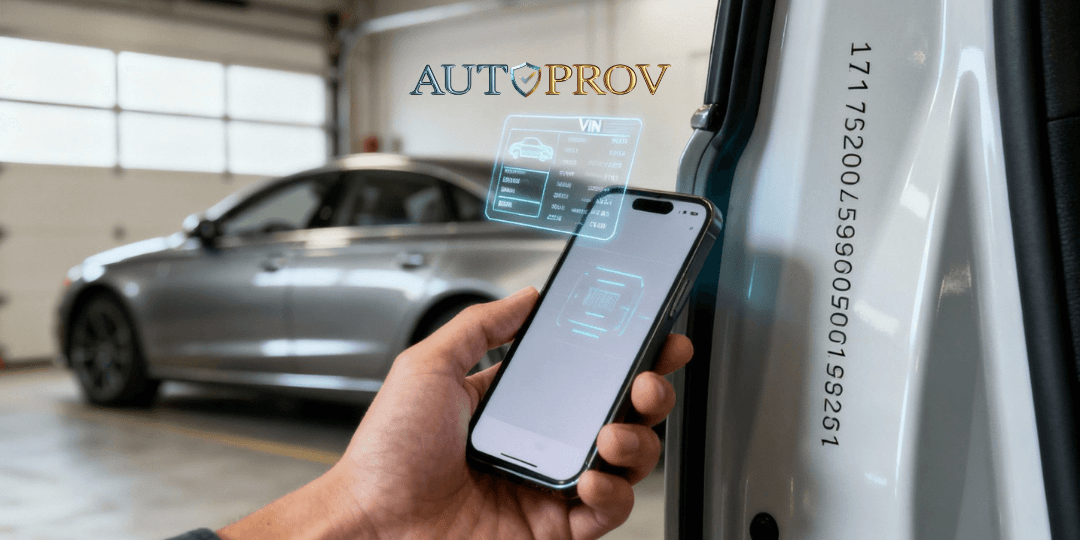
You'll usually find the VIN on the dashboard, visible through the windscreen on the driver's side. You can also check the door pillar; open the driver’s door and look for a sticker on the frame between the front and back doors. Sometimes the VIN is also stamped directly onto the chassis or engine block under the bonnet.
Once you’ve found the VIN on the car itself, compare it character-for-character with the one printed on the V5C logbook. They have to be identical. If you want to get into the nitty-gritty of this, check out our guide to performing a vehicle check with a VIN number.
Scrutinising the V5C Logbook
The V5C document is far more than just a piece of paper; it’s the car’s official biography. Unfortunately, criminals have become pretty skilled at faking them, so you need to know what a genuine one looks and feels like.
When you get your hands on the V5C, give it a proper inspection. Hold it up to the light to look for the distinctive watermark embedded in the paper. Feel the texture—it should feel like a quality, official document, not flimsy printer paper. Keep an eye out for any signs of tampering like smudged ink, altered text, or spelling mistakes, which are classic giveaways of a forgery.
Don’t just glance at the V5C—inspect it. Verifying its authenticity and ensuring the VIN matches the car is the bedrock of a trustworthy transaction. Overlooking this step exposes you to significant risk.
Running Initial Free Government Checks
With the registration number, you can run a few preliminary checks using the government's free online tools. The DVLA’s vehicle information checker and the MOT history service are great places to start.
These free services will quickly show you when its next MOT is due, its full MOT history including every pass, fail, and advisory note, the mileage recorded at each MOT test, and basic vehicle details like its colour, engine size, and date of first registration.
This is a fantastic first pass for spotting obvious problems, like a huge gap in the MOT history or mileage that barely creeps up between tests. But it's just as important to understand what these free checks don't show you. They won't tell you if the car has outstanding finance, has been written off by an insurer, or is currently listed as stolen.
That information gap is exactly why a professional-grade check isn't just a good idea—it's essential. While a free check can flag basic issues, it only scratches the surface. To get the full picture and truly protect your investment, you need a service that digs deeper. This is where AutoProv comes in, pulling data from over 10 trusted sources to give you the confidence you need before you buy.
How to Read a Vehicle History Report

Getting the history check is the easy part. The real skill is knowing how to read between the lines. Your AutoProv report is a dense document, but it’s packed with clues that piece together the car’s true story.
Think of it less like a checklist and more like a biography. Every data point—from MOT advisories to a change in keepers—is a chapter in the car’s life. Your job is to connect those dots and find the parts of the story that just don't add up. Let's break down how to interpret the data like a seasoned pro.
Decoding Write-Off Categories
One of the first things you should look for is any history of being written off. When a car is damaged, insurers use specific categories to decide if it's economical to repair. Knowing what these mean is absolutely vital, as they directly impact a car's safety, value, and insurability.
The two you'll see on modern reports are Category S (Cat S), which means the vehicle has suffered serious structural damage to its chassis or frame, and Category N (Cat N), which signifies non-structural damage, such as cosmetic issues or faults with electrics or steering. A Cat S marker means that although it has been professionally repaired, its core structure was once compromised. With a Cat N write-off, the main vehicle structure was untouched, but the insurer still decided the repair bill was too high compared to the car's value.
Finding a Cat S or Cat N marker isn't an automatic "no," but it demands extreme caution. You absolutely must see proof that the repairs were done to a high standard. Ask for detailed invoices and, ideally, photos of the work in progress. A well-repaired Cat N car can be a decent buy, but a badly fixed Cat S is a massive safety risk you just don't want to take.
Analysing Outstanding Finance Markers
This section is black and white. If your AutoProv report flags outstanding finance, it means one thing: the car doesn't legally belong to the person selling it. It belongs to a finance company.
Until that debt is fully settled, the lender has the right to repossess the vehicle at any time—even after you've bought it.
There is zero grey area here. Do not proceed with the sale unless the seller provides you with a settlement letter from the finance company confirming the debt has been cleared. This must happen before any money changes hands. Never, ever accept a promise that they’ll use your money to pay it off.
An "Outstanding Finance" alert is one of the biggest red flags you'll ever see. It's a direct warning of potential financial loss and a whole lot of legal trouble. Don't walk away—run.
Spotting Mileage Anomalies
A car's mileage is the simplest measure of its wear and tear, which is why "clocking"—illegally winding back the odometer—is still a huge problem. Your report fights this by pulling mileage records from MOT tests, services, and previous sale adverts to build a timeline.
What you're looking for is a steady, logical increase over time. Any sudden, unexplained drop is a massive red flag. For instance, if an MOT in 2022 recorded 75,000 miles and the 2023 test mysteriously shows 55,000 miles, you know something is seriously wrong.
Look for other oddities, too. Did the mileage suddenly stop climbing for a few years? This might suggest it was off the road, but if the MOT history shows it was still being tested during that time, it points to tampering. A tiny discrepancy of a few hundred miles could be a simple data entry error, but big, illogical jumps are almost always a sign of fraud.
Connecting the Dots in the MOT History
The MOT history is an absolute goldmine. It tells you so much more than just whether the car passed or failed. Every single advisory and minor defect is logged, giving you a year-by-year picture of the car’s health and how it's been looked after.
When you dive into this section, look for tell-tale patterns like recurring advisories. Is the same issue popping up repeatedly? This suggests an owner who ignored problems until they became failures. Also pay close attention to any mention of rust, especially on critical parts like brake pipes or sub-frames. Finally, look for significant gaps. A long break between MOTs could mean the car was in storage, but it could also mean it was off the road for a major, undeclared repair.
To get even more out of this data, our comprehensive MOT history guide breaks down exactly how to interpret every detail.
By carefully piecing together the information from each part of your AutoProv report, you stop being a simple buyer and start becoming an investigator. You can see the car's real story, spot the risks before they become your problem, and go into any negotiation with the confidence that you know exactly what you're buying.
Why Free Checks Just Don't Cut It
Kicking off your car check with a free government tool feels like the logical first move. And it is. Using the DVLA or MOT history database gives you a quick, if basic, snapshot of a vehicle. You can confirm its tax status, see its MOT history year-by-year, and note down any advisories. It’s a decent starting point.
But stopping there is like reading the back cover of a book and thinking you know the whole story. These free checks lay a foundation, but they leave massive, dangerous gaps in the vehicle's history—the kind of gaps that can end up costing you thousands. The most critical, high-risk information simply isn't part of the deal.
The Blind Spots of Government Checks
The convenience of a free check is great, but what these reports don't tell you is where the real danger lies. They were never designed to be a comprehensive risk assessment for a buyer.
The crucial details they completely miss include outstanding finance, as a free check will never tell you if the car is still owned by a finance company. You also won't find a single mention of whether an insurer has previously declared the car a total loss (think Cat S or Cat N) after an accident. Finally, these tools don't link up with police databases, so they have no way of knowing if the car is flagged as stolen on the Police National Computer (PNC).
Imagine driving away in your new car, only to have it repossessed weeks later because it legally belongs to a finance company. That’s the reality you’re risking by relying only on a free check. While they’re fine for a quick first look, they are absolutely no substitute for a full, professional history report from a provider like AutoProv.
How Paid Services Fill the Gaps
This is where a professional vehicle intelligence platform like AutoProv shows its true colours. We dig much deeper, pulling in data from a whole network of official and commercial sources that free services just can't access.
Our reports bring together information from finance houses, the official Motor Insurance Anti-Fraud and Theft Register (MIAFTR), and police records. This creates a complete, multi-layered picture of the vehicle, specifically designed to uncover the hidden risks that lead to expensive mistakes.
A free check confirms the basics; a professional check protects your investment. The difference comes down to accessing the high-stakes data that reveals a vehicle’s true history, safety, and legal status.
The AutoProv Advantage: AI-Powered Insight
We take this a step further. AutoProv uses an AI-driven approach to not just gather this critical data but to actually analyse it for subtle red flags and inconsistencies. A simple data lookup might show a clean record, but our system is trained to spot anomalies that the human eye would almost certainly miss—things like unusual MOT patterns or conflicting details between different data sources.
For example, while free government checks in the UK give you the essentials like MOT history, they stop short of the big three risks: finance, write-offs, and theft. To get the full picture, paid services are the industry best practice, integrating data from police, insurers, and finance companies to build a complete risk profile. If you're weighing up your options, you can discover more insights about the best vehicle check services in the UK.
This level of robust assessment is precisely why motor trade professionals depend on us. They simply can't afford to take a punt on incomplete information. In the trade, understanding the importance of finance checks in a vehicle purchase is non-negotiable, and it should be for any serious private buyer, too. By investing in a proper check with AutoProv, you're not just buying data; you're buying peace of mind and protecting yourself from potentially devastating financial and legal trouble down the road.
Turning Your Report Into a Negotiation Tool

With a detailed AutoProv report in your hands, you're no longer just a buyer; you're an informed investor. This document isn't just a summary of the past—it’s your most powerful tool for shaping the final deal. The trick is to turn those data points into confident questions and solid negotiation leverage.
Every piece of information, from a minor MOT advisory to a past insurance claim, is a conversation starter. Your goal isn't to find fault for the sake of it, but to get the full story of the car's condition and make sure the asking price truly reflects its value.
Approaching the Seller with Your Findings
Once you're armed with the facts, you can approach the seller calmly and professionally. Rather than making accusations, frame your points as questions based on what the report has uncovered. This approach is far less confrontational and much more likely to lead to a productive chat.
For instance, if you spot a recurring MOT advisory for tyre wear, you could say, "The history check flagged that the front tyres have been an advisory for the last two years. Have they been replaced since the last MOT, or is that something I'll need to budget for?" It's a fair question that directly addresses a potential upcoming cost.
Likewise, if the report shows a Category N write-off from three years ago, ask to see the repair invoices. A transparent seller with nothing to hide should have this documentation ready. Their willingness to share it speaks volumes about the quality of the repair and their honesty.
The real goal of checking used car history isn't just to weed out the bad ones. It's to build a complete, honest picture of the vehicle so you can negotiate a price that fairly reflects its past, present, and future running costs.
Knowing When to Negotiate and When to Walk Away
The insights from your AutoProv check will generally fall into two camps: points for negotiation and absolute deal-breakers. Knowing the difference is crucial for protecting your investment and your business's reputation. Not every issue is a red flag; some simply justify a price adjustment.
Valid grounds for negotiation include minor historical issues like a previous Cat N repair (with full paperwork), recurring MOT advisories for wear-and-tear items, or a gap in the service history. These are all valid reasons to negotiate a lower price. Upcoming maintenance, such as a major service like a timing belt change, is also a clear justification for a price reduction.
However, some issues are deal-breakers. Outstanding finance is completely non-negotiable; if the finance isn't cleared before the sale, you have to walk away. A significant, unexplained drop in mileage is a massive red flag for clocking and another reason to reject the vehicle immediately. Finally, undisclosed Cat S damage is a serious safety concern, and if the seller didn't disclose it upfront, you simply can't trust what other issues might be hidden.
Ultimately, the information in your report empowers you to make that final, confident decision. It helps you accurately factor in future costs and understand how past issues could impact value down the line. For more on this, our guide on how to calculate vehicle depreciation offers some valuable insights. By using your report effectively, you can ensure every purchase is a smart one.
Any Lingering Questions About Car History Checks?
Even after digging through all the data, you might still have a few questions rattling around. That’s perfectly normal. Getting straight answers is the final step to buying with complete confidence. Let's tackle some of the most common queries we hear from buyers.
This isn't just about ticking boxes; it's about making a smart financial move you won't regret.
How Reliable Are These Online Checks, Really?
A top-tier online car history check, like the ones from AutoProv, is incredibly reliable. We don't guess—we pull data directly from the most authoritative sources available. This includes the DVLA, the Police National Computer (PNC), major insurance firms, and finance houses.
Now, is any check 100% foolproof? Not quite, as there can sometimes be small delays in data reporting. But a professional report from a trusted service like ours is, without a doubt, the single most powerful tool you have to uncover a car's true story. It massively cuts down your risk of buying a vehicle with expensive secrets.
What's the One Check I Absolutely Cannot Skip?
Every piece of the report builds a complete picture, but if I had to pick just one, it would be verifying the car is clear of outstanding finance. This is the big one. If you buy a car with a loan still attached to it, the finance company legally owns that vehicle, not the seller.
This means they have the right to repossess it at any time, leaving you with no car and no money, even if you paid in full. It's a devastating scenario, which is why services like ours make this check a top priority.
Can I Get the Full Story with Just the Reg Number?
Yes, all you need to kick off a full history check is the vehicle's registration number. A comprehensive service like AutoProv uses the reg plate to instantly query data from over 10 different sources, pulling everything together for you in moments.
However, a word of advice from experience: always, always cross-reference the Vehicle Identification Number (VIN). Find the VIN stamped on the car itself (usually at the base of the windscreen or on a door pillar) and make sure it matches what's on the V5C logbook and your history report. This simple step is your best line of defence against sophisticated "car cloning" scams, ensuring the car you're checking is the car you're buying.
For more detailed answers to common queries, you can explore the AutoProv FAQ page.
Frequently Asked Questions
AI-Generated Content Notice
This article was created with the assistance of artificial intelligence technology. While we strive for accuracy, the information provided should be considered for general informational purposes only and should not be relied upon as professional automotive, legal, or financial advice. We recommend verifying any information with qualified professionals or official sources before making important decisions. AutoProv accepts no liability for any consequences resulting from the use of this information.
From our AI insights
- Navigating UK Grey Imports: A Trader's Guide
Understand the complexities and opportunities of UK grey imports for savvy motor traders.
- Uncovering the Real Costs of Vehicle Intelligence Services
Discover hidden fees and data quality issues in vehicle intelligence services.
- Decoding UK Auction Vehicle Histories
Understand how to assess UK auction vehicle histories and uncover hidden risks.
Related Articles

Essential Vehicle Checks Before Buying a Used Car
Learn essential checks to ensure your used car purchase is safe and sound in the UK market.

Why a Provenance Check is Essential for Used Car Buyers
Ensure your used car is a smart investment by understanding the importance of a provenance check and how AutoProv can help.
A Guide to Vehicle Check with VIN Number
A vehicle check with vin number is easily the most important thing you can do before buying a used car. Think of it as your first line of defence—a quick, simple step that pulls back the curtain on a vehicle's past, protecting you from expensive mistakes, legal headaches, and downright dangerous cars.
Published by AutoProv
Your trusted source for vehicle intelligence