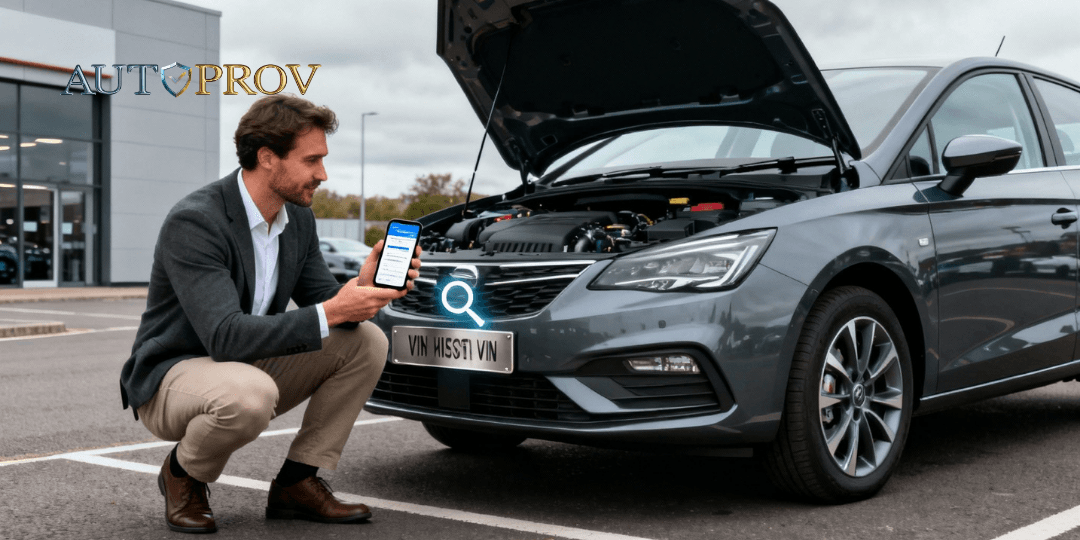
Before you even think about looking at a single car, the real work begins. Getting a safe deal on a used car in the UK is all about the groundwork. That means setting a proper budget, narrowing down your search to reliable models that fit your life, and—critically—running a full vehicle history check. This preparation phase is your best defence; it lets you weed out the dodgy cars from the get-go, so you only waste time on genuine contenders.
Before you even think about looking at a single car, the real work begins. Getting a safe deal on a used car in the UK is all about the groundwork. That means setting a proper budget, narrowing down your search to reliable models that fit your life, and—critically—running a full vehicle history check. This preparation phase is your best defence; it lets you weed out the dodgy cars from the get-go, so you only waste time on genuine contenders.
Building Your Foundation for a Safe Car Purchase

It’s tempting to jump straight onto the classifieds, but the smartest move you can make is to lay a solid foundation first. This isn't just about picking a colour you like; it’s about arming yourself with the right information to sidestep some very expensive mistakes. In this game, a rushed purchase is almost always a bad one.
Let's face it, the UK’s used car market is massive and moves at lightning speed. The Society of Motor Manufacturers and Traders (SMMT) reported over 6 million used car sales by September of last year alone. That incredible choice is a double-edged sword. It creates the perfect environment for hidden problems like undisclosed accident damage or clocked mileage to slip through the cracks.
Crafting a Realistic Financial Plan
Your budget has to be more than just the windscreen price. A genuinely safe purchase is one where you've accounted for the total cost of ownership. This simple bit of planning stops you from getting hit with a nasty surprise the minute you get the keys.
A proper financial plan should cover the purchase price, which is what you're paying for the car itself, and the ongoing insurance costs. It is vital to get quotes before you commit, as the difference between models can be staggering. You also need to factor in Vehicle Excise Duty (VED), commonly known as road tax, as you cannot skip this legal requirement. Finally, a sensible budget includes an upkeep fund. Be realistic and set a few quid aside for immediate jobs like new tyres, a fluid service, or any small niggles you spotted during your inspection.
Thinking this way turns your budget from a simple number into a strategic tool, making sure your new motor stays affordable long after you've driven it home.
Pinpointing the Right Vehicle for You
With your finances sorted, it's time to zero in on cars that actually make sense for your needs. It’s far too easy to get distracted by a sporty look or a fancy badge, but for a safe, long-term buy, practicality and reliability trump everything else.
Think about your day-to-day. Are you doing city-centre crawls that demand something small and frugal? Or are you racking up motorway miles and need something bigger for the family? Once you have a shortlist, dig into owner reviews and forums to uncover common faults and real-world running costs. The sheer volume of choice can feel overwhelming, but our guide on the best platforms to find a used car can help you cut through the noise.
Here's the most important shift in mindset you need to make: stop thinking like a typical punter and start thinking like you're in the trade. The very first check you run on any car that piques your interest shouldn't be for an insurance quote; it should be a comprehensive history check.
This is where a trade-focused service like AutoProv gives you a serious edge. Running a report upfront gives you instant clarity. It flags everything from outstanding finance to previous write-off damage before you've wasted a single phone call or invested any emotional energy. By making this your non-negotiable first step, you create a powerful filter that knocks out the riskiest cars from the start, letting you move forward with confidence.
Vetting a Used Car from Your Keyboard
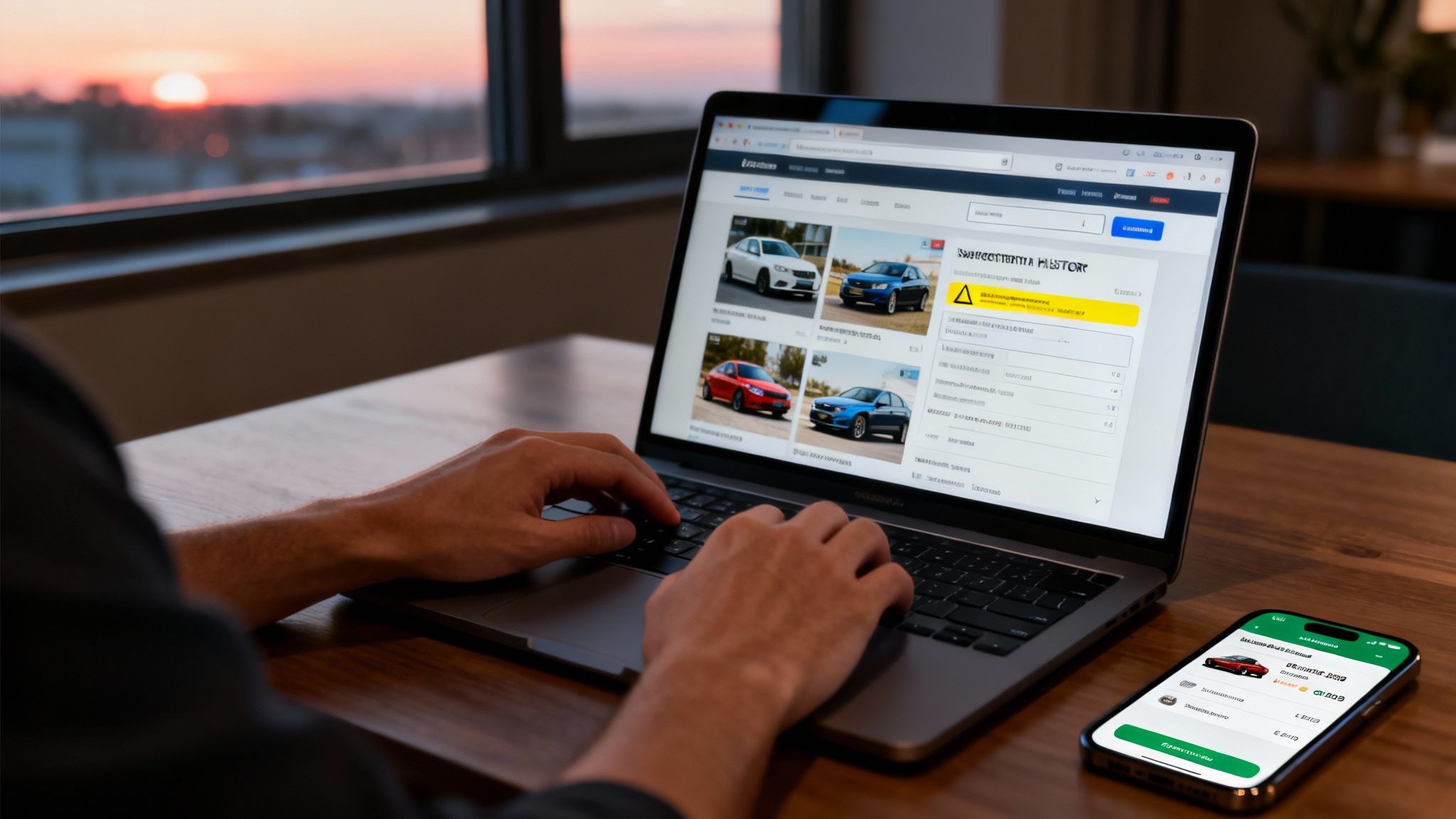
These days, the most important part of buying a used car happens long before you see it in the metal. It all starts with the digital due diligence you do from your desk. This is what separates a smart buy from a rolling disaster, and it’s where you learn to read between the lines of an online advert to spot the red flags most buyers miss.
The used car market is a classic "market for lemons"—an economic theory where sellers know a lot more about a car's true condition than buyers do. Without a way to verify their claims, good cars get lost in a sea of problematic ones, leaving buyers to take a massive gamble. Your keyboard is what levels the playing field.
Deconstructing the Online Advert
Every online car listing tells a story. Your job is to work out if it’s fact or fiction. A professional approach means looking at every single detail, starting with the pictures.
Are there inconsistencies in paint colour between the panels? That could point to a shoddy repair. Have the photos been taken in the rain to hide swirl marks and scratches? A seller who only uploads a few blurry, distant shots is almost certainly hiding something.
Next, tear the description apart. Vague language is a huge warning sign. A phrase like "age-related marks" could mean anything from a tiny scuff to serious corrosion. You want specifics: a detailed service history, proof of recent work, and a clear reason for selling are all good signs. A short, lazy description suggests a seller who either doesn't care or doesn't want you looking too closely.
The single most powerful tool at your disposal is the vehicle registration number (VRM). If a seller is reluctant to give you the VRM before a viewing, walk away. It's a massive red flag. Without it, you can't run the checks that protect your investment.
The Non-Negotiable Vehicle History Check
Once you have the VRM, the real work begins. This is the heart of your digital vetting process, where you stop analysing the seller's claims and start verifying hard facts. A trade-grade report, like the ones from AutoProv, is your best defence against fraud and misrepresentation. It pulls data from multiple official sources into one easy-to-read summary.
This is much more than a basic MOT check; it’s a deep dive into the car's entire recorded life. Your report must verify several key areas. First, check for outstanding finance. If there is a hire purchase or loan agreement secured against the car, the finance company legally owns it, not the seller. Buying a car with outstanding finance means it could be repossessed at any time.
Second, investigate the write-off history. The report will show if the vehicle has ever been declared a write-off and specify the category, like Cat S (Structural) or Cat N (Non-structural). A seller "forgetting" to mention this is a common trick. Next, look for theft markers to ensure the vehicle isn’t listed as stolen on the Police National Computer (PNC).
Finally, scrutinise MOT and mileage discrepancies. A full history check cross-references every MOT record to find inconsistencies. A big drop in mileage between tests is a clear sign of "clocking"—a fraudulent practice to make a car seem worth more. You can get a much clearer picture by reading our complete guide on how to check a car's history in the UK.
Imagine finding what looks like a perfect Audi A4 for a great price. The seller is friendly, the pictures are flawless. But an AutoProv report reveals it was a Cat N write-off six months ago and has a mileage discrepancy of 30,000 miles. You’ve just dodged a bullet and saved yourself thousands in potential repair bills and depreciation—all without leaving your chair. That’s the power of vetting from your keyboard.
The Hands-On Inspection and Test Drive
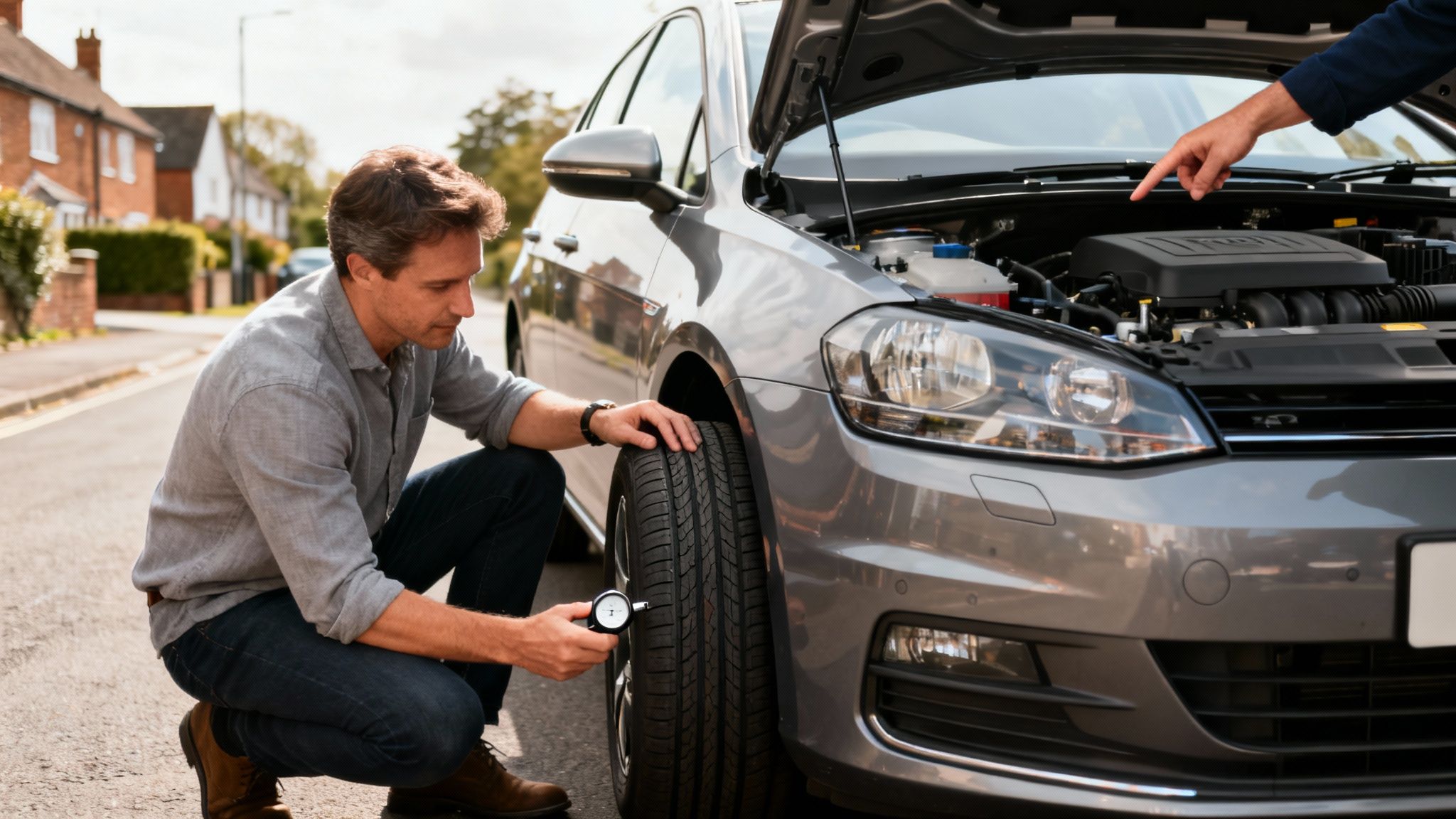
Once your digital detective work gives the car a clean bill of health, it's time for the real world. You need to confirm the metal matches the data. This is the moment you switch from analytics to a hands-on diagnostic, and it's a make-or-break step in buying a used car safely in the UK. A perfect AutoProv report is useless if the car has been neglected or is hiding developing mechanical gremlins.
First things first: always view the car at the seller's home address—the one printed on the V5C logbook. This simple step helps weed out dodgy traders posing as private sellers. Also, make sure you inspect it in broad daylight and on a dry day. Rain is brilliant at hiding paint swirls, scratches, and even minor dents that you'd spot immediately in the sun.
The Static Walkaround Inspection
Before you even touch the keys, give the car a proper, slow walkaround. This isn't just a quick glance; it's a methodical hunt for the tell-tale signs of past damage or cheap repairs the seller is hoping you’ll overlook.
Start with the bodywork. Crouch down at each corner and look along the length of the panels. Your eye will pick up ripples or distortions in the reflection which often scream "previous repair". Check the gaps between the doors, bonnet, and boot; they should be tight and perfectly even. If they're wide or wonky, it’s a classic sign that panels have been off the car, likely after a shunt.
Next, get forensic with the paint. Look for fine paint overspray on the rubber window seals or under the wheel arches. Mismatched shades between adjacent panels, however subtle, point to a localised respray. Don’t forget the tyres, either—uneven wear across the tread is a dead giveaway for alignment or suspension problems brewing.
Your goal is to find evidence that contradicts the car's documented history. If the report shows no accidents but you find clear signs of a front-end repair, it raises serious questions about what else hasn't been disclosed.
Under the Bonnet and Inside the Cabin
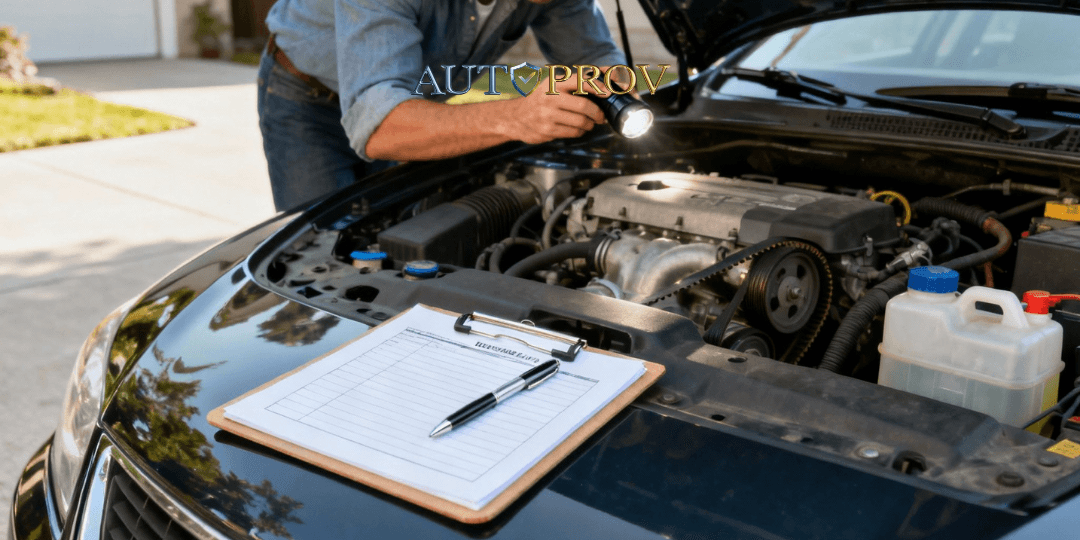
Exterior checked? Now, pop the bonnet. You don't need to be a qualified mechanic, but anyone can spot the big red flags. Scan the engine bay for obvious fluid leaks on the block or fresh drips on the ground underneath. Pull the dipstick to check the oil level and colour; it should be a clean golden brown, not thick, black sludge. A crucial check is to unscrew the oil filler cap. If you see a creamy, mayonnaise-like gunk, walk away. This is a classic symptom of head gasket failure, a very expensive fix.
Climb inside and get busy. Press every single button and flick every switch. Test the air-con (does it blow properly cold?), electric windows, stereo, and every single light. Look closely at the wear on the steering wheel, gear knob, and the driver's seat bolster. Does it feel consistent with the claimed mileage? A shiny steering wheel and worn-out seat on a supposed 30,000-mile car should set alarm bells ringing about potential "clocking". For a deeper dive, have a look at our guide to building your ultimate used car inspection checklist.
Conducting a Meaningful Test Drive
The test drive is your chance to really feel how the car performs in the real world. A quick five-minute jaunt around the block tells you nothing. You need to get it on a mix of roads, ideally including a faster A-road or a stretch of dual carriageway.
Turn the radio off and use your ears. Listen for any strange noises that shouldn't be there. With the engine, does it start from cold without a struggle? Listen for any deep knocking or lighter rattling sounds that get faster as you accelerate. For the gearbox, whether manual or automatic, the gear changes should be slick and smooth. Any whirring from a manual or clunky shifts from an auto spells trouble. Regarding brakes and suspension, perform a firm stop on a safe road; the car should pull up straight. Listen for knocks over potholes, which indicates worn-out suspension.
The UK market itself highlights why these checks are so vital. Data shows that around 52.3% of used cars sold here are second-owner vehicles. These often represent a sweet spot of value and reliability. And while independent dealers still hold a massive 48.3% of the used car market share, the growth of online platforms is giving savvy buyers more transparency and access to the very reports that make this process safer.
Ultimately, this hands-on evaluation is the final piece of the puzzle. It connects the dots between the digital data in your AutoProv report and the car's actual physical state, ensuring the vehicle you’re about to buy is as good in reality as it looks on paper.
Negotiating with Confidence and Paying Securely
Alright, you’ve done the digital deep-dive and given the car a proper once-over in person. Now it’s time to talk numbers. This is where your hard work pays off, letting you secure a fair price that reflects the car’s true condition and close the deal without any last-minute hitches.
Confident negotiation isn't about being confrontational; it’s about being prepared. Your power in this conversation comes directly from the homework you’ve already done. That AutoProv report and your own meticulous inspection notes are now your most valuable tools. This evidence-based approach takes the emotion out of it, turning a potential haggle into a calm, factual discussion about what the car is genuinely worth.
Using Your Findings as Professional Leverage
Don't just walk in and ask for a discount. That's amateur. Instead, build your case around the specific, concrete findings from your checks. Present the issues calmly and, crucially, link them directly to the cost of putting them right. This shows the seller you’re a serious, knowledgeable buyer who has done their due diligence.
For example, if you spotted two tyres nearing the legal limit and the brake pads are looking thin, state it clearly. Explain that these are immediate costs you’ll have to cover the moment you drive away, and propose a price adjustment to reflect those expenses. It’s a world away from just asking, "Can you knock £500 off?"
Your AutoProv report is the ace up your sleeve. Minor MOT advisories, for instance, can be brought up as a known future cost. Gaps in the service history are a valid reason to negotiate, as they affect long-term reliability. Even if a car was correctly advertised as a Cat N write-off, you can use this to ensure the price reflects its history and lower future resale value.
Remember, negotiation isn’t a battle to be won or lost. It's about agreeing on a price that is fair and justified by the vehicle's verifiable condition. The goal is simple: pay what the car is actually worth, not just the price on the windscreen.
Navigating the UK Used Car Market Climate
You have to know the market you’re playing in. Recent data shows the average used car price in the UK has hit £17,087, a slight increase year-on-year. This tells us the market is resilient; good quality cars are holding their value well.
What does this mean for you? While you absolutely have room to negotiate based on a car’s specific condition, sellers with well-maintained examples and perfect provenance are less likely to entertain low-ball offers. You can get more insight on current used car market trends to shape your approach. For a deeper dive into the art of the deal, check out our guide on how to bargain for the best car price.
Finalising Payment Securely
Once you’ve shaken hands on a price, how you pay is critical for buying a used car safely in the UK. Forget about big cash deals. Carrying thousands of pounds is a massive personal security risk, and it leaves zero paper trail if things go south.
The only sensible way to pay is a direct bank transfer, specifically using the Faster Payments Service (FPS). It’s instant, secure, and creates a clear, traceable record of the transaction. Never send the money until you’re with the seller, you have all the documents in your hand, and you’re ready to drive the car away.
Completing the Essential V5C Logbook Paperwork
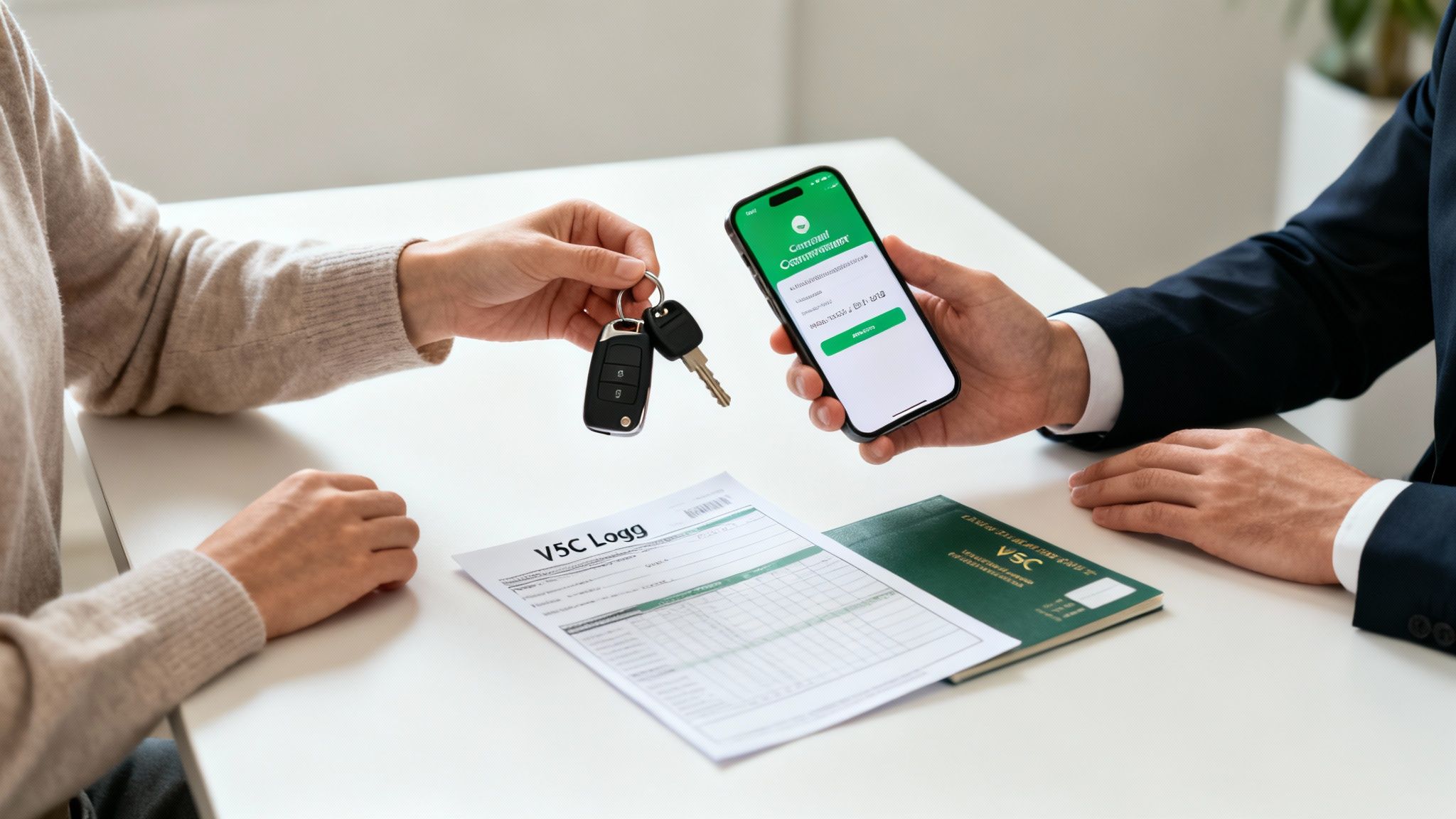
This is the final, non-negotiable step. Do not leave without the V5C logbook. Watch the seller fill out the "new keeper" section (that’s the green slip, section 2) and make sure they hand it to you before you take the keys. The seller is then responsible for telling the DVLA about the sale, either online or by post.
If this isn't done properly, you are not the legally registered keeper. The old owner could still be on the hook for fines, or worse, you could be. That little green slip is your proof of purchase until the new V5C with your name on it arrives in the post. Don't leave without it.
Getting it Home and Knowing Your Rights
The deal is done. The money's sent, and the keys are finally in your hand. For a lot of buyers, that’s the finish line. But for a professional, this is just the transition into the ownership phase. A few immediate, critical actions are needed to make sure your purchase is legal, protected, and hassle-free from the second you drive away.
Driving off the seller's drive without proper insurance is a massive own goal. Before you even think about turning the key, you must have at least temporary insurance in place. Plenty of insurers offer "drive-away" cover you can sort in minutes online or over the phone. Don't skip this – it isn't just a legal hoop to jump through; it’s your first and most important line of financial defence.
Next up, tax. You're legally required to tax the vehicle before it touches a public road. Vehicle tax is no longer transferable between keepers, so the previous owner's tax became void the moment you bought it. Thankfully, it's a simple job. You can get it sorted instantly on the DVLA website using the 12-digit reference number from your new keeper slip (the green V5C/2 section).
Understanding Your Legal Standing
The level of protection you have after buying a used car depends entirely on who you bought it from. This distinction is one of the most important things to get your head around, as your rights change dramatically.
When you buy from a registered motor trader, you are fully protected by the Consumer Rights Act 2015. This piece of legislation is your safety net. It states that the vehicle must be of satisfactory quality, fit for purpose, and as described in the advert.
If the car develops a serious fault within the first 30 days, you're entitled to a full refund under your "short-term right to reject". After 30 days but within six months, the dealer gets one chance to repair or replace the vehicle. The law is on your side here, presuming the fault was present at the time of sale unless the dealer can prove otherwise.
A classic forecourt tactic is the "sold as seen" or "no warranty" sign. Don't fall for it. This is legally meaningless. A trade seller cannot simply waive your statutory rights under the Consumer Rights Act.
The Wild West of Private Sales
Buying from a private individual is a completely different legal ball game. The Consumer Rights Act doesn't apply here. Instead, the old legal principle of "caveat emptor"—"let the buyer beware"—is in full force.
The only legal obligations a private seller has are to describe the car accurately and to have the legal right to sell it (meaning it isn't stolen or still on finance). If you discover a catastrophic mechanical issue the day after you buy it, you have very little legal comeback unless you can prove the seller deliberately and knowingly lied to you about its condition. And believe me, that's incredibly difficult to do.
This is precisely why a meticulous pre-purchase inspection and a comprehensive vehicle history report are non-negotiable in a private sale. To get a better grasp of your position, our detailed article explains the full scope of the Consumer Rights Act 2015 in the UK motor trade.
Common Questions on Buying a Used Car Safely
Even the most seasoned buyer hits a few common snags. You’ve done your homework, you’ve lined up the car, but then a curveball comes your way. This is where experience really counts.
Let’s run through a few real-world scenarios that can easily derail a deal, and how to handle them like a pro to protect your investment.
What If a Car Has No Service History?
This is one of the biggest red flags you'll ever see. A missing service history, especially on a newer car, should have alarm bells screaming. We’re not just talking about a few missed oil changes; we're talking about a complete lack of proof that the car has been looked after.
Sure, an older, cheaper runaround might have a lost book – it happens. But for anything more significant, a seller's excuse of "I serviced it myself" or "the garage forgot to stamp it" just doesn't cut it. You have zero proof that critical jobs, like a cambelt change, have ever been done.
In this situation, the negotiating power is firmly in your hands. You have to assume the worst and budget for a full major service and any big-ticket items that are due. That cost should come directly off your offer.
A car with zero service history is a massive gamble. An AutoProv report can help by confirming MOT history and flagging mileage discrepancies, but it’s no substitute for a proper maintenance log. Tread very, very carefully.
Is an Independent Mechanic's Inspection Worth It?
One hundred percent, yes. For a private sale, a professional pre-purchase inspection (PPI) is the smartest few hundred quid you can spend. Your own checks are vital, of course, but a good mechanic has the experience and equipment to spot things you’ll almost certainly miss.
They can pick up on the subtle signs of a head gasket on its way out, find historic fault codes lurking in the ECU, or spot developing suspension issues that won’t be obvious on a quick test drive.
Think of it as an insurance policy. The inspector’s report gives you a totally unbiased, expert view of the car's true condition. It will either give you the confidence to seal the deal or hand you a concrete list of reasons to walk away – or to negotiate a much, much lower price. It's a small outlay that can save you thousands in the long run.
How Do I Safely Buy a Car Located Far Away?
Buying a car from the other side of the country is common these days, but it requires a disciplined approach. You can’t afford to get this wrong after investing time and money in travel. Your initial digital vetting process becomes absolutely critical here.
First off, insist on a live video call. Get the seller to walk you around the car in detail, inside and out, and crucially, ask them to start it from cold while you watch.
Never, ever travel for a car without running a comprehensive history check first. An AutoProv report is your first line of defence, confirming the vehicle’s identity and making sure there are no hidden skeletons like outstanding finance or a write-off history. If that comes back clean, consider paying for a mobile PPI in the seller's local area before you even think about booking a train ticket.
Finally, do not send a deposit or pay for the car until you’ve seen it with your own eyes. Arrange to meet the seller at the address on the V5C, do your own final checks and test drive, and only then make a secure bank transfer. This structured process is fundamental to buying a used car safely in the UK, regardless of how many miles away it is.
Frequently Asked Questions
AI-Generated Content Notice
This article was created with the assistance of artificial intelligence technology. While we strive for accuracy, the information provided should be considered for general informational purposes only and should not be relied upon as professional automotive, legal, or financial advice. We recommend verifying any information with qualified professionals or official sources before making important decisions. AutoProv accepts no liability for any consequences resulting from the use of this information.
From our AI insights
- Auction Pitfalls: Avoiding Costly Mistakes
Navigate UK car auctions with confidence by avoiding finance, write-off, and mileage risks.
- Mastering Paint Code Checks: Detecting Hidden Car Repairs
Discover how to use paint code verification to identify hidden car repairs and ensure a smarter purchase.
- UK Part-Exchange Checks: Protecting Dealer Margins
Explore essential part-exchange checks for UK dealers to safeguard profit margins, including provenance and finance verification.
Related Articles

Your Ultimate Guide to Buying a Used Car in the UK
Navigate the UK used car market with confidence using our comprehensive buying guide. Tips, checks, and AutoProv Provenance insights included.

Difference Between MOT and Service: What You Need to Know
An MOT is a mandatory legal inspection that every car on UK roads needs to pass.Think of it as the government's way of ensuring your vehicle meets the absolute minimum safety and environmental standards to be considered roadworthy. A service, on the other hand, is a completely different beast. It's the proactive maintenance routine recommended by the people who built your car, designed to keep it running smoothly and catch problems before they start. In short, an MOT is a pass-or-fail exam required by law. A service is a comprehensive health plan for your car.
Your Ultimate Used Car Inspection Checklist
A solid used car inspection checklist is the single most powerful tool you have to avoid buying a lemon. It gives you a methodical way to look past the shiny paint and assess a car's real condition, helping you spot hidden problems and get a fair price before you shake hands on the deal.
Published by AutoProv
Your trusted source for vehicle intelligence