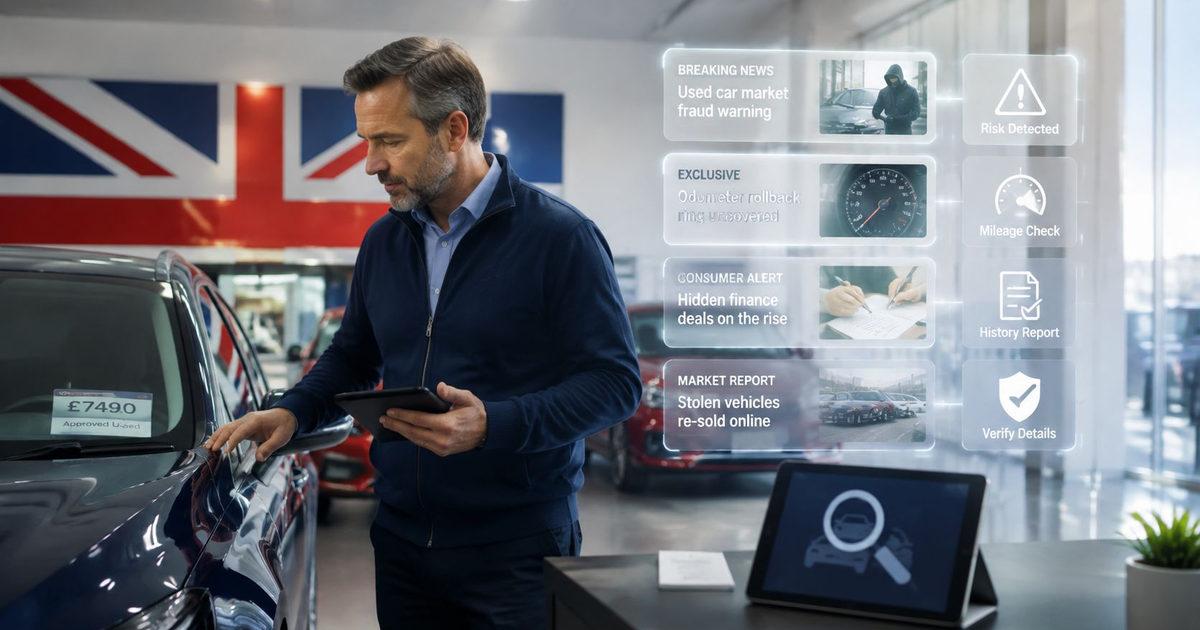
You've just taken a part-exchange through the door, the paperwork looks tidy, the MOT history doesn't raise an obvious alarm, and the seller sounds convincing. Still, something about the ownership timing, the story around the car, or the way the documents line up doesn't quite sit right.
That's the point where a good dealer starts doing more than a basic vehicle history check UK. You stop asking only whether a record exists, and start asking what context the record is hiding. Adverse media screening is the same habit, just applied with structure. It's the discipline of checking whether public information, court actions, regulatory notices, or negative reporting tells a different story from the surface one.
For motor traders, that mindset matters because used car risk rarely announces itself in a neat checklist. It shows up as a pattern, a contradiction, a linked party, or a detail that needs a second look. A proper vehicle provenance process should catch that. If you're also thinking about the wider cost of buying without a provenance lens, this overview of the hidden costs of buying without provenance checks is a useful companion read.
Table of Contents
- The Hidden Risk Behind a Clean-Looking Used Car
- What Adverse Media Screening Means for Dealers
- A dealer-friendly definition
- Why that matters on a forecourt
- Types of Adverse Media Every Dealer Should Recognise
- The main risk families
- Why dealers already do this instinctively
- How Adverse Media Screening Fits Into a Provenance Workflow
- Where it fits in the buying process
- The operational lesson
- Why Continuous Monitoring Beats One-Off Checks
- Common Pitfalls and Data Protection Realities
- False positives are a tuning problem
- Data protection needs a process, not panic
- A Practical Playbook for UK Motor Traders
- Key Takeaways for Building a Screening Habit
The Hidden Risk Behind a Clean-Looking Used Car
A car can turn up with neat paperwork, a sensible-looking mileage trail, and no immediate red flags on a standard used car history report. The problem is that a clean surface does not always mean a clean story. A short chain of ownership, a quick resale pattern, or a seller whose explanation feels overly polished can point to risk that a snapshot check will not explain.
That is why experienced buyers often slow down when the story feels compressed. They are not relying on instinct alone, they are reading context. Adverse media screening does the same job on the public record. It asks whether news, court material, regulatory notices, or other public references add meaning to the name, company, or linked party behind the deal.
Practical rule: if the paperwork looks clean but the story feels compressed, slow the deal down and look for context, not just confirmation.
For dealers, that matters because the buying decision is never made on paper alone. A car can look tidy on the forecourt and still sit inside a wider pattern that deserves caution, especially if a previous keeper, connected company, or associated individual has a record that changes the risk picture. Adverse media screening works like a wider provenance check. It does not replace the vehicle file, it gives the file more depth.
The FCA's risk-based approach is already built around customer due diligence and ongoing monitoring, and the practical point for a motor trader is how that discipline gets applied at deal level. In SYSC 6.3, the question is not whether a record exists in isolation, it is whether the evidence fits the transaction in front of you. That is the useful habit for a used car buyer as well. A tidy logbook and a clean advert still need to make sense alongside the wider background, which is why AutoProv's vehicle provenance perspective is helpful here, the value sits in context rather than the headline result.
A dealer who buys without that context can miss the difference between a normal trade-in and stock with a story attached to it. The point is simple. A clean-looking car still needs a reading of the background, because the forecourt presentation is only part of the picture.
What Adverse Media Screening Means for Dealers
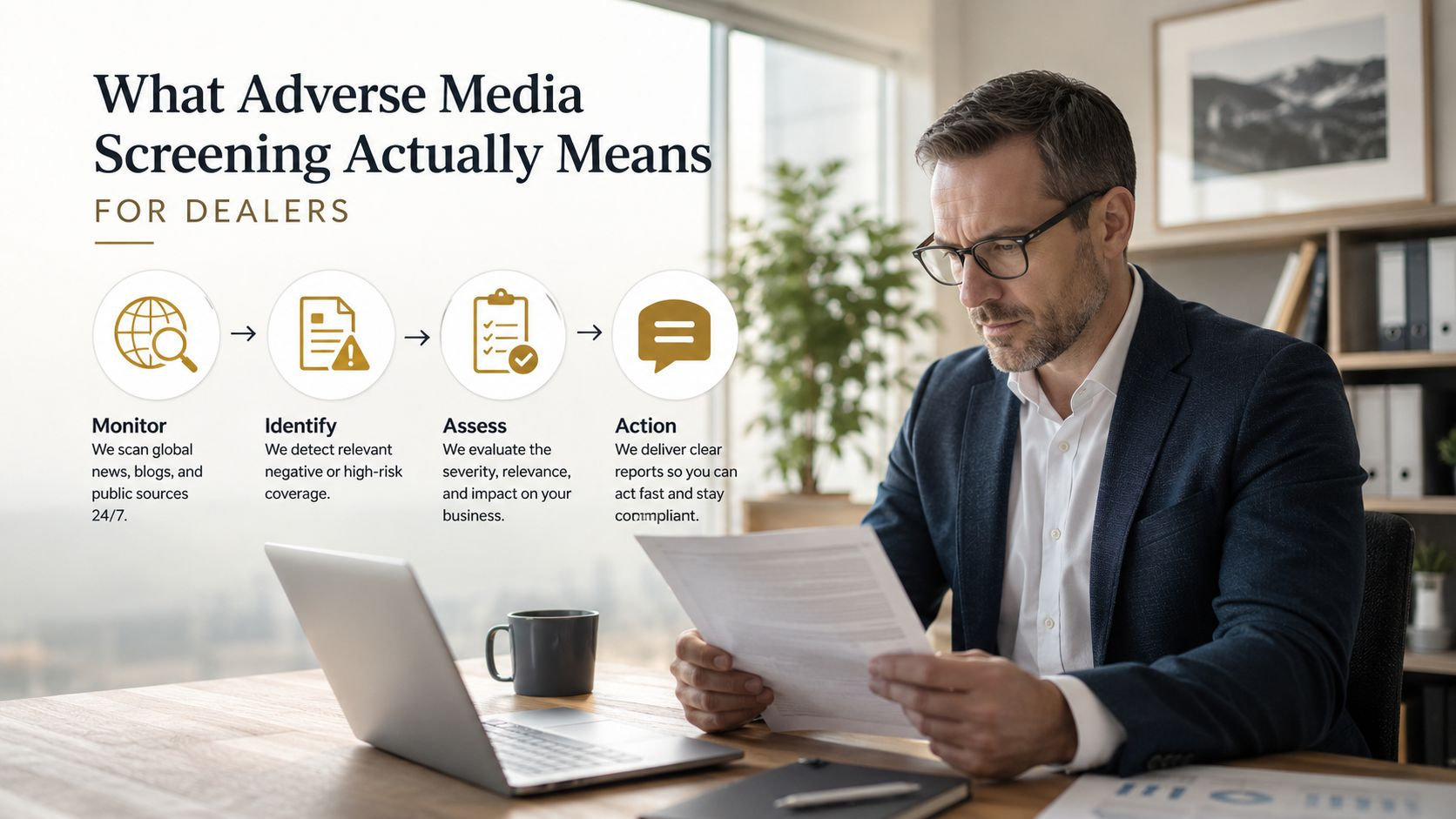
A dealer agrees a part-exchange that looks tidy on the surface. The paperwork is in order, the car presents well, and the seller sounds straightforward. Then a search turns up public reports about a linked company, a previous keeper, or another connected party that changes how the file should be read. That is where adverse media screening earns its place.
At its simplest, adverse media screening means searching public sources for negative information about a person or business. That includes news, court material, regulatory announcements, and government publications. In dealer terms, the subject might be a private seller, a previous keeper, a connected company, or a linked party behind the transaction.
A dealer-friendly definition
Working definition: adverse media screening is the structured search for public negative information that could change how you assess risk before you buy.
A standard vehicle history check UK result tells you whether a data point exists, such as a keeper change, an outstanding issue, or an event in the record. Adverse media screening adds the wider context around that record, and that is often where the buying decision sits. A car can be technically clean and still sit inside a wider pattern that deserves caution.
The FCA framework matters here because UK firms are expected to use a risk-based approach to customer due diligence and ongoing monitoring, anchored in SYSC 6.3. In plain dealer language, that means you do not treat every stock purchase the same way. Higher-risk deals deserve more attention, and the process should be defensible if challenged later. A useful follow-up is this guide to the data behind professional vehicle checks, which shows how different data sources support a stronger provenance view.
Why that matters on a forecourt
A seller's background can change how the deal should be read, even when the car itself seems normal. If a linked business has a troubled public record, or if a transaction sits near a reputation issue, that does not automatically kill the deal. It does mean you should treat the file differently and record why you did so.
A vehicle history check confirms the record. Adverse media screening reads the story around the record, including who is linked to it, what has been reported publicly, and whether the wider pattern fits the price, the source, and the way the car is being sold. That is why motor traders who already think in provenance terms usually adapt to it quickly.
Types of Adverse Media Every Dealer Should Recognise
A clean-looking stock record can still sit inside a wider pattern that raises questions. One mention in the news may mean little on its own, but several linked references, especially around the same seller or related business, can change how a buying file should be read. Dealers who learn the main risk families can separate an awkward one-off from something that deserves escalation.
The main risk families
- Criminal activity. This covers allegations or findings tied to serious wrongdoing. In practice, the warning sign is simple, the people linked to the vehicle start appearing in serious negative reporting, and the provenance file becomes harder to trust.
- Financial misconduct. This includes behaviour that suggests dishonesty, concealment, or repeated abuse of trust. A source can look orderly on paper and still feel unstable once the wider business background is checked.
- Regulatory violations. Public breaches of formal rules tell you the business has already crossed a line. A seller with that sort of record may still be able to trade, but the counterparty risk is no longer straightforward.
- Reputational issues. Some entries are not hard breaches. The issue sits in the pattern of criticism, controversy, or unresolved allegations, and dealers already make this sort of judgement when a vehicle's ownership chain does not sit comfortably.
- Corporate or insolvency events. These can matter even when the car itself appears fine. If the linked business is in distress, aftercare, payment reliability, and supporting paperwork can all become harder to rely on.
Published screening guidance also recommends that the search scope includes risk categories such as money laundering, fraud, bribery and corruption, sanctions evasion, terrorist financing, organised crime, trafficking, tax crime, cybercrime, and environmental crime, and that people related to the business should be screened, not just the entity itself. That sits neatly with trade vehicle intelligence, because linked parties often matter as much as the registration mark. A related motor trade check is how to check for a stolen vehicle, since the same habit applies, look beyond the obvious label and examine the surrounding network.
Why dealers already do this instinctively
A buyer who pauses over a car with a rapid resale history is already using a form of adverse media logic. They are asking whether the story around the vehicle is stable enough to trust. The only difference is that structured screening gives you the same question, asked in the same way, every time you review stock.
That matters because the dealer decision is rarely about one headline alone. It is about whether the public record, the linked parties, and the sale circumstances all point in the same direction, or whether one of them is out of step and needs a closer look.
How Adverse Media Screening Fits Into a Provenance Workflow
A used car can look tidy on the forecourt and still have a story that needs checking. Provenance report documents the vehicle trail, while adverse media screening checks whether the names linked to that trail have public warnings attached to them. In dealer terms, that means you are not just checking the car, you are checking the people and business connections around it before you commit stock money.
Where it fits in the buying process
- Pre-purchase research. Before you attend auction or spend time on a live lead, screening helps you separate the vehicles worth pursuing from the ones that deserve caution. A linked party with repeated negative reporting, a suspicious ownership pattern, or a troubling public background can be enough to slow the buying decision.
- Point-of-decision verification. Right before you buy, the stock file should still make sense. If the provenance record and the screening result point in the same direction, the deal is easier to stand behind. If they clash, the file needs another look before money changes hands.
- Post-purchase review. Once the car is in stock, screening can be used to check whether anything new has appeared while the unit was live. That helps with later questions from buyers, internal notes, and any dispute over what was known at the time of purchase.
- Ongoing monitoring. A car file does not freeze the moment payment clears. New information about linked parties, ownership changes, or public allegations can surface later, and the workflow should be able to catch that without starting again from scratch.
- Dispute support. If a customer later asks why the vehicle was acquired, a structured screening trail shows what was checked, what was visible at the time, and why the decision was made.
The practical lesson is simple. Using screening only at the point of purchase gives you a control, using it throughout the stock lifecycle gives you a process. That is the difference between a one-time check and a repeatable buying discipline, and it lines up with the distinction between a provenance check and a more complete provenance report when you want the file to support the whole buying decision, not just the first glance.
The operational lesson
A good provenance report lays out the vehicle's paper trail in order. Screening then acts like the dealer's background check on the names behind that trail, so ownership links, business partners, and associated parties can be reviewed before a unit is signed off. In a used car scenario, that matters because the risk is often not inside the metal itself, it sits in the story around the stock.
The cleanest way to use both tools is to treat them as linked steps in the same workflow. First, confirm what the vehicle is. Then, check whether the people attached to it raise questions that a normal stock review would miss. After that, record the result in the file so the next person in the chain can see why the decision was taken.
Why Continuous Monitoring Beats One-Off Checks
A dealer can clear a file at purchase and still inherit a problem later. That is the gap continuous monitoring closes. A one-off screen only answers the question, “What did we know at the point of purchase?” Ongoing screening asks the same question again when new names, new reports, or new ownership links appear.
That matters because adverse information often turns up after the first search. A new allegation may be published, an alias may connect the buyer to a different record, or local-language coverage may surface a link that was not visible before. For UK dealers, that can mean the stock file looks clean when the car is bought, then starts to change while the vehicle is being prepared or retailed. Real-time intelligence helps because it keeps the file aligned with changes that can affect the deal while the vehicle is still in hand.
The practical issue is scale. Production-grade adverse media systems are designed to scan millions of daily sources and can index hundreds of millions of documents across news, court records, regulatory announcements, government publications, and corporate or insolvency registers. That breadth gives the dealer a wider net, which is useful, but it also throws up more noise. Fuzzy matching, phonetic algorithms, and AI-based entity resolution help reduce missed matches from spelling variants and aliases, yet the alert thresholds still need careful tuning so the team is not buried under routine hits.
A 2019 Dow Jones survey found that 24% of respondents received more than 1,000 alerts per month, 35% said alert volume was a particular challenge, and 50% estimated that fewer than 5% of matches were true positives, according to the survey results. For a dealer, that is the same lesson you get from a busy auction lane, the issue is not only spotting a car, it is deciding quickly which unit deserves a closer look.
Dimension One-Off Snapshot Continuous Monitoring Timing At one point in the buying cycle Across the stock lifecycle Value Confirms what was visible then Catches new information later Risk gap Misses post-purchase changes Reduces blind spots after acquisition Dealer use Quick pre-buy check Live control for higher-risk stock
Common Pitfalls and Data Protection Realities
The two objections that stop many dealers are easy to predict. The first is false positives. The second is data protection. Neither is a reason to ignore screening, they're design issues that need to be handled properly.
False positives are a tuning problem
A workflow should combine entity-resolution, multilingual NLP, and risk-based tuning, then score alerts by source credibility, severity, recency, and proximity to the screened subject, with an auditable disposition record for defensibility, as set out in this screening guidance. That's not theory, it's how you move from noise to a workable queue. The same public item can be a harmless historical mention, a weak lead, or a live risk signal depending on how you've set the policy.
Practical rule: if you can't explain why a match was accepted or rejected, the process isn't ready for live buying decisions.
The useful control is not to suppress everything. It's to define predicate offences, confidence thresholds, credible sources, and monitoring timeframes so the team knows what deserves attention and what doesn't. That way, a dealer doesn't overreact to every mention, but doesn't ignore the one that matters either.
Data protection needs a process, not panic
In the UK, screening must sit comfortably alongside UK GDPR and the Data Protection Act. That means having a documented lawful basis, keeping the scope proportionate, and setting clear retention rules for the records you keep. A dealer already does something similar with purchase files, finance notes, and complaint records, so this isn't a new discipline, it's a better one.
The main mistake is treating privacy and risk control as opponents. They're not. If the screening purpose is clear, the data scope is tight, and the decision trail is documented, the process becomes easier to defend and easier to run.
A Practical Playbook for UK Motor Traders
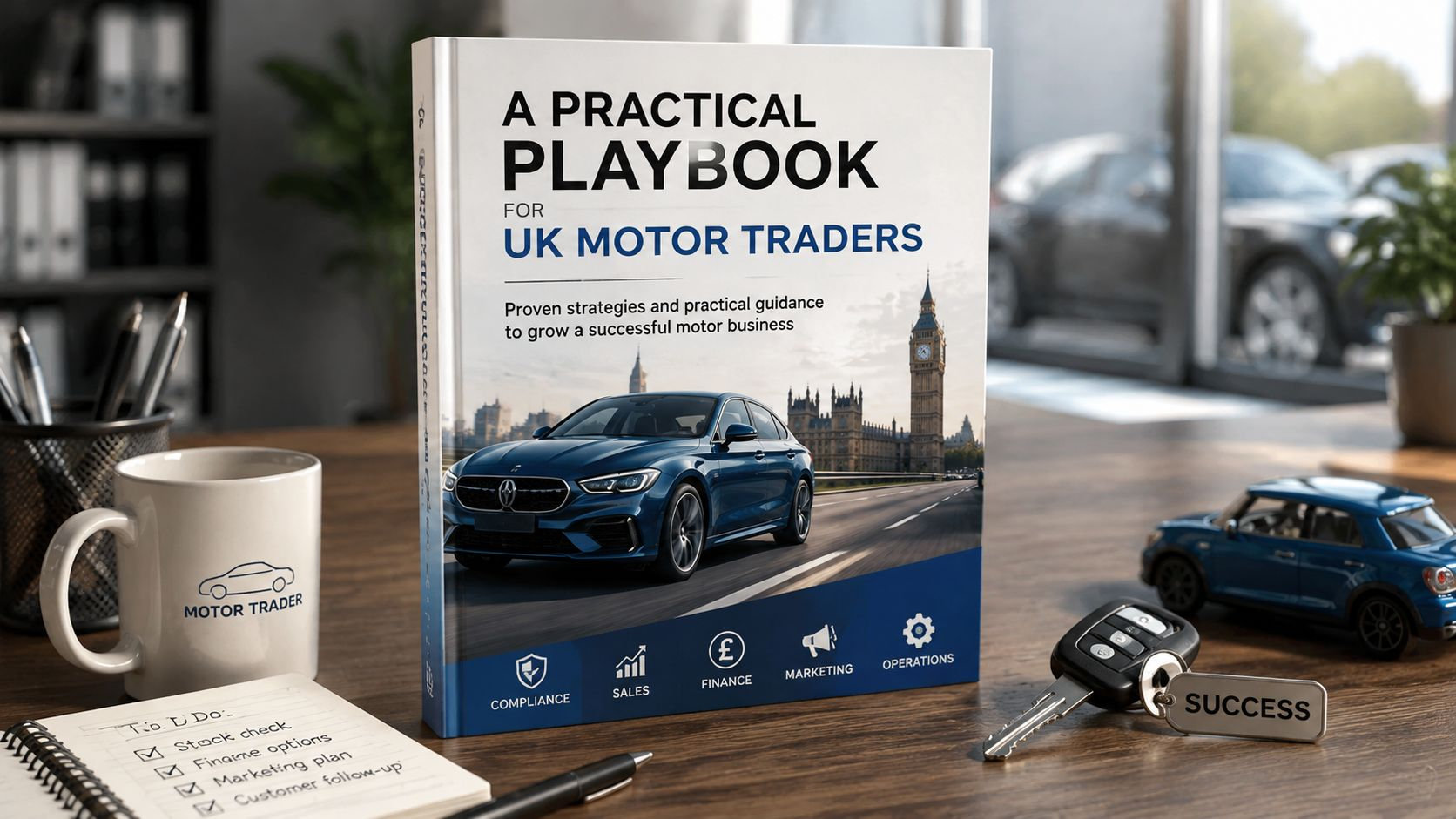
A usable playbook doesn't need to be complicated. It needs to be consistent.
- Set your risk appetite. Decide what kind of stock, seller, or linked-party profile needs a deeper review. That's your buying policy, written down.
- Screen at the right moment. Don't wait until the car is already moving through prep. Use screening before commitment, then again when the file changes.
- Use credible current sources. If the source wouldn't support a buying decision, it shouldn't support a risk decision.
- Keep an audit trail. Note what was checked, what was found, and why the car was still bought. That file protects the buyer as much as the business.
- Reduce manual burden with technology. Entity matching, entity linking, and contextual alerting help dealers deal with volume without lowering standards.
- Build a documented culture. Make it normal for buyers to explain their decisions, especially when the deal is close but not perfect.
The risk-based approach means adverse media screening should be applied more intensively where risk is higher and where a documented process can be evidenced, rather than as a uniform, one-size-fits-all requirement for every case, according to this guidance. That's the right trading mindset too. A quiet retail prep unit doesn't need the same scrutiny as a stock car with a messy background.
For dealers who also want a practical angle on image-based risk, the resource on using AI video forensics for fraud is a useful reminder that provenance work often involves more than one evidence layer.
Key Takeaways for Building a Screening Habit
Adverse media screening is a provenance discipline as much as a compliance one. UK dealers who use it as a live, ongoing control make better buying decisions than those who treat it as a one-time check. The habits that matter are simple, define risk appetite, monitor for changes after purchase, and document every decision so it can be defended later.
No screening process removes every risk. It does, however, change the quality of the decision. That's the difference between buying blind and buying informed.
AutoProv helps UK motor traders bring that discipline into everyday stock acquisition with vehicle provenance intelligence built for dealer decisions, not generic pass or fail outputs. If you want a clearer view of context, risk signals, and ownership patterns around used stock, visit AutoProv and see how trade-focused vehicle intelligence can support your buying process.
Frequently Asked Questions
AI-Generated Content Notice
This article was created with the assistance of artificial intelligence technology. While we strive for accuracy, the information provided should be considered for general informational purposes only and should not be relied upon as professional automotive, legal, or financial advice. We recommend verifying any information with qualified professionals or official sources before making important decisions. AutoProv accepts no liability for any consequences resulting from the use of this information.
From our AI insights
- Auction Pitfalls: Avoiding Costly Mistakes
Navigate UK car auctions with confidence by avoiding finance, write-off, and mileage risks.
- Mastering Paint Code Checks: Detecting Hidden Car Repairs
Discover how to use paint code verification to identify hidden car repairs and ensure a smarter purchase.
- UK Part-Exchange Checks: Protecting Dealer Margins
Explore essential part-exchange checks for UK dealers to safeguard profit margins, including provenance and finance verification.
Related Articles

Your Ultimate Guide to Buying a Used Car in the UK
Navigate the UK used car market with confidence using our comprehensive buying guide. Tips, checks, and AutoProv Provenance insights included.

Difference Between MOT and Service: What You Need to Know
An MOT is a mandatory legal inspection that every car on UK roads needs to pass.Think of it as the government's way of ensuring your vehicle meets the absolute minimum safety and environmental standards to be considered roadworthy. A service, on the other hand, is a completely different beast. It's the proactive maintenance routine recommended by the people who built your car, designed to keep it running smoothly and catch problems before they start. In short, an MOT is a pass-or-fail exam required by law. A service is a comprehensive health plan for your car.
Your Ultimate Used Car Inspection Checklist
A solid used car inspection checklist is the single most powerful tool you have to avoid buying a lemon. It gives you a methodical way to look past the shiny paint and assess a car's real condition, helping you spot hidden problems and get a fair price before you shake hands on the deal.
Published by AutoProv
Your trusted source for vehicle intelligence