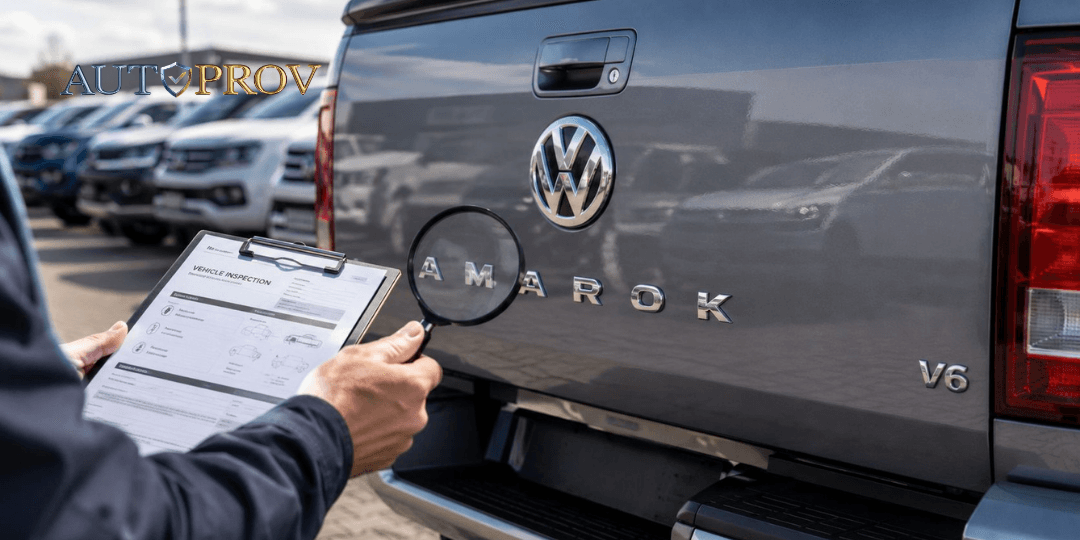
You spot an Amarok for sale in the trade feed before breakfast. Clean photos, strong spec, sensible money, decent stance, no obvious abuse. On screen, it looks like easy stock. That's exactly where traders get caught.
The Amarok sells well because it sits in two lanes at once. One buyer wants a working pickup. Another wants a premium double cab with towing ability and presence. That overlap creates retail demand, but it also creates appraisal mistakes. A polished truck can still have a hard commercial past. A high-spec variant can look perfect for a business buyer and still be the wrong answer once payload, VAT position, and tax treatment are checked.
For a dealer, the phrase Amarok for sale shouldn't trigger excitement first. It should trigger process. You're not just buying a pickup. You're buying a story, a use-case, and a risk profile that has to stack up physically, digitally, and commercially.
The Amarok Opportunity and Its Hidden Risks
A dealer takes in an Amarok on clean photos, strong spec, and a sensible CAP gap. Two weeks later, the problems start. The truck is well presented, but the payload on that exact variant muddies its commercial status, the VAT position is unclear, and the underbody tells a harder story than the advert did. That is how profit disappears on stock that looked straightforward.
The Amarok earns attention because it has broad retail appeal. In the UK market it can sit comfortably in front of a builder, a company owner, or a private buyer who wants a pickup that feels more premium than basic workhorse stock. That wider audience helps turn rate. It also creates a trap. Buyers and some traders treat all Amaroks as if they sit in the same commercial bracket, and they do not.
Why traders like them
The model has genuine forecourt pull. It looks expensive, it tows well, and many examples feel closer to an SUV inside than a traditional pickup. That gives you more than one route out at retail if the truck is right.
The important qualifier is "if the truck is right".
Early trucks, later first-generation facelifts, and the newer shape do not carry the same buying risk. Specification changes, engine choices, payload differences, and ownership patterns all affect how easy the vehicle will be to retail and how exposed you are if the customer asks detailed tax or VAT questions after the sale.
Where margin slips away
Margin usually goes in three places on an Amarok.
First, provenance gets oversimplified. A tidy double cab with gloss black trim can still be ex-site, ex-tow vehicle, or ex-utility stock that has had a cosmetic freshen-up before disposal. Second, traders miss the compliance angle. Payload and body configuration can change whether the truck is straightforward commercial stock or something that needs much more careful explanation around VAT recovery and business use. Third, generation matters more than the advert suggests. Some buyers see "Amarok" and stop there. A good stock buyer does not.
That last point matters because one bad assumption can hit the deal twice. You can overpay at purchase, then slow your exit when the eventual retail buyer or their accountant starts asking questions you should have answered at appraisal stage.
Practical rule: Appraise an Amarok as a specific variant with a specific tax, VAT, and use-case profile. Never as just "a pickup."
Presentation still catches people out. Side steps, a roller shutter, upgraded wheels, and fresh photos often add confidence that the vehicle has not earned. The expensive mistakes tend to come from what sits underneath: towing wear, damaged load beds, corrosion starting where a quick valet does not reach, poor repair work, and service history that looks complete until the dates and mileages are checked properly.
Disciplined buying protects margin here. The process needs to cover physical condition, paperwork, commercial classification, and seller story before the bid makes sense. AutoProv's guide to risk mitigation strategies for vehicle sourcing is a useful framework if you want to tighten that part of your buying process.
Sourcing Quality Amarok Stock Beyond the Obvious
The best Amarok stock usually isn't the loudest listing.
Mainstream classifieds and big auction catalogues are full of them, but volume creates noise. If you want cleaner stock, you need to narrow the field before you inspect anything.

Start with seller type, not just vehicle spec
A tidy description means very little on its own. Seller pattern matters more.
Look first at the background the truck is coming from:
- Ex-fleet and lease disposals often give you the clearest maintenance trail. That doesn't mean soft use. It means there's a better chance of organised servicing and documented downtime.
- Known local trade contacts can be more useful than open-market stock because you can often ask direct questions about previous use, workshop history, and why the vehicle is being moved on.
- Pickup specialists are worth watching because they tend to know what modifications have been done properly and what has been added cheaply to make a truck look newer than it is.
A broad sourcing strategy helps, but the best buyers also avoid chasing every shiny listing. If you work in 4x4 stock regularly, AutoProv's guide to the best used 4x4 options for trade buyers is a useful companion when comparing where the Amarok sits against other pickup stock.
Read the listing for omissions
A poor Amarok advert often tells you more by what it leaves out.
Watch for:
- No clear service detail. “Maintained regardless” means nothing if there's no evidence.
- Heavy accessory focus. If the advert leads with bars, roof kit, wheels, and trim add-ons, ask what it's distracting from.
- Vague ownership wording. “Used mainly on motorway runs” on a pickup deserves scrutiny.
- Fresh cosmetic prep with weak underside imagery. That's common on trucks that need closer physical inspection.
Clean photos don't reduce motor trade risk. They often just reduce the time you have to ask better questions.
Where better Amaroks tend to come from
There isn't one magic source, but stronger stock often has one thing in common. The previous keeper treated the vehicle as part of a system, not as a weekend project.
A simple comparison helps:
Source type What usually helps What usually hurts Fleet disposal Service structure, policy-driven upkeep Heavy use can still be hidden Specialist trade contact Better product knowledge, more accurate descriptions Can still be retail-priced into the trade Open auction Volume and buying opportunity Thin provenance, rushed decisions Private classified Lower entry potential Harder to verify use and maintenance standards The point isn't to avoid open stock. It's to make sure you don't pay specialist money for anonymous risk.
The Essential On-Site Vehicle Inspection Checklist
A tidy Amarok can still be bad stock. I have seen clean, well-photographed trucks with fresh seat covers and polished paint turn into margin killers because the underlying story was underneath, in the driveline, chassis, and paperwork details that affect how you can retail it.
Start the appraisal under the vehicle. Amaroks attract both genuine commercial users and lifestyle buyers, so wear patterns vary more than they do on many vans. A truck that has spent its life towing, carrying weight, or working off-road will often show it in the underside long before the cabin gives anything away. That matters because first-generation examples and newer trucks can look similar at a glance while carrying very different cost risks.

What to inspect before the test drive
Begin with the engine bay, but treat a very clean one with caution. Fresh degreasing around the rocker cover area, sump edges, or front timing side can hide active leaks rather than prove good upkeep. Then get underneath and check the areas that cost real money if you miss them.
Focus on:
- CV boots and front axle area. Split boots, thrown grease, and tired joints often point to rough use or neglected maintenance.
- Chassis rails and crossmembers. Look for corrosion, impact marks, crushed sections, and poor repairs. On a pickup, underside damage matters more than cosmetic scuffs.
- Suspension and steering components. Excessive play, uneven wear, or cheap recent parts can signal a truck that has been run on a budget.
- Load bed, tailgate, and tow gear. Heavy hitch wear, bent bed trims, and damaged liners usually tell you more about commercial use than the seats or carpets.
- Tyres as a set. Mismatched brands or uneven wear often point to poor maintenance discipline, alignment issues, or a truck that has had a harder life than the advert suggests.
A repeatable process saves money. If your team is standardising appraisals across pickups and vans, use a structured vehicle appraisal checklist for trade buyers rather than relying on memory and habit.
Check the vehicle against the specification on paper
This part gets missed too often on Amaroks, and it has a direct effect on profit. Payload, body style, transmission, trim, and wheelbase details are not just brochure points. They feed into VAT treatment, commercial classification, buyer suitability, and how confidently you can describe the truck at point of sale.
Volkswagen Commercial Vehicles sets out the UK Amarok dimensions and capability figures in its Volkswagen Commercial Vehicles Amarok brochure PDF. Use that information on site. Check that the truck in front of you matches the stated configuration, especially if accessories, canopy fitment, wheel changes, or suspension alterations make it sit or measure differently from standard.
If the paperwork suggests a payload-sensitive commercial variant but the vehicle has been modified in a way that could affect carrying capacity or classification, stop and verify it before agreeing a number. The wrong assumption here can create a VAT problem later and leave your sales team trying to explain a specification they cannot support.
Small faults still affect retail readiness
Glass, lights, trim, and aftermarket add-ons deserve a proper look because Amaroks are often modified. Some changes help saleability. Some create prep cost and compliance risk.
Window film is a simple example. If the truck has aftermarket tint on the front side glass, check whether it is legal and whether the finish is retail standard. A poor tint job gives you removal cost, possible compliance issues, and one more reason for a buyer to lose confidence. Keep this guide to compliant car tint handy during appraisal.
Then road test it properly. Check cold-start behaviour, steering weight, brake pull, transmission quality, driveline vibration, suspension noise, and how it behaves under load changes through the gears. A short drive with the radio off will usually tell you more than the advert ever did.
Decoding Amarok Provenance and Mileage Red Flags
A clean-looking Amarok arrives from auction with sensible miles, decent photos, and a price that leaves room. Then the file starts to unravel. Two keepers in quick succession, patchy servicing, an MOT pattern that does not fit the odometer, and a spec description that shifts between “pickup” and “van” depending on where it was advertised. That is how margin disappears.
Amaroks need a stricter provenance read than many dealers give them. The UK market mixes old working trucks, ex-fleet units, lifestyle builds, imports, and examples that have moved between private and business use more than once. On this model, history is not a box-tick. It is how you decide whether the truck is honest stock or a future comeback.

What the ownership pattern is really telling you
Quick changes of keeper are not automatically a deal-breaker. They are a reason to slow the appraisal down and read the file properly.
With Amaroks, short-term keepership often points to one of four things. The truck had an irritation the next owner would not live with. It was bought on the wrong tax or use-case assumption. It presented well online but disappointed in daily use. Or it was bought trade-to-trade because nobody wanted to retail the risk.
Sale channel matters as well. If a pickup appears at auction, then on a forecourt, then back through auction within a short period, treat that as a signal. Professional buyers passed on keeping it for a reason. Find out whether that reason was mechanical, compliance-related, or merely that the provenance was too weak to defend at retail.
Mileage only means something when the story matches
Mileage on its own is lazy buying. An Amarok that has spent its life towing, carrying tools, crossing sites, or idling through local work can be far more tired than a higher-mileage truck used mainly for motorway runs.
Check whether the timeline stacks up. MOT dates, mileage increments, advisory patterns, service invoices, wear to the seat base, steering wheel, load bed, towbar, switchgear, and undersides should all point in the same direction. If the odometer says one thing and the truck says another, price it as a problem until the seller proves otherwise.
Use the government record and a proper history file together. AutoProv's guide on how to check MOT history and mileage before you buy is a good process reference for this stage.
Generation and use history change the risk
Listings often flatten the Amarok into one generic product. That is poor buying practice.
Earlier trucks can still make strong stock, but only when the maintenance trail is convincing and the condition fits the working life you would expect. Age brings accumulated wear, deferred jobs, and more chance of mixed repair quality. Newer trucks usually present better, but that creates a different trap. Better trim, bigger wheels, cosmetic upgrades, and lifestyle marketing can distract from weak provenance, dubious business use history, or a specification that will matter later when commercial status is checked.
Imported examples need extra care. So do trucks with sparse invoice history, long gaps between MOTs and servicing, or registration details that do not line up neatly with the version being advertised. On Amaroks, sloppy identity work creates problems later with valuation, VAT conversations, and buyer confidence.
Red flags that justify a harder line on price
Some combinations should change your bid immediately.
Signal Why it matters Patchy service evidence Hard to defend at retail and usually hides future prep cost Repeated MOT advisories for the same issue Suggests the truck was run cheaply rather than maintained properly Fast keeper changes Often linked to unresolved faults, poor suitability, or stock nobody wanted to stand behind Low-mileage claim with heavy wear Raises the risk of mileage discrepancy or a very hard working life Inconsistent spec descriptions across adverts or invoices Can point to poor provenance, misdescribed variant, or classification trouble later Long periods with little documentary evidence Leave you guessing on servicing, use pattern, and whether mileage progression is believable Good provenance work protects more than the purchase price. It protects the resale story your team will need to tell, the warranty risk you are taking on, and the chance of getting dragged into a dispute over mileage, use history, or what the truck really was before it reached your pitch.
Verifying Commercial Status and VAT Qualification
At this point, dealers can lose money while thinking they've bought well.
An Amarok can look like obvious commercial stock and still be the wrong unit for a VAT-sensitive buyer. Payload is the key issue. If you get that wrong, you don't just risk pricing badly. You risk mis-positioning the vehicle, misleading the next buyer, and narrowing your exit route.

Why variant detail matters
UK pricing and spec data show how wide the Amarok brief can be. Carwow lists the current UK range from just over £36,000 ex. VAT for the Life trim and around £43,500 for the Style trim, while noting that the Aventura has a payload of only 870 kg, which means it does not qualify for commercial vehicle tax breaks in the UK (Carwow Volkswagen Amarok LCV pricing and payload guide).
That single detail changes the whole stock conversation.
A trader who buys an Aventura assuming “double-cab pickup equals commercial” can get boxed in fast. The wrong assumption affects:
- VAT expectations
- BIK-related buyer conversations
- retail audience
- residual strategy
- how aggressively you can price the truck
What to verify before you commit
Don't work from trim name alone. Verify the exact vehicle.
Use a simple decision process:
- Confirm the precise variant
- Badge, transmission, wheels, trim and equipment all matter.
- Check documented payload for that configuration
- Don't assume another Amarok in the same shape has the same status.
- Separate commercial buyers from lifestyle buyers early
- The advert, valuation, and pitch should follow the actual classification, not wishful thinking.
- Build the tax-position conversation carefully
- You're not there to give legal or tax advice. You are there to avoid making inaccurate claims.
A pickup that misses commercial treatment isn't bad stock. It's just different stock, and it needs valuing and marketed accordingly.
Why this protects margin
The financial hit often comes from paying trade money based on the wrong retail assumption. A truck bought for one lane may only sell cleanly in another.
That's also why paperwork discipline matters. If you're tightening up file quality and ownership documentation before retail, this guide on proof of ownership of a car is a useful process reference, even though the Amarok classification question needs its own separate payload verification.
Valuation Negotiation and Post-Purchase Process
Friday afternoon, a clean Amarok lands in the lane and the guide price looks fair. By Monday, that same truck can be either tidy stock with margin in it or a slow seller tied up in workshop time, VAT confusion, and awkward post-sale conversations. The difference is usually decided in appraisal and in the first 24 hours after purchase.
By the point you are discussing money, the unknowns should be minimal. The job is to turn inspection findings, provenance concerns, and commercial classification into a number that protects margin. On Amaroks, that matters more than it does on many mainstream pickups because payload differences, trim-led buyer expectations, and generational changes can shift the retail audience quite quickly.
Price the risk you will actually carry
A presentable truck still needs a hard valuation if the file is weak or the use profile looks rough. The right question is not whether it will retail. The right question is how much cost, delay, and comeback risk sits between trade purchase and handover.
In practice, I price Amaroks in layers:
- Mechanical spend. Oil leaks, driveline wear, suspension knocks, split CV boots, tired brakes, poor tyres, underbody damage.
- Commercial-use wear. Damaged tow electrics, worn load beds, poor canopy fit, evidence of heavy site use or repeated towing.
- Provenance drag. Patchy service evidence, mileage that fits the MOT trail poorly, ownership changes that need explaining, invoice gaps.
- Classification risk. Unclear VAT status, weak evidence for how the truck has been treated in the trade before, and payload or variant details that narrow the buyer pool.
- Prep time. Workshop hours, parts lead times, cosmetic delay, and the cost of holding stock while you sort paperwork.
That gives you a factual negotiation position. Sellers do not have to agree with every line item. They do need to understand why your number is lower than the screen average.
Negotiate from evidence, not optimism
The strongest Amarok buys are usually the ones where the file and the truck tell the same story. If they do not match, the valuation needs to move.
A useful approach is simple. Start with the defects you can show. Move to the documents that are missing or inconsistent. Then explain how those points affect your exit route. A Highline or Aventura with lifestyle appeal can still become awkward stock if the VAT position is muddy or the payload history does not support the way it has been advertised before. An older working truck with honest miles can be the safer buy if the paperwork is straight and the prep cost is controllable.
Do not pay retail-minded trade money for a truck that only works as value commercial stock.
The first steps after purchase matter
Once bought, the Amarok should go into a controlled stock process immediately.
Use a short post-purchase routine:
- Book workshop triage before cosmetic prep so mechanical cost is confirmed early.
- Record VAT status and classification notes on the stock file so sales staff are not guessing later.
- Check the V5C, service paperwork, MOT trail, and invoice pack together while the purchase is still fresh.
- Write the advert from verified facts. Payload, transmission, trim, service history, tow setup, and number of keys all need to be right.
- Keep internal notes on anything borderline such as partial history, previous use indicators, or why the truck was valued below cleaner examples.
Dealerships either keep control of the deal or create their own future complaint. Amarok buyers often know exactly what they are looking at, especially on higher-spec trucks and VAT-qualifying examples. If your advert overstates the history, glosses over classification, or leaves room for tax assumptions, the sale gets harder and the risk stays with you.
What disciplined Amarok retailing looks like
Good Amarok retailing is accurate, not ambitious. A genuine workhorse should be marketed as one. A well-kept lifestyle pickup can justify stronger money, but only if the spec, condition, VAT position, and paperwork support that pitch.
That means:
- valuing against the actual buyer pool, not the best-case buyer
- keeping enough margin for prep, warranty exposure, and slower turn if the audience is narrower
- making sure every sales handover note matches the stock file
- avoiding loose claims about commercial status or tax treatment
The margin that matters is the one left after prep, after warranty risk, and after the buyer has had time to inspect what you sold them.
An Amarok for sale can be very good stock. It can also punish casual buying. The dealers who do well with them are usually the ones who appraise the compliance angle as hard as they appraise the paint and tyres.
If you're appraising Amarok stock and want sharper point-of-decision intelligence, AutoProv gives UK motor traders deeper vehicle provenance, mileage analysis, ownership-pattern insight, and risk context than a basic history check alone. It's built to support better buying decisions, cleaner valuations, and stronger compliance discipline across the used vehicle workflow.
Frequently Asked Questions
AI-Generated Content Notice
This article was created with the assistance of artificial intelligence technology. While we strive for accuracy, the information provided should be considered for general informational purposes only and should not be relied upon as professional automotive, legal, or financial advice. We recommend verifying any information with qualified professionals or official sources before making important decisions. AutoProv accepts no liability for any consequences resulting from the use of this information.
From our AI insights
- Essential Pre-Purchase Checklist for UK Motor Traders
Ensure a seamless vehicle acquisition with our detailed pre-purchase checklist tailored for UK motor traders.
- Leveraging Auction Data for Strategic Car Purchases
Discover how to use auction data effectively to make profitable car buying decisions.
- Auction Pitfalls: Avoiding Costly Mistakes
Navigate UK car auctions with confidence by avoiding finance, write-off, and mileage risks.
Related Articles

Your Ultimate Guide to Buying a Used Car in the UK
Navigate the UK used car market with confidence using our comprehensive buying guide. Tips, checks, and AutoProv Provenance insights included.

Difference Between MOT and Service: What You Need to Know
An MOT is a mandatory legal inspection that every car on UK roads needs to pass.Think of it as the government's way of ensuring your vehicle meets the absolute minimum safety and environmental standards to be considered roadworthy. A service, on the other hand, is a completely different beast. It's the proactive maintenance routine recommended by the people who built your car, designed to keep it running smoothly and catch problems before they start. In short, an MOT is a pass-or-fail exam required by law. A service is a comprehensive health plan for your car.
Your Ultimate Used Car Inspection Checklist
A solid used car inspection checklist is the single most powerful tool you have to avoid buying a lemon. It gives you a methodical way to look past the shiny paint and assess a car's real condition, helping you spot hidden problems and get a fair price before you shake hands on the deal.
Published by AutoProv
Your trusted source for vehicle intelligence