
For any UK motor trader, the automatic Nissan Juke is a common sight—a high-volume, quick-selling piece of stock. But the term ‘automatic’ is deceptively simple for this popular crossover. Depending on its age, it could have one of two entirely different transmissions—the earlier Xtronic CVT or the later DCT—and each comes with its own set of risks and valuation considerations.
Decoding the Automatic Juke for the UK Motor Trade
The Nissan Juke has been a fixture on the UK used car market for over a decade, with automatic models in consistent demand. For the unprepared trader, this popularity can mask significant mechanical and financial risks. The first critical step in any appraisal is identifying which automatic gearbox is fitted, as this fundamentally changes the risk assessment.
It is a tale of two transmissions. First-generation Jukes (from approximately 2010-2019) are almost all fitted with the Xtronic Continuously Variable Transmission (CVT). When the second-generation models arrived (from 2019 onwards), Nissan switched to a 7-speed Dual-Clutch Transmission (DCT). These are not just different names; they are fundamentally different systems with distinct wear patterns and common failure points.
The diagram below breaks down this crucial split.
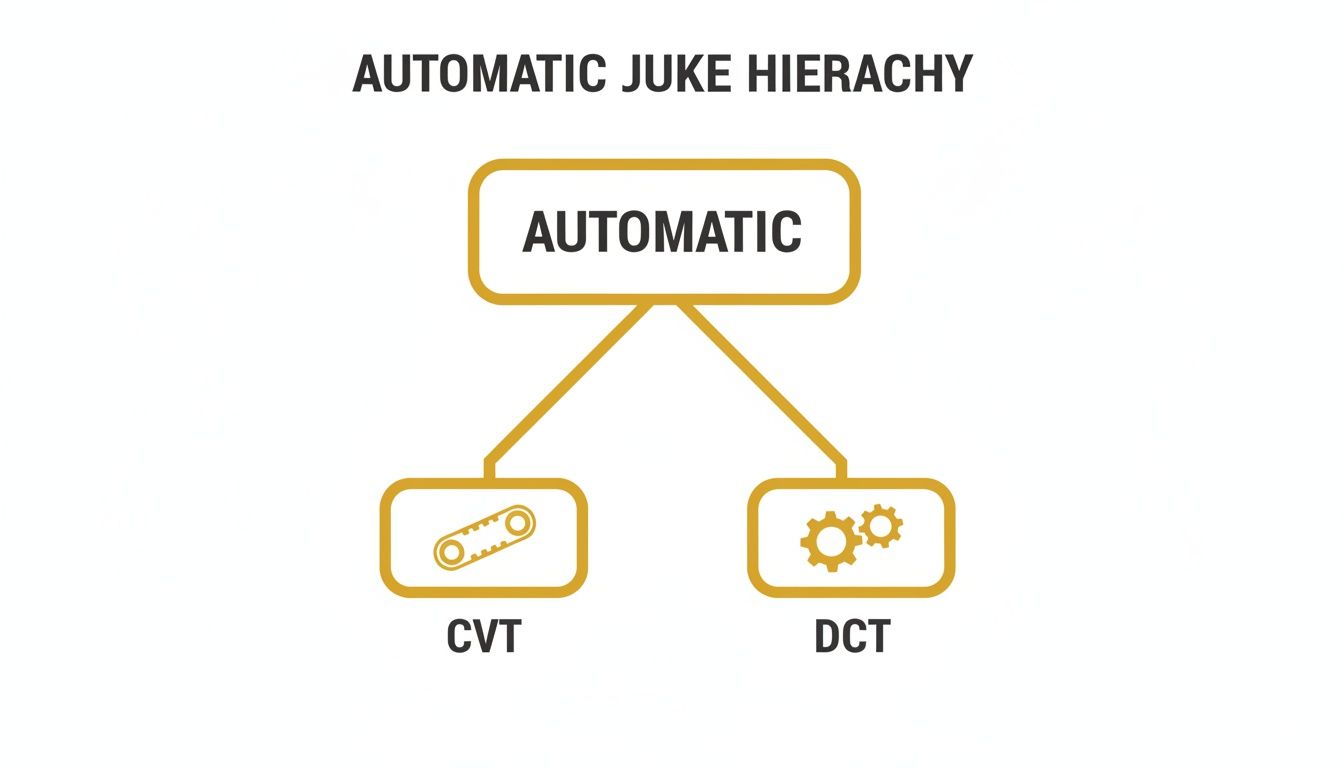
This distinction is the single most important piece of information for any dealer buying an automatic Juke. Each system has well-documented issues that a standard vehicle history check UK simply will not flag.
Why Transmission Type Matters
Knowing which gearbox you are dealing with is vital. It directly shapes the pre-purchase inspection, dictates potential reconditioning costs, and ultimately affects the final retail price. A Juke with a CVT, for instance, requires a completely different set of checks on a test drive compared to one with a DCT.
Key considerations include:
- Reliability Red Flags: Both gearboxes have known issues. The CVT is known for juddering and premature wear, while the DCT can suffer from expensive mechatronic faults.
- Valuation Nuances: The market often perceives one transmission as more reliable than the other, which can impact its residual value and profit margin.
- Provenance Clues: A vehicle's history often provides indicators of gearbox health. A pattern of short-term ownership or multiple auction appearances can be a significant red flag for a recurring, unsolved transmission problem—a critical piece of trade vehicle intelligence.
A basic data check often misses the story behind the data. Recognising a pattern of short ownership cycles in a CVT-equipped Juke, for instance, provides the context needed to suspect a developing gearbox issue that the previous owner wanted to offload.
Simply confirming the vehicle's specifications is only the first step. You can learn more about how to get accurate car specs in our detailed guide. In the sections that follow, we will detail the specific risks tied to both the CVT and DCT gearboxes, providing the practical insight needed to assess these vehicles confidently and protect your business from costly acquisition errors.
Navigating the First-Generation Juke Xtronic CVT
For any dealer in the UK motor trade, the first-generation Nissan Juke (running approximately from 2010-2019) is bread-and-butter stock. The vast majority of these automatics come with the Xtronic Continuously Variable Transmission (CVT), and understanding this gearbox is not just a technical detail—it is fundamental to managing risk.
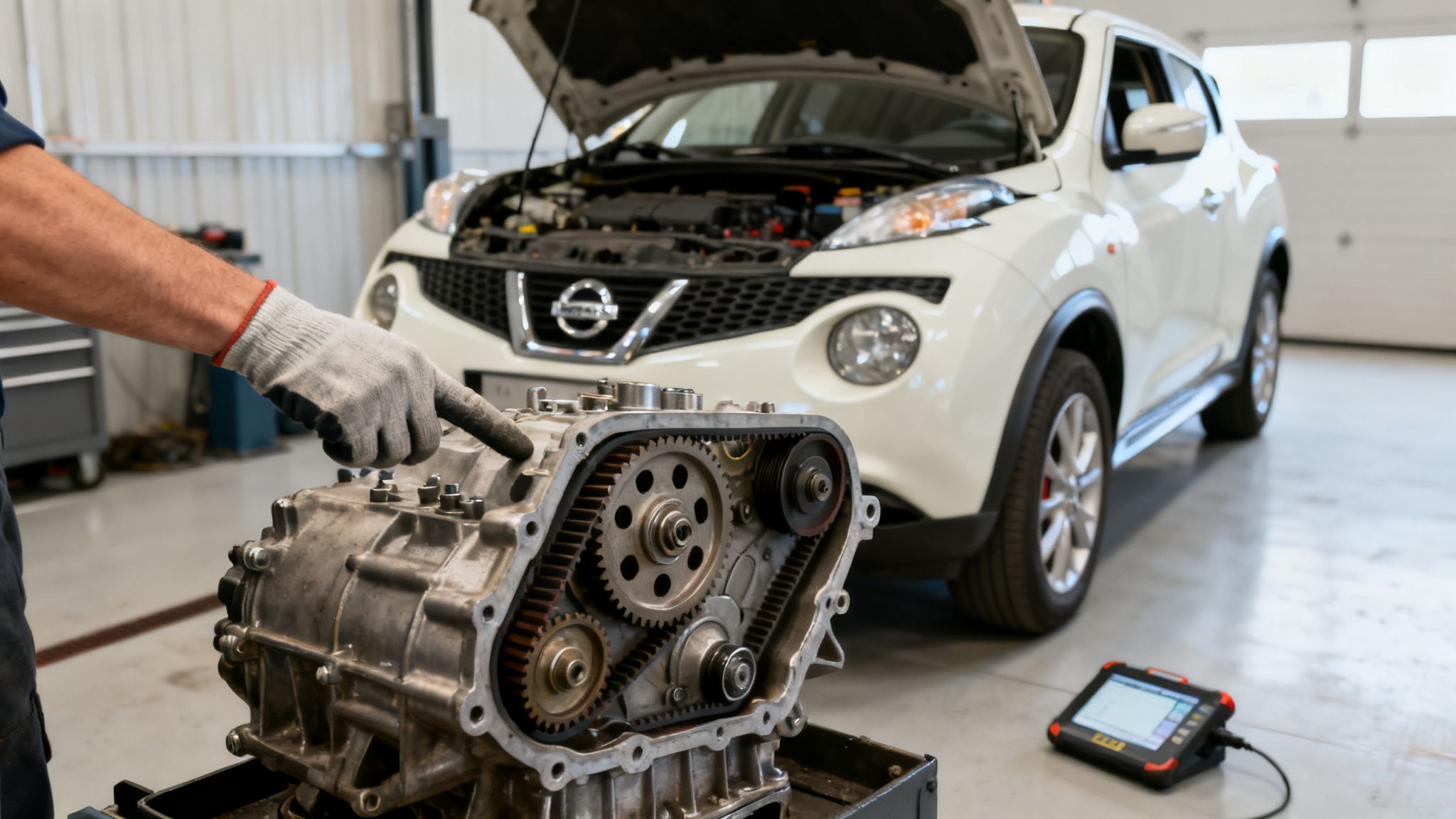
This is not a typical automatic with fixed gears. The CVT uses a system of pulleys and a steel belt to deliver a seamless range of ratios. On a test drive, this feels smooth and linear, with no perceptible gear shifts. While that is a decent selling point for consumers, it means the warning signs of a failing gearbox are entirely different. Traders need to know what to listen and feel for.
Identifying Common CVT Faults During Appraisal
The Xtronic CVT in this era of Juke is known for recurring problems that can quickly lead to substantial workshop bills. The first line of defence is a sharp ear and a good feel for the vehicle during appraisal. The most common trade complaints relate to juddering under acceleration, hesitation when pulling away, or a whining noise that follows engine revs.
These symptoms can point to anything from degraded or incorrect transmission fluid to serious internal wear on the pulleys or the steel belt itself. Overheating is another known cause of failure, accelerating the breakdown of fluid and components. This is especially common in vehicles that have been driven aggressively or used for towing—details a visual check will never reveal.
Key sensory clues of a failing CVT include:
- Audible Whining: A persistent, high-pitched whine that rises and falls with engine speed is a classic red flag for internal wear.
- Juddering or Shuddering: Any vibration or jerky movement, especially when pulling away from a standstill, suggests the belt may be slipping or the pulleys are worn.
- Sluggish Response: A noticeable delay between throttle application and acceleration can be a sign of a worn transmission struggling to transfer power.
- Dashboard Warnings: The Master Warning Light or a specific gearbox symbol is an obvious signal to investigate further. It confirms the vehicle's onboard diagnostics have detected a fault.
The Role of Provenance in Assessing CVT Risk
Assessing mechanical symptoms is only half the picture. The real risk with a problematic automatic Juke is often buried in its history. A vehicle's provenance provides the context needed to understand why these issues might be occurring. This is where a proper used car history report becomes indispensable.
A vehicle with a history of multiple short-term ownership cycles—for example, three keepers in less than two years—is a significant risk signal. This pattern often suggests previous owners have offloaded the vehicle to avoid an impending, expensive gearbox repair that a standard check would miss.
An AutoProv vehicle provenance check connects these dots. By analysing ownership timelines alongside MOT history, we can spot anomalies that hint at underlying trouble. For example, recurring MOT advisories for 'oil leaks' in the engine bay could be linked to a weeping transmission. A comprehensive mileage check UK, cross-referencing all available records, can also expose gaps that often correlate with periods of neglect, increasing the odds of gearbox strain.
This level of trade vehicle intelligence elevates an appraisal from a simple mechanical inspection to a robust risk assessment. It allows traders to anticipate reconditioning costs and make a much sharper valuation, protecting margins from the well-documented pitfalls of these popular but potentially troublesome transmissions. For a wider perspective, see our guide on reputable sources for cars with CVT transmission in 2025. By combining a physical inspection with solid data, you can navigate the first-gen automatic Juke market with confidence.
Understanding the Second-Generation DCT Shift
When the second-generation Nissan Juke arrived in late 2019, it featured a significant change under the bonnet. Nissan replaced the CVT in its automatic models with a 7-speed Dual-Clutch Transmission (DCT). For many in the motor trade, this was seen as a positive development.
The DCT delivers a sharper, more engaging drive with the crisp gear changes that many drivers prefer. It feels more like a traditional automatic, which broadens its appeal.
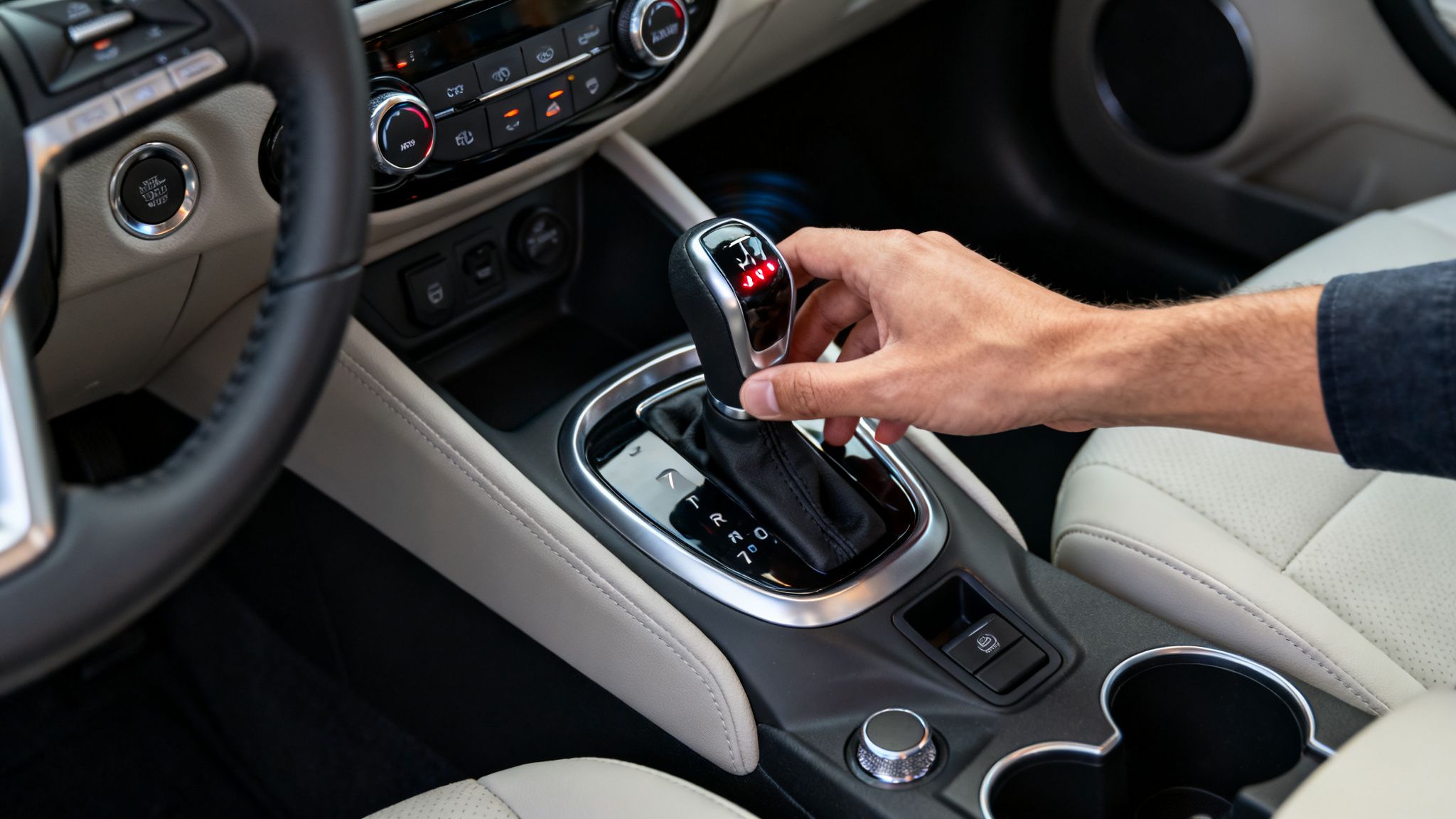
In simple terms, a DCT operates like two manual gearboxes side-by-side—one handling the odd gears, the other the even ones. This setup allows the next gear to be pre-selected for extremely fast shifts. However, this mechanical complexity introduces a different set of risks compared to the old CVT. While generally more reliable, DCTs are not invulnerable, and a faulty one can lead to significant repair bills.
Key DCT Inspection Points for Traders
When appraising a second-gen automatic Juke, the test drive is crucial. You need to be focused on how the DCT behaves, because initial symptoms are often subtle but can escalate into major mechanical failures. A sharp appraisal is the best defence against acquiring a vehicle with a latent gearbox issue.
The two main weak spots are the clutch packs and the mechatronic unit—the complex electro-hydraulic control module.
Common DCT symptoms to look for include:
- Low-Speed Hesitation or Jerkiness: Pay close attention to how it pulls away from a standstill or behaves in slow-moving traffic. Any obvious hesitation or jerky movements can be a sign of worn clutches or a failing mechatronic unit.
- Delayed Gear Engagement: Shifting from Park into Drive or Reverse should be prompt and smooth. A noticeable pause or a harsh "thud" as the gear engages is a major red flag.
- Rough or Noisy Shifts: While DCTs are quick, the shifts should be smooth. Any clunking, grinding, or overly harsh changes, especially between first and second gear, require closer investigation.
- Dashboard Warning Lights: An illuminated Master Warning Light or a specific gearbox fault symbol means the car's own onboard diagnostics have detected a problem.
Poor maintenance is often the root cause of these issues. A DCT requires regular fluid changes to remain healthy, a detail that should be verifiable in the service history. For a better understanding of why this is critical, see our guide on the cost of a gearbox oil change.
Linking Mechanical Risk to Vehicle Provenance
A test drive tells you what may be wrong, but a deep dive into the vehicle's history can often tell you why. Mechanical faults do not appear in isolation; they are often linked to the vehicle's past use and maintenance. This is where a proper vehicle provenance report becomes an indispensable part of your dealer vehicle checks.
An intermittent DCT fault is a trader's nightmare. It might perform perfectly on a short test drive, leaving you exposed. However, the vehicle's history can provide clues that a physical inspection misses.
A pattern of rapid resale or multiple auction appearances in a short space of time is a significant warning sign. It often suggests previous traders have identified an intermittent or complex DCT fault, could not resolve it profitably, and have passed the problem on.
This is a classic example of motor trade risk that a standard used car history report would never identify. By connecting the dots between a vehicle's ownership history and its likely mechanical state, you gain a significant advantage. An AutoProv report highlights these anomalies, showing you if a Juke has been passed between dealers.
This context is invaluable. It transforms your appraisal from a simple mechanical check into a strategic risk assessment. It gives you the intelligence to price the vehicle accurately, factoring in potential repair costs, or to walk away from a deal that could negatively impact your bottom line.
A Provenance-Led Inspection Checklist
Appraising an automatic Nissan Juke effectively requires a two-pronged approach. You must combine a sharp physical inspection with a deep dive into its history. Many dealers treat these as separate tasks, but integrating them is essential for accurate risk assessment.
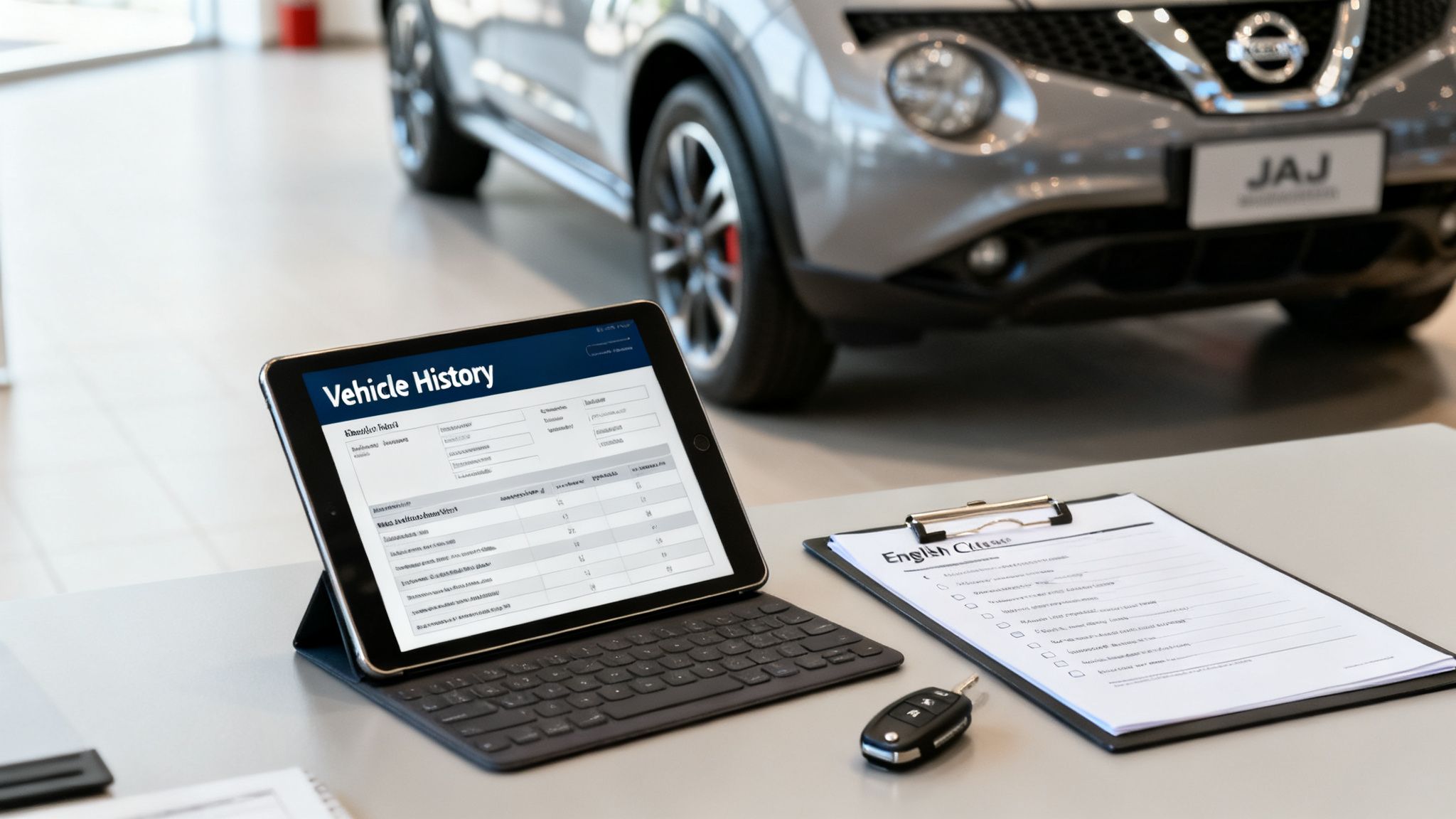
The physical check tells you the vehicle's condition right now. The provenance report tells you why it is in that condition. When you connect a judder on the test drive to a pattern of rapid ownership changes in the data, you get the full picture. It becomes an intelligence exercise, not just an appraisal.
To achieve this, you need a process that weaves physical and historical checks together. The table below outlines a method for connecting what you see, feel, and hear with the data from a provenance report.
Integrated Inspection and Provenance Checklist
Physical Inspection Point (CVT & DCT) Associated Provenance Check What This Uncovers Transmission Fluid: Check colour/smell. Dark or burnt? Service History & MOT Advisories: Look for gaps or "oil leak" notes. Chronic neglect, a history of running on low fluid, and potential for imminent failure. Engagement Test: Clunks or delays when shifting? Ownership Cycles: Check for multiple short-term keepers. A known, unresolved fault being passed between owners. Low-Speed Manoeuvres: Any juddering or whining? Mileage History: Cross-reference with MOT and service records. High-mileage wear-and-tear potentially disguised by mileage discrepancies. Acceleration Test: Slipping or erratic revs? Previous Plate Changes: Correlate with keeper changes. Potential attempts to obscure the vehicle's history from less thorough checks. Dashboard Warning Lights: Gearbox or master warning light on? Full MOT History: Look for recurring electronic or emissions-related advisories. A persistent electrical fault rather than a one-off issue. This integrated approach is fundamental to acquiring the right stock at the right price.
The Physical Inspection
Start with the basics, but remain tuned to the specific signs of a struggling CVT or DCT gearbox. These initial checks are your first chance to spot red flags that demand a closer look at the vehicle's history.
- Transmission Fluid Check: Where possible, check the dipstick. If the fluid is dark and smells burnt, it indicates overheating and neglect—a sure sign of accelerated internal wear.
- Initial Engagement Test: From a cold start, shift through P-R-N-D. Any long delays, harsh clunks, or loud thuds are classic symptoms of mechatronic trouble in DCTs or serious internal issues in CVTs.
- Low-Speed Manoeuvres: In a car park, perform tight turns and slow crawls. A whining noise from a CVT or a juddering hesitation from a DCT points directly to potential clutch pack or control unit faults.
- Acceleration Test: On the road, accelerate moderately, then more firmly. A healthy CVT should be seamless, and a DCT’s shifts should be sharp. Any slipping, shuddering, or erratic rev behaviour indicates a problem.
- Dashboard Warning Lights: Do not ignore the Master Warning Light or any gearbox symbols. A simple code reader is useful, but the real intelligence comes from cross-referencing any fault codes with the vehicle's history to see if it is a recurring issue.
Connecting the Dots with Provenance Data
For every physical clue you find, there should be a corresponding check against the vehicle’s historical data. This is how a simple mechanical issue becomes a clear indicator of motor trade risk. A professional vehicle provenance report provides the context that a standard check misses.
Linking a physical sign like transmission judder to a historical pattern of rapid resale is crucial. This connection suggests a known, unresolved fault being passed from one owner to the next—a classic example of a liability disguised as retail stock.
Use this methodical approach to turn your physical findings into actionable intelligence:
- Verify Service History: Do not just count the stamps. Match service dates and recorded mileages against the MOT history. Significant gaps or inconsistent entries suggest neglect, a direct cause of transmission failure.
- Analyse Ownership Cycles: If the test drive felt hesitant, the first thing to check is the ownership timeline. A history of multiple owners in a short period (e.g., three keepers in 18 months) is a major red flag that you are not the first to find the fault.
- Review MOT Advisory History: Look for repeated advisories about "oil leaks" around the engine or gearbox. A persistent minor leak flagged over several MOTs can point to failing seals and a history of being run low on fluid.
- Check for Previous Plate Changes: Align any plate changes with ownership transfers. While often innocent, a plate swap immediately before a sale can be an attempt to obscure a vehicle's past from less diligent dealer vehicle checks.
By pairing what you can see and feel with what the data proves, you eliminate guesswork. You start making acquisition decisions backed by evidence, which is the only way to protect your margin and reputation.
Valuation Strategy and Market Risks
For any motor trader, valuing an automatic Nissan Juke is where technical knowledge must translate into commercial sense. The documented issues with both CVT and DCT gearboxes are not just workshop problems; they are genuine market risks that directly impact a vehicle's value, desirability, and ultimately, your profit margin. Pricing this stock correctly requires more than a glance at guide values.
You will almost always see a price difference between manual and automatic Juke models, especially with the first generation. The CVT's reputation means informed buyers are wary, which naturally suppresses values. A well-maintained automatic with a comprehensive service history showing proper transmission servicing can command a premium, but this must be proven. Without that proof, you must price in the risk of a future expensive repair.
Market Saturation and Provenance
The sheer number of Jukes on UK roads is a double-edged sword. On one hand, it guarantees steady demand. On the other, the market is saturated. The Nissan Juke entered the UK market in 2010, with registrations rising from around 4,000 units in its first year to a peak of over 39,000 in 2015. With well over 300,000 Jukes sold in the UK since launch, supply is never an issue, which makes sharp acquisition pricing vital for protecting margins.
This massive volume also increases the statistical probability of encountering a unit with a hidden, costly history. This is where professional trade vehicle intelligence becomes non-negotiable.
Uncovering a hidden risk—such as a previously recorded insurance write-off, a mileage discrepancy, or a history of being passed around the trade—directly protects your bottom line. It provides the leverage to negotiate effectively or the confidence to walk away from a problematic vehicle.
Protecting Your Bottom Line with Deeper Intelligence
A standard history check might confirm a vehicle is clear of finance, but it often misses the crucial context needed for a proper risk assessment. An advanced vehicle provenance report from AutoProv goes much further, spotting the patterns and red flags that signal a problem vehicle.
Consider these common scenarios where extra data is critical:
- Undisclosed Write-Offs: A vehicle may appear clear on a basic check but could be a previously categorised write-off that has been repaired and returned to the road. This severely impacts its structural integrity and resale value.
- Mileage Anomalies: A thorough mileage check UK can uncover discrepancies that indicate potential odometer tampering. This is not just fraud; it means the transmission has done far more work than the dashboard suggests.
- Short-Term Ownership Patterns: A history of being sold on quickly is a classic sign of a persistent fault that previous owners grew tired of trying to fix.
When assessing market risks and valuing an automatic Nissan Juke, traders also have to factor in security effectiveness. This includes understanding advanced car security systems like the Ghost Immobiliser. Comprehensive dealer vehicle checks that cover all these angles are the bedrock of profitable, low-risk trading. For more on this, see our guide on vehicle valuations and market insights. This level of due diligence moves from simple valuation to strategic risk management.
Your Questions Answered
We are frequently asked about the automatic Nissan Juke. Here are some of the most common questions from the trade, with direct answers to help you make smarter buying and pricing decisions.
Is the Automatic Nissan Juke a Safe Bet for My Forecourt?
It is a tale of two gearboxes. The first-generation Jukes fitted with the CVT have a reputation for juddering, hesitation, and failure, representing a significant motor trade risk. The later DCT models are an improvement and generally more robust, but they are not invulnerable – mechatronic unit failures can occur.
However, reliability is not just about mechanics; it is about vehicle provenance. A Juke with a comprehensive service history, proof of regular transmission fluid changes, and a sensible ownership pattern is a much safer proposition than one with gaps in its past, regardless of its gearbox.
What is the Single Most Expensive Fix I Should Look Out For?
A total gearbox failure. This is the biggest financial risk with either the CVT or DCT model. A full replacement, including parts and specialist labour, will run into thousands of pounds. A bill of that size does not just erode a profit margin; it obliterates it.
This is precisely why your initial appraisal and dealer vehicle checks are so crucial. Spotting early warning signs—a slight judder on a test drive or hesitation when pulling away—backed by a used car history report that flags suspiciously short ownership cycles, can save you from acquiring a major liability.
How Much Does a Poor Gearbox History Impact the Resale Value?
Significantly. The market is aware of potential gearbox problems, especially with the CVT. A Juke with a known or even suspected fault is a difficult retail proposition. You will struggle to sell it, and when you do, it will likely be at a reduced price, possibly back into the trade.
Conversely, a vehicle with solid, documented proof of a recent gearbox replacement or a quality specialist repair can command a stronger price. It removes the single biggest concern for the next owner, turning a potential liability into a genuine selling point.
You must verify any claims of previous repairs. Use a comprehensive vehicle history check UK to cross-reference invoices against the vehicle's timeline. This ensures the history is consistent and protects you from inaccurate seller claims.
Can a Basic Provenance-Style Check Spot a Problematic Juke?
No, a basic check is not sufficient for this purpose. It will tell you if the vehicle is stolen or has outstanding finance, but it will not provide the trade vehicle intelligence needed to identify a potential problem vehicle.
It will not analyse ownership cycles to see if it has been passed around the trade. It will not highlight rapid resale patterns. And it will not cross-reference mileage records to expose significant anomalies. These are all classic indicators of a vehicle with underlying problems being moved from one unsuspecting buyer to the next.
At AutoProv, we deliver the advanced vehicle provenance intelligence the UK motor trade needs to see the full picture. Our reports are designed to uncover the hidden risks and analyse the ownership patterns that basic checks miss, giving you the confidence to buy and sell stock like the automatic Nissan Juke. Get the real picture at https://autoprov.ai.
Frequently Asked Questions
AI-Generated Content Notice
This article was created with the assistance of artificial intelligence technology. While we strive for accuracy, the information provided should be considered for general informational purposes only and should not be relied upon as professional automotive, legal, or financial advice. We recommend verifying any information with qualified professionals or official sources before making important decisions. AutoProv accepts no liability for any consequences resulting from the use of this information.
From our AI insights
- Auction Pitfalls: Avoiding Costly Mistakes
Navigate UK car auctions with confidence by avoiding finance, write-off, and mileage risks.
- Mastering Paint Code Checks: Detecting Hidden Car Repairs
Discover how to use paint code verification to identify hidden car repairs and ensure a smarter purchase.
- UK Part-Exchange Checks: Protecting Dealer Margins
Explore essential part-exchange checks for UK dealers to safeguard profit margins, including provenance and finance verification.
Related Articles

Your Ultimate Guide to Buying a Used Car in the UK
Navigate the UK used car market with confidence using our comprehensive buying guide. Tips, checks, and AutoProv Provenance insights included.

Difference Between MOT and Service: What You Need to Know
An MOT is a mandatory legal inspection that every car on UK roads needs to pass.Think of it as the government's way of ensuring your vehicle meets the absolute minimum safety and environmental standards to be considered roadworthy. A service, on the other hand, is a completely different beast. It's the proactive maintenance routine recommended by the people who built your car, designed to keep it running smoothly and catch problems before they start. In short, an MOT is a pass-or-fail exam required by law. A service is a comprehensive health plan for your car.

Your Ultimate Used Car Inspection Checklist
A solid used car inspection checklist is the single most powerful tool you have to avoid buying a lemon. It gives you a methodical way to look past the shiny paint and assess a car's real condition, helping you spot hidden problems and get a fair price before you shake hands on the deal.
Published by AutoProv
Your trusted source for vehicle intelligence