
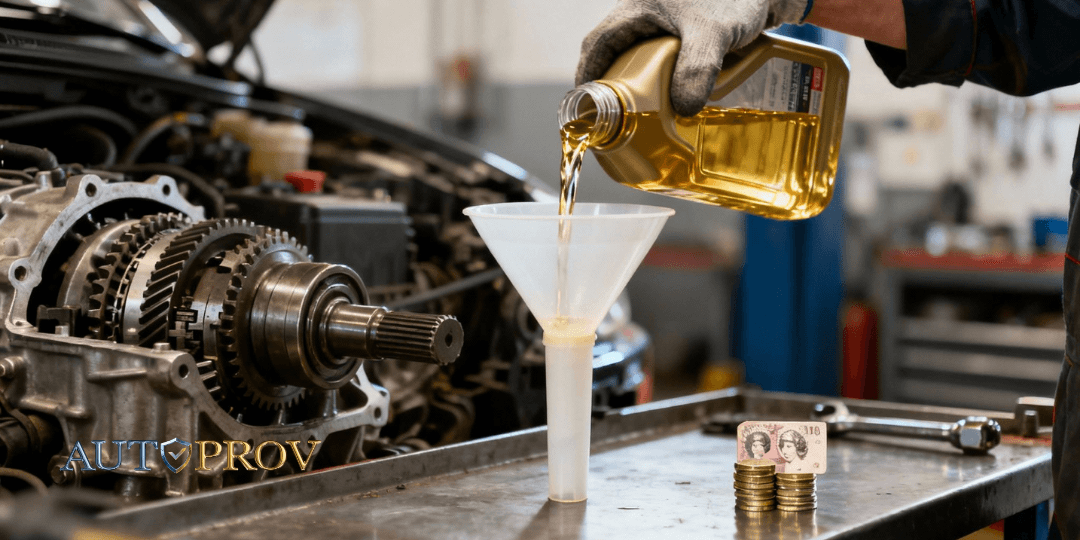
On paper, the average gearbox oil change in the UK costs around £200. For motor trade professionals, however, averages provide little practical value. A straightforward manual transmission service might only cost £80-£150, but a specialist automatic, DSG, or CVT fluid change on a premium model can easily exceed £300.
Understanding The Real Cost Of Gearbox Maintenance
For a dealer, a gearbox oil change isn't just a line item on a service invoice. It is a critical variable that directly impacts a vehicle's profitability. When a car arrives at your business with a neglected transmission, it carries a hidden liability—one that can erode your margin.
This guide breaks down gearbox service costs from a trade perspective. We will examine the factors that drive prices, how to identify risk signals early, and why miscalculating this cost can turn a promising vehicle into a financial loss. A solid understanding of these costs is a non-negotiable part of any accurate vehicle appraisal.
Key Considerations for Traders
When assessing a vehicle's potential service requirements, several key factors require immediate attention. These initial checks help build a clearer picture of potential reconditioning expenditure.
- Vehicle Make and Model: Premium brands often require specific fluids and more complex, time-consuming procedures, increasing costs.
- Gearbox Type: A simple drain-and-fill on a manual gearbox is fundamentally different from a full filter-and-fluid service on a dual-clutch (DSG) or CVT transmission.
- Service History: The absence of a stamp in the service book or digital record for a gearbox service is a significant red flag. An immediate service should be factored into your costings.
- Mileage and Age: Any vehicle approaching or exceeding the 60,000-mile threshold without proof of a fluid change is a prime candidate for this essential work.
Across the UK, prices vary depending on the vehicle's manufacturer and the workshop's hourly rate. An Audi gearbox service might be quoted from £150 to £250, while a similar job on a Mercedes can approach £300.
It is not just about the oil. Understanding When to Change Your Transmission Filter is equally important for correct gearbox function. To see how this fits into the wider context of vehicle maintenance, refer to our complete UK car service price guide.
Decoding The Invoice: Labour, Fluid, And Parts
To price a vehicle accurately or finalise reconditioning costs, it is essential to understand the components of a gearbox oil change invoice. The final bill is a combination of labour time, specialist fluids, and essential parts, each weighted differently depending on the transmission type.
When analysing the total cost, three components are key. While all contribute, their share of the final invoice changes dramatically with more complex transmissions.
This chart illustrates the core cost components for the most common gearbox types in the UK market.
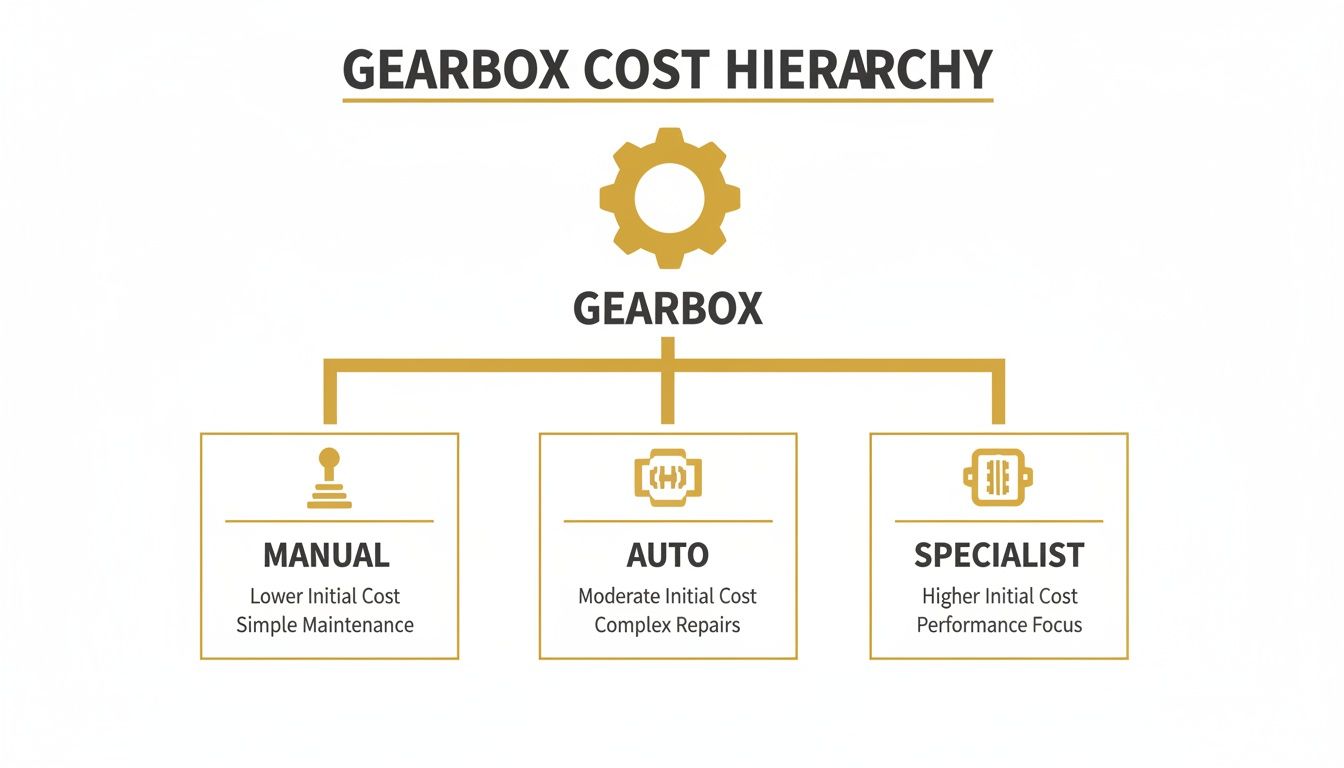
As shown, labour and fluid costs increase substantially for more complex automatic and specialist systems.
Labour Charges Unpacked
Labour constitutes a significant portion of the bill, determined by the time required to complete the job correctly. A simple drain-and-fill on a manual gearbox may only take an hour, keeping the labour cost low.
An automatic or DSG transmission service, however, is a more involved procedure. The process often involves removing the sump pan, replacing the internal filter and gasket, and refilling the fluid to a precise level at a specific temperature. This complexity can extend labour time to two to three hours, significantly increasing the overall cost.
The High Cost of Correct Fluids
The single biggest variable in parts cost is the fluid itself. Standard manual gearbox oil is relatively inexpensive. In contrast, modern automatic transmission fluid (ATF) and specialist oils for DSG or CVT units are highly engineered liquids with a corresponding premium price.
Using incorrect fluid is not an option—it leads to catastrophic transmission failure. For instance, a DSG service requires a specific fluid that can cost over £20 per litre, with many units needing five to seven litres for a complete change.
A critical mistake is underestimating the cost of OEM-specified fluids for premium vehicles. This is non-negotiable for ensuring correct transmission function and longevity, directly impacting the vehicle's future reliability and value.
Essential Filters and Consumables
In addition to the fluid, a proper automatic transmission service requires a new filter and sump gasket. While these parts are not excessively expensive on their own (typically £20-£60), they are mandatory consumables that add to the total cost. Forgetting to factor them in can disrupt your reconditioning budget.
Costs can escalate on high-performance or luxury models. For example, forum discussions show Mercedes owners being quoted over £800 for a service on an older V12 model, driven by extensive labour and expensive OEM parts. To see how fluid changes fit into the bigger picture, see our practical guide to engine oil changes.
Key Factors That Drive Service Pricing
The final cost for a gearbox oil change is rarely a fixed price. Beyond the basic components of labour and parts, several key variables can significantly influence the final invoice. Understanding these is essential for accurately budgeting a vehicle’s reconditioning costs before acquisition.
The most significant factor is the vehicle's make and model. A mainstream model like a Ford Fiesta will use standard, affordable fluids, and parts are readily available. Conversely, a premium German SUV will almost certainly require expensive, OEM-specific fluids and may have a more complex service procedure, increasing the cost from the outset.
This complexity is usually determined by the transmission technology.
Transmission Type and Its Cost Implications
The technology inside the gearbox dictates the time, skill, and fluids needed, creating a clear cost hierarchy.
- Manual Gearbox: The most straightforward and cheapest service, usually a simple drain-and-fill job requiring relatively inexpensive gear oil.
- Traditional Automatic (Torque Converter): A step up in complexity. This service often requires a new filter and gasket, plus more expensive Automatic Transmission Fluid (ATF). The process is also more labour-intensive.
- DSG/PDK (Dual-Clutch): These advanced gearboxes require a very specific, high-cost fluid and a meticulous filling procedure to function correctly. Labour costs increase due to the precision involved.
- CVT (Continuously Variable Transmission): Like DSGs, CVTs are highly sensitive to fluid type. Using the wrong fluid can lead to catastrophic failure, making the correct—and often expensive—fluid non-negotiable.
Main Dealer vs Independent Specialist
The choice of service provider also has a massive impact on the bill. For a motor trader managing reconditioning costs, each route has distinct advantages and disadvantages.
A main dealer guarantees the use of genuine OEM parts and fluids. This provides an assurance of quality and maintains the official service history, which is a strong selling point. However, this comes at a premium, with higher labour rates and parts prices that can inflate the service cost significantly.
An independent specialist, on the other hand, usually offers more competitive labour rates. A reputable independent will use OEM-quality parts and correct fluids without the main dealer’s overheads. For many traders, this offers the best balance between quality and cost-effectiveness. The key is to verify the garage's reputation and expertise with the specific make or gearbox type. Understanding these variables is as crucial as knowing the cost of a cambelt change, as both can represent significant hidden costs.
How Service History Impacts Vehicle Value
In the motor trade, a vehicle's provenance is paramount. While appearance may attract initial interest, it is the service history that substantiates its value and protects your profit margin. A missing or patchy gearbox service record is not a minor detail; it is a significant red flag that can turn a seemingly sound acquisition into a serious hidden liability.
A comprehensive file of receipts and service stamps is a tangible asset. For an astute trader, understanding how that history impacts a car's value is a critical part of vehicle appraisal and should be integrated into your automotive inventory management software. It provides the evidence to justify a higher retail price and demonstrates a level of care that buyers are willing to pay a premium for. Conversely, gaps in maintenance history—especially for the transmission—should immediately trigger a downward negotiation on the purchase price.
From Paperwork To Profit
The link between maintenance and financial outcome is direct. A high-mileage vehicle with no documented proof of a transmission fluid change is a ticking financial risk. The question is not if it will require attention, but when, and that cost will come directly from your margin, either in reconditioning or a post-sale dispute.
This is where analysing a car's provenance becomes a powerful trading tool. By cross-referencing MOT history with ownership patterns, you can identify signs of neglect. For instance, a vehicle that has passed through multiple owners in a short period might have had essential but costly jobs, like a gearbox oil change, repeatedly deferred.
The Real-World Cost Of Neglect
Ignoring gearbox maintenance is a significant financial risk. UK data consistently shows that deferred gearbox oil changes are a hidden cost driver in used car maintenance. While the service itself might average around £200, it is a key preventative measure against much larger repair bills. With 59% of drivers reportedly facing unexpected repair bills exceeding £600, transmission problems are a common cause, especially in vehicles between three and ten years old that lack a clear service history.
For a dealer, a vehicle with no gearbox service history isn't just a car; it's an unquantified risk. Factoring in the potential £200-£400+ gearbox oil change cost during your appraisal isn't just being cautious—it's essential for protecting your margin.
This table breaks down the direct impact of a service history—or lack thereof—on a vehicle's trade valuation. It illustrates why it cannot be overlooked.
Impact Of Gearbox Service History On Vehicle Valuation
Service History Status Impact on Trade-In Value Potential Reconditioning Cost Associated Risk Level Full, Documented History Supports a higher valuation; a strong selling point. Low; routine checks only. Low Partial or Missing History A significant reduction in your offer price is necessary. High; budget for an immediate service. High No History at High Mileage Drastic value reduction; could justify a no-bid decision. Very High; risk of imminent failure. Very High As shown, the risk increases steeply when documentation is absent. By using advanced dealer vehicle checks that focus on provenance, you can identify these liabilities before committing to purchase. This intelligence provides the leverage to negotiate purchase prices more effectively and calculate the true cost of preparing a vehicle for retail. For more detail, refer to our guide on the importance of a complete service and maintenance history.
Spotting The Red Flags Of A Neglected Gearbox
Whether you are appraising a part-exchange or evaluating stock at auction, assessing a car’s mechanical health quickly is crucial. A neglected gearbox presents a significant financial risk, and it is the type of problem that a basic vehicle history check will not identify. Recognising the physical warning signs is your first line of defence against acquiring stock with an expensive, imminent transmission failure.
These symptoms are not just about a future service cost; they are clues pointing to potential internal damage that could result in a repair bill running into the thousands. Identifying them early is vital for protecting your margin.
On The Road And In The Bay
During a test drive or a workshop inspection, your own senses are your most effective diagnostic tools. Pay close attention to how the vehicle drives and listen for any unusual sounds or smells – they are often the first tell-tale signs of a problem.
Here are the key warning signs to watch for:
- Hesitant or Jerky Gear Changes: In an automatic, if the car seems to struggle or lurches between gears, it is a classic symptom of low or degraded fluid. This is not just a comfort issue; it is a sign the transmission is under significant strain.
- Slipping Gears: When the accelerator is pressed, the engine revs climb, but the vehicle does not accelerate accordingly. This indicates a slipping transmission, a major red flag pointing to worn internal parts, usually caused by fluid neglect.
- Unusual Noises: Listen carefully for any whining, humming, or clunking. A distinct whine can indicate low fluid levels, while a clunk during shifts suggests more serious mechanical wear.
- Delayed Engagement: When shifting from Park into Drive or Reverse, a noticeable pause before the gear engages points to internal pressure problems, often linked directly to old, ineffective fluid.
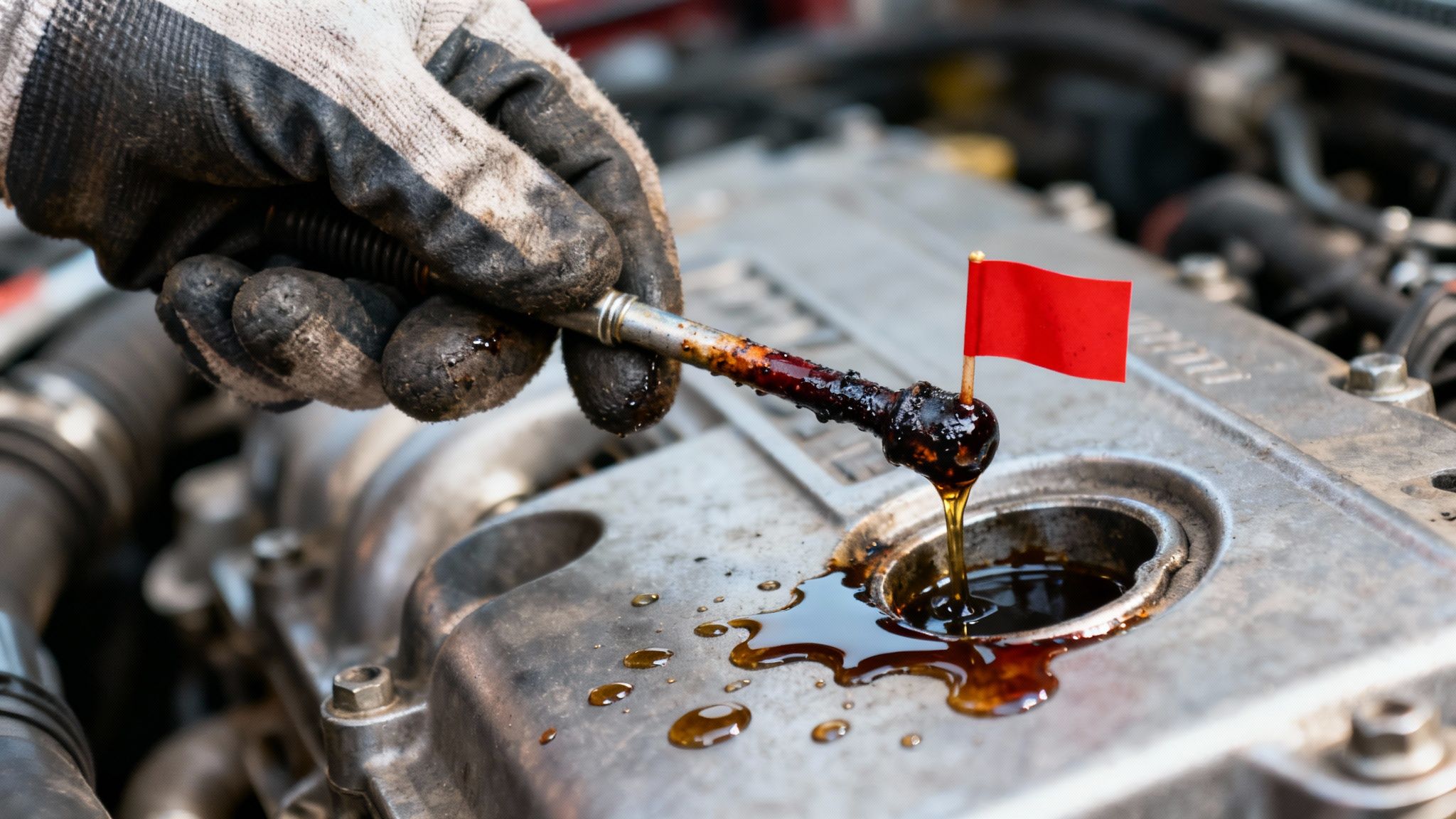
A crucial part of any appraisal should be checking the transmission fluid itself, where possible. Oil that’s dark, gritty, or smells burnt is a dead giveaway of severe neglect and potential overheating, dramatically increasing the risk of a catastrophic failure.
Fluid Condition: A Direct Health Indicator
The state of the gearbox oil provides a direct insight into the transmission’s health. Old, contaminated fluid cannot lubricate or cool effectively, which accelerates wear on critical internal components.
A quick visual and olfactory test can reveal a great deal:
- Colour: Healthy automatic transmission fluid (ATF) is typically a bright, translucent red. If it has turned dark brown or black, it is heavily contaminated and has likely been degraded by excessive heat.
- Smell: A distinct burnt smell is a negative indicator. It means the fluid has overheated, breaking down its chemical properties and signalling that the transmission has been operating at too high a temperature, causing premature wear.
- Consistency: Rub a small amount of the fluid between your fingers. If you feel gritty particles, that is likely metal filings or debris from wearing clutches—a sure sign that internal damage has already begun.
By incorporating these practical checks into your appraisal routine, you can become more proficient at identifying high-risk vehicles. Catching these red flags allows you to adjust your bid price to cover the almost certain gearbox oil change cost or, in severe cases, walk away from a deal that could otherwise result in a significant financial loss.
Integrating Gearbox Checks Into Your Buying Process
Effective traders translate insight into action. Systematically integrating gearbox health and service history checks into your stock acquisition workflow is essential. This is not about adding complexity; it is about creating a repeatable, evidence-based process that protects your capital and consistently informs buying decisions.
The first step is to treat the gearbox service history with the same scrutiny you apply to the MOT history. When appraising a vehicle, ask direct questions about transmission maintenance. Examine service invoices for specific mentions of fluid and filter changes, paying close attention to dates and mileage. Vague responses or incomplete paperwork should immediately lower your valuation to cover the potential gearbox oil change cost.

From Appraisal To Acquisition
A structured approach ensures nothing is missed, particularly when time is limited at an auction or during a busy part-exchange appraisal.
- Ask Direct Questions: "When was the transmission fluid last changed?" and "Can I see the invoice for that job?" are non-negotiable questions.
- Verify with Intelligence: Use trade vehicle intelligence to cross-reference ownership patterns and MOT advisories. A history of short-term ownership can be a red flag that expensive maintenance, such as a gearbox service, has been repeatedly deferred.
- Factor in the Cost: If there is no proof of service on a vehicle approaching or past 60,000 miles, you must automatically budget for a full fluid and filter change. This figure should be deducted from your offer price.
By embedding these steps into your routine, you shift from reactive problem-solving to proactive risk management. For a more detailed breakdown of physical inspection points, our ultimate used car inspection checklist provides further guidance. This disciplined process not only protects profitability but also builds a reputation for stocking mechanically sound vehicles.
Questions From The Trade
We receive many questions from dealers about gearbox oil changes. Here are direct answers to the most common queries to support buying, pricing, and remarketing decisions.
How Often Should Gearbox Oil Be Changed On A Used Vehicle?
There is no single interval, as manufacturer schedules vary. A reliable rule of thumb is every 30,000 to 60,000 miles for automatics and 60,000 to 100,000 miles for manuals.
For traders, the pragmatic approach is this: if a vehicle is within this mileage window and lacks verifiable proof of service, assume it is due. The only safe action is to factor the full gearbox oil change cost into your valuation from the outset.
This is a simple step that protects your margin before acquisition.
Is A Gearbox 'Sealed For Life' Truly Maintenance-Free?
No. The term 'sealed for life' is one of the most misleading in the industry. It typically means the fluid is engineered to outlast the manufacturer's warranty period—not the vehicle's operational lifespan. Most independent specialists recommend changing the fluid around the 100,000-mile mark to prevent catastrophic failure.
Be highly cautious of high-mileage vehicles with these 'sealed' units and a blank service history. They represent a significant hidden financial risk that a standard appraisal will miss, and could result in a substantial post-sale repair bill.
Does A Standard Vehicle History Check Verify A Gearbox Service?
No. A standard vehicle history check UK traders use is effective for flagging major events like insurance write-offs, MOT history, and keeper changes, but it provides no information on routine maintenance. The only way to verify a gearbox service is through the physical or digital service records from the previous owner.
This is where more advanced trade vehicle intelligence platforms can provide an advantage. By analysing data such as ownership patterns and MOT advisories that may indicate neglect, they build a much clearer risk profile than a basic check alone. That level of insight is critical for making a truly informed buying decision.
At AutoProv, we provide advanced vehicle provenance intelligence designed for the UK motor trade. Our reports help you uncover hidden risks, verify vehicle history, and make more profitable buying decisions. Get the clarity you need at https://autoprov.ai.
Frequently Asked Questions
AI-Generated Content Notice
This article was created with the assistance of artificial intelligence technology. While we strive for accuracy, the information provided should be considered for general informational purposes only and should not be relied upon as professional automotive, legal, or financial advice. We recommend verifying any information with qualified professionals or official sources before making important decisions. AutoProv accepts no liability for any consequences resulting from the use of this information.
From our AI insights
- Decoding CO2 Emissions: A Trader's Guide
Learn how traders can verify CO2 data using factory build sheets to prevent disputes.
- Navigating Recall Compliance for UK Car Traders
Ensure compliance with recall regulations: essential steps for UK car traders.
- Unlocking Manufacturer Warranty Transfers for UK Traders
Master the nuances of manufacturer warranty transfers for used cars in the UK and avoid disputes.
Related Articles

The Importance of Car Maintenance and Provenance Checks
Discover why regular car maintenance and proper provenance checks are essential for vehicle quality and longevity.
Essential Car Maintenance Tips for UK Drivers
Discover vital car maintenance tips to keep your vehicle roadworthy and compliant in the UK.
How Much Is a Car Service? Complete UK Price Guide
Trying to pin down exactly "how much is a car service?" can feel a bit like asking "how long is a piece of string?". Prices vary quite a bit, but to give you a ballpark figure, an interim service will usually set you back around £100 to get started. A more thorough full service often begins at £180, while a major service for many cars can easily top £300.
Published by AutoProv
Your trusted source for vehicle intelligence
