

If you need to get your car's specs, you can usually start with the registration plate (VRM) or the Vehicle Identification Number (VIN). Both of these will unlock key data about a vehicle, but the quality and depth of that information can be wildly different depending on the source. For anyone in the trade, that variability is a risk, making professional verification from a service like AutoProv an absolute must.
Why Accurate Car Specs Are Your Most Valuable Asset
In the fast-moving UK motor trade, getting vehicle data right is not just about good record-keeping—it is the bedrock of your profitability. The gap between a great deal and a costly mistake often comes down to one thing: knowing a vehicle's true, factory-fitted specification. Relying on basic checks or simple assumptions is a sure-fire way to introduce massive financial risk into every single transaction.
Imagine buying a vehicle at auction that is listed as a standard model, only to find out later it is missing a high-value optional pack you had priced in. Or worse, undervaluing a part-exchange because a free check missed its desirable trim level. These are not just hypotheticals; they happen every day and they hit your bottom line directly.
The Real Cost of Inaccurate Data
Every decision you make, from initial valuation right through to remarketing, hangs on the quality of the data in your hands. Get it wrong, and you set off a domino effect of problems that go way beyond the purchase price.
- Valuation Errors: Mistake a high-spec model for a base version and you could lose thousands in profit. On the flip side, overvaluing a standard car based on bad data leads to stock that just sits there, refusing to shift. Our guide on mastering car valuation digs into why granular data is the key to getting your pricing spot-on.
- Workshop Inefficiency: Ordering the wrong part because of faulty spec information causes delays, ties up valuable ramp space, and chips away at customer trust.
- Wasted Marketing Spend: Advertising a car with features it does not actually have is not only misleading but also wastes your budget attracting buyers who will inevitably be disappointed.
In the motor trade, you do not really sell cars; you sell information. The vehicle is just the asset that information is attached to. The more accurate and detailed your information, the bigger your commercial advantage.
Establishing a Single Source of Truth
The most common ways to get my car specs are by using the registration or the VIN. While both are useful, they often pull from different databases, which can lead to frustratingly different results. A basic reg check might tell you one thing, while the manufacturer's own build data, tied to the VIN, tells a completely different story.
This constant data conflict is a major headache for dealers and fleet managers alike. Trying to cross-reference everything manually is a huge time-sink and still leaves plenty of room for human error.
This is precisely the problem a professional vehicle intelligence platform is designed to fix. By pulling together multiple data streams into a single, verified report, solutions like AutoProv cut out the guesswork. They give you the certainty you need to operate profitably and with confidence. Getting the specs right is not just a clerical task; it is a critical business tool for managing risk.
Using the Registration Plate and VIN to Uncover Vehicle Data
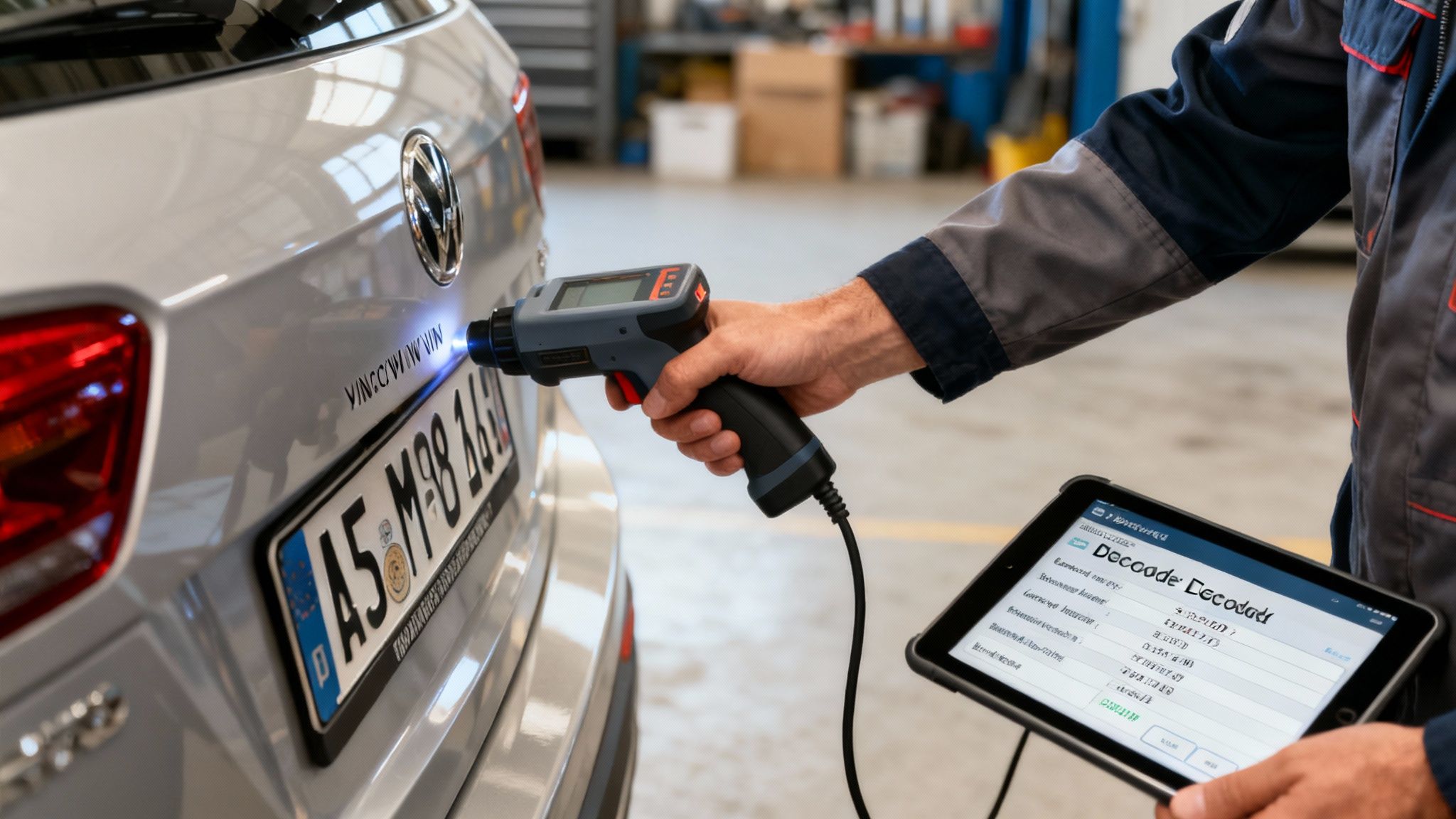
When you need to get my car specs, there are two codes that act as your keys: the registration plate (VRM) and the Vehicle Identification Number (VIN). Both unlock a vehicle's history and makeup, but they open very different doors. For anyone in the motor trade, knowing the strengths and weaknesses of each is fundamental to making sound business decisions.
The registration plate is your most obvious starting point. A quick VRM lookup taps directly into the Driver and Vehicle Licensing Agency (DVLA) database, giving you a solid first layer of information. Think of it as your initial pass to confirm the basics.
This first check usually gives you:
- The vehicle's make and model.
- Its date of first registration.
- Basic engine size and fuel type.
- Current tax and MOT status.
- The officially recorded colour.
While this is great for a quick confirmation, stopping here is commercially risky. The DVLA record is a registration log, not a factory build sheet. For a professional, this is where the limitations become glaringly obvious.
The Power of the VIN
This is where the VIN comes in, providing a much deeper, more specific story. The 17-digit code is the vehicle's unique fingerprint, stamped on it at the factory and staying with it for life. Unlike a VRM, which can be transferred, the VIN is permanent.
Decoding a VIN grants you access to the manufacturer's original build data. This is where you find the granular details that dictate a vehicle's real market value—details often missing from a standard reg check. It reveals the exact trim level, factory-fitted optional extras, specific engine and transmission codes, and even the original paint colour, which might not match what the DVLA has on record after a respray.
A registration plate tells you how a car is identified by the government. A VIN tells you exactly what the car was when it left the factory. For valuation and sourcing, the VIN is your ultimate source of truth.
Take a car with a private plate, for example. A simple VRM check might only tell you it is a basic model, completely missing a desirable high-end audio system or a winter pack that significantly boosts its value. The VIN check cuts through that ambiguity, laying out the complete factory specification. If you are unsure where to find this critical number, our guide on locating a UK vehicle's VIN has you covered.
Why Free Checks Fall Short for Professionals
The internet is flooded with free, consumer-grade spec checkers. They are fine for a casual owner wondering about their MOT date, but for the motor trade, they are dangerously inadequate. These tools typically just scrape the most superficial data from public sources and lack the depth you need for accurate valuations or parts ordering.
Relying on them leads to costly mistakes. A free check might identify a car as a "Ford Focus 1.6," but it will not tell you which of the five different trim levels it is, each with its own trade value. That lack of detail can hit your profitability hard, causing you to either overpay for a vehicle or undervalue a gem on your forecourt.
This is the critical gap that professional platforms are built to fill. A service like AutoProv does not just do a simple lookup; it intelligently cross-references data from the DVLA, manufacturer records via the VIN, insurance databases, and other trusted sources. It then consolidates this into a single, verified report that highlights discrepancies and gives you the full, commercially relevant picture in seconds. It removes the manual work and the risk, letting you operate with a level of certainty that free tools simply cannot offer.
Decoding Vehicle Data for Commercial Success
Once you have run a check, you get a wall of data. For any professional, the real skill is knowing which of those details actually drive a vehicle's value and desirability. Confirming the make and model is just the first step; commercial success is found in the small print that separates a standard car from a highly sought-after one.
Moving beyond the basics means zeroing in on the data points with a direct financial impact, from mechanical codes to tax-relevant emissions figures. Knowing the exact engine and transmission codes, for example, is vital for sourcing the right parts and servicing the vehicle correctly, preventing expensive mistakes in the workshop.
Likewise, CO2 emissions figures are not just an environmental metric; they dictate the car's tax band. This has a real impact on running costs for the next owner, making it a key selling point or a potential hurdle you need to be ready for.
From Trim Levels to Tyre Fitments
The difference between two seemingly identical cars can easily be thousands of pounds, and that value is almost always hidden in the trim level. A basic check might just say "Ford Mondeo," but a professional needs to know if it is the high-spec "Titanium X" or the more modest "Zetec" edition.
These trim levels are what determine the presence of high-value features, such as:
- Leather upholstery and heated seats.
- Advanced driver-assistance systems (ADAS) like adaptive cruise control.
- Premium audio systems or a panoramic sunroof.
- Upgraded alloy wheels and factory body kits.
If you fail to spot a higher trim level, you could undervalue a part-exchange by a significant margin, essentially handing profit back to the customer. This is precisely where a detailed check from a service like AutoProv becomes a non-negotiable tool for protecting your margins.
Another detail that is often overlooked but critically important is the Original Equipment (OE) wheel and tyre fitment. Knowing the correct OE specs helps you verify the vehicle’s authenticity and ensures any replacement parts are correct, maintaining both safety and performance. For workshops and parts departments aiming for a first-time fix, this data is indispensable.
Think about this real-world scenario: A dealer is offered a Volkswagen Golf in part-exchange. A free check shows it is a standard model, valued at £12,000. But a professional check using AutoProv reveals it has the optional 'Winter Pack' (£300), a 'Discover Pro' navigation system (£1,325), and 'Dynamic Chassis Control' (£875). All of a sudden, a £12,000 car is correctly valued at over £14,500. That is £2,500 of equity identified in under 30 seconds.
This is the commercial power of having detailed, accurate specifications. It turns valuation from a guessing game into a data-driven science, directly boosting your profitability on every single vehicle. This process is also fundamental to understanding a vehicle's future worth; you can learn more by reading our guide on how to calculate vehicle depreciation.
The Rise of Electric Vehicle Data
The market is shifting, and the data you need to track is changing with it. The electric and zero-emission vehicle sector is one of the most significant changes in UK car ownership patterns we have ever seen, with growth accelerating fast. As of June 2025, there were 1,625,000 licensed zero-emission vehicles on UK roads, making up 3.9% of all licensed vehicles. This rapid transition is reshaping what motor trade professionals need to know, making details like battery specs and charging capabilities essential business intelligence. You can explore the full government statistics on UK vehicle licensing trends.
For electric vehicles (EVs), traditional specs like engine size have been replaced by new, equally critical data points.
Key EV specifications to watch for include:
- Battery Capacity (kWh): This is the single most important metric. It determines the vehicle's range and is a primary driver of its value.
- Charging Speed (AC/DC kW): A vehicle’s ability to rapid-charge is a massive selling point. Knowing its maximum AC and DC charging rates is crucial for marketing.
- Battery Health (SoH): While not always available, any data on the battery's State of Health is invaluable for an accurate valuation.
- Original Range (WLTP): Understanding the manufacturer's official range helps set realistic expectations for potential buyers.
As the market continues this shift, having access to a data provider that stays on top of these new data points is not just an advantage—it is a necessity for survival. Relying on outdated systems that cannot differentiate between EV models or provide accurate battery specs is a recipe for commercial disaster. A platform like AutoProv ensures you have the most up-to-date information at your fingertips, keeping you ahead of the curve.
Navigating and Resolving Conflicting Vehicle Data
One of the biggest headaches in the motor trade is getting conflicting data from different sources. You run a quick check and get one story, but a deeper dive tells you something else entirely. This is not just a minor inconvenience; these discrepancies are a direct threat to your bottom line, injecting risk into every single transaction.
Picture this: you are valuing a potential part-exchange. A basic DVLA lookup suggests it is a standard Ford Focus Zetec. But your gut tells you something is off—maybe it is the alloys or the interior trim. A more detailed check reveals it is actually a high-spec ST-Line model with a factory-fitted driver assistance pack, a detail that could add over a thousand pounds to its trade value.
This happens all the time. Relying on a single, basic source can lead you to drastically undervalue a vehicle or, even worse, overpay for one that does not have the spec you thought it did.
Understanding the Causes of Data Conflicts
These conflicts are not just random glitches; they usually boil down to a few common issues. Getting to grips with the root cause is the first step towards building a bulletproof verification process.
- Initial Registration Errors: Simple human error when a vehicle is first registered can mean the wrong model or trim level gets logged in the DVLA database from day one.
- Post-Factory Modifications: A previous owner might have upgraded the wheels, added a body kit, or even swapped the interior, making the car look like a higher spec than its original build sheet.
- Plate Transfers: Private registration plates can easily obscure a vehicle's true age and original identity, often causing confusion if you do not cross-reference the VIN.
- Vague Manufacturer Data: Sometimes, the manufacturer data itself can be a bit woolly, lumping several different trim levels under one generic model name. You need a more detailed lookup to get the real story.
When you get my car specs from multiple sources and find a conflict, always trust the VIN. The Vehicle Identification Number is tied directly to the original factory build sheet. It is the definitive source of truth for what that vehicle was when it rolled off the production line.
A Practical Method for Reconciling Data
When you are faced with conflicting information, you need a systematic way to find the truth without losing hours manually cross-referencing everything. The trick is to prioritise your data sources and use a layered approach.
Start by treating the VRM lookup as your initial baseline—it confirms the vehicle's identity and registration status. From there, the VIN becomes your primary tool for forensic-level detail. For a deeper dive, our guide on performing a free UK VIN number check offers some great insights into the process. The VIN allows you to pull the manufacturer's data, confirming the exact trim, engine code, and any optional extras fitted at the factory.
This decision tree shows how even a single specification, like engine type, immediately splits a vehicle's data profile and its potential value.
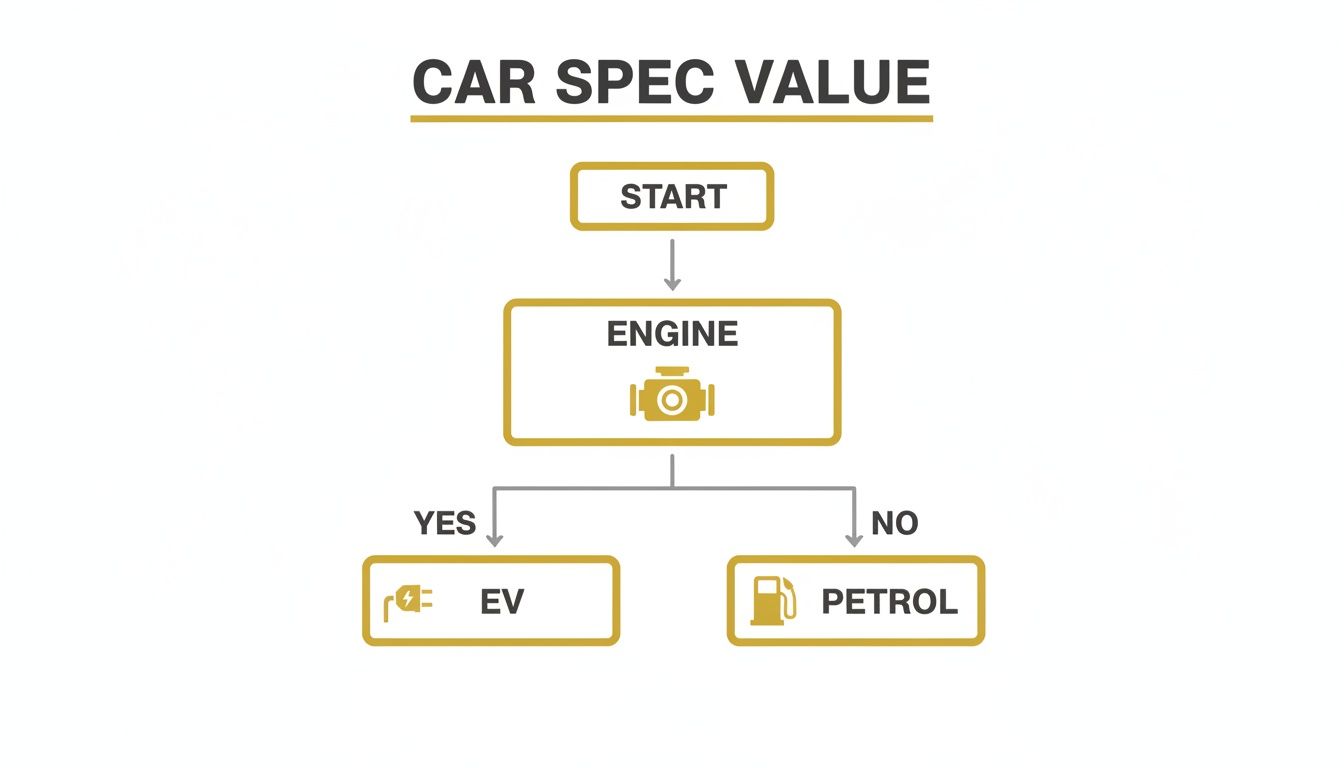
This simple branching illustrates that from the very first data point, a car's valuation and the checks it requires head in completely different directions.
The Automated Solution to Data Discrepancies
While this manual process works, it is slow and still leaves room for error. In a fast-paced trade environment, you do not have time to play data detective for every single vehicle. This is where a professional vehicle intelligence platform becomes absolutely essential.
A service like AutoProv is built specifically to solve this problem. It automatically consolidates and cross-references information from over 10 trusted sources, including the DVLA, manufacturer databases, and insurance records. It instantly flags any discrepancies and presents you with a single, verified report you can actually trust.
This automated approach gets rid of the manual slog and the commercial risk that comes with conflicting data. Instead of wasting valuable time trying to piece together the truth, you get a complete and accurate picture in under 30 seconds, empowering you to make confident and profitable decisions, every time.
Turning Accurate Specs into a Competitive Edge
Knowing how to get accurate car specs is one thing, but actually turning that data into a real commercial advantage is another game entirely. This is where the process stops being about simple data lookup and starts becoming about generating profit. For any modern dealership, precise vehicle data is the fuel that powers smarter decisions across the entire operation, giving you a sharp edge in a seriously crowded market.
It all begins with valuation. An accurate spec list lets you price vehicles with total confidence, making sure you do not overpay for stock or, just as bad, undervalue a part-exchange. But its influence stretches far beyond that initial purchase. That same data is a powerhouse for your sales and marketing teams, helping them craft compelling listings that actually stand out.
Highlighting desirable, factory-fitted features like a panoramic sunroof, an advanced driver-assistance system (ADAS), or a premium sound system can seriously boost a vehicle's perceived value and cut down its time on the forecourt. It is about selling the car's unique story, not just its make and model.
Driving Profitability from the Auction Lane to the Service Bay
The impact of precise data is felt everywhere. Over in the service department, having the correct engine and transmission codes means your technicians can source the right parts first time, every time. This cuts down on costly workshop delays, minimises parts returns, and ultimately, makes for happier customers.
Confident part sourcing is not a minor detail; it is a core part of an efficient and profitable aftersales business. It stops the kind of operational friction that slowly eats away at your margins and damages your reputation.
Picture this real-world auction scenario:
An experienced buyer is scanning the auction list and spots a car described as a standard trim level. A quick report from AutoProv on their mobile reveals it actually has a high-value factory-fitted technology pack and a rare interior option—details completely missed in the auction house's basic description.
Armed with this verified info, the buyer can bid with absolute confidence, knowing the vehicle's true market value is much higher than what others see. They snag the car for a great price and have already baked a significant profit margin into the purchase before it even leaves the auction. This is not luck; it is a direct result of using superior vehicle intelligence.
In the motor trade, the most profitable deals are often found in the details that everyone else misses. Accurate specification data is your magnifying glass, revealing hidden value where others only see a standard vehicle.
Building a Data-Driven Operation
This proactive approach really underlines the return on investment you get from professional-grade data tools. Every single piece of granular information, from OE tyre sizes to specific trim codes, has a direct impact on your potential for profit. It shifts your operation from one based on guesswork to one driven by data-backed certainty.
The UK's vehicle fleet has seen incredible growth, with the number of cars registered in Great Britain swelling by 55% over the past three decades to over 34 million. For professionals, this explosion in vehicle numbers makes accurate identification more critical than ever, as the sheer volume increases the risk of costly errors. You can explore more about the expanding UK car market on NimbleFins.
This complexity demands a systematic approach. Integrating a reliable data source like AutoProv into your daily workflow ensures consistency and accuracy across your entire team, from buyers to sales staff. It helps build a more robust and efficient business. For dealerships looking to refine their processes, our guide on UK vehicle inventory management software provides valuable insights into creating a seamless system.
Ultimately, using accurate specs is not just about avoiding mistakes. It is a strategic choice to operate more intelligently, market more effectively, and buy more profitably. Platforms like AutoProv deliver the instant, verified data needed to make these sharp commercial decisions, turning every vehicle check into an opportunity to strengthen your bottom line.
Your Car Spec Questions Answered
Getting tangled up in vehicle data can bring up a lot of questions, especially when getting it right is directly tied to your bottom line. Here, we tackle some of the most common queries we hear from motor trade professionals about how to get my car specs reliably and what that data actually means for your business.
Think of this as straight-talking advice to help you make sharper, more informed decisions.
Can I Get My Car Specs for Free in the UK?
You can, but you get what you pay for. Free services like the DVLA's vehicle information checker will give you the absolute basics from a registration lookup—make, model, colour, MOT history. It is a start.
For any professional use, though, these free checks are seriously lacking. They will not tell you the specific trim level, the factory-fitted optional extras, or the crucial provenance data you need for an accurate valuation or a proper risk assessment. Professional tools like AutoProv exist to fill this massive gap, delivering the comprehensive, trade-grade data you need in one simple report.
What is the Difference Between a Registration and VIN Lookup?
This is a key distinction that every trade professional needs to have nailed down. A registration (VRM) lookup pulls its data primarily from the DVLA. It is fantastic for confirming a vehicle's registration basics and MOT status. In short, it tells you how the car is known to the government.
A VIN lookup, on the other hand, decodes the manufacturer's original build sheet. This is where you find the granular detail—the exact trim, the optional extras fitted at the factory, and specific engine and transmission codes. For a professional, the VIN is the ultimate source of truth for what that vehicle is. A service like AutoProv intelligently combines both, giving you the complete picture without you having to manually cross-reference anything.
A registration check confirms a car's identity on the road; a VIN check confirms its identity as it left the factory. When valuing a vehicle, it is the factory spec from the VIN that truly sets its worth.
Why Does Vehicle Specification Data Sometimes Seem Wrong?
Data discrepancies are a common and incredibly frustrating part of the business. These issues can pop up for a few reasons: simple data entry mistakes when the car was first registered, unrecorded modifications made by a previous owner, or you are just using an incomplete data source.
For example, a basic check might not be able to tell the difference between five different trim levels of the same model—a difference that could easily be thousands of pounds in value. Relying on a single, often free, source of data is a huge commercial risk.
To guarantee accuracy and protect your margins, you need a solution that pulls together and verifies information from multiple, trusted sources. AutoProv does exactly this, cross-referencing data from manufacturer records, the DVLA, insurance databases, and more. We present a single, reliable report that flags and resolves these common conflicts for you, taking the guesswork out of the equation so you can operate with confidence.
Stop gambling on incomplete data. AutoProv delivers instant, verified vehicle intelligence that motor trade professionals rely on to make smarter, more profitable decisions. Get the full picture in under 30 seconds at https://autoprov.ai.
Frequently Asked Questions
AI-Generated Content Notice
This article was created with the assistance of artificial intelligence technology. While we strive for accuracy, the information provided should be considered for general informational purposes only and should not be relied upon as professional automotive, legal, or financial advice. We recommend verifying any information with qualified professionals or official sources before making important decisions. AutoProv accepts no liability for any consequences resulting from the use of this information.
From our AI insights
- Navigating ULEZ Compliance for Used Car Dealers
A deep dive into ensuring your used car stock meets ULEZ standards, avoiding costly fines.
- Mastering Paint Verification with VIN Decoding
Learn how UK traders verify original paint using VIN decoding and provenance data.
- Understanding VIN Decoding: Avoid Misleading Imports
Learn how VIN decoding reveals vehicle origins and specs, preventing import pitfalls.
Related Articles

Car Specs by Reg: Instantly Find Vehicle Details & MOT History
Trying to find the full car specs by reg? In the UK, that little number plate is the key to unlocking a huge amount of information about a vehicle. From the exact engine size and CO2 emissions to its MOT history and tax status, it's all tied to the registration.

How to Check Previous Owners of a Car in the UK
Before you even start thinking about how to check the previous owners of a car, you need to get your head around why it's so important. This isn't just about being nosy; it’s a non-negotiable step that protects you from serious financial headaches and safety risks lurking under a shiny bonnet.

How to Check Service History in the UK
Think of a car's service history as its detailed CV, not just some dusty folder in the glovebox. To check service history is to get the real story behind a vehicle, digging into everything from its routine oil changes to any major surgery it's had. For any savvy car buyer in the UK, this record is the single most important document you can get your hands on.
Published by AutoProv
Your trusted source for vehicle intelligence
