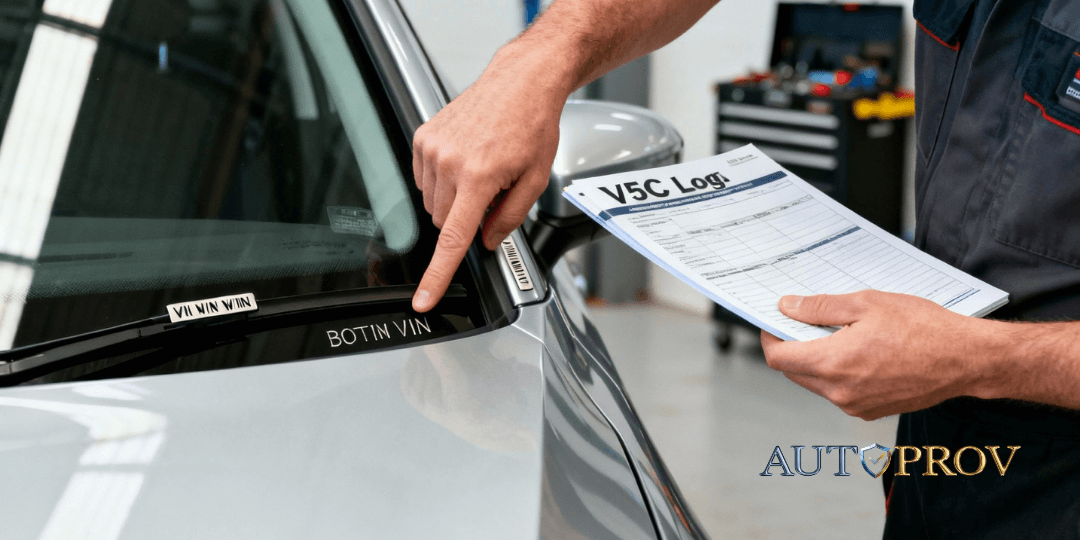
For any professional in the motor trade, the Vehicle Identification Number (VIN) is a car's true fingerprint. It offers a level of certainty a registration plate simply can't match. Knowing where to find the VIN is the first, non-negotiable step in any vehicle appraisal, as it's the key that unlocks its entire history. The most common spots are on the dashboard visible through the windscreen and on the door pillar sticker, but there are a few other places to look.
Finding The VIN: Your First Line Of Defence
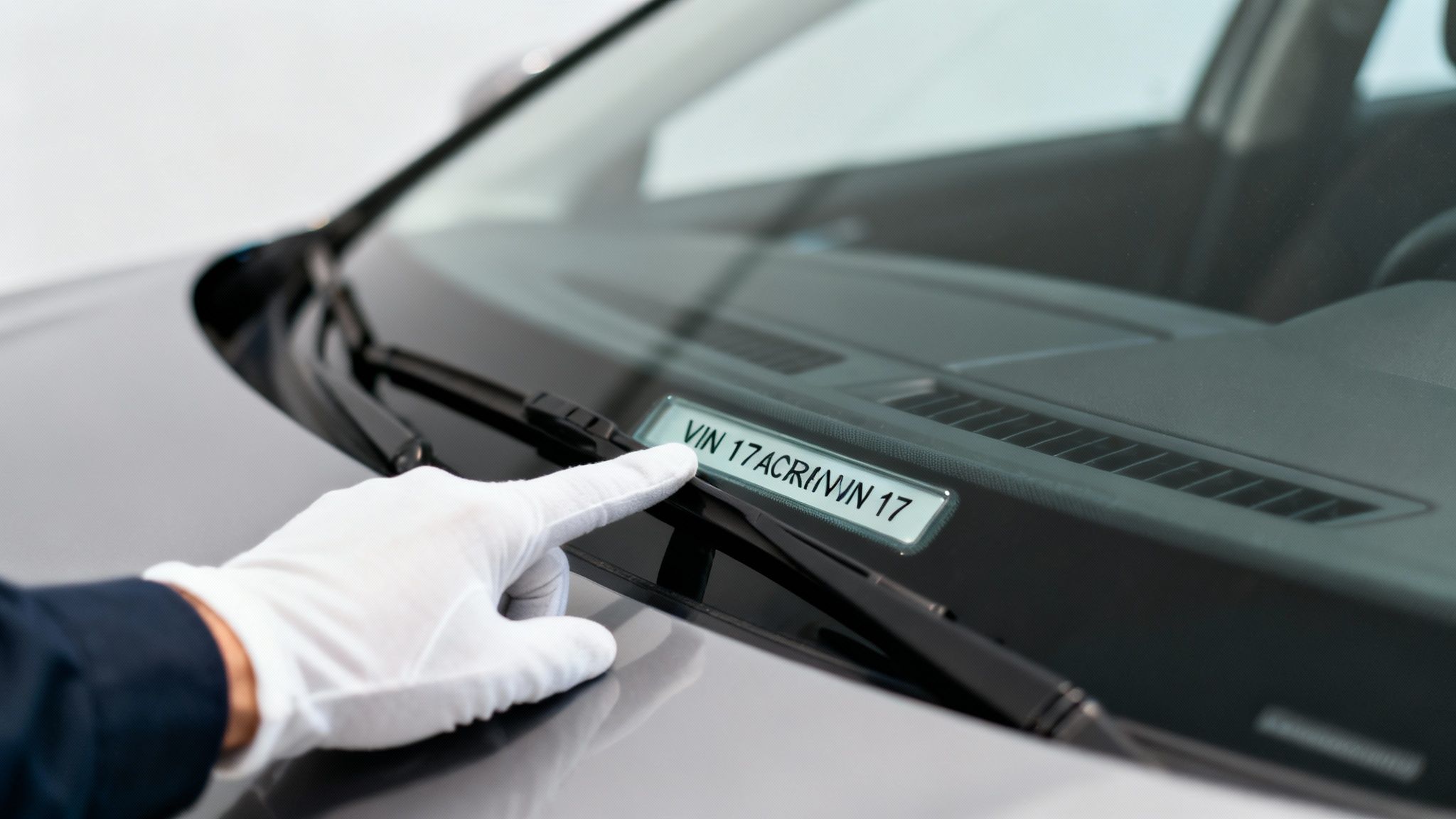
In the fast-paced world of vehicle acquisition, whether you're at an auction or with a private seller, efficiency is everything. You need to verify a vehicle’s identity quickly and accurately, and the VIN is your best tool for the job. Unlike a registration number that can be changed or cloned, the VIN is a permanent identifier stamped onto the vehicle when it was built.
This initial physical check is your first line of defence against buying problematic stock. It’s a simple but vital process that confirms the vehicle's identity before you invest any more time or money into a deeper provenance check. Seeing the VIN match across multiple points on the car and its documents gives you an immediate sense of legitimacy.
The Most Common Physical Locations
When you're appraising a car or van, be systematic. Start with the most accessible spots before you go hunting in the less common ones. These locations are largely standardised across manufacturers to help both law enforcement and industry professionals like us.
The most obvious place is the small metal plate on the dashboard, which you can see from the outside through the bottom of the windscreen. It’s usually on the passenger's side. This allows for a quick check without even opening the vehicle.
Another key location is the door pillar. Open the driver’s or passenger's door and look at the B-pillar (the post between the front and rear doors). You'll usually find a sticker or plate here with the VIN, often alongside other details like tyre pressures and weight limits.
Official Documentation Checks
Beyond the vehicle itself, the VIN is a critical part of its official paperwork. Cross-referencing these documents with the physical VIN is an essential part of your due diligence. For instance, knowing where the VIN is on the V5C is crucial.
You'll find it clearly printed on the V5C log book under the 'VIN/Chassis/Frame No.' section, and it will also be on the MOT test certificate. This number must match what you see on the car. You can find more details about UK vehicle verification standards at vinreport.co.uk.
For a motor trade professional, the few seconds it takes to locate and match the VINs on the car and the V5C can be the difference between a profitable acquisition and a costly mistake. It is the foundational act of professional due diligence.
This unique identifier unlocks a vehicle’s full history. Our guide on using a vehicle check chassis number explains exactly how this 17-digit code is used in a comprehensive check. Once you've found it, the next step is to use a professional tool like AutoProv to ensure the story it tells is accurate and complete.
Decoding The 17 Characters: What A VIN Reveals
A Vehicle Identification Number is so much more than a random string of 17 characters; it's the vehicle's unique fingerprint. For any professional in the motor trade, learning to read this code is the first step towards a true forensic-level appraisal. Each character and segment tells a specific part of the vehicle’s story, from its birthplace to its unique factory-fitted features.
Think of the VIN as the car's DNA. It's a globally standardised sequence, which ensures that no two vehicles built within a 30-year window ever share the same number. This system gives us a consistent, reliable way of tracking every car, van, and lorry from the moment it leaves the production line.
The Three Key Sections Of A VIN
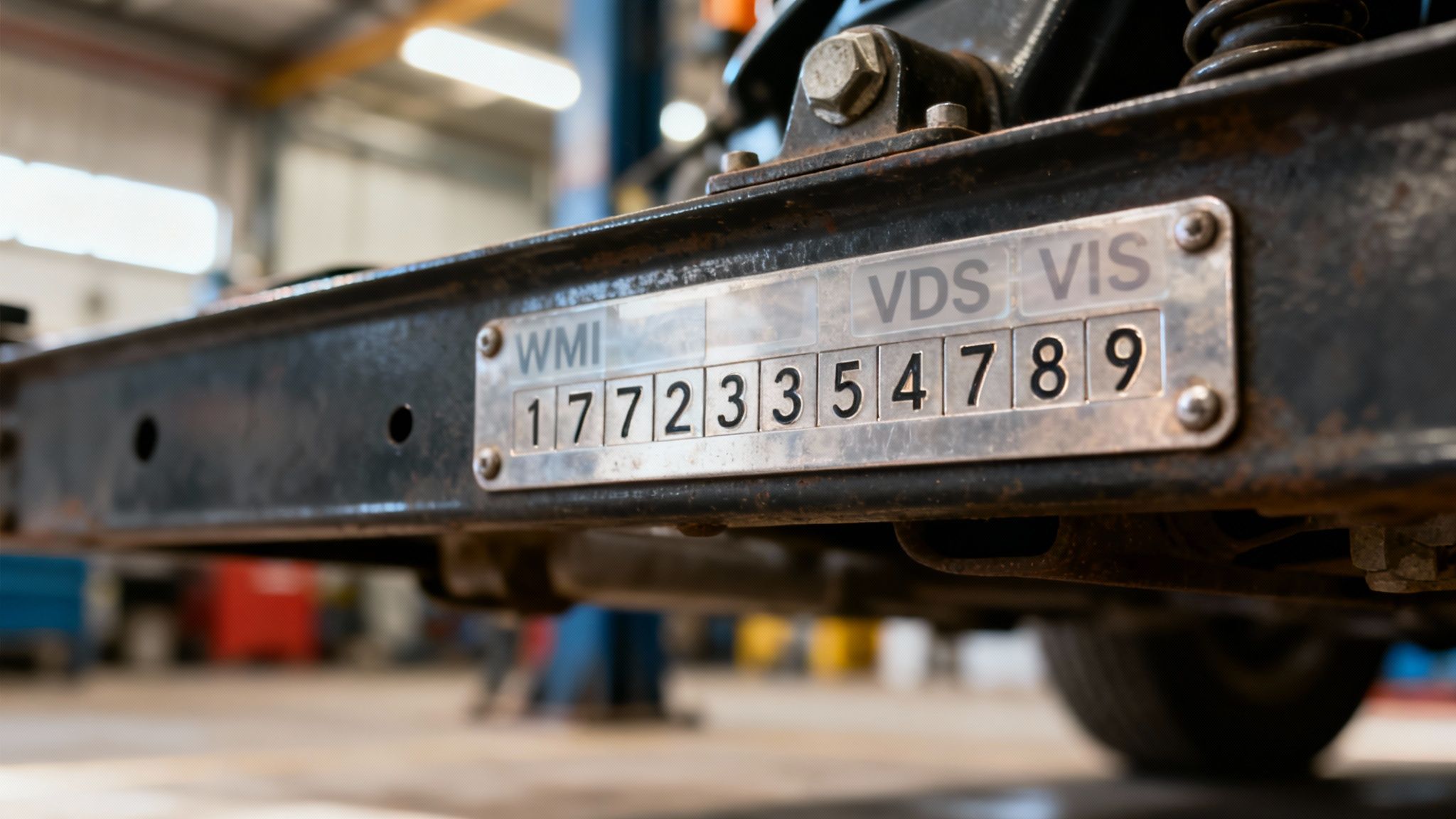
That 17-character code isn't just a jumble of letters and numbers; it's logically split into three distinct parts. Each section provides another layer of information, and once you know what you’re looking for, you can pull out crucial details at a glance. Grasping this structure is absolutely essential for spotting the kinds of discrepancies that might point to a cloned or tampered vehicle.
First up is the World Manufacturer Identifier (WMI), which covers characters one to three. This trio identifies the manufacturer and where in the world the vehicle was built. The very first character tells you the geographic region (for example, 'S' is for the UK), while the next two pinpoint the specific brand, like Ford or Vauxhall.
Next, you have the Vehicle Descriptor Section (VDS). Characters four to eight get into the specifics of the vehicle itself—its model, body style, engine type, and even its transmission or safety features. Each manufacturer uses its own internal coding system for this section. Character nine is a clever bit of security known as the 'check digit'. It’s calculated using a mathematical formula based on all the other characters in the VIN. Its job is to confirm the number's authenticity and help flag any invalid or fake VINs immediately.
Understanding the VIN's structure is fundamental for any serious vehicle appraiser. A discrepancy between the VIN's encoded data and the vehicle's physical attributes is an immediate red flag that requires a deeper, professional investigation.
Finally, the third segment is the Vehicle Identifier Section (VIS). This is where the vehicle’s unique serial number lives.
Unpacking The Unique Serial Number
The final eight characters are what make a vehicle truly one-of-a-kind. This section is what separates one Ford Focus from the thousands of others that might have been built in the same factory on the same day.
Character ten indicates the vehicle's model year, using a standardised system of letters and numbers that cycles over time. Character eleven tells you the specific assembly plant where the vehicle was put together. The last six digits, characters twelve to seventeen, are the simple production sequence number—the unique serial assigned to the vehicle as it rolled off the assembly line.
This deep level of detail is exactly what powers professional verification tools from AutoProv. You can find out more by reading our guide to a vehicle check with a VIN number. By running this 17-character code through the AutoProv platform, you unlock a wealth of data that not only confirms these details but also reveals the hidden history that the VIN itself can't tell you.
Spotting Red Flags And Signs Of VIN Tampering
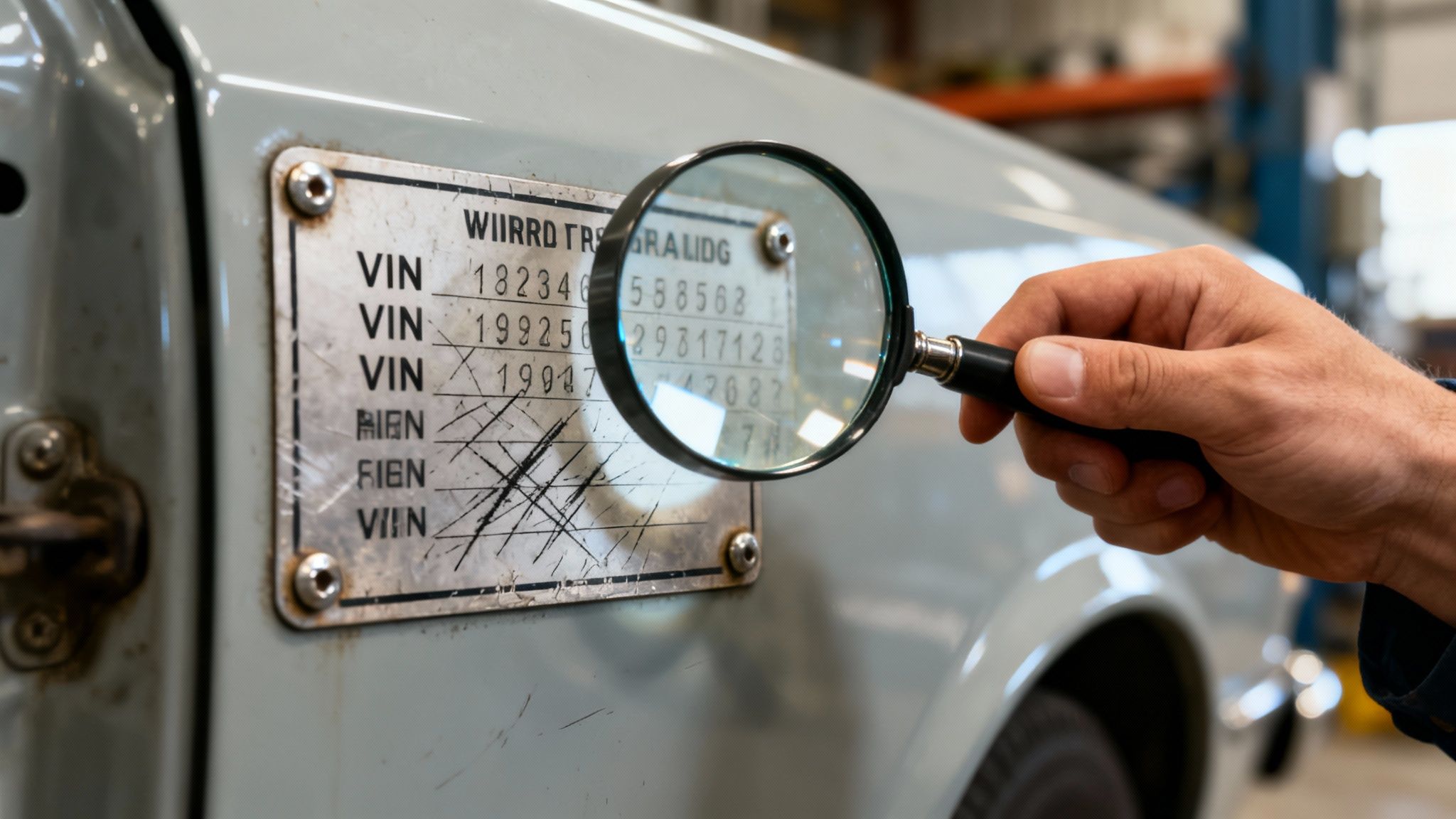
Knowing where to find the VIN is the first half of the job. The second, and just as critical, is inspecting it for authenticity. A dodgy VIN is one of the biggest red flags you'll encounter, often pointing to a stolen vehicle, a dangerous 'cut-and-shut', or an insurance write-off that’s been illegally put back on the road.
For any professional in the motor trade, developing a sharp eye for the subtle signs of tampering isn't just a good idea—it's a core skill.
Criminals are getting smarter, but they almost always leave a trace. You have to look closer than a quick glance. A legitimate VIN plate or stamping should look like it belongs there, clean and untouched since the day it left the factory.
Physical Clues To Look For
When you're appraising a vehicle, take a moment to properly inspect each VIN you find. Don't just read the number; examine its surroundings with a critical eye.
Factory VIN plates are usually fixed with special, manufacturer-specific rivets. If you spot common pop rivets, sticky residue from glue, or scrape marks that suggest the plate has been prised off and stuck back on, your alarm bells should be ringing. On VINs stamped directly into the chassis, run your hand over the characters. Can you feel any grinding marks, uneven surfaces, or patches that look like they've been filled or painted over? These are classic signs of a cover-up. Also, look for misaligned characters; factory stamping is uniform, so crooked numbers or odd spacing are tell-tale signs of a fraudulent change.
Mismatches Between Locations and Paperwork
The most damning evidence of fraud is simple inconsistency. A criminal might get one VIN right but forget—or fail—to alter another. This is where your systematic approach really pays off.
A common trick is to take the dashboard VIN plate from a legitimate, scrapped car and fix it onto a stolen one of the same model and colour. This is exactly why you must cross-reference every single VIN on the vehicle with the V5C. No exceptions.
Check the windscreen VIN against the one on the door pillar. Then check it against the one under the bonnet, and finally, check them all against the V5C logbook. If any of them don't match perfectly, walk away from the deal. Discrepancies like these are massive indicators of criminal activity. Our guide on how to perform a stolen car check goes into more detail on these risks.
The scale of the problem is huge. In 2020, the DVLA held records for nearly 32.7 million vehicles, and 74,769 of those were reported stolen. The risk of coming across a ringer is very real. You can read more about UK vehicle data on the SMMT website.
Even if your physical inspection just leaves you with a slight doubt, it’s not worth the risk. This is the moment a professional digital check becomes essential. Running a suspicious VIN through the AutoProv platform can instantly settle your doubts by checking it against police, DVLA, and insurance databases, protecting your business from buying a dangerous and completely worthless liability.
Going Beyond The VIN Plate With Professional Provenance Checks
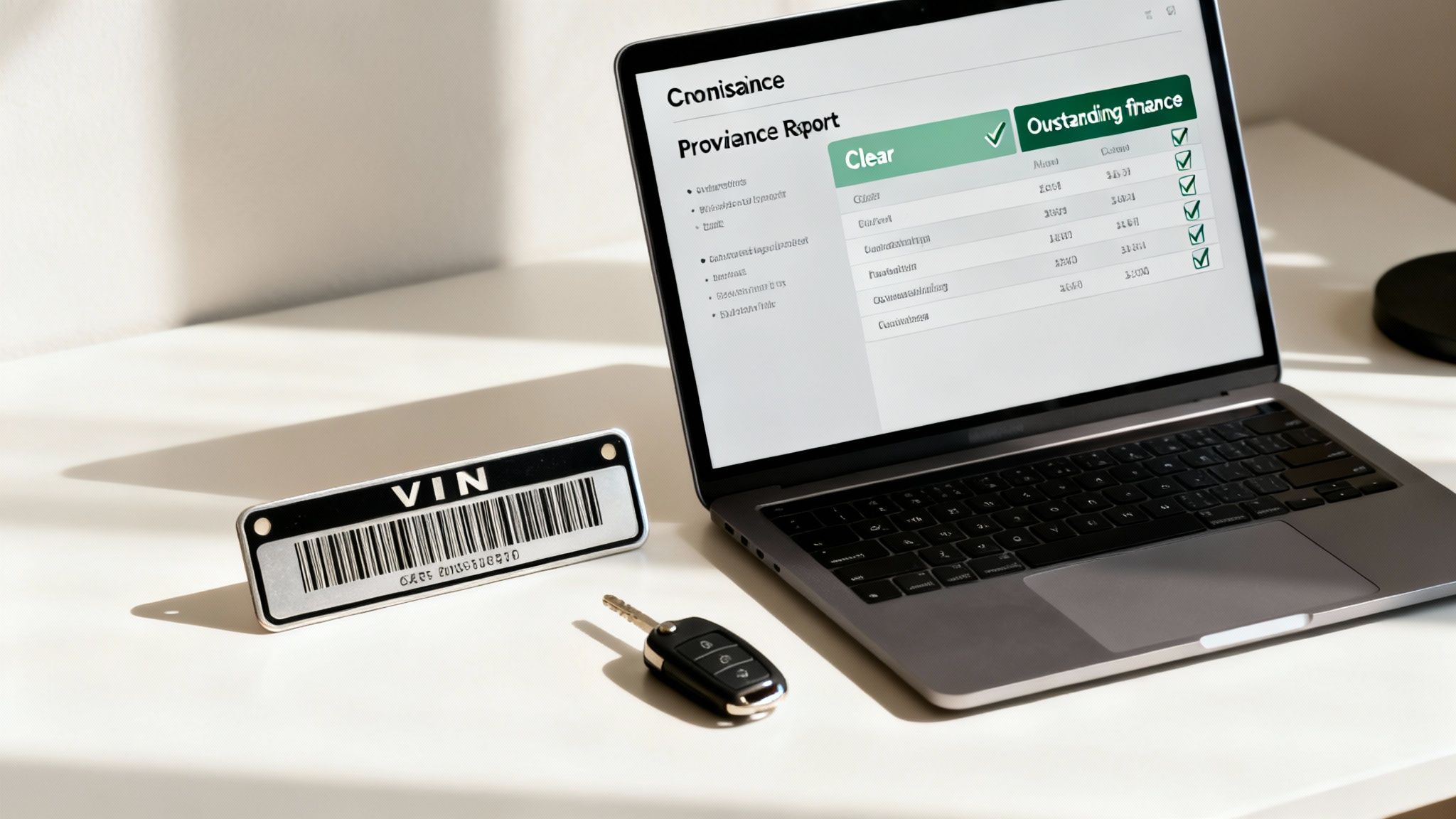
Locating and physically inspecting the VIN is a foundational skill, but it’s really just the starting line for any professional appraisal. The real value for your dealership isn't in finding the number itself but in what that 17-character code unlocks when you dig deeper with AutoProv's services.
A physical check confirms the vehicle's identity on the surface, but a digital provenance check uncovers its entire history—warts and all.
This second stage is where you shift from basic verification to genuine business intelligence. It’s the process that protects your capital, sharpens your pricing strategy, and ultimately safeguards your reputation. Simply put, what you can see stamped on the chassis is only the first chapter of the story.
Uncovering The Unseen Risks
The biggest threats to your bottom line are the ones you can't spot with the naked eye. A car that looks pristine at auction could be hiding a multitude of costly secrets that only a thorough digital investigation will ever bring to light.
These hidden liabilities include things like outstanding finance, where a car is still legally owned by a finance company. An Experian check is the only way to know for sure that it’s free from debt. You must also check for stolen status by cross-referencing the VIN with the Police National Computer (PNC). Finally, it's vital to uncover any insurance write-off history. A vehicle with a Category S (structural) or N (non-structural) marker has a significantly lower value and can be a tough sell on the forecourt.
For anyone in the motor trade, these checks are completely non-negotiable. Knowing the full story is critical, as we detail in our guide on the importance of a provenance check for a used car.
Turning Data Into Business Intelligence
A professional-grade check does more than just wave red flags; it gives you the detailed data you need to make smarter, more profitable decisions. When you run a VIN through the AutoProv platform, you aren't just getting a simple pass or fail. You're accessing a consolidated report from over 10 data sources, delivering more than 40 critical data points in seconds.
This information is your competitive advantage. It allows you to confidently price stock based on its true history and condition, not just how it looks on the day. Discovering a hidden mileage discrepancy or a past colour change, for instance, directly impacts your offer price and protects your profit margin.
Locating the VIN is about confirming what a vehicle is. A professional provenance check is about discovering what it has been through. The latter is where profit is made and losses are avoided.
The scale of risk in the UK market makes these checks vital. Amidst rising fraud, it's essential to know that the VIN locations on the windscreen, door pillars, and V5C all align with DVLA records. This became even more critical as vehicle theft spiked to 74,769 in 2020, with other data revealing that 14.2% of checked vehicles were previous insurance write-offs.
AutoProv transforms this complex web of data into a simple, actionable report. By integrating information from the DVLA, Experian, the PNC, and even OEM recall notices, it turns a simple VIN into the cornerstone of a secure and profitable acquisition strategy.
Integrating VIN Checks Into Your Business Workflow
For any large-scale motor trade operation, from a major dealership group to a sprawling fleet management company, efficiency isn't just a nice-to-have; it's the bedrock of your profitability. Knowing where the VIN is located is the first step, but it’s how you integrate that verification into your daily workflow that truly separates reactive businesses from proactive ones.
Making this process a non-negotiable, standardised part of every single appraisal is how you minimise risk at scale.
This means getting away from random, ad-hoc checks and building a systematic approach. Every vehicle you look at, whether it's on the auction block or a part-exchange on your forecourt, should start with a standard appraisal checklist. The VIN check needs to be item number one. This simple procedural shift ensures no vehicle ever enters your inventory without its identity being rigorously confirmed from the word go.
Creating A Standardised Appraisal Process
It all starts with robust staff training. Your buyers, appraisers, and even your valeters need to know precisely where to find the VIN on different types of vehicles and how to spot the basic physical red flags we've already covered. For high-volume operations, consistency is king, which makes a formal, documented process absolutely essential.
Your process should bake in a mandatory multi-point VIN check. This means physically checking the VIN on the windscreen, the door pillar, and under the bonnet, then cross-referencing all of them against the V5C. No exceptions. This should be followed by immediate digital verification using a tool like AutoProv on a mobile device, right there on the spot. Finally, you need clear escalation protocols for flagging a suspicious vehicle and halting the acquisition process until a senior manager can investigate further.
For a high-volume business, the goal is to make due diligence a reflex, not a task. By embedding VIN checks into your standard operating procedure, you standardise your risk assessment and create a powerful, scalable defence against fraud.
Leveraging Technology for On-The-Spot Decisions
In the fast-paced world of a vehicle auction, speed and accuracy are everything. You don't have the luxury of time to wander back to the office to run checks. This is where technology becomes your greatest ally.
By equipping your buyers with a tool like AutoProv, you empower them to perform immediate, on-the-spot verification. A buyer can locate the VIN, tap it into their phone, and get a comprehensive report back in under 30 seconds.
This completely transforms the buying process. It allows for faster, more informed decisions that give you a massive competitive edge. A simple check becomes a powerful business tool, helping to streamline your UK vehicle inventory management software and tighten up your processes. AutoProv’s enterprise solutions are built specifically to support these professional workflows, ensuring every single purchase you make is backed by complete certainty and detailed intelligence.
Answering Your VIN Questions
In the motor trade, you get asked about the VIN almost daily. Having the right answers on the tip of your tongue is key to moving quickly and making smart buys. Let’s tackle some of the most common queries that pop up.
Think of this as a quick-reference guide to reinforce what we've covered and to hammer home why professional verification from AutoProv is never a step you should skip.
Does The VIN Number Appear On The V5C Logbook?
Yes, it absolutely has to be there. The VIN is one of the most critical details on the V5C Registration Certificate, or logbook as we all call it. You'll spot it in section 4, clearly marked as ‘VIN/Chassis/Frame No.’.
For any professional, the first job is to make sure the VIN on the V5C is a perfect match for the numbers stamped on the vehicle itself. If there's even a slight difference, it’s a massive red flag. That’s precisely why a tool like AutoProv is essential, allowing you to cross-reference DVLA records instantly.
Can I Find The VIN On A Motorcycle Or Van?
You certainly can. The VIN is just as mandatory for bikes and vans as it is for cars. On a motorcycle, your best bet is to check the steering neck, often called the headstock. You might need to turn the handlebars fully to one side to get a clear view of the stamped number.
For vans, the locations are pretty much the same as you’d find on a car. Start with the base of the windscreen on the passenger side, then check the sticker on the door jamb (the B-pillar), and finally, pop the bonnet and look along the bulkhead. No matter the vehicle type, the VIN's job is the same, and its integrity must always be confirmed with a proper check.
A common slip-up is thinking VIN spots are universal. They aren't. Always do a thorough, multi-point physical check, whether you're sizing up a scooter or a long-wheelbase van.
What Should I Do If I Suspect A VIN Has Been Tampered With?
If your gut tells you something is off, listen to it. Signs like deep scratches around the VIN plate, rivets that don't look factory-standard, or mismatched numbers between the windscreen and the chassis are serious warnings.
The safest, most professional response? Walk away from the deal. A tampered VIN is a classic sign of a stolen or cloned vehicle, or one with a murky past you don't want your business associated with. Running a suspicious VIN through a trade-focused platform like AutoProv can often expose discrepancies in seconds, giving you the hard data to back up your instincts and avoid a very expensive mistake.
Is A VIN Check The Same As A Provenance Check?
People often use these terms as if they mean the same thing, but there's a key difference. A 'VIN check' is the action you take—using the vehicle's unique number to investigate its history. 'Provenance Check' is simply a well-known brand name for one company that provides these checks.
An AutoProv check is built specifically for the trade, offering a much broader and deeper look. We pull data from over 10 different sources. That includes the finance checks from Experian (like provenance check) but also integrates vital data from the PNC for stolen status, DVLA records, MIAFTR for write-offs, and crucial recall notices. It’s the full picture, all in one place.
Frequently Asked Questions
AI-Generated Content Notice
This article was created with the assistance of artificial intelligence technology. While we strive for accuracy, the information provided should be considered for general informational purposes only and should not be relied upon as professional automotive, legal, or financial advice. We recommend verifying any information with qualified professionals or official sources before making important decisions. AutoProv accepts no liability for any consequences resulting from the use of this information.
From our AI insights
- Navigating UK Grey Imports: A Trader's Guide
Understand the complexities and opportunities of UK grey imports for savvy motor traders.
- Navigating Private Plate Challenges in UK Vehicle Checks
Learn how private plates affect UK vehicle checks and how traders verify provenance and spot cloning risks.
- Navigating VIN Checks Post-Brexit: What UK Traders Need to Know
Discover how Brexit impacts VIN checks for UK traders and the crucial data to review.
Related Articles

Essential Vehicle Checks Before Buying a Used Car
Learn essential checks to ensure your used car purchase is safe and sound in the UK market.

Why a Provenance Check is Essential for Used Car Buyers
Ensure your used car is a smart investment by understanding the importance of a provenance check and how AutoProv can help.
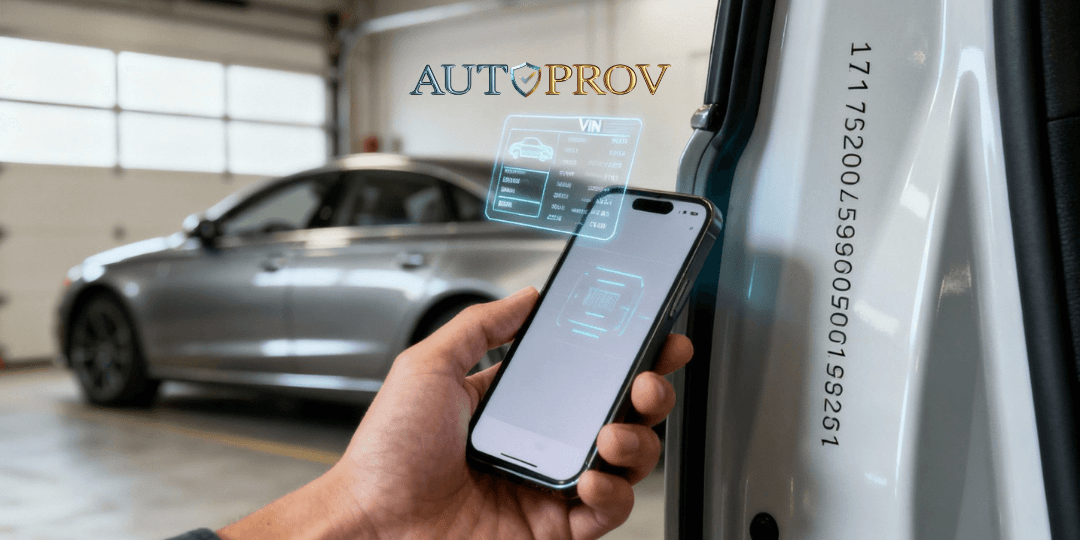
A Guide to Vehicle Check with VIN Number
A vehicle check with vin number is easily the most important thing you can do before buying a used car. Think of it as your first line of defence—a quick, simple step that pulls back the curtain on a vehicle's past, protecting you from expensive mistakes, legal headaches, and downright dangerous cars.
Published by AutoProv
Your trusted source for vehicle intelligence