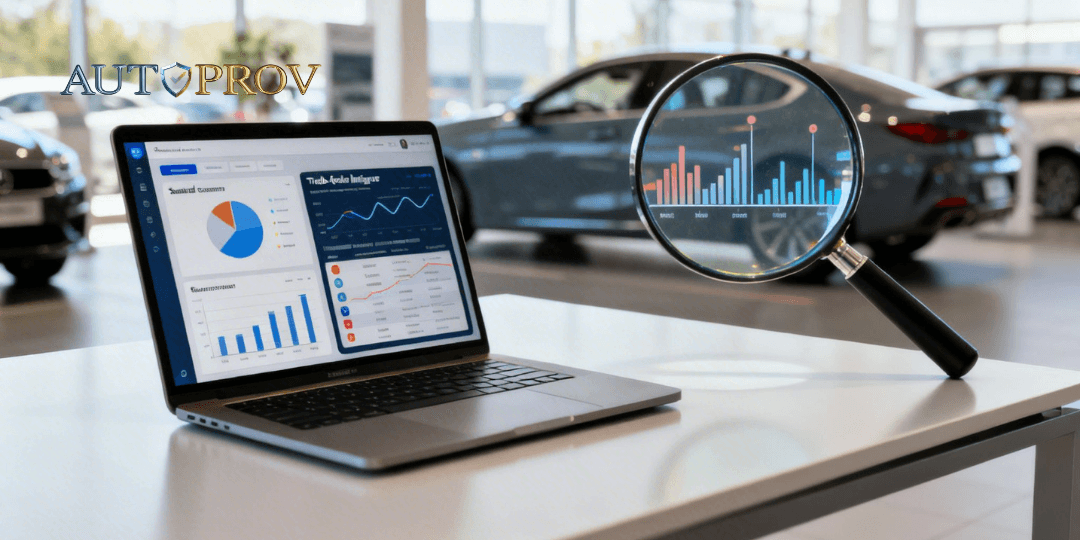
For any professional in the UK motor trade, the best car check website is rarely the one advertised on consumer television. While consumer-focused services provide basic data, a professional dealership operation requires trade-grade intelligence. The objective is to move beyond simple pass/fail reports to gain a comprehensive understanding of a vehicle's provenance and associated commercial risk.
Moving Beyond Basic Vehicle History Checks

In the UK’s highly competitive used car market, astute buying decisions are fundamental to profitability. A standard vehicle history check UK report, designed for a private buyer, will typically confirm essentials: outstanding finance, theft records, and insurance write-off status. While this information is vital, for a motor trade professional, it is merely the starting point.
Consumer-grade reports are fundamentally inadequate for managing risk at a professional level. They lack the depth required to uncover subtle but potentially costly issues embedded in a vehicle's past. For any motor trader, the real value lies in understanding the context behind the data points.
The Trade-Intelligence Difference
This is where true vehicle provenance analysis becomes critical. It distinguishes a simple data summary from a professional tool designed to support better commercial decisions. It involves examining the patterns, context, and timelines that reveal a car's complete history—and this is precisely where trade-focused platforms provide significant advantages.
Professional intelligence delivers greater depth in several key areas:
- Ownership Pattern Analysis: Identifying rapid resale, unusually short ownership spells, or a series of dealer-to-dealer transfers that can indicate a persistent, underlying fault.
- Mileage Anomaly Detection: Flagging inconsistencies in the mileage record that go beyond a simple MOT check, such as periods of unusually low or high mileage between tests. You may also find value in our guide on how to perform a car history check for free.
- Usage Context: Determining how a vehicle was likely used based on its ownership timeline, such as whether it was a high-mileage fleet vehicle or a privately owned asset.
"A consumer report tells you if a car has had four owners. A trade intelligence platform helps you understand why it has had four owners in three years—and the commercial risk that pattern represents."
This level of insight is crucial in a market where speed and accuracy are paramount. For example, recent industry data showed a significant month-on-month surge in buyer engagement on major UK used car platforms. In such an environment, the ability to quickly and accurately assess a vehicle's true history is not a luxury; it is a core business necessity.
Ultimately, the best car check website for a dealer is one that functions as a risk management partner. It provides the trade vehicle intelligence needed to protect capital investment, substantiate valuations, and uphold professional reputation. This guide will analyse the criteria that truly matter for a dealership's profitability and long-term operational success.
When sourcing stock, how do you determine which car check service to trust? For a private buyer, the decision often rests on a simple 'clear' or 'not clear' result. For a motor trade professional, the stakes are far higher. You are not merely buying a car; you are making a capital investment, and your due diligence must reflect that.
Choosing the right service is not about comparing feature lists. It is about identifying a genuine risk management partner—a platform that delivers deep, contextual intelligence to protect your investment and facilitate smarter, faster buying decisions.
Provenance Intelligence, Not Just Raw Data
The single greatest differentiator between a consumer check and a trade-grade report is the shift from raw data to actionable vehicle provenance intelligence. A basic report might state that a car has had four previous keepers. A professional platform interprets what that means.
Your evaluation should be based on context:
- Ownership Timelines: How long did each keeper retain the vehicle? A succession of short-term owners is a classic indicator of potential issues.
- Usage Patterns: Does the history suggest private use, a demanding life in a commercial fleet, or a vehicle passed between dealers? This backstory helps build a picture of the vehicle’s true condition and potential wear.
A service that merely lists keeper counts is providing data. A service that analyses the timing and sequence of ownership to flag potential risk is delivering intelligence. For any professional buyer, that is the critical distinction.
Advanced Risk Signal Detection
Beyond standard checks for finance or theft, a capable trade platform must serve as a second pair of eyes, spotting the subtle but expensive problems. These are the patterns that often lead to post-sale complications or reveal underlying issues that a surface-level check would miss entirely.
A key component is a robust mileage check UK service, looking for more than just a reduction in the numbers. It should flag periods of suspiciously low or unusually high mileage between MOT tests. Likewise, the system must automatically highlight rapid ownership cycles. A car that has changed hands three times in 18 months represents a completely different risk profile to one with a single long-term owner, even if both have a 'clean' basic report. Your chosen platform needs to place that risk front and centre. You can learn about the various data sources that power these risk signals.
This is even more critical in the UK's fragmented online marketplace. With stock appearing from countless sources, a robust intelligence platform is required to validate a car’s history in seconds, regardless of where it is advertised.
Reporting Clarity and Commercial Viability
Finally, consider the output and the commercial model. The report itself must be structured for a professional user. Key risks should be flagged at the top, not buried within pages of generic information. A data dump is ineffective when making a rapid decision at an auction.
Equally important is the pricing model. Does a pay-as-you-go setup or a monthly subscription better suit your buying volume? A true trade-grade service should offer a structure that aligns with your business operations, providing value that pays for itself the first time it prevents a poor acquisition.
Comparing Consumer Checks and Trade Intelligence Platforms
For professionals in the motor trade, selecting the best car check website is not about choosing a well-known consumer brand. It is about understanding the crucial difference between two service types: a basic consumer check and a professional trade intelligence platform. This distinction is fundamental to effective risk management.
Consumer-focused checks are built for simplicity. They are designed to give a private buyer an easy-to-read report flagging major, obvious problems—an insurance write-off, outstanding finance, or a stolen marker. While essential, for a professional dealer, this is merely the tip of the iceberg.
The Limitations of Consumer-Grade Checks
The primary weakness of a consumer check for a trader is its lack of context. It presents data points but fails to connect them to reveal the underlying story or, more importantly, the hidden commercial risk.
A standard used car history report will almost always miss important details:
- Ownership Nuance: It may state a car has had five keepers, but it will not flag that three of them were in the last 18 months—a classic indicator of a problem vehicle being passed on.
- Mileage Gaps and Patterns: It will show the latest MOT mileage but lacks the tools to analyse the entire timeline for suspicious gaps or sudden jumps that a simple odometer reading completely misses.
- Trade-Specific Risk Signals: These reports are not built to spot patterns like rapid dealer-to-dealer trading or a history of short-term ownership, which are significant red flags for motor trade risk.
A dealer relying solely on a consumer-grade check is therefore operating with incomplete information, leaving the business exposed to the very problems they believe they are avoiding.
The Focus of Trade Intelligence Platforms
A trade intelligence platform, by contrast, is built from the ground up around the concept of vehicle provenance. Its purpose is not just to report data but to interpret it, providing actionable intelligence to support commercial decisions.
These platforms operate on a different principle. They assume the user is a professional who needs to understand the 'why' behind the data, not just the 'what'. This means delivering a much deeper level of analysis that has a direct impact on buying, valuation, and compliance. You can learn more about these key differences in our deep dive on AutoProv versus traditional provenance checks.
The fundamental difference lies in the questions they answer. A consumer check answers, "Is this car recorded as stolen or written-off?" A trade platform answers, "What is the complete story of this vehicle, and what level of commercial risk does it represent?"
This decision tree provides a simple set of questions to determine if your current service is providing genuine trade-grade intelligence.

The key takeaway is that deep provenance intelligence is the defining feature that separates a proper professional tool from a basic consumer report.
Feature Comparison: Consumer Check vs. Trade Intelligence Platform
To put it simply, the two services are built for entirely different purposes. A consumer check is a basic safety net for a one-off purchase, while a trade platform is an industrial-strength tool for daily business operations.
Feature/Capability Typical Consumer Check Trade Intelligence Platform Core Focus Flagging major red flags (stolen, write-off, finance). Revealing complete vehicle provenance and commercial risk. Data Depth Surface-level public data. Deep, multi-source data including trade-only sources. Ownership Analysis Simple keeper count. Full ownership timeline analysis, flagging short-term keepers. Mileage Verification Basic MOT check. Cross-references multiple sources to detect anomalies. Risk Signals Limited to basic alerts. Identifies complex patterns like frequent trading. Data Guarantee Minimal, often under £10,000. Comprehensive business-level indemnity (e.g., £50,000+). Workflow Integration Not designed for business use. Built for speed and integration into dealer workflows. As the comparison shows, the scope and purpose are worlds apart. Relying on a consumer check for professional buying is akin to using a domestic tool for a commercial job—it is not fit for purpose.
Interpreting Data Differently
The real value emerges in how each service interprets the same piece of information. Consider a two-year-old vehicle with only 10,000 miles on the clock.
- A Consumer Check sees low mileage and flags it as a positive feature.
- A Trade Intelligence Platform sees low mileage but also cross-references this with ownership data. If it finds the car has had three owners in that short period, it immediately flags a high-risk situation. Why would a nearly new car be sold so frequently? It is a strong indicator of a persistent, unresolved fault.
This is the power of trade vehicle intelligence. It connects disparate data points to uncover patterns that only become obvious with a complete picture. This type of analysis is becoming more critical as the market evolves.
The UK's transition towards electric vehicles, for example, is adding new layers of complexity to vehicle assessment. Independent dealers need a platform that can assess risk across petrol, hybrid, and electric powertrains—a capability standard checks are not equipped to provide.
Ultimately, a professional platform like AutoProv is designed to be part of your daily workflow, providing support at the point of decision. It moves you beyond a simple background check into a core component of your stock acquisition and risk management strategy, helping you buy smarter and protect your margins.
Applying Provenance Intelligence in Real-World Scenarios

Theoretical knowledge is one thing, but its application on the forecourt is what counts. The true test of a professional service is not its feature list but its utility in the day-to-day situations every dealer faces. This is where moving beyond basic checks ceases to be a "nice-to-have" and becomes a significant commercial advantage.
A platform built for vehicle provenance is more than a data repository. It functions as an expert eye over your shoulder, providing the context needed when it matters most. Let's examine a few real-world scenarios where this level of insight can prevent a costly mistake.
Assessing the Part-Exchange Vehicle
A customer arrives to part-exchange their vehicle. It presents well, and they are quick to mention its "full service history." A standard check comes back clear—no finance, no write-off markers.
This is where a trade-grade platform proves its worth. It digs deeper, analysing the car's complete ownership timeline. It might flag that the current keeper has only had the vehicle for six months, and the previous owner for just eight. This pattern of rapid resale is a major red flag a basic check would completely miss. It strongly suggests a recurring fault that the seller may not have disclosed.
Sourcing from Online Auctions
Online auctions are a key source of stock but demand snap decisions with razor-sharp accuracy. You often have just minutes to vet dozens of vehicles. Operating with only basic checks here is a recipe for poor acquisitions.
A proper trade platform allows you to screen multiple registrations in seconds, instantly flagging vehicles that carry unacceptable risk.
- Vehicle A: Shows one long-term owner with a solid MOT and service history. A low-risk prospect.
- Vehicle B: Has a gap in its MOT history and a sudden 20,000-mile drop between two tests. High risk for clocking.
- Vehicle C: Has been passed between three different dealers in the last year without a private keeper. A classic sign of a problem car the trade cannot move on.
This level of dealer vehicle checks enables you to instantly filter out problematic stock, allowing you to focus time and capital on vehicles with solid, profitable histories.
A professional platform doesn’t just provide data; it delivers a verdict. In a fast-moving auction, that clarity means you can bid with confidence or walk away, preventing a mistake that could cost thousands.
Buying from Other Traders
Sourcing stock from another dealer should be straightforward, but independent verification remains a cornerstone of prudent business practice. Even with established relationships, you must conduct your own due diligence. You are not just buying a car; you are acquiring its entire history.
Using an advanced used car history report provides a completely impartial view. It verifies the story you are being told against official records and trade-only data sources. This confirms keeper timelines, cross-references mileage, and ensures the car's provenance aligns with its valuation. It is what protects you from inheriting another trader’s problem.
You can see exactly how a detailed vehicle provenance report provides that crucial layer of protection.
Justifying Valuations with Confidence
Finally, robust vehicle intelligence is a powerful tool on both sides of a transaction. When buying, a detailed report showing multiple short-term owners or mileage red flags provides the hard evidence needed to negotiate a price that reflects the increased motor trade risk.
Conversely, when selling a vehicle with a clean provenance—such as a one-owner car with a perfect MOT history—that report becomes a powerful sales tool. It provides your customer with transparent, credible proof of quality, justifying your asking price and building the trust needed to close the sale.
In every scenario, deeper intelligence leads to more profitable and secure decisions.
How to Integrate Vehicle Intelligence Into Your Buying Process

Selecting the best car check website is only the first step. The real value is realised when that intelligence is integrated into a consistent, repeatable buying process. One-off checks are better than none, but a structured workflow transforms vehicle data from a last-minute necessity into a proactive tool for managing motor trade risk.
A robust system ensures every vehicle is vetted to the same professional standard, creating a defensible audit trail and a significant commercial edge. The goal is a multi-stage process that filters out unsuitable stock early and provides the deep insights needed for sound investment decisions.
Step 1: The Initial Triage
This stage occurs at the first point of contact—a phone call about a part-exchange or an initial review of an auction catalogue. This is a rapid check to eliminate vehicles with major, non-negotiable problems before wasting further resources.
At this stage, a basic check is sufficient to confirm fundamentals and identify immediate deal-breakers.
- Finance Markers: Is there outstanding finance that requires settlement?
- Write-Off Status: Is it recorded as a Category S or N write-off?
- Stolen Alerts: Is there a police interest marker on the vehicle?
This initial filter is fast and cost-effective, preventing you from investing time and effort in vehicles that are clear non-starters.
Step 2: The Provenance Deep Dive
If a vehicle passes the initial triage and is under serious consideration for purchase, it is time for the deep dive. This is where a trade-intelligence platform like AutoProv becomes non-negotiable. You are moving beyond the basics into full vehicle provenance analysis.
This step is designed to uncover the subtle risks that basic checks completely miss:
- Ownership History Analysis: Scrutinise the full keeper timeline. Flag any short-term ownership stints or rapid sales that could indicate a recurring, hidden fault.
- Mileage Check UK: Examine the entire mileage history recorded across every MOT, service, and previous sale listing. Identify any gaps, inconsistencies, or unusual drops that suggest "clocking."
- Risk Signal Identification: Look for tell-tale patterns like frequent plate changes or a history of being passed between traders without a private keeper in sight.
This deep dive provides the context needed to value a car accurately. A vehicle with a chequered past, even without a major write-off marker, carries a higher risk that must be factored into your offer.
Step 3: The Physical Cross-Reference
The final piece of the process is the physical inspection. This is where the digital report meets the physical asset, providing an opportunity to ensure everything aligns.
During this stage, cross-reference the V5C logbook with your provenance report. Check that the VIN, engine number, and keeper details match exactly. Any discrepancy, no matter how small, is a significant red flag requiring immediate investigation. This physical check confirms the car in front of you is the one you have researched, completing a secure and compliant buying process.
Making the Right Choice for Your Dealership
When it comes to choosing the best car check website, a UK motor trade professional isn't just picking between consumer brands. The real decision is between a basic data report and a professional-grade vehicle intelligence platform. For any dealer, that choice directly impacts profitability, risk exposure, and professional reputation.
Relying on checks built for private buyers leaves your business exposed. These services are not designed to spot the subtle—but costly—patterns of motor trade risk, like short-term ownership cycles or minor mileage discrepancies that hint at larger problems. They present data points but miss the crucial context needed for smart acquisitions and accurate valuations.
It's About Trade-Focused Intelligence, Not Just Data
A professional-grade service moves beyond simple red flags to deliver genuine vehicle provenance analysis. It interprets the entire history of a vehicle, highlighting patterns and anomalies that indicate a "potential problem" before you commit capital. This level of insight is not a luxury; it is a fundamental part of modern risk management for any serious dealer.
For anyone in the UK motor trade, the best vehicle check is a risk management partner. It delivers the deep, contextual intelligence you need to buy smarter, justify your pricing, and trade with absolute confidence.
By adopting a platform built for the trade, you move from reactively spotting problems to proactively and intelligently sourcing your stock. A solution like AutoProv is designed to integrate seamlessly into your buying workflow, delivering the critical trade vehicle intelligence you need at the moment of decision. It empowers you to protect your investment by flagging hidden issues a basic used car history report would completely miss.
This intelligence-led approach gives you the evidence to walk away from deals that carry too much risk and bid with more certainty on vehicles with a clean, verifiable history. In today's competitive market, that capability is essential for building a resilient, profitable, and reputable dealership.
Frequently Asked Questions for Motor Traders
If you're in the motor trade, you know that making the right call on a vehicle comes down to the quality of your information. Getting it wrong doesn't just hurt your margin; it can damage your reputation.
Here are some of the most common questions we hear from dealers about vehicle data, provenance, and spotting the risks that others miss.
Are Basic Provenance Checks Enough for a Car Dealer?
In short, no. While a basic provenance-style check is a valid starting point for identifying major red flags like outstanding finance or an insurance write-off, it is insufficient for a professional buyer. It should be considered the bare minimum, not the complete picture.
These consumer-grade checks lack the depth to identify the subtle, high-risk patterns that can signal a problem vehicle. They will not reveal rapid ownership cycles or minor mileage anomalies that may indicate larger issues. Relying solely on them is a significant commercial risk.
What Is Vehicle Provenance and Why Does It Matter?
Vehicle provenance is the complete, contextualised history of a car's life. It goes far beyond a standard check that merely lists the number of previous keepers. Provenance connects the dots, transforming isolated data points into a clear narrative that reveals how a vehicle has been used and maintained.
This is where you identify the red flags that raw data alone will not show:
- Rapid Resale: Spotting vehicles that have been passed between keepers, particularly dealers, in a short period.
- Mileage Anomalies: Flagging not just clocked odometers, but also periods of unusually low mileage that might indicate the vehicle was off the road for repairs.
- Frequent Plate Changes: Highlighting if a car’s identity has been switched multiple times, a tactic sometimes used to obscure a problematic history.
This context is what separates a sound acquisition from a future liability.
A standard report tells you a car had three owners. Provenance intelligence reveals it had three owners in the last 12 months, immediately changing its risk profile from low to high.
How Can I Check for Mileage Discrepancies Accurately?
A proper mileage check UK service must do more than just reference the last MOT entry. A truly accurate check involves cross-referencing every available data source—the entire MOT history, previous sales listings, and other trade-only records—to build a complete timeline.
A professional intelligence platform performs this analysis automatically. It flags any gaps or inconsistencies a simple check would miss, such as periods of abnormally low or high usage. This could indicate anything from clocking to a persistent fault that kept the vehicle off the road. A trade-grade service presents this timeline clearly, so you can assess the car's entire usage pattern at a glance.
What Are the Biggest Red Flags in a Used Car History Report?
Beyond obvious issues like a 'Category S' or 'Category N' write-off, the real risks for dealers are often hidden in the details. These are the subtle signals of motor trade risk that a professional-grade platform is designed to find.
Maintain a sharp eye for these red flags:
- Short-Term Ownership Cycles: Multiple keepers in under 18-24 months is a major indicator that a persistent fault is being passed along.
- Significant Gaps in MOT History: An unexplained year or more without a valid MOT can hide anything from major, unrecorded accident repairs to a long-term breakdown.
- V5C Issue Date Discrepancies: If the date the V5C was issued does not align with the stated change of ownership, it indicates a discrepancy that requires further investigation.
Spotting these contextual risks is precisely what separates basic dealer vehicle checks from a true business intelligence tool.
For a platform built from the ground up to give you this level of insight, see what AutoProv can do for your business. We deliver the advanced vehicle provenance and risk intelligence you need to buy smarter and trade with absolute confidence. Visit us at https://autoprov.ai.
Frequently Asked Questions
AI-Generated Content Notice
This article was created with the assistance of artificial intelligence technology. While we strive for accuracy, the information provided should be considered for general informational purposes only and should not be relied upon as professional automotive, legal, or financial advice. We recommend verifying any information with qualified professionals or official sources before making important decisions. AutoProv accepts no liability for any consequences resulting from the use of this information.
From our AI insights
- Navigating UK Grey Imports: A Trader's Guide
Understand the complexities and opportunities of UK grey imports for savvy motor traders.
- Navigating Private Plate Challenges in UK Vehicle Checks
Learn how private plates affect UK vehicle checks and how traders verify provenance and spot cloning risks.
- Navigating VIN Checks Post-Brexit: What UK Traders Need to Know
Discover how Brexit impacts VIN checks for UK traders and the crucial data to review.
Related Articles

Essential Vehicle Checks Before Buying a Used Car
Learn essential checks to ensure your used car purchase is safe and sound in the UK market.

Why a Provenance Check is Essential for Used Car Buyers
Ensure your used car is a smart investment by understanding the importance of a provenance check and how AutoProv can help.
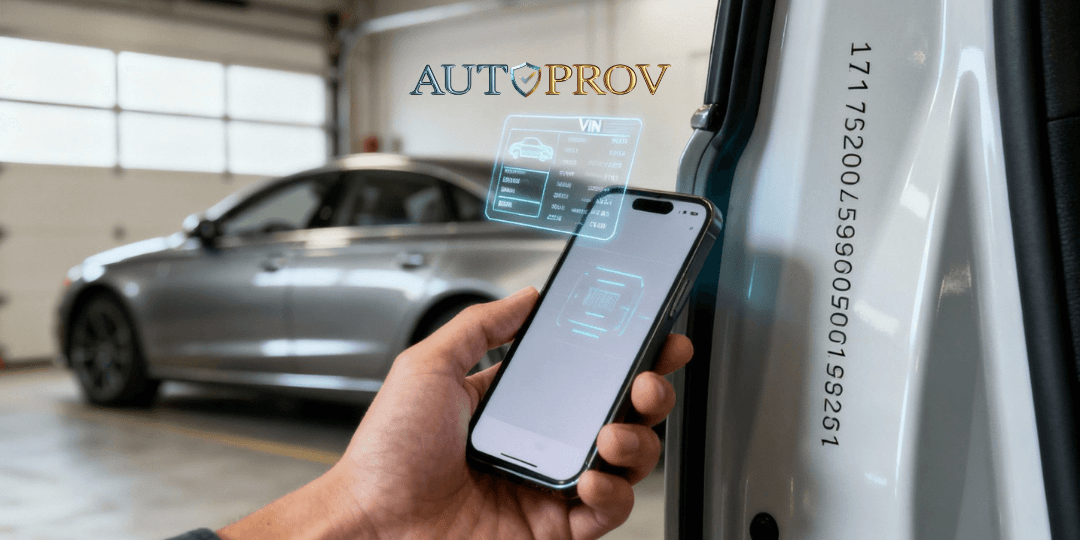
A Guide to Vehicle Check with VIN Number
A vehicle check with vin number is easily the most important thing you can do before buying a used car. Think of it as your first line of defence—a quick, simple step that pulls back the curtain on a vehicle's past, protecting you from expensive mistakes, legal headaches, and downright dangerous cars.
Published by AutoProv
Your trusted source for vehicle intelligence