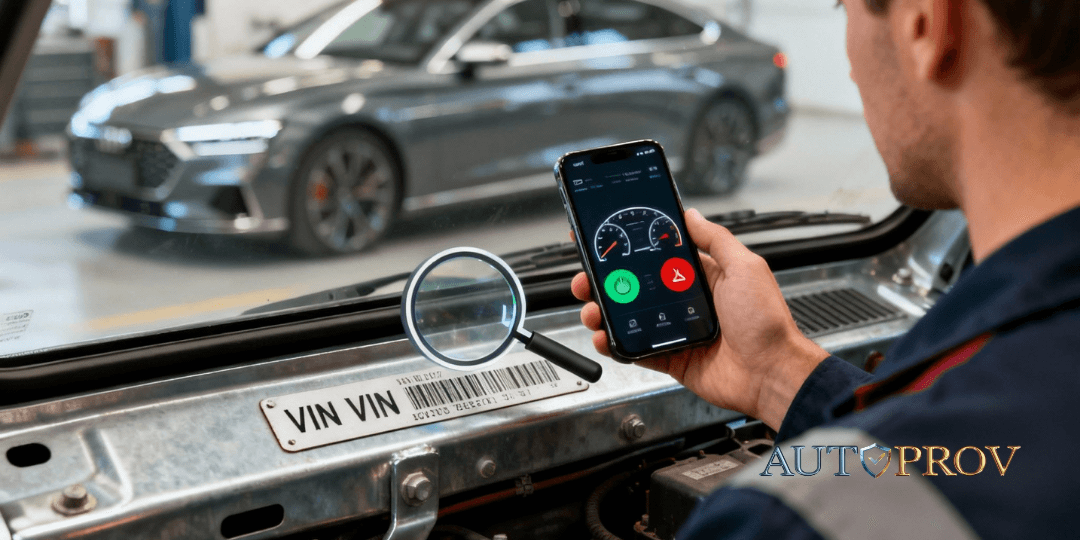
To properly check a vehicle by chassis number, you have to start with the 17-character Vehicle Identification Number (VIN) stamped directly onto the car. Forget the registration plate for a moment. That can be changed. The VIN is the vehicle's permanent fingerprint, and it's the only truly reliable way to get to the bottom of its history.
Why The Chassis Number Is Your Single Source Of Truth
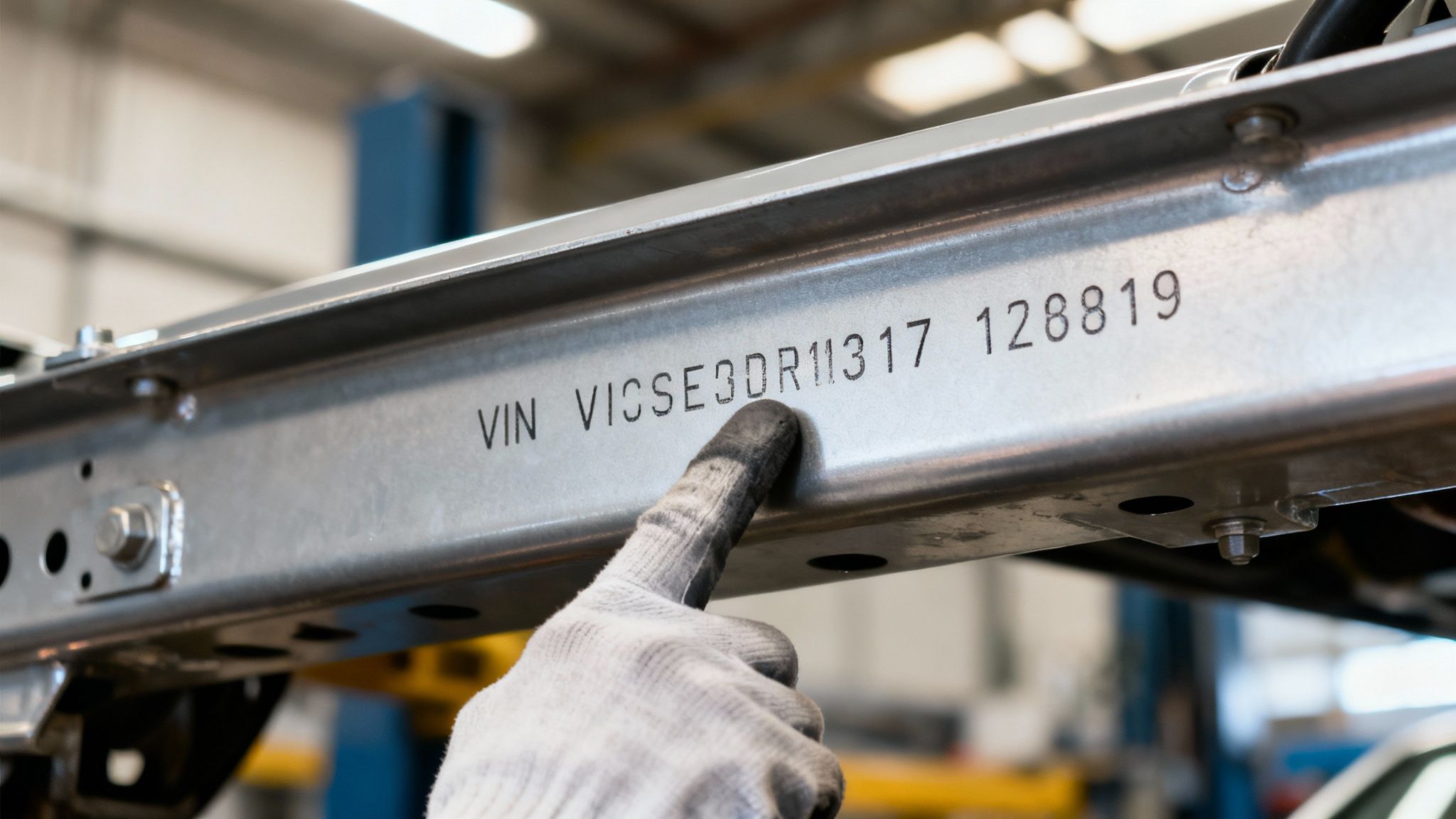
Here's something every motor-trade pro should burn into their memory: a registration plate can lie, but a chassis number can't.
Sure, the number plate is a handy identifier, but it gives you absolutely zero guarantee that it actually belongs to the car it's screwed onto. Plates get cloned, swapped between cars, and put on retention all the time, making them a fundamentally shaky foundation for your due diligence.
The Problem With Plate-Only Checks
Relying on just the registration number—or even the V5C logbook alone—is asking for trouble. It's a massive risk for your business.
Imagine this scenario: you buy what looks like a pristine Audi A4. The history check you ran on the plate came back clean. A few weeks down the line, you find out the car is actually stolen goods, cleverly disguised with the plates and paperwork from a legitimate, accident-damaged wreck. It’s a classic clone, and it happens more than you'd think.
This kind of mistake is incredibly costly. There's the immediate financial hit, of course, but the damage to your reputation can be just as bad, if not worse. The only way to see through these scams is to start every single check with the 17-character Vehicle Identification Number (VIN) that’s physically stamped on the vehicle's chassis.
Adopting A Chassis-First Principle
Think of the VIN as the car's DNA. It’s encoded from the factory with specific details about the manufacturer, model, engine, and even the year it was built. A 'chassis-first' approach simply means you verify the physical VIN on the car against all the documentation and the data reports you pull.
This isn't just best practice; it's a critical risk management strategy. By anchoring every check to the VIN, you know for a fact that the history report you're looking at belongs to the actual metal sitting in front of you. This is exactly why a platform like AutoProv is built around this very principle.
When you punch in the chassis number, you’re tapping directly into the vehicle’s unchangeable identity. AutoProv uses this unique identifier to pull data from over ten trusted sources, ensuring the information is accurate and tied to the correct vehicle, not just a piece of plastic.
This simple shift in process turns that unique identifier into your most powerful tool for buying stock with confidence, protecting your investment from fraud. For a deeper dive, you might find our guide to vehicle checks with a VIN number useful, as it explores the process in more detail.
Decoding The Essential Vehicle History Checks
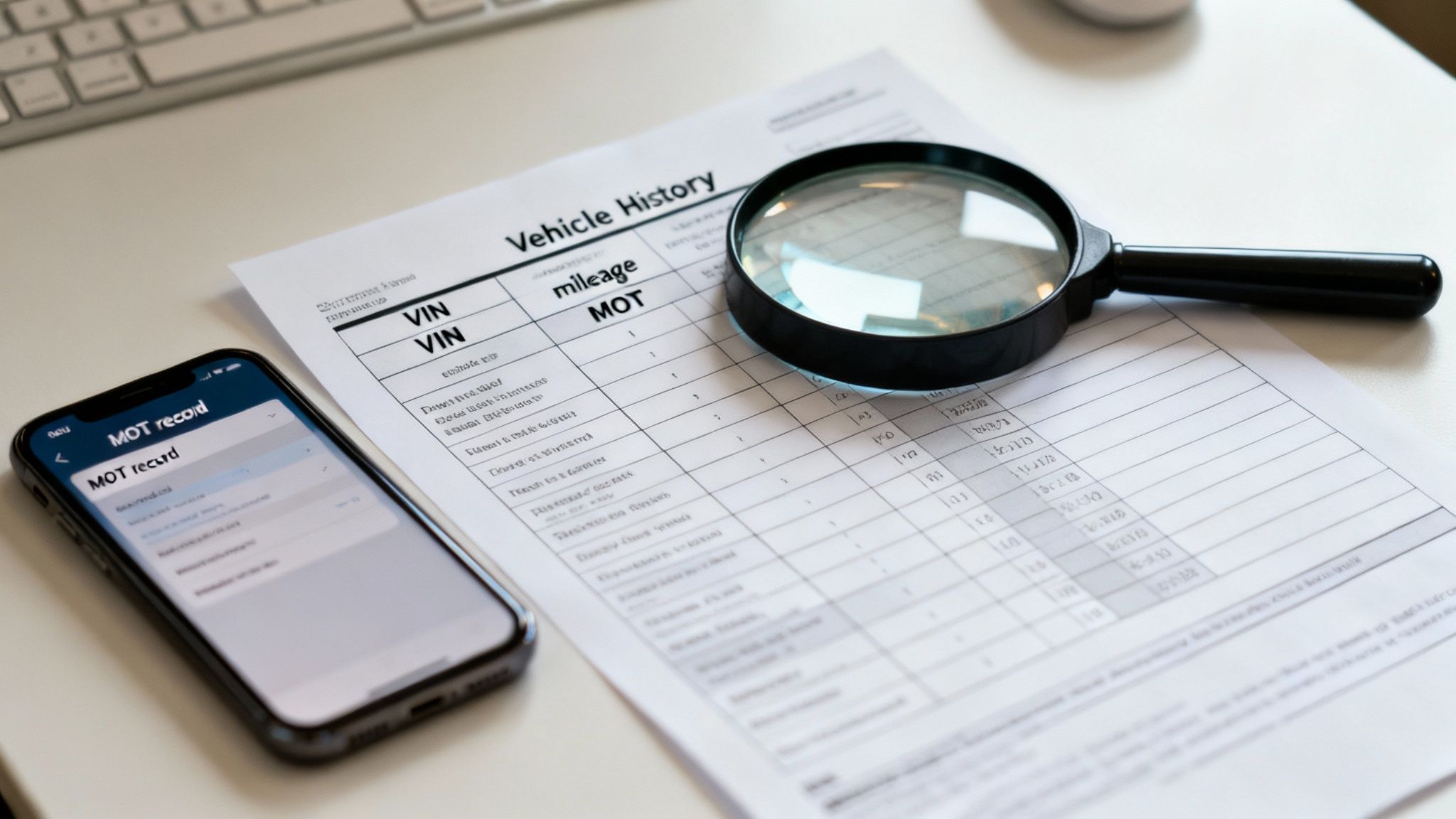
Any seasoned motor-trade professional knows that a proper vehicle appraisal goes miles beyond just glancing at the V5C logbook. When you check a vehicle by chassis number, you’re kicking off a forensic investigation, pulling in data from multiple official sources to paint a true picture of its past. This isn't just about ticking boxes; it's about protecting your margin from some very expensive mistakes.
The first port of call is always cross-referencing DVLA data. Does the make, model, colour, and engine size on record for that VIN actually match the car sitting in front of you? Any mismatch here is an instant red flag and needs a proper explanation.
But that initial ID check is only the beginning. From there, you need to get stuck into the MOT history, looking beyond a simple pass or fail. The MOT record is a goldmine for spotting dodgy mileage or recurring mechanical faults that scream "lemon."
Uncovering Stolen Status And Write-Off History
With the basics confirmed, it's time to dig for the serious stuff—the kind of history that can instantly kill a vehicle's value and make it illegal to sell. Two of the most critical databases you need to check are the Police National Computer (PNC), which tells you if the vehicle has been reported stolen, and the Motor Insurance Anti-Fraud and Theft Register (MIAFTR), which tracks every insurance write-off. Buying a stolen car, even accidentally, is a guaranteed total loss, while knowing if a car is a Category S (structural) or Category N (non-structural) write-off is fundamental for accurate valuation.
Picture this: you run a VIN check via a service like AutoProv and the spec sheet says it's a diesel, but the engine you're looking at is clearly a petrol. That's a classic sign of a cloned vehicle, where a thief has slapped the identity of a legitimate car onto a stolen one. Without a proper VIN-led check, that kind of fraud is almost impossible to spot. A deep dive into a car's past is crucial, and you can learn more about this in our comprehensive guide on how to check a car's history in the UK.
In the UK, checking a vehicle by its chassis number has become business-critical as the used market expands. With the DVLA recording hundreds of thousands of new vehicle registrations each quarter, the sheer volume of data makes accuracy vital.
Even a tiny error rate of 1-2% across tens of millions of records, as previously estimated by the Department for Transport, adds up to a huge number of vehicles where relying on the logbook is a gamble. Platforms like AutoProv eliminate this risk by cross-checking DVLA and MOT history, PNC stolen status, and MIAFTR write-off data against the unique VIN. By pulling together over 40 data points in under 30 seconds, it flags the very inconsistencies a simple reg check would miss, grounding your due diligence in the vehicle's true, unchangeable identity. You can explore the government's vehicle statistics for more insight into these records.
Uncovering Hidden Finance And High-Risk Markers
While stolen markers and write-off histories are massive red flags, some of the costliest mistakes you can make are completely invisible during a physical inspection. I'm talking about hidden financial liabilities—the kind that can turn a profitable acquisition into a total loss overnight. These are tied directly to the car's VIN, not the number plate.
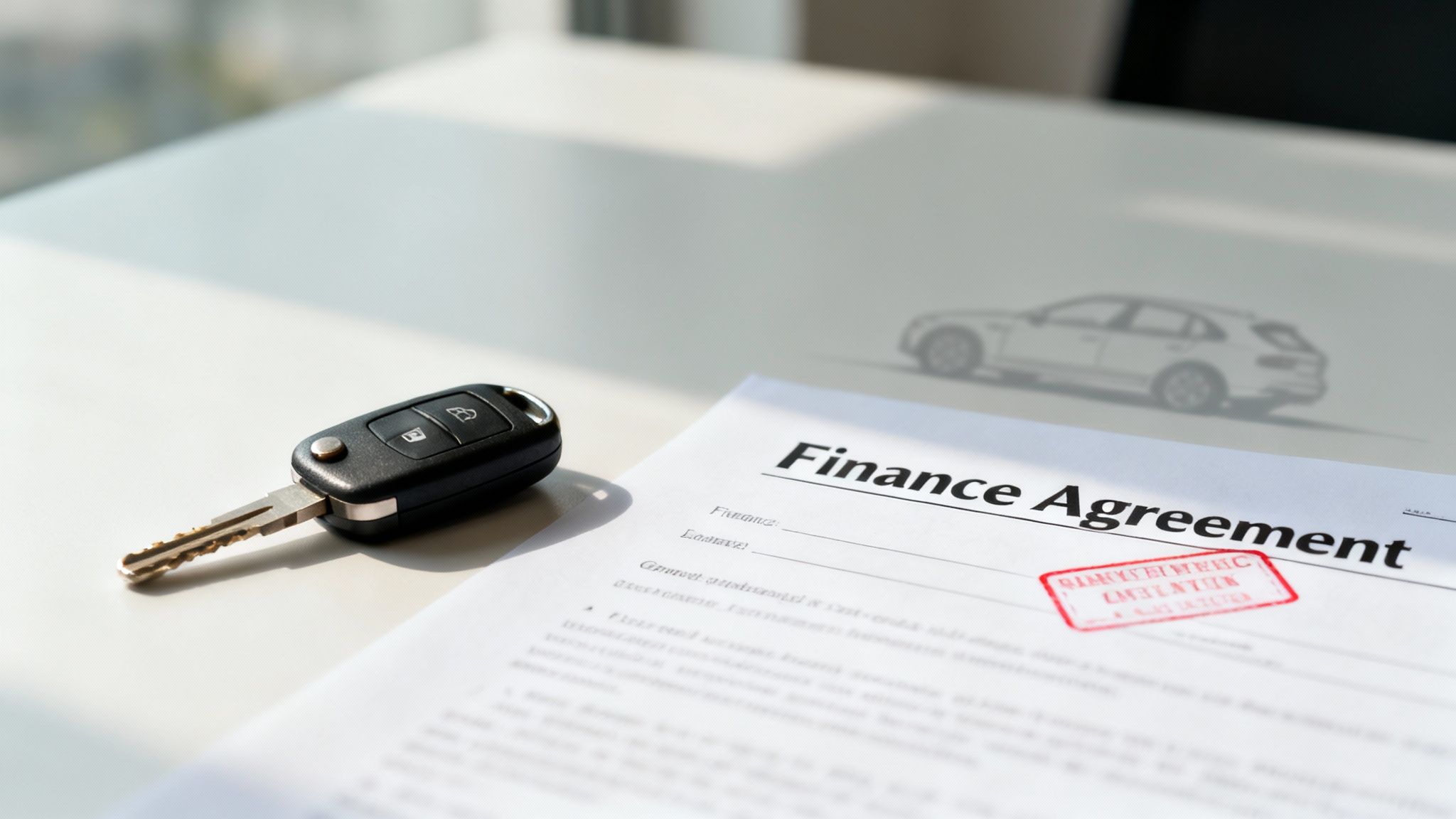
Uncovering these markers isn't just good practice; it's a non-negotiable step in your due diligence. The biggest culprit is outstanding finance. If a vehicle has an active hire purchase (HP) or personal contract purchase (PCP) agreement, the finance company is the legal owner until that last payment clears.
Buy a car with finance on it, and you’re acquiring an asset that simply doesn't belong to the seller. You run the very real risk of it being repossessed without warning, leaving you massively out of pocket.
Identifying Financial Liabilities
To properly check a vehicle by chassis number for these kinds of financial ties, you absolutely need access to reliable, industry-recognised data sources. Professional checks tap into databases from providers like Experian, which are seamlessly integrated into platforms like AutoProv.
When you run a check, you’re looking for a clear "all clear" signal. Simple as that. If a finance marker pops up, the report will give you the details of the finance company and the agreement date. This is your cue to hit the brakes on the transaction until it’s sorted. For a deeper dive, check out our guide on how to check for outstanding car finance in the UK.
Acting on a finance marker demands a strict process. Always get a settlement letter directly from the finance company—never, ever take the seller’s word for it. The safest route? Pay the lender directly from the purchase funds and give the remaining balance to the seller. This ensures the title is legally transferred to you, clean and clear.
Looking Beyond Finance For High-Risk Indicators
A comprehensive check goes further than just finance. It uncovers other high-risk markers that paint a vivid picture of a vehicle's previous life and hint at potential for premature wear and tear. This is all about building a complete story of its usage history. Key high-risk flags include previous taxi or private hire use, which suggests high mileage and wear; ex-driving school cars, which may have clutch and gearbox stress; and former police or emergency service vehicles, which have often lived a hard life.
The persistent pressure from vehicle crime in the UK has pushed the motor trade towards deeper, chassis-number-based verification. Number plates are just too easy to clone or swap. The 17-character VIN is the only true identifier and the cornerstone of modern anti-fraud checks.
This is exactly what platforms like AutoProv are built for. We fuse Experian finance checks, stolen markers, salvage categories, and mileage records into a single, cohesive file—all driven by the chassis number.
Turning Due Diligence Data Into Profit
A thorough vehicle check isn't just a defensive move to avoid buying a dud; it’s about flipping the script and using that knowledge to buy the right cars at the right price. This is where you move beyond simple risk management and into active profit optimisation. The granular data you get when you check a vehicle by chassis number is your secret weapon.
This goes way beyond just spotting a write-off or a stolen marker. It’s about digging into the small details—the exact factory specifications, the precise mileage history, any gaps in the service records, even the original paint code—to build a crystal-clear picture of a vehicle's true market value. Every single piece of information should inform your appraisal.
From Data Points to Price Points
Picture this: you're appraising a part-exchange. The owner is adamant it's the top-spec model, but a quick VIN check reveals it’s missing several key factory options. That snippet of information isn't just trivia; it's a powerful negotiation tool. It lets you adjust your offer based on hard facts, not just the seller's opinion.
Or, let's say a detailed MOT history shows a consistent advisory for a specific component. You know straight away that there’s a potential repair bill on the horizon. That cost has to be factored into your purchase price to protect your margin. This is how raw data transforms directly into profit.
The real competitive advantage in this trade comes from turning your due diligence from a simple cost centre into a profit-generating activity. When you know more about a vehicle than the seller does, you can price it with surgical precision—whether you're at the auction block or standing on your own forecourt.
This deep understanding allows you to bid with confidence at auction or negotiate a part-exchange with undeniable accuracy. When you have concrete evidence of a car's history, you can justify your valuation and, crucially, avoid overpaying. Our detailed guide on using a professional car valuation tool in the UK dives deeper into blending this data with market insights for maximum effect.
A Real-World Scenario
Here’s a classic example we see all the time. A dealer is offered a popular German saloon that looks fantastic—low mileage on the clock, clean presentation. But a comprehensive check through AutoProv flags a massive mileage discrepancy of 30,000 miles between its last service and what the odometer is showing now.
Armed with that indisputable data, the dealer has two clear, commercially-sound options: walk away from a car that could be a ticking time bomb for their reputation, or negotiate a substantial price reduction that reflects the car's true mileage, turning a huge risk into a smart, profitable acquisition.
This is the power of a professional chassis number check. Tools like AutoProv are designed specifically for this purpose. We don't just throw raw data at you; we consolidate it with live trade and retail valuations. This gives you the commercial intelligence you need to make smarter, more profitable buying decisions on every single vehicle you acquire. It's about ensuring every car you buy has a healthy margin built-in right from the start.
Ditch The Admin Headache: Streamline Your Checks With A Professional Platform
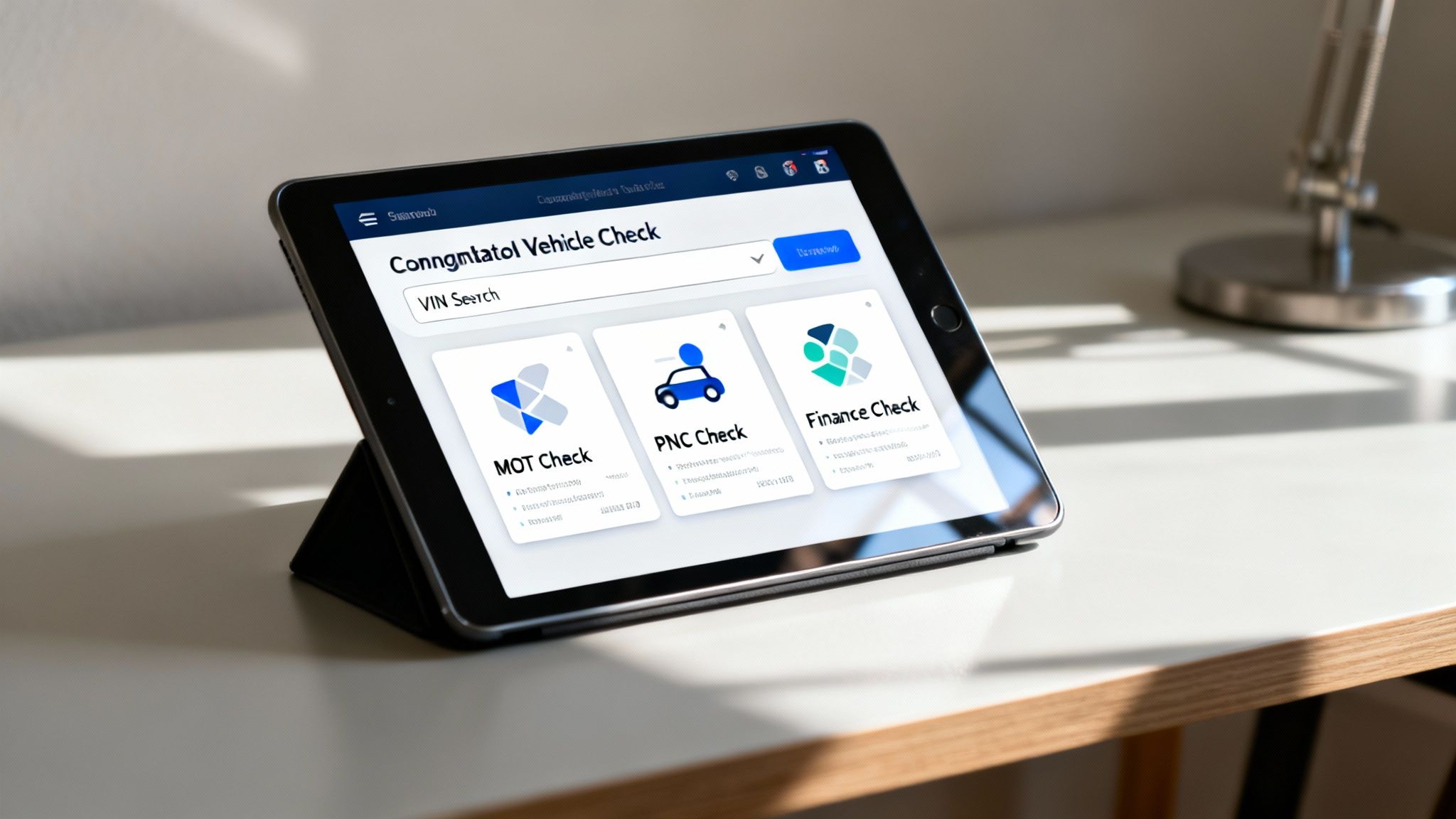
Let's be honest. Manually checking a vehicle by its chassis number is a slow, painful process. Juggling the DVLA portal, the MOT history site, a separate finance checker, and everything else is a recipe for a costly mistake.
A missed detail or a misread report can be the difference between a great bit of stock and a total lemon that costs you thousands. This fragmented approach chews up valuable time you could be spending sourcing more cars or talking to customers. In this game, efficiency and accuracy are everything, which is why a dedicated platform is no longer a 'nice-to-have'—it's essential.
The Power of a Single Source of Truth
Imagine this: you enter one chassis number or reg, and within seconds, you get the complete, unvarnished history of that car. That's the edge a professional platform like AutoProv gives you. It bundles all those time-draining checks into one simple, instant report.
No more flicking between browser tabs trying to piece the story together. The system immediately pulls data from over 10 trusted sources, giving you over 40 critical data points. It covers all the non-negotiables, from Experian for outstanding finance and the Police National Computer (PNC) for stolen checks, to the MIAFTR database for write-off history and full DVLA and MOT records to verify identity and spot mileage discrepancies.
This instant consolidation doesn't just save you a few minutes; it fundamentally reduces your risk when buying. You get a clean, easy-to-digest report that shouts about any red flags, letting you make quick, confident decisions. To see exactly how this works, take a look at how the AutoProv platform pulls it all together.
Proper Peace of Mind for Your Business
A solid checking process is about more than just data—it’s about protecting your investment and your reputation. That’s why the best platforms offer a layer of real security.
With AutoProv, every check comes with the option of adding Experian indemnity cover up to £50,000. This transforms a data report into a financial safety net, giving you genuine peace of mind that your business is shielded from the hidden histories that manual checks can so easily miss.
By rolling all the mandatory checks from this guide into one powerful tool, you move your due diligence from a chore to a real strategic advantage. It gives you the speed, accuracy, and security you need to compete and win.
Answering Your Chassis Number Check Questions
Even if you’ve been in the trade for years, certain situations can still throw you. A weird check result, a dodgy-looking V5C, or a pushy seller can make you second-guess yourself. Let's run through a few common scenarios that crop up and nail down the best way to handle them.
What If The Chassis Number On The V5C And The Car Don't Match?
Stop. This is the biggest red flag you can get. If the VIN stamped on the chassis doesn’t line up with the one on the V5C logbook, you need to walk away immediately.
This isn’t just a minor issue; it’s one of the classic signs of a cloned or stolen vehicle. Sure, a freak clerical error could be to blame, but that’s a massive gamble to take. Your first and only move should be to physically check the VIN on the chassis, in the windscreen, and anywhere else it’s stamped. If there's a discrepancy, do not buy the vehicle. This is exactly the kind of critical inconsistency that a professional platform like AutoProv flags instantly, saving you from a fraudulent deal and a massive financial headache.
Is A Check Using Just The Registration Number Good Enough?
In a word, no. For any serious motor trade professional, relying only on the registration number is playing with fire. It's far too easy for criminals to clone plates or swap them between cars. The history you pull up could belong to a completely different vehicle.
Think of the registration as a starting point, nothing more. A proper check vehicle by chassis number service uses the reg plate to find the correct VIN. From that moment on, every crucial check—finance, write-off status, MOT history—is tied directly to that permanent chassis number. It's the only way to be certain the data you're looking at belongs to the metal in front of you.
An online check and a physical inspection are two halves of the same coin. The data report tells you the car's past—hidden finance, theft markers, accident history. Your own eyes tell you its present condition. They work in tandem. A report flagging a Category S write-off tells you exactly where to look for poor repair work during your physical appraisal.
How Should I Handle A Car With Outstanding Finance?
If your check flags an outstanding finance agreement, you have to be extremely careful. That car doesn't belong to the seller; it belongs to the finance company. Your job is to make sure that finance is cleared before you hand over a penny to the seller.
The safest way forward is to get an official settlement figure directly from the lender—a good data provider like AutoProv will include this. Then, you pay the finance company directly yourself and only give the seller whatever amount is left over. Buying a car with live finance is a huge risk. The lender can repossess the vehicle at any time, leaving your business with a total loss. It's a risk that's just not worth taking.
Frequently Asked Questions
AI-Generated Content Notice
This article was created with the assistance of artificial intelligence technology. While we strive for accuracy, the information provided should be considered for general informational purposes only and should not be relied upon as professional automotive, legal, or financial advice. We recommend verifying any information with qualified professionals or official sources before making important decisions. AutoProv accepts no liability for any consequences resulting from the use of this information.
From our AI insights
- Navigating ULEZ Compliance for Used Car Dealers
A deep dive into ensuring your used car stock meets ULEZ standards, avoiding costly fines.
- Mastering Paint Verification with VIN Decoding
Learn how UK traders verify original paint using VIN decoding and provenance data.
- Understanding VIN Decoding: Avoid Misleading Imports
Learn how VIN decoding reveals vehicle origins and specs, preventing import pitfalls.
Related Articles

Car Specs by Reg: Instantly Find Vehicle Details & MOT History
Trying to find the full car specs by reg? In the UK, that little number plate is the key to unlocking a huge amount of information about a vehicle. From the exact engine size and CO2 emissions to its MOT history and tax status, it's all tied to the registration.

How to Check Previous Owners of a Car in the UK
Before you even start thinking about how to check the previous owners of a car, you need to get your head around why it's so important. This isn't just about being nosy; it’s a non-negotiable step that protects you from serious financial headaches and safety risks lurking under a shiny bonnet.

How to Check Service History in the UK
Think of a car's service history as its detailed CV, not just some dusty folder in the glovebox. To check service history is to get the real story behind a vehicle, digging into everything from its routine oil changes to any major surgery it's had. For any savvy car buyer in the UK, this record is the single most important document you can get your hands on.
Published by AutoProv
Your trusted source for vehicle intelligence