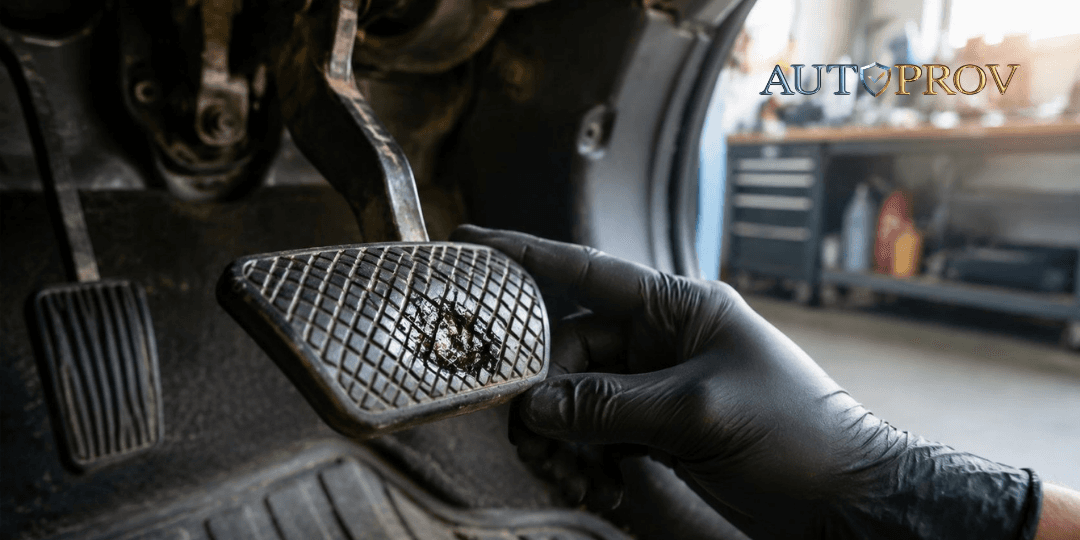
You're standing beside a potential stock unit, key in hand, trying to decide whether the number still works. The engine starts cleanly enough, the body is presentable, and then the clutch pedal tells a different story. It stays low, comes back lazily, or feels wrong under your foot.
That's the point where a mechanical niggle becomes a buying decision.
A sticking clutch pedal can still be a workable deal. It can also be the first visible sign that the car has been run on a budget, patched between owners, or moved on before an obvious drivability fault turned into a larger workshop bill. For a trader, the right question isn't just “what's failed?” It's “what does this symptom say about the car, the previous owner, and the margin?”
The Hidden Risk Behind a Sticking Clutch Pedal
A sticking clutch pedal can turn an ordinary appraisal into a provenance check within seconds.
At auction, on a driveway, or in a part-exchange lane, that matters. The pedal fault is rarely just a tidy workshop job sitting on its own. It often sits alongside a pattern: missed servicing, short-term fixes, repeated driveline complaints, or an owner who kept using the car after the warning signs were obvious.
That is why the symptom deserves more than a quick mental allowance for “clutch work.” A pedal that hangs low, returns slowly, or feels inconsistent can point to a simple hydraulic issue. It can also point to wear further into the release system, poor previous repairs, or a car that has been moved on before the proper bill landed. For a trader, the risk sits in misreading which one you are looking at.
Why traders get caught out
The mistake usually goes one of two ways. Some buyers hear “clutch” and price in a full replacement before they have earned that conclusion. Others assume it is a cheap slave cylinder or a bleed, then buy into a margin that disappears the moment the gearbox has to come out.
Both approaches miss the central trade-off. You are not only judging the fault. You are judging whether the fault matches the car's wider history and whether the history supports confidence in the fix.
A sound appraisal follows three lines of thought:
- Mechanical triage: Decide whether the symptom looks more like hydraulics, cable or linkage drag, pedal-box wear, or a release-system problem that may involve larger labour.
- History context: Check for signs of deferred maintenance, patchy servicing, repeat advisories, or gaps where you would expect evidence of routine upkeep.
- Buying discipline: Price the unit on confirmed risk, not best-case workshop optimism.
The paperwork matters as much as the pedal feel. If the clutch sticks on a car with orderly invoices, consistent servicing, and sensible ownership, the risk profile is different. If the same symptom shows up on a car with thin records and vague recent history, it raises a different question: what else has been postponed? A proper service and maintenance history review helps answer that before money is committed.
Practical rule: A sticking clutch pedal is not only a repair item. It is a credibility test for the vehicle's history.
Rapid On-the-Spot Diagnostics for Traders
The first few minutes tell you most of what you need to know. You're not trying to complete a workshop diagnosis on the spot. You're trying to decide whether the unit still deserves your attention.

Start with pedal behaviour
Press the clutch several times with the engine off, then again with the engine running if it's safe to do so. Don't overcomplicate it. Focus on how the pedal returns.
A useful quick read:
- Pedal stays on the floor
- That often pushes suspicion towards hydraulic pressure loss, a failed cylinder, or a cable issue on older cars.
- Pedal returns slowly
- That can suggest drag in the actuation system, contamination, or developing wear rather than a clean break.
- Pedal feels spongy
- Air in the system becomes more likely, especially on hydraulic cars.
- Pedal catches part-way
- Look harder at intermittent hydraulic faults, binding linkage, or wear that only shows through part of the travel.
Identify the system before guessing the fault
Accurate appraisals depend on understanding clutch system evolution. Clutch systems evolved from older cable-operated designs to more common hydraulic systems, and that matters because older vehicles are more likely to suffer from stretched or broken cables, while modern hydraulic systems are more often affected by leaks, air ingress, or failing master and slave cylinders, as outlined in repair guidance on sticking clutch pedal causes.
If you don't know which system the car uses, you can waste the next ten minutes looking in the wrong place.
Look for:
- Hydraulic layout: Reservoir, master cylinder at the bulkhead, hydraulic line routing.
- Cable setup: Visible cable run, mechanical linkage feel, older pedal action.
- Modified or repaired signs: Non-standard clips, fresh fluid residue, recent disturbance around the pedal or gearbox end.
Use your eyes before your tools
You don't need a ramp for a first pass. You do need discipline.
Check these points:
- Fluid condition and level: Low or dirty clutch fluid can signal leakage, neglect, or both.
- Master cylinder area: Inspect around the bulkhead and pedal box for dampness or staining.
- Visible hydraulic lines: Any wetness, corrosion, or disturbed fittings should move the risk upward.
- Pedal box and pivot: Worn bushes, binding movement, or obvious obstruction can mimic bigger faults.
- Under-bonnet consistency: A tidy engine bay with one freshly cleaned hydraulic area often tells its own story.
A simple scan can help if the vehicle has related drivability complaints or stored faults, but don't expect electronics to diagnose a manual clutch issue directly. A basic OBD2 reader workflow for trade checks is useful for wider appraisal context, not as a substitute for mechanical observation.
If the pedal feel changes noticeably over a few presses, treat that as information, not reassurance. Inconsistent faults are often the ones that come back to haunt the deal.
What works and what doesn't
What works is a short, repeatable process. Feel the pedal. Identify the system. Look for leaks or binding. Then decide whether the fault belongs in the “serviceable”, “investigate”, or “walk away” category.
What doesn't work is assuming every sticky pedal means a full clutch kit, or assuming every sticky pedal is nothing more than low fluid. Both mistakes cost money.
Common Causes and Potential Repair Costs
A sticking clutch pedal can sit anywhere on the scale from minor workshop job to margin killer. The mistake is pricing it as a simple symptom. Its cost is determined by the underlying cause, the access required, and whether the fault aligns with the car's history.

Trade experience and consumer guidance point to the same broad pattern. Sticking pedals are often tied to hydraulic faults, cable or linkage issues on older setups, or wear inside the clutch assembly itself. WhoCanFixMyCar's guide to clutch pedal sticking also makes the practical point that once gear engagement becomes unreliable, the car stops being a routine prep item and becomes a saleability and liability problem.
The faults traders see most often
Most cases fall into three buckets, but they do not carry the same risk.
Fault group Typical examples Trade implication Hydraulic system issues Low fluid, air in system, failing master cylinder, failing slave cylinder Often fixable without major strip-down. Risk rises fast if there is evidence of repeat bleeding, mixed old and new parts, or hidden leakage. Mechanical linkage problems Stretched cable, broken cable, worn pedal pivot, binding linkage More common on older cable-operated cars. Usually easier to verify, but neglected linkage wear can point to broader poor maintenance. Clutch assembly wear Worn release bearing, pressure plate issues, contamination-related clutch problems Highest labour exposure. Once the box comes out, the estimate can widen quickly and eat the deal. Hydraulic faults are often the cheapest entry point and the most dangerous assumption. A low pedal or sticky return can be a cylinder, but it can also be the first visible sign of a car that has been run with developing faults for longer than the seller admits.
Cost ranges in real trade terms
Use cost bands, not hopeful figures. The same symptom can produce a very different invoice depending on layout, parts access, and what is found once work starts.
Repair scenario Usual trade view of cost Fluid top-up and bleed Low Master cylinder or slave cylinder replacement Low to moderate Clutch cable replacement or linkage repair Low to moderate Pedal box or pivot rectification Moderate, depending on access and parts availability Release bearing or pressure plate related work Moderate to high because labour climbs quickly Full clutch-related strip due to internal wear or contamination High Those bands matter because the buying decision changes with each step up. A cheap hydraulic fix can still leave room. Internal clutch work can turn a clean retail prospect into a workshop unit with weak profit and awkward comeback risk.
Price the repair path, not the symptom
The better question is not whether the pedal can be freed off. It is whether the likely repair path is visible, proportionate, and consistent with the vehicle's story.
Useful clues include:
- Fresh fluid or disturbed fittings with no paperwork
- A new master or slave cylinder paired with old surrounding hardware
- Pedal feel that worsens when hot or changes across a short drive
- Seller wording that frames a recurring fault as “just needs bleeding”
- Overlap with vibration, chatter, or harsh take-up
Where the hydraulic side looks model-specific or parts-sensitive, trade buyers sometimes benefit from reviewing specialist 30901 hydraulic solutions to understand component options and likely repair pathways before pricing the risk.
If the car also shows driveline shunt, idle vibration, or poor engagement quality, widen the job card before agreeing a number. Related dual mass flywheel failure symptoms can sit behind the same complaint and turn an apparently manageable clutch repair into a much more expensive strip and refit.
Negotiate from the most likely repair path, with a reserve for what appears once the gearbox is out. That is how you protect margin on cars with clutch pedal complaints.
Beyond the Mechanical Fix Assessing Provenance Risk
A sticky pedal tells you what the car is doing today. It can also tell you a great deal about what the car has been through.
The mechanical symptom is where the appraisal starts, not where it ends. A trader who stops at diagnosis risks missing the more valuable question. Why is this fault present now, and what does that say about how the vehicle has been maintained, used, and moved through the market?

Read the paperwork like a technician
A clutch pedal issue often leaves a paper trail, even when the seller doesn't mention it clearly.
Look for:
- Service history references: Clutch fluid work, master cylinder replacement, slave cylinder replacement, gearbox removal, or vague transmission notes.
- MOT language: Advisories or comments that suggest drivability concerns, even if the wording isn't neat.
- Invoice sequencing: Repeated small repairs around the clutch actuation system can indicate a car that has been patched rather than properly sorted.
A thin record matters. So does a record that shows repeated attention without a settled resolution.
Ownership patterns change the risk
Standard checks often stop too early. A basic vehicle history check UK report may confirm identity markers and headline events, but it won't always give enough context around vehicle provenance, ownership behaviour, or the timing of disposal.
If a manual car shows a developing clutch actuation fault and has passed quickly through short-term owners, that should sharpen your attention. Not because every short-ownership car is bad stock, but because rapid resale can be consistent with a fault that's inconvenient, intermittent, or becoming expensive.
Three patterns deserve a closer look:
- Short holding periods: A seller who hasn't kept the car long may be moving on from a known issue.
- Gaps in maintenance evidence: Missing records around expected service points weaken confidence in the explanation you're being given.
- Mileage and usage mismatch: Heavy wear with an otherwise tidy story often means the story is incomplete.
A good appraisal doesn't separate mechanical condition from history. It joins them up.
What a deeper report can add
Dealer vehicle checks, used car history report analysis, and broader trade vehicle intelligence become commercially useful rather than administrative. You're not only looking for a bad marker. You're looking for patterns.
A stronger provenance review helps you test whether the sticking pedal fits the wider life of the car. Ownership timelines, mileage behaviour, MOT rhythm, insurance-related events, and other anomaly signals can all alter how much confidence you place in the unit. A proper vehicle provenance report is most useful at this point, when the symptom has already told you to look harder.
For a trader, that context affects more than buying price. It affects prep budgeting, sales confidence, and the odds of a post-sale dispute when the next owner experiences the same fault.
Intermittent Faults and Hidden Liabilities
The hardest cars aren't always the obviously broken ones. They're the ones that behave just well enough to get bought.
Many drivers describe clutch pedals that stick intermittently or only half way, and that nuance matters. In UK conditions, reports of these variable symptoms point towards faults that can change with temperature, humidity, or pedal travel, rather than presenting as a constant failure, as discussed in driver reports of clutch pedals sticking half way.

Why intermittent faults are dangerous stock
A car can pass a short drive and still be a poor buy. The pedal may stick after repeated use, on a damp morning, or only once the system is warm. That kind of behaviour is easy to miss during a quick handover or auction inspection.
In practice, intermittent clutch pedal sticking can point to:
- Hydraulic air ingress: The system may feel acceptable until temperature or repeated pedal use exposes pressure inconsistency.
- Variable master or slave cylinder wear: A cylinder can behave differently through the stroke, especially when wear is developing rather than catastrophic.
- Linkage drag or part-travel binding: Older or worn components don't always fail in a neat, repeatable way.
Why the history matters even more here
Intermittent faults create the perfect conditions for concealment. A seller can say “it was fine for me” and may even be telling the truth in a narrow sense. That doesn't reduce your exposure once the car enters prep or reaches a retail customer.
That's why intermittent drivability complaints should push you beyond the obvious paperwork. If service records look too clean, check whether they're genuine and complete. A manual vehicle with suspiciously tidy records but inconsistent condition deserves extra caution, especially where the workshop evidence doesn't fully support the story. A careful review of fake service stamps and logbook fraud warning signs is relevant here because hidden mechanical liability and weak documentation often travel together.
Buy the car you can evidence, not the one you can excuse.
Conclusion Making the Right Buying Decision
A sticking clutch pedal is never just a pedal problem. It's a buying signal.
The smart trade response has two parts. First, work the fault properly on the ground. Read the pedal, identify whether the system is cable or hydraulic, and decide whether you're likely looking at a minor actuation issue or a deeper clutch-related job. Second, test the symptom against the vehicle's history. Service records, ownership patterns, MOT rhythm, and anomaly signals often tell you whether this is ordinary wear or a car with a longer story behind it.
That's what protects margin. Not optimism. Not guesswork.
A tighter process helps on both fronts, and a disciplined trade buyer appraisal checklist keeps these decisions consistent across auctions, part-exchanges, and direct purchases.
AutoProv supports UK dealers and motor traders with deeper vehicle history, provenance, and risk intelligence at the point of purchase. When a fault like clutch pedal sticking raises questions, better context around ownership, mileage patterns, MOT history, and hidden risk indicators helps you decide whether to buy, renegotiate, or walk away.
Frequently Asked Questions
AI-Generated Content Notice
This article was created with the assistance of artificial intelligence technology. While we strive for accuracy, the information provided should be considered for general informational purposes only and should not be relied upon as professional automotive, legal, or financial advice. We recommend verifying any information with qualified professionals or official sources before making important decisions. AutoProv accepts no liability for any consequences resulting from the use of this information.
From our AI insights
- Navigating Recall Compliance for UK Car Traders
Ensure compliance with recall regulations: essential steps for UK car traders.
- Unlocking Manufacturer Warranty Transfers for UK Traders
Master the nuances of manufacturer warranty transfers for used cars in the UK and avoid disputes.
- Navigating Incomplete Service Histories: A Trader's Guide
Effective strategies for UK traders managing incomplete vehicle service histories.
Related Articles

The Importance of Car Maintenance and Provenance Checks
Discover why regular car maintenance and proper provenance checks are essential for vehicle quality and longevity.

Essential Car Maintenance Tips for UK Drivers
Discover vital car maintenance tips to keep your vehicle roadworthy and compliant in the UK.
How Much Is a Car Service? Complete UK Price Guide
Trying to pin down exactly "how much is a car service?" can feel a bit like asking "how long is a piece of string?". Prices vary quite a bit, but to give you a ballpark figure, an interim service will usually set you back around £100 to get started. A more thorough full service often begins at £180, while a major service for many cars can easily top £300.
Published by AutoProv
Your trusted source for vehicle intelligence