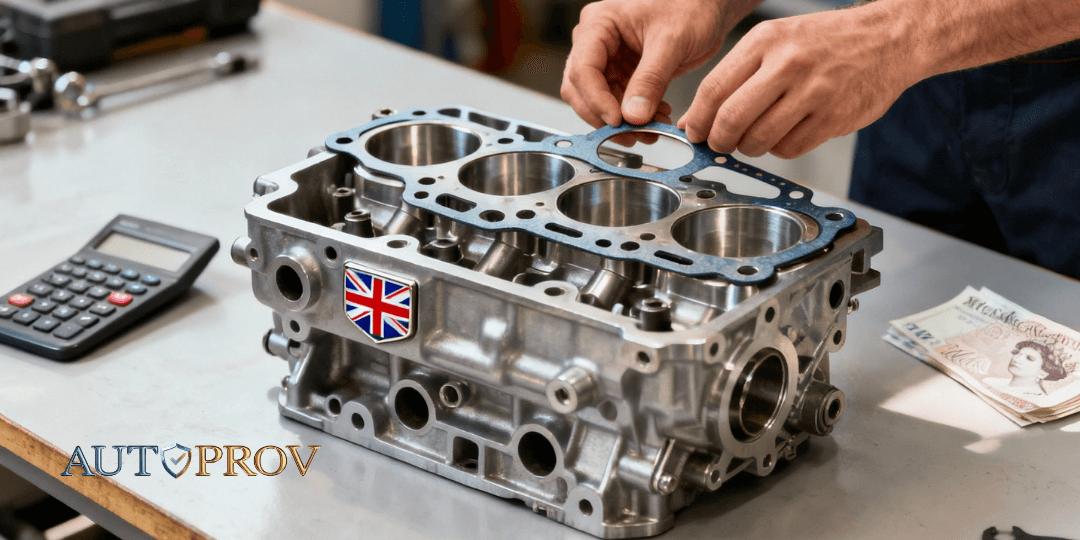
Nothing quite matches the sinking feeling of being told you have a blown head gasket. It's a notoriously expensive repair, and the sheer unpredictability of the final bill just adds to the stress. In the UK, you could be looking at a bill anywhere from £550 to £1,700, a huge range that depends heavily on your car and just how bad the damage is. This guide will help you make sense of it all.
Nothing quite matches the sinking feeling of being told you have a blown head gasket. It's a notoriously expensive repair, and the sheer unpredictability of the final bill just adds to the stress. In the UK, you could be looking at a bill anywhere from £550 to £1,700, a huge range that depends heavily on your car and just how bad the damage is. This guide will help you make sense of it all.
Decoding the Head Gasket Repair Bill in the UK

A head gasket repair isn't like buying a new set of tyres; there's no fixed price. It's less like a product and more like major surgery for your engine. The final invoice you see is a mix of labour charges, the cost of the new gasket and other parts, and any extra machine work needed to sort out related damage.
The massive price difference often catches drivers completely off guard. Data from across the industry shows that the average cost for a head gasket replacement in the UK hovers between £550 and £1,700. This wide spectrum is down to the car's make, its engine layout, and the garage's hourly labour rate, which can vary a lot from one part of the country to another.
Why Is There Such a Wide Price Range?
Getting your head around the main parts of the quote is the first step to feeling back in control. The huge price swing usually comes down to these key factors:
- Labour Intensity: This is the big one. It's the largest chunk of the bill by far. Replacing a head gasket means a mechanic has to carefully dismantle a huge part of your engine, a painstaking job that can take anywhere from eight to twenty hours.
- Vehicle Complexity: A simple four-cylinder engine in a common hatchback is relatively easy to get to. A tightly packed V6 or V8 engine in a premium saloon? That’s a different story entirely, demanding more time and specialised skills.
- Associated Damage: A failed gasket rarely happens in isolation. It often causes other problems, like a warped cylinder head. If that happens, the head needs to be professionally skimmed (machined flat again), adding another significant cost to the repair.
As you start looking at your options, it's useful to see how different workshops structure their costs. For a clearer idea of potential expenses, checking out professional pricing models can be insightful. AutoProv connects you with trusted UK garages, allowing you to get transparent quotes for complex jobs like this. This platform gives you a solid starting point for demystifying that repair bill and making a decision you feel good about.
What Really Drives Your Repair Cost
So, why can one person’s head gasket repair come in at £600 while another bill skyrockets past the £2,000 mark? It’s never one single thing, but a mix of crucial variables. Getting your head around these factors is key to knowing what to expect and being able to chat confidently with your mechanic about the quote.
Think of it like getting work done on your house. Replacing a leaky tap is worlds away from a full kitchen refit, right? The same logic applies under your bonnet. The final head gasket repair cost in the UK really boils down to three things: the car you drive, where you live, and just how bad the damage is.
Your Car's Make, Model and Engine
The single biggest influence on your bill is the car itself. Its make and model don't just determine the price of the parts; more importantly, they dictate the sheer number of hours a mechanic needs to spend getting to the head gasket in the first place.
Take a common four-cylinder engine in a Ford or a Vauxhall. It’s a pretty straightforward job. The parts are easy to get to, and most mechanics know the layout like the back of their hand. But a V6 or V8 engine nestled inside a premium BMW, Audi, or Land Rover? That’s a completely different ball game.
These engines are far more complex and crammed into the engine bay. They also have two cylinder heads, meaning two gaskets to replace. This instantly doubles the complexity and the time needed to do the job properly.
It can turn into a massive undertaking. Sometimes the mechanic has to pull the entire engine out just to reach the cylinder heads. That kind of complexity translates directly into more labour hours and a much, much higher final invoice.
Garage Labour Rates Across the UK
Where you get the work done makes a huge difference. Labour rates aren’t the same everywhere in the country. A specialist garage in central London or Manchester is almost guaranteed to charge a higher hourly rate than your local independent workshop in a smaller town.
These rates are simply a reflection of local overheads like rent and other business costs. It’s one of the main reasons why getting a few different quotes is so important. You’re not just comparing the quality of the work; you’re comparing the basic cost of doing business in your area. For a bit more context on this, our complete UK price guide for car services offers some great insights into how prices can vary region by region.
The Extent of the Damage
Finally, the bill hinges on whether the problem stopped at the gasket. A failed head gasket often causes a domino effect of damage, usually from the engine overheating. If it gets seriously hot, the metal cylinder head can actually warp, meaning it’s no longer perfectly flat.
When this happens, the cylinder head has to be sent off to a specialist machine shop to be "skimmed." This is a delicate process where a tiny layer of metal is shaved off to make the surface perfectly flat again. This extra step adds both time and a significant extra cost to the repair, easily tacking a few hundred pounds onto the final bill.
Spotting the Warning Signs of a Blown Head Gasket
Catching a failing head gasket early is the single best thing you can do to avoid a truly catastrophic repair bill. Acting on the very first clues can be the difference between a manageable cost and one that makes you question the future of your car. Think of these signs as your engine's way of asking for help before a little problem becomes an absolute disaster.
Ignoring these warnings almost guarantees a much bigger bill at the garage. The financial fallout of a blown head gasket goes way beyond just the repair itself. If you overlook early symptoms—like white smoke from the exhaust, a constantly overheating engine, or a noticeable loss of power—you're not just risking serious engine damage, you're also watching the potential repair cost skyrocket. You can get more insight into how early detection hits your wallet over at Checkatrade.com.
The Obvious Red Flags
Some symptoms are impossible to miss and demand your immediate attention. If you see any of these, it’s time to stop driving and get on the phone with a mechanic right away.
- Thick White Smoke: A bit of thin white vapour from the exhaust on a cold morning is perfectly normal. But if your car is pumping out thick, sweet-smelling white smoke, that's the classic sign of coolant getting into the combustion chambers and being burnt off.
- Constant Overheating: Your temperature gauge should sit pretty steady once the car is warmed up. If you notice it creeping into the red zone, even on short trips, it could mean the head gasket seal is compromised and your cooling system can't do its job properly.
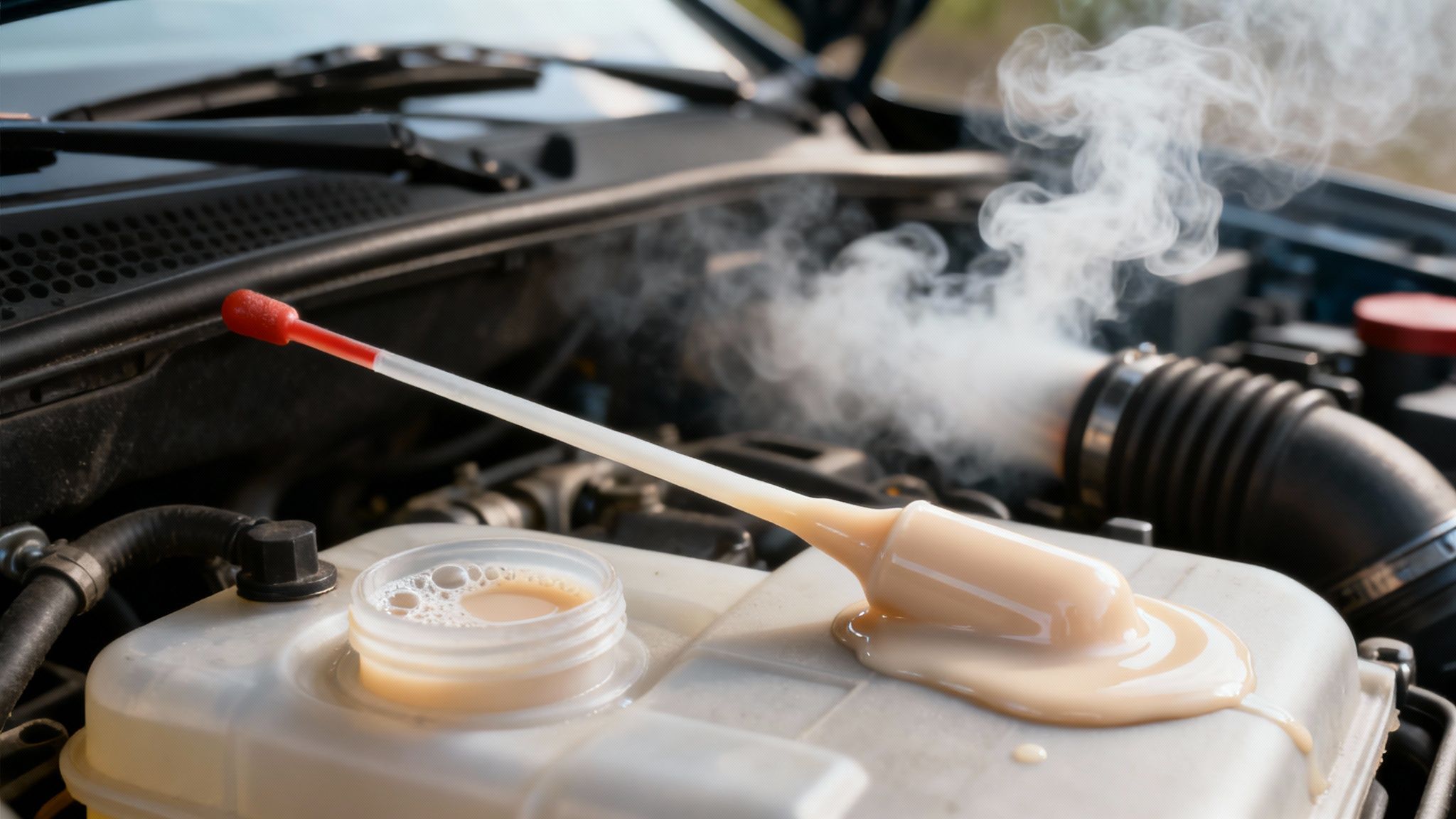
- "Mayonnaise" Under the Oil Cap: This is one of the most famous tell-tale signs. Finding a creamy, milky-brown sludge on the underside of your oil filler cap or on the dipstick is a dead giveaway. This is what you get when oil and coolant mix, creating an emulsion that’s terrible for your engine's health.
These are the classic signs that most people spot first, but a failing gasket can also show itself in more subtle ways.
The Less Obvious Clues
Sometimes the signs aren't quite so dramatic, but they're every bit as serious. Spotting these requires a bit more vigilance.
A head gasket can fail in a few different ways, which is why the symptoms can vary. It might fail between a cylinder and a coolant passage, between two cylinders, or between an oil and a coolant channel. Each type of failure produces its own unique set of clues.
Keep an eye out for these more subtle indicators:
- Mysterious Coolant Loss: Find yourself constantly topping up the coolant reservoir, yet there's never a puddle under your car? A failing head gasket could be causing a slow, internal leak where the coolant is being vaporised inside the cylinders.
- Bubbles in the Coolant: With the engine running (and cool enough to safely open), have a look at the coolant in the expansion tank. If you see a steady stream of bubbles, it could be combustion gases being forced into the cooling system—a clear sign of a breach.
- Poor Engine Performance: A sudden drop in power, a rough idle, or engine misfires can all point to a loss of compression caused by a faulty gasket letting pressure escape between cylinders.
Recognising these symptoms is a crucial skill for any car owner. If you're looking at buying a used car, knowing what to check for can save you from inheriting a hidden, eye-wateringly expensive problem. For more on that, take a look at our guide on your ultimate used car inspection checklist.
The Tough Call: Repair or Replace Your Car?
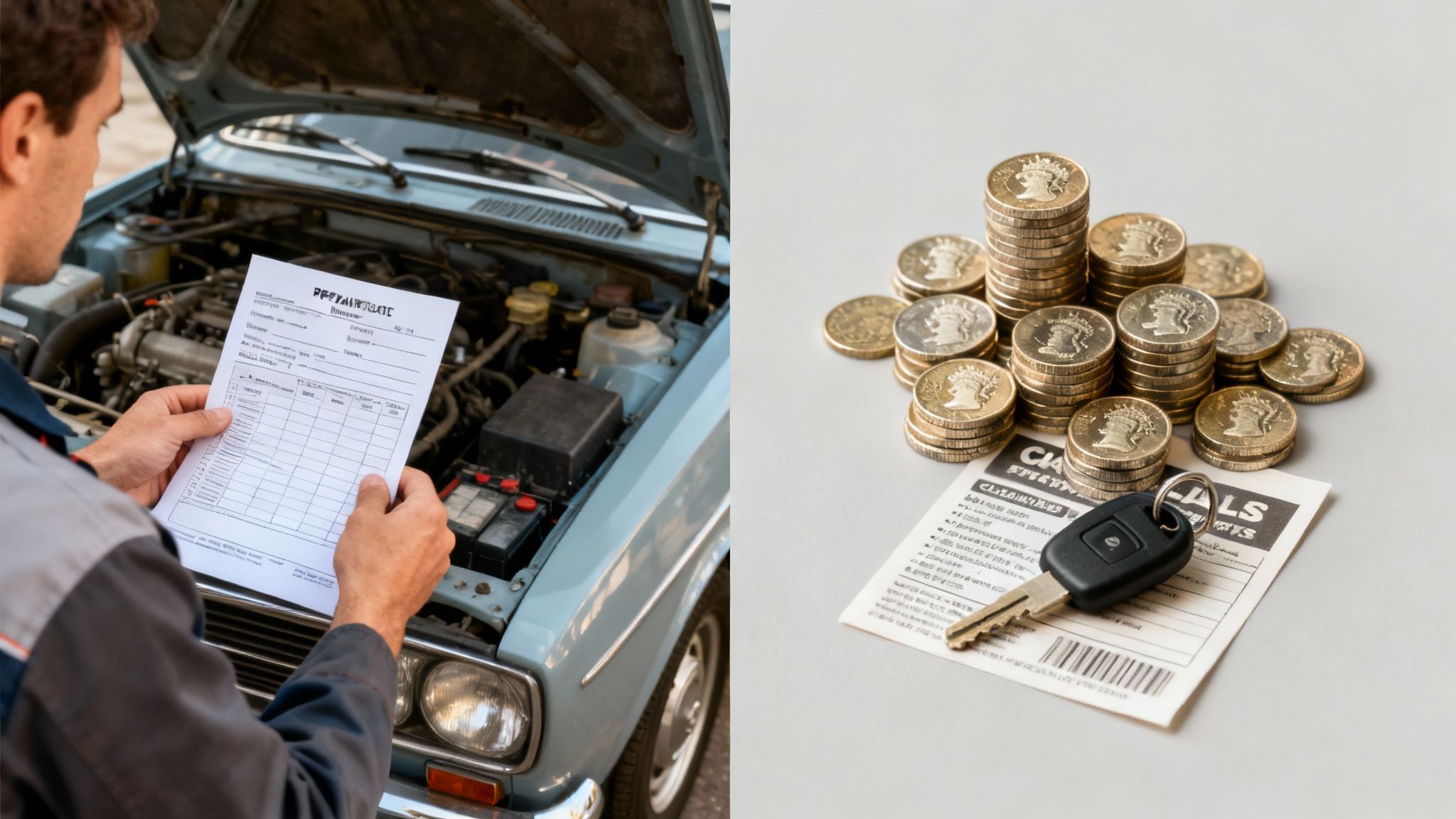
A steep quote for a head gasket repair forces one of the most difficult decisions a car owner can face: is your car worth saving? This is that critical crossroads where logic really has to trump emotion. The head gasket repair cost UK drivers are looking at can easily be more than the car is worth, turning it into a purely financial calculation.
Making the right choice here comes down to a simple cost-benefit analysis. First things first, you need a realistic idea of your vehicle's current market value. Then, you can compare this figure directly against the total repair estimate you’ve been given.
Weighing the Repair Cost Against Your Car's Value
There's a well-known rule of thumb in the motor trade called the 50% rule. It's pretty straightforward: if the repair bill is more than half of what the car is worth, it’s probably time to seriously consider replacing it.
Spending £1,500 to fix a car valued at £2,000 is rarely a sound financial move. You’re simply not going to get that money back when you eventually sell.
But it’s not just about the numbers on the page. You need to look beyond this one problem and take a hard look at the car's overall health. This means considering its age, mileage, and the state of other major parts that could be next in line to fail.
A car is a complex system of interconnected parts. A failed head gasket can often be a warning sign that other age-related issues are just around the corner—things like a failing gearbox, worn-out suspension, or creeping rust.
Looking at the Bigger Picture
To make a truly informed decision, you have to consider the car's complete history. Has it been well-maintained with a consistent service record? A vehicle with a solid past is a much better candidate for a big repair than one with a patchy or unknown background. You can find out more by reading our guide on how to check service history in the UK.
Before you commit to the repair, ask yourself these crucial questions:
- What's the condition of the gearbox and clutch? These are other big-ticket items that can fail on older, high-mileage cars.
- How are the suspension and brakes? Worn shocks, springs, and brakes can easily add hundreds more to your future running costs.
- Is there any significant rust on the body or underneath? Serious corrosion can be the final nail in the coffin, signalling that the car is nearing the end of its structural life.
Ultimately, the choice comes down to weighing the financial sense of a major repair against the practicality of putting that money towards a more reliable vehicle.
How to Find a Trusted Garage for Your Repair
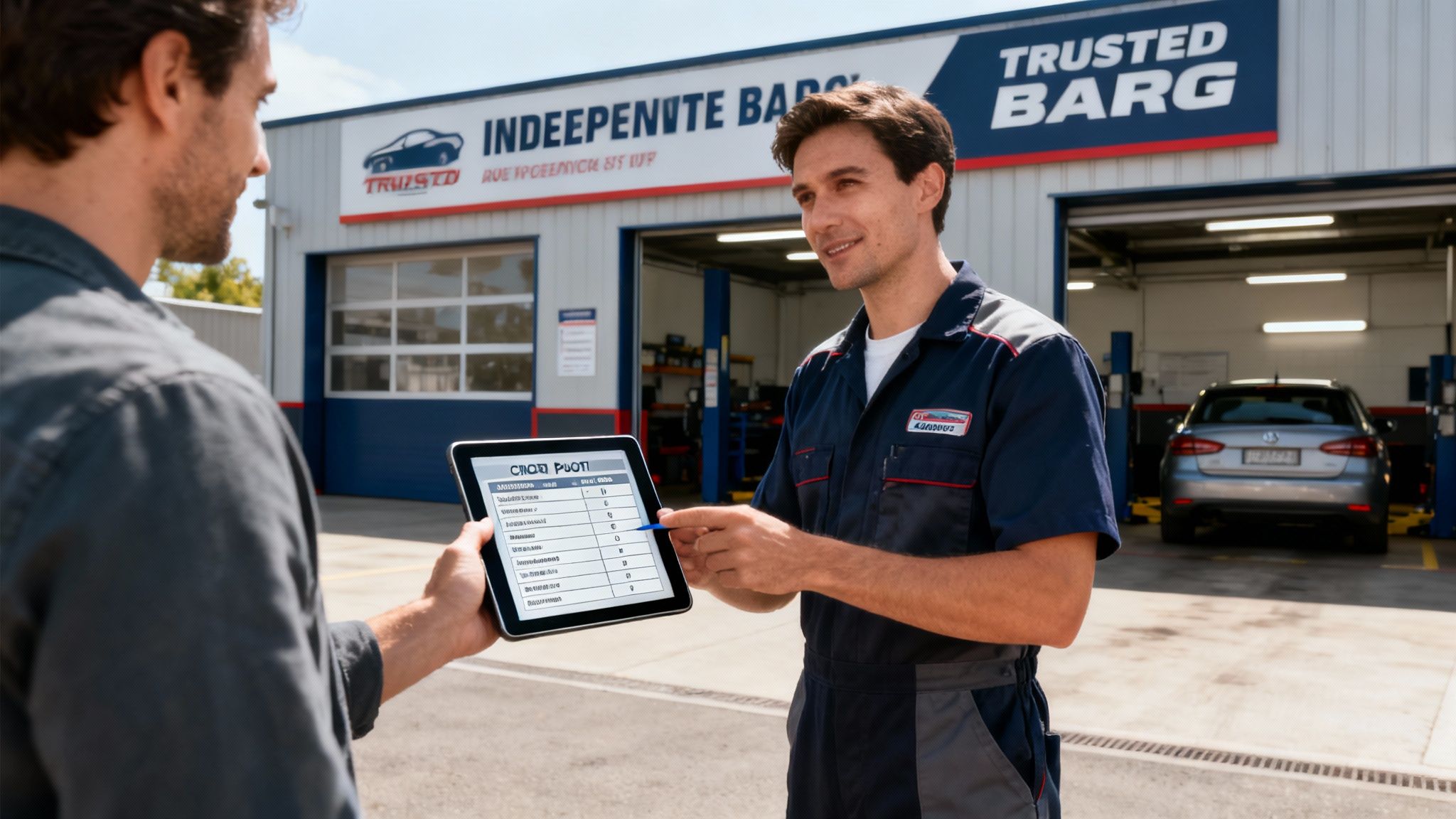
A head gasket replacement is serious engine surgery. It's an intricate job, and you absolutely need to know it’s being handled by someone with experience. Let’s be honest, the quality of the repair is just as critical as the price, because a botched job can lead to catastrophic engine failure down the road. Finding the right specialist isn't just a preference; it's essential for your peace of mind and your wallet.
We’ve all been there. The old-school method of finding a garage means spending hours on the phone, trying to explain a complex problem to different people, and getting vague quotes in return. It’s stressful, inefficient, and often leaves you wondering if you're actually getting a fair price. Thankfully, there’s a much better way.
Streamline Your Search for a Specialist
Instead of blindly phoning around, you can use a dedicated platform to connect you with a whole network of vetted, professional workshops right in your local area. This is exactly where a service like AutoProv becomes an indispensable tool.
We make it simple to get multiple, transparent quotes so you can easily compare what different garages are charging for the head gasket repair cost UK-wide. This takes all the guesswork and pressure out of the equation, letting you make a decision based on clear, solid information—not a rushed phone call.
By comparing several quotes from pre-screened garages, you not only get a better sense of the fair market price for the job but also gain the confidence that you're choosing a workshop that values transparency and quality.
What’s more, you can read genuine, verified reviews from other car owners. This gives you unfiltered insight into the quality of a garage's work and how they treat their customers. It allows you to find a specialist you can genuinely trust, someone with proven experience in handling these complex engine repairs.
With AutoProv, you can navigate the whole process with confidence. From getting an accurate diagnosis to finding a fair price for a top-quality repair, you have all the information you need to choose the best possible service for your car, ensuring the job is done right the first time.
Smart Ways to Manage Your Repair Budget
Seeing a high quote for a head gasket repair can feel like a gut punch, but there are definitely practical ways to get a handle on the expense. While it’s never going to be a cheap job, getting on the front foot can seriously trim the final bill and stop the head gasket repair cost UK drivers dread from spiralling.
Your most powerful tool, right from the start, is comparison. Never, ever accept the first quote that comes your way.
Take the time to gather at least three different estimates from a mix of local garages. This simple step alone gives you a realistic snapshot of the fair market rate for the job in your area. It’s the best defence against accidentally overpaying.
Independent Specialists vs Main Dealers
One of the biggest savings often comes down to where you get the work done. Main dealers typically have huge overheads—think shiny showrooms and large staff teams—which almost always means higher labour rates.
On the other hand, a good independent specialist can offer the same level of expertise (and sometimes, even better) but at a much more competitive price. Their business lives and dies by its local reputation, so you can bet that quality work is their top priority.
Another key conversation to have with your mechanic is about the parts they plan to use. Ask them to explain the difference between Original Equipment Manufacturer (OEM) parts and high-quality aftermarket alternatives. OEM parts are identical to what the car left the factory with, and they carry the highest price tag. A quality aftermarket part, however, can perform just as well for a fraction of the cost, offering a serious saving without cutting corners on reliability.
The single most effective way to save money on a head gasket repair is to act on the very first sign of trouble. Delaying the repair allows minor damage to cascade into major engine failure, turning a manageable expense into one that could write off the car.
OEM vs Aftermarket Parts
Your choice of parts will make a direct and noticeable impact on the final invoice. This becomes especially important when you realise the head gasket repair cost UK varies so much based on the car's badge.
For instance, premium brands naturally come with higher repair bills. A BMW head gasket replacement averages around £781, while a Mercedes is closer to £837. Compare that to more common makes like Renault and Vauxhall, which are nearer the £610-£640 mark. Choosing good aftermarket parts for these vehicles can bring that figure down even further. You can see more on how these costs are calculated over at the RAC.
Ultimately, deciding whether to go ahead with a big repair like this is tied to your car's overall value. Pouring a grand into a car that's only worth a couple of thousand might not make sense. To get a better grip on this, check out our guide on how to calculate vehicle depreciation. This knowledge is crucial for helping you decide if the investment is financially sound.
Head Gasket Repair: Your Questions Answered
When you're staring down the barrel of a head gasket repair, a million questions probably spring to mind. It’s a big job, and you need clear answers. We’ve pulled together some of the most common queries from UK drivers to help you navigate this tricky situation.
Is It Worth Repairing a Head Gasket on an Old Car?
This is the classic head-versus-heart decision, isn't it? The best rule of thumb is a simple one: if the repair bill is more than 50% of your car's current market value, it’s probably time to say goodbye. Spending £1,200 to fix a car that’s only worth £2,000 just doesn't add up financially for most people.
But money isn't everything. If your car is otherwise mechanically sound or holds a special place in your heart, a top-notch repair could easily give you several more years of happy motoring.
How Long Does a Head Gasket Repair Take?
Don't expect to have your car back in a few hours. This is a complex, labour-intensive job that requires patience and precision. For a standard four-cylinder engine, a good mechanic will likely need 8 to 15 hours to do the job properly.
If you've got a more complicated V6 or V8 engine, or if the cylinder head needs to be sent to a machine shop for skimming, your car could be off the road for several days. Always get a clear timeline from the garage when they give you a quote.
It's crucial to understand that this isn't a rush job. Precision is key. A carefully executed repair ensures the new gasket seals perfectly, preventing a repeat failure down the line and protecting your investment.
Can I Drive My Car With a Blown Head Gasket?
Please, don't. Driving even a short distance with a suspected blown head gasket is one of the worst things you can do. It's the fastest way to turn a very expensive repair into an impossible one.
When you keep driving, coolant and oil are free to mix and get into places they should never be, causing devastating damage to the engine's internals. This can lead to warped cylinders or a completely seized engine, which basically writes the car off for good. If you think your head gasket has failed, pull over as soon as it's safe and call for a tow to a trusted garage.
Frequently Asked Questions
AI-Generated Content Notice
This article was created with the assistance of artificial intelligence technology. While we strive for accuracy, the information provided should be considered for general informational purposes only and should not be relied upon as professional automotive, legal, or financial advice. We recommend verifying any information with qualified professionals or official sources before making important decisions. AutoProv accepts no liability for any consequences resulting from the use of this information.
From our AI insights
- The Importance of Tyre Verification for UK Motor Traders
Discover why verifying tyre specs is crucial for UK traders to ensure safety and compliance.
- Decoding CO2 Emissions: A Trader's Guide
Learn how traders can verify CO2 data using factory build sheets to prevent disputes.
- Navigating Recall Compliance for UK Car Traders
Ensure compliance with recall regulations: essential steps for UK car traders.
Related Articles

The Importance of Car Maintenance and Provenance Checks
Discover why regular car maintenance and proper provenance checks are essential for vehicle quality and longevity.
Essential Car Maintenance Tips for UK Drivers
Discover vital car maintenance tips to keep your vehicle roadworthy and compliant in the UK.
How Much Is a Car Service? Complete UK Price Guide
Trying to pin down exactly "how much is a car service?" can feel a bit like asking "how long is a piece of string?". Prices vary quite a bit, but to give you a ballpark figure, an interim service will usually set you back around £100 to get started. A more thorough full service often begins at £180, while a major service for many cars can easily top £300.
Published by AutoProv
Your trusted source for vehicle intelligence