A standard MOT is usually booked into a 45 to 60-minute slot, but that's just the time your vehicle is actually being inspected on the ramp. In reality, your total time at the garage will almost certainly be longer once you factor in the check-in process, paperwork, and any potential queues.
A standard MOT is usually booked into a 45 to 60-minute slot, but that's just the time your vehicle is actually being inspected on the ramp. In reality, your total time at the garage will almost certainly be longer once you factor in the check-in process, paperwork, and any potential queues.
Understanding the MOT Test Timeline
It’s helpful to think of it like a doctor's appointment. The check-up itself is relatively quick, but the entire visit—from the moment you walk in to when you leave—takes more time. While the official test has a set duration, the total time you're without your car is shaped by several real-world factors.
The Driver and Vehicle Standards Agency (DVSA) provides the framework for how long the inspection should take, but those guidelines don't account for the garage's day-to-day schedule. If the technician is just finishing up another job or has run into an unexpected problem, a small delay can easily happen before your car even gets looked at.
From Booking to Keys in Hand
The whole MOT process is more than just the physical inspection. Here’s a quick breakdown of what makes up your total wait time:
- Vehicle Check-In: This is the first step, where you hand over your keys and sort out any necessary paperwork with the front desk.
- Workshop Queue: It's common for your vehicle to wait its turn behind others already scheduled for the day.
- The Official Test: This is the core inspection, where the mechanic meticulously follows the DVSA's checklist.
- Paperwork and Certification: Once the test is done, the results have to be logged on the official system and the new certificate printed off.
On average, the test alone typically takes between 45 and 90 minutes, provided no major issues pop up.
Realising the difference between the 'test time' and your 'total waiting time' helps set realistic expectations. It’s a key part of navigating the broader world of UK automotive regulations.
What Happens During the Inspection
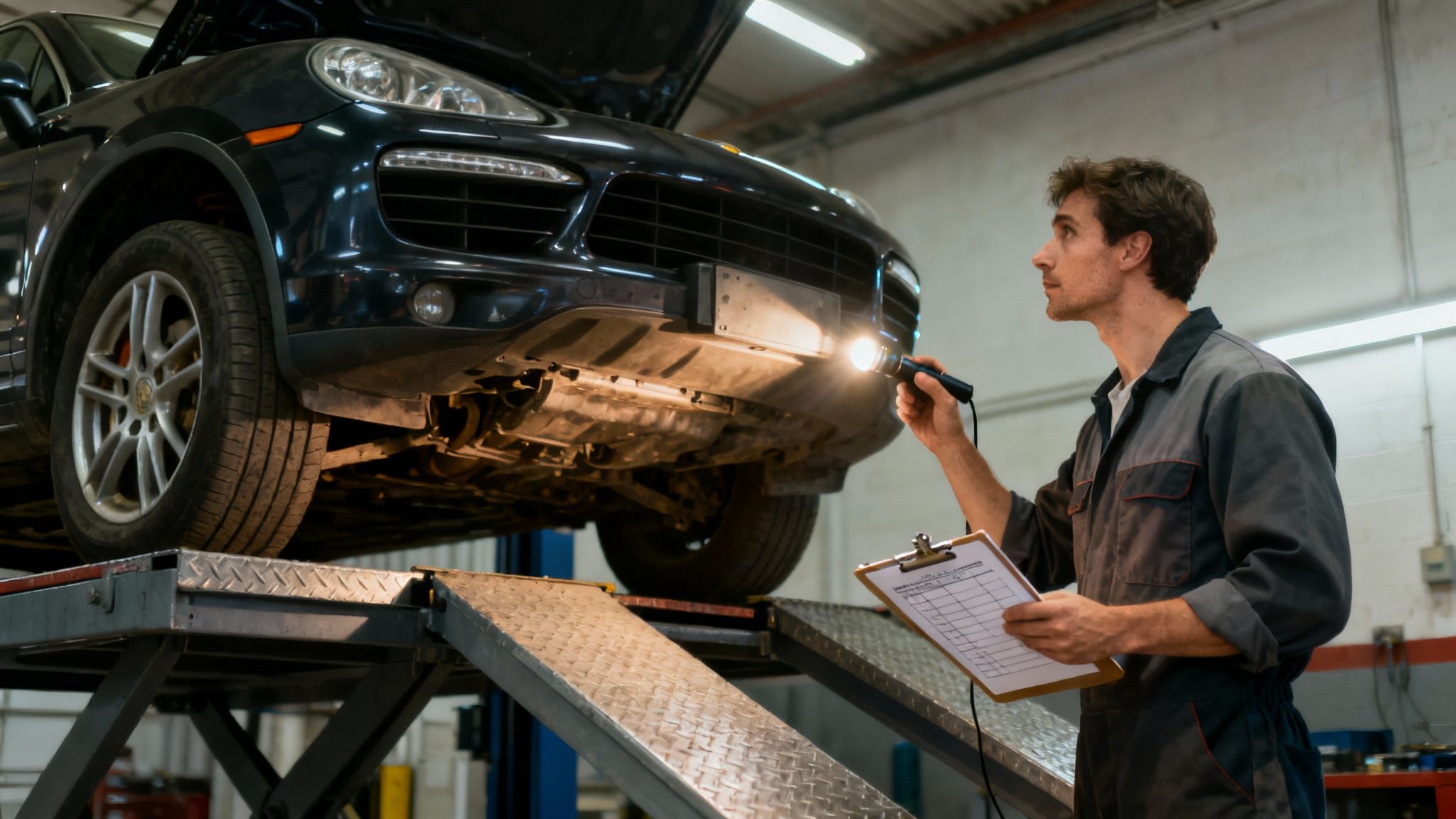
To really get why an MOT can't be rushed, it helps to understand what the tester is actually doing. This is far from a quick look under the bonnet; it's a deep dive, a systematic inspection guided by a strict DVSA checklist. Every single step is there for a reason: road safety.
The process is incredibly methodical. The technician works their way through the vehicle from top to bottom, checking everything from the beam pattern on your headlights to the condition of your windscreen wipers. Then they move on to the less obvious but equally vital parts.
Key Areas of Inspection
The inspection is broken down into categories to make sure nothing gets missed. Some of the biggest areas they focus on include:
- Brakes: The efficiency and balance are tested on a roller brake tester. It’s a precise measurement to ensure they meet the minimum safety standards.
- Tyres and Wheels: It’s not just about tread depth. They’re meticulously checking the tyre’s condition, security, and pressure.
- Suspension and Steering: Every component is checked over for excessive wear or damage that could compromise your control of the car.
- Lights and Signals: Every single light, from the main headlamps right down to the number plate lights, has to work perfectly.
- Exhaust and Emissions: They check the system for security and leaks, while the emissions are measured to ensure they’re within the legal limits.
Understanding this process demystifies the whole thing. It shows you exactly why that 45-60 minute timeframe is essential for a proper job and highlights the common failure points you can look at beforehand. For a deeper dive, our ultimate used car inspection checklist is a great resource.
One of the smartest ways to prepare is to know your car’s history. Using a service like AutoProv.ai to check past MOT records can flag recurring advisories, giving you a massive heads-up on areas needing a bit of extra attention. It’s the best way to avoid any nasty surprises on the day.
Common Factors That Extend Your MOT Time
The advertised 45 to 60-minute MOT is what happens in a perfect world. But back in reality, a few common hiccups can easily turn a quick visit into a much longer affair. It pays to know what these are so you can plan your day properly, because it's rarely just about the hour the car is up on the ramp.
The biggest time-sink, by a country mile, is a test failure. It’s the one thing everyone dreads. If the tester finds a 'dangerous' or 'major' fault, that's it – your car is legally off the road. You can't just drive it away. Instantly, your one-hour appointment stretches into hours, or even days, while you figure out repairs.
Beyond the Test Bay
Even if your car sails through with no problems, you're still at the mercy of the garage's schedule. The logistics of a busy workshop can add more waiting time than you'd think.
- Workshop Workload: A popular garage is a busy one. Even with an appointment, your car might have to join a queue before it even sees the inside of the test bay.
- Unexpected Delays: The car in front of you might have a complicated failure, creating a domino effect that pushes every other appointment back. It's a classic bottleneck.
- Staffing Levels: Garages are just like any other business. If they're short-staffed on the day, everything slows down, from the front desk to the technicians on the floor.
These are the kinds of things you have no control over, but they're part and parcel of how a real-world test centre operates.
The Impact of Repairs
If you do get the bad news that your car has failed, the MOT itself is over, but your timeline is now all about the repairs. The biggest wildcard here is getting the right parts. Common bits like new bulbs or wiper blades are usually sitting on a shelf. But something more specific, like an exhaust sensor for an older model? That'll likely need ordering in.
This is where a simple MOT can get really drawn out. The wait for parts can add anything from a couple of hours to a few days to the whole process. The question quickly changes from "how long does an MOT take?" to "how long until the part arrives?".
Your best weapon against these kinds of delays is just good, old-fashioned maintenance. Keeping on top of your car's health means you can spot and fix little issues before they become a big MOT problem. Getting familiar with some essential car maintenance tips for UK drivers can honestly make all the difference. At the end of the day, a well-looked-after car is far more likely to pass the first time, saving you a world of time, money, and stress.
Navigating MOT Failures and Retests
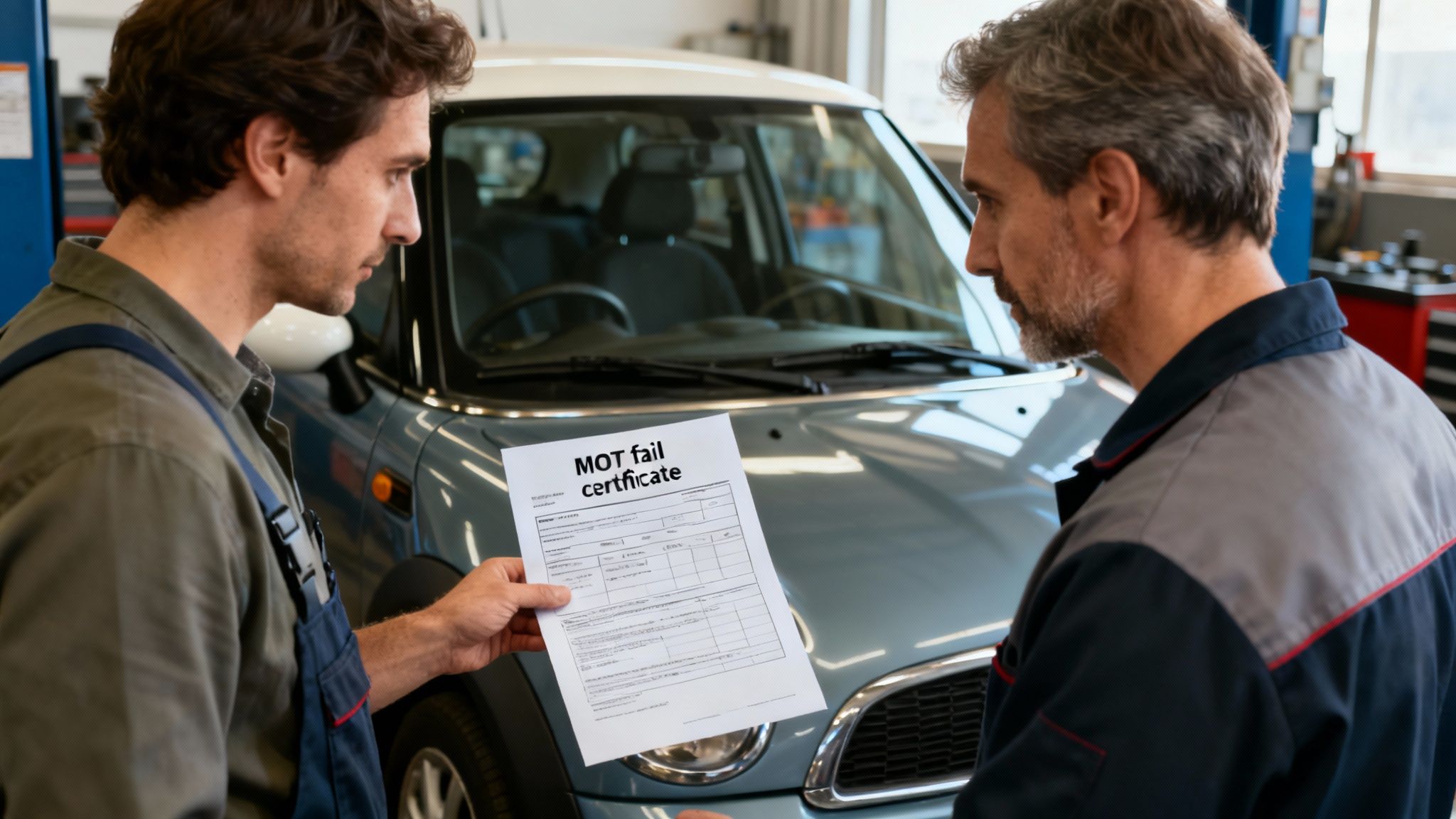
Seeing that VT30 ‘fail’ certificate can feel like a punch to the gut, but it's a pretty standard part of owning a car in the UK. The real question isn't just if it fails, but what happens next. This is where the simple answer to "how long does an MOT take?" can get a whole lot more complicated.
MOT failures are split into two camps: 'major' and 'dangerous' faults. A major fault means you need to get the car fixed before it can pass, but you might be able to drive it to a pre-booked garage for the repairs if your old MOT is still valid. A dangerous fault, on the other hand, is a complete showstopper. The car is legally unroadworthy and can't be driven at all.
That distinction is everything, as it completely dictates what you can do immediately after the test and how long your car will be out of action.
Understanding Retest Rules
When your vehicle fails, you've got a couple of options, and the path you choose will directly affect your schedule and wallet. The smoothest route is usually leaving the car with the testing station to handle the repairs.
- Partial Retest: If you get the repairs done at the original garage within 10 working days, you're in for a partial retest. This is often free or heavily discounted and just checks the specific things that failed the first time. It's by far the quickest way to get a pass certificate and get back on the road.
- Full Retest: If you take the car somewhere else for repairs but bring it back to the original test centre inside that 10-day window, you'll probably pay a reduced fee for the retest. But, if you go to a totally different garage for the retest or go over the 10-day limit, you're back to square one. You'll need a brand new, full MOT at the standard price.
The biggest delay after an MOT fail usually isn't the retest itself. It's the waiting game for the repairs. If a specific part needs ordering, that can add hours or even days to the job, turning a 45-minute test into a multi-day headache.
Getting a grip on potential repair costs is crucial for managing the situation. To get a better idea of what you might be in for, take a look at our complete UK guide to car service prices. Making a smart choice here can save you a significant amount of time and money, ensuring your car is off the road for the shortest time possible.
How to Prepare for a Faster MOT
If you want to get in and out of the garage quickly, the single best thing you can do is aim for a first-time pass. A few simple, proactive checks can slash the odds of a failure, saving you from the headache of unexpected repairs and re-tests.
Honestly, spending just 10-15 minutes before your appointment can catch the most common failure points. You don't need to be a mechanic; this is just about spotting the obvious things that testers are legally required to check.
Your Pre-MOT Checklist
Before you head to the garage, give your car a quick once-over. These checks cover some of the most frequent reasons for an MOT fail and give you the best shot at a clean sheet.
- All Lights and Indicators: Get a friend to help you check every single exterior light. That means headlights (both dipped and main beam), brake lights, indicators, reversing lights, and—the one everyone forgets—the number plate lamps.
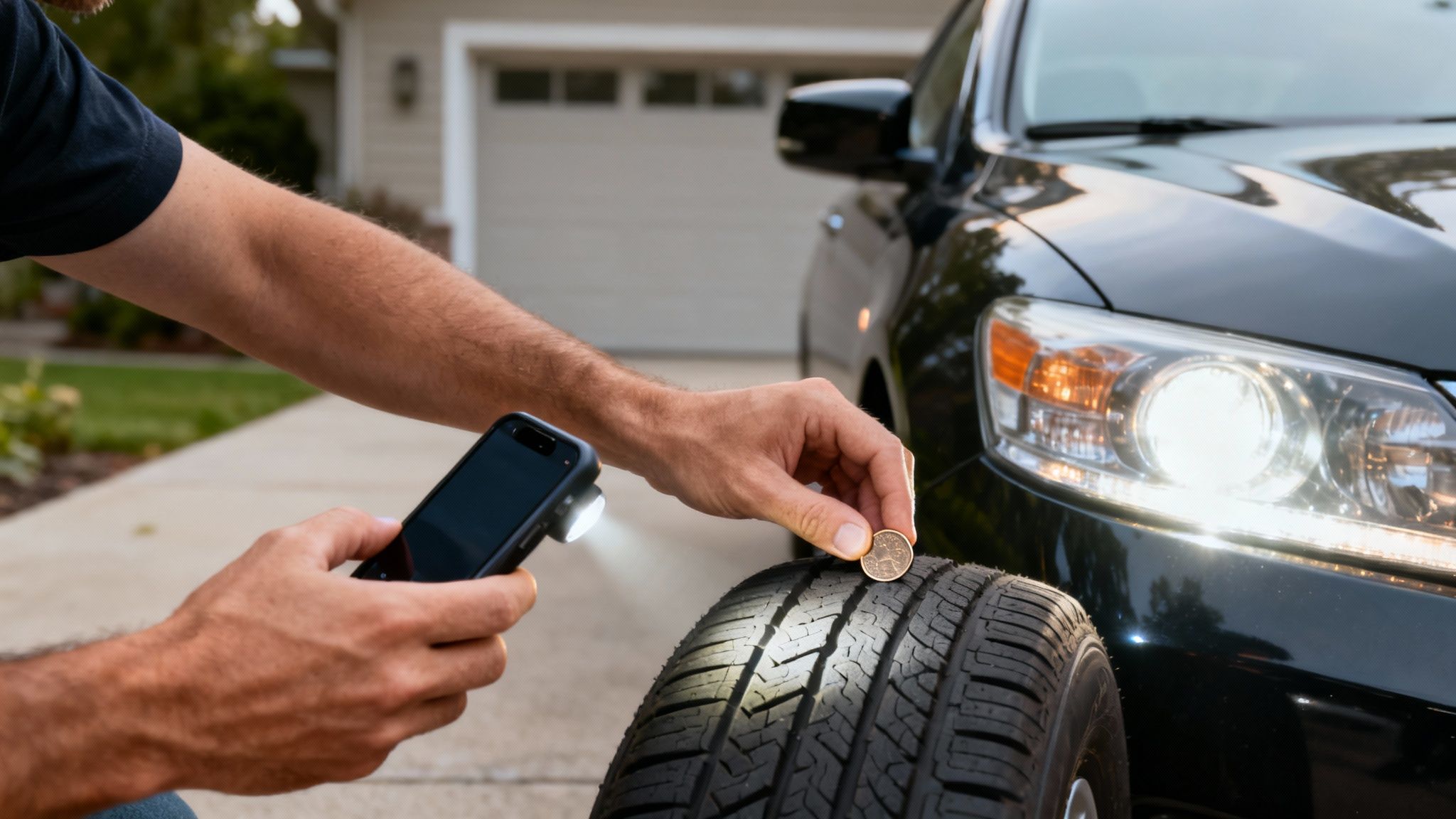
- Tyres and Wheels: Make sure your tyre pressures are correct. Give the tread depth a quick look, too. A 20p coin is a great tool for this. Pop it into the main tread grooves; if you can see the outer band of the coin, your tread is likely getting too low.
- Windscreen and Wipers: Top up your screen wash bottle. Check your wiper blades for any splits or tears that stop them from clearing the screen properly.
But the most powerful tool you have is a bit of foresight. Digging into your vehicle’s past gives you invaluable clues about where it might trip up.
Using a tool like AutoProv.ai to review your car’s MOT history lets you spot recurring advisory items or previous failures. Fixing these known issues before the test is the smartest way to guarantee a pass.
This isn't just hoping for the best; it's actively getting ahead of potential problems. For anyone in the motor trade, knowing a vehicle's full background is second nature. You can learn more about how to check service history in the UK to get the complete picture. A clean pass simply means less time wasted and getting the car back on the road faster.
Got More Questions About MOT Times?
So, you're still a bit unsure about how long you'll be without your car for its MOT? No problem. Let's tackle some of the most common questions head-on to help you plan your day better.
Can an MOT Really Be Done in Under 45 Minutes?
You might see garages advertising lightning-fast MOTs, but be very cautious of any promise to get it done in less than 45 minutes. A proper, thorough inspection that actually follows the official DVSA guidelines just takes time.
Rushing the job means critical safety issues could easily be missed. That not only puts you at risk on the road but could also lead to a much bigger, more expensive failure down the line. It's just not worth the risk.
How Much Longer Does an MOT with a Service Take?
Combining your MOT with a service is a smart way to get all your yearly maintenance done in one go, but it will naturally mean your car is off the road for longer. A basic interim service will usually add at least another hour to the job.
If you've booked your car in for a full service, you should probably expect that to add two to three hours, or even more, on top of the MOT time. The best thing to do is always ask the garage for a total time estimate when you book.
Does a Car's Age Affect the Test Time?
Officially, the test itself is standardised, so it should take the same amount of time no matter the car's age. But in the real world, it’s a bit different. An older vehicle often needs a closer look at components that see a lot of wear and tear, like suspension bushes, bearings, and any signs of chassis corrosion.
This more detailed check means the inspection is far more likely to run for the full 60 minutes. Plus, let's be honest, older cars are just statistically more likely to fail on something, and it's the repairs that really add to your waiting time. Getting ahead of this by running a check with a tool like AutoProv.ai can be a huge help, as it flags past advisories on older cars, giving you a clear heads-up on potential problem areas.
Frequently Asked Questions
AI-Generated Content Notice
This article was created with the assistance of artificial intelligence technology. While we strive for accuracy, the information provided should be considered for general informational purposes only and should not be relied upon as professional automotive, legal, or financial advice. We recommend verifying any information with qualified professionals or official sources before making important decisions. AutoProv accepts no liability for any consequences resulting from the use of this information.
From our AI insights
- Digital Service Records: The Future of Vehicle Maintenance
Discover why UK motor traders trust digital service records for accurate vehicle history verification.
- The Impact of EV Service Records on Resale Value
Discover how electric vehicle service records affect resale value and buyer confidence in the UK market.
- The Importance of Tyre Verification for UK Motor Traders
Discover why verifying tyre specs is crucial for UK traders to ensure safety and compliance.
Related Articles

The Importance of Car Maintenance and Provenance Checks
Discover why regular car maintenance and proper provenance checks are essential for vehicle quality and longevity.
Essential Car Maintenance Tips for UK Drivers
Discover vital car maintenance tips to keep your vehicle roadworthy and compliant in the UK.
How Much Is a Car Service? Complete UK Price Guide
Trying to pin down exactly "how much is a car service?" can feel a bit like asking "how long is a piece of string?". Prices vary quite a bit, but to give you a ballpark figure, an interim service will usually set you back around £100 to get started. A more thorough full service often begins at £180, while a major service for many cars can easily top £300.
Published by AutoProv
Your trusted source for vehicle intelligence