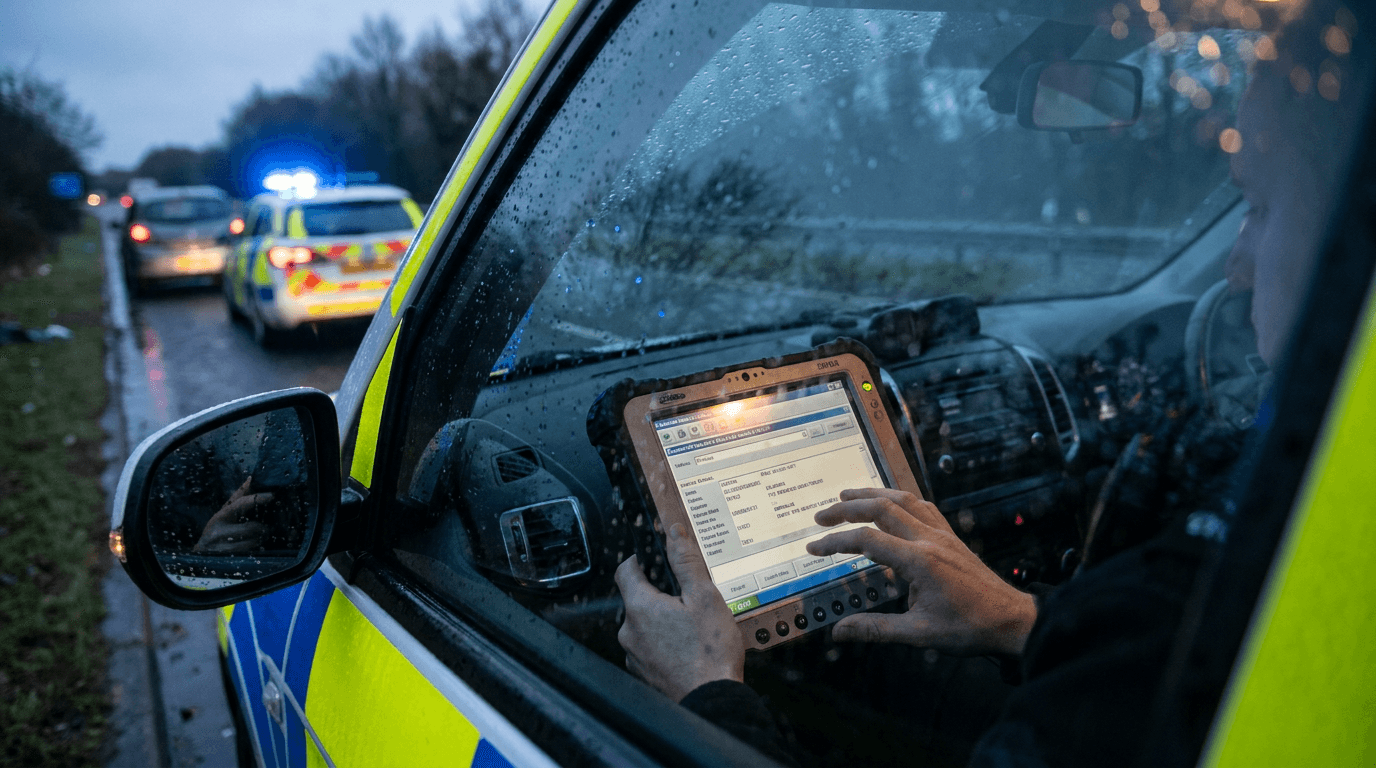
How stolen vehicle checks work in the UK motor trade. Understand the Police National Database, DVLA markers, and what trade checks actually reveal.
By CiteFlow
How the UK Stolen Vehicle Database Actually Works
The Police National Database (PND) holds records of vehicles reported stolen to UK police forces, and professional vehicle checks query this database alongside the DVLA stolen marker system to identify theft risks. When a vehicle is reported stolen, the registered keeper reports it to their police force, which creates a PND record and triggers a DVLA marker that flags the vehicle registration. Trade checks access this data through licensed channels, typically via insurance industry databases that aggregate police reports, DVLA markers, and insurance theft claims into a single searchable record.
The system relies on accurate reporting and timely database updates. A vehicle reported stolen in Manchester appears on the PND within hours, but the DVLA marker may take 24-48 hours to propagate through all systems. Insurance databases add another layer, cross-referencing theft claims against police reports to identify discrepancies. This multi-source approach catches most stolen vehicles, but gaps exist when owners fail to report theft promptly or when vehicles are stolen and quickly moved through complex re-identification schemes.
What Gets Recorded When a Vehicle Is Reported Stolen
Police forces record specific details when processing a theft report: the VIN, registration number, make, model, colour, and any distinguishing features. The reporting officer enters this data into the PND, which becomes the authoritative source for stolen vehicle queries across all UK forces. The DVLA receives notification and applies a stolen marker to the vehicle record, preventing re-registration or transfer of ownership through official channels.
Insurance companies receive theft claims separately and maintain their own databases. When a claim is paid, the insurer takes legal ownership of the vehicle and records it as a total loss theft. This creates a second verification layer because a vehicle might appear on insurance databases before police records are fully updated, or vice versa. Professional vehicle checks combine multiple data sources to catch these timing gaps.
The detail matters for trade buyers. A PND record includes the exact date and location of the theft report, the reporting force, and whether the vehicle has been recovered. Recovery status is critical because some vehicles are found within days, the marker is removed, and the vehicle returns to legitimate circulation. Others remain on the database indefinitely, creating permanent red flags for any future buyer.
How Trade Checks Access Stolen Vehicle Data
Motor trade professionals access stolen vehicle data through licensed check providers who maintain direct feeds from the PND, DVLA, and major insurance databases. These providers pay licensing fees to access official data and must comply with data protection regulations governing how that information is used and displayed. When you run a check, the system queries multiple databases simultaneously and aggregates the results into a single report.
The query process is near-instantaneous for most vehicles. The check provider sends the VIN and registration to each database, receives responses within seconds, and compiles the results. A clean result means no current stolen markers exist across any queried database. A positive match triggers detailed reporting showing which database flagged the vehicle, when the theft was reported, and what status the record currently holds.
Not all check providers access the same data sources. Consumer-facing services might query only insurance databases or rely on historical data that updates weekly rather than daily. Professional trade checks maintain direct PND access and real-time DVLA feeds, reducing the window where a recently stolen vehicle might slip through. This is why understanding what data sources power your checks directly affects your risk exposure.
The Difference Between Stolen and Stolen Recovered Status
A vehicle marked as stolen remains on the database until the police confirm recovery and remove the marker. This process is not automatic. When police recover a stolen vehicle, the recovering force updates the PND record to show recovery date and location, but the marker persists until the registered keeper confirms they have the vehicle back and the insurance claim (if filed) is resolved.
Stolen recovered vehicles create complexity for trade buyers. The vehicle was legitimately stolen, appeared on databases, was recovered, and should now be clean. But if the insurance company paid out the claim before recovery, they own the vehicle and it becomes a salvage category write-off. The stolen marker gets removed, but a write-off marker replaces it. The vehicle might be legally sold through salvage channels, repaired, and re-enter the market with a Category S or Category N marker instead of a theft flag.
Some recovered vehicles never get their markers removed because the registered keeper never collected the vehicle or the police never closed the case administratively. These orphaned records create false positives where a vehicle that was stolen five years ago, recovered within a week, and has changed hands three times since still shows a stolen marker. This is rare but happens often enough that professional traders verify marker dates and contact the check provider for clarification before walking away from otherwise clean stock.
Why Stolen Markers Sometimes Appear After You Buy
The most dangerous scenario for traders is buying a vehicle that appears clean, only to have a stolen marker appear days or weeks later. This happens through several mechanisms, all related to database timing and reporting delays. A vehicle stolen on Friday evening might not be reported to police until Monday morning. The owner might try to locate it themselves first, delaying the official report by several days. During that window, the vehicle appears completely clean on all databases.
International theft complicates this further. A vehicle stolen in the UK and immediately moved to Ireland or continental Europe might not trigger database updates for weeks. By the time Interpol records synchronise and the vehicle is flagged for export, it could have changed hands twice. Equally, a vehicle imported from Europe with a clean UK check might have been stolen in Germany or France, with that data not yet shared through international databases.
Insurance fraud creates another timing gap. A keeper reports a vehicle stolen, files an insurance claim, and the insurer pays out. Weeks later, the vehicle is 'found' by a friend or family member who bought it cheaply from the keeper before the theft report. The insurance company investigates, identifies the fraud, and updates their database to show the vehicle was never legitimately stolen. But during the investigation period, the vehicle carries a stolen marker that affects any innocent buyer who acquired it in good faith.
This is why comprehensive vehicle checks before buying must include indemnity protection. If a stolen marker appears after purchase and you bought based on a clean check, the indemnity covers your financial loss up to the policy limit.
What Happens When You Unknowingly Buy a Stolen Vehicle
Buying a stolen vehicle, even in good faith, does not give you legal ownership. The original owner retains title, and police can seize the vehicle at any time once the theft is discovered. As a trader, you lose both the vehicle and the money you paid for it, with your only recourse being a claim against the seller (who is often untraceable) or your check provider's indemnity policy.
The police recovery process is straightforward but financially painful. Once a stolen vehicle is identified, police seize it and return it to the registered keeper or their insurance company if a claim was paid. You receive no compensation from the police or the original owner. Your purchase contract with the seller is void because the seller had no legal right to sell the vehicle. If you sold the vehicle to a retail customer before the theft was discovered, you face additional liability under the Consumer Rights Act 2015 because you sold goods you did not own.
Indemnity protection through professional check providers offers the only practical financial safety net. Policies typically cover the purchase price up to £50,000 if a stolen marker appears after you bought based on a clean check. The indemnity requires proof you ran a check before purchase, paid market value, and had no reason to suspect the vehicle was stolen. This is why understanding what Experian indemnity actually covers is essential before relying on it as your primary protection.
Red Flags That Suggest a Vehicle Might Be Stolen
Professional traders develop instincts for stolen vehicles beyond what databases reveal. Mismatched VIN plates, where the dashboard VIN looks newer than the vehicle or uses different rivet types than factory standard, suggest re-identification. Paint overspray on VIN plates or around the windscreen base where the VIN is visible indicates someone has worked in that area recently. Legitimate repairs do not require removing or painting over VIN plates.
Documentation gaps create suspicion. A seller with no V5C logbook, claiming it is 'in the post' from DVLA, might be stalling because they cannot produce the document. A V5C that looks new but the vehicle is several years old could be a duplicate issued to replace a 'lost' original, which is a common tactic for stolen vehicles being re-introduced to the market. Service history that stops abruptly or shows a gap of several years followed by recent activity might indicate the vehicle was off-road (stolen) during that period.
Key and lock condition tells a story. A vehicle with ignition damage, replaced lock barrels, or aftermarket keys when the seller claims to have 'both original keys' suggests forced entry at some point. Modern vehicles with keyless entry that suddenly have traditional keys, or high-spec models with only one key when they should have two, raise questions about how the current keeper acquired the vehicle.
Price is the clearest signal. A vehicle offered significantly below market value with a plausible-sounding reason ('divorce sale', 'emigrating urgently', 'company car I need gone') might be legitimate, but it might also be stolen. Criminals price stolen vehicles to move them quickly before database markers appear. When the deal looks too good and the seller is unusually eager to complete without negotiation, run comprehensive checks and verify every document before committing.
How Cloning Affects Stolen Vehicle Checks
Vehicle cloning, where a stolen vehicle is given the identity of a legitimate vehicle of the same make, model, and colour, defeats database checks because the VIN and registration being checked are genuine. The cloned vehicle appears clean on all databases because the identity it is using belongs to a real, non-stolen vehicle. The legitimate vehicle owner has no idea their identity is being used on a stolen car until they receive speeding tickets, parking fines, or worse, a police visit about crimes committed using their registration.
Professional checks cannot detect cloning through database queries alone because the data being checked is technically correct. The VIN on the cloned vehicle matches the VIN in the DVLA database, the MOT history matches, and no stolen markers exist because the real vehicle is not stolen. Detection requires physical verification: checking that the VIN plate matches factory specifications, that the paint code matches the colour, that the build date aligns with registration date, and that the specification matches what the vehicle build sheet says should be fitted.
Cloning is most common with high-value vehicles where the profit justifies the effort. A stolen Range Rover or Mercedes is given the identity of a legitimately registered identical vehicle, often one that was written off and scrapped but whose identity was preserved before the DVLA was notified. The cloned vehicle is sold through apparently legitimate channels, complete with a valid MOT (because the cloned identity has one) and a V5C that matches the VIN (because criminals have become sophisticated at producing convincing forgeries).
The only defence is physical inspection combined with comprehensive checks. If the VIN plate looks tampered with, if the vehicle has features or options that do not match the DVLA record, if the paint code does not align with the stated colour, or if the seller cannot explain minor discrepancies, walk away. Cloned vehicles eventually get discovered, and when they do, you lose everything.
Why Multiple Database Checks Matter for Theft Verification
Relying on a single database for stolen vehicle verification creates gaps that professional criminals exploit. The PND updates when police receive theft reports, but if a vehicle is stolen and not reported immediately, it will not appear. Insurance databases update when claims are filed, but if the owner has not yet filed a claim, the vehicle appears clean. DVLA markers update when notified by police, but administrative delays can create windows where the vehicle is stolen but not yet flagged.
Professional trade checks query all three sources simultaneously and flag any discrepancies. A vehicle that appears stolen on insurance databases but clean on the PND might indicate a fraudulent insurance claim. A vehicle flagged by DVLA but not on insurance databases might be a recent theft where the claim has not yet been processed. A vehicle showing stolen on the PND but clean everywhere else might be a database error or a very recent report that has not propagated.
The timing of database updates varies by source. PND updates are near real-time once a report is filed, typically within hours. DVLA markers can take 24-48 hours to appear after police notification. Insurance databases update when claims are processed, which might be days or weeks after the theft depending on the insurer's procedures. A comprehensive check run on Monday might show different results than the same check run on Wednesday because database synchronisation is not instantaneous.
This is why professional traders run checks immediately before committing to a purchase, not days in advance. A check run on Friday when you first viewed the vehicle might be clean, but by Monday when you are ready to pay, a theft report filed over the weekend could have updated the databases. The few pounds spent on a second check before handing over money is cheap insurance against buying a vehicle that was stolen between your initial inspection and final purchase.
The Role of Finance Checks in Identifying Stolen Vehicles
Outstanding finance checks serve a dual purpose: identifying vehicles with unpaid loans and flagging potential theft through finance company records. When a vehicle is stolen and the keeper has an active finance agreement, the finance company is notified and marks the account accordingly. This creates another data point that can identify stolen vehicles, particularly when the keeper stops making payments immediately after reporting the theft.
Finance companies maintain their own databases of vehicles under agreement, and these databases include theft markers when customers report vehicles stolen. A comprehensive check that includes finance verification queries these databases and can identify theft flags even if police databases have not yet updated. This is particularly valuable for recently stolen vehicles where the keeper notified their finance company before filing a police report.
The relationship between finance and theft becomes complex when insurance is involved. A vehicle on finance is stolen, the insurance pays out the finance company directly, and the finance company closes the account and removes the outstanding finance marker. The vehicle now appears clean from a finance perspective but should still carry a stolen marker from police and insurance databases. If those markers are delayed or missing, the vehicle might appear completely clean despite being stolen and written off.
This is why professional checks must include finance verification as part of a broader due diligence process, not as a standalone check. The absence of outstanding finance does not mean the vehicle is clean; it means there is no current finance agreement. Combined with stolen checks, insurance write-off verification, and physical inspection, finance data contributes to a complete risk picture.
FAQ
How quickly do stolen vehicle markers appear on databases after a theft is reported?
Police National Database markers typically appear within hours of a theft report being filed with a UK police force. DVLA markers can take 24-48 hours to propagate after police notification. Insurance database markers appear when claims are processed, which may be several days or weeks after the initial theft report. This timing gap means a vehicle can appear clean on some databases while flagged on others, which is why professional checks query multiple sources simultaneously.
Can a stolen marker be removed if the vehicle is recovered?
Yes, stolen markers are removed when police confirm recovery and the registered keeper or insurance company (if a claim was paid) confirms they have the vehicle back. However, removal is not automatic and requires administrative action by the police force that created the marker. Some recovered vehicles retain markers indefinitely if the case is never formally closed, creating false positives that require investigation before dismissing an otherwise clean vehicle.
What protection do I have if I buy a vehicle that later shows as stolen?
You have no legal ownership of a stolen vehicle regardless of whether you bought it in good faith. Police will seize the vehicle and return it to the registered keeper or their insurance company. Your only financial protection is indemnity coverage from your vehicle check provider, which typically covers the purchase price up to £50,000 if you ran a check before buying and the stolen marker appeared after purchase. Without indemnity protection, you lose both the vehicle and your money.
Why would a vehicle show as stolen on one database but not others?
Database synchronisation is not instantaneous, and different sources update at different speeds. A vehicle might appear on the Police National Database within hours of being reported but not show on DVLA or insurance databases for days. Alternatively, an insurance fraud investigation might flag a vehicle on insurance databases while police records remain clean. International thefts create longer delays as data is shared through Interpol channels. This is why comprehensive checks query multiple databases and flag any discrepancies for investigation.
How does vehicle cloning affect stolen vehicle checks?
Cloning defeats database checks because the VIN and registration being checked belong to a legitimate, non-stolen vehicle. The stolen vehicle has been given a fake identity, so all database queries return clean results. Detection requires physical verification: checking VIN plate authenticity, confirming the specification matches official build data, and verifying that all documentation is genuine. Cloned vehicles are eventually discovered, usually when the legitimate owner receives fines or tickets for a vehicle they do not have, but by then the cloned vehicle may have changed hands multiple times.
Frequently Asked Questions
AI-Generated Content Notice
This article was created with the assistance of artificial intelligence technology. While we strive for accuracy, the information provided should be considered for general informational purposes only and should not be relied upon as professional automotive, legal, or financial advice. We recommend verifying any information with qualified professionals or official sources before making important decisions. AutoProv accepts no liability for any consequences resulting from the use of this information.
From our AI insights
- Navigating UK Grey Imports: A Trader's Guide
Understand the complexities and opportunities of UK grey imports for savvy motor traders.
- DVLA Keeper Changes: Insight for UK Motor Traders
Understand DVLA keeper change patterns to assess vehicle history and risk factors for UK motor traders.
- Navigating Private Plate Challenges in UK Vehicle Checks
Learn how private plates affect UK vehicle checks and how traders verify provenance and spot cloning risks.
Related Articles

Essential Vehicle Checks Before Buying a Used Car
Learn essential checks to ensure your used car purchase is safe and sound in the UK market.

Why a Provenance Check is Essential for Used Car Buyers
Ensure your used car is a smart investment by understanding the importance of a provenance check and how AutoProv can help.
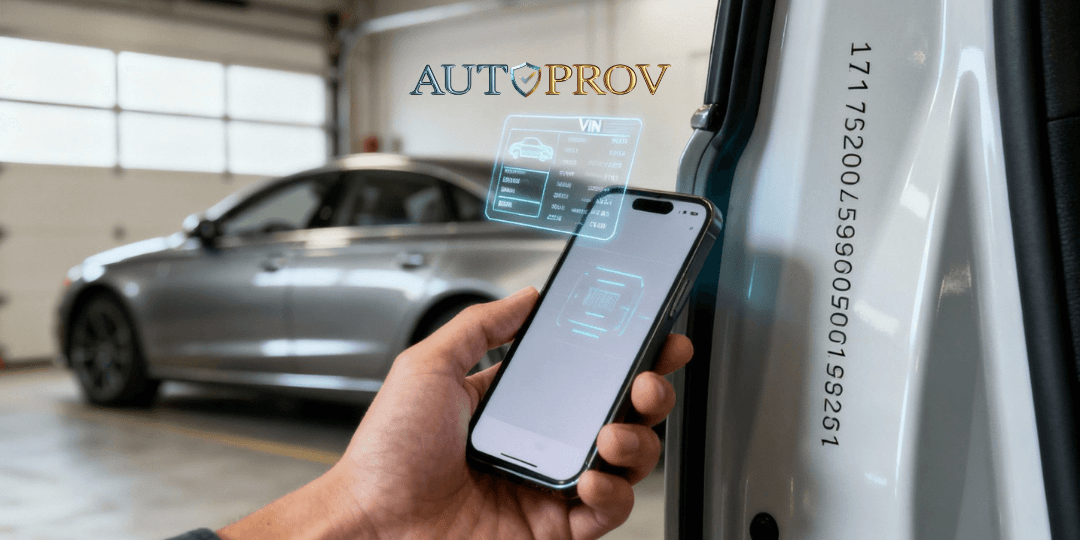
A Guide to Vehicle Check with VIN Number
A vehicle check with vin number is easily the most important thing you can do before buying a used car. Think of it as your first line of defence—a quick, simple step that pulls back the curtain on a vehicle's past, protecting you from expensive mistakes, legal headaches, and downright dangerous cars.
Published by AutoProv
Your trusted source for vehicle intelligence