Digging into a car's past often begins with the V5C logbook, but that only really tells you who the current keeper is. If you want the full story, you'll need to go through official channels, like submitting a V888 form to the DVLA, or getting your hands on a professional vehicle history report. These methods, particularly services from AutoProv, give you the comprehensive data you need without falling foul of privacy laws.
Digging into a car's past often begins with the V5C logbook, but that only really tells you who the current keeper is. If you want the full story, you'll need to go through official channels, like submitting a V888 form to the DVLA, or getting your hands on a professional vehicle history report. These methods, particularly services from AutoProv, give you the comprehensive data you need without falling foul of privacy laws.
Why Knowing a Car's History Matters
Before you even think about tracking down a car's previous owner, it’s worth pausing to understand why this is so important. This isn't just about being nosy; it’s a crucial part of making a smart, confident purchase. The ownership history tells the vehicle's real story, offering insights that a quick test drive and a look under the bonnet could never reveal.
The Story Behind the Wheel
Imagine two identical cars sitting side-by-side on a forecourt. One spent its life as a city runabout, stuck in stop-start traffic, making short journeys, and navigating tight car parks. The other belonged to a sales rep who clocked up thousands of motorway miles every year.
They might look the same on the surface, but their mechanical wear and tear will be worlds apart. The city car likely has more wear on its clutch and brakes, whereas the motorway car could have a few stone chips but a healthier engine from all those long, consistent runs.
Knowing the context of a car's life is a game-changer. It helps you assess potential risks, anticipate future maintenance needs, and ultimately determine the vehicle's true value. A transparent history is the foundation of a confident purchase.
Peace of Mind Through Provenance
A clear ownership history gives you that all-important peace of mind and protects your investment. It’s your best defence against vehicles with hidden skeletons in their closets, such as recurring mechanical faults, an undisclosed accident history, or a murky background with gaps in the service history. A car that changes hands frequently in a short space of time is a massive red flag for persistent, underlying issues.
With car ownership in the UK on a steady rise for decades, the used market is busier than ever. To put it in perspective, the number of licensed cars in Great Britain shot up from 21.2 million in 1994 to over 33.9 million by mid-2024.
This constant turnover means checking a vehicle's provenance is more critical than ever if you want to properly assess its usage and maintenance history. You can dive deeper into UK car ownership trends with data from NimbleFins.
For a complete rundown, have a look at our guide to checking used car history. Services like AutoProv are designed to build a complete picture of a vehicle's life, giving you the essential due diligence you need right from day one.
Using the Official DVLA V888 Form
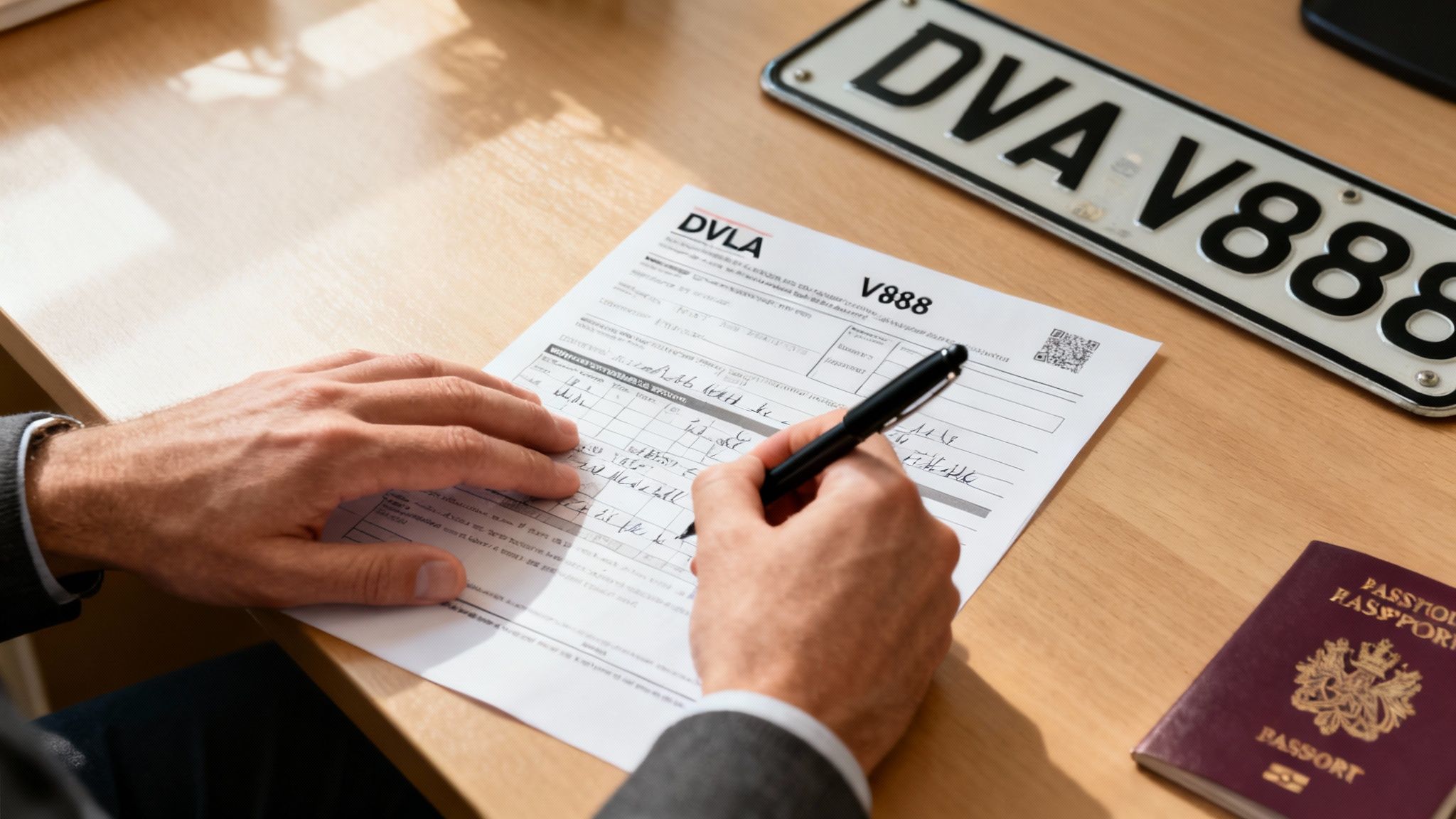
When you need to go down the official route to find a car's previous owner, your first and only stop is the Driver and Vehicle Licensing Agency (DVLA). The one legitimate way to request a former keeper's details is by filling out and sending off a V888 form. Be prepared, though—this isn't a quick search. The whole process is tightly controlled by strict data protection laws.
The absolute key to a successful V888 application is proving you have a ‘reasonable cause’ to ask for the information. This is the DVLA’s barrier to entry, making sure personal details are only handed over for genuinely valid reasons. Just wanting to know who owned your classic Mini before you isn't going to cut it.
What Counts as a Reasonable Cause?
So, what does the DVLA actually consider a good enough reason? It all comes down to showing a real, demonstrable need for the previous keeper’s details, usually for legal or safety purposes.
Practical situations where you'd likely get the green light include investigating a hit-and-run, dealing with an abandoned vehicle, challenging a dishonest seller about the car's history, or issuing parking and trespass notices.
To get the form filled out correctly, you’ll need the car's registration number, its make, and a very clear explanation of why you're asking, backed up with any evidence you can provide. There’s a small fee to pay, and it can take several weeks to get a response, so this is definitely not an instant fix.
The Limits of the Official Route
It's really important to manage your expectations here. The DVLA has to operate within the UK’s data protection framework, which exists to protect our privacy. While the registered keeper's details are meticulously recorded, getting access to them is another story.
With 33,935,937 cars licensed as of Q2 2024, there's a colossal amount of sensitive data to protect, and the DVLA takes that responsibility very seriously. You can get a deeper understanding of the history and complexities from this government evidence review on UK car ownership.
The V888 form is designed to give you one specific piece of the puzzle: the name and address of a previous keeper. It won't tell you about the car's full service history, any outstanding finance, or if it's been in an accident.
This is exactly where the official DVLA route and a professional vehicle history check work hand-in-hand. While you’re waiting for the V888 request to be processed, an instant report from a service like AutoProv can fill in all those other critical gaps, giving you a complete picture of the vehicle's past right away.
Get the Real Story Instantly with a Vehicle History Report
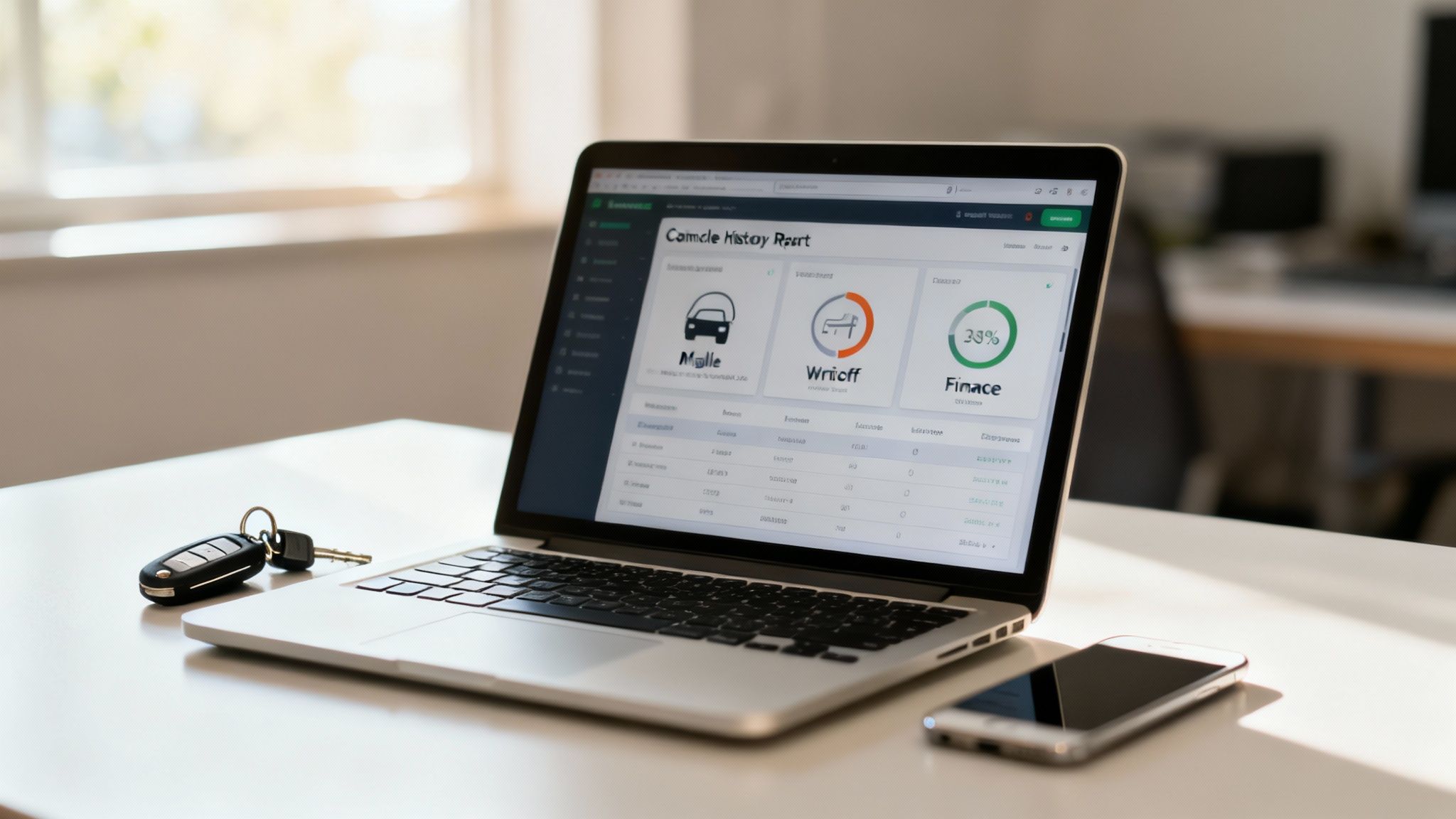
Sure, the DVLA’s V888 form is the official route for requesting a previous keeper’s details. But it’s slow, highly specific, and frankly, doesn’t give you the full picture of a car’s life. For immediate, genuinely useful information, a comprehensive online history report is the go-to tool for any savvy buyer in the motor trade today.
This is exactly where services like AutoProv come into play. They give you instant access to a massive amount of data that goes miles beyond just a name and address. Forget waiting weeks for a single piece of information—you get a full vehicle biography in your hands in seconds.
What a Premium Vehicle Check Actually Reveals
Think of a premium vehicle check from AutoProv as a full-body scan for a car. It digs deep into its past, flagging potential problems and verifying its history from every angle. While you won't get the previous owner's name, you'll discover crucial details that tell you far more about the car's true condition.
An AutoProv report pulls together essential data points that are vital for professional due diligence. You can immediately see if the car has an active finance agreement, uncover if it has ever been declared a write-off by an insurer (Categories S, N, C, or D), flag potential 'clocking' or inconsistent mileage readings, and see at a glance how many times the vehicle has changed hands. A high turnover in a short space of time is a massive red flag for hidden issues.
This data lets you piece together the car’s story. One report might show a car with only two owners over ten years, both keeping it for five years each, with a clean MOT history. That suggests a well-cared-for vehicle. Another could reveal four owners in the last two years, a failed MOT for corrosion, and a mileage reading that magically dropped between tests—all signs telling you to walk away. You can learn more about what to look for in our essential AutoTrader provenance check guide.
The Speed and Scope of Digital Reports
The biggest advantage of a digital report is the combination of speed and breadth. While the V888 process is a slow, narrow request, a service like AutoProv delivers a multi-faceted analysis in under 30 seconds.
An instant vehicle history report gives you the critical data needed to make a smart decision right there on the spot. It shifts the power in a negotiation from relying on the seller's word to being backed by hard facts.
The system for tracking vehicle ownership has come a long way since the DVLA's creation in 1965. Registration numbers have swung wildly, from a peak of over 562,000 in March 2017 to a low of just 4,321 in April 2020. These fluctuations make tracing a car's history more complex, making a consolidated digital report even more valuable for navigating these ownership changes. You can see more insights into UK car registration trends on Trading Economics.
Finding Clues Through Detective Work
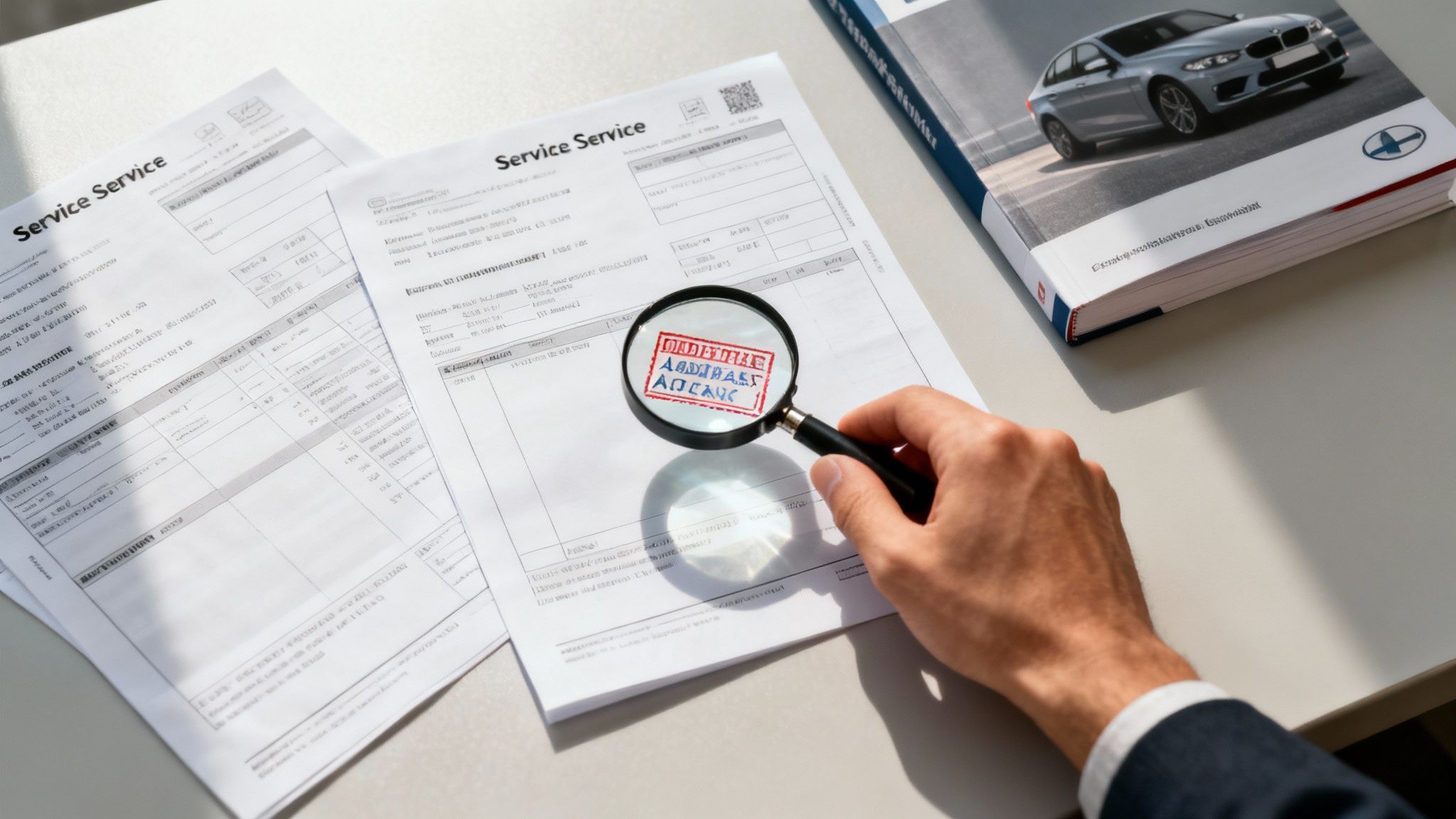
Sometimes, the official routes and digital checks still leave gaps in a car's story. While an AutoProv report gives you the hard data, a bit of old-fashioned detective work can add real colour and context. It helps you to truly understand the car you’re looking at.
This isn’t about prying into someone's life; it's about piecing together a history from the clues they left behind. And the best place to start is often the physical paperwork that comes with the car.
The service book is your first port of call, showing not just what was done, but where. A thick stack of invoices from independent garages can be even more revealing. You're looking for names and addresses, trying to build a picture that complements the data you already have.
Uncovering The Paper Trail
Beyond the main service book, dig into every single piece of paper that comes with the car. Old MOT certificates, receipts for a new set of tyres, or even invoices for minor repairs can contain some absolute gems.
You’re looking for things like garage locations, which can tell you where a car spent its life. Also, check if the car was taken to specialist workshops, suggesting an enthusiastic owner. The details of repairs can also highlight recurring issues not visible on a standard MOT history.
Think about it. A folder stuffed with receipts from a well-regarded performance tuning shop for a BMW 335i tells you a very different story than one with receipts from a budget chain. The first suggests an enthusiast owner; the second suggests someone just keeping it on the road for the school run.
By sifting through the paperwork, you can move beyond simple data points and start to understand the character of the car's past ownership. That kind of insight is invaluable when you're about to part with your cash.
Tapping into The Community
Another brilliant resource? The community built around specific makes and models. Owners' clubs and online forums are often filled with passionate people who know their cars inside and out. A vehicle with unique modifications or a rare paint colour might be instantly recognisable.
Try posting a polite query with the car's registration (and maybe a photo) on a relevant forum. You’d be surprised how often someone remembers the car from a show or recalls a previous owner discussing its history. This is especially useful for classic cars or performance models.
Finally, don't be afraid to just ask the seller. A simple, "Do you know much about the previous owner? It looks like they really looked after it," can open up a conversation. A seller who is open and willing to share what they know is always a good sign.
By combining this hands-on investigation with the hard facts from an AutoProv report, you build the most complete picture possible. For a deeper dive into the more technical side of checks, our buyer's guide to using a vehicle chassis number is also a great read.
Staying Within Legal and Ethical Boundaries
When you're digging into a car's past, it's easy to feel like you're playing detective. But this isn't a film noir – there are real-world rules you need to follow. Straying off the path doesn't just put you at risk of legal headaches; it can also lead you to make a huge financial decision based on dodgy, illegally sourced information.
The biggest hurdle you'll face is data protection. In the UK, laws like the General Data Protection Regulation (UK-GDPR) and the Data Protection Act 2018 are incredibly strict about how personal details are handled and shared. This is exactly why the DVLA won't just hand over a previous keeper's address. You need a legally sound 'reasonable cause', and trying to pull a fast one on the V888 form is a serious offence.
Common Pitfalls to Avoid
It’s surprisingly easy to make a misstep here. Buyers often fall into common traps that can completely undermine their checks and leave them holding the keys to a car with a past they know nothing about.
A classic mistake is getting tempted by those online services promising to reveal owner details for a small fee. Let's be blunt: these outfits often get their data from shady, if not outright illegal, sources. Using them means you’re not only supporting unethical practices but also relying on information that could be completely wrong. It's a massive gamble with your money.
Another pitfall is putting too much faith in the V5C logbook. It’s an important document, sure, but it only confirms who the current registered keeper is and gives you a count of previous ones. It tells you nothing about their identities, whether the car has a lurking finance agreement, or if it was declared a write-off a few years back.
The real aim is to piece together a complete, accurate, and legally sound picture of the vehicle's history. That means sticking to official channels and using trusted, professional-grade data sources that play by the rules.
The Right Way to Gather Intelligence
Doing this responsibly is all about using the right tools for the job. While the DVLA handles official keeper requests, a professional vehicle check is designed to give you the critical data you need without crossing any privacy lines. A responsible search means sticking to official channels, being honest about your reasons, dodging dodgy data cowboys, and cross-referencing everything with a comprehensive report.
Services like AutoProv are designed to provide this very level of assurance. We give you access to the crucial vehicle data you need, all while strictly adhering to every legal and ethical standard. This approach not only keeps you safe but also helps you meet your obligations under consumer protection laws. To get a better handle on your rights and responsibilities, have a look at our in-depth guide on the Consumer Rights Act 2015 for the UK motor trade.
Frequently Asked Questions
When you're trying to track down a car's past, certain questions pop up time and again. Let's tackle the most common ones head-on, giving you the clear, straightforward answers you need to do your research the right way.
Is It Legal to Find the Previous Owner of a Car in the UK?
Absolutely, yes—but you have to play by the rules. The key is having a ‘reasonable cause’ and using the official DVLA V888 form for your request. The UK's data protection laws are incredibly strict, and for good reason. They exist to stop unauthorised access to personal information, so your reason for needing the details must be legitimate.
Services like AutoProv operate fully within these legal boundaries, providing you with a wealth of vehicle history data without ever disclosing protected personal details.
Can the V5C Logbook Tell Me Who the Previous Owner Was?
In a word, no. The current V5C (what most of us still call the logbook) will only ever show you the details of the current registered keeper.
While it does note when they acquired the car and lists the number of former keepers, it's a dead end for finding their names and addresses. You simply can't rely on the V5C by itself to identify who owned the car before.
How Long Does It Take to Get Information from the DVLA?
Patience is a virtue here. The DVLA's official line is that processing a V888 request can take up to six weeks.
This isn't a hard and fast rule, though. The actual time can vary quite a bit depending on how complex your request is and how busy they are. If you need instant, factual information on a car's history (everything except personal keeper details), an online service like AutoProv is a much, much faster way to get it.
What Is Considered a Reasonable Cause for a DVLA Request?
A ‘reasonable cause’ is more than just curiosity. It has to be a genuine, provable reason for needing access to the previous keeper's information. Common, valid examples include investigating a road traffic accident, tracing the owner of an abandoned vehicle, or verifying details during a car purchase where you have good reason to suspect fraud or misrepresentation.
Just wanting to know who owned your classic car before you isn't going to cut it. That kind of request will be rejected.
Your success in finding a previous owner hinges on using the right channels for the right reasons. The DVLA provides the official route for keeper details, while a professional history check gives you the immediate, factual vehicle data needed for smart decision-making.
For more answers to common queries about vehicle data and history checks, you can explore our detailed AutoProv FAQ page.
Frequently Asked Questions
AI-Generated Content Notice
This article was created with the assistance of artificial intelligence technology. While we strive for accuracy, the information provided should be considered for general informational purposes only and should not be relied upon as professional automotive, legal, or financial advice. We recommend verifying any information with qualified professionals or official sources before making important decisions. AutoProv accepts no liability for any consequences resulting from the use of this information.
From our AI insights
- Leveraging Auction Data for Strategic Car Purchases
Discover how to use auction data effectively to make profitable car buying decisions.
- Auction Pitfalls: Avoiding Costly Mistakes
Navigate UK car auctions with confidence by avoiding finance, write-off, and mileage risks.
- Mastering Paint Code Checks: Detecting Hidden Car Repairs
Discover how to use paint code verification to identify hidden car repairs and ensure a smarter purchase.
Related Articles

Your Ultimate Guide to Buying a Used Car in the UK
Navigate the UK used car market with confidence using our comprehensive buying guide. Tips, checks, and AutoProv Provenance insights included.

Difference Between MOT and Service: What You Need to Know
An MOT is a mandatory legal inspection that every car on UK roads needs to pass.Think of it as the government's way of ensuring your vehicle meets the absolute minimum safety and environmental standards to be considered roadworthy. A service, on the other hand, is a completely different beast. It's the proactive maintenance routine recommended by the people who built your car, designed to keep it running smoothly and catch problems before they start. In short, an MOT is a pass-or-fail exam required by law. A service is a comprehensive health plan for your car.
Your Ultimate Used Car Inspection Checklist
A solid used car inspection checklist is the single most powerful tool you have to avoid buying a lemon. It gives you a methodical way to look past the shiny paint and assess a car's real condition, helping you spot hidden problems and get a fair price before you shake hands on the deal.
Published by AutoProv
Your trusted source for vehicle intelligence