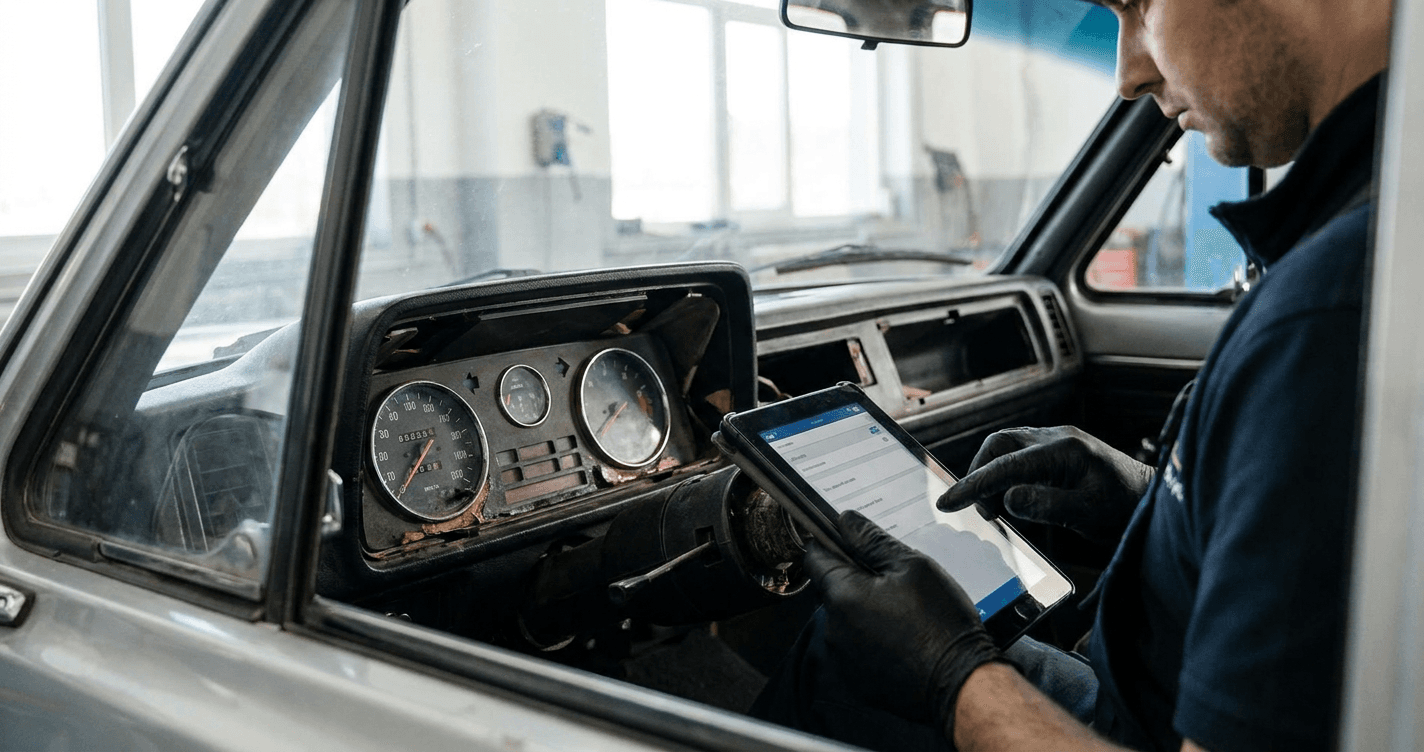
Learn how UK motor traders can detect and prevent mileage fraud using MOT history analysis, digital service records, and provenance intelligence.
By CiteFlow
What is Clocking Fraud and Why It Matters to UK Dealers
Clocking fraud is the deliberate alteration or misrepresentation of a vehicle's mileage to inflate its value, and it costs UK motor traders an estimated £800 million annually through reduced resale values, warranty claims, and reputational damage. A clocked vehicle typically shows 30,000 to 50,000 fewer miles than it has genuinely covered, creating a false impression of condition and remaining service life. For dealers, buying clocked stock means overpaying at acquisition, facing potential rejection claims under the Consumer Rights Act 2015, and risking regulatory action from Trading Standards. The practice remains widespread because digital odometers, despite being harder to manipulate than mechanical units, can still be altered using readily available diagnostic tools or by swapping instrument clusters.
The financial impact extends beyond the purchase price. A dealer who unknowingly sells a clocked vehicle faces liability for misrepresentation even without intent, potential prosecution under the Fraud Act 2006, and the cost of unwinding the sale including refunds, legal fees, and loss of margin. Reputational damage in local markets can persist for years. Trading Standards prosecutions for mileage fraud have increased 23% since 2020, with courts taking an increasingly dim view of dealers who fail to conduct adequate due diligence.
How Clocking Fraud Has Evolved
Mileage fraud has adapted to technological change. Early mechanical odometers could be wound back with a drill or replaced entirely, leaving obvious physical evidence. Digital odometers introduced in the 1990s initially reduced fraud, but by the mid-2000s, correction tools became commercially available, marketed as legitimate mileage correction devices for instrument cluster replacements. These tools communicate directly with engine control units, body control modules, and instrument clusters via OBD-II ports, rewriting stored mileage values across multiple systems.
Modern vehicles store mileage in numerous locations: the instrument cluster, ECU, TCU, ABS module, airbag controller, and sometimes the infotainment system. Professional clocking now involves identifying and rewriting all these storage points to create consistency. Some criminals swap entire instrument clusters from lower-mileage donor vehicles, though this approach often leaves forensic traces in module serial numbers and coding. The rise of connected vehicles with cloud-stored service data has created a new battleground, as manufacturers increasingly hold tamper-proof mileage records that criminals cannot access.
The profile of clocking has also shifted. High-value prestige vehicles are disproportionately targeted because the financial reward justifies the technical effort. Ex-lease and ex-fleet vehicles face elevated risk due to typically high annual mileage. Vehicles approaching significant service intervals (60,000 or 100,000 miles) are often clocked back below these thresholds to avoid expensive maintenance obligations.
MOT History Analysis: Your First Line of Defence
MOT history records provide the most reliable publicly available mileage trail for UK vehicles over three years old. DVSA data captures odometer readings at every test, creating a chronological record that criminals cannot retrospectively alter. A clean MOT history with steadily increasing mileage proves nothing definitively, but anomalies flag immediate concern. Look for mileage decreases between tests, implausibly low annual mileage (under 3,000 miles for a vehicle in daily use raises questions), sudden changes in mileage accumulation rate, and gaps in test history where a vehicle might have been off-road during alteration.
Calculate average annual mileage across the vehicle's life and compare it to recent years. A car showing 8,000 miles per year for eight years, then suddenly 3,000 miles annually, may indicate clocking. Check the mileage recorded at the most recent test against the current odometer reading and calculate whether the accumulation rate since that test is plausible given the time elapsed. A vehicle tested three months ago showing only 200 additional miles when presented for sale suggests either extremely light use or recent alteration.
MOT advisory items provide additional context. A vehicle showing worn brake discs, perished bushes, or oil leaks at supposedly low mileage indicates condition inconsistent with the claimed history. Cross-reference tyre wear patterns with recorded mileage. Advisories mentioning "slight play in steering" or "slight corrosion" at low indicated mileage deserve scrutiny.
Digital Service History as Corroborating Evidence
Manufacturer-held digital service records provide independent mileage verification that criminals cannot easily manipulate. When a franchised dealer services a vehicle, mileage data uploads to the manufacturer's central database along with the VIN, date, and work performed. These records persist even if paper documentation goes missing or gets fabricated. Digital service history verification across 44 manufacturer databases allows dealers to retrieve official service records by VIN, confirming mileage at each dealer visit.
Compare digital service records against MOT history and the current odometer reading. If digital records show 62,000 miles at a service 18 months ago, MOT records show 58,000 miles at a test 12 months ago, and the odometer currently reads 54,000 miles, you have clear evidence of fraud. Even without such obvious discrepancies, gaps between digital service records and claimed mileage warrant investigation.
Not all vehicles have comprehensive digital records. Independent garages rarely upload to manufacturer systems, and some brands maintain less complete databases than others. Vehicles serviced exclusively outside franchised networks may have genuine low mileage but no digital trail to prove it. This absence of evidence is not evidence of clocking, but it does remove a valuable verification layer and should inform your risk assessment and pricing.
Physical Inspection Indicators
Vehicle condition often contradicts claimed low mileage. Examine wear patterns on the driver's seat bolster, steering wheel rim, gear knob, pedal rubbers, and door handle mechanisms. A vehicle claiming 35,000 miles with a heavily worn steering wheel leather, compressed seat foam, and smooth pedal rubbers has likely covered significantly more. Check for replacement parts that suggest higher use: new seat covers hiding worn upholstery, replaced pedal rubbers, or aftermarket steering wheels.
Inspect service items for consistency with claimed mileage. Original brake discs and pads on a vehicle claiming 80,000 miles are implausible unless it has lived exclusively on motorways. Check tyre date codes and tread depth. If all four tyres are recent replacements on a supposedly low-mileage vehicle, ask why. Examine the underside for oil leaks, corroded brake lines, or worn suspension components inconsistent with low use.
Scrutinise the instrument cluster for signs of removal or tampering. Look for scratched screw heads, misaligned trim panels, or disconnected warning lights. Check whether the odometer display shows all digits clearly or whether some segments appear fainter, suggesting partial replacement or interference. Compare the instrument cluster serial number against manufacturer records if accessible.
Provenance Intelligence and Data Triangulation
Comprehensive provenance reports aggregate multiple data sources to reveal inconsistencies that single checks miss. A robust fraud detection system combines DVSA MOT records, digital service history, finance records, salvage registers, and keeper change history to build a complete picture. Cross-referencing these sources identifies discrepancies that suggest either clocking or other hidden history.
Finance records sometimes contain mileage data from the point of agreement. If a vehicle entered a finance agreement 24 months ago at 45,000 miles but now shows 38,000 miles, the evidence is conclusive. Salvage records may note mileage at the point of damage assessment, providing another independent reference point. Previous insurance claims sometimes record mileage, though accessing this data requires appropriate permissions.
Keeper change history offers context. Multiple short-term keepers in quick succession can indicate a vehicle being flipped through the trade, potentially with alteration occurring between transactions. A single long-term keeper followed by several rapid changes raises questions about what prompted the disposal and whether condition issues or history problems emerged.
Legal Obligations and CRA 2015 Compliance
Under the Consumer Rights Act 2015, dealers must ensure vehicles are as described, fit for purpose, and of satisfactory quality. Mileage forms a material part of the description, and selling a clocked vehicle constitutes misrepresentation even if the dealer was unaware of the fraud. The Act provides consumers with rejection rights: short-term right to reject within 30 days, and right to reject within six months if a fault (including mileage discrepancy) existed at the point of sale.
Trading Standards can prosecute under the Fraud Act 2006 (fraud by false representation) and the Consumer Protection from Unfair Trading Regulations 2008. Penalties include unlimited fines and up to ten years imprisonment for serious cases. Even without criminal prosecution, civil liability for misrepresentation can result in full refunds, legal costs, and damages. Courts expect dealers to conduct reasonable due diligence, and failure to check readily available MOT history or service records undermines any defence of innocent misrepresentation.
Document your checking process thoroughly. Record which data sources you consulted, what they revealed, and how you assessed the information. If you identify potential clocking, document your decision-making: did you walk away, adjust your offer, or seek further verification? This audit trail demonstrates professional standards and provides evidence of due diligence if disputes arise. Understanding CRA 2015 compliance requirements protects both your customers and your business.
Building a Systematic Checking Process
Protection against clocking requires consistent, documented procedures applied to every vehicle. Establish a pre-purchase checklist that includes MOT history review, digital service history retrieval where available, physical inspection for wear consistency, and provenance report analysis. Train staff to recognise red flags and empower them to reject suspicious vehicles regardless of apparent profit opportunity.
Set clear risk thresholds. Some dealers refuse any vehicle with MOT history anomalies or missing digital service records. Others accept higher-risk stock but adjust pricing and warranty terms accordingly. Define your risk appetite explicitly and ensure purchasing decisions align with it. Consider whether certain vehicle categories (ex-fleet, high-value prestige, approaching major service intervals) warrant enhanced checking.
Integrate checking into your workflow at the earliest possible point. For auction purchases, conduct checks before bidding rather than after winning. For part-exchanges, complete verification before finalising the deal. For stock purchases from other traders, make provenance checks a condition of sale. The cost of a comprehensive vehicle check is negligible compared to the cost of buying a clocked vehicle.
Review your checking effectiveness periodically. Track how many vehicles you reject due to suspected clocking, whether any clocked vehicles slip through your process and get discovered later, and what patterns emerge in fraud attempts. Use this data to refine your procedures and train your team on evolving fraud techniques.
What to Do When You Identify Clocking
If pre-purchase checks reveal likely clocking, walk away. The vehicle is not worth the risk regardless of price. If you discover clocking after purchase but before retail sale, your options depend on your relationship with the seller and the strength of your evidence. Trade-to-trade sales typically include limited warranties, but misrepresentation claims may still succeed if you can prove the seller knew or should have known about the fraud.
Consider reporting suspected clocking to Trading Standards, particularly if you believe the seller is systematically defrauding the trade. Providing evidence helps authorities build cases against persistent offenders. If you purchased from an auction, report the issue to the auction house; most major auction groups take provenance fraud seriously and may bar sellers who repeatedly present suspect vehicles.
If you discover clocking after retail sale, act immediately. Contact the customer, explain the situation honestly, and offer a full refund or replacement vehicle. Attempting to minimise or conceal the issue will worsen your legal position and reputational damage. Report the fraud to your trade association and consider whether the circumstances warrant a police report. Document everything: your discovery of the fraud, your communication with the customer, and the resolution.
Technology and Future-Proofing Your Defence
Connected vehicle technology is gradually making clocking more difficult. Many manufacturers now store mileage data in cloud systems that update automatically via embedded connectivity. Tesla, for example, maintains tamper-proof mileage records accessible through the vehicle's service history. As more vehicles gain permanent connectivity, the scope for successful mileage fraud will narrow, though it will not disappear entirely.
Blockchain-based vehicle history systems are emerging as potential solutions, creating immutable records of mileage, service, and ownership that no single party can alter. Several pilot projects in Europe are exploring this approach, though widespread adoption remains years away. In the interim, the best defence combines multiple independent data sources that criminals cannot simultaneously manipulate.
Artificial intelligence tools are beginning to identify clocking through pattern recognition that exceeds human capability. Emerging AI solutions for mileage fraud detection analyse combinations of data points (MOT intervals, service patterns, keeper changes, market pricing) to flag anomalies that individual checks might miss. These systems learn from known fraud cases to recognise similar patterns in new vehicles.
Stay informed about fraud techniques as they evolve. Join trade associations, participate in industry forums, and share intelligence with other dealers. Criminals adapt their methods continuously, and your checking procedures must adapt in response. What worked five years ago may not catch today's sophisticated fraud.
Cost-Benefit Analysis of Comprehensive Checking
The cost of thorough provenance checking is modest compared to the cost of buying clocked stock. A comprehensive vehicle check costs between £3.00 and £4.50, depending on volume. The average loss from buying a clocked vehicle ranges from £2,000 to £5,000 in overpayment and subsequent loss on resale, plus potential legal costs if the fraud is discovered after retail sale. The return on investment is clear.
Some dealers question whether checking every vehicle is necessary, particularly for lower-value stock where margins are tight. This reasoning is flawed. Clocking occurs across all price points, and lower-value vehicles often have less complete history, making fraud easier to conceal. The reputational damage from selling a clocked £3,000 car is identical to selling a clocked £30,000 car. Your local Trading Standards officer will not consider tight margins a mitigating factor.
Choosing the right pricing model for vehicle checks depends on your volume. High-volume dealers benefit from subscription pricing that reduces per-check costs to £3.00 or less. Lower-volume operations may prefer pay-per-check models that avoid fixed monthly costs. Either way, the expense is a necessary cost of professional trading, not an optional extra.
Frequently Asked Questions
AI-Generated Content Notice
This article was created with the assistance of artificial intelligence technology. While we strive for accuracy, the information provided should be considered for general informational purposes only and should not be relied upon as professional automotive, legal, or financial advice. We recommend verifying any information with qualified professionals or official sources before making important decisions. AutoProv accepts no liability for any consequences resulting from the use of this information.
From our AI insights
- Understanding Mileage Correction Costs for UK Dealers
Explore the legal risks and cost implications of mileage correction for UK car dealers.
- Decoding Mileage: Impact of Seasonal Driving Patterns
Explore how seasonal driving impacts your car's mileage verification.
- Tackling Mileage Fraud in Electric Vehicles
Explore how motor traders can prevent mileage fraud in electric vehicles using advanced techniques.
Related Articles

Understanding Vehicle Mileage Importance
Discover the critical role of accurate mileage in vehicle provenance and how AutoProv can safeguard your purchase.
What Is the Average Annual Mileage in the UK?
Right now, the average annual mileage for a car in the UK hovers around 7,000 miles. For anyone in the motor trade, that number is more than just a statistic; it’s a vital benchmark that helps buyers, sellers, and insurers get a quick read on a car's usage and potential wear and tear.
Car Mileage Discrepancy Explained: A Guide for UK Motor Traders
When it comes to a car’s history, its mileage record should tell a simple, straightforward story: the number always goes up. A mileage discrepancy is what happens when that story suddenly does not make sense.
Published by AutoProv
Your trusted source for vehicle intelligence