
Steamed-up windows are far more than just a nuisance; they're a critical safety issue and a potential red flag that hints at deeper problems with a vehicle. In the UK's damp climate, persistent condensation is often a sign of issues that can hammer a car's value and, ultimately, a dealership's reputation. Knowing how to quickly clear a foggy screen is one thing, but understanding why it’s happening in the first place is what really matters, especially when assessing a potential vehicle for your forecourt.
Steamed-up windows are far more than just a nuisance; they're a critical safety issue and a potential red flag that hints at deeper problems with a vehicle. In the UK's damp climate, persistent condensation is often a sign of issues that can hammer a car's value and, ultimately, a dealership's reputation. Knowing how to quickly clear a foggy screen is one thing, but understanding why it’s happening in the first place is what really matters, especially when assessing a potential vehicle for your forecourt.
Why Foggy Windscreens Are a Major Red Flag

When you’re appraising a car and the windows fog up easily, it should set alarm bells ringing. This isn't just about the five minutes a driver wastes clearing the glass on a cold morning. It’s a symptom, and it could be pointing to hidden moisture getting in, mechanical faults, or poor maintenance – all things that lead to post-sale complaints and expensive fixes.
This problem is a constant battle here in the United Kingdom. It's a serious road safety issue, too. A 2022 report from the UK Department for Transport found that around 12% of all weather-related collisions happen because of poor visibility, with foggy windows being a major factor.
The Real Risks Beyond Inconvenience
When you're looking over a potential trade-in, a steamy interior tells you there's excess moisture trapped inside the cabin. That moisture has to be coming from somewhere, and none of the potential sources are good news for the car's condition or its value.
First, you have hidden water leaks. This is the number one culprit for chronic condensation, often from worn-out door seals, a blocked sunroof drain, or a failing windscreen gasket.
Next are HVAC system faults. A heater core on its way out can leak coolant into the ventilation system. This creates a greasy, stubborn film on the glass that's a nightmare to clear. Even a simple clogged cabin air filter can trap dampness and restrict airflow, making everything worse.
Finally, consider previous damage. A car that's had previous water damage might have damp carpets or sound-deadening material underfoot, constantly releasing moisture back into the air.
A damp car isn’t just uncomfortable; it’s a perfect breeding ground for mould and mildew. That leads to nasty smells and can be a real health concern for the new owner. Ignoring these signs can come back to bite you, damaging your reputation long after the car has left the forecourt.
Protecting Your Reputation and Bottom Line
Making moisture checks a non-negotiable part of your appraisal process is just good business. This is where a systematic, digital approach like the one offered by AutoProv really pays off. Spotting these red flags early protects you from buying a vehicle with hidden defects that will just eat away at your margins.
More importantly, it ensures the next owner gets a safe, reliable car, which is the cornerstone of building customer trust. By documenting these checks from the moment a car arrives, you create a transparent history of its condition, all managed within the AutoProv platform.
For a deeper dive into what to look for, check out our guide on essential car safety checks for UK used cars. It gives you a solid framework for making sure every vehicle you handle meets the highest standards.
Using Climate Control for Instant Clarity
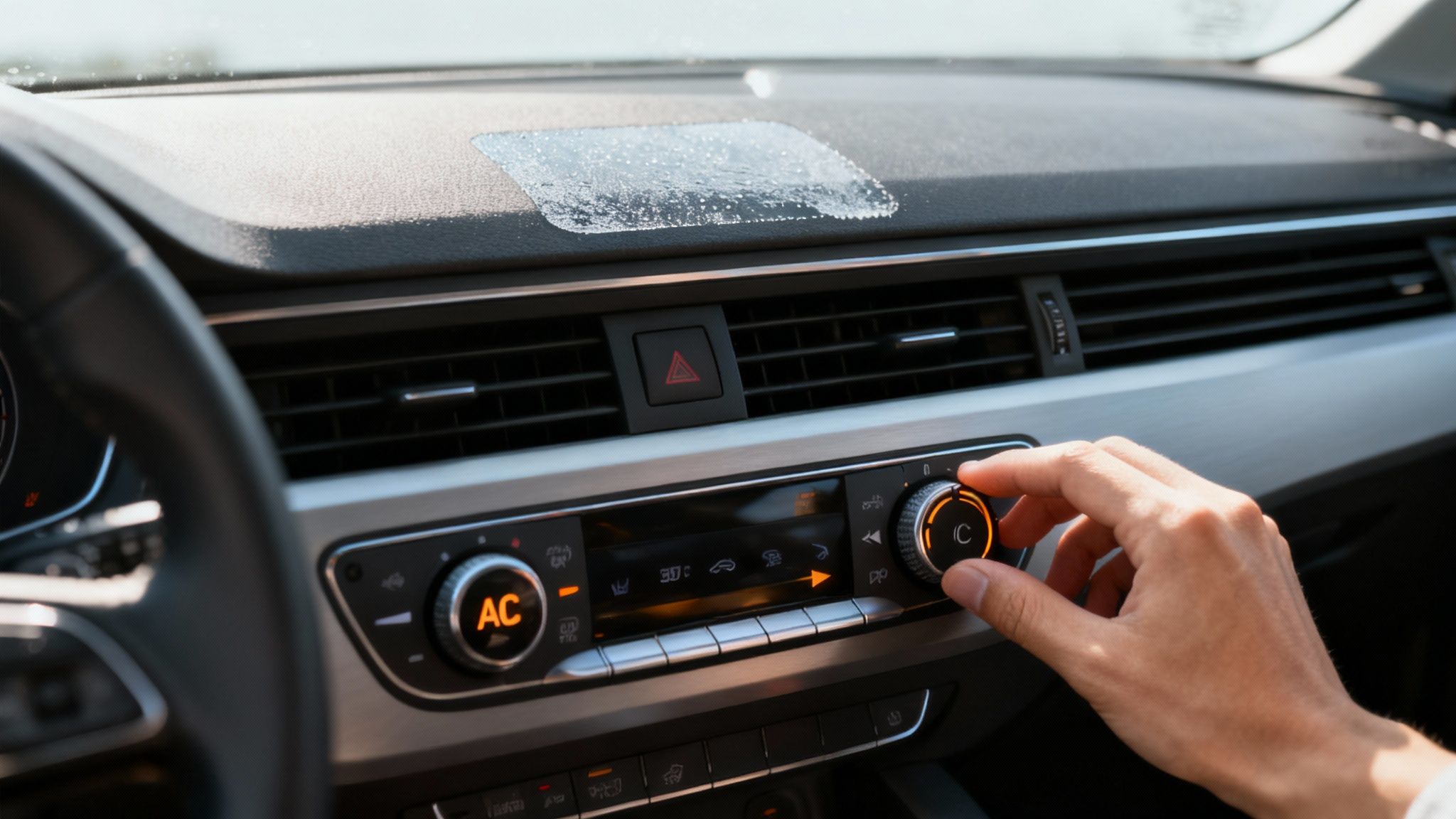
There’s nothing worse than a steamed-up windscreen when a customer is about to take a car for a spin, or a driver needs to get on the road. It’s frustrating, but the good news is that nearly every modern car has the tech to clear it in moments. Forget just blasting the fan and hoping for the best; there's a specific, science-backed method that works every single time.
A common mistake is simply cranking up the heat. While warm air certainly helps, it's not the critical part of the equation. The real key to stopping your car windows from steaming up is to pull the moisture right out of the air. That’s a job for the air conditioning system.
The A/C Is Your Secret Weapon
It might feel a bit strange flicking on the air con on a cold, damp morning, but it’s the single most effective thing you can do. The A/C system is essentially a powerful dehumidifier, stripping moisture from the air it sucks in before sending it through the vents. This super-dry air is brilliant at absorbing the condensation clouding up the glass.
The role of air conditioning in managing the cabin environment is no longer a luxury. Back in 2010, only 58% of new cars sold in the UK came with A/C as standard. Fast forward to 2023, and that figure has shot up to 89%, showing just how vital it is for both comfort and safety. This makes demonstrating the climate control system a simple but powerful sales tool. It's a practical bit of knowledge that adds real value for a new owner and highlights the car's efficiency.
Your Four-Step Demisting Sequence
For the fastest possible results, follow this exact sequence. It combines the drying power of the A/C with the evaporative effect of heat.
First, turn the Air Conditioning on. A little light should pop on to show the compressor is engaged. Second, increase the temperature. Now you can turn the heat up high. Blasting hot, dry air onto the windscreen will clear it much faster than just hot, damp air. Third, direct air to the windscreen. Find the setting that directs all airflow to the windscreen. This focuses the system's power exactly where you need it. Fourth, switch off air recirculation. Make sure the system is drawing in fresh, drier air from outside. The recirculation button (often an icon of a car with a U-turn arrow inside it) needs to be off. Leaving it on just traps the same moist air inside the cabin, defeating the purpose.
Understanding a car's specific climate control features is non-negotiable for a sales team. Whether it’s old-school manual dials or a fully automatic system, knowing how to demonstrate this quick demisting process instils confidence in a buyer. It’s a small detail that makes a big difference.
If you're unsure whether a car has standard or automatic climate control, you can check our guide on finding car specs by reg to get the details you need. Features like these are precisely the kind of information we track within AutoProv’s vehicle checklists, ensuring your team is always fully informed.
Long-Term Strategies to Prevent Condensation
While knowing how to demist your windows quickly is a must, the real win is stopping them from steaming up in the first place. This is all about playing the long game – shifting from a daily annoyance to a permanent fix. For anyone managing a fleet or prepping cars for sale, this proactive approach is vital for vehicle condition and customer happiness.
The science is simple: condensation needs two things to exist – moisture in the air and a cool surface to form on. If you can tackle both, you’ll drastically cut down how often you’re reaching for the demister button. It all starts with something surprisingly basic: keeping your interior glass impeccably clean.
Why a Spotless Windscreen is Your First Line of Defence
Think of a dirty windscreen as the perfect welcome mat for condensation. All that dust, grime, and oily film that builds up on the inside is a textured surface that water vapour just loves to cling to. This film, often from plastics in the car ‘off-gassing’ over time, acts like a magnet for moisture.
A proper clean with a good quality automotive glass cleaner and a fresh microfibre cloth makes a world of difference. Steer clear of household sprays like window cleaner, as the ammonia in them can damage window tints and brittle interior plastics. For a perfect, streak-free finish, use one cloth to apply the cleaner and a second, completely dry one to buff the glass until it’s crystal clear.
Here’s a top tip for dealerships: applying a quality anti-fog treatment during the valeting process is a low-cost, high-impact move. It creates a special hydrophilic barrier that stops moisture from beading up into those tiny, vision-blocking droplets. Making a note of this in the vehicle’s prep history, using a system like AutoProv, adds a real touch of professionalism and shows a commitment to quality that buyers definitely notice.
Get Rid of Moisture at the Source
Of course, even the cleanest glass will fog up if the cabin air is saturated with moisture. The next, and arguably most important, step is to hunt down and eliminate any source of dampness inside the car. This isn’t just about foggy windows; it’s about preventing those musty smells and stopping mould from ever getting a foothold.
Start by checking for damp floor mats. Pull out wet mats, especially the rubber ones that trap water underneath, and let them dry out properly overnight. Don’t just leave them festering in the footwells. Next, remove any wet belongings. A damp coat, a soggy umbrella, or a forgotten gym bag can release a surprising amount of moisture into a sealed car. Finally, mop up any spills and leaks straight away. It's also worth checking for damp patches under the seats or in the boot, as this could be a sign of a water leak that needs sorting professionally.
A consistently dry cabin is one of the hallmarks of a well-cared-for vehicle. For a full rundown of other key checks, have a look at our guide on essential car maintenance tips for UK drivers. By combining squeaky-clean glass with a dry interior, you’re creating a car that’s far more resistant to the frustrating and unsafe problem of steaming up.
Diagnosing Persistent Moisture Problems
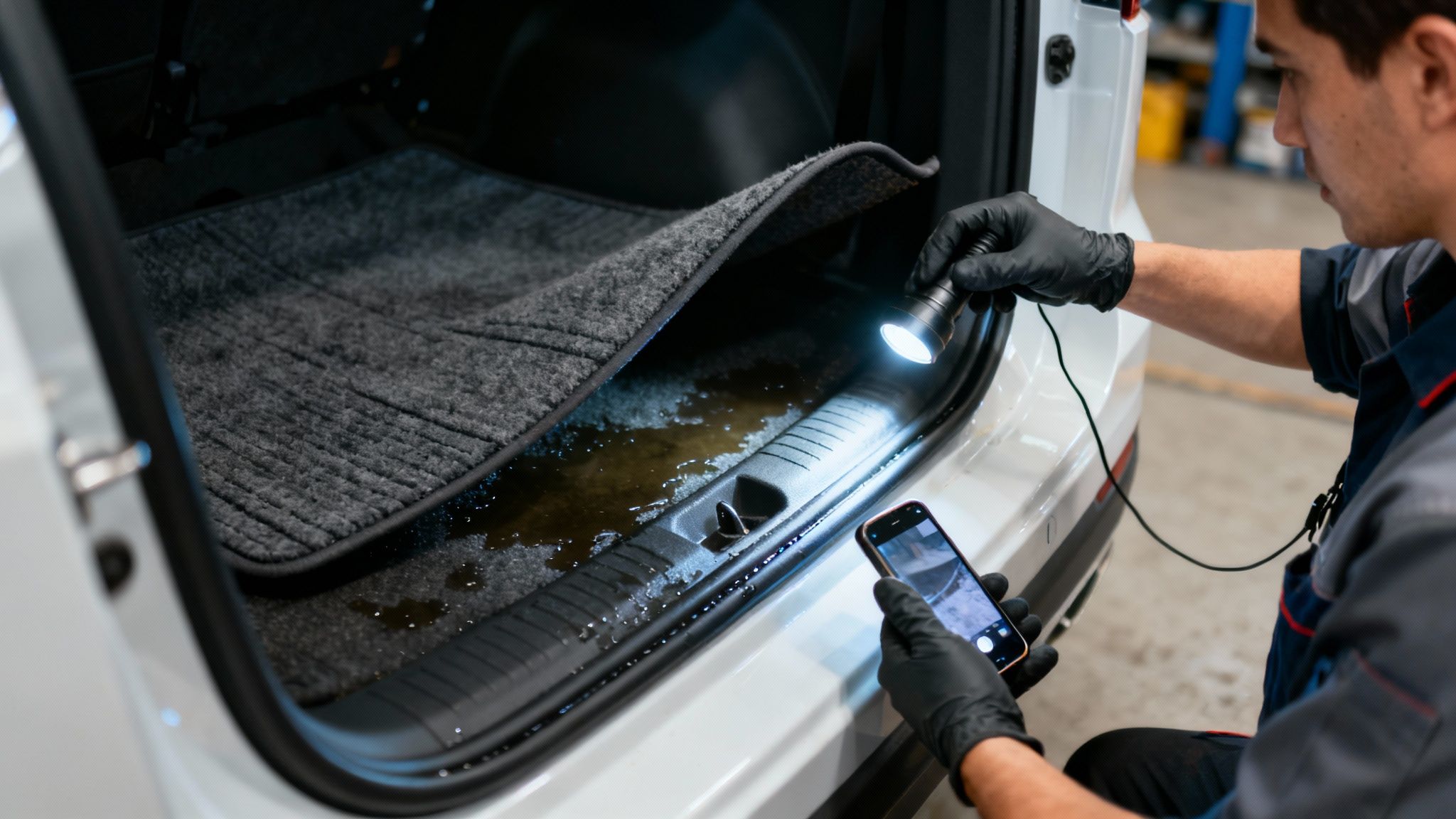
When the quick demisting tricks just aren't cutting it, and a car's windows are constantly fogged up, it's a dead giveaway that something more is going on. For any service department, chronic condensation is a diagnostic red flag. It points to an underlying issue that’s trapping moisture inside the vehicle, and at this point, simply clearing the glass isn't a fix—it's just a temporary patch.
Getting to the bottom of persistent moisture requires a systematic inspection. This isn’t just about keeping the driver happy; it’s about preventing long-term damage like mould, mildew, and corrosion that can tank a car's value. The best approach is to start with the most common culprits.
Checking the Cabin Air Filter
Before you start pulling off door cards or lifting carpets, your first port of call should always be the cabin air filter. Its job is to clean the air coming into the ventilation system, but it inevitably gets clogged with leaves, dust, and general road muck. A blocked filter kills the airflow, meaning the climate control system can't do its job of pulling moisture out of the air.
Even worse, a damp, dirty filter can become a source of moisture itself. It can hold onto dampness and blast a musty smell through the vents every time the fan is switched on. It's a simple, often-forgotten part that causes a surprising amount of grief. Swapping it out is a cheap and easy first step in any moisture diagnosis.
Hunting for Water Ingress
If a fresh cabin filter doesn’t solve the mystery, it’s time to methodically hunt for leaks. Water is surprisingly good at finding its way into a car's interior, especially as seals and gaskets get older and less effective.
Your hunt should start with door and window seals. Run a careful eye over the rubber seals around all doors, windows, and the boot. Look for any signs of perishing, cracking, or shrinking that could let water sneak past. Next, check for blocked sunroof drains. Sunroofs have small drain tubes, usually running down the A-pillars, designed to channel rainwater away safely. These get clogged with debris all the time, causing water to back up and overflow into the headlining or down into the footwells. Finally, inspect the boot and rear light seals. The boot is another prime suspect. Check the main boot seal for damage and pay close attention to the gaskets around the rear light clusters. These are notorious for failing, allowing water to pool in the boot floor or spare wheel well.
The Telltale Signs of a Leaking Heater Core
Now for the most serious potential cause of chronic window fogging: a leaking heater core. This is a small radiator, buried deep behind the dashboard, that uses hot engine coolant to warm the cabin. When it develops a leak, it sprays a fine mist of antifreeze directly into the ventilation system.
The classic signs of a heater core leak are unmistakable: a persistent sweet, sickly smell inside the car and a greasy, stubborn film on the interior of the windscreen that is incredibly difficult to clean. This isn't just a moisture issue; inhaling coolant vapour is a health concern.
Diagnosing and replacing a heater core is often a big, labour-intensive dashboard-out job, but it's an absolutely critical repair. Documenting these complex jobs properly is vital, especially when it comes to explaining the costs. Our complete UK price guide offers valuable insights into how much a car service can cost.
Using a tool like AutoProv, technicians can log these detailed diagnostic checks, attach photos of the leak or faulty part, and build a transparent service history that justifies the necessary repairs to the customer.
Building Condensation Checks into Your Appraisals

Catching moisture issues during an appraisal isn't just good practice; it's a critical step in protecting your bottom line. A car that’s constantly misting up is almost certainly hiding an underlying problem, and that problem will eventually cost you money to put right.
That’s why making condensation checks a mandatory part of every single inspection is the only way to avoid unknowingly buying a vehicle with expensive hidden faults.
These checks don't need to eat into your appraisal time. It's all about using your senses and following a simple, repeatable process that flags potential trouble before you've even agreed on a price. The aim here is to spot excess moisture before it becomes a financial headache for your dealership.
The Initial Sensory Checks
The moment you open the car door, your appraisal has already started. Often, the first clue is the smell. A musty, damp odour is an immediate red flag, pointing to the likely presence of mould or mildew born from a persistent moisture source somewhere in the cabin.
From there, your checks need to be hands-on. Don't just look—feel. Feel the carpets and floor mats, pressing your hand firmly into the carpets in every footwell. Don’t forget to check the areas tucked away under the dashboard. Lift every floor mat to check for trapped water underneath. This is a very common sign that moisture is getting in. Finally, check the boot area, paying special attention to the spare wheel well, a notorious collection point for water.
Integrating these simple sensory checks into a digital appraisal platform like AutoProv is a game-changer. It allows your team to quickly document their findings with notes and images, creating a permanent, evidence-backed record. This ensures that any potential repair costs are accurately factored into the vehicle’s valuation from the very beginning.
Functional Testing of Climate Control
Next up is a quick functional test of the very system designed to combat condensation. Fire up the engine and run the climate control through its full range of settings. You need to confirm the fans are working correctly on all speed settings and that the air conditioning compressor kicks in properly to deliver cold air.
A weak fan or an A/C system that refuses to blow cold points directly to mechanical faults that are crucial to identify early. After all, a fully working demister system isn't just a key feature; it's a legal requirement for passing an MOT.
For a deeper dive into what a comprehensive vehicle review should cover, have a look at our guide on building your ultimate used car inspection checklist. This simple process uncovers problems that could otherwise lead to costly reconditioning down the line.
Car Condensation: Your Questions Answered
Even when you've got your demisting routine down to a fine art, some nagging questions about condensation can stick around. We see the same queries pop up time and time again from dealers and drivers alike. Let's clear the air and tackle those common head-scratchers once and for all.
Why Do My Windows Steam Up Even When It’s Not Raining?
It’s a classic mystery. You get in the car on a crisp, dry morning, and the windscreen is completely fogged over. What gives? It all comes down to moisture inside the car. Condensation happens when the warm, damp air in your cabin hits the cold surface of the glass. That moisture can come from your own breath, a damp jacket tossed on the back seat, wet floor mats, or even a tiny, hidden leak somewhere. If the air inside is more humid than the air outside, your windows are going to steam up as they cool down, rain or shine.
Is It Better To Use Hot or Cold Air to Clear a Windscreen?
For the quickest results, you actually want to use both. The single most important button to press is the air conditioning (AC). Think of it as a powerful dehumidifier that actively strips moisture from the air. Once the AC is on the job, crank the temperature up to full heat. Why? Because hot, dry air is incredibly thirsty and can hold much more moisture than cold air. It will literally suck the condensation right off the glass. Just be sure to aim the vents directly at the windscreen to get the job done fast.
Can a Car Fail Its MOT for Having Steamed Up Windows?
While a bit of fog on the windows isn't an MOT failure in itself, the reason why it won't clear absolutely can be. The MOT test is crystal clear on one thing: the driver must have an unobstructed view of the road.
Critically, the test mandates that the vehicle’s front demister system functions correctly. If the fans, heater, or air conditioning system designed to clear the windscreen are broken or ineffective, the vehicle will fail its MOT. This makes checking the climate control system an essential part of any vehicle appraisal.
There’s a Sweet Smell and a Greasy Film on the Windows. What Is It?
If you’re noticing a strange, sickly-sweet smell and a greasy film that’s impossible to wipe clean from the inside of the glass, you’re almost certainly looking at a leaking heater core. The heater core is like a small radiator that circulates hot engine coolant (antifreeze) to warm up the cabin. When it develops a leak, that coolant turns into a vapour and gets blown into the car through the vents. This isn't just a nuisance; it's a significant problem that needs a proper diagnosis from a mechanic. Inhaling antifreeze fumes can be harmful, and the repair is often a complex, dashboard-out job.
Spotting signs like this is a crucial part of accurately valuing a vehicle. Logging these kinds of faults is made straightforward with platforms like AutoProv, ensuring every detail is captured during appraisal.
Frequently Asked Questions
AI-Generated Content Notice
This article was created with the assistance of artificial intelligence technology. While we strive for accuracy, the information provided should be considered for general informational purposes only and should not be relied upon as professional automotive, legal, or financial advice. We recommend verifying any information with qualified professionals or official sources before making important decisions. AutoProv accepts no liability for any consequences resulting from the use of this information.
From our AI insights
- Navigating ULEZ Compliance for Used Car Dealers
A deep dive into ensuring your used car stock meets ULEZ standards, avoiding costly fines.
- Mastering Paint Verification with VIN Decoding
Learn how UK traders verify original paint using VIN decoding and provenance data.
- Understanding VIN Decoding: Avoid Misleading Imports
Learn how VIN decoding reveals vehicle origins and specs, preventing import pitfalls.
Related Articles

Car Specs by Reg: Instantly Find Vehicle Details & MOT History
Trying to find the full car specs by reg? In the UK, that little number plate is the key to unlocking a huge amount of information about a vehicle. From the exact engine size and CO2 emissions to its MOT history and tax status, it's all tied to the registration.

How to Check Previous Owners of a Car in the UK
Before you even start thinking about how to check the previous owners of a car, you need to get your head around why it's so important. This isn't just about being nosy; it’s a non-negotiable step that protects you from serious financial headaches and safety risks lurking under a shiny bonnet.

How to Check Service History in the UK
Think of a car's service history as its detailed CV, not just some dusty folder in the glovebox. To check service history is to get the real story behind a vehicle, digging into everything from its routine oil changes to any major surgery it's had. For any savvy car buyer in the UK, this record is the single most important document you can get your hands on.
Published by AutoProv
Your trusted source for vehicle intelligence