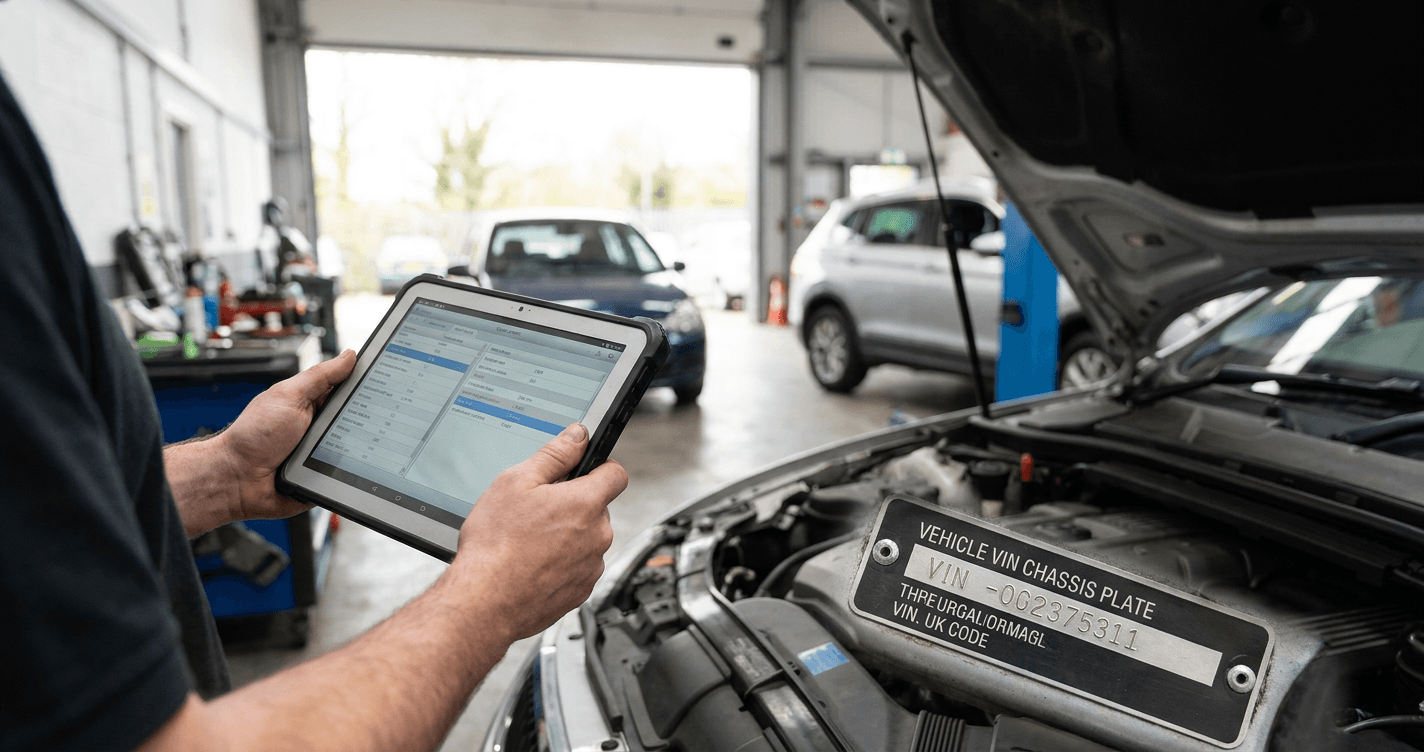
Learn how UK motor traders use VIN-based factory build data to verify fitted options, prevent mis-selling, and uncover hidden high-value equipment on used stock.
By CiteFlow
What Factory-Fitted Options Can Be Verified Through VIN Data
Factory-fitted options verified through VIN data include manufacturer-installed equipment, trim packages, engine specifications, transmission types, paint codes, interior materials, safety systems, infotainment hardware, driver assistance features, and optional extras fitted during production. Official OEM build sheets accessed via VIN lookup provide a definitive record of what left the factory, eliminating guesswork and preventing costly mis-descriptions on forecourt stock.
For UK motor traders, this verification matters because aftermarket modifications, dealer-fitted accessories, and retrofitted equipment do not appear on factory build data. The VIN-based check tells you precisely what the manufacturer installed at the production facility, creating a baseline against which you can assess the vehicle's current specification and identify discrepancies.
Manufacturer databases store build data against the 17-character VIN, which serves as a unique identifier for every vehicle produced since 1981. When you query a VIN through systems that access OEM data sources, you retrieve the original factory specification including equipment codes, option packages, and technical details that determine market value and buyer appeal.
Why Motor Traders Need VIN-Based Factory Verification
Relying on seller descriptions, online advertisements, or visual inspections alone creates significant commercial risk. Paper V5C documents list basic details but omit factory-fitted options. Previous owners may not know the full specification, and auction listings frequently contain errors or incomplete information that can cost you hundreds or thousands in lost margin.
VIN-based factory verification protects your business in three critical ways. First, it prevents you from overpaying for vehicles that lack advertised premium features. Second, it helps you identify high-value factory options that increase stock profitability when options are present but not mentioned in the sale listing. Third, it provides documentary evidence for your own sales descriptions, reducing Consumer Rights Act 2015 exposure when customers challenge specification claims.
The financial impact becomes clear when you consider specific examples. A BMW 3 Series advertised with navigation might lack the factory system, or a Mercedes-Benz described as having leather seats might feature MB-Tex synthetic upholstery. These specification errors directly affect retail value and customer satisfaction, yet they remain invisible without factory build verification.
How VIN Structure Relates to Factory Specification Data
The 17-character VIN contains encoded information about the vehicle's origin, manufacturer, model year, production plant, and sequential production number. Positions 1-3 identify the world manufacturer identifier, positions 4-8 describe vehicle attributes including body style and engine type, position 9 is a check digit, position 10 indicates model year, position 11 shows the assembly plant, and positions 12-17 provide the unique serial number.
Whilst you can decode basic information from the VIN structure itself, the detailed factory specification requires querying the manufacturer's production database. The VIN serves as the key that unlocks this data, but the options list, equipment codes, and package details exist in separate manufacturer systems that must be accessed through authorised data providers.
Different manufacturers store varying levels of detail in their build databases. Premium German brands typically maintain comprehensive records including individual option codes, paint formulations, and production dates. Volume manufacturers may provide less granular data, particularly for older vehicles or entry-level models. Understanding manufacturer database coverage helps set realistic expectations for what you can verify.
Accessing Official Factory Build Data for UK Vehicles
Official factory build data comes directly from manufacturer databases, not from aggregated consumer data or crowd-sourced information. Professional vehicle intelligence platforms access these OEM systems through data licensing agreements, providing trade users with the same specification information that franchised dealer networks use internally.
For UK motor traders, accessing this data requires either direct relationships with individual manufacturer systems or using a consolidated platform that aggregates multiple OEM data sources. The latter approach proves more practical because it eliminates the need to navigate 44 different manufacturer portals, each with unique login credentials, data formats, and access restrictions.
When you run a VIN-based vehicle check, the system queries relevant manufacturer databases and returns the factory build sheet alongside other provenance data. This integration means you verify options, check service history, and confirm technical specifications in a single query rather than conducting separate searches across multiple platforms.
The data returned typically includes equipment codes (manufacturer-specific alphanumeric identifiers for options), option descriptions in plain language, package contents when options were sold as bundles, paint and trim codes with colour names, and production dates that help verify age-related claims. Some manufacturers also provide original retail pricing for options, which helps you calculate the vehicle's original specification value.
Interpreting Factory Option Codes and Equipment Lists
Factory option codes appear as alphanumeric strings that vary by manufacturer. BMW uses three-digit codes like 609 for satellite navigation or 322 for leather upholstery. Mercedes-Benz employs codes such as 249 for parking sensors or 275 for sunroof. Volkswagen Group brands use PR codes, three-character combinations that identify specific equipment.
These codes matter because they provide unambiguous specification confirmation. Whilst option names can be vague or marketing-focused, the equipment code references a specific part number and installation specification. When you list a vehicle for sale, noting the actual option codes in your internal records creates an audit trail that supports your description accuracy.
Package codes add complexity because manufacturers bundle multiple options together. A BMW M Sport package includes specific wheels, body styling, suspension settings, interior trim, and steering wheel design. The build sheet might show the package code without listing every individual component, requiring you to understand what each package contains. Premium audio systems, technology packages, and comfort bundles all follow this pattern.
Some options affect other specifications in ways that are not immediately obvious. Four-wheel drive systems add weight and change fuel consumption figures. Larger wheels alter tyre sizes and potentially affect speedometer calibration. Tow bars require specific electrical systems and cooling upgrades. The factory build data reveals these interconnected specifications that casual inspection might miss.
Common Discrepancies Between Advertised and Factory Specifications
Mis-described vehicles appear regularly in trade channels, often through innocent error rather than deliberate misrepresentation. Previous owners add aftermarket equipment and assume it was factory-fitted. Auction houses rely on visual inspection without consulting build data. Private sellers confuse trim levels or misunderstand option availability in specific model years.
Navigation systems present frequent discrepancies. Aftermarket head units replace factory systems, or vehicles described as having navigation lack the manufacturer's integrated solution. The distinction matters because factory navigation integrates with other vehicle systems, receives manufacturer updates, and commands higher residual values than aftermarket alternatives.
Leather upholstery claims require careful verification. Many manufacturers offer multiple interior materials at different price points: genuine leather, synthetic alternatives, partial leather with vinyl bolsters, and cloth with leather inserts. The factory build sheet specifies exactly which material was fitted, preventing disputes when customers discover their 'leather interior' contains synthetic components.
Safety and driver assistance features create similar issues. Adaptive cruise control, lane keeping assist, blind spot monitoring, and parking sensors exist in multiple generations and capability levels. A vehicle might have basic parking sensors but not the 360-degree camera system, or cruise control without adaptive functionality. These distinctions affect both value and customer satisfaction, making factory verification essential before you describe these features in your sales listing.
Using Factory Data to Identify Valuable Undisclosed Options
Factory build verification works in both directions. Whilst it prevents you from overpaying for mis-described vehicles, it also uncovers hidden high-value equipment that sellers have not mentioned. This information asymmetry creates profit opportunities when you can identify valuable options that others have missed.
Premium audio systems, advanced driver assistance packages, performance upgrades, and luxury interior options all add significant value but may not be visible in photographs or mentioned in brief auction descriptions. When you run the VIN before bidding, you might discover a Meridian sound system in a Range Rover, a Burmester audio setup in a Porsche, or adaptive air suspension in a Mercedes-Benz that the seller has not highlighted.
Paint codes provide another opportunity. Metallic and pearl finishes command premiums over solid colours, and certain special-order paints add substantial value to prestige vehicles. The factory build sheet lists the exact paint code and finish type, allowing you to verify whether that BMW is finished in standard black or a premium Individual colour that cost several thousand pounds when new.
Sunroofs, panoramic glass roofs, and convertible hard-top mechanisms represent high-value options that affect both retail price and buyer demand. Factory verification confirms not just their presence but their specific type, as manufacturers often offer multiple roof configurations at different price points within the same model range.
Preventing Mis-Selling Claims Through Factory Specification Documentation
The Consumer Rights Act 2015 requires that goods match their description, and vehicle specifications form a core part of that description. When you advertise a vehicle with specific options or features, you create a contractual obligation that those features are present and functional. Factory build data provides the documentary foundation for accurate descriptions that withstand customer scrutiny.
Storing the factory build sheet alongside your vehicle provenance report creates an audit trail showing you conducted proper due diligence. If a customer later disputes the specification, you can demonstrate that you verified the factory fitment and described the vehicle based on official OEM data rather than assumptions or seller claims.
This documentation proves particularly valuable when identifying mis-described vehicles using factory build data becomes necessary during dispute resolution. You can show exactly what the manufacturer fitted, when discrepancies arose in the ownership chain, and how your description reflected the verified specification rather than perpetuating previous errors.
For distance sales and online retail, factory specification verification becomes even more critical because customers cannot physically inspect the vehicle before purchase. Providing detailed, accurate option lists based on factory data reduces returns, complaints, and negative reviews whilst building customer confidence in your descriptions.
Limitations of VIN-Based Factory Verification
Factory build data shows what left the production facility but does not track subsequent modifications, damage, or component replacement. A vehicle might have had factory-fitted navigation that a previous owner removed, or original leather seats that were replaced with cloth after damage. The build sheet remains accurate for the original specification but cannot tell you the current state.
Aftermarket additions, dealer-fitted accessories, and post-production modifications do not appear in manufacturer databases. Body kit components, upgraded wheels, performance tuning, audio system replacements, and cosmetic changes all fall outside the scope of factory data. You must still conduct physical inspection to verify the current specification matches the original build.
Some manufacturers maintain better historical records than others. Premium brands typically offer comprehensive data going back decades, whilst volume manufacturers may have limited information for older vehicles or models produced before digital record-keeping became standard. Imported vehicles, grey imports, and parallel imports sometimes lack complete UK database coverage, requiring alternative verification methods.
Factory build data also cannot verify the condition or functionality of fitted options. The sheet confirms that parking sensors were installed, but not whether they currently work. It shows that a sunroof was fitted, but not whether it leaks or operates correctly. Physical inspection and test drives remain essential to assess the working condition of factory equipment.
Integrating Factory Verification Into Your Stock Acquisition Process
Effective use of factory build data requires integrating VIN checks into your standard acquisition workflow. Before you bid at auction, make an offer on part-exchange, or commit to a private purchase, run the VIN through a system that accesses manufacturer databases alongside other essential data sources for comprehensive provenance verification.
This pre-purchase verification takes minutes but can save thousands in avoided mistakes or captured opportunities. When you identify valuable undisclosed options, you can adjust your maximum bid accordingly. When you spot specification discrepancies, you can either walk away or negotiate a lower price that reflects the actual specification rather than the advertised claims.
For remote appraisals and distance purchases where physical inspection is limited, factory build verification becomes even more critical. You cannot rely on visual confirmation of options when buying from photographs, making the documentary evidence from manufacturer databases your primary specification verification tool.
Training your buying team to interpret factory build data ensures consistent application across all acquisitions. Understanding common option codes for your stock profile, recognising valuable packages, and knowing which discrepancies matter most for your customer base all improve the commercial return from factory verification.
Factory Build Data and Digital Service History Verification
Factory build sheets and digital service history verification complement each other in the due diligence process. The build sheet tells you what options were fitted, whilst service records confirm the vehicle has been maintained according to manufacturer specifications and reveal any option-related repairs or replacements.
Service history accessed through manufacturer databases sometimes references specific options during maintenance work. A service record might note software updates for the navigation system, brake fluid changes for vehicles with adaptive cruise control, or specific procedures for air suspension maintenance. These references provide additional confirmation that options are genuine factory fitments rather than aftermarket additions.
Mileage verification through service records also helps validate the overall vehicle history alongside specification checks. A vehicle with comprehensive digital service history and matching factory build data presents lower risk than one with specification discrepancies and incomplete maintenance records.
FAQs About Verifying Factory-Fitted Options
Can I verify factory options on imported vehicles?
Factory option verification on imported vehicles depends on whether the manufacturer's UK database includes international production data. European imports from the same manufacturer often appear in UK systems, particularly for premium brands with integrated European databases. Japanese imports, American-market vehicles, and grey imports may have limited or no UK database coverage, requiring alternative verification through the origin market's systems or physical inspection of build plates and documentation.
How far back does factory build data go?
Factory build data availability varies by manufacturer, with premium brands typically maintaining records for 20-30 years or more, whilst volume manufacturers may have limited data for vehicles over 15 years old. Digital record-keeping became standard in the 1990s, so vehicles from 2000 onwards generally have comprehensive data. Earlier vehicles may have partial records or require alternative verification methods. The specific coverage depends on each manufacturer's data retention policies and system migrations.
What if the factory build sheet contradicts the V5C document?
When factory build data contradicts V5C information, the manufacturer's production records typically provide the accurate specification for factory-fitted options, as the V5C lists basic vehicle details but not comprehensive equipment lists. However, discrepancies in fundamental specifications like engine size, fuel type, or body style require investigation, as they might indicate VIN cloning, registration errors, or vehicle identity issues. Cross-reference multiple data sources and consider professional verification if significant contradictions appear.
Do all manufacturers provide the same level of option detail?
Manufacturers vary significantly in the detail and accessibility of their factory build data. German premium brands generally provide comprehensive option codes, package contents, and production specifications. Japanese manufacturers offer moderate detail with some variation between brands. Volume manufacturers may provide basic specification data without granular option codes. The level of detail also depends on model year, with newer vehicles having more comprehensive digital records than older production runs.
Can factory build data help identify cloned or stolen vehicles?
Factory build data contributes to identity verification by confirming whether the VIN matches the vehicle's physical specification, but it should be used alongside stolen vehicle databases, DVLA records, and physical VIN plate inspection rather than as a standalone security check. Significant mismatches between factory specification and the actual vehicle might indicate VIN cloning, plate swapping, or identity fraud, warranting further investigation before purchase. Comprehensive provenance checks combine factory data with multiple verification sources for robust due diligence.
Frequently Asked Questions
AI-Generated Content Notice
This article was created with the assistance of artificial intelligence technology. While we strive for accuracy, the information provided should be considered for general informational purposes only and should not be relied upon as professional automotive, legal, or financial advice. We recommend verifying any information with qualified professionals or official sources before making important decisions. AutoProv accepts no liability for any consequences resulting from the use of this information.
From our AI insights
- Navigating UK Grey Imports: A Trader's Guide
Understand the complexities and opportunities of UK grey imports for savvy motor traders.
- Navigating Private Plate Challenges in UK Vehicle Checks
Learn how private plates affect UK vehicle checks and how traders verify provenance and spot cloning risks.
- Navigating VIN Checks Post-Brexit: What UK Traders Need to Know
Discover how Brexit impacts VIN checks for UK traders and the crucial data to review.
Related Articles

Essential Vehicle Checks Before Buying a Used Car
Learn essential checks to ensure your used car purchase is safe and sound in the UK market.
Why a Provenance Check is Essential for Used Car Buyers
Ensure your used car is a smart investment by understanding the importance of a provenance check and how AutoProv can help.
A Guide to Vehicle Check with VIN Number
A vehicle check with vin number is easily the most important thing you can do before buying a used car. Think of it as your first line of defence—a quick, simple step that pulls back the curtain on a vehicle's past, protecting you from expensive mistakes, legal headaches, and downright dangerous cars.
Published by AutoProv
Your trusted source for vehicle intelligence