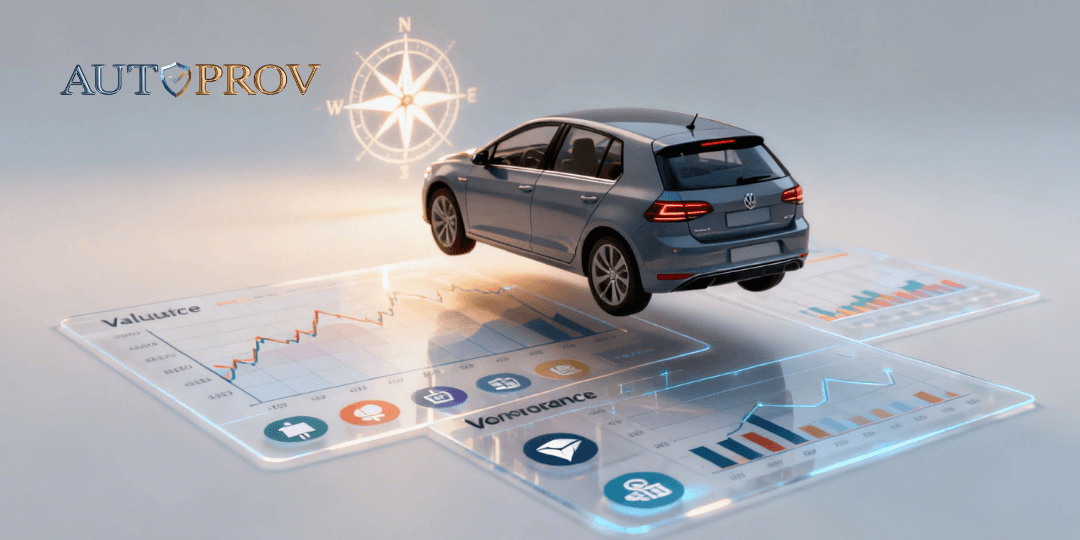
For decades, the Parker's Car Guide has been a staple of the UK motor trade. It is the go-to resource for establishing a baseline vehicle valuation. From part-exchange negotiations to appraising potential stock, its figures are often the first point of reference for both dealers and their customers.
Why Parker's Valuations Still Matter to the Motor Trade

In an era of sophisticated data platforms, Parker's maintains a critical role in a professional buyer's toolkit. Its consumer-facing nature is its unique strength; it provides direct insight into the price point your retail customers have likely already researched.
Consider it a compass. It offers a solid, widely trusted direction on a car's potential market value, but it is not the complete map. Its authority is built on decades of market analysis and the vast quantity of data it processes to produce its valuations.
A Starting Point Built On Data
Parker's valuations are the output of continuous market tracking, collating data from multiple industry sources:
- Dealer Forecourts: Monitoring retail asking prices across the UK.
- Auction Results: Factoring in the real-world hammer prices that vehicles achieve in the trade.
- Private Sales: Analysing advertised prices in the private market.
- Depreciation Curves: Applying established algorithms that forecast a vehicle's value trajectory based on its age, model, and typical mileage.
This blend of sources gives Parker's its broad-stroke accuracy. It creates a shared starting line for price negotiations—a figure that both you and your customer can recognise and understand.
The Compass, Not The Map
For any professional buyer, however, a guide price is merely the beginning. A fundamental limitation of any valuation guide is its reliance on basic data: make, model, age, and mileage. It has no visibility of the vehicle's specific history or provenance.
This is where professional trade vehicle intelligence becomes essential.
A guide price indicates what a standard vehicle could be worth. A full provenance check reveals what a specific vehicle is actually worth by exposing its unique history and associated risks.
The true value of any vehicle is defined by its condition, specification, desirability, and, crucially, its provenance. A clean, one-owner vehicle with a complete service history will command a higher value than an identical model with a problematic past—irrespective of the book price.
This is precisely where profit is made or lost. Relying solely on a guide price, without deeper investigation, is a significant business risk. Understanding how a basic check differs from a professional one is vital; you might find our comparison of AutoProv's advanced checks versus basic provenance-style reports useful. Without this deeper context, you are buying with incomplete information.
How to Interpret Parker's Valuations Through a Trade Lens

While the Parker's Guide is aimed primarily at the public, a professional trader knows how to interpret its consumer-focused data and convert it into a strategic tool. The skill lies not just in looking up a number, but in translating what a retail buyer sees into what it means for your profit margin.
Treat Parker's figures as market signposts. For a motor trader, they are clues to your retail positioning, potential profit, and even the negotiation dynamic for a part-exchange. Understanding these is the first step towards making fast, accurate buying decisions.
The Four Key Price Points Explained
At its core, Parker's provides four main price points. Each tells a different part of the vehicle's commercial story, and knowing how to interpret them is what separates a cursory glance from a professional appraisal.
- Original Price: The vehicle's list price when new, including VAT. This is a useful reference for understanding the initial cost and the value of optional extras.
- Franchised Dealer: The top-end retail benchmark. This is the price expected at a main dealer, where a vehicle is prepared to a high standard and sold with a premium warranty. For an independent dealer, this is your primary competitor's price.
- Private Good: Parker's estimate for a well-maintained vehicle in a private sale. It assumes a clean history, average mileage, and good condition. Crucially, this is the figure your customers have likely researched before contacting you.
- Private Poor: This price reflects a vehicle with high mileage, cosmetic damage, or requiring mechanical attention. It serves as a baseline for valuing a rough part-exchange or auction stock that needs significant reconditioning.
An experienced trader uses the 'Private Poor' and 'Franchised Dealer' prices to establish the absolute floor and ceiling for a vehicle's value. Your task is to pinpoint where a target vehicle sits on that scale after factoring in its unique condition, history, and preparation costs.
Why Specification Is King
Beyond these headline figures, the real art is adjusting for specification. Two vehicles that appear identical on paper can have vastly different real-world values due to factory-fitted options.
Consider two three-year-old Audi A4s. One is a standard SE model; the other is a top-spec S line with a panoramic roof, Technology Pack, and premium audio. Parker's provides the baseline, but you must mentally add the trade value of those desirable extras. That S line will not only sell for more; it will likely sell faster.
This is where a basic used car history report falls short. It will confirm the car's identity but often won't list the factory-fitted options. Knowing which options add genuine value is a fundamental part of a professional buyer's expertise. Our guide on vehicle valuations and market insights digs deeper into how these details shape a car's journey to your business.
Ultimately, Parker's provides the what—the general market price. Your experience, supported by a comprehensive vehicle provenance check, delivers the why—the solid rationale to adjust that price up or down. Using the guide as a compass and deep data as your map is the only way to protect your margins and source stock intelligently.
Beyond The Book Price: Hidden Risks Valuation Guides Miss
Every trader uses a guide price, but relying solely on a figure from a source like the Parker's Guide is one of the fastest ways to erode profit margins.
Treating the "book price" as the final word is a critical error. It is akin to diagnosing an engine fault by admiring the paintwork; you are ignoring the complex history and mechanical realities that truly define a vehicle's commercial worth.
A guide price is a snapshot of an idealised car—one with average mileage, standard specification, and a clean history. It has no awareness of the vehicle's real-world ownership story or what that history might be concealing. These are the details that create a significant gap between the book price and a car's genuine trade value.
The Provenance Gap: What The Guides Can't See
The most significant blind spot for any valuation guide is its complete inability to assess vehicle provenance. This is where your profit margin is either secured or lost. A car can appear excellent on paper, with a strong book value, but be a high-risk acquisition due to factors a standard valuation will never detect.
Consider these common scenarios where a vehicle's hidden history completely alters its value:
- Short-Term Ownership: A car passed between three keepers in the last 18 months is a major red flag. A professional vehicle history check UK solution flags this instantly, as it often indicates a recurring fault or a vehicle being passed around the trade.
- Mileage Anomalies: An unexplained drop in mileage between MOTs, or a year with minimal recorded usage, is a classic indicator of potential clocking. This not only poisons a vehicle's value but also creates significant legal and reputational risk.
- Geographic Indicators: A vehicle that has spent its life in a coastal area demands closer inspection for corrosion. One used exclusively for city commuting will likely have increased wear on its clutch, brakes, and suspension.
A guide price provides a vehicle's theoretical market value. Its provenance reveals its actual value to your business, accounting for all the risks and opportunities hidden in its past.
The table below highlights the critical difference between what standard guides see and the deeper intelligence required for professional buying.
Valuation Data Points: A Comparison
Data Point Parker's Guide (Standard Valuation) Provenance & Risk Intelligence (e.g., AutoProv) Model & Age Value Yes - Core component based on market data. Yes - Used as a starting baseline. Mileage Adjustment Yes - Applies a standard formula. Yes - But cross-references against history for anomalies. Specification Impact Yes - For major factory options. Yes - Integrated with overall vehicle profile. Outstanding Finance No - Completely invisible to the guide. Yes - A critical, immediate check. Insurance Write-Offs No - Cannot see accident or write-off history. Yes - Checks MIAFTR for Cat A, B, S, and N markers. Ownership History No - No visibility of keeper changes. Yes - Flags rapid ownership cycles as a key risk indicator. Import/Export Status No - Doesn't verify if a vehicle is a UK model. Yes - Identifies grey imports or vehicles previously exported. Stolen Vehicle Marker No - Not connected to police databases. Yes - Live checks against the Police National Computer (PNC). Scrapped Marker No - Unable to see DVLA scrapped status. Yes - Prevents you from buying a vehicle that shouldn't exist. As illustrated, a valuation guide provides a single piece of the puzzle. True risk intelligence delivers the full picture, enabling you to price a vehicle based on its complete story, not just its cover.
Connecting Price To Real-World Risk
Imagine two identical cars at auction. Both are three-year-old Ford Focus models with 40,000 miles. Parker's lists the 'Private Good' valuation for both at £15,000.
- Car A's provenance check shows one owner from new, a complete main dealer service history, and perfectly consistent MOT mileage. A clean, low-risk vehicle.
- Car B's check reveals four previous owners, a suspicious 10,000-mile gap in its MOT record, and evidence of being sold at auction twice in the last year.
Their book price is identical, but Car B is a fundamentally different and riskier proposition. The potential reconditioning costs, likelihood of future warranty claims, and difficulty in retailing mean its true trade value is significantly less than £15,000.
Failing to identify that provenance gap before bidding is how you lose your margin before the vehicle even reaches your forecourt. The price you pay must always reflect the vehicle's entire story. Our thoughts on the value of CarVertical and similar checks offer further perspective. This is where effective motor trade risk management begins.
Combining Parker's Data With Provenance Intelligence
A Parker's valuation is an essential piece of the puzzle, providing the market benchmark that both you and your retail customer recognise. For a professional buyer, however, that figure should never be the final word. It is simply the opening line in your appraisal process.
The art of modern stock acquisition is a disciplined, two-step process. First, establish a baseline value from a trusted source like Parker's. Second, immediately investigate the vehicle's provenance to uncover its full history and quantify the associated motor trade risk.
Moving From Valuation to Verification
A valuation is an educated guess based on market averages. Provenance is the hard evidence of a specific car's life. The book price tells you what a perfect version of that car might be worth; a provenance report reveals whether the car in front of you is anywhere near that ideal.
This is the verification stage, where profit margins are protected. It is the moment you move from decisions based on assumptions to those grounded in fact. This workflow, from guide price to a confirmed, actionable value, is what distinguishes professional buyers.

As the workflow demonstrates, a book price is only the starting point. True value can only be determined after a thorough history check and a realistic assessment of any risks uncovered.
How Provenance Intelligence Changes The Numbers
Robust intelligence on a vehicle's past can fundamentally alter its real-world trade value. The gap between the guide price and the price you should pay is directly linked to the risks concealed in its history.
Consider a four-year-old executive saloon with a Parker's valuation of £15,000. On paper, it appears to be desirable stock.
Now, let's apply real trade vehicle intelligence:
- Ownership History: A provenance check shows it has had three keepers in the last 12 months. This is a major red flag, suggesting a recurring issue.
- MOT Mileage: The mileage check UK data flags a discrepancy. The mileage at its last MOT was 5,000 miles less than the previous year, pointing to potential clocking or a data error that requires investigation.
- Usage Patterns: The history reveals it was first registered to a large fleet operator, suggesting a hard life, regardless of what the odometer now indicates.
Suddenly, this is no longer a £15,000 retail opportunity. It is a high-risk unit that could lead to warranty claims, reputational damage, and a vehicle that is difficult to sell. A professional dealer, armed with these facts, would reduce their offer significantly—perhaps to £12,500 to cover the risk—or simply walk away.
This is the power of layering a guide price with genuine provenance data. It allows you to price the specific car in front of you, not the generic one in the guide. Building a complete picture with a comprehensive vehicle provenance report is the ultimate safeguard for your buying decisions.
A Practical Workflow for Trade Buyers
To apply this effectively, you need a consistent process for every vehicle you consider.
- Establish the Benchmark: Use the Parker's Guide to get the 'Franchised Dealer' and 'Private Good' valuations. This sets your ceiling and provides market context.
- Conduct the Deep Dive: Immediately run a professional dealer vehicle check, such as one from AutoProv. Focus on risk signals: keeper changes, MOT anomalies, outstanding finance, and write-off markers.
- Quantify the Risk: Assign a real-world cost to every red flag. What is the potential workshop cost to rectify a recurring fault? What is the financial impact if the car proves to be clocked?
- Make the Final Offer: Adjust the initial Parker's valuation downwards based on your risk assessment. Your bid must reflect the car’s true, evidence-backed value to your business, not an optimistic guide price.
This disciplined approach transforms buying from a gamble into a calculated business decision. It ensures every vehicle is priced on its unique history, protecting your margins and building a more resilient, profitable operation.
Frequently Asked Questions For Motor Traders
The motor trade is constantly evolving. It is natural to have questions about how traditional tools like the Parker's Guide integrate with modern risk intelligence platforms. Here are some of the most common queries from UK dealers and wholesalers.
How Accurate Is The Parker's Guide For Trade Valuations?
The Parker's Guide provides a solid market baseline. Its figures offer a reliable, widely recognised starting point for any valuation.
However, for a precise trade valuation, you must look beyond the book price. A guide cannot know a specific vehicle's condition, its local market desirability, or its hidden history. The accurate trade value is only revealed after a thorough vehicle provenance check uncovers the complete story.
Does The Parker's Guide Account For Service History?
No, a standard valuation guide cannot assess a vehicle's specific service history. The guide price assumes an average, reasonably maintained car but has no way of verifying this.
A vehicle with a full main dealer service history will command a higher price and sell faster than an identical one with incomplete records. This is a critical detail that must be identified through physical inspection and a detailed used car history report.
A strong service history is one of the most powerful value multipliers that a guide price cannot see. It is your responsibility to identify it and factor it into your final valuation.
Why Is My Part-Exchange Offer Lower Than The Parker's Private Price?
The 'Private Good' price in the Parker's Guide is an estimate for a sale between two private individuals. It does not account for the costs and risks inherent in operating a professional dealership.
A part-exchange offer must incorporate a range of business overheads, including:
- Reconditioning Costs: The expense of preparing the vehicle for retail.
- Warranty Provision: The cost of legally required warranties.
- Marketing and Overheads: The investment needed to advertise the car and cover business expenses.
- Profit Margin: The essential margin required for business sustainability.
These factors are why a trade offer will always be lower than the private guide price. Explaining this difference professionally is key to managing customer expectations.
Can I Rely Solely On The Parker's Guide At Auction?
Relying solely on a guide price at auction is extremely risky. You are often buying 'as seen' with no opportunity for thorough inspection, and the vehicle's history is unknown.
The Parker's valuation should be your absolute maximum bid, not your target. Before bidding, you must run a comprehensive dealer vehicle check. This screens for major red flags like mileage discrepancies, rapid ownership changes, or previous write-off markers. Any information uncovered should be used to adjust your bid price downwards to mitigate the risk of the unknown. Knowing how to choose the best car check website for trade use is a crucial part of this process.
At AutoProv, we provide the advanced vehicle history, provenance, and risk intelligence UK motor traders need to buy smarter and protect their margins. Go beyond the book price and uncover the full story of every vehicle. Learn more about how AutoProv supports your buying decisions.
Frequently Asked Questions
AI-Generated Content Notice
This article was created with the assistance of artificial intelligence technology. While we strive for accuracy, the information provided should be considered for general informational purposes only and should not be relied upon as professional automotive, legal, or financial advice. We recommend verifying any information with qualified professionals or official sources before making important decisions. AutoProv accepts no liability for any consequences resulting from the use of this information.
From our AI insights
- Auction Pitfalls: Avoiding Costly Mistakes
Navigate UK car auctions with confidence by avoiding finance, write-off, and mileage risks.
- Mastering Paint Code Checks: Detecting Hidden Car Repairs
Discover how to use paint code verification to identify hidden car repairs and ensure a smarter purchase.
- UK Part-Exchange Checks: Protecting Dealer Margins
Explore essential part-exchange checks for UK dealers to safeguard profit margins, including provenance and finance verification.
Related Articles

Your Ultimate Guide to Buying a Used Car in the UK
Navigate the UK used car market with confidence using our comprehensive buying guide. Tips, checks, and AutoProv Provenance insights included.

Difference Between MOT and Service: What You Need to Know
An MOT is a mandatory legal inspection that every car on UK roads needs to pass.Think of it as the government's way of ensuring your vehicle meets the absolute minimum safety and environmental standards to be considered roadworthy. A service, on the other hand, is a completely different beast. It's the proactive maintenance routine recommended by the people who built your car, designed to keep it running smoothly and catch problems before they start. In short, an MOT is a pass-or-fail exam required by law. A service is a comprehensive health plan for your car.
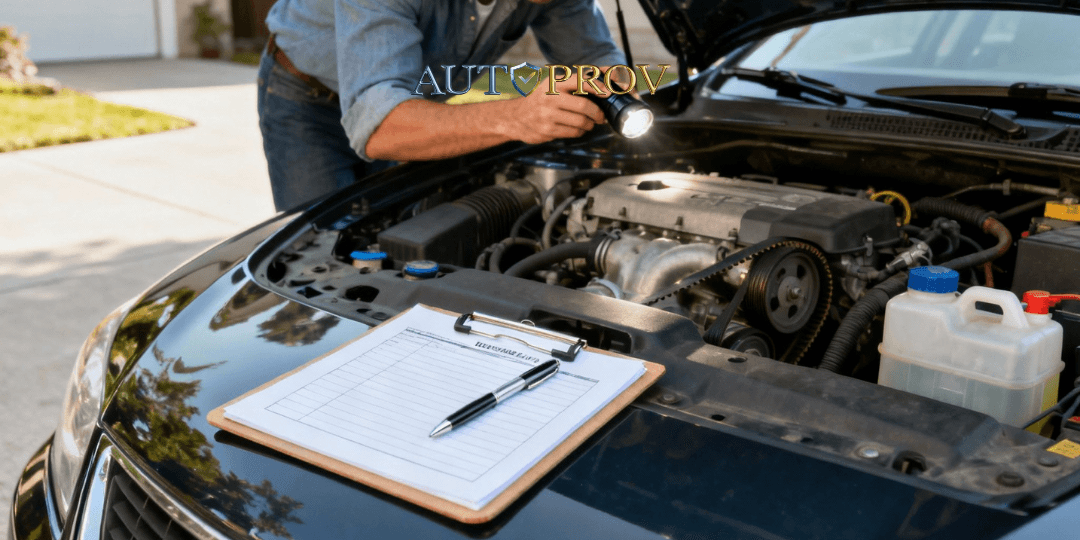
Your Ultimate Used Car Inspection Checklist
A solid used car inspection checklist is the single most powerful tool you have to avoid buying a lemon. It gives you a methodical way to look past the shiny paint and assess a car's real condition, helping you spot hidden problems and get a fair price before you shake hands on the deal.
Published by AutoProv
Your trusted source for vehicle intelligence