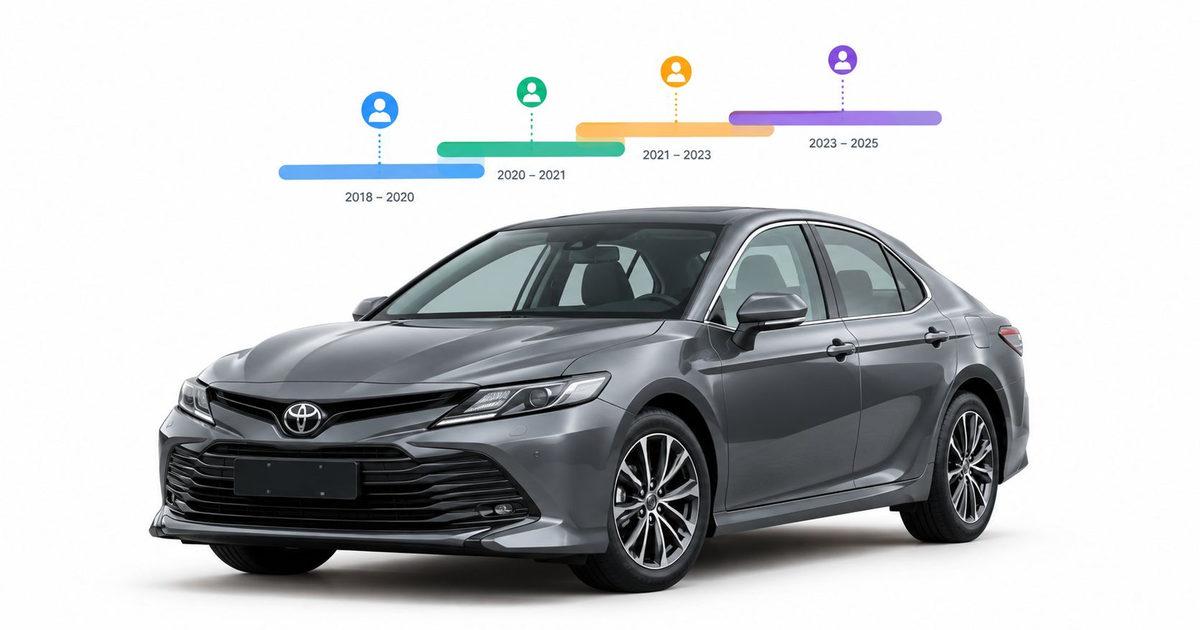
A vehicle arrives at the yard with a clean presentation, a plausible mileage reading and paperwork that appears orderly. The keeper sequence, however, shows several changes close together, followed by an unusually quiet period before the latest MOT. Nothing proves a problem on its own, but the shared ownership timeline raises a more useful question than a simple pass or fail result: what happened between each recorded event?
For UK dealers, that question matters because a vehicle's value depends on more than its current condition. Finance, leasing, fleet use, rapid resale, mileage recording and insurance events can create a fragmented history. Standard checks may identify individual signals without explaining how they fit together. A thorough vehicle history check UK process must therefore assess context, not just collect isolated records.
Table of Contents
- The Hidden Risks in Vehicle Ownership Patterns
- Why the sequence matters
- Decoding Overlapping and Short-Term Ownership
- Read compressed timelines as questions
- How to Interpret Timelines for Risk Assessment
- A practical reading method
- Questions that improve the decision
- Standard Checks vs Advanced Provenance Intelligence
- What works in the yard
- Mileage Discrepancies and Data Anomalies
- Anomalies worth investigating
- Practical Insights for Safer Trade Buying
- A yard-ready review
- Why Advanced Vehicle Intelligence Matters
- Securing Your Stock with Better Decisions
- Make the decision defensible
The Hidden Risks in Vehicle Ownership Patterns
A buyer in the trade might recognise the situation. A nearly new vehicle is offered at a competitive price, the seller provides a recent MOT history and the odometer reading looks consistent with the visible wear. The keeper record then shows a short period with one holder, another change soon afterwards and a gap before the current seller acquired it.
That sequence doesn't establish fraud. It does establish uncertainty. The vehicle may have moved through a leasing company, a fleet operator, a motor trader or a finance-related transfer. It could also reflect a genuine private sale. The problem starts when the dealer treats every keeper change as an ordinary retail transaction without asking why the dates and usage appear compressed.
A shared ownership timeline in this article doesn't mean several people appearing as legal owners at the same time. It describes a provenance pattern where different parties may have had legal, financial or operational interests, or where the vehicle moved rapidly between users and sellers. Leasing and hire purchase can create different relationships between the registered keeper, finance provider and person using the vehicle. Rapid resale can make the history look denser than a normal private ownership cycle.
Why the sequence matters
The individual records often look harmless. The risk becomes visible when you align:
- Keeper changes: Compare each change with the vehicle's age, mileage and sale context.
- Registration events: Check whether registration timing makes sense alongside ownership and usage.
- MOT records: Look for mileage progression, gaps and unusually close test dates.
- Condition and specification: Ask whether wear, repairs or modifications fit the claimed use.
A standard review of previous keepers remains useful, but it shouldn't be the end of the assessment. A dealer needs to understand the intervals, not just count the names.
Practical rule: A clean-looking vehicle with an unexplained timeline isn't a clean buying decision. Pause the valuation until the gaps have a credible explanation.
This approach protects both wholesale buying and retail preparation. If the dealer pays on an assumption that later proves wrong, the impact can include reconditioning costs, renegotiation, a delayed sale or a post-sale dispute. Vehicle provenance gives the buying team a framework for asking better questions before capital is committed.
Decoding Overlapping and Short-Term Ownership
Ownership records describe registration history, but they don't always describe the complete commercial relationship with a vehicle. A registered keeper may be a user, a business or a fleet operator, while another party holds a financial interest. That distinction matters when a dealer interprets a compressed timeline.

A normal transfer usually has a coherent story. A private owner buys, uses and later sells the vehicle, with mileage and condition broadly matching that use. Other patterns need more care:
- Fleet or leasing use: The vehicle may have had one operational keeper while being driven by many users. Service, tyre and bodywork history can therefore matter as much as the keeper count.
- Finance-linked changes: A finance arrangement can create a difference between the person using the vehicle and the organisation with a financial interest. The V5C record alone may not explain that relationship.
- Rapid resale: A vehicle moving through several businesses in a short period may reflect wholesale trading, a rejected purchase, mechanical trouble or a dealer avoiding a difficult disclosure.
- Possible identity concerns: Registration dates, specification, mileage and documentation that don't align can justify checking for cloning or identity irregularities.
Read compressed timelines as questions
A short holding period isn't automatically negative. A vehicle may be sold because of a change in circumstances, a failed finance application or a normal dealer-to-dealer transaction. The correct response isn't to reject every short-term keeper. It's to ask whether the supporting evidence matches the explanation.
Lease-end wear can also be relevant. A vehicle returned after intensive use may have been prepared cosmetically before resale, leaving the exterior more convincing than the underlying usage record. Conversely, a clean interior and strong service history may support a benign explanation. The timeline provides direction, not a verdict.
MOT coverage has a defined limit. GOV.UK explains that car, motorcycle and van MOT history is available only for tests carried out since 2005, while HGVs, trailers, buses and coaches are covered since 2018. An MOT-led vehicle history check UK can therefore leave earlier ownership and mileage periods unexamined, which is material when assessing provenance and motor trade risk.
For a fuller view, dealers should combine the keeper sequence with mileage records, finance and insurance indicators, service evidence, physical inspection and seller documentation. A DVLA keeper history review helps establish the recorded chain, but the commercial meaning of each change still requires judgement.
How to Interpret Timelines for Risk Assessment
Start with the vehicle's age and the first available record, then work forward. Don't begin with the latest keeper and try to explain backwards from the seller's description. A timeline is easier to assess when every event is placed in sequence and compared with the vehicle's physical evidence.
A practical reading method
First, map the dates. Note registration, keeper changes, MOT tests, recorded mileage and any available finance or insurance events. You're looking for order and spacing. A sequence that moves logically is easier to support than one with unexplained gaps.
Next, test the usage story. Ask whether mileage growth fits a private vehicle, a business car, a rental-style pattern or a fleet vehicle. A high-use explanation may be credible, but it should be reflected in servicing, tyres, interior wear and repair records.
Then, examine transitions. A rapid change from one keeper to another deserves context. Was the vehicle sold at auction, returned at the end of a lease, acquired by a trader or moved after a mechanical issue? The answer affects valuation and preparation.
Finally, separate evidence from inference. A gap isn't proof of concealment. It becomes more significant when it appears with mileage reversal, inconsistent documentation, unusual wear or a seller explanation that changes under questioning.
The MOT system also allows for administrative correction. A test centre can correct a mileage error noticed within 28 days, issue a replacement certificate, and report an error found later to DVSA, as described in the DVSA explanation of MOT mileage recording errors. That rule matters because a recent discrepancy may be an input mistake rather than evidence of tampering.
Questions that improve the decision
- Why did the keeper change? Seek a documented reason, not just a verbal assurance.
- What happened during the gap? Check invoices, service entries, auction records and seller paperwork where available.
- Does mileage rise consistently? Compare the reading with wear and recorded test history.
- Does the vehicle's condition fit the timeline? Heavy use should leave some trace, even after preparation.
- What risk remains unresolved? Price the uncertainty rather than ignoring it.
A useful MOT history review is a starting point, not a substitute for provenance analysis. The strongest buying decisions come from explaining the timeline in plain language before the vehicle reaches the stock list.
Standard Checks vs Advanced Provenance Intelligence
A standard check answers narrow questions efficiently. It may show finance, an insurance marker, MOT results or a mileage record. Those outputs are valuable, especially when a dealer needs a quick first filter, but they often leave the buyer to interpret the relationship between events.
Advanced provenance analysis starts with the same underlying evidence and adds context. It can group ownership patterns, identify compressed activity, compare mileage movement and bring related risk indicators into one decision view. That doesn't remove the need for inspection or judgement. It reduces the chance that a buyer misses a meaningful connection between otherwise ordinary records.
GOV.UK's MOT history service returns tests since 2005 for cars, motorcycles and vans and shows the mileage recorded at each test. It doesn't, by itself, explain ownership timing, movement between tests or other signals relevant to a used car history report. That limitation is important when a dealer is assessing stock at speed.
Feature Standard Check Advanced Provenance Keeper information Displays recorded keeper events where available Interprets the sequence and highlights unusual density or gaps MOT and mileage Shows test history and recorded readings Assesses progression alongside ownership and usage context Finance or insurance Presents individual markers Relates markers to the wider timeline Decision support Requires manual interpretation Prioritises anomalies for further investigation Buying workflow Useful as an initial filter Supports valuation, negotiation and escalation decisions
What works in the yard
Standard checks work well for fast exclusion. If a vehicle has an obvious unresolved marker, the buyer can stop before investing more time. They also provide an auditable first step in a structured purchasing process.
They work less well when the vehicle passes each isolated check but the combined timeline feels wrong. A dealer may see no single disqualifying event and still face a material provenance question. In that situation, relying on a pass result can be more dangerous than acknowledging uncertainty.
A provenance check comparison helps buyers distinguish raw retrieval from contextual analysis. The practical standard should be simple: use the level of intelligence that matches the value, speed and risk of the purchase.
Mileage Discrepancies and Data Anomalies
Mileage is persuasive because it appears precise. In practice, it is a series of recorded observations, each dependent on the person entering the reading and the system holding it. A mileage check UK process should therefore assess direction, timing and supporting evidence rather than treating the latest dashboard figure as definitive.
A compressed ownership timeline can increase the risk of unexplained mileage movement. A short-term seller may have limited knowledge of earlier use, while a vehicle moving through several trade channels can accumulate records from different sources. Lease or fleet use may also produce demanding mileage without an obvious private-owner narrative.
Anomalies worth investigating
- Reversal: A later recorded reading is lower than an earlier one. Check whether an administrative correction could explain it, then seek supporting documentation.
- Plateau: Mileage appears unchanged across a period where the vehicle was likely in active use. Compare service dates, MOT timing and physical wear.
- Sudden acceleration: The vehicle covers an unusual amount of distance between records. This may fit fleet or motorway use, but it should influence preparation and valuation.
- Mismatch with condition: Steering wheel, pedals, driver's seat and tyres may tell a different story from the odometer.
The analysis of mileage anomalies in MOT records is useful because it encourages dealers to treat a discrepancy as a diagnostic prompt. It doesn't prove that a vehicle has been clocked, and a clean sequence doesn't prove that every mile has been captured.
A mileage figure is evidence. It isn't a complete account of how the vehicle was used.
The dealer's response should be proportionate. Confirm the source, ask the seller for an explanation, inspect the vehicle closely and record the decision. If uncertainty remains, reduce the bid, seek further evidence or walk away. The right action depends on the severity of the anomaly and the strength of the supporting documentation.
Practical Insights for Safer Trade Buying
A good buying process makes the timeline part of the valuation, not an administrative check completed after the price has been agreed. The buyer should review provenance before committing funds, especially where the vehicle has passed through several hands or the seller is pushing for a quick decision.
A yard-ready review
- Build the sequence: Put keeper, MOT, mileage and available risk events in date order.
- Identify the pressure points: Mark gaps, reversals, rapid changes and unexplained transitions.
- Request evidence: Ask for service invoices, lease-return documents, auction paperwork or a clear seller explanation.
- Inspect against the story: Compare tyres, bodywork, interior wear, modifications and warning lights with the claimed use.
- Price the uncertainty: Include likely preparation, delayed sale risk and the possibility of further investigation.
- Record the outcome: Note why the vehicle was bought, repriced or rejected.
The process doesn't need to be slow. It needs to be consistent. A stock controller can require escalation whenever the timeline and physical condition tell different stories, while an experienced buyer can apply a lower threshold to vehicles with unclear provenance.
Don't let a clean dashboard presentation override weak documentation. Equally, don't reject a vehicle solely because it has changed hands quickly. Context is the difference between a useful warning and an unsupported assumption.
Why Advanced Vehicle Intelligence Matters
Used vehicle buying now depends on decisions made before a technician has time to dismantle anything. The buyer needs a reliable view of ownership patterns, mileage movement and related risk signals while the vehicle is still available. Raw records are necessary, but they don't always provide the interpretation required at the point of purchase.
An advanced platform can help by bringing authoritative datasets into one workflow and flagging relationships that deserve attention. The aim isn't to replace a physical inspection or create a guarantee. It's to give the buying team a clearer basis for deciding whether to proceed, negotiate or stop.

AutoProv provides UK-focused vehicle history and provenance reports that analyse DVLA records, MOT history, mileage patterns, ownership timelines, insurance-related events and other risk indicators. For dealers and wholesalers, that type of trade vehicle intelligence can support stock acquisition, valuation, compliance and escalation decisions.
The useful question isn't whether a platform says yes or no. It's whether the report makes the reason behind the signal easier to understand. That distinction helps experienced buyers apply judgement without overlooking a pattern hidden across separate records.
Securing Your Stock with Better Decisions
A vehicle with several apparent owners can still be sound stock. A vehicle with one apparent owner can still carry unresolved risk. The shared ownership timeline is valuable because it moves the conversation away from simplistic keeper counts and towards sequence, evidence and explanation.
Consider two vehicles offered at similar money. The first has a dense keeper history, but the mileage rises consistently, service records support fleet use and the seller provides a coherent account. The second has fewer changes, yet the MOT mileage is difficult to reconcile with the condition and the seller can't explain a gap in the record. The first may be the more manageable purchase because its risk is understood.
Make the decision defensible
A defensible buying file should show:
- What the records said: Keep the relevant checks and timeline evidence.
- What raised concern: Describe the anomaly without overstating it.
- What the seller supplied: Record documents and explanations.
- How the price reflected risk: Note whether the uncertainty changed the offer.
- Why the final decision was reasonable: Make the outcome clear to the next buyer, manager or compliance reviewer.
This discipline protects more than margin. It supports honest retail descriptions, reduces avoidable disputes and helps the dealership maintain a consistent standard across buyers and sites. Basic checks still have a place, but they shouldn't be mistaken for a complete provenance assessment.
A stronger process is to review vehicle intelligence before the offer, investigate the timeline while the seller is available and record the reasoning before the vehicle enters stock. That is how dealers turn fragmented data into a practical buying advantage.
AutoProv provides UK vehicle history, provenance and risk intelligence for dealers, wholesalers and professional vehicle buyers, including ownership timeline, mileage pattern and anomaly analysis. Use AutoProv to review the provenance context before you commit capital, then make a clearer buying, valuation or escalation decision.
Frequently Asked Questions
AI-Generated Content Notice
This article was created with the assistance of artificial intelligence technology. While we strive for accuracy, the information provided should be considered for general informational purposes only and should not be relied upon as professional automotive, legal, or financial advice. We recommend verifying any information with qualified professionals or official sources before making important decisions. AutoProv accepts no liability for any consequences resulting from the use of this information.
From our AI insights
- Liabilities of Selling Cars with Undisclosed Finance
Explore the legal risks UK car dealers face when selling vehicles with hidden finance agreements.
- Decoding Finance Agreements: A Trader's Guide
Master finance checks with this guide on spotting hidden agreements in the UK automotive trade.
- Hidden Finance Risks: Costly Pitfalls for UK Car Dealers
Explore the serious financial risks hidden finance poses to UK car dealers and learn how to avoid costly pitfalls.
Related Articles

The Importance of Vehicle History Checks in Finance
Discover why checking vehicle history is vital, especially for outstanding finance.

Why Finance Checks are Crucial Before Buying a Vehicle
Discover why running finance checks is essential before purchasing a vehicle and how it impacts your decision-making process.
Car Hire Purchase Check: A UK Dealer's Guide for 2026
A car lands in the lane, the appraisal looks straightforward, the seller sounds credible, and the initial history result appears clean enough to keep the deal moving. Then the problem turns up after money has changed hands. An outstanding finance interest, an ownership timeline that doesn’t make commercial sense, or mileage history that doesn’t fit the vehicle’s condition.
Published by AutoProv
Your trusted source for vehicle intelligence