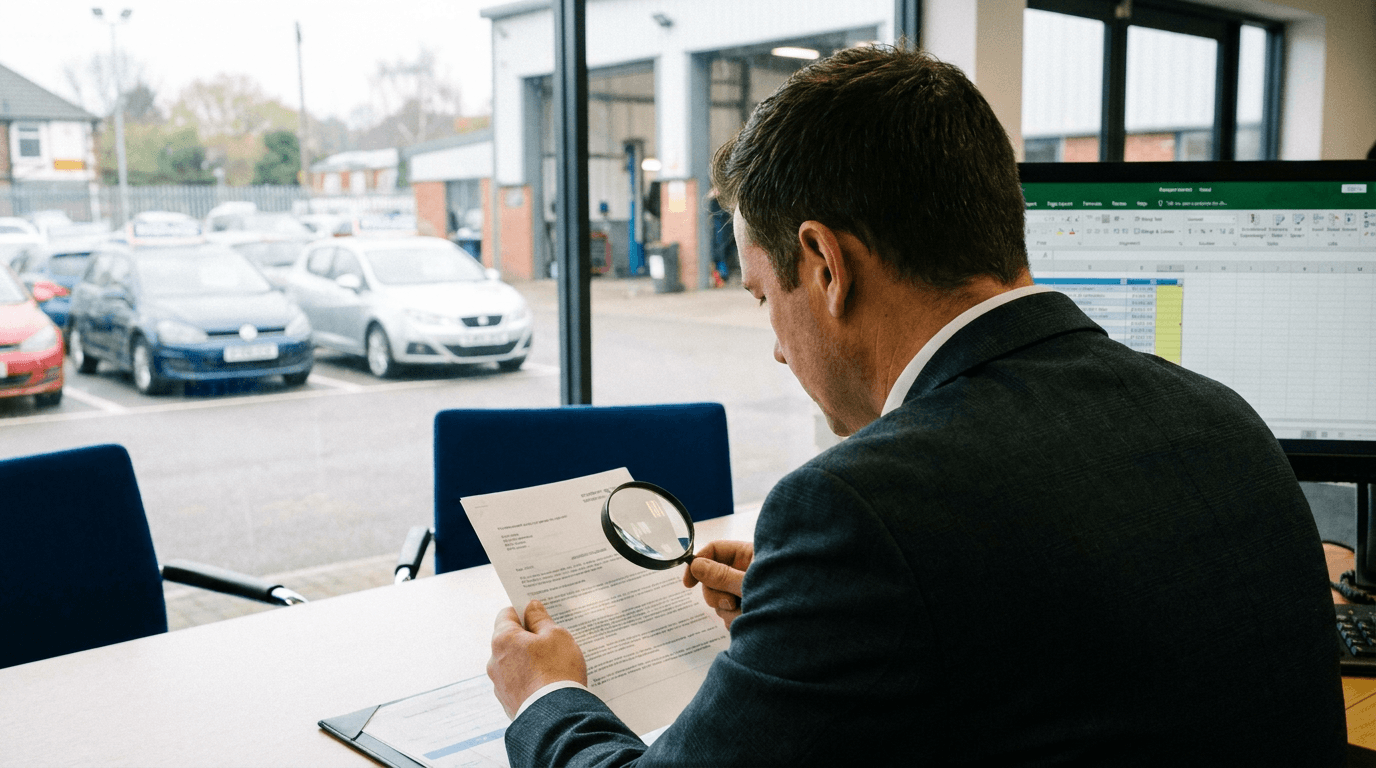
Recall history affects dealer liability, stock value, and compliance. Learn what UK motor traders must check, disclose, and document when selling recalled vehicles.
By CiteFlow
Why Recall History Matters to UK Motor Traders
Recall history directly affects your legal liability, stock valuation, and customer safety obligations as a UK motor trader. When a vehicle on your forecourt has an outstanding manufacturer recall, you inherit responsibility for disclosure and potentially remediation, regardless of whether the defect is immediately apparent. The Consumer Rights Act 2015 requires vehicles to be of satisfactory quality and fit for purpose, and an unresolved safety recall can constitute a breach of these statutory rights. Beyond compliance, recall status influences resale value, customer confidence, and your professional reputation. Understanding what recall data reveals and how to act on it separates diligent dealers from those exposed to avoidable risk.
Manufacturer recalls are not rare occurrences. Millions of vehicles on UK roads carry outstanding recall notices, from minor software updates to critical safety defects affecting braking systems, airbags, or fuel lines. Many owners never receive recall notifications due to address changes, and previous keepers may have ignored them entirely. When you acquire stock, you acquire these hidden liabilities unless you verify recall status and take appropriate action.
What Vehicle Recall Data Actually Tells You
Recall data identifies specific safety or compliance defects that manufacturers have formally acknowledged and committed to rectify at no cost to the owner. Each recall notice includes a unique campaign reference, affected VIN ranges, the nature of the defect, potential consequences, and the prescribed remedy. For dealers, this information serves three critical functions: it identifies vehicles requiring immediate attention before sale, provides evidence for pricing adjustments during acquisition, and creates documentation for your compliance records.
Recall severity varies enormously. Some recalls address minor trim issues or software calibration, whilst others involve potentially fatal defects like faulty Takata airbags or diesel particulate filter fires. The data does not always indicate whether previous keepers completed the recall work. Manufacturers maintain completion records, but these are not universally accessible through standard vehicle history check services. This gap creates uncertainty: you may know a recall was issued, but not whether it was resolved.
Recall data also reveals manufacturer quality patterns. Vehicles from certain model years or production batches may carry multiple concurrent recalls, suggesting systemic quality control failures. This pattern affects long-term reliability perceptions and resale difficulty, even after recall work is completed. Buyers increasingly research recall histories independently, and prominent safety recalls can damage a model's market reputation for years.
Your Legal Obligations Regarding Recalled Vehicles
UK law does not explicitly prohibit selling a vehicle with an outstanding recall, but your obligations under the Consumer Rights Act 2015 create significant constraints. A vehicle with a known, unresolved safety defect may fail to meet the satisfactory quality standard, particularly if the defect poses immediate danger or substantially impairs functionality. If a customer suffers harm or vehicle failure due to a recall defect you knew about but failed to disclose or remedy, you face potential liability for breach of contract, misrepresentation, or negligence.
Transparency is your strongest protection. Disclosing known recalls in writing before sale, documenting that disclosure, and offering to arrange recall completion through the manufacturer's authorised network demonstrates reasonable care. Some dealers refuse to retail vehicles with outstanding safety-critical recalls until the work is completed, treating recall remediation as part of pre-delivery preparation. This approach eliminates risk but may delay stock turn if manufacturer parts are unavailable or appointment slots are scarce.
The CRA 2015 compliance framework also affects how you handle post-sale recall notifications. If a recall is announced after you sell a vehicle but the defect existed at the point of sale, the customer may claim the vehicle was not of satisfactory quality when supplied. Your liability depends on whether the defect was discoverable through reasonable pre-sale checks and whether it materially affects quality or safety. Maintaining records of recall checks performed at acquisition protects you in these scenarios.
How to Check Recall Status for Stock Vehicles
Recall verification should form part of your standard due diligence process for every vehicle you acquire. The most reliable method is checking directly with the manufacturer using the VIN. Most major manufacturers operate online recall checkers on their UK websites, allowing instant VIN lookup. These tools return current recall status and provide contact details for booking recall work at franchised dealers. Coverage and data freshness vary by manufacturer, with some systems updated weekly and others less frequently.
Comprehensive vehicle provenance reports from trade intelligence services increasingly include recall data aggregated from manufacturer sources and regulatory databases. This approach consolidates recall status alongside finance checks, MOT history, and keeper changes in a single report, streamlining your workflow. However, not all vehicle check providers include recall data, and those that do may not cover every manufacturer equally. Verify what recall coverage your chosen provider actually delivers before relying on it as your sole check.
For imported vehicles or grey imports, recall checking becomes more complex. UK recall databases may not include campaigns issued in the vehicle's origin market, and VIN formats may not align with UK manufacturer systems. In these cases, contacting the manufacturer's UK importer or the original market's regulatory body may be necessary. The effort is proportionate to the risk: imported vehicles with unknown recall histories carry higher liability exposure than UK-market vehicles with verified clean recall status.
Commercial Impact of Recall History on Stock Value
Outstanding recalls affect vehicle valuation in ways that standard trade guides do not always capture. A vehicle with a known safety recall typically commands lower wholesale prices at auction, reflecting the time and cost required to arrange recall completion before retail sale. The severity and publicity of the recall influence the discount. High-profile recalls affecting popular models can depress values across entire model ranges, even for vehicles outside the affected VIN ranges, due to reputational damage.
Completed recall work can actually enhance value if properly documented. A vehicle with evidence of all recalls completed, particularly safety-critical campaigns, offers buyers peace of mind and reduces their perceived risk. Retaining manufacturer confirmation letters or service stamps showing recall completion adds tangible value to your stock file and supports premium pricing. This documentation also protects you against future disputes about whether the work was genuinely performed.
Recall history also influences days-to-sell metrics. Vehicles with widely publicised recalls, even if resolved, may sit longer on forecourts as retail customers conduct their own research and hesitate. This extended holding period increases your carrying costs and opportunity cost. Factoring realistic days-to-sell expectations into your acquisition pricing for recall-affected models prevents margin erosion. Understanding market intelligence around specific recall campaigns helps you make informed stocking decisions.
Practical Workflow for Managing Recalls in Your Dealership
Integrating recall checks into your existing acquisition process requires minimal additional effort but delivers substantial risk reduction. At the point of vehicle appraisal, whether at auction, part-exchange, or trade purchase, run a recall check alongside your standard provenance and finance verification. Record the result in your stock file with the date checked and the source used. If recalls are outstanding, note their severity and estimated completion time.
For vehicles with outstanding recalls, contact the relevant manufacturer's recall hotline or franchised dealer network to book the work before retailing. Many manufacturers prioritise recall appointments and provide loan vehicles if extended workshop time is required. Some dealers negotiate recall completion as a condition of purchase, requiring the vendor to arrange the work before handover. This approach works well for part-exchanges but is rarely feasible for auction purchases.
Document everything. Retain copies of recall check results, manufacturer correspondence, and completion certificates in your stock file. If you sell a vehicle with a known outstanding recall, ensure your sales documentation explicitly discloses this fact and confirms the customer's acknowledgement. Template disclosure forms reduce administrative burden whilst maintaining consistent compliance standards. Your pre-delivery inspection documentation should also reference recall status as a standard checklist item.
Common Recall Scenarios and How to Handle Them
Certain recall situations recur frequently in the used trade and benefit from standardised responses. Takata airbag recalls, affecting millions of vehicles globally, remain one of the most common outstanding campaigns. These recalls are safety-critical, involving potentially fatal airbag inflator ruptures. Best practice is to refuse retail sale until completion, as the liability exposure outweighs any profit margin. Wholesale disposal with full disclosure to the trade buyer is an alternative, accepting the corresponding value reduction.
Diesel particulate filter (DPF) recalls, common on certain European manufacturers, often involve software updates rather than physical component replacement. These are typically quick to complete and should be arranged before sale. However, some DPF recalls require extended workshop time for hardware replacement, creating scheduling challenges. Transparent communication with customers about completion timelines manages expectations and maintains trust.
Recalls issued after you have sold a vehicle require careful handling. When a manufacturer announces a new campaign, they notify registered keepers directly, but you may receive enquiries from customers who purchased recently. Your obligation is limited: you are not liable for defects that were not discoverable at the point of sale. However, proactively contacting recent customers to inform them of new recalls demonstrates goodwill and protects your reputation. Maintaining a customer database with VINs facilitates this communication.
Recall History in the Context of Broader Due Diligence
Recall checking is one component of comprehensive trade due diligence, not a standalone process. It sits alongside MOT history analysis, digital service history verification, finance checks, and keeper history review. Each data source reveals different risk dimensions, and their combination provides the complete intelligence picture you need for confident stock decisions.
Recall data sometimes correlates with other history anomalies. A vehicle with multiple outstanding recalls may also show patchy service history or frequent keeper changes, suggesting neglectful ownership. Conversely, a well-maintained vehicle with complete digital service records and no outstanding recalls signals diligent previous ownership and lower risk. These patterns inform your acquisition pricing and retail positioning.
The absence of recall data is not always reassuring. Some manufacturers are slower to issue recalls than others, despite similar defect rates. Regulatory pressure, litigation risk, and corporate culture all influence recall frequency. A vehicle with no recalls may simply come from a manufacturer with less transparent quality management. This is why recall history must be evaluated alongside broader provenance data rather than in isolation.
Technology and Future Developments in Recall Tracking
Recall data accessibility is improving as manufacturers and regulators recognise the safety imperative of reaching affected vehicle owners. The DVSA and VCA maintain the UK's official recall database, which is increasingly integrated into commercial vehicle intelligence platforms. This centralisation makes recall checking more reliable and comprehensive than relying on individual manufacturer websites, which vary in quality and coverage.
Connected vehicle technology will eventually transform recall management. Vehicles with embedded connectivity can receive over-the-air software updates to resolve certain recalls without workshop visits. Manufacturers can also push recall notifications directly to vehicle infotainment systems, ensuring owners cannot miss critical safety messages. For dealers, this technology may enable remote verification of recall completion status, reducing administrative burden.
Regulatory developments may also impose stricter dealer obligations. Some jurisdictions outside the UK already prohibit sale of vehicles with outstanding safety recalls, and similar legislation could emerge domestically. Staying informed about regulatory consultations and industry guidance ensures you adapt your processes before compliance becomes mandatory rather than reactive.
Frequently Asked Questions
AI-Generated Content Notice
This article was created with the assistance of artificial intelligence technology. While we strive for accuracy, the information provided should be considered for general informational purposes only and should not be relied upon as professional automotive, legal, or financial advice. We recommend verifying any information with qualified professionals or official sources before making important decisions. AutoProv accepts no liability for any consequences resulting from the use of this information.
From our AI insights
- The Impact of EV Service Records on Resale Value
Discover how electric vehicle service records affect resale value and buyer confidence in the UK market.
- The Importance of Tyre Verification for UK Motor Traders
Discover why verifying tyre specs is crucial for UK traders to ensure safety and compliance.
- Decoding CO2 Emissions: A Trader's Guide
Learn how traders can verify CO2 data using factory build sheets to prevent disputes.
Related Articles
The Importance of Car Maintenance and Provenance Checks
Discover why regular car maintenance and proper provenance checks are essential for vehicle quality and longevity.

Essential Car Maintenance Tips for UK Drivers
Discover vital car maintenance tips to keep your vehicle roadworthy and compliant in the UK.
How Much Is a Car Service? Complete UK Price Guide
Trying to pin down exactly "how much is a car service?" can feel a bit like asking "how long is a piece of string?". Prices vary quite a bit, but to give you a ballpark figure, an interim service will usually set you back around £100 to get started. A more thorough full service often begins at £180, while a major service for many cars can easily top £300.
Published by AutoProv
Your trusted source for vehicle intelligence