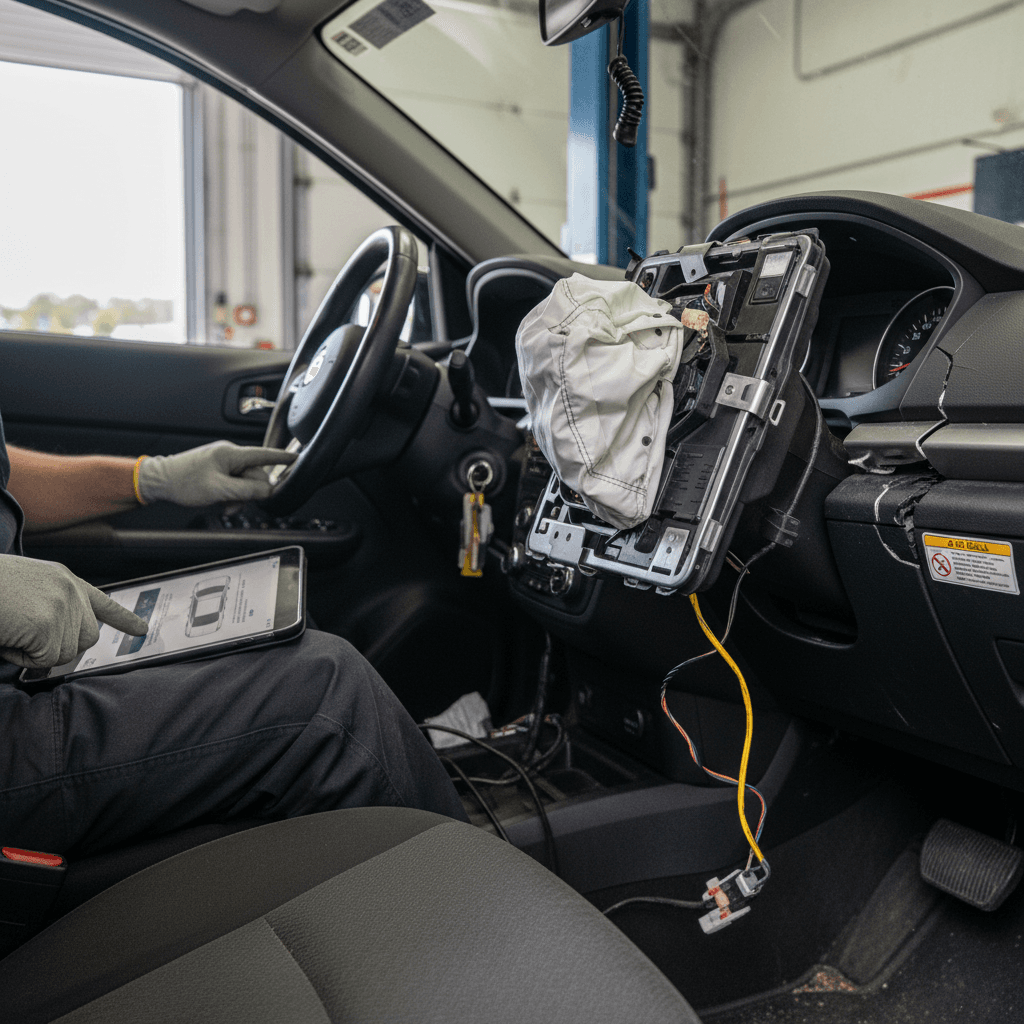
Professional guide to verifying airbag deployment, safety recalls, and crash protection systems when inspecting trade stock. Essential checks for UK motor traders.
By CiteFlow
Why Airbag and Safety System Verification Matters for Trade Buyers
Airbag and safety system verification reveals whether a vehicle has been in unreported collisions, suffered deployment without proper repair, or carries unresolved manufacturer safety recalls that create liability exposure. A deployed airbag that was never replaced, a disconnected airbag warning light, or an open recall affecting crash protection can turn what appears to be clean stock into a Consumer Rights Act 2015 liability and a potential safety hazard for your customer. Professional traders need to verify these systems because visual inspection alone cannot identify previous deployments, electrical faults, or recall status.
The financial implications extend beyond the immediate purchase. Vehicles with airbag deployment history typically suffer 15-25% value reduction even after professional repair, while unresolved safety recalls can prevent sale in some circumstances and create legal exposure under CRA 2015 durability and safety standards. A vehicle sold with faulty or missing safety equipment fails the satisfactory quality threshold, giving customers statutory rejection rights and exposing dealers to potential injury claims if systems fail.
Safety system verification also protects against sophisticated concealment. Fraudulent sellers disconnect warning lights, replace airbag covers without replacing the actual airbag units, or clear fault codes temporarily to hide deployment history. These practices are common enough that visual inspection and a quick dashboard check provide false confidence. Proper verification requires cross-referencing multiple data sources, physical inspection points, and manufacturer recall databases.
Core Safety Systems Requiring Verification
Modern vehicles contain multiple interconnected safety systems, each requiring specific verification approaches. The primary airbag system typically includes driver and passenger front airbags, side-impact airbags in seats or door panels, curtain airbags along the roof line, and knee airbags in higher-specification vehicles. Each airbag has its own deployment sensor, wiring harness, and control module integration. When verifying vehicle specification before listing, confirm which airbags were fitted as standard versus optional equipment, because aftermarket replacement often omits optional units.
Seatbelt pretensioners form part of the supplemental restraint system (SRS) and deploy simultaneously with airbags during collisions. These pyrotechnic devices tighten seatbelts in milliseconds before impact, then often incorporate load limiters that release controlled tension to prevent chest injuries. Pretensioners are single-use components that must be replaced after deployment, yet they are frequently overlooked during repair because they show no visible damage. A deployed pretensioner without replacement creates the same liability as a missing airbag.
The SRS control module records deployment events in non-volatile memory, creating a permanent record even if fault codes are cleared. This module monitors all airbag circuits continuously, detecting resistance changes that indicate deployment, disconnection, or component failure. Professional diagnostic scanning retrieves stored deployment data, crash severity recordings, and sensor activation sequences. However, unscrupulous repairers sometimes replace the entire control module to erase deployment history, which is why physical inspection and cross-referencing with other data sources remains essential.
Electronic stability control (ESC), anti-lock braking systems (ABS), and traction control systems contribute to crash avoidance rather than crash protection, but they are equally important for CRA 2015 compliance. These systems have been mandatory on new vehicles since 2014, and their absence or malfunction on vehicles where they should be fitted constitutes a material defect. Verify that ESC and ABS warning lights extinguish after the initial bulb check and that no fault codes are stored.
Physical Inspection Points for Airbag Systems
Physical inspection begins with the dashboard warning light sequence during ignition. The airbag warning light should illuminate when ignition is switched on, then extinguish after approximately six seconds once the SRS control module completes its self-test. If the light does not illuminate at all, the bulb has likely been removed to conceal a fault. If it remains illuminated or flashes, a fault code is stored. If it extinguishes too quickly (under three seconds), the warning circuit may have been bypassed with a resistor, a common fraud technique.
Inspect airbag covers for replacement evidence. Original equipment airbag covers have specific textures, grain patterns, and colour matching that aftermarket replacements rarely replicate perfectly. Look for slight colour mismatches between the airbag cover and surrounding trim, uneven panel gaps, or texture differences. Steering wheel airbag covers should sit flush without proud edges or gaps. Passenger airbag covers in the dashboard should have consistent grain direction matching adjacent surfaces. Replacement covers often show subtle installation marks, adhesive residue, or fixing clips that differ from factory installation.
Examine seatbelt anchorage points and buckle assemblies for replacement or disturbance. Seatbelt bolts should show factory torque marks and paint daubs that would be disturbed during removal. Pretensioner units located in the seatbelt reel housing or buckle assembly should have intact seals and no signs of disassembly. On vehicles with side airbags integrated into seats, inspect seat cover stitching for replacement evidence, particularly along the outboard seam where the airbag deploys. Original stitching uses specific thread colours and stitch patterns that aftermarket repairs seldom match exactly.
Check door cards and roof lining for curtain airbag replacement signs. Curtain airbags deploy from the roof line above windows, requiring roof lining removal for replacement. Look for disturbed trim clips, misaligned panels, or areas where the headlining does not sit flush against the roof structure. Door cards housing side airbags should have consistent fixing clip engagement and no pry marks around edges. Any disturbance of these trim areas warrants deeper investigation.
Data Sources for Deployment and Recall Verification
MOT history provides indirect evidence of airbag system issues through advisory notices and failure items. Advisories mentioning airbag warning lights, SRS faults, or seatbelt pretensioner warnings indicate problems that may or may not have been resolved. A vehicle showing clean MOT passes with no safety system advisories, then suddenly appearing with an airbag warning advisory, suggests an incident occurred between tests. Cross-reference MOT mileage progression with service history to identify gaps where repairs might have occurred without documentation.
Manufacturer recall databases are essential for identifying open safety campaigns. The DVSA maintains a public recall checker, but it only shows recalls issued in the UK and may not capture all manufacturer campaigns. Checking directly with manufacturer databases through VIN lookup often reveals additional recalls, particularly for imported vehicles or recalls issued in other markets. Open recalls affecting airbag systems, seatbelt components, or crash structure integrity must be disclosed to customers and resolved before sale under CRA 2015.
The Takata airbag recall represents the largest automotive safety recall in history, affecting millions of vehicles across multiple manufacturers. Takata airbag inflators can rupture during deployment, sending metal fragments into the cabin. This recall continues to affect vehicles built between 2000 and 2018 from manufacturers including Honda, Toyota, Nissan, BMW, and many others. Verify Takata recall status on every vehicle from this era, because unresolved Takata recalls create significant liability exposure and many vehicles remain unrepaired.
Insurance write-off databases reveal vehicles that sustained damage severe enough to deploy airbags. Category S (formerly C) and Category N (formerly D) write-offs often involve airbag deployment, though not always. A vehicle showing no insurance write-off record but displaying deployment evidence suggests either uninsured repair or fraudulent concealment. Conversely, a declared Category S vehicle should have comprehensive repair documentation including airbag replacement receipts, which you should verify against physical inspection findings.
Diagnostic Scanning and Fault Code Analysis
Professional diagnostic scanning retrieves stored fault codes, live data streams, and historical deployment records from the SRS control module. Generic OBD-II scanners provide basic fault code access, but manufacturer-specific diagnostic tools reveal deployment history, crash severity data, and sensor activation sequences that generic scanners cannot access. When buying high-value stock or vehicles with any deployment suspicion, manufacturer-level diagnostics are worth the investment.
Deployment event data remains stored in the SRS module even after fault codes are cleared. This permanent record includes deployment date and time stamps, which airbags deployed, crash severity measurements, and seatbelt status at the moment of impact. Comparing these timestamps with service history, MOT dates, and ownership changes can reveal undisclosed incidents. A deployment event recorded six months before the current owner purchased the vehicle, with no repair documentation, indicates concealment.
Fault codes indicating circuit resistance issues, sensor malfunctions, or communication errors warrant investigation even if the airbag warning light is not illuminated. Common fraud involves clearing fault codes immediately before sale or using resistors to bypass warning circuits. Stored codes that return after clearing indicate genuine faults rather than transient issues. Pay particular attention to codes indicating "squib circuit resistance high", which typically means an airbag has deployed and the pyrotechnic charge is missing.
Live data analysis shows real-time sensor readings and system status. With the ignition on and engine off, all airbag circuits should show normal resistance values (typically 2-3 ohms for most systems). Readings showing open circuits (infinite resistance) or short circuits (zero resistance) indicate disconnected or faulty components. Impact sensors should show no activation, and the control module should report "ready" status for all airbag zones. Any sensor showing "not ready" or "fault" status requires investigation.
Verifying Repair Quality After Deployment
When a vehicle has documented deployment and repair history, verify that repairs meet manufacturer standards rather than minimum legal requirements. Proper airbag system repair requires replacing all deployed airbags, all deployed pretensioners, the SRS control module in many cases, impact sensors if activated, and any damaged wiring or connectors. Aftermarket or used replacement components compromise system performance and create liability exposure.
Repair documentation should include itemised parts lists showing genuine OEM airbag components with part numbers. Airbag modules are not interchangeable between model years or trim levels, and using incorrect units can prevent deployment or cause improper deployment timing. Cross-reference part numbers on repair invoices against manufacturer parts catalogues to confirm correct specification. Repair invoices should also show labour for proper installation, system testing, and fault code clearing using manufacturer diagnostic equipment.
Post-repair testing must include live deployment testing or, more commonly, electronic simulation testing that verifies all circuits and sensors function correctly. Reputable body shops document this testing with diagnostic printouts showing system status after repair. Without this documentation, you cannot verify that repairs restored the system to original functionality. A vehicle with deployment history but no post-repair testing documentation carries unknown risk.
Structural repairs accompanying airbag replacement require equal scrutiny. Airbags deploy in response to crash severity measured by deceleration sensors, but they work in conjunction with crumple zones, reinforcement bars, and structural members that absorb impact energy. If the underlying structure was not repaired to manufacturer specifications, the airbag system may not protect occupants effectively in a subsequent collision. This is particularly relevant for CRA 2015 durability standards regarding vehicle safety, where structural integrity affects satisfactory quality.
Import and Grey Market Safety Considerations
Vehicles imported from outside the UK may have different airbag specifications, recall histories, or safety equipment standards. Japanese domestic market (JDM) vehicles, for example, often have different airbag calibrations, and recalls issued in Japan may not appear in UK databases. When verifying vehicle original market specification, confirm that safety equipment meets UK requirements and that any market-specific recalls have been resolved.
Parallel imports from European markets typically meet equivalent safety standards, but recall campaigns may differ between markets. A vehicle imported from Germany might have an open recall issued by the German manufacturer that does not appear in UK databases. Verify recall status in the vehicle's origin market as well as the UK, particularly for airbag-related campaigns. Some manufacturers maintain international VIN lookup tools that show global recall status.
Personal imports and grey market vehicles sometimes have aftermarket modifications affecting safety systems. Steering wheel replacements, seat swaps, or dashboard modifications can disconnect or remove airbags. Modified vehicles may have had airbag systems disabled to accommodate non-standard components, creating significant liability. Any vehicle showing modification evidence requires thorough safety system verification, including checking that all original airbags remain present and functional.
Common Fraud Techniques and Red Flags
Airbag warning light manipulation represents the most common fraud technique. Removing the bulb prevents any warning display, while installing a resistor across the warning light circuit makes the system appear functional during the initial bulb check. To detect bulb removal, use a diagnostic scanner to command the warning light on, which should illuminate it regardless of system status. Resistor bypass is harder to detect visually but shows up immediately on diagnostic scans as abnormal circuit resistance.
Replacing airbag covers without replacing the actual airbag units creates the appearance of an intact system while providing no crash protection. This fraud is particularly common with steering wheel airbags, where a replacement cover costs £30-50 while a genuine airbag unit costs £300-800. Physical inspection cannot always detect this fraud, which is why diagnostic scanning to verify airbag circuit resistance is essential. A missing airbag shows as an open circuit or extremely high resistance.
Control module replacement erases deployment history stored in the original module, but it often leaves other evidence. Check whether the control module part number and production date match the vehicle's build date. A control module showing a production date years after the vehicle was built suggests replacement. Also verify that the module's mileage programming matches the odometer, because replacement modules sometimes show lower mileage than the vehicle has actually covered.
Clearing fault codes without repairing underlying faults temporarily conceals problems. Some fault codes return immediately after clearing, while others only reappear after driving or after multiple ignition cycles. When possible, perform diagnostic scans after a test drive rather than immediately after starting the vehicle, giving intermittent faults time to reappear. Permanent fault codes that cannot be cleared without proper repair indicate genuine system problems rather than transient issues.
Integration with Comprehensive Vehicle Checks
Airbag and safety system verification forms one component of comprehensive due diligence, not a standalone check. A vehicle provenance report aggregates data from multiple sources including insurance write-off databases, MOT history, and finance verification, providing context for safety system findings. A vehicle showing airbag deployment evidence but no insurance record warrants deeper investigation into ownership history and repair documentation.
Factory build sheet verification confirms which safety equipment was fitted as original equipment versus aftermarket additions. When you verify vehicle specification using OEM data, you establish a baseline for what should be present. A vehicle specified with eight airbags but showing only six on diagnostic scan indicates missing components. This cross-referencing between factory specification and current status reveals tampering or incomplete repairs.
Service history from manufacturer databases sometimes includes safety system repairs, particularly if performed at franchised dealers. Digital service history showing airbag replacement, pretensioner replacement, or SRS control module work provides documentation that paper service books often lack. Cross-reference these service records with MOT history and insurance data to build a complete timeline of the vehicle's safety system status.
Professional Standards and Best Practice
Professional traders should adopt systematic safety verification procedures for all stock, not just vehicles showing obvious red flags. A standard inspection checklist covering dashboard warning lights, physical inspection points, diagnostic scanning, and recall verification ensures consistent standards across all purchases. This systematic approach protects against the subtle fraud techniques that visual inspection alone cannot detect.
Documentation of your verification process provides evidence of reasonable care under CRA 2015. If a customer later claims a safety system fault, your documented inspection showing that systems were verified and functional at sale demonstrates that you met your obligations. Conversely, failing to verify safety systems and subsequently selling a vehicle with faulty airbags creates liability exposure for injury claims and statutory rejection.
When safety system faults are discovered, either during initial inspection or after purchase, the decision to repair or reject depends on the severity and cost. Minor faults like a single sensor issue might be economically repairable, while multiple deployed airbags with no repair documentation usually make the vehicle unviable for retail sale. Calculate repair costs against the vehicle's post-repair value, factoring in the disclosure requirement and value reduction that accompanies deployment history.
For high-value stock or vehicles where safety system integrity is critical to market positioning, consider obtaining independent inspection reports from qualified technicians. These reports provide third-party verification of safety system status and repair quality, which can be valuable when selling to informed buyers or defending against subsequent claims. The cost of professional inspection is modest compared to the liability exposure from undetected safety system faults.
Frequently Asked Questions
AI-Generated Content Notice
This article was created with the assistance of artificial intelligence technology. While we strive for accuracy, the information provided should be considered for general informational purposes only and should not be relied upon as professional automotive, legal, or financial advice. We recommend verifying any information with qualified professionals or official sources before making important decisions. AutoProv accepts no liability for any consequences resulting from the use of this information.
From our AI insights
- Advanced Airbag and Safety Recall Checks for UK Traders
Ensure safety compliance with advanced airbag and recall checks for UK motor traders. Protect your stock and clients.
- Navigating the A2 Motorcycle Test: Risks & Regulations
Understand A2 motorcycle test rules, vehicle restrictions, and provenance risks to accurately value your stock.
- Decoding Euro NCAP Ratings for Used Cars
Understand Euro NCAP scores for used car safety, smarter buying and valuation decisions in the UK.
Related Articles

Essential Car Safety Checks for UK Used Cars
Discover crucial safety checks for used cars in the UK to ensure your vehicle is safe and reliable.

A Motor Trader's Guide to the Vehicle Recall Check UK
Performing a vehicle recall check in the UK is an absolutely critical step for any motor trader. It’s not just paperwork; it’s about safeguarding your business, your reputation, and most importantly, your customers.
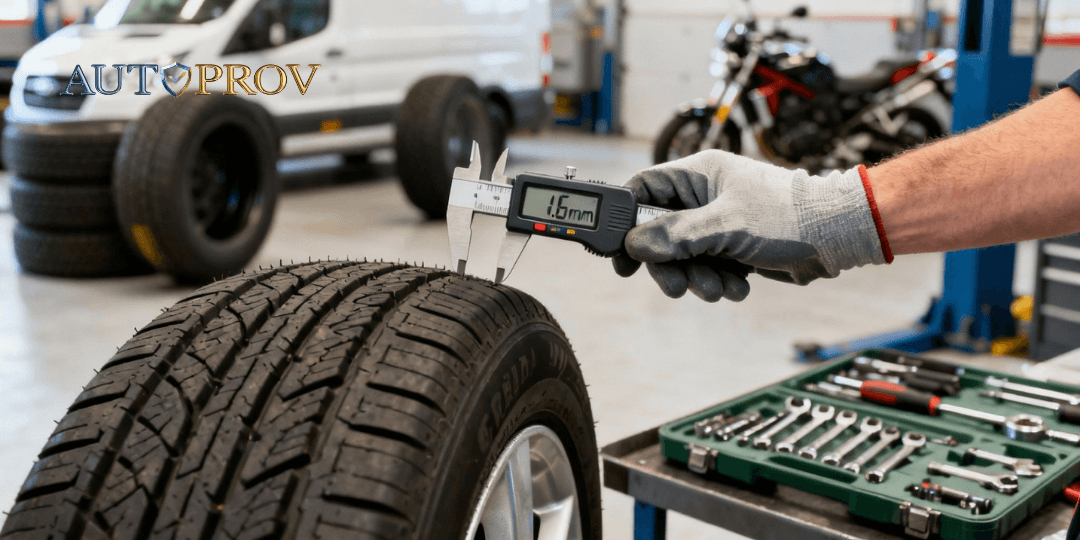
Minimum Tyre Tread Depth UK: A Guide for the Motor Trade
For anyone in the UK motor trade, one number should be front and centre in your mind: 1.6mm. That’s the legal minimum tyre tread depth. But it's so much more than a statistic—it’s a figure that has a direct line to your business's reputation, its legality, and ultimately, its bottom line. Getting this wrong isn't an option.
Published by AutoProv
Your trusted source for vehicle intelligence