
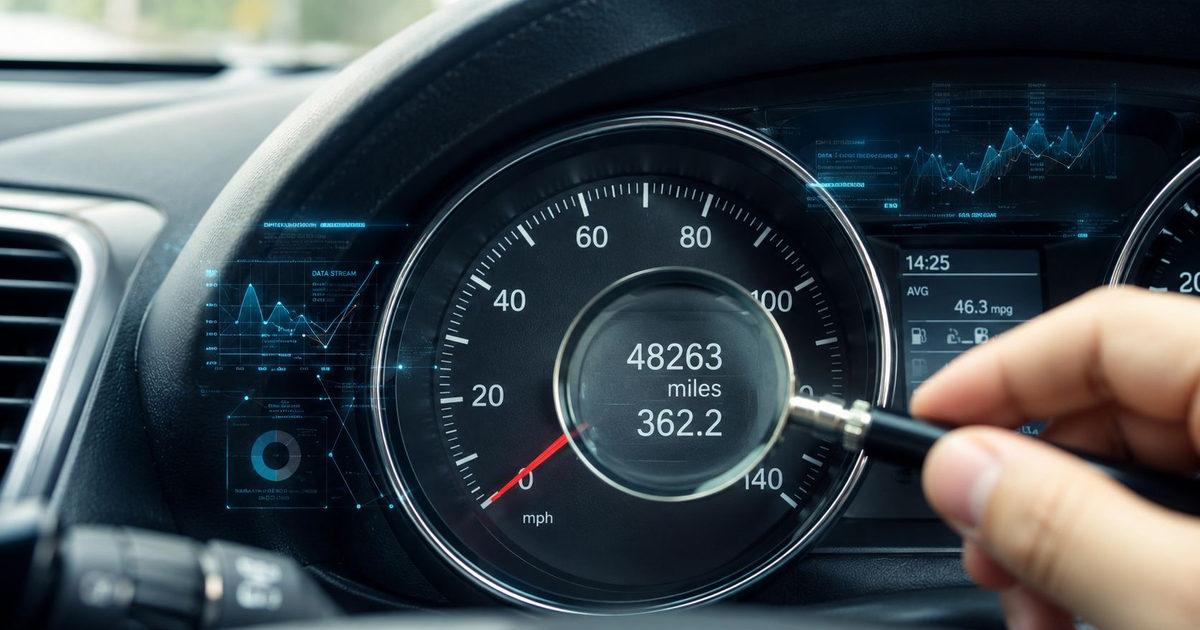
A clean odometer figure can still be weak evidence if the supporting record is thin. A suspicious sequence can also be non-fraudulent if you know how to separate a data-quality issue from a genuine rollback risk. That distinction matters when you're deciding whether to buy, reprice, ask for more proof, or walk away.
HPI reported one in 11 vehicles undergoing a check had a mileage discrepancy, and its 2019 dataset found 836,214 confirmed discrepancies, an 8.99% hit rate versus 7.35% in 2018 (HPI's road to ruin analysis). For trade buyers, that isn't a niche fraud problem, it's a pricing and stocking problem. A car history check mileage review needs to act like anomaly detection across the MOT trail, keeper timeline, and service evidence, because the first number you see is rarely the whole story.
Table of Contents
- Why Mileage Is the Single Biggest Number in a Trade Valuation
- Mileage Impact on UK Trade Valuation
- How UK Mileage Is Recorded Across MOT, DVLA and Service Data
- What each source actually tells you
- The Mileage Anomalies That Should Stop a Trade Buyer in Their Tracks
- Rollback, gaps and jumps are not the same problem
- Worked examples buyers can use in conversation
- When a Lower Reading Is Not Clocking
- Legitimate causes deserve scrutiny too
- Legitimate vs. suspicious lower mileage readings
- Cross-Referencing Mileage Against Ownership and Resale Patterns
- Ownership changes change the meaning of the number
- The best signal is the mismatch between use and movement
- From Anomaly to Action in the Trade Buying Workflow
- Match the response to the size of the problem
- Useful trade actions at each stage
- Why Context Beats a Clean MOT Mileage Line Every Time
Why Mileage Is the Single Biggest Number in a Trade Valuation
Mileage sits at the centre of almost every used-car pricing decision because it affects retail appetite, stocking risk, and how quickly a car will move back out the gate. When the market suspects the mileage story is wrong, the damage goes beyond the single unit. It affects your margin view, your warranty exposure, and the confidence of anyone downstream who has to sell or fund the car.
The reason mileage matters so much is that it's one of the few pieces of vehicle history that can be measured repeatedly over time. The UK MOT record gives trade buyers a structured sequence, not just a one-off reading, and that sequence is what turns a normal vehicle history check UK search into trade vehicle intelligence. The official record includes the mileage recorded at test, and it can be checked through the government MOT history service, which is why the data has become a long-term provenance signal (GOV.UK correcting MOT certificate mistakes).
For valuation work, the practical issue is not whether mileage is high or low in isolation. It's whether the mileage path is coherent enough to support the asking price and the likely resale story. That's where a used car history report earns its keep, because it helps buyers judge whether the mileage trend is consistent with the car's age, keeper pattern, and visible condition.
Mileage Impact on UK Trade Valuation
Mileage Variance Trade Value Adjustment Margin Impact Higher than expected Downward pressure on valuation Reduces headroom on reconditioning and retail margin Lower than expected with weak provenance Needs caution, not automatic uplift Can create hidden dispute risk if the story doesn't stack up Inconsistent or unclear Repricing or conditional purchase Often affects both acquisition price and remarketing speed The key point is simple. Mileage isn't just a descriptor, it's a risk variable. That's why dealers who build buying decisions around a proper mileage check UK process usually get better outcomes than those who treat the odometer as a stand-alone truth.
If you're comparing acquisition logic against retail pricing, it's worth aligning mileage evidence with the rest of the valuation stack. A useful starting point is the internal guidance on trade-in valuation, because mileage only makes sense when it's being judged against margin, not vanity.
Practical rule: a mileage reading that looks fine on its own can still be commercially weak if the provenance trail can't support it.
For a quick pre-check, some dealers also use tools to verify odometer reading online before they commit to deeper due diligence. That doesn't replace your own buying judgement, but it can help you separate obvious anomalies from cars worth a more detailed review.
How UK Mileage Is Recorded Across MOT, DVLA and Service Data
UK mileage history is built from layered records, not from one perfect source. The MOT trail is the backbone, DVLA keeper data adds ownership context, and service records fill in the voluntary parts of the picture. None of these sources means much on its own, but together they give you enough texture to judge whether a vehicle's distance travelled makes sense.
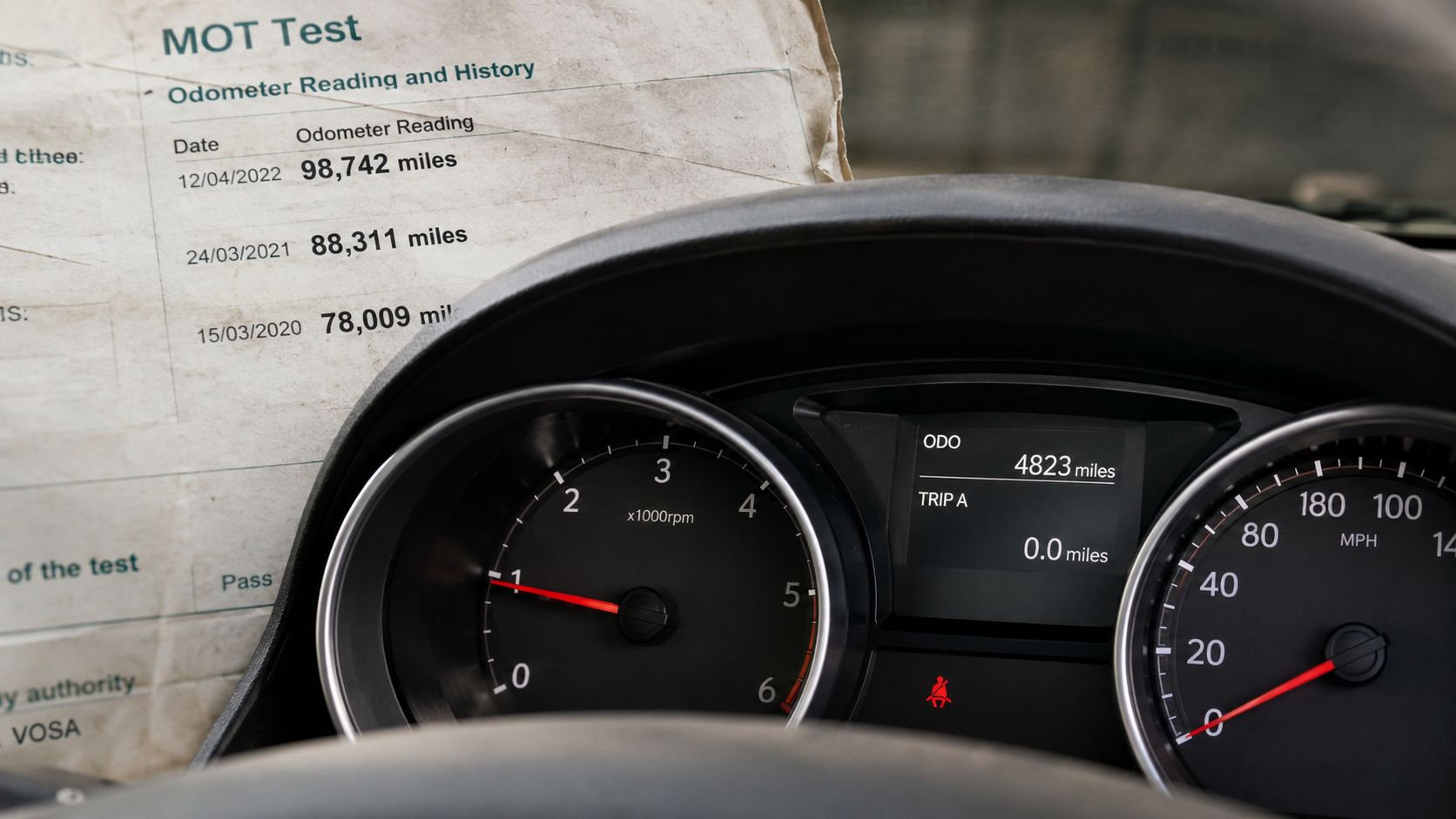
The most important anchor is the digital MOT baseline from 2005, which means many UK cars now have a long run of recorded checkpoints to compare. Industry guidance also notes that MOT certificates have shown mileage readings since 2012, while the underlying history can reach back to 2005, giving buyers a layered sequence of annual references (FreePlateCheck on mileage check history). That sequence is valuable because every test adds another odometer point, which makes decreases, gaps, and jumps easier to spot.
What each source actually tells you
The MOT history shows the mileage recorded at the time of test, plus pass or fail outcomes and the advisory trail. GOV.UK says that the public record can be checked by registration number, so it's a core source for any UK vehicle history check, but not the full provenance picture (GOV.UK vehicle and driver information).
DVLA keeper data is different. It tells you who held the car and when, but it does not give you a mileage trail. That matters because a change in keeper can explain pauses in usage, short ownership periods, or a transfer from private use to trade, but it can't prove the distance travelled on its own. For that, the MOT record and service records have to do the heavy lifting.
Service data sits on top of both. It's voluntary, but it can support the official trail when the dates and readings line up. AutoProv's own mileage verification approach is relevant here because it treats mileage as a cross-referenced signal, not a single-field check. For a broader ownership lens, the DVLA mileage angle is worth reading alongside how keeper data fits into vehicle checks.
Mileage checking works best when you treat every source as one layer of evidence, not as a verdict.
That approach is what separates a basic used car history report from a proper vehicle provenance review. The first tells you what was recorded. The second helps you decide whether the record is believable.
The Mileage Anomalies That Should Stop a Trade Buyer in Their Tracks
The strongest mileage red flags are rarely subtle. They usually show up as a broken sequence, a movement that doesn't fit the vehicle's age, or a pattern that doesn't make commercial sense. Trade buyers don't need consumer reassurance here, they need a vocabulary for diagnosing what kind of anomaly they're looking at.
Rollback, gaps and jumps are not the same problem
A rollback is the easiest to spot. If a later MOT shows a lower reading than an earlier one, the sequence has broken. That is a red flag, but not automatic proof of fraud, because a lower reading can also follow a data-entry issue or a legitimate correction. One UK guide says a fall of 20,000 miles since the last recorded reading is enough to reasonably suspect mileage fraud, while still warning that discrepancy and deliberate rollback are not identical (WeBuyAnyCar on MOT mileage mistakes).
An unexplained gap is different. If a car has a long time between MOT entries but the usage profile doesn't support it, the record becomes harder to trust. The problem isn't the gap itself, it's the absence of a clean explanation, especially when the vehicle is otherwise being priced as if the mileage line were continuous.
An implausible jump is the opposite problem. A later reading can rise so sharply that the sequence becomes commercially awkward, even if it's not fraudulent. That's when the buyer has to ask whether the car was used hard, whether it spent time off-road, or whether the record has been assembled from incomplete sources.
Worked examples buyers can use in conversation
- Rollback example: A vehicle shows 42,100 miles at an MOT in one year and 39,800 miles at the next test. That lower later reading is a classic anomaly signature, because the sequence moves backwards.
- Gap example: A car shows a clean MOT pattern, then a long absence before the next test and a reading that suddenly looks inconsistent with its expected age. The issue is not the missing period alone, it's the lack of supporting evidence.
- Jump example: A car that records a much higher figure at the next test may still be legitimate, but it needs corroboration from service records, keeper context, and the vehicle's likely usage pattern.
AutoProv's mileage anomaly analysis is built around that kind of reading, because the point is not just to flag odd numbers. It's to help buyers decide whether the record points to clocking, a correction issue, or a missing piece of provenance. The internal guide on understanding mileage anomalies in MOT records sits well alongside that approach for trade teams who need a cleaner diagnostic lens.
Commercial rule: if the sequence breaks, assume the burden of proof has moved to the seller.
The best dealers don't ask only whether a reading is lower. They ask what other record would make that sequence credible.
When a Lower Reading Is Not Clocking
A lower reading changes the risk profile, it does not prove clocking. For trade buyers, that distinction matters because UK mileage histories are often judged as a single fraud test, even though a backwards-looking figure can come from error, correction, or missing context. The job is to separate a genuine anomaly from a broken record trail.
Legitimate causes deserve scrutiny too
The cleanest non-fraud explanation is a recording error. MOT centres can enter the wrong figure, and the public record can be corrected when the mistake is supported by proof. If a mileage entry is wrong, the centre can apply a correction through the DVSA audit process with documentary evidence such as an invoice or job card.
Usage can also explain a lower figure. A car that has been lightly used, stood off the road, or changed hands quickly may produce a sequence that looks odd until the keeper history is checked. Unit confusion can also distort the trail when kilometres and miles are read as if they were the same measure. None of these explanations matters unless the seller can evidence them.
The practical question is whether the lower reading fits the wider provenance pattern. A credible explanation leaves traces in service paperwork, keeper timing, or the way the car has physically aged. A weak explanation usually leaves a gap.
Legitimate vs. suspicious lower mileage readings
Signal Likely Legitimate Cause Potential Clocking Indicator Lower reading after a higher one MOT data entry error or later correction Odometer rollback or inconsistent chronology Sparse MOT history Missed test period or short off-road use Hidden mileage gap masking a reset Reading doesn't fit vehicle age Low usage, fleet change, or keeper turnover A story that doesn't match the physical condition Kilometres and miles appear mixed Import transition or unit confusion Data manipulation intended to obscure the true trail A lower figure becomes more suspicious when the surrounding records do not support it. That is why trade buyers should compare MOT history with service stamps, invoices, and any keeper-change logic before they decide a car has been clocked. The internal guide on spotting clocked mileage using MOT and service history data gives a useful framework for separating a data issue from a genuine fraud pattern.
A lower reading should trigger a provenance check, not an instant verdict. If the sequence can be explained by a documented correction or a believable usage pattern, the anomaly may be harmless. If it cannot, the burden shifts to the seller.
Cross-Referencing Mileage Against Ownership and Resale Patterns
Mileage becomes much more informative once you put it beside ownership timing. A vehicle with a clean-looking MOT trail can still be awkward stock if the keeper pattern, resale speed, and mileage accumulation don't line up. That's why trade buyers should read mileage as part of a broader provenance pattern, not as a standalone figure.
Ownership changes change the meaning of the number
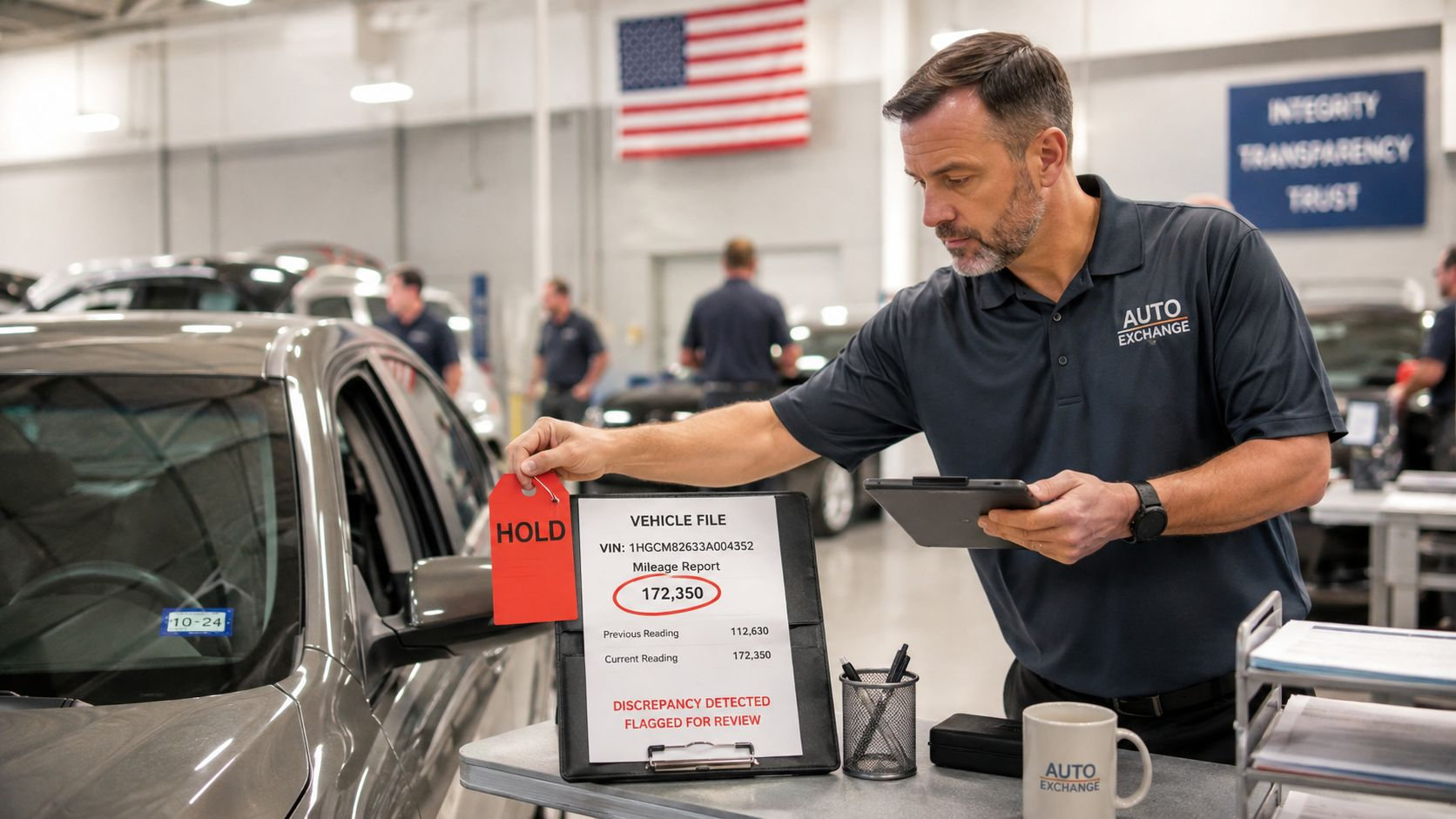
A car that has passed through multiple keepers in a short period can be perfectly legitimate, but it deserves more scrutiny if the mileage story is thin. Short-term ownership may reflect fleet rotation, a change in household needs, or a trader-to-trader movement. It can also mean the previous holder wanted out of the car quickly for reasons that only become obvious when the provenance data is joined up.
That's where a used car history report does more than show mileage. It gives context for why the mileage may have changed the way it did, and whether the pattern looks like normal use or managed disposal. The internal guide on how many car owners a vehicle has had is useful here because keeper count by itself is not the answer, but it does help explain the pace of change in the vehicle's life.
The best signal is the mismatch between use and movement
If a car changes hands quickly but barely accumulates mileage, the pattern can be benign or risky depending on the rest of the data. Some dealers will see a lightweight retail return or an underused stock turn. Others will see a vehicle that moved because a hidden issue made it hard to keep. The same applies in reverse. A car with fewer owners but a mileage path that doesn't align with age or condition still needs deeper verification.
AutoProv is built around that synthesis. It combines MOT history, keeper context, and other provenance metadata so the buyer sees a risk view rather than a single-line mileage check. That matters most when the vehicle is being priced for fast resale, because the wrong assumption about mileage can create a problem that doesn't show up until handover or after sale. For a neighbouring example of layered vehicle intelligence, EV battery health check Ireland shows how condition data becomes more useful when it's tied to the wider vehicle story.
Buyer's lens: a car can have a tidy mileage line and still be poor trade stock if its ownership rhythm looks engineered rather than natural.
A strong dealer process asks what the mileage pattern is saying about resale velocity, not just what the odometer says today.
From Anomaly to Action in the Trade Buying Workflow
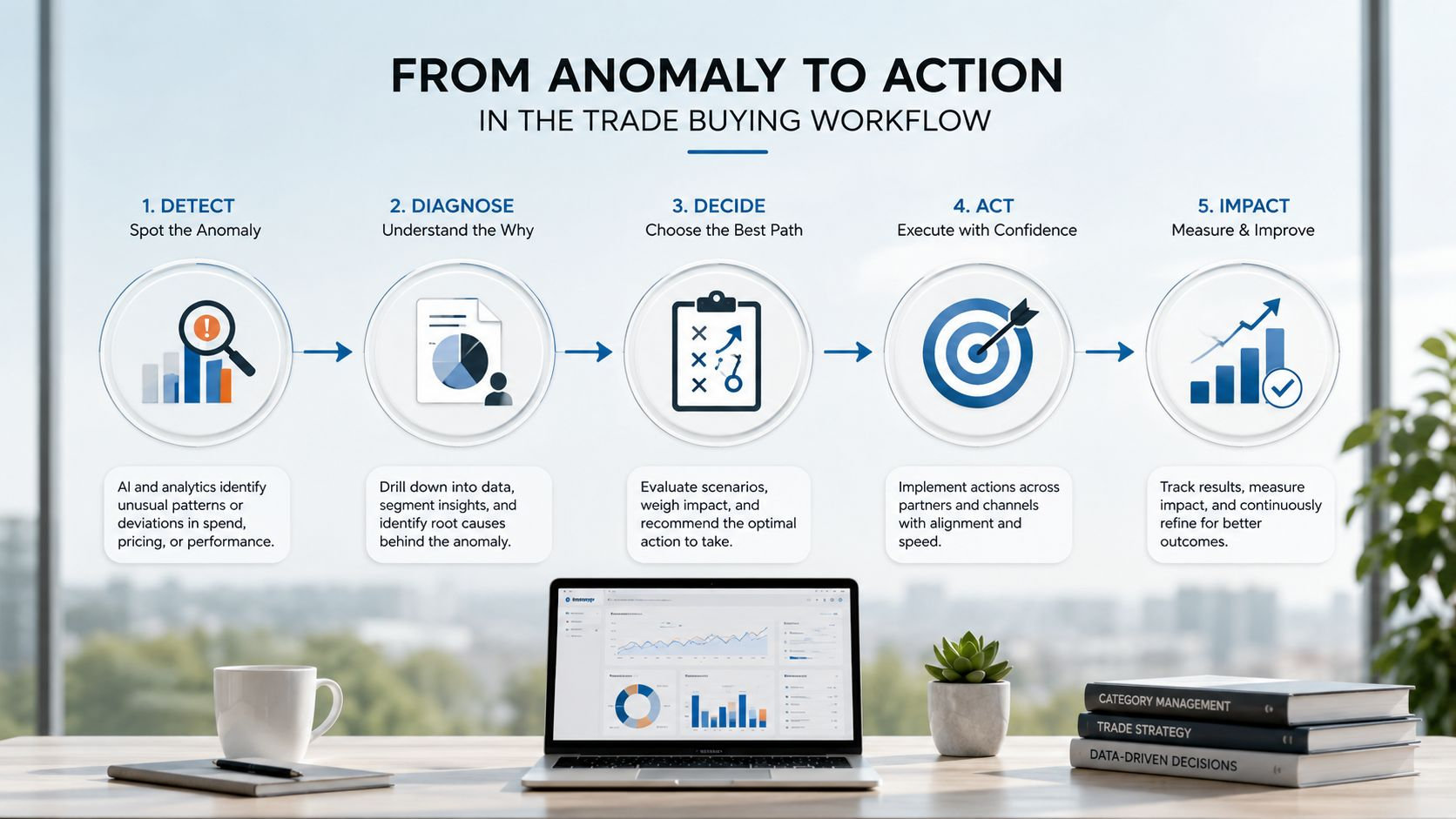
Once a mileage anomaly appears, the right response depends on severity. Good traders don't overreact to every mismatch, but they also don't let a doubtful record drift into stock with no paper trail. The right action is proportional, documented, and linked to the commercial risk on the car.
Match the response to the size of the problem
A small, explainable mismatch usually calls for more evidence, not a hard stop. Ask the vendor for service invoices, prior MOT documents, or anything that supports the claimed mileage. If the explanation is credible, the car may still be buyable at the right price.
A sharper anomaly should trigger a pricing reset. If the mileage sequence breaks in a way that weakens future resale confidence, the acquisition price needs to reflect the extra risk and the likely time spent defending the car's story. That's a commercial decision, not an emotional one.
A severe anomaly often justifies a walk-away. If the seller can't explain a lower reading, a gap, or an implausible jump with documentary proof, you're carrying a provenance problem into your stockbook. That usually becomes a remarketing problem later.
Useful trade actions at each stage
- Procurement: request supporting invoices, previous MOT details, and keeper context before committing.
- Valuation: adjust acquisition price if the mileage story is incomplete or commercially fragile.
- Stock onboarding: keep the documentary record with the unit so the sales team can explain the provenance if challenged.
- Remarketing: avoid overclaiming mileage certainty if the record has an unresolved anomaly.
The legal side also matters. If an issue is known before sale, your customer disclosure process needs to reflect it properly, especially where mileage forms part of the value proposition. That isn't legal advice, it's basic risk management. The mistake many dealers make is assuming that if the car is in stock, the risk has already been handled.
For teams that also manage keys and handover readiness, on-site key cutting for fleets is a practical reminder that stock onboarding works best when the vehicle's physical setup and paper trail are aligned from day one.
AutoProv fits into that workflow as a decision-support layer. It pulls together mileage verification, provenance signals, and ownership context so trade buyers can decide whether to price, probe, or pass.
Why Context Beats a Clean MOT Mileage Line Every Time
A linear MOT mileage sequence is useful, but it isn't enough. Cars can still carry hidden risk when the UK record is sparse, when the vehicle has spent time outside the normal MOT rhythm, or when the provenance story has more blanks than answers. A clean line tells you the record hasn't broken in one obvious place. It does not prove the whole story is sound.
That's why mileage integrity is a probability judgment. The MOT history is a foundation, not a conclusion, and the value of the check rises when it's read alongside keeper movement, source quality, and the plausibility of use. AutoProv's approach reflects that logic by treating mileage as one part of a broader vehicle provenance assessment, not as a pass or fail event.
The strongest buying teams don't ask, “Does the MOT line look clean?” They ask, “Does the rest of the vehicle history make that line believable?” That is a different standard, and it catches more bad stock before it becomes a post-sale dispute.
If you're buying stock where mileage matters, use a process that compares the MOT trail, ownership rhythm, and supporting evidence before you commit. AutoProv helps UK dealers review mileage anomalies in context, so you can price risk more accurately, challenge weak provenance, and protect your stockbook with better vehicle intelligence.
Frequently Asked Questions
AI-Generated Content Notice
This article was created with the assistance of artificial intelligence technology. While we strive for accuracy, the information provided should be considered for general informational purposes only and should not be relied upon as professional automotive, legal, or financial advice. We recommend verifying any information with qualified professionals or official sources before making important decisions. AutoProv accepts no liability for any consequences resulting from the use of this information.
From our AI insights
- Understanding Mileage Correction Costs for UK Dealers
Explore the legal risks and cost implications of mileage correction for UK car dealers.
- Decoding Mileage: Impact of Seasonal Driving Patterns
Explore how seasonal driving impacts your car's mileage verification.
- Tackling Mileage Fraud in Electric Vehicles
Explore how motor traders can prevent mileage fraud in electric vehicles using advanced techniques.
Related Articles

Understanding Vehicle Mileage Importance
Discover the critical role of accurate mileage in vehicle provenance and how AutoProv can safeguard your purchase.
What Is the Average Annual Mileage in the UK?
Right now, the average annual mileage for a car in the UK hovers around 7,000 miles. For anyone in the motor trade, that number is more than just a statistic; it’s a vital benchmark that helps buyers, sellers, and insurers get a quick read on a car's usage and potential wear and tear.
Car Mileage Discrepancy Explained: A Guide for UK Motor Traders
When it comes to a car’s history, its mileage record should tell a simple, straightforward story: the number always goes up. A mileage discrepancy is what happens when that story suddenly does not make sense.
Published by AutoProv
Your trusted source for vehicle intelligence
