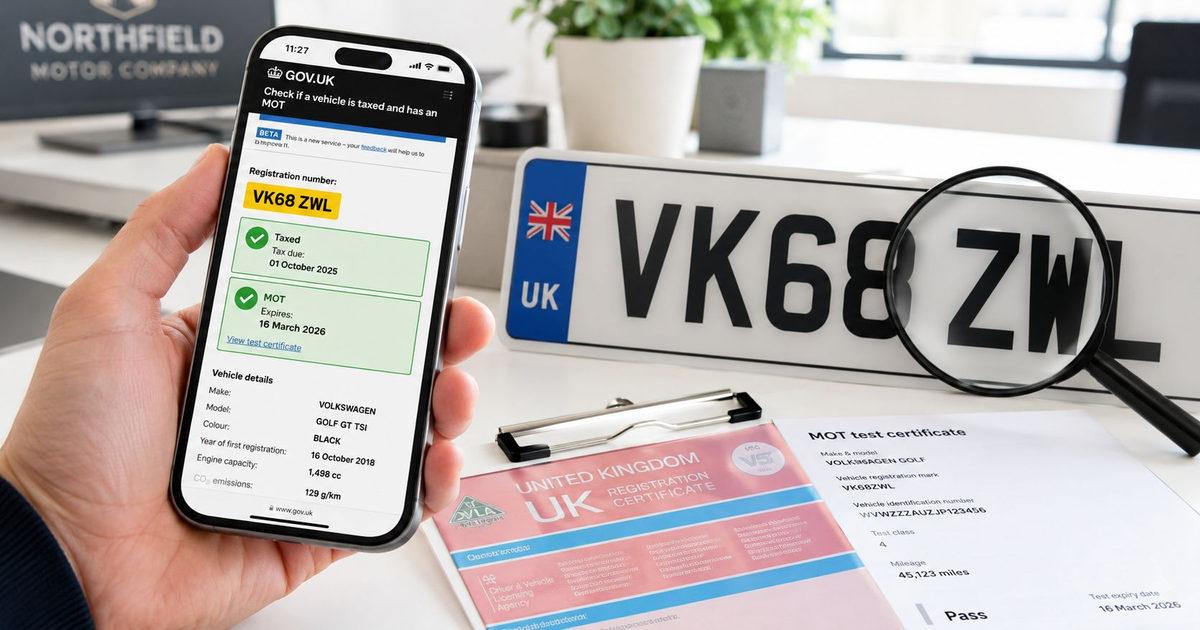
You're standing at the end of a long auction day, the hammer's still echoing in your head, and a seller's shouting that the car is “right on age”. That's exactly when a car reg age check earns its keep. It's the quickest way to decide whether a vehicle is worth deeper desk-side work, or whether the paperwork already looks off before you've spent time, money, and trust on a fuller vehicle history check UK.
The trap is thinking the plate tells you the whole story. It doesn't. A registration mark gives you a registration period, not the full provenance picture, so the real job is triangulation, using the plate, the DVLA record, the V5C, and the MOT history together. That's how dealers separate a clean, trade-ready car from one that only looks tidy from ten feet away.
Table of Contents
- Why Age Verification Is the First Trade Check You Should Run
- Start with the cheapest filter
- How UK Number Plates Encode the Registration Period
- Read the plate, then check the real date
- Cross-Checking the V5C, DVLA Record and MOT Timeline
- The sequence that actually works
- Where the Records Have Gaps and Limits
- The obvious gaps are the ones worth respecting
- Registration age isn't build age
- Red Flags That a Correct Age Can Still Hide
- A plate can be correct and still be deceptive
- A Desk-Side Checklist for Every Potential Purchase
- The check that keeps you from overpaying
- Turning the Age Check Into a Buying Decision
- Use the age result to sort the buy, not to finish it
Why Age Verification Is the First Trade Check You Should Run
A trader who skips age verification is buying blind on the most basic point of fact. If the first check is wrong, everything downstream gets distorted, from valuation and stock turn to warranty exposure and finance conversations. A car reg age check won't prove a car is clean, but it will tell you whether the rest of the file deserves your time.
The reason this matters more now is simple, the UK parc is getting older. Department for Transport-linked reporting shows the average age of a licensed car on UK roads reached about 9.7 years by 2025, up from 6.7 years in the mid-2000s, and the 13+ age cohort rose to roughly 25% of the fleet, equal to about 8.67 million vehicles out of 34.5 million licensed cars (Britain's ageing cars). Older stock means more opportunities for mismatched documents, plate swaps, and incomplete history.
Start with the cheapest filter
Use age verification first because it's fast, low-friction, and good at killing obvious problems early. If the registration period doesn't make sense, there's no point digging through every line of a used car history report until you've understood why.
Practical rule: if the plate age, DVLA date, and MOT timing don't line up, treat the car as a risk item until the gap is explained.
That's especially important in the trade, where a vehicle can look straight, present well, and still carry a provenance issue that changes the price. Age mistakes distort the whole commercial picture. You can't price stock properly if you don't know whether the car is as old as it claims.
How UK Number Plates Encode the Registration Period
UK plates don't tell you manufacture date, and they don't tell you first use in the broad sense either. They tell you the registration period, which is the bit traders need when they're checking whether a car lines up with expected paperwork and MOT timing. The current system changes twice a year, in March and September, which is why a plate decode is only the starting point.
An 18-plate covers cars registered between 1 March 2018 and 31 August 2018. A 68-plate covers September 2018 to February 2019. The same pattern keeps rolling forward, so 20, 21, and 70 follow the same half-year split rather than telling you anything about build order or physical condition (DVLA plate year guide).
Read the plate, then check the real date
A March plate can still hide a late previous-year build. A private plate can also make a vehicle look newer or older than it really is if you're reading the display instead of the records. That's why the official DVLA date of first registration matters more than the visible age code.
Plate identifier Registration window Notes 18 1 March 2018 to 31 August 2018 Spring registration period 68 September 2018 to February 2019 Autumn registration period 20 March 2020 to August 2020 Same half-year logic 21 March 2021 to August 2021 Same half-year logic 70 September 2020 to February 2021 Autumn registration period The boundary that traders still misquote is simple, the plate code is not the car's birth certificate. The first-registration date sits with the DVLA record, and that's the figure you should anchor the rest of the check to. For a fuller plate-decoding workflow, a practical reference is the reg plates check guide.
Cross-Checking the V5C, DVLA Record and MOT Timeline
A proper vehicle provenance check starts with three records, not one. Pull the V5C logbook, the DVLA vehicle information record, and the MOT history, then make them answer the same question in the same way. If they don't, you've got a reason to slow down.
The sequence that actually works
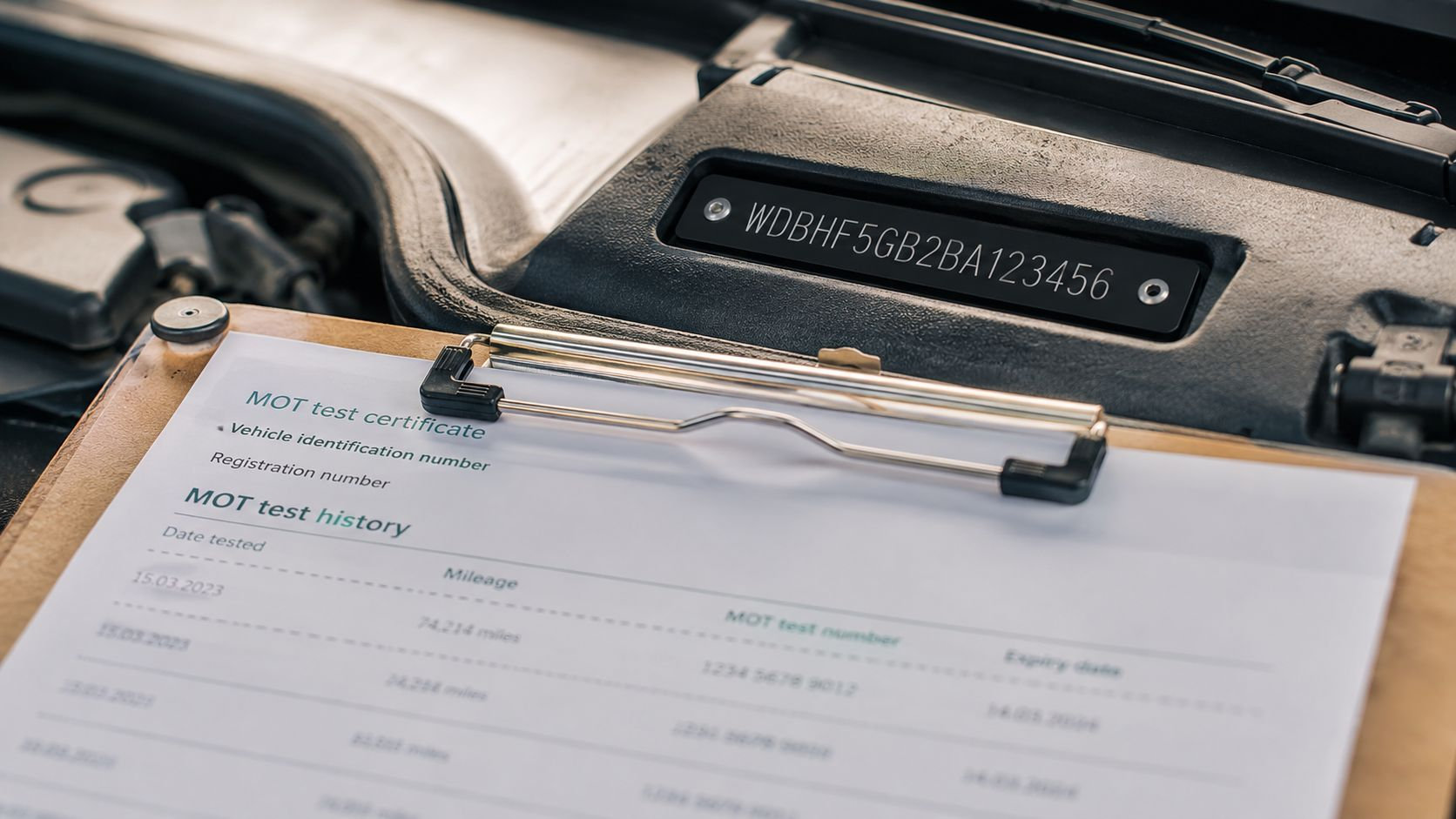
Start by matching the registration mark, VIN, and engine number across the paperwork and the vehicle itself. Then check the date of first registration on the DVLA record, because that's the authoritative date that defines age for the trade. The V5C should agree with it, not loosely resemble it.
Next, use the MOT timeline to sanity-check the age. GOV.UK states that MOT history is available for tests done since 2005 for cars, motorcycles, and vans, while heavier vehicle categories only have shorter digital histories (check MOT history). That means the online trail is useful, but it isn't infinite, especially once you're looking at older stock.
The first MOT benchmark is where the check gets commercial. A vehicle first registered in March 2018 should ordinarily have its first MOT around March 2021. If you see a materially earlier test date, something doesn't sit right, and the explanation might be a plate issue, re-registration, import history, or a cloned identity.
A clean timeline is more useful than a clean-looking car. The body can be polished in minutes, the dates can't.
Layer the mileage progression over that timeline and look for movement that makes sense. MOT mileage should rise over time, and the pattern should match the vehicle's age and use. The point isn't to prove perfection, it's to confirm that the story holds together.
For traders who want a clearer sense of what the V5C gives you, the V5C guide is worth keeping in your working tabs.
Where the Records Have Gaps and Limits
The hardest cars to assess are often the ones with enough data to look reassuring, but not enough data to be complete. That's where traders get caught. A car reg age check gives you a date corridor, not a certificate of innocence, so you need to know where the records stop speaking.
The obvious gaps are the ones worth respecting
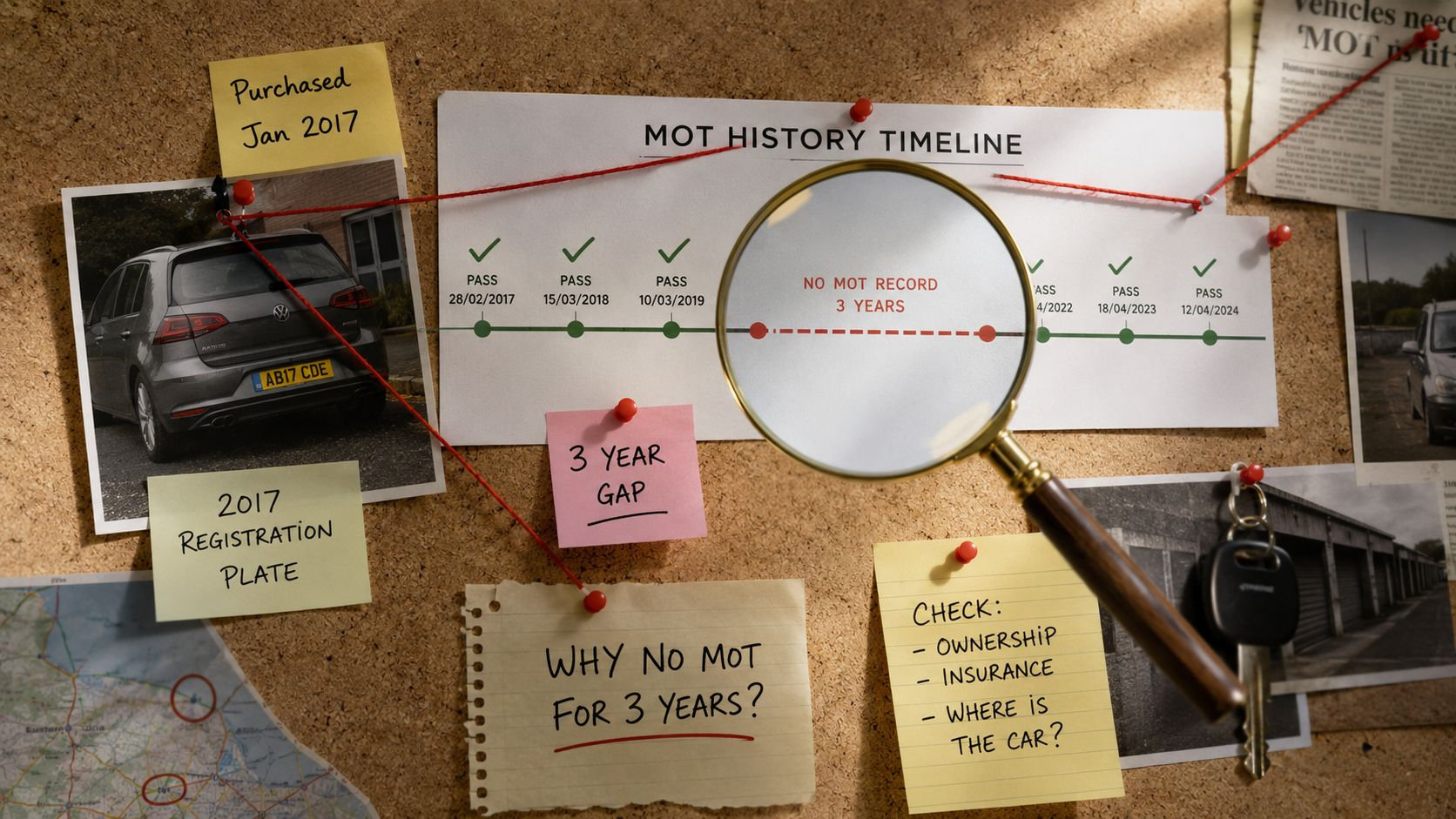
MOT history only goes back to tests recorded online from 2005 for cars, motorcycles, and vans, and that creates a real blind spot on older vehicles. If the car spent its early life before that digital boundary, a quick screen check can make the file look thinner than it should. The absence of online entries isn't proof of trouble, but it is proof that you don't have the full picture.
The V5C has its own limits. It shows keeper changes, but it doesn't tell the whole ownership story if the vehicle moved through leasing, fleet, rental, or trade channels. Two keepers on paper can still sit over a much longer chain of real-world use.
Mileage is another trap. DVSA guidance says mileage errors can only be corrected by the MOT centre if noticed within 28 days, and after that the correction has to be reported with dated evidence that proves the correct figure. That makes MOT mileage a point-in-time snapshot, not a perfect provenance file (correcting MOT certificate mistakes).
The official DVSA bulletin says the same thing in plain terms, mileage corrections depend on a tight process and supporting evidence, which is why a dealer should treat MOT mileage as one input, not the whole vehicle history check UK answer (DVSA bulletin on mileage corrections).
Registration age isn't build age
A late-registered import can also confuse the picture, because the DVLA date of first registration is not the same thing as the factory build date. That's a common cause of false confidence when a car looks newer or older than its paperwork suggests. A good desk-side check accepts that reality and moves on to the next source of proof.
For a broader sense of how the different datasets fit together, the vehicle data sources guide is a useful reference point.
Red Flags That a Correct Age Can Still Hide
A valid plate doesn't mean a safe buy. I've seen cars that decode perfectly on age, then fall apart once the rest of the record is opened out on the screen. The plate is right, the story isn't.
A plate can be correct and still be deceptive
Take a car that decodes to 2017. The age code looks fine, but the MOT timeline shows a long quiet stretch, no recorded tests between late 2019 and mid-2023. That doesn't prove wrongdoing on its own, but it does force you to ask whether the car was off-road, exported, stored, or subject to some other interruption that needs explaining.
The keeper trail can sharpen that suspicion. If the V5C shows four keepers in five years, and the earliest address points to a known trade compound, you're no longer looking at normal retail use. A short chain can be perfectly legitimate, but short chains combined with a thin timeline deserve more caution than a glossy body shell invites.
Trade note: when the first keeper history smells like a compound or a fleet pass-through, the plate age becomes the least interesting thing on the car.
Imported status is another marker traders should notice fast. If the previous keeper field says imported, and the VIN format doesn't match what you'd expect from a standard UK-supplied car, the age check needs more context before anyone prices it as ordinary stock. The plate can still be correct, while the identity history is much less straightforward.
Mileage patterns matter too. If the MOT advisory trail shows inconsistent mileage bands relative to what a same-age car should usually show over time, that's a provenance signal, not just a servicing quirk. It may point to clocking, repair downtime, or a records issue, and none of those is something you want to discover after the deal is done.
The same theme runs through plate-change cases, so if you're reviewing identity movement as well as age, the plate change history guide is worth a look.
A Desk-Side Checklist for Every Potential Purchase
The safest buying habit is boring. Run the same sequence every time, and don't let a clean first glance stop the process. On the trade desk, consistency beats instinct.

The check that keeps you from overpaying
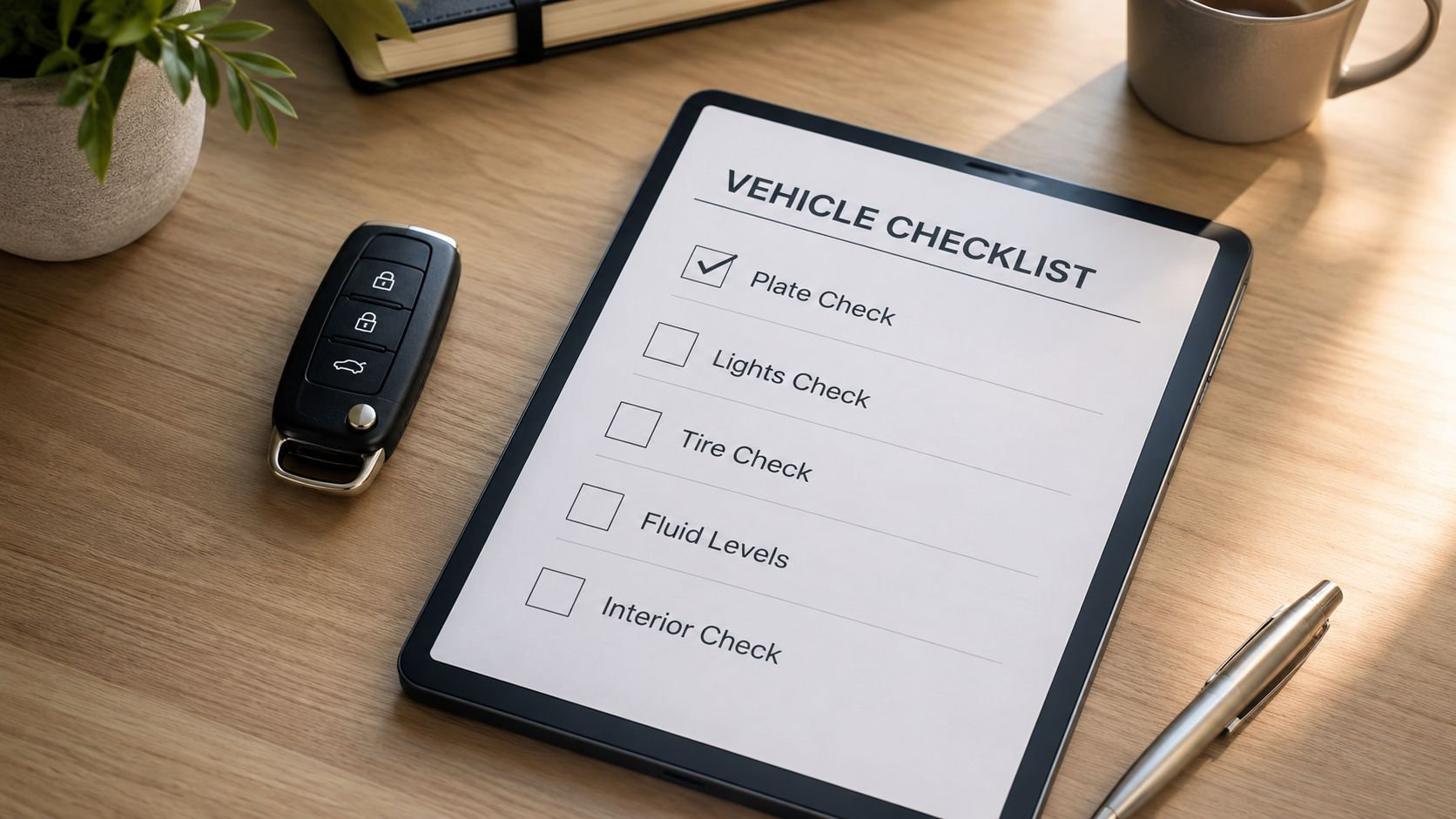
- Read the plate properly. Confirm the year code matches the March or September window, and note whether the car sits near a model change that might affect value.
- Pull the DVLA record. Capture the date of first registration, then compare it with the visible plate and the car's apparent use.
- Inspect the V5C. Match the registration mark, VIN, colour, and keeper entries, and watch for late-issued paperwork or odd continuity.
- Overlay the MOT history. Check first test date, mileage rise, advisories, and any breaks that make the timeline look too neat, or too thin.
- Add provenance context. Look for short keeper chains, import markers, category changes, and any finance or theft indicators returned by your data supplier.
A good workflow turns these into a yes-or-no answer, not a vague comfort score. If the plate, DVLA date, V5C, and MOT trail all tell the same story, the car can move to valuation. If one layer is off, it gets a deeper review. If two or more layers don't line up, it belongs in the reject pile until someone can explain the gap.
For teams that want this logic folded into one workflow, AutoProv is one option that brings DVLA, MOT, plate decoding, and history data together in a single trade-facing report. The useful point isn't automation for its own sake, it's cutting down the time spent cross-checking records that should already agree.
Turning the Age Check Into a Buying Decision
The right way to use a car reg age check is to turn it into a risk tier, not a verdict. That keeps you commercial. It also stops a decent car from being rejected for the wrong reasons, while making sure a bad one doesn't slip through because the plate looked tidy.
Use the age result to sort the buy, not to finish it
Risk Tier 1 is the clean case. The plate, DVLA first-registration date, V5C, and MOT timeline line up, with no obvious anomaly in identity or mileage. That stock is still worth checking, but it's the sort of file you'd expect to move through the buying process normally.
Risk Tier 2 covers cars that are probably buyable, but only at the right number and only after closer inspection. Think short keeper chains, minor mileage inconsistencies, or paperwork that's a little less tidy than you'd like. The age check hasn't failed, it's just told you where to spend more time.
Risk Tier 3 is where traders protect their margin by walking away. Cloned registrations, clocked mileage, fresh imports with age-plate mismatches, or clear plate-to-V5C discrepancies belong here. These cars may still be saleable in the right circumstances, but they're not desk-buy stock without a serious explanation.
Risk Tier Profile Action Tier 1 Age, DVLA, V5C, and MOT data align cleanly Proceed with normal buying process Tier 2 Minor inconsistencies or short-chain ownership Inspect further and adjust price Tier 3 Identity, mileage, or registration anomalies Walk away unless the issue is fully explained A tool like AutoProv fits here as a supporting layer, because it combines registration data, MOT history, and provenance signals into one decision-ready view. That doesn't remove judgement, but it does reduce the manual checking that slows a dealer down after a busy auction session. For a practical go or no-go framework, the decision guide is a sensible next stop.
The takeaway is simple. Age verification starts the process, provenance intelligence finishes it.
If you want a cleaner desk-side workflow for your next stock day, use AutoProv to bring DVLA, MOT, plate decoding, and vehicle provenance into one trade-focused report. It helps you cross-check age against identity and mileage before you commit capital, so you can price risk properly and move faster on the cars worth buying.
Frequently Asked Questions
AI-Generated Content Notice
This article was created with the assistance of artificial intelligence technology. While we strive for accuracy, the information provided should be considered for general informational purposes only and should not be relied upon as professional automotive, legal, or financial advice. We recommend verifying any information with qualified professionals or official sources before making important decisions. AutoProv accepts no liability for any consequences resulting from the use of this information.
From our AI insights
- Navigating ULEZ Compliance for Used Car Dealers
A deep dive into ensuring your used car stock meets ULEZ standards, avoiding costly fines.
- Mastering Paint Verification with VIN Decoding
Learn how UK traders verify original paint using VIN decoding and provenance data.
- Understanding VIN Decoding: Avoid Misleading Imports
Learn how VIN decoding reveals vehicle origins and specs, preventing import pitfalls.
Related Articles

Car Specs by Reg: Instantly Find Vehicle Details & MOT History
Trying to find the full car specs by reg? In the UK, that little number plate is the key to unlocking a huge amount of information about a vehicle. From the exact engine size and CO2 emissions to its MOT history and tax status, it's all tied to the registration.

How to Check Previous Owners of a Car in the UK
Before you even start thinking about how to check the previous owners of a car, you need to get your head around why it's so important. This isn't just about being nosy; it’s a non-negotiable step that protects you from serious financial headaches and safety risks lurking under a shiny bonnet.

How to Check Service History in the UK
Think of a car's service history as its detailed CV, not just some dusty folder in the glovebox. To check service history is to get the real story behind a vehicle, digging into everything from its routine oil changes to any major surgery it's had. For any savvy car buyer in the UK, this record is the single most important document you can get your hands on.
Published by AutoProv
Your trusted source for vehicle intelligence