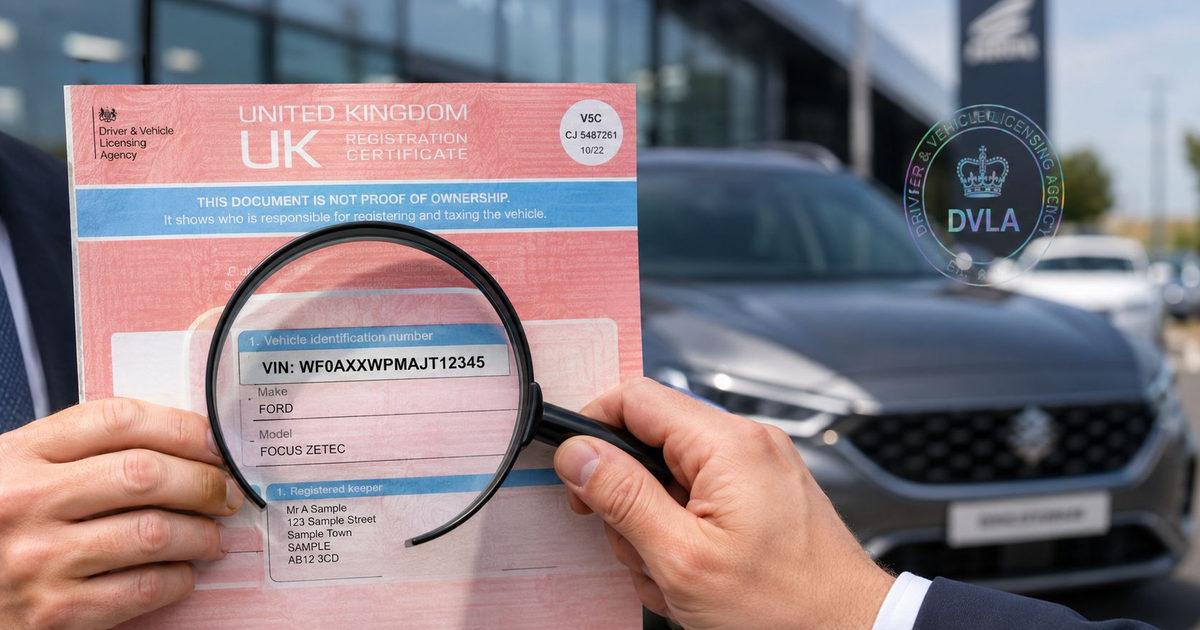
A clean V5C can make a stock car look simple on the surface. The trouble starts when the paperwork is present, the seller sounds credible, and the first live cross-check exposes a finance hold-up, a mileage mismatch, or a keeper story that doesn't line up with the rest of the file. If you buy stock for a living, you already know the question isn't whether a V5 exists, it's how much confidence it deserves before you commit margin.
Table of Contents
- A V5C Is the DVLA's Keeper Record, Not a Title Deed
- Registered Keeper Versus Legal Owner
- Why this gap matters on the forecourt
- What a V5C Contains
- Which fields matter most to dealers
- Why a Present V5C Can Still Mislead Dealers
- Why MOT history has to sit beside the V5C
- Common V5C Frauds and Red Flags at the Point of Purchase
- What to check when the story feels too neat
- How Dealers Should Verify a V5C Step by Step
- A simple sequence that works in practice
- How Provenance Platforms Augment the V5C
- Treating the V5C as the Start of Your Provenance Check
A V5C Is the DVLA's Keeper Record, Not a Title Deed
A dealer can lose time and efficiency by treating a present V5C as though it settles the deal. It doesn't. The V5C vehicle registration certificate is the DVLA's official record for the vehicle, and it tracks the registered keeper, not legal title or unencumbered ownership, which is why a clean-looking log book can still sit alongside a bad finance position or a messy handover trail. DVLA vehicle information guidance makes clear that the certificate is a controlled administrative record, not a proof-of-ownership document.
For trade conversation, keep the language tight. V5, V5C, and log book are used interchangeably in the market, but they all point to the same DVLA registration certificate. That distinction matters because buyers, sellers, and even junior staff sometimes talk as if the paper itself is a title deed, and that's where poor assumptions creep in.
Practical rule: if the V5C is the first thing you rely on, you've started in the wrong place.
A better mental model is to treat the document as the DVLA's current keeper snapshot. It tells you who the state is recording as responsible for the vehicle, while the rest of your dealer vehicle checks have to answer the harder questions about ownership, continuity, and risk. For a fuller trade view of the document's role, see this guide to the vehicle registration certificate.
Registered Keeper Versus Legal Owner
The cleanest way to explain the difference is simple. The registered keeper is the person or business the DVLA records for day-to-day responsibility. The legal owner is the party that holds the property interest, which can sit elsewhere entirely. That's why the V5C deliberately stops short of proving title.
A useful analogy is insurance. The keeper is closer to the named driver than to the person who paid cash for the car. In trade terms, that gap matters because the name on the V5C can look perfectly tidy while another party still has a legal interest in the vehicle, whether that's a finance house, a previous owner with retained rights, or an estate handling a deceased keeper's assets. For a clearer breakdown of that distinction, this ownership guide is worth keeping in your internal knowledge base.
Why this gap matters on the forecourt
Buying quickly is where mistakes happen. A busy desk can see a current V5C, a matching seller name, and assume the ownership question is done. It isn't, because the document only shows who DVLA holds as the keeper at that moment.
A neat V5C page reduces friction, but it doesn't remove the need to verify the underlying transaction trail.
That's why a used car history report has to sit alongside the document, not behind it. Keep the V5C as one input, then ask whether the sale paperwork, the finance position, and the vehicle's story all point in the same direction. If they don't, the document is doing what it was designed to do, recording keeper status, while your risk sits elsewhere.
What a V5C Contains
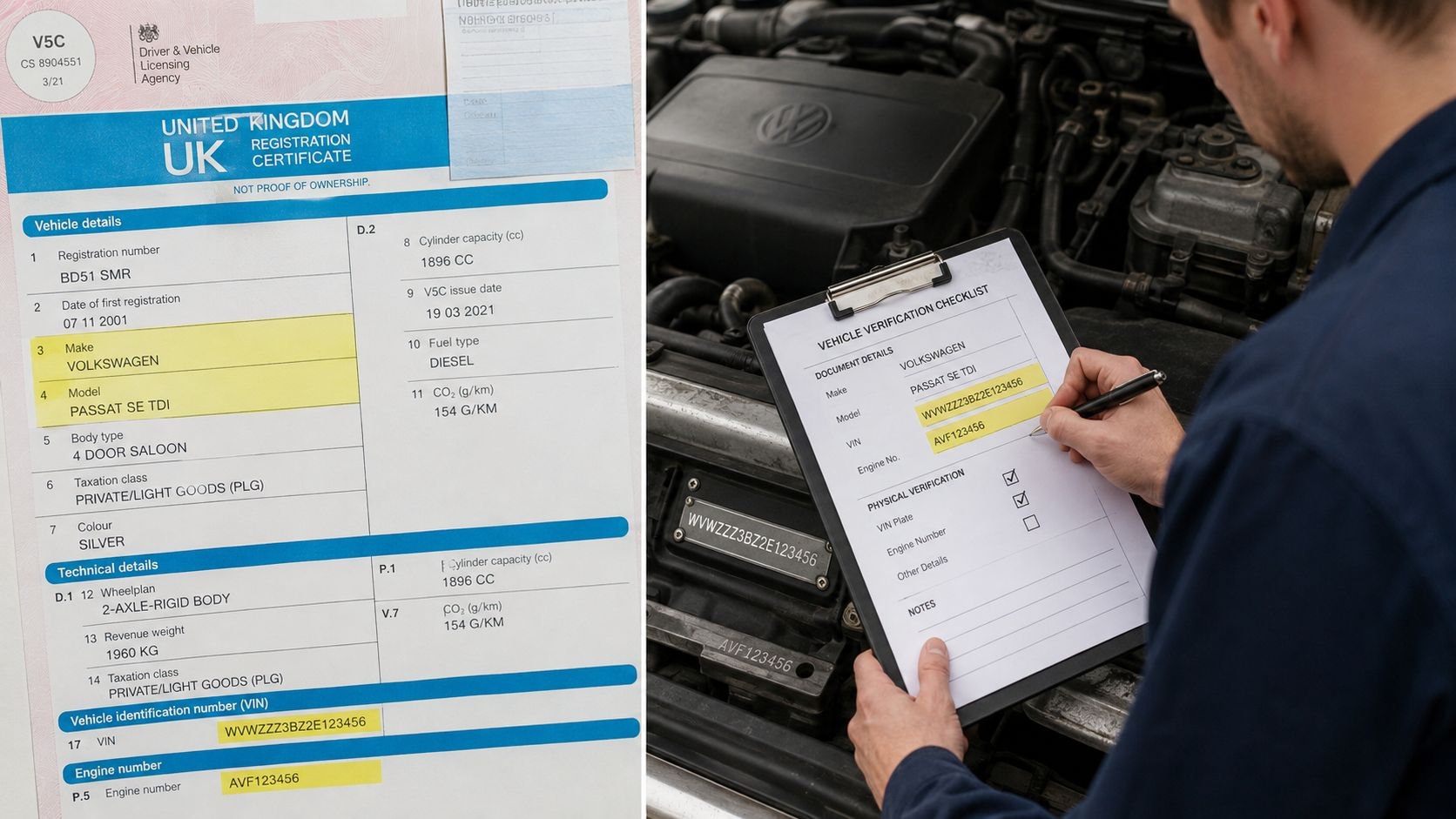
A dealer gets value from the V5C by reading the right fields in context. The document records the registration number, keeper name and address, make, VIN, and number of previous keepers. It also shows the date it was first registered and the last log book issue date, which helps place the record in time rather than treating it as a live title document.
Which fields matter most to dealers
The VIN is the anchor point for identity. The previous keeper count helps you judge continuity, and the issue date shows whether the log book reflects a recent admin event or a longer-running record. Keeper address still has value for contact and matching, but by itself it is only postal data.
Read the V5C as provenance evidence, not as a sales brochure. If the VIN, keeper count, and issue date do not sit comfortably with the seller's story, the invoice, and the car in front of you, you already have a risk signal that deserves follow-up.
The layout matters too. The older blue-green V5C was introduced in 2004, and the current red-pink V5C was introduced in 2012. Industry guidance says the current version has 11 sections, while the older one had 12, including a different location for the new-keeper slip. Autotrader's V5C guidance is useful here, because older paperwork should not be mistaken for a newer record just because it looks unfamiliar.
Why a Present V5C Can Still Mislead Dealers
A present V5C can still be wrong in the ways that matter. DVLA guidance says changes to colour, engine, fuel type, seating capacity, weight, chassis/body structure, or body type must be reported so the certificate can be updated. If the keeper hasn't done that properly, the document can carry stale descriptors even when the car itself is genuine. DVLA change-details guidance is clear that the correct update route has to be used or evidence can be rejected.
That creates an everyday trade risk. A buyer sees a current-looking V5C, but the fuel type doesn't match the vehicle in front of them, or the engine details don't fit what's stamped on the car. That isn't just an administrative nuisance. It can derail a sale, slow a prep decision, or trigger a DVLA problem later when the paper trail is challenged.
Why MOT history has to sit beside the V5C
The other mistake is assuming the log book plus the MOT is the whole story. It isn't. GOV.UK says MOT history shows recorded mileage at each test, but the record only reaches back to tests done since 2005 for cars, motorcycles and vans, and since 2018 for HGVs, trailers, buses and coaches. MOT history guidance confirms the timeline limits, which means the database is useful, but not a complete lifetime history.
Trade rule: a genuine V5C can still describe the car badly if the keeper has not kept the DVLA record current.
That's why you inspect, then cross-check. Use the V5C as a point-in-time document, then verify the physical vehicle and the supporting records before you write a bid or sign off a purchase. If the descriptors are stale, treat that as a condition to resolve, not a reason to assume everything else is fine.
Common V5C Frauds and Red Flags at the Point of Purchase
The most damaging V5C problems usually don't announce themselves. A trader sees a plausible log book, a seller with a story, and a car that looks consistent from a distance. Then the supporting records start to drift, and the gap between paper and reality becomes obvious.
One pattern is the cloned identity. The V5C details appear clean, but the VIN on the document doesn't fully reconcile with the stamped plate and the physical car. Another is the mileage story that looks tidy on paper but breaks once you compare the log book with the MOT trail. A third is a sudden shift in keeper history that doesn't fit the seller's explanation, especially when the car has flipped hands quickly through private sale. For a deeper fraud-awareness angle, this log book fraud guide is a useful internal reference.
What to check when the story feels too neat
- VIN consistency: match the VIN on the V5C to the vehicle's stamped identity points and the physical car. If the numbers don't align perfectly, stop.
- Mileage continuity: compare the V5C story with MOT-recorded mileage. A jump, reversal, or soft explanation needs scrutiny.
- Keeper narrative: check whether the number of previous keepers makes sense against the timing and the seller's version of events.
- Sales cadence: if the car seems to have moved through the market unusually quickly, ask why before the price discussion gets ahead of the facts.
The key point is that V5C fraud rarely lives in isolation. It leaves footprints in other records, and that's where your trade diligence earns its keep. Dealers who compare the document against the vehicle and the supporting data usually spot the mismatch before it turns into a stock problem.
How Dealers Should Verify a V5C Step by Step
A good check doesn't need to be theatrical, it needs to be repeatable. Start with the document itself. Look for the correct design version, signs of alteration, and any detail that looks out of sequence with the rest of the pack. Then move to the vehicle and verify the VIN and engine details against the car, not just against the paperwork.
Next, compare the keeper details on the V5C with the seller's identification. You're not trying to prove ownership from the log book, you're checking whether the person in front of you is the same person who is meant to be disposing of the vehicle. After that, pull the MOT history and read the mileage against the test points. If the mileage line or keeper narrative feels odd, stop and ask for more evidence before the deal advances.
For a field-friendly registration check workflow, this plate-check guide fits neatly into a buying process.
A simple sequence that works in practice
- Inspect the certificate. Look for tampering, inconsistencies, and signs that the document has been handled badly.
- Match the vehicle. Check VIN, engine markings, and visible identifiers against the car in front of you.
- Confirm the seller. Make sure the keeper details and the ID you've been shown make sense together.
- Read the mileage trail. Use MOT history to test whether the mileage progression is credible.
- Reconcile the sale pack. Compare the V5C with the invoice and any finance settlement evidence before money moves.
A consistent 10-minute process catches more bad stock than a rushed trust-based handover ever will.
The point isn't perfection. The point is to make the same checks every time, in the same order, so weak paperwork can't slip through when the yard is busy.
How Provenance Platforms Augment the V5C
The V5C gives you the keeper record. It doesn't tell you whether the mileage is honest, whether the vehicle has moved through the market unusually fast, or whether the paper trail points to greater risk. That's where vehicle provenance intelligence adds value, because it brings the V5C into context rather than treating it as a standalone verdict.
A trade-grade platform can pull together DVLA data, MOT history, ownership timelines, and mileage patterns, then show whether the record behaves like a normal retail car or a vehicle that needs a second look. That matters because motor trade risk usually sits in the gaps between datasets, not in any one field by itself. This comparison of provenance checks is a useful way to frame the difference between a basic lookup and a broader risk view.
For dealers, that shift is practical. It means the V5C becomes the starting document in a wider used car history report, not the final answer. AutoProv is one option in that space, because it analyses DVLA records, MOT history, mileage patterns, and ownership timelines together, then flags anomaly patterns for trade decision support. The point isn't to replace a physical inspection, it's to reduce the chance that a paper-perfect file hides a real problem.
When a buyer, buyer's agent, or stock controller sees the V5C in isolation, they only have one layer of the picture. When they see the keeper record against mileage, ownership behaviour, and the rest of the file, they can make a cleaner call on valuation, prep, and whether to walk away.
Treating the V5C as the Start of Your Provenance Check
A V5C earns trust when it survives cross-checking, not because it exists. The document shows who the DVLA records as the registered keeper, but it doesn't prove legal ownership, it doesn't prove mileage integrity, and it doesn't explain how the vehicle moved through the market. Those are separate questions, and each one needs supporting evidence.
The habit that protects margin is straightforward. Read the certificate, match the vehicle, test the keeper story, verify the mileage trail, and reconcile the sale pack before funds leave the desk. If any one of those layers feels weak, pause the purchase and resolve the gap rather than hoping prep will hide it.
Keep the V5C in the file, not on a pedestal.
That approach is what separates routine admin from real dealer vehicle checks. Dealers who treat the log book as one layer of vehicle provenance, rather than the whole answer, make cleaner buying decisions and cut down on avoidable post-sale pain.
If you want a trade-focused way to turn keeper paperwork into a proper risk view, visit AutoProv and use it alongside your existing vehicle history check UK process. It's built to combine DVLA data, MOT history, mileage patterns, and ownership context so you can assess stock with more confidence at the point of purchase.
Frequently Asked Questions
AI-Generated Content Notice
This article was created with the assistance of artificial intelligence technology. While we strive for accuracy, the information provided should be considered for general informational purposes only and should not be relied upon as professional automotive, legal, or financial advice. We recommend verifying any information with qualified professionals or official sources before making important decisions. AutoProv accepts no liability for any consequences resulting from the use of this information.
From our AI insights
- Avoiding Towing Missteps: Legal Checks for Dealers
Protect your dealership by ensuring vehicle weight and towing capacity compliance before listing stock.
- V5C Logbook: Untold Legal Limitations & Verification Needs
Explore the V5C logbook's legal boundaries and why traders need extra checks.
- Managing CRA 2015 Rejections: Evidence Essentials for Dealers
Learn how UK motor traders can effectively handle CRA 2015 rejection claims with proper evidence management.
Related Articles

Understanding the Consumer Rights Act 2015 in the UK Motor Trade
Explore the Consumer Rights Act 2015 and its impact on UK car buyers and sellers, offering essential protections and insights.

Understanding UK Automotive Regulations
Explore the complexities of automotive regulations in the UK, covering DVLA, FCA, MOT, and more.
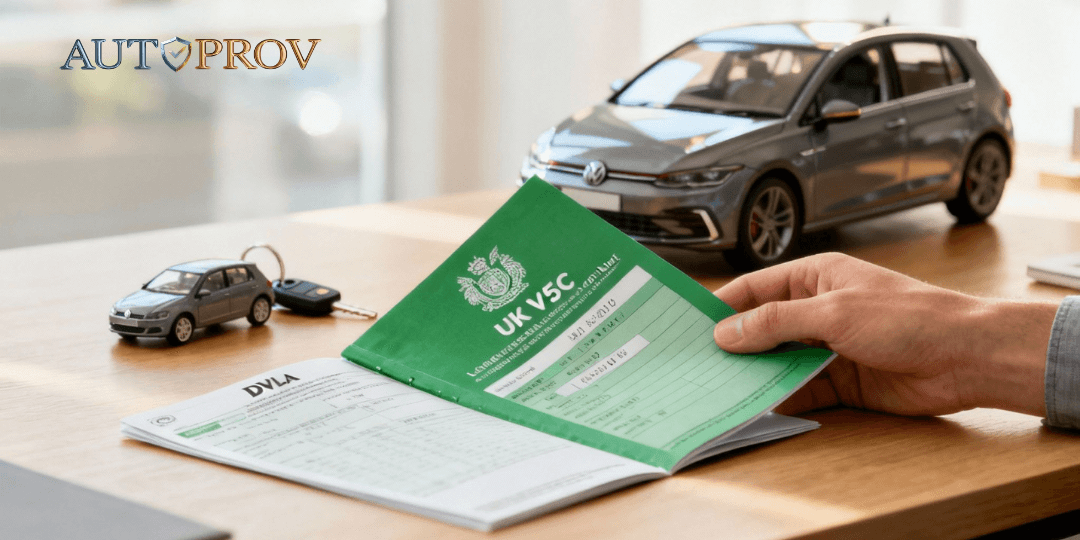
What is a V5C Document: A Quick UK Log Book Guide
If you've ever bought or sold a car in the UK, you've definitely come across the V5C. It's often just called the 'log book', and it’s the official Vehicle Registration Certificate issued by the DVLA.
Published by AutoProv
Your trusted source for vehicle intelligence