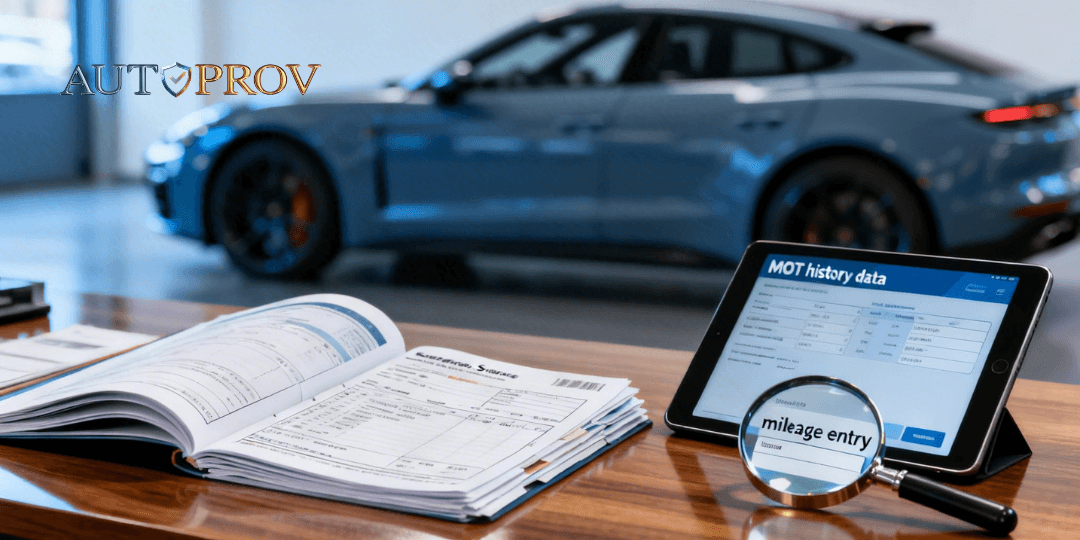
A standard vehicle history report is a good start, but it's just that—a start. For any professional operating in the UK motor trade, a proper car service history check is a fundamental component of due diligence. It’s how you uncover the genuine story behind a vehicle, protecting your capital and, critically, your reputation. For seasoned traders, digging into a car's provenance isn't just about ticking boxes; it's fundamental to buying profitably and managing risk.
Why a Basic Car Check Is No Longer Sufficient
Any experienced trader knows that a standard history report is merely the first layer of due diligence. While these checks are vital for identifying major red flags like outstanding finance or insurance write-offs, they rarely provide a complete picture of a vehicle's true condition and history.
The real financial exposure—the kind that can turn a profitable acquisition into a liability—is often buried in the service history. Or, more frequently, the lack of one. Incomplete, inconsistent, or missing service records can hide a multitude of issues: a history of neglect, recurring mechanical faults, or substandard repairs that are guaranteed to become your problem the moment the vehicle enters your stock.
This is where vehicle provenance intelligence becomes essential. It's about moving beyond isolated data points and starting to analyse the patterns and the narrative they tell.
Provenance intelligence is the analysis of a vehicle's entire historical narrative—from first registration to the present day. It involves piecing together ownership timelines, MOT data, and service intervals to build a risk assessment that a basic check simply cannot deliver.
The Financial Impact of Service Records
The value tied to a vehicle’s maintenance paperwork is significant and directly impacts your bottom line. A full, verifiable service history is one of the most powerful assets a used car can have, heavily influencing its trade value and speed of sale.
Research indicates a complete service history can boost a vehicle's value by over 20%. On a typical vehicle, that’s a difference of thousands of pounds. Failing to properly investigate a car's service history isn't just a missed opportunity; it’s a direct financial risk. You can get a clearer picture by reading our guide on what a free car history check can and can't tell you.
Let's examine how this plays out in real-world valuations. The table below breaks down the stark financial reality of service history status on a typical used vehicle.
Service History Impact on Vehicle Valuation
Vehicle Condition Average Trade Value Adjustment Financial Risk for Trader Full, Main Dealer History +10-20% on trade value Gain: Higher margin & faster sale. Full, Independent Garage History +5-10% on trade value Gain: Still desirable, good margin. Partial or Missing History -15-25% on trade value Loss: Immediate hit on potential profit. No Service History -30% or more (or a "no-bid") Catastrophic Risk: Unsaleable at a profit. The data is clear: a solid service record isn't a "nice-to-have"—it's a core component of a vehicle's value. Retail buyers are also aware of this. A Motorway.co.uk survey found that nearly half of car owners would walk away from a car without a complete service record. Those who might still consider it would demand a discount of around 19% to offset the risk.
Based on average used car prices, that gap can mean an instant loss of over £2,400 per unit. It’s a powerful reminder of why a thorough dealer vehicle check is non-negotiable.
The Growing Complexity and Risk
The risks associated with inadequate checks are increasing. Modern vehicles are equipped with complex technology—Advanced Driver-Assistance Systems (ADAS), intricate engine management software, and sophisticated electronics. This means that deferred maintenance or a poorly executed repair can lead to exceptionally expensive failures.
A missed gearbox service on a premium German model or an ignored DPF warning could easily result in a repair bill that eliminates your entire margin. This makes a meticulous car service history check one of your primary risk management tools, helping you avoid vehicles that are financial time bombs.
AutoProv’s trade-focused vehicle intelligence is designed specifically to surface these hidden risks, providing the insight to protect your capital and make smarter buying decisions.
Building an Investigative Framework for Service History
A professional car service history check is an investigative process. For any experienced trader, this means collating and cross-referencing information from multiple sources to build a trustworthy picture of a vehicle's past. A quick digital check or a glance at a service book is insufficient; true insight comes from blending physical evidence with digital records.
The objective isn't to find the 'perfect' vehicle—which is a rarity. It's about accurately pricing the risk and opportunity in the vehicle before you. To achieve this consistently, you need a systematic approach. Setting up used car alerts can bring potential stock to your attention quickly, allowing you to reserve deep-dive investigations for the most promising assets.
Physical Document Scrutiny
Your first port of call is always the paperwork accompanying the vehicle. This includes the service book and, more importantly, every available invoice and receipt.
- The Service Book: Do not just count the stamps; scrutinise them. Are they from a consistent garage? Examine the ink, the clarity of the stamp, and the handwriting over time. Fraudulent stamps often appear too perfect or are made with generic stamps available for purchase online.
- Invoices and Receipts: These are often more valuable than the service book itself. A detailed invoice breaks down the parts used (often with part numbers) and the labour carried out. This is how you confirm a "major service" included critical jobs like spark plug replacement, not just an oil change. It also provides a paper trail of the garages that have worked on the car.
A thick, organised file of invoices from a well-regarded specialist is a significant positive indicator. Conversely, a pristine service book where all stamps appear identical and seem to have been applied on the same day is a major red flag for motor trade risk.
Digital Record Verification
Once you’ve assessed the physical documents, it’s time to compare them against official digital records. This is where inconsistencies often first appear.
The GOV.UK MOT history service is an essential tool. It’s free and provides a complete timeline of a vehicle’s MOT tests, including mileage readings, failures, and every advisory notice. This is the bedrock of the daily mileage check UK traders rely on.
A steady, plausible increase in mileage between each MOT is the desired pattern. However, be alert for unusual trends. A vehicle that covers very few miles for a long period before being offered for sale can signal a developing fault that the owner has been avoiding. A sudden, large jump in mileage might suggest use as a taxi or private hire vehicle.
This process flow illustrates how a simple check evolves into a much deeper investigation.

The diagram highlights the progression from simple data retrieval to the application of genuine provenance intelligence. It is the patterns and the context that reveal the true history of the vehicle.
Accessing Manufacturer Digital Service Records (DSR)
For most modern vehicles, especially from premium brands like BMW, Mercedes, and the VAG group, the paper service book has been replaced by the Digital Service Record (DSR). This is the gold standard for verification.
These records are stored on the manufacturer's central servers and updated by main dealers and authorised independents each time work is performed, making them extremely difficult to falsify. Access typically requires contacting a main dealer’s service department with the VIN. While it is an extra step in your process, the assurance it provides, especially on high-value stock, is invaluable. A confirmed DSR can substantially de-risk a purchase. You can learn more about a vehicle's service and maintenance history to better understand the data you are reviewing.
By integrating these three pillars—physical documents, public digital records, and manufacturer data—you build a truly robust framework. AutoProv's trade vehicle intelligence platform is built to automate and enhance this entire process, flagging inconsistencies between sources to provide a clear, instant risk assessment at the point of decision.
Uncovering Mileage Discrepancies and Clocking Fraud
Mileage fraud, or ‘clocking’, remains one of the most significant and costly issues in the UK motor trade. While modern digital odometers present new challenges for fraudsters, the practice is still prevalent. An artificially low mileage reading can inflate a vehicle's perceived value, leaving you to manage the consequences when the discrepancy is discovered.
A basic history report might catch a significant rollback, but more sophisticated clocking is harder to detect. It requires a forensic approach, hunting for subtle inconsistencies between the MOT record, service invoices, and the dashboard reading. It's not always about spotting a mileage figure that has decreased; it's about identifying a pattern that is illogical.
For example, a vehicle showing a consistent 12,000 miles per year for five years, followed by only 1,000 miles in each of the two years prior to sale, should raise alarm bells. This is a classic indicator that the vehicle may have been clocked before its latest MOT tests to create a more attractive, low-mileage history. This is a common tactic designed to deceive a standard car service history check.
Cross-Referencing MOT and Service Data
Your first point of reference should always be the DVSA's online MOT history service. Since 2005, it has logged the mileage at every test, providing a powerful, free timeline to spot anomalies. For any trader, the government's free service to check MOT history is an essential due diligence tool.
This interface allows you to instantly see the mileage recorded at every MOT. A close inspection can expose unusual patterns, such as a period of very high mileage followed by almost none. This could indicate a change in the owner's circumstances, or it could suggest mileage manipulation.
Accurate mileage verification is critical, especially when considering that clocking could affect as many as 1 in 10 used cars in the UK. Identifying discrepancies between recorded mileages can prevent you from overpaying by 10-20% on a fraudulent vehicle. A proper mileage check UK traders can rely on involves more than one data point; it’s about analysing the entire historical trend.
Physical Evidence Versus Digital Data
Often, the most compelling evidence is found within the vehicle itself. A car’s physical condition tells a story; if that story doesn’t align with the odometer reading, something is amiss. This is where your professional experience is invaluable.
A vehicle displaying 30,000 miles but fitted with new pedal rubbers, a new gear knob, and a driver’s seat bolster that is heavily worn is a major red flag. The wear and tear should be consistent with its stated age and mileage.
Look for these physical indicators:
- Excessive Wear: Physically inspect the steering wheel, driver's seat (especially the entry bolster), pedal rubbers, and high-contact switches. A shiny, worn-smooth steering wheel does not belong in a low-mileage vehicle.
- Stone Chips: The front bumper, bonnet, and windscreen should exhibit a degree of pitting consistent with the claimed mileage. A flawless front end on a vehicle with 80,000 miles is highly suspect, pointing to either a recent respray or a doctored odometer.
- Mismatched Tyres: Always check the date codes on the tyres. If a car with only 15,000 miles is already on its second or third set of tyres, further questions are warranted.
Developing these forensic skills is what separates a proficient trader from an expert one. It helps you spot deception that a basic check will miss, protecting you from costly errors.
By combining digital data from the MOT history with a thorough physical inspection, you can create a much more accurate picture of a car's true history. For a deeper analysis, our guide on how to complete a full DVLA mileage check offers further expert guidance. This is exactly what platforms like AutoProv are designed for—automating this cross-referencing, highlighting red flags, and delivering the trade vehicle intelligence you need to buy with confidence.
How to Read Ownership Patterns and Provenance Signals
A professional car service history check extends beyond verifying stamps in a service book. True intelligence is derived from analysing ownership patterns. This is where you distinguish good stock from high-risk liabilities. The number of keepers, the frequency of sale, and the type of ownership are all significant signals that tell a story, revealing either a predictable problem vehicle or a solid, profitable asset.
Learning to interpret the narrative behind a car's ownership timeline is a fundamental skill for any astute trader. It marks the transition from data collection to informed risk assessment. A basic check will report that a car has had four owners, but it won't explain what that means in a commercial context.
Short-Term Ownership and Rapid Resale Risks
One of the most significant red flags is a vehicle that has been passed between multiple owners in a short period. When you encounter a vehicle that has changed hands several times in a short window—for example, three keepers in 18 months—you must stop and investigate closely.
This pattern is a classic indicator that previous owners have discovered a significant, expensive, or intermittent fault and decided to dispose of the vehicle quickly rather than incur the repair costs. These are the problem cars, and by the time one reaches you, you risk being the one left with the liability.
Consider the common scenarios that lead to rapid resale:
- The Hidden Fault: An intermittent gearbox issue that doesn't manifest during a short test drive or a complex electrical problem that has confounded multiple garages.
- The Post-Accident Problem: A vehicle that has sustained damage, been repaired cheaply, and now suffers from alignment issues, uneven tyre wear, or chassis noise.
- The Major Bill Avoidance: The previous owner receives a quote for a £2,000 cambelt and water pump service and decides to sell the car rather than pay for the maintenance.
This is why you must scrutinise the ownership dates on the V5C and cross-reference them with MOT records and service invoices. This allows you to build a clear timeline and challenge any suspiciously short ownership periods.
Analysing Keepers in Context
The raw number of previous keepers is almost meaningless without context. You must evaluate that number against the vehicle's age, type, and value segment. A ten-year-old family hatchback with two owners is perfectly normal. A high-performance sports car of the same age with four or five keepers could also be entirely acceptable.
The critical question isn’t "how many owners?" but "is this number of owners logical for this specific vehicle?". A three-year-old, five-owner performance car carries a completely different risk profile to a ten-year-old, two-owner family estate.
Here’s how to apply that crucial context:
- Vehicle Type: Performance, prestige, and classic cars are often aspirational or secondary vehicles, so they naturally change hands more frequently. A higher keeper count here is far less of a red flag than on a workhorse van or estate.
- Vehicle Age: A one-year-old car with three owners is a major cause for concern. A 15-year-old car with five owners is much less worrying, as it averages a new owner every three years.
- Market Segment: Small, budget city cars are often passed between new drivers or used as second family runarounds. More owners are expected in this part of the market.
Frequent changes on the V5C logbook that do not appear to align with a sale can also indicate suspicious activity. This requires a deeper level of vehicle provenance analysis. To get the full story, it’s worth understanding everything covered in a professional vehicle provenance report, which is specifically designed to connect these disparate pieces of information.
This is precisely where AutoProv's platform excels. It doesn't just present raw data; it actively flags ownership patterns that are atypical for that specific model, giving you an instant alert on elevated motor trade risk. This is the kind of trade vehicle intelligence that leads directly to smarter, more profitable buying decisions.
Turning Service History Intelligence into Profit
A thorough car service history check is not merely a defensive measure; it’s a powerful tool for enhancing your profit margin. Once you’ve completed the due diligence—analysing the service book, MOT records, and ownership timeline—you can leverage this intelligence. This is where your expertise as a trader converts raw data into margin.
The story a vehicle's history tells should directly inform three critical decisions: how you negotiate, how you value it, and whether you acquire it at all. While a pristine vehicle with a flawless history can command a premium, the greatest profit opportunities often lie in vehicles with well-understood, manageable imperfections. The key is knowing exactly what you're dealing with and pricing that risk into your bid.
Using Service History for Negotiation
Every gap, advisory notice, and red flag you uncover in a vehicle's history is a negotiation point. This is not about making lowball offers; it's about presenting a fair, evidence-based bid that reflects the vehicle's genuine condition and the tangible costs required to make it retail-ready.
When you can point to specific, documented issues, you shift the conversation from opinion to fact, instantly strengthening your position.
- Upcoming Major Service: A vehicle approaching a major scheduled service like a cambelt, water pump, or gearbox oil change carries a significant, predictable expense. You can confidently factor this cost directly into your offer as a necessary deduction.
- Service History Gaps: A year or two of missing service history creates a void of uncertainty. This provides grounds to argue for a price reduction to compensate for that unknown risk. You are assuming the potential cost of a full inspection to verify no major problems are present.
- Advisory Notices: A history of MOT advisories for items like worn suspension bushes or corroded brake lines is valuable intelligence. It’s an official record of pending work, giving you a solid basis to adjust your offer to cover the future repair bill.
The most effective negotiation tactic is to present your findings calmly and factually. Avoid saying, "The history looks a bit dodgy." Instead, state: "The vehicle is due its 6-year major service, which is a £900 job at a specialist. The last MOT also flagged corrosion on the rear brake lines. My offer has to reflect that reality."
Adjusting Valuations Based on Provenance
Your final valuation must be a direct reflection of the vehicle's provenance. Two seemingly identical cars—same make, model, year, and mileage—can have vastly different real-world values once you investigate their past. Mastering this valuation adjustment is critical to protecting your margins.
A key part of this is pricing in the risk associated with incomplete records. The market is rife with issues, and you cannot afford to ignore that reality. Data shows that over 50% of UK used car buyers encounter service history gaps or forgeries. This presents a massive risk, especially as the average vehicle age increases and MOT data reveals patterns of neglect leading to high failure rates.
For a more detailed breakdown of how these factors should influence your final numbers, review our guide on mastering car valuation for accurate vehicle pricing. It provides a solid framework for converting historical data points into a robust financial assessment.
Knowing When to Walk Away
Sometimes, the most profitable decision is to walk away. Certain red flags are simply too significant, signalling a vehicle destined to become a financial liability, regardless of its acquisition price. Your dealer vehicle checks are your best defence against acquiring a problem unit.
Every successful trader has a set of 'walk-away' triggers—non-negotiable red flags that indicate unacceptable risk. Defining your own is a crucial part of buying discipline.
This quick-reference table outlines common red flags and the business risks they represent.
Service History Red Flags and Associated Risks
Red Flag Potential Indication Business Risk Hand-written, unstamped entries Unverifiable, potentially fabricated history. High. Impossible to prove work was done, making the car hard to retail. Multiple short ownership periods Underlying fault being passed on quickly. Very High. You could be buying a chronic, expensive problem. Confirmed mileage discrepancy Deliberate clocking and fraud. Extreme. Legal issues and total loss of investment. Missing Digital Service Record (DSR) on a modern car History is effectively non-existent. High. Key services (e.g., gearbox) are unconfirmed, posing huge repair risks. Assessing these risks should be second nature. The goal is to spot them instantly and understand the financial danger they represent.
Platforms like AutoProv are built to bring this kind of trade vehicle intelligence directly into your workflow, automatically flagging these critical red flags in seconds. By embedding this capability into your buying process, you can make faster, more confident decisions and ensure you’re only tying up capital in stock that promises a healthy, predictable return.
Your Questions Answered: Advice for the Trade
Even for experienced motor trade professionals, certain vehicle history scenarios can present challenges. Here are some direct, trade-focused answers to common questions.
What if a Service Book Is Missing but the Owner Insists It Was Serviced?
In the motor trade, verbal assurances have no commercial value. If there is no stamped service book, no digital record, and no collection of invoices, then for all practical purposes, the service history does not exist.
Your first step should be to request any form of proof. This could include:
- Invoices from garages detailing the work performed.
- Receipts for parts purchased.
- Bank or credit card statements showing payments to service centres.
If no evidence can be produced, you must operate on the assumption that the vehicle has zero service history. Your valuation must be adjusted downwards accordingly to cover your risk and the subsequent difficulty in retailing the vehicle. A car with a good story but no proof is simply a car with no history.
Is Main Dealer History Always Better Than Independent Garage History?
Not necessarily. A full main dealer service history (MDSH) is an excellent selling point and simplifies marketing to a retail buyer. However, the true measure of value is the quality and consistency of the work performed.
A detailed, complete history from a well-regarded independent specialist can be just as valuable—sometimes more so.
Consider a performance car, such as a Porsche or Alfa Romeo. A file filled with invoices from a renowned independent specialist who focuses on that marque can be a significant asset. These garages often have a reputation that speaks for itself, and enthusiasts will actively seek out cars they have maintained.
The key is to look beyond the logo on the invoice and analyse the detail. A comprehensive file of itemised receipts from an independent garage, listing high-quality parts and the correct specification of oil, provides more assurance than a single main dealer stamp with no supporting paperwork.
The genuine value lies in the evidence of consistent, correct, and thorough maintenance. That is the core of a professional used car history report.
How Do I Reliably Verify a Digital Service Record?
With more manufacturers discontinuing paper service books, knowing how to check a Digital Service Record (DSR) is a non-negotiable part of modern dealer vehicle checks. While there are a few methods, one is definitive.
The most reliable way to verify a DSR is to contact a main dealer for that brand by phone. You will need the vehicle's VIN. Call their service department, provide the details, and ask them to retrieve the vehicle's record on their system. They can confirm every service entry, including the dates and mileages logged against the vehicle. This provides a direct line to the manufacturer's central database, making the information almost impossible to falsify.
While some brands offer online portals for owners, these can be inconsistent or slow to update. When you are on-site and need to make a fast buying decision, a phone call is the quickest, most reliable path to verification. It is a simple piece of trade vehicle intelligence that can prevent a costly mistake on high-value, modern stock.
What if the MOT History Shows a Mileage Error?
Encountering an anomalous mileage reading on the GOV.UK MOT history check is common and does not automatically mean the vehicle has been clocked. Simple clerical errors during data entry happen frequently.
For instance, if you spot a single reading that spikes by 100,000 miles and then corrects itself at the next MOT, it is likely a typo. Your job is to verify this. Check service invoices from around that period; if they show a logical mileage progression, you can be reasonably confident the MOT entry was a one-off error.
The real red flags for a mileage check UK traders must be vigilant for are suspicious patterns. This includes mileage that drops between two MOTs or remains static for several years before the car is offered for sale. These are the situations that demand extreme caution and a much deeper investigation into the vehicle's provenance.
At AutoProv, we understand that a professional risk assessment is more than a simple data check. Our platform is built to dig deeper, cross-referencing ownership timelines, MOT data, and service records to deliver the advanced vehicle provenance intelligence that UK motor traders need. It helps you buy smarter and protects your bottom line.
See how AutoProv can strengthen your buying process at https://autoprov.ai.
Frequently Asked Questions
AI-Generated Content Notice
This article was created with the assistance of artificial intelligence technology. While we strive for accuracy, the information provided should be considered for general informational purposes only and should not be relied upon as professional automotive, legal, or financial advice. We recommend verifying any information with qualified professionals or official sources before making important decisions. AutoProv accepts no liability for any consequences resulting from the use of this information.
From our AI insights
- Navigating UK Grey Imports: A Trader's Guide
Understand the complexities and opportunities of UK grey imports for savvy motor traders.
- Navigating Private Plate Challenges in UK Vehicle Checks
Learn how private plates affect UK vehicle checks and how traders verify provenance and spot cloning risks.
- Navigating VIN Checks Post-Brexit: What UK Traders Need to Know
Discover how Brexit impacts VIN checks for UK traders and the crucial data to review.
Related Articles

Essential Vehicle Checks Before Buying a Used Car
Learn essential checks to ensure your used car purchase is safe and sound in the UK market.

Why a Provenance Check is Essential for Used Car Buyers
Ensure your used car is a smart investment by understanding the importance of a provenance check and how AutoProv can help.
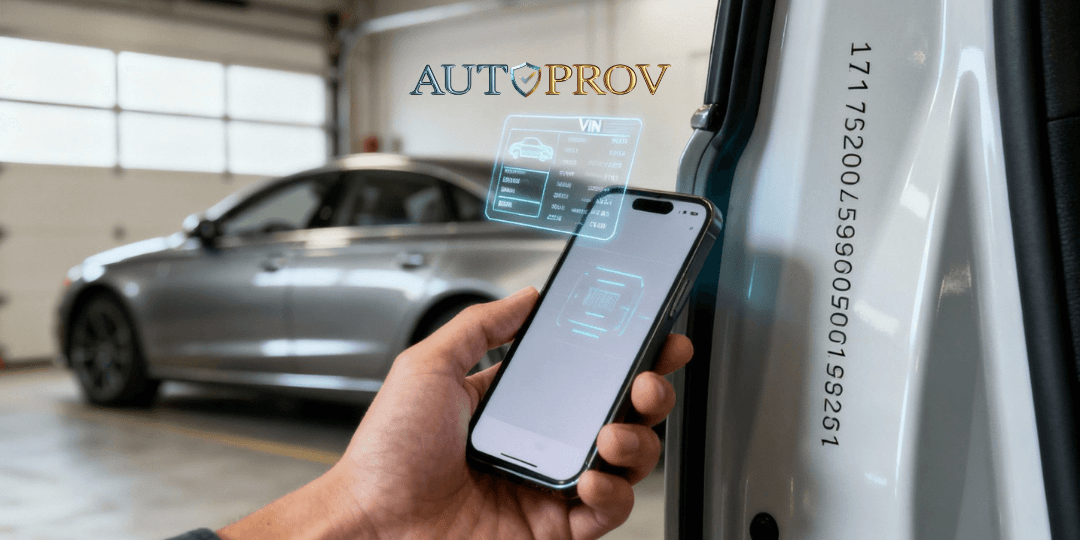
A Guide to Vehicle Check with VIN Number
A vehicle check with vin number is easily the most important thing you can do before buying a used car. Think of it as your first line of defence—a quick, simple step that pulls back the curtain on a vehicle's past, protecting you from expensive mistakes, legal headaches, and downright dangerous cars.
Published by AutoProv
Your trusted source for vehicle intelligence