
Two cars roll through the same auction lane. Similar age. Similar mileage. Similar guide price. One carries a five-star Euro NCAP result from 2019. The other shows four stars from 2024. If you treat cars safety ratings as a simple hierarchy, the older car looks like the safer buy.
That's where dealers get caught out.
In the trade, a safety rating isn't just a consumer brochure detail. It affects stock selection, valuation, negotiation position, retail presentation, and post-sale risk. A car with stronger crash-avoidance systems fitted as standard may present a better real-world risk profile than a car with an older headline score that flatters it out of context. If you're appraising stock quickly, that distinction matters.
The practical problem is that many buyers still read a star rating as if it were fixed, universal, and directly comparable across years. It isn't. In the UK, safety ratings are most commonly understood through Euro NCAP, the region's leading independent crash-testing body, launched in 1997. Its results are expressed across several safety domains rather than as a simple pass or fail, and a rating is only valid for the specific test year because protocols change over time, as outlined in this guide to understanding car safety ratings.
For dealers, that means the useful question isn't “How many stars?” It's “What exactly was tested, under which protocol, and on what standard equipment?”
That shift turns safety data from a sales talking point into a proper risk input. It also helps when you're comparing late-plate stock against older approved-used style vehicles, or when you're trying to separate genuine value from apparent value. If safety-led stock is part of your mix, it's worth reviewing examples such as AutoProv's top 10 safest used cars in the UK, but the bigger commercial advantage comes from knowing how to interpret the rating rather than just quoting it.
Introduction More Than Just Stars on a Windscreen
At auction or in a part-exchange appraisal, the star count is often the first thing someone mentions and the last thing they properly examine. That's understandable. It's simple, visible, and easy to repeat in a sales conversation.
It's also incomplete.
A modern dealer can't afford to read cars safety ratings at face value. Safety performance feeds into buyer confidence, but it also feeds into the kind of stock you're willing to stand behind. If two vehicles sit at the same retail point, yet one has stronger standard crash-avoidance technology and a more current test result, that difference can affect how you pitch, price, and defend the car.
Why the trade should care
A safety rating has operational value because it helps answer three separate questions:
- Acquisition risk: Are you buying a vehicle whose safety credentials still stand up in current market terms?
- Valuation risk: Does the rating support a stronger retail narrative, or is it likely to date badly once a customer looks deeper?
- Reputational risk: If a buyer asks what makes one car safer than another, can your team explain more than “it has five stars”?
Practical rule: A safety rating is strongest when it supports a wider appraisal, not when it replaces one.
That matters most in used stock, where age, trim, optional equipment, and changing test methods all distort the headline. Dealers who handle safety ratings properly tend to make cleaner comparisons. Dealers who don't often overvalue older stock with legacy scores and undervalue newer vehicles with better active safety provision.
What Are Car Safety Ratings The UK Framework
A buyer asks whether a car is “five-star.” The trade question is narrower and more useful. Which safety standard was the car tested under, what specification was assessed, and does that result still support the margin on the stock unit in front of you?
In the UK, the reference point is Euro NCAP, the independent programme that publishes comparative safety assessments for new vehicles across Europe. For dealers, its value is practical. It gives a common framework for judging how a vehicle was assessed at launch, then checking whether that result still holds up once age, trim, and equipment are taken into account. Euro NCAP sets out its test methods and rating structure in its official safety assessment framework.
The overall star rating gets the attention. The working detail sits underneath it, in the percentage scores and equipment notes attached to the tested vehicle. That is the part that affects appraisal accuracy and retail positioning.

What the framework is actually measuring
Euro NCAP assessments are built around four core areas:
- Adult Occupant Protection: Crash protection for adult occupants in common impact scenarios.
- Child Occupant Protection: Protection for children using the correct restraint systems.
- Vulnerable Road User Protection: The vehicle's design and systems in relation to pedestrians and other exposed road users.
- Safety Assist: Driver-assistance features that help avoid or reduce the severity of a collision.
For a dealership, that matters because a rating is not just a comment on structural crash performance. It is also a comment on fitted technology, calibration, and standard equipment. Two cars from the same model line can look identical on the forecourt yet carry different safety credibility if one trim included key assistance systems as standard and another did not.
That specification check is where rating data becomes commercially useful. A proper appraisal links the Euro NCAP result to trim-level equipment, build date, and verified vehicle records, using vehicle provenance and data-source checks rather than relying on a brochure description or a seller's shorthand.
Why stars still matter, but not on their own
The star rating remains the quickest market signal. Customers recognise it, sales staff can use it in conversation, and it still influences how safe a vehicle feels in a side-by-side comparison.
It is also easy to misuse.
A five-star result can be old. A lower-rated car can be newer but tested under a harder protocol. A strong overall score can hide a weak area that matters to your target buyer. The tested vehicle may also have carried standard-fit safety equipment that is absent from the actual unit you are pricing.
That is why dealers should treat the star count as an entry point, not a conclusion. The useful reading is whether the published assessment matches the exact stock profile closely enough to support your acquisition decision, your retail narrative, and your asking price.
Decoding the Euro NCAP Scorecard
A dealer looking at cars safety ratings needs to read the scorecard the way an underwriter would read risk. The overall rating matters. The component parts matter more.
Current assessment thinking puts increasing weight on the combination of crash performance and crash avoidance. Euro NCAP's current protocol rewards vehicles that fit autonomous emergency braking, lane support, and speed assistance systems as standard, and two otherwise similar cars can carry very different risk profiles if one bundles active mitigation technology and the other relies mostly on passive protection, as noted in this vehicle safety ratings reference.

The four pillars in trade terms
Pillar What It Tests Trade Consideration Adult Occupant Protection Core crash protection for adult occupants in impact scenarios Useful for judging structural crashworthiness, especially when comparing older stock Child Occupant Protection Protection for child occupants with appropriate restraint setups Relevant for family-car retailing and for how broad the buyer pool may be Vulnerable Road User Protection How the vehicle design and systems protect pedestrians and other exposed road users Important in urban-use stock, where buyer concerns often extend beyond cabin occupants Safety Assist Driver assistance and crash-avoidance systems fitted to help prevent or reduce collisions Increasingly important for valuation because it often separates legacy safety from current safety Adult and child protection
These are the parts most traders instinctively understand. They speak to impact management, occupant restraint performance, and cabin protection. For older used stock, these domains still carry obvious value because they provide a baseline view of how the vehicle was engineered to manage a crash.
But they shouldn't be treated as the whole story. A car can look strong here and still sit behind a newer rival in practical road safety if the newer vehicle avoids low-speed and medium-risk incidents more effectively.
Vulnerable road user protection
This category often gets less attention in the lanes than it deserves. In UK retail, especially for superminis, hatchbacks, and crossovers aimed at town and commuter use, it can be commercially relevant.
A buyer with mixed urban use in mind may care as much about pedestrian interaction and front-end mitigation as about occupant scores. That doesn't only affect the customer conversation. It affects how current the car feels against newer stock.
Safety Assist is where older readings fall apart
This is the pillar many traders skip, and it's often the one that tells you whether a strong-looking rating is modern or merely historical.
If the tested vehicle earns credit because AEB, lane support, and speed assistance are fitted as standard, that changes the risk conversation. You're no longer just assessing how well a car survives an impact. You're assessing whether it has a better chance of reducing crash frequency or severity in the first place.
That distinction is especially useful when combined with broader vehicle data sources used in trade risk assessment. The safety scorecard tells you how the model performed in testing. The wider data picture helps you judge whether that model specification and history align with the actual vehicle you're considering.
A five-star shell with weak standard assist technology can be less attractive stock than a newer car with a lower headline score but stronger avoidance systems.
The Hidden Risks and Common Misinterpretations
A buyer stands in the forecourt comparing two similar hatchbacks. One carries an older five-star result that looks strong on the windscreen. The other has a lower headline rating from a newer test cycle. If the sales team treats those stars as equal currency, the dealership can overpay for the wrong car and stock an asset that is harder to defend on specification, margin, and risk.
That mistake turns up regularly in used buying. Safety ratings have a shelf life in commercial terms because Euro NCAP changes its protocols over time. A headline result only makes sense in the context of the year tested, the equipment fitted, and the way that model was configured for the assessment.

Misreading protocol years
A five-star car from an earlier regime can look stronger than it really is beside a newer four-star car tested against tighter criteria. In appraisal terms, that matters because the older car may still command confidence with retail customers while offering less current safety content than the headline suggests.
The practical answer is to compare within the same protocol year where possible. If the years differ, go past the star count and read the score breakdown, especially where newer test methods place more weight on driver assistance and crash avoidance. That approach improves buying discipline and helps avoid overvaluing legacy ratings.
Assuming every trim matches the tested car
This is one of the costlier errors in mainstream stock acquisition. The tested vehicle may include AEB, lane support, or speed assistance as standard, while the car in front of you only had those systems on a pack, a higher trim, or a later facelift.
That gap affects more than the sales pitch. It affects reserve price, prep decisions, and complaint risk after handover. If the stock unit does not match the tested specification, describe the fitted equipment precisely and price it on what it offers.
Confusing a strong crash result with a low operational risk
A car can perform well in impact protection and still present commercial risk for a dealer.
The issue is real-world use. Urban stock, family hatchbacks, and small crossovers spend their lives in traffic, car parks, school runs, and short mixed journeys. In those conditions, avoidance systems often matter as much as crash structure because they can reduce the chance of an incident that leads to warranty friction, customer dissatisfaction, or a lower-value part exchange later.
An old five-star result should never replace a current appraisal of specification, test year, and vehicle history.
There is also a compliance angle. Safety equipment only helps if it is present, functioning, and not subject to outstanding remedial work. That is why rating checks should sit beside recall status, service evidence, and provenance review. AutoProv's guide on how to check car recalls is a practical reference for that process.
Dealers should also remember that safety risk is wider than the retail handover. Workshop movements, customer vehicles on site, and road testing all carry exposure, which is why insurance planning still matters alongside stock assessment. That applies well beyond the UK context, including protecting your Florida dealership.
Using Safety Ratings in Your Dealership Workflow
Most dealerships already look at age, mileage, condition, provenance, and margin. Safety data should sit in the same workflow, not off to one side as brochure content.
The practical shift is to stop asking whether a car has a good rating and start asking how the rating changes the buying decision. Many retail resources still present the star result as the whole story, but the market is moving towards vehicles that score well for avoiding a crash, not just surviving one. For UK traders, a safer asset may be one with strong AEB, lane support, and headlight performance, rather than just the highest legacy crash score, as discussed in this car safety ratings guide for buyers.

Sourcing and acquisition
In buying terms, safety ratings work best as a filter, not a verdict.
Use them to separate stock into broad risk bands before you commit time to deeper appraisal. For example:
- Prioritise current-fit safety tech: Give extra attention to vehicles where AEB and lane support are standard rather than pack-dependent.
- Question legacy headline scores: If an older car leads with stars but lacks meaningful assist systems, price the risk into the bid.
- Check spec integrity: Confirm that the tested or advertised safety equipment matches the trim in lane.
Trade vehicle intelligence helps dealers who use structured buying tools such as AutoProv's vehicle intelligence workflow to place safety data alongside provenance, mileage patterns, ownership timelines, and other risk indicators rather than treating each input in isolation.
Valuation and pricing
Safety can support retail price. It doesn't automatically justify it.
A strong, recent safety position may help defend a firmer retail stance when the car also presents well on history, ownership pattern, and condition. But the reverse is also true. If a vehicle's score relies on an older protocol or on equipment not fitted to your stock unit, it may not warrant the premium you hoped for.
A good desk appraisal asks:
- Does the rating still read well in current market context?
- Is the tested safety equipment present on this vehicle?
- Will the safety story survive a discerning customer's questions?
Sales process and aftersales communication
The strongest sales teams don't oversell stars. They explain relevance.
That means talking about what the systems do in practical use, where appropriate, and avoiding broad claims that all variants are equally equipped. It also means framing safety as one part of responsible stocking and handover standards. In parallel, some dealers also review wider operational exposures around storage, movement, and custody of vehicles. For a US-market perspective on workshop and site liability, the article on protecting your Florida dealership is a useful reminder that vehicle risk doesn't stop at the point of sale.
Sales note: Safety sells best when it's specific to the actual car, not when it's reduced to a generic star claim.
Beyond the Rating Combining Safety Data with Provenance Intelligence
A safety rating tells you how a vehicle model should perform when properly built, properly equipped, and properly maintained. It doesn't tell you the condition story of the individual car you're buying.
That's the gap many traders underestimate.
A vehicle may have been well rated when tested, but that doesn't mean the stock unit in front of you still reflects that design standard in real terms. Prior damage, poor-quality repair, missing safety equipment, unresolved recall work, inconsistent maintenance, or signs of hard-use ownership can all weaken confidence. This is why a vehicle history check UK process needs to sit alongside safety review, not behind it.
Why provenance changes the risk picture
From a dealer's perspective, the key distinction is between model safety and vehicle-specific risk.
- Model safety comes from the published assessment and tested specification.
- Vehicle-specific risk comes from provenance, mileage pattern, ownership behaviour, repair context, and data anomalies.
A five-star car with a questionable background may be a weaker buy than a slightly less marketable model with clean history and consistent evidence. That's where vehicle provenance, a proper used car history report, and deeper dealer vehicle checks become commercially useful. They help you understand whether the safety narrative is intact or whether the stock carries hidden compromise.
Turning public data into trade intelligence
The trade doesn't need more isolated data points. It needs context at the point of decision.
That's why safety information works best when paired with trade-focused provenance analysis. If you're assessing broader used car security and risk awareness material for customers, practical pieces such as these car security tips for KC drivers can support general education. For stock acquisition, though, what matters is a more disciplined review of the car's own history and pattern of use.
For a deeper look at how provenance supports motor trade risk decisions, AutoProv's guide to a car provenance report in the UK is a useful reference. It connects public-facing safety information with the hidden context that affects valuation, compliance, and profitability.
If you want to assess stock with more context than a headline rating can provide, AutoProv helps UK motor traders review vehicle provenance, ownership patterns, mileage signals, and other risk indicators alongside standard appraisal inputs. That gives buying teams a clearer view of whether a vehicle's safety story stands up in practice.
Frequently Asked Questions
AI-Generated Content Notice
This article was created with the assistance of artificial intelligence technology. While we strive for accuracy, the information provided should be considered for general informational purposes only and should not be relied upon as professional automotive, legal, or financial advice. We recommend verifying any information with qualified professionals or official sources before making important decisions. AutoProv accepts no liability for any consequences resulting from the use of this information.
From our AI insights
- Managing Takata Recall Liability: A Trader’s Guide
Explore how UK traders can manage liability for Takata airbag recalls effectively.
- Advanced Airbag and Safety Recall Checks for UK Traders
Ensure safety compliance with advanced airbag and recall checks for UK motor traders. Protect your stock and clients.
- Navigating the A2 Motorcycle Test: Risks & Regulations
Understand A2 motorcycle test rules, vehicle restrictions, and provenance risks to accurately value your stock.
Related Articles

Essential Car Safety Checks for UK Used Cars
Discover crucial safety checks for used cars in the UK to ensure your vehicle is safe and reliable.

A Motor Trader's Guide to the Vehicle Recall Check UK
Performing a vehicle recall check in the UK is an absolutely critical step for any motor trader. It’s not just paperwork; it’s about safeguarding your business, your reputation, and most importantly, your customers.
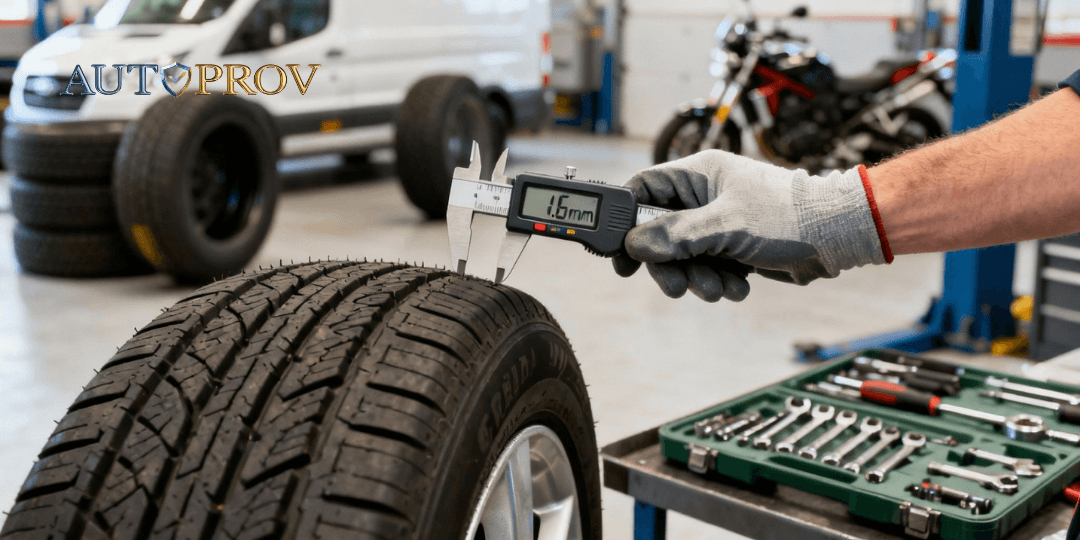
Minimum Tyre Tread Depth UK: A Guide for the Motor Trade
For anyone in the UK motor trade, one number should be front and centre in your mind: 1.6mm. That’s the legal minimum tyre tread depth. But it's so much more than a statistic—it’s a figure that has a direct line to your business's reputation, its legality, and ultimately, its bottom line. Getting this wrong isn't an option.
Published by AutoProv
Your trusted source for vehicle intelligence