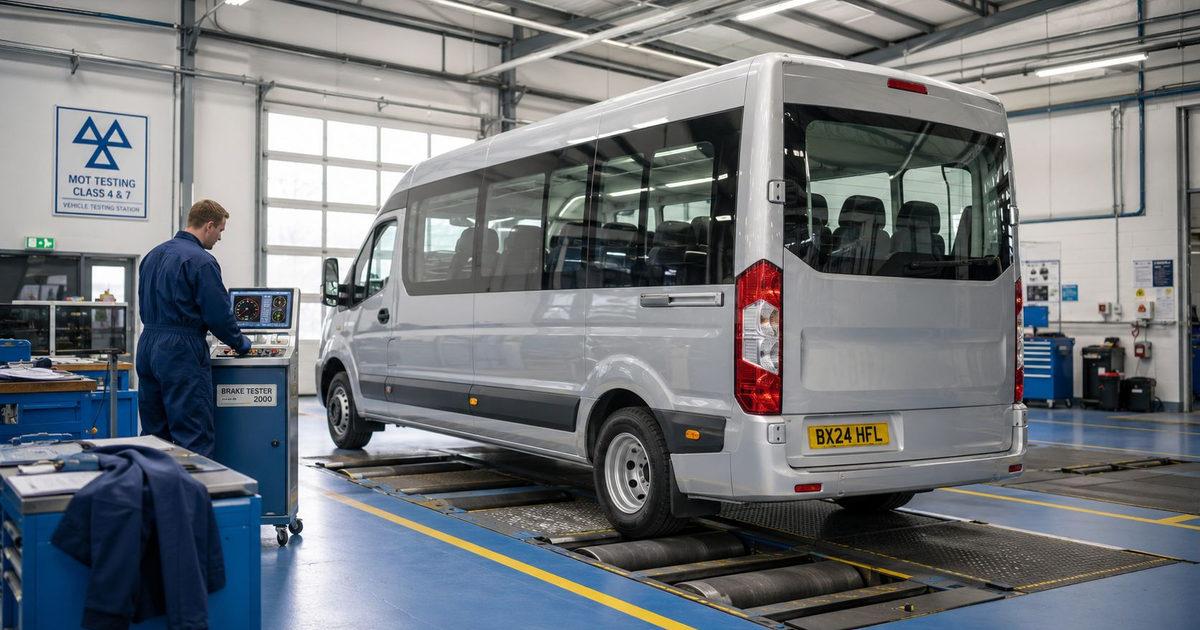
A Class 5 MOT is a bigger deal than many trade buyers assume, and the government data backs that up. In 2025 to 2026 Q1, DVSA recorded 7,545,188 Class 5 tests, with 1,662,310 fails, an initial fail rate of 27.24% and a final fail rate of 22.03% after rectification at the test station, plus 14,374 failures with at least one dangerous item DVSA MOT testing data for Great Britain. For dealers handling minibuses, ambulances, motor caravans, or other larger passenger vehicles, that failure profile is a reminder that Class 5 stock needs sharper risk control than a normal car lot strategy.
The practical issue is simple. These vehicles carry more people, cost more to remediate, and often come with more complicated testing pathways, so a shallow vehicle history check UK approach misses too much. A decent vehicle provenance review, a proper used car history report, and trade-focused dealer vehicle checks should work together, not sit in separate boxes.
Table of Contents
- Why Class 5 MOTs Demand Extra Scrutiny
- Why the failure profile matters to dealers
- Understanding Class 5 Vehicle Categories and Requirements
- What the inspection actually covers
- The loading calculation dealers overlook
- The Critical Difference Between Class 5, Class 5L, and Class 5A Testing
- The pathway depends on more than seat count
- What to confirm before you buy
- Common Failure Points and Risk Indicators
- What the defect mix tells a trader
- What to prioritise in the file
- Why Standard History Checks Fall Short for Class 5 Vehicles
- Why provenance matters more on specialist passenger vehicles
- What basic checks miss
- Practical Steps for Evaluating Class 5 Vehicles Before Purchase
- A buying sequence that works in the trade
- Questions that should be answered before money changes hands
Why Class 5 MOTs Demand Extra Scrutiny
Class 5 stock carries a sharper risk profile than many dealers assume. DVSA open data shows large volumes of failures in this class, and a meaningful share of those failures involve dangerous items, which means the problem is not limited to minor paperwork or cosmetic defects. Earlier DVSA figures for Class 5 also showed a notable fail rate on initial presentation, so this is a recurring condition issue, not an isolated blip DVSA MOT testing data for Great Britain DVSA class 5 defect-category data.
Why the failure profile matters to dealers
A Class 5 MOT applies to private passenger vehicles with more than 12 seats, so these vehicles usually sit in a transport workflow where downtime, seat integrity, and brake performance affect both compliance and saleability DVSA MOT introduction. That changes the buying decision. A minibus that needs immediate rectification can eat margin fast, and a vehicle with an unresolved safety defect can become a liability if it is retailed without proper checks.
Practical rule: treat every Class 5 prospect as a passenger-safety asset first and a retail unit second.
The open-data format also matters. DVSA publishes initial tests only, excluding re-tests, so the failure picture reflects the vehicle's first-pass condition rather than the eventual result after repairs DVSA class 5 defect-category data. That is useful to motor traders because it gives a cleaner read on condition at the point of inspection. It also means a pass record on its own does not tell you whether the vehicle has already had repeated issues, deferred repairs, or class-specific defects that were fixed just enough to clear the test.
For trade buyers, the commercial exposure is straightforward. Larger passenger vehicles often bring more complex repair work, dearer parts, and a thinner buyer pool that can absorb hidden faults. That is why I would pair any acquisition decision with a proper provenance review and, where usage or compliance questions go beyond a standard dealer purchase, a specialist resource such as the Heavy Vehicle National Law guide.
A basic MOT pass is not enough on its own. The right question is whether the vehicle has been assessed against the correct class, at the right station, with history that supports the condition you are paying for. For a practical breakdown of the rules, the AutoProv MOT rules guide is a useful reference.
Understanding Class 5 Vehicle Categories and Requirements
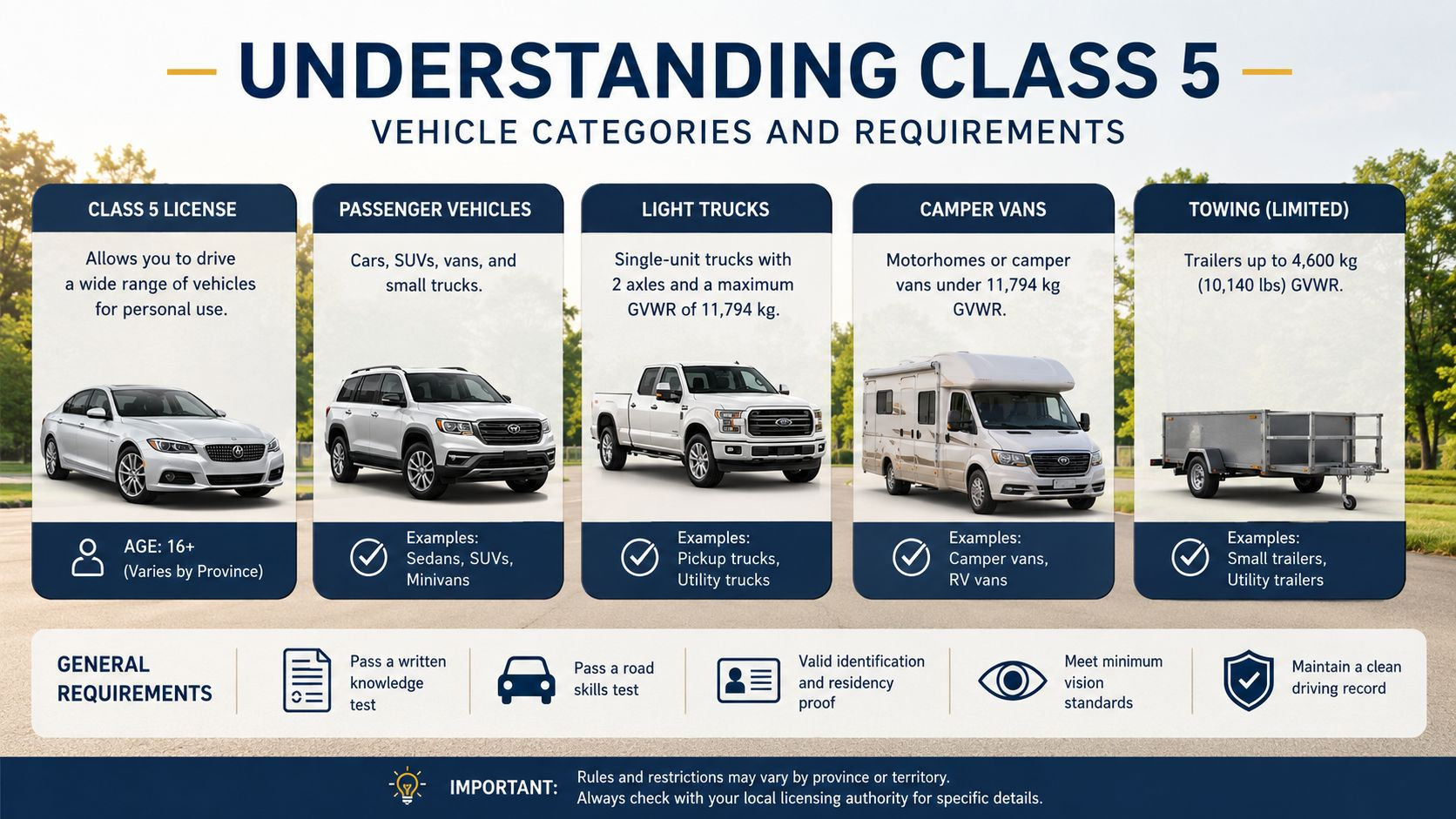
A dealer can get the vehicle right and still end up with the wrong test pathway. That matters on Class 5 stock because a mismatch between the vehicle's build, its passenger layout, and its test category can create avoidable storage, transport, and reconditioning costs before the unit is ready for sale. Class 5 covers category M2/M3 passenger-carrying vehicles, including private passenger vehicles, ambulances, and motor caravans with 13 or more passenger seats DVSA MOT introduction. The first test follows the normal annual MOT rhythm, but the inspection scope is wider because the vehicle is designed to move a larger passenger load.
What the inspection actually covers
The DVSA inspection scope for Class 5 goes well beyond the standard car test. Testers assess braking, steering, seatbelts, seating, doors and exits, lighting, emissions, and body structure because the vehicle has to carry a much larger passenger load safely DVSA MOT inspection manual. In trade terms, that wider sweep changes the reconditioning conversation. A fault in any one of those areas can affect legality, usability, and the money needed to retail the vehicle.
A 16-seat minibus is the obvious example, but the same logic applies to a converted motor caravan if it meets the seat-count threshold. Conversion history, seating layout, and passenger access points can matter as much as the badge on the grille. A vehicle can present well in photos and still be awkward to certify if the structure or seating arrangement raises questions.
The brake test carries particular weight. DVSA ties Class 5 and 5A testing to the statutory annual brake-performance regime for Class V vehicles, and roller brake testers are specified to stop wheel slip at a preset limit of 20 to 30% during brake measurement DVSA brake guidance. That is a specialist measurement process, not a casual check, and it reflects the demands of heavier passenger transport.
The loading calculation dealers overlook
The MOT manual also sets out a concrete loading rule. Inspectors use the lesser of the Design Gross Weight or the manufacturer's Maximum Authorised Mass, and if only Unladen Weight is shown they calculate DGW by adding 63.5 kg per passenger seat to the ULW DVSA brake guidance. That capacity-based approach is one reason generic history checks miss important context.
A vehicle can look straightforward on paper and still need specialist test planning once seat count, DGW, and passenger layout are applied.
For dealers, the buying lesson is plain. Class 5 is not just a bigger MOT, it is a more demanding category for vehicles whose daily use depends on passenger safety, loading, and structural integrity. If you are checking what a pass record means, the AutoProv MOT certificate guide is a useful reference point for understanding what the test record can and cannot tell you.
The Critical Difference Between Class 5, Class 5L, and Class 5A Testing
A single classification error can turn a sale into a delay. Class 5, Class 5L, and Class 5A are separate testing routes, and the station you need can change with weight, seat layout, and whether the vehicle needs a seatbelt installation check DVSA MOT introduction and class 5L guidance. If a dealer buys into the wrong testing route, the result is avoidable transport cost, booking friction, and extra days off the forecourt before the vehicle is ready to retail.
The pathway depends on more than seat count
Class 5 covers private passenger vehicles, ambulances, and motor caravans with 13 or more passenger seats. Class 5L applies to some vehicles up to 5,000kg DGW and can be tested at some Class 7 stations, but it does not apply where a seatbelt installation check is required. In those cases, the vehicle has to go to a Class 5A station instead.
Testing Class Vehicle Type Weight Limit Seatbelt Check Station Availability Class 5 Private passenger vehicles, ambulances, motor caravans with 13 or more seats Capacity-based Class V testing May require it depending on the vehicle Class 5 station Class 5L Lighter vehicles that can be handled by some Class 7 stations Up to 5,000kg DGW Not allowed where a seatbelt installation check is needed Some Class 7 stations Class 5A Vehicles requiring a seatbelt installation check Depends on the vehicle's construction and test needs Required Class 5A station The buying implication is straightforward. If you are sourcing an accessible minibus or a converted specialist vehicle, confirm whether your network can present it for the correct test before you commit cash. A vehicle with added belts, non-standard seating, or conversion work can move from straightforward to awkward very quickly.
Paperwork and physical configuration have to line up. A clean-looking vehicle with the wrong testing pathway can trap a buyer, especially where an operator expects a quick turnaround. Trade due diligence matters more here than retail-style browsing, because the retail view often misses how the vehicle will be treated at test.
For dealers who want to read the record properly, the AutoProv MOT certificate guide is a useful reference for understanding what a pass record does, and does not, confirm.
What to confirm before you buy
- Weight basis: Check whether the vehicle sits within the relevant DGW or MAM logic used for Class 5 assessment.
- Seatbelt installation: Confirm whether extra belts or conversion work trigger a Class 5A requirement.
- Station access: Make sure the vehicle can be presented to a station that handles the relevant class.
- Conversion records: Match the seat layout to the paperwork, not just the advert photos.
A pass certificate alone does not tell you whether the vehicle fits the right lane, the right station, and the right test route without friction. For trade buyers, that distinction is where hidden cost appears.
Common Failure Points and Risk Indicators
DVSA's class-level defect tables separate dangerous and major failures, and that split matters because it tells you more than pass or fail ever could DVSA class 5 defect-category data. In a passenger vehicle, a dangerous defect carries immediate operational and safety significance. A major defect can still be expensive, disruptive, and a warning sign that the vehicle has been run hard or maintained inconsistently.
What the defect mix tells a trader
Class 5 vehicles are commonly used in commercial, community transport, or specialist passenger roles, so their failure patterns often reflect heavier usage than a typical family car. That usage profile puts pressure on brakes, steering, seatbelt systems, body structure, and lighting because those are the areas where wear and load handling show up first DVSA MOT inspection manual. Dealers who only scan the headline result can miss the pattern beneath it.
Repeated failures in the same area usually matter more than a single pass after repair.
Look for the things that suggest a system-level issue rather than an isolated fix. If a vehicle has had repeated failures in one category, that can mean the underlying fault was patched rather than resolved. If it has a dangerous defect in the record, the question is not whether the unit still looks presentable, it's whether the repair history supports confidence in the vehicle's current condition.
The other red flag is a test history that keeps bouncing between fail and pass without a clear maintenance narrative. That often tells you more about the operator's maintenance discipline than the vehicle's age. For a trade buyer, that matters because weak maintenance culture tends to travel with the vehicle.
The earlier section on defect-category data gives you the official structure, but the buying response has to be practical. Ask whether the vehicle's usage, passenger role, and service life line up with the wear you're seeing. If they don't, the MOT history becomes a clue, not a comfort blanket. The AutoProv MOT red flags guide is a sensible follow-on reference if you're building a stock review process around recurring failure patterns.
What to prioritise in the file
- Brake-related repeats: They often point to load stress, neglected maintenance, or conversion-related complications.
- Seat and restraint issues: These can be awkward, costly, and time-consuming on larger passenger vehicles.
- Structural notes: Corrosion or body defects on a larger vehicle can quickly move from cosmetic to commercial problem.
- Light and visibility faults: They're sometimes treated as minor, but repeated issues can show broader poor upkeep.
In Class 5, the defect category is not just an admin label. It's a risk signal.
Why Standard History Checks Fall Short for Class 5 Vehicles
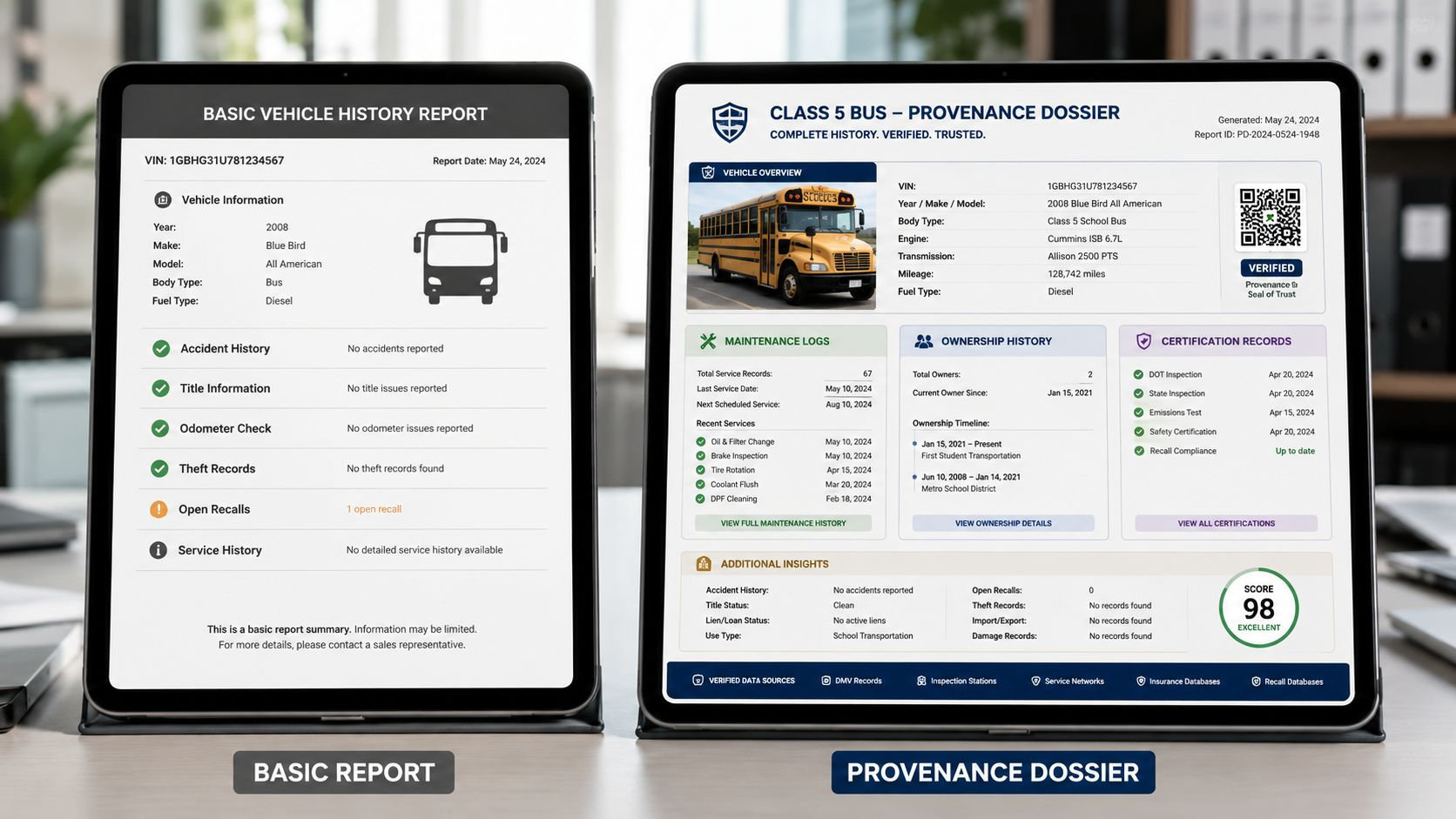
A standard vehicle history check UK product will usually cover the basics, such as finance, theft, and write-off status, but that's only the starting point. For Class 5 stock, the bigger question is whether the vehicle's ownership pattern, usage pattern, and mileage story make commercial sense. Generic checks often stop where the primary trade risk begins.
Why provenance matters more on specialist passenger vehicles
Class 5 vehicles often move through more hands than a typical retail car, especially where they've served operators, local organisations, or specialist transport providers. Short-term keeper changes, rapid resale cycles, and inconsistent mileage progression can all point to a story that deserves closer inspection. Those patterns rarely come through clearly in a plain used car history report.
Mileage is especially sensitive on larger passenger vehicles because the use case is usually more intensive. A vehicle that claims modest mileage but has a history consistent with shuttle work, community transport, or school-related duty needs extra scrutiny. The odometer number alone tells you less than the timeline around it.
Trade vehicle intelligence adds value. A proper provenance platform looks at ownership timelines, mileage patterns, and contextual red flags together, rather than handing you disconnected data points. AutoProv is built around that kind of analysis, and its approach to vehicle provenance is more useful to the motor trade than a simple pass-or-fail summary when you're working through Class 5 stock.
What basic checks miss
- Short holding periods that can suggest quick resale after a problem appears.
- Mileage anomalies that don't fit the vehicle's role.
- Keeper churn that may reflect hidden condition concerns.
- Usage mismatch between the advertised purpose and the observable wear.
If your buying process is still built around a single report and a visual walkaround, you're leaving risk on the table. Better intelligence matters because the cheapest unit on the screen can become the most expensive one in the workshop if the background doesn't stack up. For teams trying to tighten overheads, even the unglamorous admin side matters, and resources such as maximize savings on expenses are a reminder that disciplined cost control starts with better categorisation and cleaner data.
For deeper context on what feeds a professional report, the AutoProv data sources guide is worth reading. The point is not to replace MOT history. It's to stop treating MOT history as the whole story.
Practical Steps for Evaluating Class 5 Vehicles Before Purchase
A weak Class 5 buy often looks tidy until the paperwork starts to move. The safest way to assess dealer vehicle checks on this stock is to start with provenance, then read the MOT record, then inspect the vehicle in a way that reflects passenger-carrying duty rather than ordinary car retailing. That order protects margin because it filters out units that already look questionable before you spend time on them.
A buying sequence that works in the trade is straightforward, but each stage needs discipline. Use the AutoProv vehicle appraisal checklists for trade buyers alongside your own process so the checks stay consistent across minibuses, motor caravans, and other Class 5 stock.
A buying sequence that works in the trade
- Run a full provenance review. Check keeper changes, mileage consistency, and any pattern that does not fit the vehicle's role. On Class 5 stock, that often exposes quick turnover after a hidden fault or a history that does not match the sales pitch.
- Read the MOT history in context. Do not stop at the pass or fail result. Look at the failures, whether the same items return, and whether dangerous defects appear around brakes, steering, or passenger-area equipment.
- Check the passenger-area structure. Seat mountings, door operation, exits, and overall body condition matter more here than on an ordinary saloon. If the structure shows wear or damage, the repair bill can move fast.
- Inspect brake and steering condition. These are core safety systems on a vehicle built to carry groups, and they carry direct cost risk if a defect only shows up after purchase.
- Match the test pathway to the vehicle. Confirm whether the unit needs Class 5, Class 5L, or Class 5A handling before you agree a deal. A mismatch at this stage can create delays, re-testing costs, and awkward handovers.
If the paperwork, usage pattern, and physical condition do not tell the same story, walk away or re-price hard.
Questions that should be answered before money changes hands
- How many previous keepers has it had recently, and does that fit the vehicle's life cycle?
- Are there gaps in MOT history that need explaining?
- Does the mileage look plausible for the type of work the vehicle has done?
- Are there repeated failures in the same system, especially brakes or passenger restraint areas?
- Can your local test station handle the right class without special arrangements?
Those questions belong in the same file as your inspection notes, not in separate conversations. A repeat failure pattern, an awkward test pathway, or unexplained keeper churn can turn a promising unit into an expensive delay, especially if your team needs predictable stock turn and quick certification. Keep the process tight and record what you found so the next buyer, valuer, or workshop manager sees the same risk picture.
Class 5 vehicles with clean provenance and consistent maintenance records usually support stronger confidence in valuation. The reverse is also true. If the story is messy, the margin needs to cover the risk, or the deal should be left alone.
Frequently Asked Questions
AI-Generated Content Notice
This article was created with the assistance of artificial intelligence technology. While we strive for accuracy, the information provided should be considered for general informational purposes only and should not be relied upon as professional automotive, legal, or financial advice. We recommend verifying any information with qualified professionals or official sources before making important decisions. AutoProv accepts no liability for any consequences resulting from the use of this information.
From our AI insights
- MOT History: Understanding Seasonal Trends
Explore how seasonal trends impact MOT history and what it means for vehicle checks in 2026.
- Leveraging MOT History APIs: Dealer Insights 2026
Explore how MOT history APIs can enhance vehicle checks for UK dealers in 2026.
- Navigating Class 5 MOT: Insights for Dealers
Explore Class 5 MOT requirements and failure patterns to enhance vehicle evaluations.
Related Articles

Understanding the MOT History: A Comprehensive Guide
Explore everything you need to know about MOT history, including its significance, how to check it, and what to look out for.
Understanding MOT History: A Key to Smart Used Car Purchases
Discover how MOT history can guide your used car buying decisions and ensure you make an informed choice.

How to View MOT History and Make Smarter Buying Decisions
For anyone in the UK motor trade, a vehicle's Ministry of Transport (MOT) history is much more than a simple pass or fail certificate. It's the car's diary, a detailed logbook of its life on the road. Glancing only at the latest MOT is a rookie mistake, and a costly one at that. To really get under the bonnet of a vehicle's past, you need to view MOT history in its entirety—it’s the only way to see the true timeline of maintenance versus neglect.
Published by AutoProv
Your trusted source for vehicle intelligence