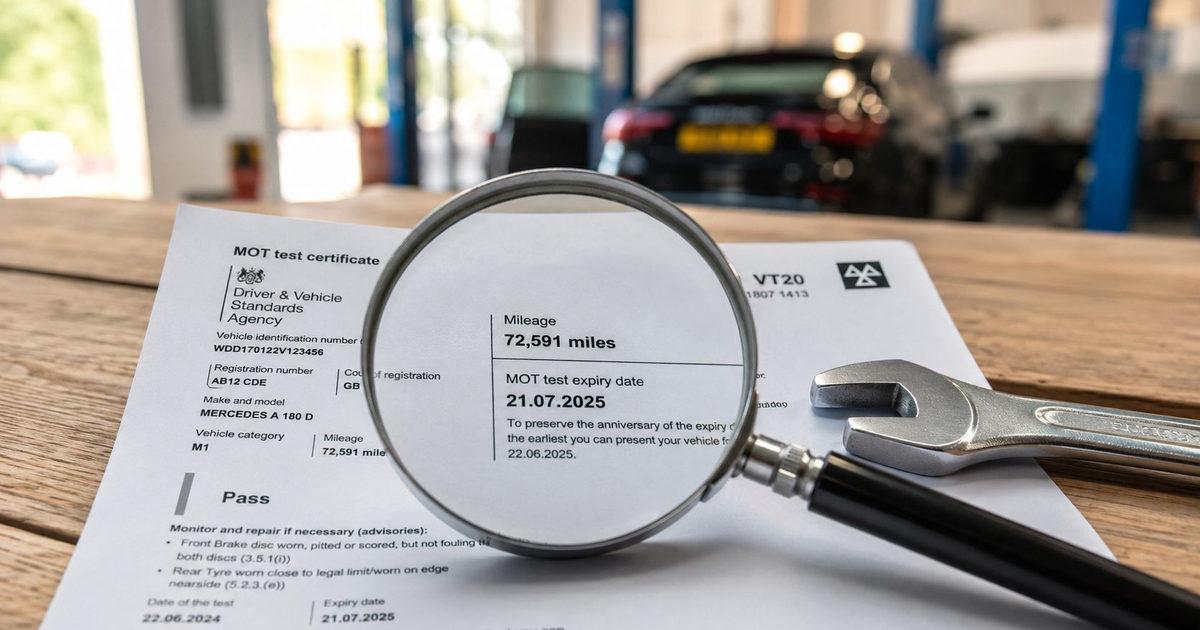
You're probably looking at a car that presents well, carries a current MOT, and seems easy enough to fund into stock. That's exactly where traders get caught. A valid MOT can calm a buyer too quickly, especially when the screen says “pass” and the car looks straight.
For a retail customer, an MOT certificate often means one simple thing: legal road use. For the motor trade, it means something different. It's a point-in-time compliance record, a partial mileage marker, a clue to maintenance habits, and sometimes the first signal that the vehicle's story doesn't quite add up.
If you want a practical answer to what is a MOT certificate, the short version is this. It's an official DVSA test record confirming that, on the day of test, the vehicle met the minimum required road safety and environmental standards. If you want the trade answer, that's only the starting point. Its deeper value sits in how you read the certificate alongside failures, advisories, mileage progression, document identity, and wider vehicle provenance.
Table of Contents
- Beyond the Pass Certificate A Trader's Perspective
- Deconstructing the MOT Certificate for Provenance Checks
- What the document actually proves
- Which fields matter during due diligence
- The Gap Between Legal Roadworthiness and Commercial Risk
- Why a valid MOT can still hide expensive problems
- The commercial view of a pass certificate
- How to Analyse MOT History for Trade Vehicle Intelligence
- Read the pattern not the latest result
- What dangerous defects tell a trader
- Advanced MOT Risk Signals and Anomaly Detection
- Where free MOT data stops helping
- Signals worth escalating before you buy
- Making MOT Intelligence a Cornerstone of Your Buying Process
- Turn MOT data into a buying discipline
- Better decisions come from context
Beyond the Pass Certificate A Trader's Perspective
A car can arrive with a clean interior, acceptable panel fit, and a current MOT, yet still be the wrong stock for your forecourt. Traders don't lose money because they misunderstood the definition of an MOT. They lose money because they treated it as a conclusion instead of an input.
That matters most when speed creeps into the buying process. At auction, in group stock disposals, or during part-exchange appraisal, the MOT certificate often becomes a shortcut. If it's current, the vehicle feels lower risk. If it passed recently, the buyer relaxes. That's where margin starts leaking.
The document is useful. It confirms legal testing status and gives you a structured set of data points to work from. But it won't protect you from poor prior maintenance, unresolved advisory patterns, identity concerns, or developing mechanical issues outside the test scope.
Practical rule: A current MOT should move a vehicle into deeper checks, not move it past them.
A trader's reading of an MOT starts with a different question. Not “has it passed?” but “what does this result tell me about ownership behaviour, upkeep standards, likely prep cost, and future complaint risk?”
That shift changes how you buy.
Instead of seeing a pass certificate as reassurance, you start treating it as one layer in a broader vehicle history check UK workflow. You cross-check dates, certificate details, advisory wording, and mileage progression. You compare the MOT record to the V5C, service evidence, and the physical car in front of you. If there's a mismatch in story, you pause.
The regulatory side changes over time as well, which is why it's worth keeping an eye on practical updates around new MOT regulations for traders. Not because regulations remove risk, but because they change how risk shows up in the data.
Deconstructing the MOT Certificate for Provenance Checks
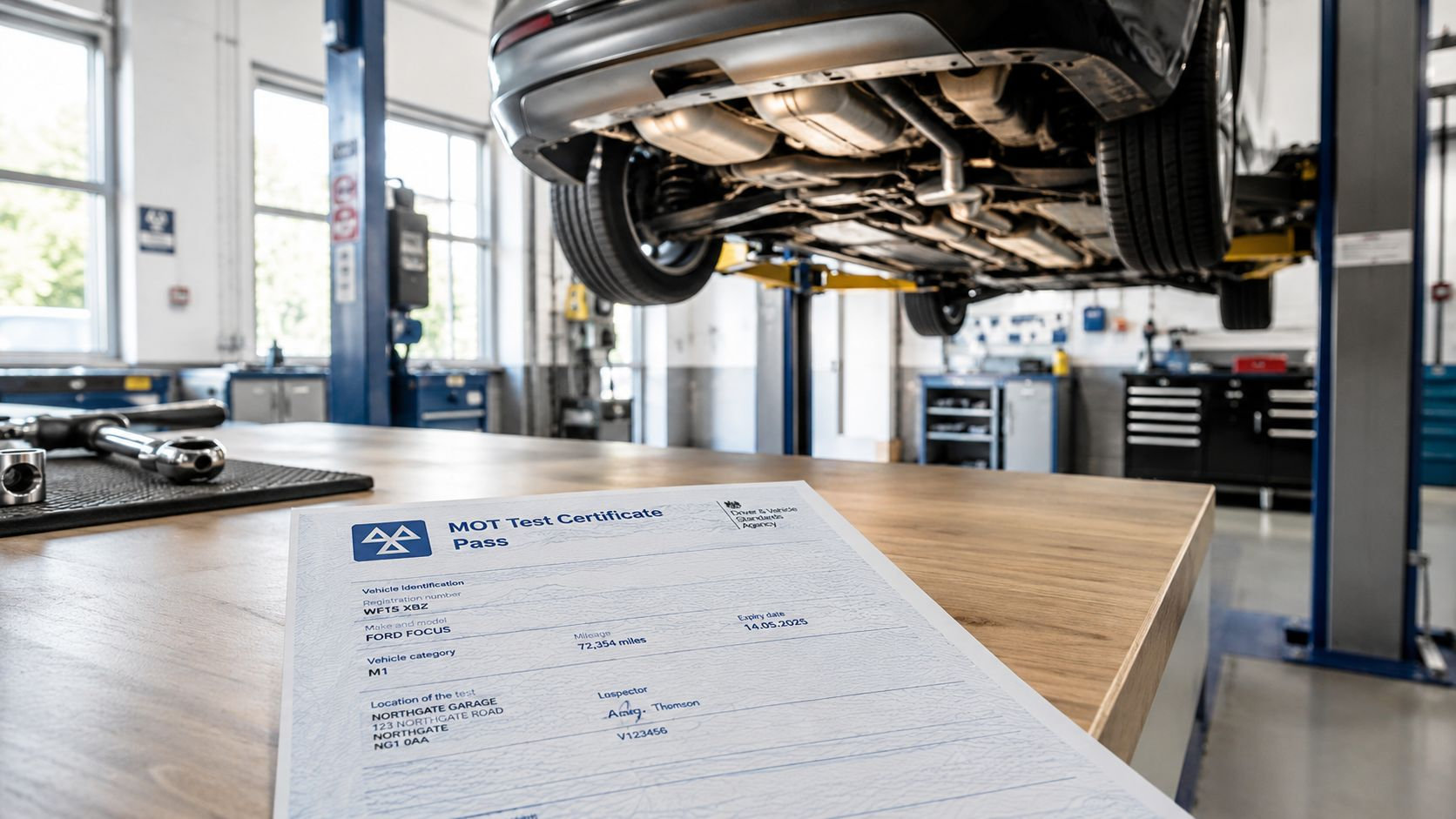
In the United Kingdom, an MOT certificate is issued annually for most vehicles over three years old, with the first test required by the third anniversary of the vehicle's registration. A VT20 certificate is issued for a pass, while a VT30 “Refusal of an MOT Test Certificate” is issued for a failure, detailing major or dangerous defects, according to the official GOV.UK MOT status guidance.
What the document actually proves
The first thing to keep straight is status. A VT20 tells you the vehicle met the minimum acceptable standards at the test. A VT30 tells you it did not, and the listed defects are part of the car's usable history, not just old workshop admin.
For provenance work, both documents matter. A pass certificate can still include minor defects or advisories. A refusal certificate can reveal periods of neglect, repeated component failure, or signs that the previous keeper deferred repairs until the last moment.
That's why a certificate should be read as a record of inspection, not a badge of quality.
A trader who only checks whether an MOT exists misses the more valuable question: what kind of ownership behaviour produced that record?
In broader asset verification work, the principle is familiar. Document status matters, but structured underlying records matter more. That's also why adjacent sectors increasingly focus on traceable records and auditability, whether in motor trade provenance or RWA tokenization solutions used to support transparent asset tracking.
Which fields matter during due diligence
An MOT pass certificate, officially known as a VT20, contains specific fields that are commercially useful. These include the registration number, VIN, make, model, fuel type, test date, test location, mileage recorded on the day, the 12-digit unique test number, and the expiry date, as outlined in Auto Trader's MOT certificate guide.
For trade buying, these are the fields that deserve attention first:
- Registration and VIN match: The registration number should align with the vehicle and paperwork, but the VIN check is the harder control. If the certificate, V5C and car don't line up cleanly, treat it as a provenance issue until proven otherwise.
- Test location: A test centre location can help you understand the vehicle's operating area and whether its documentary trail makes geographical sense.
- Recorded mileage: This is one marker in the car's mileage history. On its own it proves very little. In sequence, it becomes more useful.
- Expiry date and test date: These influence stock timing, prep planning, and negotiation, especially when the next test window is close.
- Advisories or minor defects: These don't fail the car, but they often point directly to upcoming prep cost.
If you need a practical refresher on document retrieval and status before deeper checks, this guide on how to check if a car has MOT covers the operational side.
A proper used car history report doesn't stop at the visible certificate. It uses the certificate fields as anchors, then checks whether the wider record supports the same identity and mileage story.
The Gap Between Legal Roadworthiness and Commercial Risk
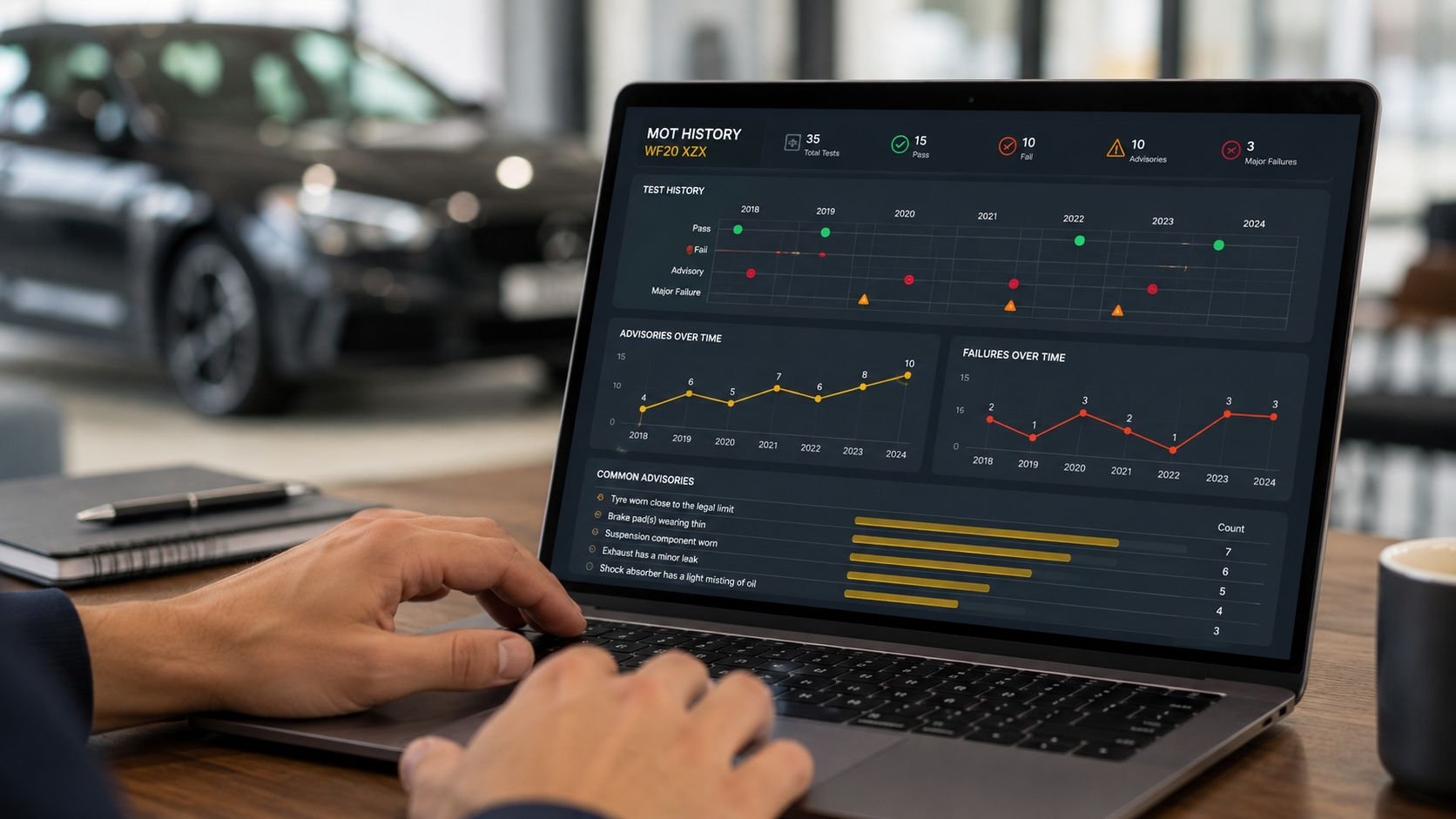
A valid MOT doesn't mean you've found sound stock. It means the vehicle cleared a legal test threshold on a specific day. Those are not the same thing, and traders who blur them usually end up carrying avoidable mechanical exposure.
Why a valid MOT can still hide expensive problems
The MOT test covers critical safety components including brakes, tyres, and lights, but explicitly excludes the engine condition other than emissions, clutch, and gearbox. That exclusion creates a specific risk gap where mechanical failures in non-safety components can occur undetected by the MOT certificate, as summarised in the MOT test overview.
That gap matters most in retail disposal.
A car can pass its MOT and still carry:
- Early gearbox symptoms that won't show during the legal inspection
- A slipping clutch that a road test exposes immediately
- Internal engine wear that hasn't yet affected emissions enough to fail
- Service neglect that hasn't matured into an MOT item
This is why experienced buyers separate legal roadworthiness from commercial suitability. The first is a compliance question. The second is a margin and complaint-risk question.
A useful companion read is the VekTracer vehicle history guide, which looks at how history reporting adds context beyond a single inspection record.
The commercial view of a pass certificate
When traders ask what is a MOT certificate, they often want a straightforward definition. In practice, the better question is what it doesn't tell you.
Here's the cleanest way to look at it:
MOT outcome What it tells you What it doesn't tell you Valid pass The car met minimum test standards at that time Whether it will stay trouble-free in stock or after retail sale Advisory-laden pass The car was legal to pass How soon prep cost will land on you Recent fail then pass Defects were identified and some repair process followed Whether repairs were done well or cheaply Trade view: The certificate reduces one type of uncertainty. It doesn't remove buying risk.
That's also why basic dealer vehicle checks shouldn't end with MOT validity. Traders who rely on the certificate alone tend to miss the exact faults customers later notice first.
If you deal with vehicles moving in and out of test status, this note on in and out MOT patterns is useful because intermittent compliance often signals inconsistent ownership standards rather than a one-off admin lapse.
How to Analyse MOT History for Trade Vehicle Intelligence
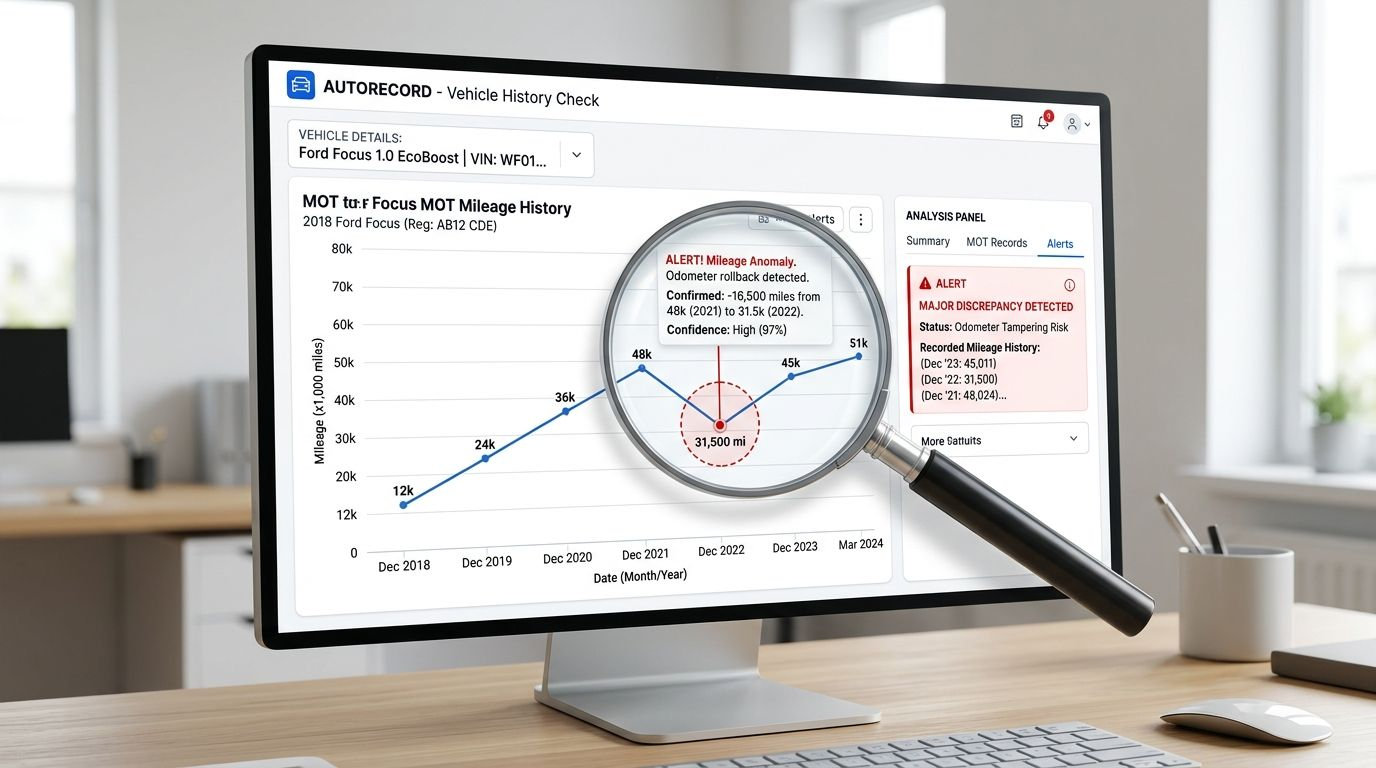
The latest MOT result is only the headline. Trade value sits in the sequence. You need to read the MOT history as a timeline of behaviour, not as isolated annual events.
Read the pattern not the latest result
Start with advisories. One advisory can be routine. Repeated advisories on the same area usually mean the previous keeper delayed the work, applied a temporary fix, or accepted deterioration until failure forced action.
Useful patterns include:
- Recurring tyre or brake advisories: Often point to maintenance done late rather than proactively.
- Suspension comments appearing across multiple tests: Can suggest low-grade repair work or chronic wear that was managed just enough to pass.
- Corrosion-related notes that evolve over time: These are important for prep cost forecasting and retail suitability.
- Advisories disappearing without supporting service evidence: Sometimes that's genuine repair. Sometimes the paper trail is thin enough to justify caution.
The point isn't to reject every car with history. The point is to build a believable maintenance narrative.
When the MOT record shows orderly mileage progression, occasional sensible advisories, and no repeated neglect pattern, that usually feels different from a car that only gets attention when it's close to failing. One reads like ownership. The other reads like postponement.
What dangerous defects tell a trader
The VT30 refusal certificate categorises defects into Major and Dangerous, where dangerous defects legally prohibit the vehicle from being driven until repaired, directly impacting a trader's ability to move stock for re-testing or sale, according to Merityre's explanation of MOT certificates.
That has direct operational implications:
- Stock movement risk: If a car had dangerous defects, don't assume it returned to normal use cleanly. Check what evidence supports the repair.
- Buying confidence: A dangerous-defect history isn't automatically a deal-breaker, but it raises the standard of proof you should expect.
- Prep budgeting: Major and dangerous issues often cluster with other deferred maintenance.
- Retail disclosure judgment: Even where the car is now compliant, its history may alter your appetite for certain customer profiles.
A dangerous-defect history should trigger questions about repair quality, downtime, and whether the previous owner was reacting to faults only when forced.
MOT history also works as a practical trade vehicle intelligence feed when you combine faults with mileage direction. If a vehicle shows light annual usage but repeated wear-related advisories, look harder at operating conditions and ownership style. If recorded mileage jumps or stalls in ways that don't fit the rest of the file, escalate the provenance checks.
For a more structured workflow, this guide on how to view MOT history and make smarter buying decisions is worth keeping in your acquisition process.
Advanced MOT Risk Signals and Anomaly Detection
Free MOT history is useful, but it has hard limits. The record is annual and test-based. Fraud, poor data quality, and hidden financial exposure don't respect that timetable.
Where free MOT data stops helping
Free MOT history checks from the DVLA leave 364 days of a vehicle's annual year unaccounted for because they only record mileage at the testing interval and can't detect fraudulent alterations made between tests, data entry errors at testing stations, or confirm if a vehicle has been cloned during those unmonitored periods, as explained in this analysis of free car history checks.
That's the key limitation in any mileage check UK process built only on MOT entries. A clean annual sequence can still hide activity between tests.
There's another blind spot. Free vehicle checks access government sources like the DVLA, while paid reports add data from finance companies, police records, and insurers to detect write-off status, outstanding hire purchase, theft records, and insurance damage claims, according to CarOwl's overview of history check data sources.
So if you're relying only on MOT and DVLA data, you're not looking at the full risk picture.
Signals worth escalating before you buy
Some MOT-based warning signs deserve immediate escalation rather than a casual note on the appraisal sheet:
- Mileage irregularity: A sequence that drops, stalls unnaturally, or clashes with service and usage evidence needs explanation.
- Advisory density: Multiple repeated advisories can indicate a vehicle that has been kept legal at minimum spend.
- Fail to pass speed without supporting paperwork: Sometimes repairs were done properly. Sometimes they were done cheaply to get the car through.
- Identity tension across records: If MOT details, V5C details and the physical vehicle don't align, stop treating the issue as clerical.
The Car Expert's analysis found that 27.5% of verified cars had an issue with a number plate change and 17.6% had outstanding debt attached, showing that basic DVLA data alone misses significant fraud and finance risks that thorough checks can reveal, in its UK vehicle history checks analysis.
That's where motor trade risk assessment moves beyond manual reading. Tools that cross-reference MOT data against wider provenance signals are more useful than the certificate on its own. In practice, a platform such as AutoProv can analyse MOT history alongside mileage patterns, ownership timelines and anomaly indicators to flag risks that don't stand out in a simple pass or fail view.
If mileage integrity is the issue you're trying to tighten up first, this guide on how to spot clocked mileage using MOT and service history data is the right place to start.
Making MOT Intelligence a Cornerstone of Your Buying Process
The right mindset is simple. Don't treat the MOT as a finish line. Treat it as an evidence layer inside a broader vehicle provenance decision.
Turn MOT data into a buying discipline
A consistent buying process usually works better than trying to make brilliant judgments on the fly. For most dealers, that means embedding MOT review into appraisal and acquisition, every time.
A workable routine looks like this:
- Start with identity: Match the MOT record to the registration, VIN, V5C and physical vehicle.
- Read backwards: Don't begin with the latest pass. Review the older tests first and see how the history developed.
- Price advisories properly: If the record points to near-term wear items, treat them as likely cost, not abstract notes.
- Escalate weak narratives: Cars with patchy upkeep, repeated failure themes, or unexplained mileage behaviour need deeper review before you commit capital.
That approach doesn't mean refusing every car with an imperfect history. Some stock with MOT issues can still be bought well, prepped correctly, and retailed sensibly. The difference is that you'll know what you're buying.
Better decisions come from context
A certificate on its own is thin evidence. A certificate inside a full vehicle history check UK process is useful. A certificate interpreted alongside mileage behaviour, ownership patterns, identity consistency, and external risk data becomes genuine decision support.
That's where stronger dealer vehicle checks pay off. Not because they remove uncertainty, but because they help you quantify it before the deal is done.
For the trade, the practical answer to what is a MOT certificate is no longer just a legal document. It's a structured record with real value when you read it critically. Used properly, it helps with buying discipline, negotiation, prep forecasting, and complaint prevention. Used casually, it creates false confidence.
If you want to bring MOT analysis into a wider provenance workflow, AutoProv provides UK motor trade vehicle intelligence that combines MOT history, mileage patterns, ownership context and anomaly detection to support buying, valuation and risk review at the point of decision.
Frequently Asked Questions
AI-Generated Content Notice
This article was created with the assistance of artificial intelligence technology. While we strive for accuracy, the information provided should be considered for general informational purposes only and should not be relied upon as professional automotive, legal, or financial advice. We recommend verifying any information with qualified professionals or official sources before making important decisions. AutoProv accepts no liability for any consequences resulting from the use of this information.
From our AI insights
- Navigating DVLA Conviction Checks: Dealer Compliance
Understand DVLA conviction checks and lawful access for UK dealers.
- Streamlining Compliance: Automated Checks for Dealers
Discover how UK car dealers can automate compliance checks, reduce risk, and build trust with AutoProv.
- Avoiding Towing Missteps: Legal Checks for Dealers
Protect your dealership by ensuring vehicle weight and towing capacity compliance before listing stock.
Related Articles

Understanding the Consumer Rights Act 2015 in the UK Motor Trade
Explore the Consumer Rights Act 2015 and its impact on UK car buyers and sellers, offering essential protections and insights.

Understanding UK Automotive Regulations
Explore the complexities of automotive regulations in the UK, covering DVLA, FCA, MOT, and more.
What is a V5C Document: A Quick UK Log Book Guide
If you've ever bought or sold a car in the UK, you've definitely come across the V5C. It's often just called the 'log book', and it’s the official Vehicle Registration Certificate issued by the DVLA.
Published by AutoProv
Your trusted source for vehicle intelligence