
A buyer rings first thing on Monday. The car they collected on Saturday has gone into limp mode, they're unhappy with the handover notes, and they're already using the word “solicitor”. At the same time, one of your drivers reports a non-fault shunt in a stock unit being moved between sites. Another vehicle is stuck in argument over who was responsible during a test drive. That's the point many dealers ask the same question: do I need motor legal protection?
From a motor trade perspective, that isn't really an insurance question on its own. It's a risk management question. You're trying to protect margin, preserve time, avoid dead stock, and keep disputes from dragging staff away from buying, prep, and selling.
Motor legal protection can help in the right circumstances. It can also be misunderstood. Too many traders buy it thinking they've covered “legal problems”, when in reality they've bought support for a narrow set of non-fault recovery situations. Useful, yes. Complete, no. If you're reviewing your wider insurance position, it also helps to look at broader commercial dealership coverage in the round, because legal expenses cover only solves one part of a dealership's exposure.
Table of Contents
- A Familiar Problem for Every Motor Trader
- Why this feels different in the trade
- The real decision
- What Motor Legal Protection Means for Your Business
- What it is in plain trade terms
- Where it tends to matter most
- When Legal Protection Becomes a Lifeline
- Three situations dealers recognise immediately
- Why timing and process matter
- Understanding the Gaps What It Does Not Cover
- The common misunderstanding
- Where dealers get caught out
- Proactive Intelligence vs Reactive Insurance
- Insurance deals with aftermath
- Better buying decisions cut dispute exposure
- Your Decision A Risk Management Checklist for Dealers
- A practical checklist
A Familiar Problem for Every Motor Trader
A dispute rarely arrives on its own.
One issue starts with a vehicle. Then it pulls in admin time, transport delays, technician input, customer communication, and insurer correspondence. If liability isn't clear, or the other side is evasive, the file sits open while your team chases paperwork instead of stock.
That's why the question Do I need motor legal protection? matters more in the trade than it does for a private motorist. Dealers don't absorb one-off inconvenience in the same way. A single unresolved matter can interfere with disposal timing, prep schedules, collection dates, and cash tied up in units you expected to have turned already.
Why this feels different in the trade
A dealer's exposure is layered:
- Stock exposure: A damaged or disputed vehicle can miss its selling window.
- Staff time: Sales managers and buyers end up dealing with evidence, statements, and follow-up.
- Margin pressure: Recovery delays often leave you carrying costs before anyone reimburses them.
- Reputation: Even a legitimate non-fault situation can look messy if the buyer only sees delay and disagreement.
Dealers usually underestimate the cost of friction, not the cost of the incident itself.
The practical issue is that most insurance products respond after something has already gone wrong. They don't stop poor acquisition decisions, weak paperwork, or hidden history risks from becoming a dispute later. They also don't remove the need for disciplined internal process.
The real decision
If you run trade plates, move stock regularly, allow test drives, or hold vehicles across multiple locations, you already know incidents happen. The key decision isn't whether risk exists. It's how you want to handle it when recovery becomes slow, contested, or expensive.
For many businesses, motor legal protection belongs in the toolkit. It just shouldn't be mistaken for the toolkit itself.
What Motor Legal Protection Means for Your Business
What it is in plain trade terms
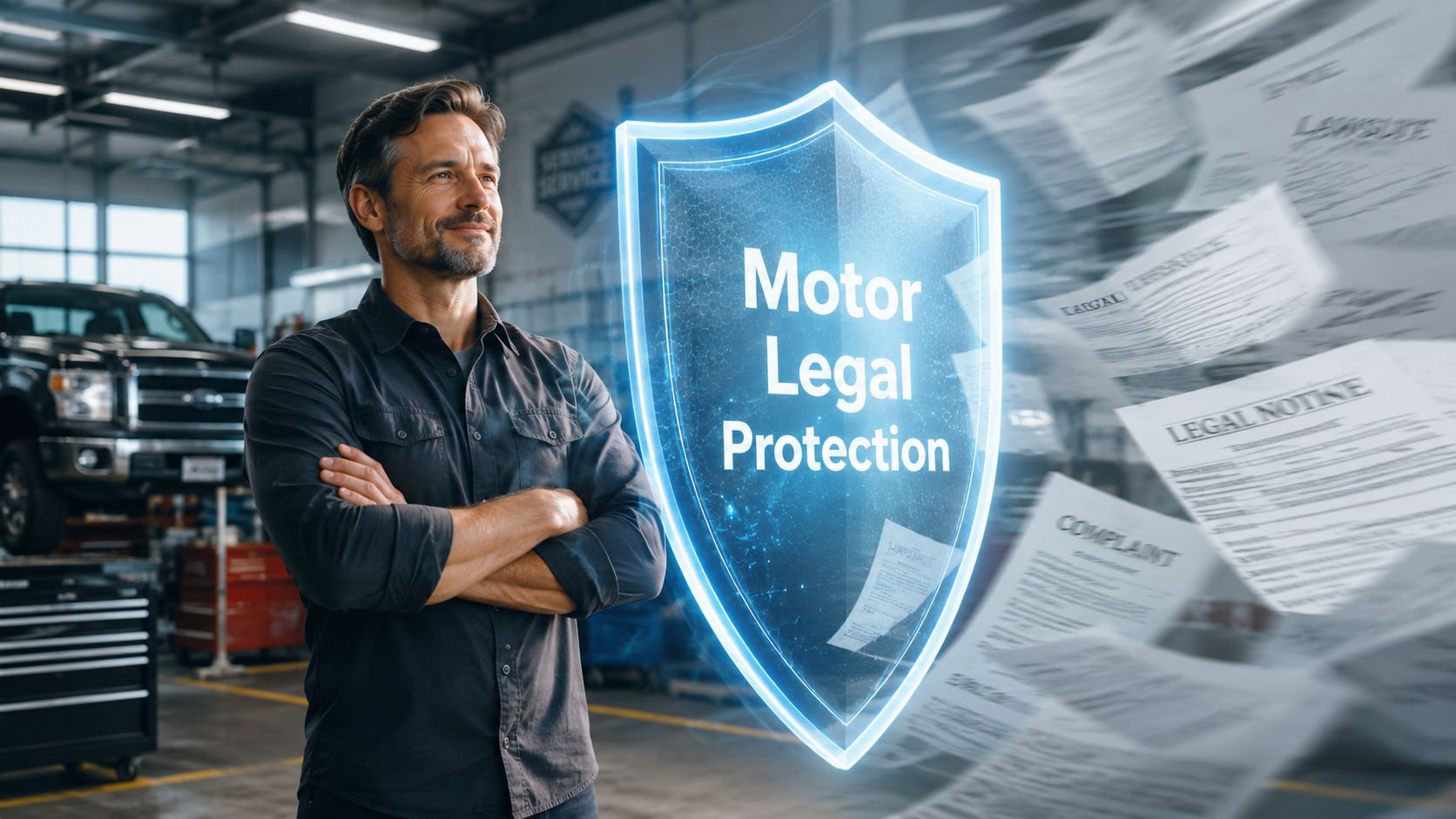
Motor legal protection is an optional insurance add-on. It isn't a legal requirement in the UK. By contrast, compulsory third-party motor insurance is required under UK motor insurance rules. As an add-on, motor legal protection typically costs £15 to £30 per year and can cover solicitor fees and court costs up to a typical limit of £100,000 for recovering losses in non-fault claims, according to the Motor Vehicles Insurance Requirements framework.
In practical dealer terms, that means it's designed to help you pursue uninsured losses after an incident where your business wasn't at fault. Think legal costs associated with trying to recover your losses, rather than repairing every commercial problem you face.
A lot of traders lump this in with “business insurance for cars”, but that creates confusion. It's better to separate policy functions. Public liability is one thing. road risks is another. Legal expenses cover is another again. If you're reviewing how those parts fit together, this breakdown of business insurance for cars is useful because it shows where legal protection sits and where it doesn't.
Where it tends to matter most
The value appears when a third party causes the problem and recovery isn't straightforward.
Examples include:
- A non-fault road traffic incident: Your driver or employee is hit while moving stock and you need to pursue losses not met elsewhere.
- An uninsured third party: Recovery becomes more complicated and legal support matters more.
- Out-of-pocket losses: Solicitor and court costs can become a significant burden even where fault is clear.
That doesn't make it broad legal cover for every dealership argument. It's narrower than many assume.
Practical rule: Buy motor legal protection for claims recovery support, not for general peace of mind about every legal dispute your dealership might face.
Some firms also use external investigation support when facts are contested, especially where identity, movement, or commercial conduct needs checking. In those cases, specialist business private detectives can have a role in wider corporate investigations. That's separate from the insurance product itself, but it reflects the same principle. Evidence quality matters.
When Legal Protection Becomes a Lifeline
Three situations dealers recognise immediately
The strongest case for motor legal protection appears when a non-fault incident turns into a recovery problem.
The UK still has a meaningful uninsured driving problem. An estimated 4% of registered keepers are driving without valid insurance, based on the cited casualty and enforcement background in Reported Road Casualties Great Britain. For dealers, that matters because clear fault doesn't always mean fast recovery.
One common example is the stock movement collision. A driver is transferring a vehicle between sites or taking a unit for prep, another road user causes the incident, and the at-fault party turns out to be uninsured or difficult to trace properly. Your policy may deal with parts of the immediate loss, but not every associated cost lands neatly inside the main claim.
Another example is the test-drive incident where your driver or accompanying staff member has done everything properly, but the other motorist creates the damage. The immediate headache isn't just bodywork. It's cancelled viewings, delayed retail prep, transport rearrangement, and staff hours spent dealing with statements and correspondence.
Why timing and process matter
This cover becomes more valuable when your internal file is clean.
If your team can show vehicle movement records, driver details, photographs, handover notes, and incident chronology, recovery is usually more straightforward than when everyone relies on memory after the fact. Dealers who treat incidents like compliance files tend to put themselves in a better position than dealers who treat them like informal garage conversations.
A few practical situations where this cover can earn its keep:
- Policy excess recovery: You may still want to pursue money your business has had to fund up front.
- Damage to a stock unit in transit or repositioning: Especially where another party caused it and disputes liability.
- Losses linked to a non-fault event: Not every financial consequence is resolved by the core motor claim alone.
The legal cover matters most when the accident wasn't your fault, but the paperwork and recovery still become a fight.
There's also a process point many dealers overlook. By the time a dispute feels serious, someone in the business has often already said too much, promised too much, or failed to preserve enough evidence. A disciplined internal dispute resolution process helps before legal expenses cover ever comes into play.
The businesses that get best value from motor legal protection aren't the ones with the most incidents. They're the ones that document well, notify early, and understand the cover's purpose.
Understanding the Gaps What It Does Not Cover
The common misunderstanding
The most expensive mistake with motor legal protection is expecting it to solve problems it was never built to solve.
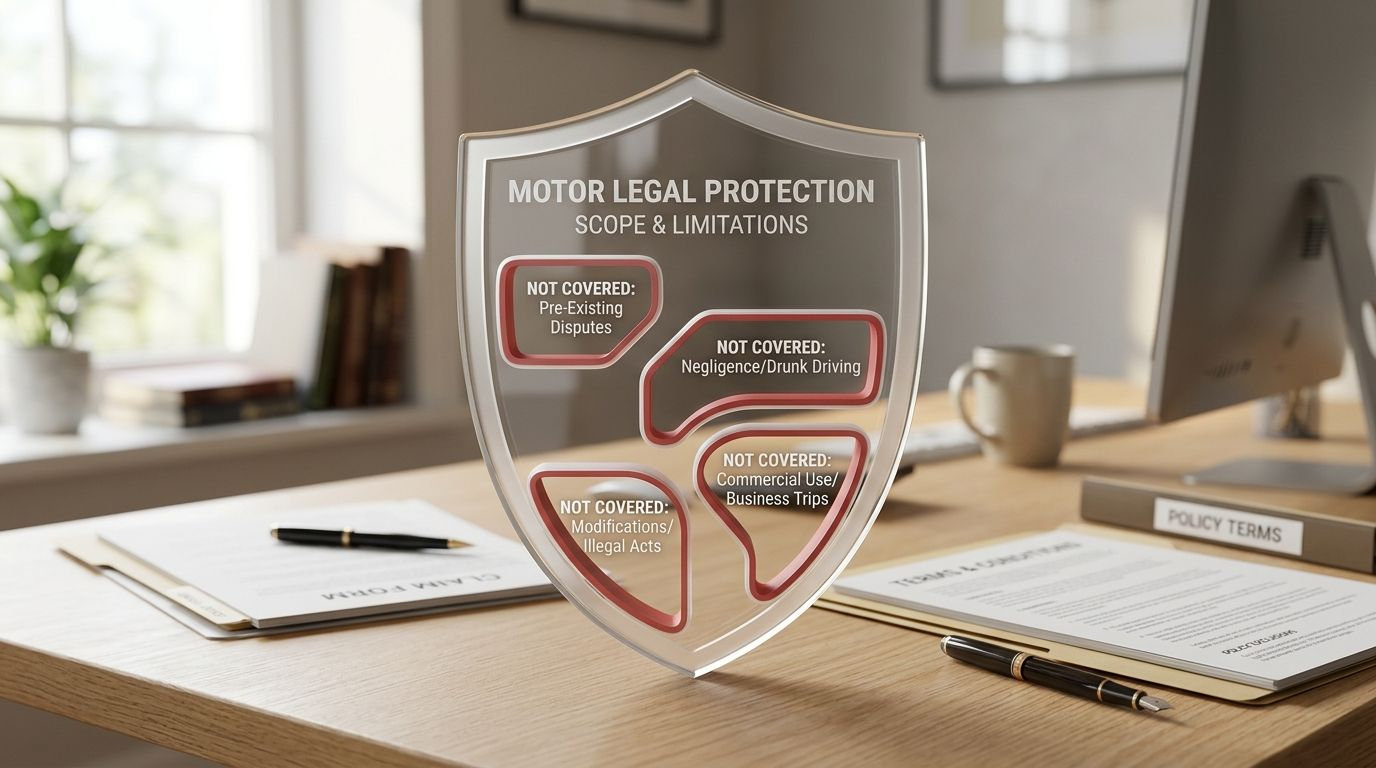
This cover is reactive. It helps with legal costs tied to recovering certain non-fault losses. It is not a universal answer to buyer complaints, faulty stock, contract fallouts, finance misunderstandings, employee disputes, or every argument that reaches a solicitor's letter.
A lot of frustration starts here. A trader hears “legal protection” and assumes broad legal backup. Then a claim falls outside policy scope, or the insurer wants to approve the route before legal action starts, and the business realises the cover is much narrower than the label suggested.
Where dealers get caught out
The practical gaps usually look like this:
- Fault-based incidents: If your business caused the problem, recovery-focused legal expenses cover may not respond in the way you expected.
- Weak prospects: Insurers commonly assess whether a claim has a reasonable chance of success before backing legal spend.
- Unapproved action: If someone instructs solicitors or escalates matters before insurer approval, recovery of those costs may become difficult.
- General trading disputes: Sale quality complaints and misdescription arguments usually belong in a different risk category altogether.
That last point matters in used retail. Many post-sale disputes don't start with a road incident. They start with the vehicle itself, its condition, its paperwork, or what was known before purchase. If you've ever had to deal with indemnity arguments or limits around what a report provider or insurer may cover, this guide to understanding Experian indemnity and when to claim is a useful reminder that policy wording always matters more than assumptions.
Buying cover without reading exclusions is like buying stock without checking provenance. The risk sits there quietly until you need the answer.
So, do you need motor legal protection? Maybe. But you definitely need to understand what it won't do.
Proactive Intelligence vs Reactive Insurance
Insurance deals with aftermath
Insurance products are built to respond once something has already happened. That has value. Every dealer needs backstops.
But many of the costliest trade problems don't begin with a road incident. They begin at acquisition. A buyer takes in a vehicle with questionable vehicle provenance, a weak ownership story, patchy mileage logic, or resale behaviour that doesn't make commercial sense. The dispute only appears later, usually after prep spend, after advertising, or after retail handover.
That's where a basic pass-or-fail check often isn't enough. A standard vehicle history check UK result can clear obvious markers and still leave you exposed to context risk. Dealers need to know not just whether a data point exists, but whether the overall profile stacks up.
Better buying decisions cut dispute exposure
This is the difference between reactive cover and proactive control.
A stronger used car history report for the trade should help you spot issues such as:
Risk area What a dealer should ask Ownership pattern Does the timeline suggest short-term keepers or rapid resale behaviour that needs explaining? Mileage logic Does the mileage check UK trail look consistent, or are there anomalies that warrant caution? Vehicle context Do the records make sense together, or are there signals that the vehicle has a more complicated background than the advert suggests? Decision timing Are you seeing these signals before money is committed, or after the problem becomes yours? When traders tighten up dealer vehicle checks at the point of decision, they reduce the number of avoidable headaches that later become complaints, unwinds, pricing errors, or legal arguments. That's why trade vehicle intelligence matters. It doesn't replace insurance. It reduces the number of times you need to lean on insurance in the first place.
A dealer who buys well usually argues less later.
If your stock appraisal process still relies mostly on basic checks and instinct, it's worth understanding how anomaly detection fits into modern motor trade risk control. The point isn't to turn every appraisal into an investigation. It's to spot what deserves a second look before the vehicle enters stock.
Better provenance work doesn't guarantee a perfect outcome. It does improve your odds of avoiding the wrong car at the wrong price with the wrong story attached to it.
Your Decision A Risk Management Checklist for Dealers
A practical checklist
The right answer depends on how your operation works, not on a blanket yes or no.
Use this checklist if you're deciding whether motor legal protection deserves a place in your business:
- Vehicle movement frequency
- If staff regularly move stock on trade plates, between sites, to auctions, or to prep partners, your exposure to non-fault road incidents is higher.
- Stock profile
- Higher-value stock usually makes recovery friction more painful because delays affect cash flow and disposal planning more sharply.
- Driver count and control
- The more people who can drive business vehicles, the more important it is to have clean incident reporting and clear policy understanding.
- Documentation discipline
- If your team records movements, condition, handovers, and accident evidence properly, you're more likely to get practical value from legal expenses cover.
- Buying process quality
- If your acquisition process is weak, fix that first. Better provenance review, stronger vehicle history check UK standards, and sharper appraisal discipline often save more grief than any policy add-on.
- Transport dependencies
- If you frequently rely on third-party logistics or long-distance movement, review operational risk alongside specialist resources such as shipping vehicles for car dealers, because transport exposure sits upstream of many recovery disputes.
- Decision culture
- The strongest operators use a simple go, pause, or walk-away framework before buying stock and before escalating disputes. A structured go no go decision process helps remove emotion from both.
Motor legal protection is usually worth considering as a low-cost backstop for the right type of non-fault recovery issue. It isn't your main defence. Your main defence is still disciplined buying, clear paperwork, strong incident handling, and better risk judgement on every vehicle you touch.
If you want to reduce avoidable disputes before they start, AutoProv gives UK motor traders deeper vehicle provenance, mileage context, ownership pattern analysis, and trade-focused risk signals that go beyond a basic used car history report. It's built to support better buying decisions at the point of appraisal, where the most profitable risk management usually happens.
Frequently Asked Questions
AI-Generated Content Notice
This article was created with the assistance of artificial intelligence technology. While we strive for accuracy, the information provided should be considered for general informational purposes only and should not be relied upon as professional automotive, legal, or financial advice. We recommend verifying any information with qualified professionals or official sources before making important decisions. AutoProv accepts no liability for any consequences resulting from the use of this information.
From our AI insights
- Spotting Insurance Frauds: Key Indicators UK Dealers Need
Learn to identify insurance frauds with key risk indicators using AutoProv.
- Navigating Insurance Write-Offs in 2024: What UK Traders Need to Know
Explore how UK traders can navigate insurance write-offs using provenance intelligence in 2024.
- Impact of Write-Off Categories on Car Values in 2024
Explore how Cat S, Cat N, Cat A, and Cat B write-offs affect UK vehicle pricing and trader responsibilities.
Related Articles

Understanding UK Car Insurance: Types and Legalities
Explore the UK car insurance sector, types of coverage, and the legal implications of incorrect coverage.
How to Check If a Car Is Insured in the UK | Easy Guide
The quickest and most reliable way to check if a car is insured is by using the Motor Insurance Database (MID) online. All it takes is the vehicle's registration number to see if a valid insurance policy is on record. Remember, driving without at least third-party insurance is a serious offence here in the UK.
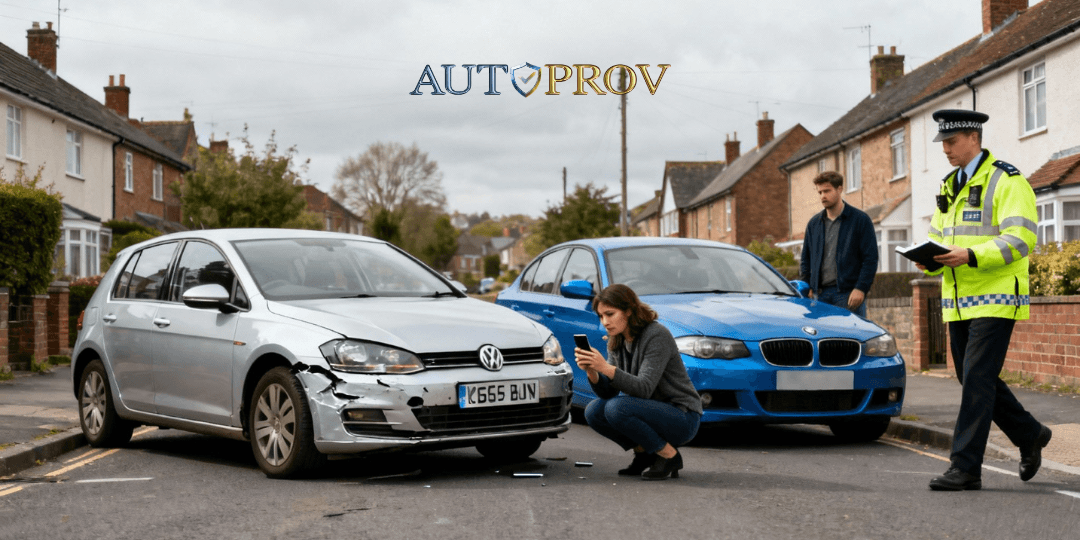
Hit by an uninsured driver: UK accident rights & claim guide
Being hit by an uninsured driver is a deeply frustrating experience. The shock of the accident is bad enough, but finding out the other party has no insurance just adds a whole new layer of stress and confusion. Suddenly, the straightforward path to getting your car fixed seems to vanish. This guide is here to cut through that noise and show you that you're not out of options.
Published by AutoProv
Your trusted source for vehicle intelligence