Thinking about running a DVLA vehicle owner check free of charge? It’s a smart first move, but you have to be realistic about what you’ll actually find out. The official government service is great for the basics—like MOT and tax status—but for privacy reasons, it won't tell you who the owner is.
Thinking about running a DVLA vehicle owner check free of charge? It’s a smart first move, but you have to be realistic about what you’ll actually find out. The official government service is great for the basics—like MOT and tax status—but for privacy reasons, it won't tell you who the owner is.
What a Free DVLA Vehicle Check Really Shows You
When you use the free government portal, you’re getting a public snapshot of the car's official record. It's a fundamental tool that helps keep things in order across the UK. With around 42.3 million licensed vehicles on the road as of early 2025, the DVLA's database is the single source of truth for vehicle verification.
This free check is the perfect starting point. It’s your first opportunity to see if the basic details line up with what the seller is telling you. Think of it as the first layer of your due diligence.
Key Information You Will Receive
The data from the free DVLA check is straight to the point, covering the essentials you need to confirm a car's identity and its legal road status. Here’s what you can expect to see:
- Vehicle Make and Model: Confirms you're looking at the right car.
- Date of First Registration: Gives you the vehicle's age.
- Year of Manufacture: Narrows down the specific age.
- Cylinder Capacity (CC): The engine size.
- CO₂ Emissions: A big clue for potential tax costs.
- Fuel Type: Is it petrol, diesel, electric, or something else?
- Current Vehicle Tax Status: Shows if it's taxed or has a SORN (Statutory Off Road Notification).
- MOT Status and History: A crucial look into its past test results, fails, and any advisories.
This information gives you a solid foundation to build on. But the real risk for any buyer lies in what this free check doesn't show. Critical history points like outstanding finance, insurance write-offs, or mileage discrepancies are completely missing.
This is exactly why a free check should only ever be the start of your homework. To get the full story, a professional-grade report from AutoProv isn't just a nice-to-have, it's essential. To really get to grips with what you should be looking for, have a look at our complete guide on how to check vehicle history, which digs into these hidden dangers. Our service at AutoProv.ai is built to uncover these critical blind spots, making sure your purchase is a safe one.
Using the Official Government Vehicle Check Portal
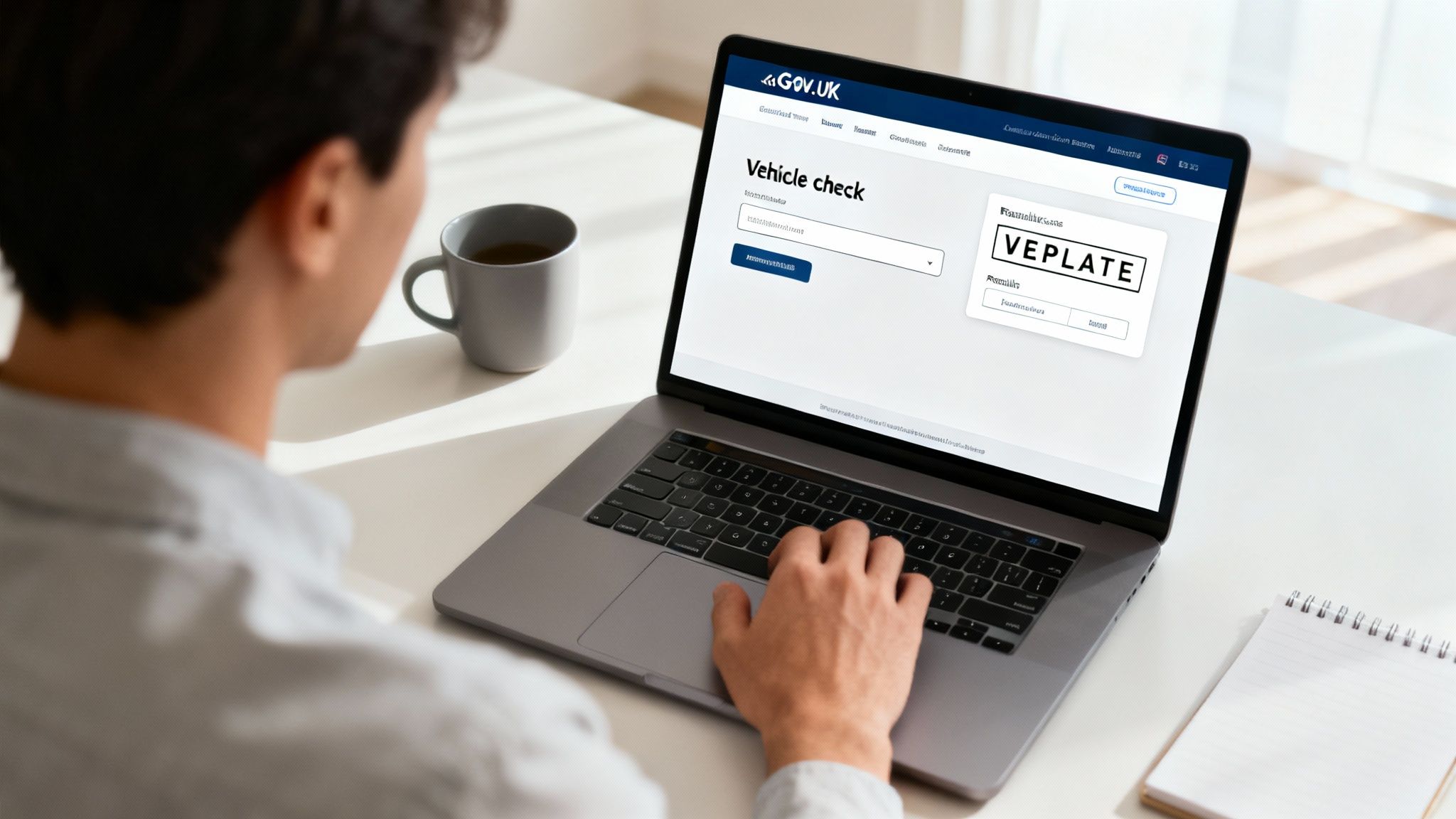
Alright, let's start with the absolute basics. The official government portal on the GOV.UK website is your first port of call for a DVLA vehicle owner check free of charge. It’s designed to be simple and accessible, and all you need to get started is the car’s registration number – the number plate.
Just head to the correct page, pop the reg number into the search box, and hit enter. The system instantly pings the DVLA's massive database, which keeps tabs on over 47 million vehicles across the UK. In seconds, it pulls up the publicly available details tied to that specific number plate.
Interpreting the Results
Once the search is complete, you’ll see a summary screen. This is your first chance to play detective. Compare every detail on the screen with what the seller has told you and what you can see on the car itself.
First up, you’ll get confirmation of the vehicle’s make and colour. Does it say it's a blue Ford, but you're looking at a silver Vauxhall? That's a massive red flag and a good reason to walk away immediately.
You’ll also see a breakdown of key dates and technical specs:
- Date of first registration: This tells you the car's true age.
- Year of manufacture: Confirms the year it rolled off the production line.
- Tax status: Is it currently taxed, or is it declared off-road with a SORN?
- MOT expiry date: You’ll know exactly when the next test is due.
Don’t get carried away, though. This is just a surface-level check. It’s brilliant for confirming a vehicle’s identity and basic roadworthiness, but it tells you nothing about its hidden history. There's no information on outstanding finance, previous accidents, or if it's been reported stolen. This is where the limitations of a free check really show.
While this initial data is valuable, it's far from the full picture. For instance, you won’t see the crucial VIN (Vehicle Identification Number) unless you also have the V5C logbook reference number to hand. If you're curious about the difference and why the VIN is so important, our guide on a vehicle check with a VIN number breaks it all down.
Think of the government portal as an essential first step. It gives you a baseline of verified information straight from the source. But it should only ever be the start of your investigation. The really critical details—the ones that protect you from nasty surprises and financial loss—are only revealed in a comprehensive history report from a specialist service like AutoProv.
Decoding the MOT History and Tax Status
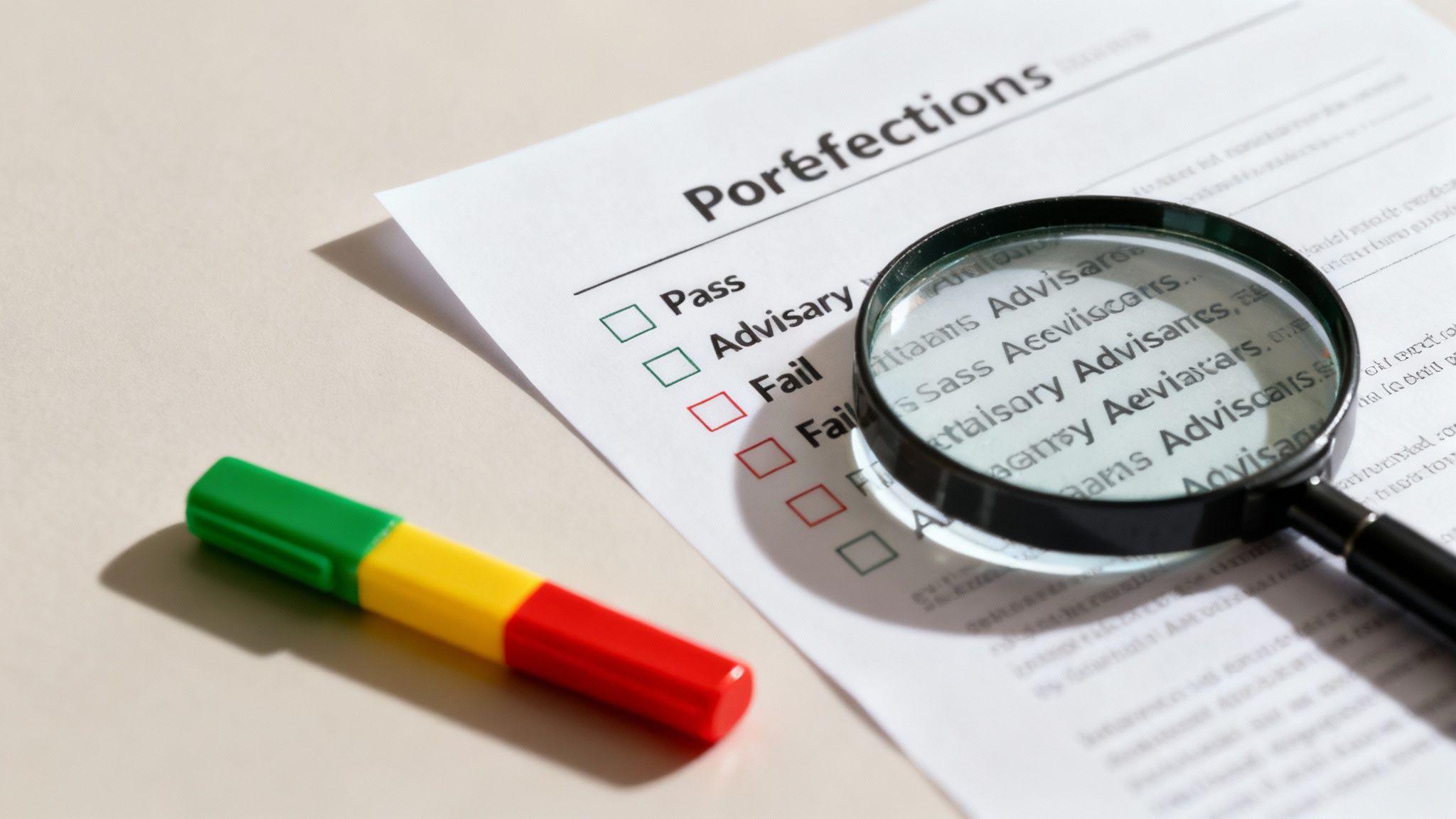
The MOT history section is where you really start to see a car's true colours. Forget just looking for a simple pass or fail; this is a detailed log of the vehicle's health over the years, and it tells a compelling story if you know how to read it.
The real gold is in the advisories and the reasons for previous failures. A green 'Pass' certificate is great, but what did the mechanic note down along the way?
For instance, if you spot a recurring advisory for something like "corrosion on brake pipes" or "slight play in suspension joint" year after year, that's a massive red flag. It’s a classic sign of an owner doing the bare minimum to scrape through the test, never actually sorting out the root problem. These are the kinds of nagging issues that inevitably turn into expensive, major repairs later on.
A car that's been properly looked after will have a clean MOT history, maybe with the odd minor advisory here and there. But a car that consistently fails on similar items or racks up a long shopping list of faults should have you proceeding with caution.
Taxed or SORN: What You Need to Know
Beyond the MOT, the car's tax status gives you another piece of the puzzle. The DVLA check will show one of two things: Taxed or SORN (which stands for Statutory Off Road Notification).
- Taxed: Nice and simple. This means the car is legally taxed and ready to be driven on public roads, as long as it has a valid MOT and insurance.
- SORN: This is where you need to pay attention. The keeper has officially declared the vehicle off the road. It can't be legally driven or even parked on a public street. A SORN status could mean anything—it might be a weekend project car, stored away for the winter, or it could be sat waiting for serious repairs.
A lengthy SORN period isn’t automatically a deal-breaker, but it should prompt some serious questions. Why was it off the road for so long? Was it tucked away after a major mechanical failure or an accident? This is where that MOT history you just scrutinised becomes even more crucial.
This is exactly where a free DVLA vehicle owner check starts to show its limitations. You can spot the suspicious patterns, but you can’t see the why. Was that recurring suspension advisory a consequence of an unrecorded prang? This is precisely the kind of deeper insight a full provenance report from a service like AutoProv.ai can uncover.
To get a better feel for what each MOT entry really means, check out our detailed MOT history guide. It’ll teach you how to read between the lines and spot a potential lemon before you ever hand over your cash.
The Critical Blind Spots of a Free Vehicle Check
Relying solely on a free vehicle check is a dangerous gamble. While it confirms the basics, it leaves you completely exposed to the most expensive and deceitful problems that can plague a used car. What these free checks don't tell you is precisely what can turn a dream purchase into a financial nightmare.
Imagine this scenario: you find what looks like the perfect car, only to discover weeks later that it’s legally owned by a finance company. It’s a shockingly common situation. The seller defaults on their loan, and suddenly, the finance house can repossess your car, leaving you out of pocket with nothing to show for it. A free check will never warn you about this.
What You Don’t See Can Hurt You
The gaps in a free check are significant. Key, deal-breaking details are completely absent, putting all the risk squarely on your shoulders. These are the major blind spots:
- Outstanding Finance: It will not tell you if the car is tied to a hire purchase or personal contract purchase agreement.
- Insurance Write-Offs: You won’t know if the vehicle was previously declared a total loss (e.g., Cat S or Cat N) due to accident damage.
- Stolen Vehicle Status: The free check doesn’t cross-reference the Police National Computer (PNC) to see if the car has been reported stolen.
- Mileage Discrepancies: It lacks access to multiple databases that can flag potential clocking or rollback fraud.
The rapid rise of electric vehicles adds another layer of complexity. As of early 2025, there were 1.52 million licensed zero-emission vehicles in the UK, a staggering 38% increase from the year before. These vehicles can have complex battery lease agreements that aren't visible on a basic check, creating another hidden financial liability. You can explore more data on this trend and its impact on DVLA records in the 2024-25 report.
This is where the value of a professional-grade report becomes undeniable. It’s not an optional extra; it’s your essential safety net against fraud and crippling financial loss.
A thorough report, like those from AutoProv.ai, fills in these critical gaps. It’s the only way to get a complete picture and make a truly informed decision. For a deeper dive into what a full report uncovers, our guide on a provenance check for a used car is essential reading.
How to Legally Request Keeper Information from the DVLA
So, after hitting the limits of a free check, you might be wondering if it's ever possible to find out who the registered keeper of a vehicle is. The short answer is yes, but it’s not as simple as you might think and certainly isn't a tool for curious buyers.
The DVLA guards keeper data fiercely to comply with strict privacy laws. You can't just perform a quick owner lookup online. Instead, you need to prove you have a ‘reasonable cause’ for requesting the information, and buying the car doesn't count. This is for serious situations only.
Submitting a V888 Form
The official—and only—way to do this is by completing a V888 form. This process is specifically designed for legitimate legal scenarios. Think less about tyre-kicking and more about genuine disputes.
You'd typically use a V888 form for things like:
- Tracing a driver who was involved in a road traffic incident with you.
- Dealing with a vehicle abandoned on your private land.
- Issuing parking tickets or trespass charge notices as a landowner.
- Investigating suspected insurance fraud if you're an insurer.
Each application comes with a £2.50 fee, but more importantly, you must provide solid evidence to back up your claim. The DVLA scrutinises every request and will only release the keeper's details if they agree your reason is legitimate. This strict process completely debunks the myth of an easy "owner lookup" and underlines just how seriously keeper privacy is taken.
This is exactly why services like AutoProv focus on the vehicle's history, not the keeper's personal identity. It’s all about uncovering the real risks that matter when buying a car—like hidden finance, undisclosed accident history, or mileage fraud. For a deeper dive into what a proper history check covers, you can learn more about how to check previous owners of a car in the UK.
Got Questions About the Free DVLA Check? You're Not Alone.
When you're looking at a used car, figuring out which checks to run can feel like a minefield. You want to be thorough, but you also don't want to spend money unnecessarily. Let's clear up some of the most common questions people have about the free DVLA check.
Just How Reliable Is the Free DVLA Data?
The short answer? It's very accurate for what it covers. The information you see on the GOV.UK portal comes straight from the DVLA's own database, which keeps tabs on over 47 million vehicles. This means the details on MOT status, tax, and basic vehicle specs are about as up-to-date as you can get.
But here's the catch: its accuracy is limited to just those specific data points. It’s not a full vehicle history by any stretch.
If you do spot something obviously wrong, like the colour being listed as blue when the car is clearly red, it could be a simple admin error. Or, it could be a red flag for something much worse, like a cloned vehicle. It always pays to be cautious and investigate further.
Think of a professional history report from AutoProv as your backup. We cross-reference data from multiple sources, which helps confirm the car’s identity and can flag weird inconsistencies the free check would never catch. It’s an essential second opinion that could save you from fraud.
Free Check vs. Full Report: What's the Real Difference?
It’s best to think of them as two completely different tools for two different jobs.
A free DVLA check is a quick, on-the-spot confirmation. It tells you if a car is legally roadworthy right now by showing its current MOT and tax status. It’s a snapshot in time, nothing more.
On the other hand, a full history report from AutoProv is like reading the car's entire biography. It uncovers the critical, often costly, information that the free check simply doesn’t include, such as:
- Outstanding finance agreements (you don't want to inherit someone else's debt!)
- Hidden write-off history (like a Cat S or Cat N classification).
- Mileage discrepancies flagged at previous sales or MOTs.
- Confirmation if the vehicle has been reported stolen.
So, while the free check is great for confirming the basics, a full report from a specialist like AutoProv is what truly protects your hard-earned money.
Frequently Asked Questions
AI-Generated Content Notice
This article was created with the assistance of artificial intelligence technology. While we strive for accuracy, the information provided should be considered for general informational purposes only and should not be relied upon as professional automotive, legal, or financial advice. We recommend verifying any information with qualified professionals or official sources before making important decisions. AutoProv accepts no liability for any consequences resulting from the use of this information.
From our AI insights
- Leveraging Auction Data for Strategic Car Purchases
Discover how to use auction data effectively to make profitable car buying decisions.
- Auction Pitfalls: Avoiding Costly Mistakes
Navigate UK car auctions with confidence by avoiding finance, write-off, and mileage risks.
- Mastering Paint Code Checks: Detecting Hidden Car Repairs
Discover how to use paint code verification to identify hidden car repairs and ensure a smarter purchase.
Related Articles

Your Ultimate Guide to Buying a Used Car in the UK
Navigate the UK used car market with confidence using our comprehensive buying guide. Tips, checks, and AutoProv Provenance insights included.

Difference Between MOT and Service: What You Need to Know
An MOT is a mandatory legal inspection that every car on UK roads needs to pass.Think of it as the government's way of ensuring your vehicle meets the absolute minimum safety and environmental standards to be considered roadworthy. A service, on the other hand, is a completely different beast. It's the proactive maintenance routine recommended by the people who built your car, designed to keep it running smoothly and catch problems before they start. In short, an MOT is a pass-or-fail exam required by law. A service is a comprehensive health plan for your car.
Your Ultimate Used Car Inspection Checklist
A solid used car inspection checklist is the single most powerful tool you have to avoid buying a lemon. It gives you a methodical way to look past the shiny paint and assess a car's real condition, helping you spot hidden problems and get a fair price before you shake hands on the deal.
Published by AutoProv
Your trusted source for vehicle intelligence