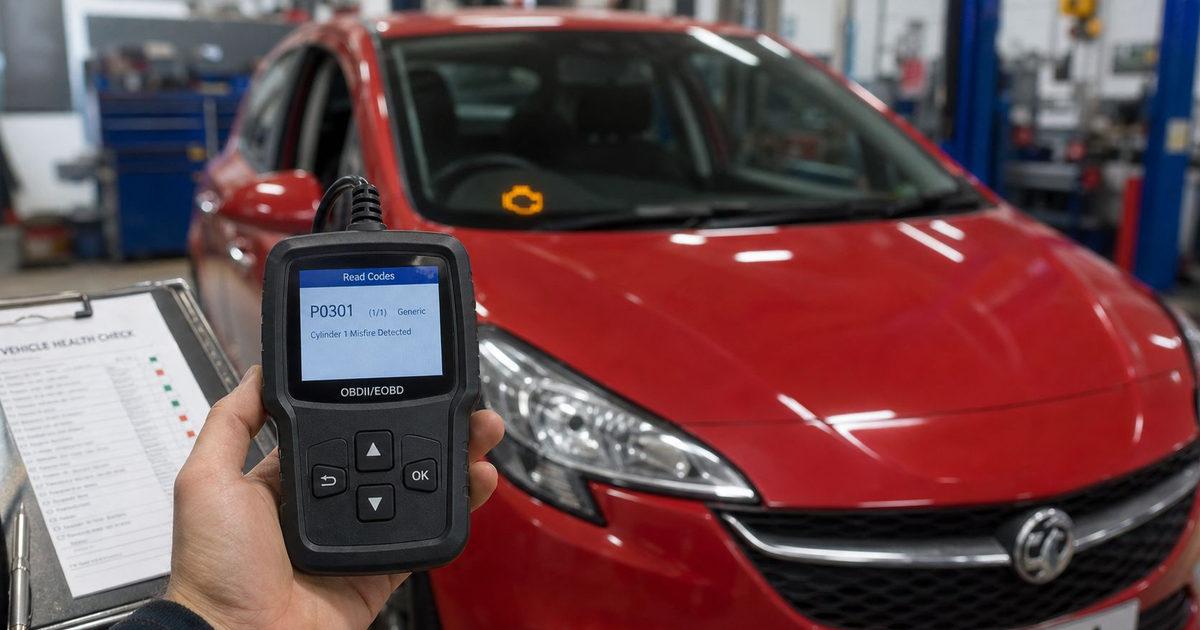
A Vauxhall Corsa rolls onto the forecourt with the engine light on, and the seller is already talking it down as “probably just a sensor”. For a trade buyer, that warning light is not a nuisance detail, it's a buying decision signal. It can point to a cheap fix, but it can just as easily hide a recurring fault, a missed MOT issue, or a car that's been moved on before anyone dealt with the problem.
On a Corsa, the dashboard light has to be read in context. A steady amber warning, a flashing light, reduced performance, and a messy ownership trail don't mean the same thing, and they shouldn't be priced the same way. That's why proper dealer vehicle checks need to combine diagnosis with vehicle provenance, not stop at the bonnet.
Table of Contents
- Why an Engine Light on a Corsa Matters to the Trade
- Understanding the Corsa Warning Light System
- Amber steady versus flashing
- What the ECU is actually doing
- Diagnostic Triage and Immediate Actions
- What to do first
- How to think about MOT and usability
- Common Corsa Fault Codes and Repair Implications
- Typical triggers in a Corsa
- What to watch in older cars
- What the ECU is doing
- Connecting Warning Lights to Vehicle Provenance
- Why the ownership trail matters
- When the warning light is part of a pattern
- Why Basic Vehicle Checks Fall Short
- Snapshot data versus decision data
- What better intelligence adds
- Trade-Focused Risk Assessment Checklist
- Use this order on the forecourt
- Buying decision thresholds
Why an Engine Light on a Corsa Matters to the Trade
A Corsa with an illuminated warning light can still be a sensible buy, but only if the fault is isolated and the rest of the file stacks up. On the forecourt, the question is whether you are buying a straightforward repair or taking on a car with a history of repeated faults, patchy presentation, or a seller who has moved it on before dealing with the problem. A clean fix is manageable. A hidden pattern is where margin disappears.
That is why the light should be read as a motor trade risk marker, not just a repair note. Dashboard warnings on Vauxhall models are meant to separate minor issues from serious ones, so a yellow warning tells you the system needs checking, while a red warning means the car should stop as soon as it is safe to do so because the fault may be serious and dangerous. RAC also notes that fuel-related issues account for about 15% of UK breakdowns tied to warning lights, which matters because incorrect fuel, contaminated fuel, and fuel-system faults all sit within the Corsa risk profile (RAC dashboard warning lights guidance).
Practical rule: if the seller cannot explain the light, do not price the car as if it were a normal retail-ready Corsa.
A good trade buyer also reads the warning lamp inside the wider acquisition story. A car offered cheaply, described vaguely, or pushed through quickly often has more going on than a single dashboard message. The light may be the first clear sign that someone else has already chosen not to spend money on the car.
Provenance matters alongside diagnostics. A used car history report gives useful background, but it will not show whether a car has been passed around because of unresolved faults, which is where a deeper vehicle history check UK approach earns its place. If you want a structured way to protect stock buying decisions, the process at proper trade-stock due diligence is the sort of discipline that stops a warning lamp becoming a stock write-down. Where a key issue sits alongside the engine light, Vauxhall key replacement Midlands is useful for understanding replacement and matching, but it still comes after deciding whether the car is worth buying at all.
Understanding the Corsa Warning Light System
A Corsa engine light is not a fault code in itself. It's the ECU's way of telling you that the engine or emissions control system has detected something outside expected parameters, and the light only tells you that a problem exists, not what the problem is (carwow's explanation of the engine management light). On a trade walkaround, that distinction matters because a visual warning without a scan is incomplete information.
Amber steady versus flashing
The working rule is simple. A steady amber engine management light usually means the ECU has stored a fault code and the car needs diagnosis. A flashing light is more urgent, because it can signal a severe misfire with the risk of catalyst damage, and that's not the sort of fault you drive casually back to base (UK-spec Corsa diagnosis guidance). In practical trade terms, flashing means escalation, not reassurance.
A lot of Corsa lights also follow a predictable ignition sequence. They should come on briefly when the key is turned and then go out. If the warning remains on while the engine is running, the car is telling you that emissions control or engine management needs attention, not that the dashboard bulb is being temperamental (Corsa warning light behaviour).
The light is a messenger, not the diagnosis.
What the ECU is actually doing
The ECU listens to sensors across the engine and emissions system, then stores a diagnostic trouble code when one of those readings falls outside expected limits. That's why the same dashboard light can cover a wide range of issues, from a minor sensor fault to a more serious fuelling or ignition problem. It's also why a Corsa can seem to drive almost normally while still carrying a fault that needs proper attention.
For a buyer, the key is to separate safe-to-scan from safe-to-ignore. A steady amber light on a car that otherwise behaves normally still needs code interrogation. A flashing light or one paired with rough running, hesitation, or obvious misfire doesn't belong in the “sort later” pile.
The internal logic here is basic but important, and it's the same reason a proper diagnostic workflow matters more than guesswork. A clean-looking dash doesn't clear a stored fault, and a reset doesn't tell you whether the issue will come back once the car's under load.
Diagnostic Triage and Immediate Actions
The first technical move on an engine light on Corsa job is an OBD-II diagnostic scan, not a parts swap. The ECU stores fault codes, and the scan tool reads those codes through the vehicle's diagnostic port, which is why a dashboard warning on its own can't tell you whether you're looking at a sensor, an ignition fault, or an emissions issue (OBD-II reader process). In the trade, that saves time and stops you buying parts on guesswork.
What to do first
Start with the symptom, then the code, then the decision. If the light is steady amber and the car runs cleanly, you can usually move to scanning and planning. If it's flashing, or if the car is down on power, shaking, or obviously misfiring, it belongs in the urgent category because that's where catalyst damage and further mechanical harm become realistic risks.
Practical rule: don't clear a code before you've written it down, because you may erase the only evidence of what the car was doing.
The next decision is whether the fault fits a retail prep job or a deeper stock risk. A steady stored code with no other symptoms may still be workable if the rest of the file is strong and the price allows for repair. A recurring light, limp-mode behaviour, or a car that keeps coming back with the same complaint is different, because that suggests a fault that's being managed, not solved.
How to think about MOT and usability
A warning light can also affect how the car is viewed at MOT time, especially if the underlying issue is emissions-related. That doesn't automatically make the car unsellable, but it does change how much of a discount you need and how much diagnostic time you're willing to commit. If the fault is minor and repairable, it may still become a decent retail car. If the car is showing recurring engine management issues and the seller has already priced it as a quick sale, the safer move is often to step back.
For a process-led workshop or appraisal team, the best practice is to document the symptom, scan the codes, note the test drive result, and compare the fault with the vehicle's background before authorising spend. The more you treat it like a structured appraisal problem, the less likely you are to absorb hidden labour and comeback risk. A disciplined scan workflow, like the one outlined in how to use an OBD reader properly, protects the buying decision as much as the repair decision.
Common Corsa Fault Codes and Repair Implications
A Corsa with the engine light on is not just a workshop job, it is a stock decision. Some codes point to a clean fix and a car that can still be retailed with confidence. Others point to repeat faults, patch repairs, or a vehicle that needs more diagnostic time than the margin will comfortably support. For a buyer on the forecourt, the code matters because it changes the risk profile before a spanner has even gone on.
Typical triggers in a Corsa
The usual list includes oxygen sensor faults, MAF sensor issues, crank or cam sensor faults, ignition coil problems, and EVAP or fuel-cap related faults. Those sit within the engine-management setup used across many Corsa petrol and diesel variants, which is why the warning light often looks vague until a proper scan is done. A fuel-related warning can also be tied to broader contamination or delivery issues, so it should be treated as part of the whole fault picture rather than a separate nuisance on its own.
Common Corsa Engine Light Triggers Typical Symptoms Repair Complexity Trade Risk Level Oxygen sensor fault Poor running, emissions-related warning, possible fuel economy complaints Usually moderate, but diagnosis still matters Medium MAF sensor issue Hesitation, rough idle, poor throttle response Can be simple or misleading, depending on contamination or wiring Medium Crank or cam sensor fault Intermittent starting, cutting out, non-start complaints Often straightforward once confirmed, but can be mistaken for deeper faults High Ignition coil fault Misfire, flashing light, loss of power Needs prompt action because it can escalate quickly High EVAP or fuel-cap fault Warning light with few other symptoms Often simple, but only if the code confirms it Low to medium The table matters because the repair path changes the buying decision. A fuel-cap or EVAP issue can be cheap and straightforward. A crank sensor fault may still be manageable, but if the car has intermittent stalling or starting complaints, it deserves closer appraisal because that pattern can hide a wider electrical or wiring issue. A misfire-related coil fault is where caution increases, because a flashing light can point to catalyst damage if the car has been driven on the fault for long enough.
Trade takeaway: a cheap part does not always mean a cheap job.
What to watch in older cars
Older high-mileage petrol Corsas often show ignition-side issues more than diesel-specific emissions complaints, while eco-diesel examples tend to bring a different mix of emissions and airflow concerns. That does not mean the car should be judged by badge or fuel type alone. Mileage, usage pattern, service history, and the exact fault code should decide the next move.
If the code points to recurring emissions behaviour, keep the diesel-specific context in view and use a separate fault analysis such as DPF warning light context as part of the buying process for diesel stock. The same rule applies on a Corsa, one code is not the full story.
What the ECU is doing
The ECU is not just switching the light on for drama. It is comparing sensor inputs, checking whether values sit within expected limits, and storing a code when it sees a mismatch that affects running, emissions, or protection strategy. In some cases the car may still drive normally, but that does not mean the issue is minor from a trade point of view.
This is why a stored code, a pending code, and an active fault should not be treated the same way. A single historic code with clean live data can be a prep item. A returning code after a road test, or a code that sits beside rough running, starts to look like a known fault that has already survived one round of attention. For older stock, that is where provenance and diagnostic discipline matter as much as the part itself.
If a car has been moved on with warnings still present, or the seller cannot explain why the light keeps returning, that is a buying risk as well as a mechanical one. In those cases, a claim for fair settlement help from Leverage Auto Appraisals can be useful when you need a clearer position on value and exposure before you commit.
Connecting Warning Lights to Vehicle Provenance
A warning light becomes much more serious when it sits beside weak provenance. A car that's been owned briefly, moved on quickly, or described vaguely through successive listings can be hiding repair avoidance rather than a one-off mechanical issue. In the trade, that's where the dashboard and the history file start telling the same story.
Why the ownership trail matters
If a Corsa has bounced through owners in a short period, you need to ask why. That pattern doesn't prove anything on its own, but it does raise the odds that a warning light, rough running, or intermittent fault has been tolerated rather than fixed. The same goes for mileage patterns that don't sit comfortably with the age and apparent condition of the car, because those anomalies often show up alongside deferred maintenance or rushed resale.
A proper provenance review should also include the engine identity and how the vehicle has been represented over time. When the car's specification, engine details, or documentation are unclear, the risk isn't just mechanical. It becomes a buying-confidence problem, because the more ambiguity there is in the file, the less certain you can be about what you're stocking. A useful companion check here is engine number verification for trade buyers, because identity issues and warning-light issues often need to be assessed together rather than in isolation.
When the warning light is part of a pattern
A recurring engine light on a Corsa can mean someone else has already tried to live with the fault, clear it, or move the car on before the root cause was dealt with. That's the behaviour trade buyers need to spot. A one-off code on a solid vehicle is manageable. A fault repeated across ownership changes, especially where the price has clearly been softened, often signals deferred spend.
If the provenance is messy, the warning light deserves more suspicion, not less.
That's where a deeper vehicle provenance review changes the buying decision. The point isn't to prove the car is bad. The point is to understand whether the light is an isolated issue or a symptom of broader neglect, rushed resale, or weak disclosure. In a dispute, that difference affects not just repair costs but how the deal looks after the fact.
Where a file needs context rather than a simple green tick, a service such as fair settlement help from Leverage Auto Appraisals can be useful for cross-checking older-vehicle identity details and strengthening the comparison between the physical car and the paperwork. That kind of context matters most when a warning lamp has already made the car a higher-risk stock decision.
Why Basic Vehicle Checks Fall Short
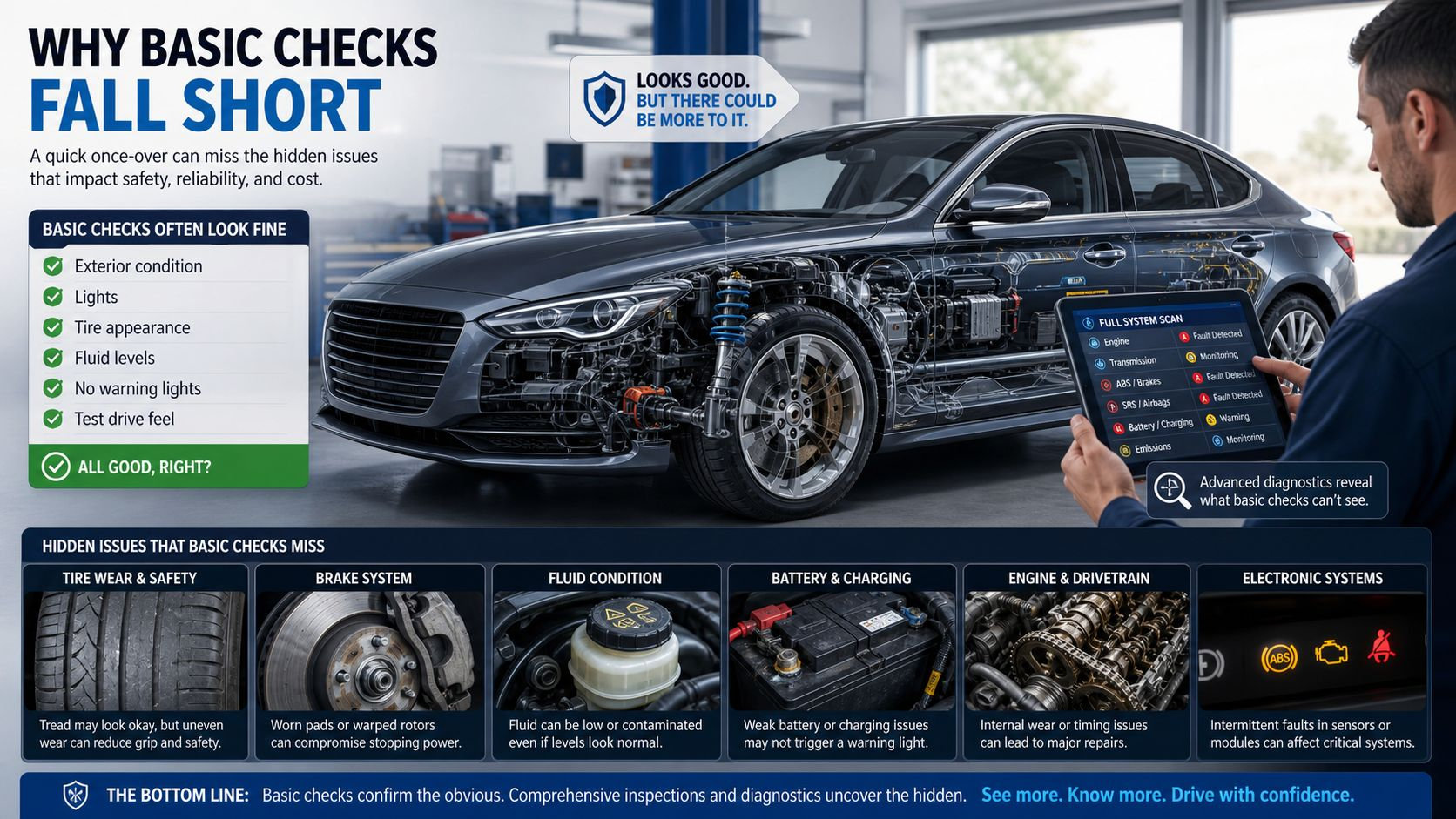
Basic vehicle history check UK products are useful, but they're not enough when a Corsa has a live warning light. They tell you something about the car's record, but they rarely tell you enough about its current risk. A pass or fail result isn't the same as an acquisition decision, and traders know the gap between those two things is where money gets lost.
Snapshot data versus decision data
A standard check can show you whether the car has a recorded issue, but it often misses the context around timing, ownership movement, and whether a fault pattern is repeating. That's why a clean-looking result can still leave you exposed. The car may look acceptable on paper, yet still carry the kind of history that makes a warning light more worrying than the scan result alone suggests.
The problem is that vehicle data is usually a point-in-time snapshot. It doesn't automatically tell you whether the previous keeper was trying to offload a nagging fault, whether mileage progression makes sense, or whether the car has changed hands too quickly for comfort. For a trade buyer, that context is the difference between a normal prep decision and a stock-risk decision.
What better intelligence adds
Better trade vehicle intelligence cross-references the clue that the light gives you with the background that the car has been carrying all along. That means you're not just reading a fault code, you're asking whether the car's ownership pattern, MOT history, and mileage story support the idea that this is a repairable retail prep or a vehicle that's been de-risked by someone else.
For traders, that reduces the chance of paying retail money for wholesale problems. It also tightens compliance because the buying note becomes evidence-led rather than assumption-led. If the dashboard warning, the scan result, and the file history all point in the same direction, you're in a stronger position to price, renegotiate, or walk away.
The broader lesson is simple. A used car history report is a starting point, not a conclusion. When a Corsa is already flagging on the dash, the buying decision should be built on context, not optimism.
Trade-Focused Risk Assessment Checklist
A Corsa with an engine light needs to be treated as a mixed mechanical and provenance risk, not a quick “clear the code and retail it” job. On the forecourt, the better buy decisions come from matching what the dashboard is showing with what the file, the MOT trail, and the ownership pattern say about the car.
Use this order on the forecourt
- Read the light properly: Confirm whether it is steady amber or flashing, because the urgency and the buying risk are different.
- Scan before spending: Pull the OBD-II codes first, then decide whether the fault looks like a contained repair or a wider issue that will eat margin.
- Check the ownership pattern: Short-term ownership and quick resale should raise your suspicion, especially on a cheap Corsa with a live light.
- Compare mileage with condition: If the wear, service history, and odometer story do not line up, treat the car as higher risk.
- Review MOT history and timing: A warning light that follows repeated advisories or a recent handover needs more scrutiny.
- Look for repeat-fault behaviour: If the same type of complaint has followed the car around, discount it harder or walk away.
- Price the fix realistically: A fault code is not a repair invoice, so allow for diagnosis time as well as the part itself.
Buying decision thresholds
A steady amber light, a clean scan result, and a coherent background can still leave a Corsa in retail territory. A flashing light, power loss, or a record that suggests the fault has been avoided rather than solved points to a very different stock decision. Good trade process does not try to rescue every car, it separates the workable from the risky.
For teams that want a structured appraisal habit rather than an instinct-led one, complete vehicle appraisal checklists for trade buyers gives the kind of discipline that keeps the buying file consistent. On a Corsa, that consistency protects margin just as much as the repair estimate does.
If the dashboard warning is already there, the buying note should reflect diagnosis, provenance, and resale risk before money changes hands. That is where vehicle history, stock decisions, and fair settlement thinking all sit in the same decision file.
Frequently Asked Questions
AI-Generated Content Notice
This article was created with the assistance of artificial intelligence technology. While we strive for accuracy, the information provided should be considered for general informational purposes only and should not be relied upon as professional automotive, legal, or financial advice. We recommend verifying any information with qualified professionals or official sources before making important decisions. AutoProv accepts no liability for any consequences resulting from the use of this information.
From our AI insights
- The Impact of EV Service Records on Resale Value
Discover how electric vehicle service records affect resale value and buyer confidence in the UK market.
- The Importance of Tyre Verification for UK Motor Traders
Discover why verifying tyre specs is crucial for UK traders to ensure safety and compliance.
- Decoding CO2 Emissions: A Trader's Guide
Learn how traders can verify CO2 data using factory build sheets to prevent disputes.
Related Articles

The Importance of Car Maintenance and Provenance Checks
Discover why regular car maintenance and proper provenance checks are essential for vehicle quality and longevity.

Essential Car Maintenance Tips for UK Drivers
Discover vital car maintenance tips to keep your vehicle roadworthy and compliant in the UK.
How Much Is a Car Service? Complete UK Price Guide
Trying to pin down exactly "how much is a car service?" can feel a bit like asking "how long is a piece of string?". Prices vary quite a bit, but to give you a ballpark figure, an interim service will usually set you back around £100 to get started. A more thorough full service often begins at £180, while a major service for many cars can easily top £300.
Published by AutoProv
Your trusted source for vehicle intelligence