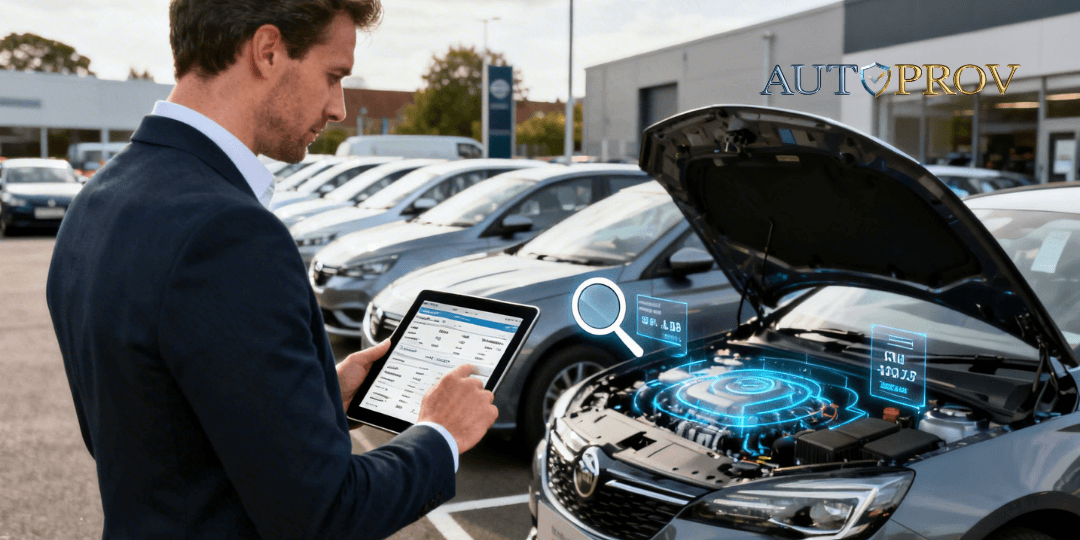
For motor trade professionals, sourcing ex-rental cars is a strategic imperative. These vehicles offer a consistent supply of late-model stock, yet they are often accompanied by underlying issues that a basic vehicle check will fail to identify. This creates a significant risk for traders looking to acquire inventory without inheriting costly, undisclosed problems.
Why Ex-Rental Cars Are a Double-Edged Sword for the Trade

The UK motor trade depends on a reliable flow of quality used vehicles, and ex-rentals form a major component of this supply chain. Large rental corporations operate on structured de-fleeting cycles, consistently releasing high volumes of cars into the wholesale market. This creates an inventory pipeline that dealers can leverage to maintain forecourt stock levels.
However, this convenience is balanced by significant risk. The operational life of a rental car is demanding, characterised by numerous drivers, intensive urban usage, and frequent short journeys. This usage pattern places unique mechanical stress on a vehicle, which is rarely documented in its service history.
To clarify the challenge, here is a summary of the opportunities and risks associated with stocking ex-rental vehicles.
Ex-Rental Vehicle Risk vs Opportunity
Opportunity Associated Risk Consistent supply of late-model vehicles. High driver turnover leads to accelerated interior and mechanical wear. Often accompanied by full service histories. Maintenance can be performed to a budget, not to preserve long-term health. Predictable de-fleeting schedules aid stock planning. Heavy urban usage causes strain on clutches, brakes, and suspension. Base-spec models appeal to a wide market segment. Minor damage is often repaired in-house without official record. While the supply opportunities are attractive, the associated risks can erode profit margins if not properly managed.
The Trader's Dilemma
A standard used car history report is insufficient for this category of vehicle. While it will flag critical issues such as outstanding finance or an insurance write-off, it provides no insight into the car's operational life. The minor cosmetic repairs, excessive clutch wear from varied driving styles, or suspension fatigue from urban roads represent the hidden history a dealer acquires.
This is where effective motor trade risk management becomes critical. Dealers are not just acquiring a vehicle; they are acquiring its unwritten operational history. With the UK used car market comprising millions of annual transactions, fleet disposals represent a substantial portion of available stock. This volume increases the probability of acquiring vehicles with undisclosed issues that a basic check will not detect.
The primary issue is that a 'clean' vehicle history check can create a false sense of security. It confirms the vehicle has not been written off but reveals nothing about the intensity of its use or the quality of its maintenance between services.
This gap between basic data and operational reality is precisely where profit margins are lost. A vehicle that appears sound on paper can quickly become a financial liability due to reconditioning costs. Therefore, a deeper level of trade vehicle intelligence is essential for making informed and profitable purchasing decisions.
By looking beyond surface-level data, dealers can gain a true understanding of a vehicle's vehicle provenance and protect their business from poor investments. For further insight into large-scale fleet operations, see our guide to modern fleet management for UK businesses.
What a Standard Vehicle History Check Fails to Reveal
Relying solely on a standard used car history report for ex-rental stock is inadequate. While these checks are vital for identifying critical markers like outstanding finance, theft, or insurance write-offs, they were never designed to capture the complete operational history of a vehicle.
A basic report cannot quantify the cumulative impact of numerous drivers, each with a different level of mechanical sympathy. It will not flag the detrimental effects of constant short journeys, where engines rarely reach optimal operating temperature. Crucially, it overlooks the general 'fleet abuse' that goes undocumented.
A clean provenance-style check on an ex-rental car often creates a false sense of security. It confirms the vehicle has not been in a major recorded incident, but reveals nothing about the high-intensity usage that directly impacts its long-term mechanical health and future reconditioning costs.
The Story Between the Data Points
Consider a practical scenario. A three-year-old hatchback with 40,000 miles is offered at auction. The standard vehicle history check UK traders use returns 'clear'. No finance, no accidents, one previous keeper—a major rental company. On paper, it appears to be a solid retail unit.
However, a deeper analysis of its vehicle provenance tells a different story. The MOT history, when cross-referenced with the vehicle's short ownership cycle, indicates a pattern consistent with heavy urban use. One might see recurring advisories on brake discs and tyres—components often replaced just before de-fleeting to secure a pass certificate, but which signal a hard operational life.
This type of detailed analysis uncovers what basic reports cannot:
- High Driver Turnover: The vehicle was likely operated by hundreds of individuals, leading to accelerated wear on the clutch, gearbox, and interior touchpoints.
- Intense Usage Patterns: Constant stop-start urban driving places significant strain on the engine, transmission, and suspension components that a simple mileage figure does not reflect.
- Budget-Constrained Maintenance: While serviced on schedule, the work is often performed to meet the minimum lease-end requirements, not to ensure longevity for the next owner.
This is the contextual intelligence that distinguishes a profitable acquisition from a problematic one. The clean report masks a vehicle that will almost certainly require significant investment in reconditioning to be retail-ready. For traders focused on protecting their margins, this deeper level of motor trade risk assessment is non-negotiable. To understand what a comprehensive report should cover, it is useful to know how to get a free VIN check in the UK as a first step.
How to Decode a Vehicle’s True Provenance
To gain a competitive edge when sourcing ex-rental cars, traders must move beyond basic data and learn to decode a vehicle’s true history. This involves a systematic method for identifying motor trade risk. The optimal workflow combines physical document inspection with intelligent cross-referencing of digital records to build a complete picture of a car's previous life.
First, examine the V5C logbook. Scan the previous keepers for major rental firms—Hertz, Enterprise, Avis, or other national leasing companies. Some entities operate under less obvious trading names, but an online search can often reveal their connection to the rental industry. This initial check is the first confirmation that you are dealing with a former fleet asset.
This process is not about a single check; it is about synthesising information to reveal hidden issues and, ultimately, the vehicle's true story.

As illustrated, a standard report is merely the starting point. Genuine insight is derived from investigating the gaps in the data.
Analysing Wear and Tear Patterns
Next, attention should be directed to the MOT history, a valuable source of information available via the DVLA website. Do not just look for a pass or fail result. Analyse the patterns of advisories over time.
- Recurring Brake and Tyre Advisories: Consistent warnings about worn brakes and tyres, particularly on a low-mileage vehicle, are a strong indicator of a life spent in hard, stop-start urban driving.
- Suspension Component Warnings: Advisories for items such as bushes, links, or shock absorbers can point to a vehicle operated on poorly maintained roads or subjected to heavy loads.
- Minor Faults: A long list of minor advisories—such as non-critical bulbs or worn wiper blades—can suggest a bare-minimum maintenance schedule designed solely to meet lease-end return standards.
It is crucial to cross-reference this information with the mileage recorded at each MOT test. A proper mileage check UK traders perform involves looking for logical progression. Any anomalies, such as dips or periods of static mileage, require further investigation as they could indicate clocking or long periods of inactivity.
Short ownership cycles are a significant risk signal. When a vehicle is de-fleeted and then passes through several trade owners in a short period, it often indicates that previous dealers have identified underlying problems and quickly moved it on. This is a classic symptom of a problem vehicle being passed through the trade.
The flow of ex-rental cars into the UK's used market is accelerating. Recent data indicates a significant year-on-year increase in used car leasing contracts, highlighting the rate at which rental firms are cycling their fleets. For traders, this means more stock availability but also a higher risk of encountering vehicles with mileage discrepancies or hidden fleet abuse that standard checks will miss.
This is precisely where platforms like AutoProv provide value. Our system is designed to automate this deep-dive due diligence. By consolidating disparate data sources—V5C history, MOT records, and mileage timelines—it delivers the trade vehicle intelligence that flags these anomalies instantly. This elevates the dealer's role from a simple buyer to a risk analyst, providing the capability to protect investments by truly understanding a vehicle's vehicle provenance.
Adjusting Valuations with Provenance Data
Effective vehicle intelligence is not merely a defensive tool for avoiding problematic stock; it is a proactive strategy for accurate pricing. For any dealer, using provenance data during the valuation process is where profit is protected and maximised, especially when dealing with ex-rental cars for sale. It is how findings are translated into tangible figures that impact the bottom line.
When you move beyond a basic used car history report, you equip yourself with the evidence needed to adjust your bidding strategy with confidence. Having an intuitive sense about a car's hard life is one thing; having the data to substantiate it is another.
Translating Data into Financials
Once your dealer vehicle checks uncover specific wear patterns or risk signals in a vehicle's history, you can assign real-world costs to them. This is the crucial step that transforms abstract risk into a concrete negotiation tool.
- Evidence of Urban Use: Does the MOT history show repeated advisories for brakes, tyres, and suspension? You can confidently factor in higher reconditioning costs. A vehicle used as a city runabout for three years will almost certainly require more than a basic set of pads and discs. Consider the clutch, suspension bushes, and potential DPF issues.
- Short Ownership Cycles: A vehicle that has passed through three different traders in four months is a major red flag. This pattern often indicates a hidden fault that another party could not diagnose or chose not to repair. Your offer must be adjusted to account for the diagnostic time and complex repairs others have likely avoided.
- Minimalist Servicing: A stamped service book does not tell the full story. If a vehicle has only received the absolute minimum servicing required by the lease company, you should budget for a full, comprehensive service yourself to ensure it is retail-ready.
The objective is to build a data-backed case for your valuation. When you can point to specific MOT advisories or rapid ownership changes, your bid is no longer just an opinion—it is a professional assessment based on tangible evidence.
Presenting a Professional Case
Armed with this detailed vehicle provenance data, you enter any negotiation from a position of strength. Whether at auction or in a private trade deal, the presentation of these insights is key.
Instead of stating, "It feels like it's had a hard life," you can assert with authority, "The MOT history shows recurring wear on the front suspension, and we have factored in a £400 reconditioning budget for that."
This data-driven approach changes the nature of the conversation. It demonstrates that you have conducted thorough due diligence and understand the true condition of the asset, not just what is visible on the surface.
Using advanced trade vehicle intelligence from a platform like AutoProv delivers this information in a clear, consolidated format. It makes identifying risks and calculating their financial impact a systematic process. It turns risk assessment from a shield into a sword, helping you secure better deals and protect margins on every vehicle acquired. For more on how data influences pricing, see our article on vehicle valuations and market insights.
Navigating The Rise Of Ex-Rental Electric Vehicles

As electric vehicles (EVs) transition from rental fleets into the trade, they introduce a new layer of complexity. Their rapid depreciation can make them appear as attractive bargains when sourcing ex rental cars for sale. However, they carry unique and often costly risks that a standard physical inspection or basic history check will not identify. This necessitates a shift in how traders approach their dealer vehicle checks.
Unlike an internal combustion engine vehicle, the most significant risk with an ex-rental EV is its battery. A life in a rental fleet often involves a punishing cycle of constant rapid charging, a usage pattern known to accelerate battery degradation far more than slower, overnight charging. This directly impacts the vehicle's real-world range and long-term reliability—two factors critical to its resale value and customer satisfaction.
Unseen Risks in EV Provenance
The challenges extend beyond the battery. EVs are sophisticated electronic systems, and an intensive fleet life can mask underlying electronic faults or software issues that may only manifest weeks or months after a sale. A standard used car history report is completely blind to these types of problems.
This creates a high-risk scenario for traders. An EV may appear immaculate, possess a clean history on paper, and seem like a good value proposition, only to incur substantial repair bills for its powertrain or battery management system post-acquisition. The true provenance of an EV encompasses not just its ownership timeline, but its entire usage and charging history.
For an ex-rental EV, the single previous keeper on the V5C—the rental company—is a major risk signal. It implies a history of numerous, anonymous drivers and a high probability of relentless rapid charging. Both factors have a direct, negative impact on the car’s most valuable component: the battery pack.
The volume of ex-rental EVs is increasing. The UK car rental market is projected to continue its growth, fuelling the flow of these vehicles into the used market. Without appropriate tools, it is easy for dealers to miss these critical, fleet-related risk signals.
This is where platforms like AutoProv deliver the necessary trade vehicle intelligence. By analysing ownership patterns, our system can instantly flag a vehicle's past life as a rental asset. This vital piece of vehicle provenance insight serves as a prompt to investigate the specific risks associated with ex-rental EVs. It provides the solid data required to adjust your valuation for potential battery degradation, protecting your margin from the outset. For traders, understanding the nuances of how electric vehicles impact car valuations is no longer optional; it is essential.
Your Questions, Answered
When it comes to sourcing ex-rental cars for sale, motor trade professionals often have pertinent questions. Here are direct answers to help navigate this segment of the market and understand why deeper trade vehicle intelligence is non-negotiable.
How Can I Be Sure a Car Is Ex-Rental?
The traditional method is to inspect the V5C logbook and identify major rental or leasing firms listed as a previous keeper, such as ‘Hertz,’ ‘Enterprise,’ or ‘Avis’.
However, many rental and fleet companies operate under obscure trading names that are not immediately recognisable. This introduces an element of guesswork and risk. A professional vehicle provenance check, such as that provided by AutoProv, eliminates this uncertainty. Our system automatically cross-references keeper data against extensive databases of fleet and rental companies, instantly flagging a vehicle's commercial history. This removes the need for manual interpretation of the V5C.
Is Buying an Ex-Rental Car Always a Bad Decision?
No. They can be an excellent source of late-model, regularly serviced stock that offers good value. The issue is not the vehicle's origin, but the lack of transparency regarding its operational history.
The risk lies in acquiring the vehicle without full knowledge. Armed with the right data from a comprehensive used car history report and provenance analysis, you can differentiate between a well-maintained example and one that has been subjected to excessive wear. This insight allows you to value it correctly, budget for reconditioning accurately, and secure a satisfactory profit margin.
The key takeaway is that an ex-rental history is not a 'buy' or 'do not buy' signal. It is a critical piece of intelligence that should fundamentally inform how you value the vehicle.
What is the Single Biggest Risk of Buying Ex-Rentals Blind?
Undisclosed, accelerated mechanical wear. This represents a significant financial risk. A car can have a clean history report—no accidents, no finance—but still harbour underlying issues that will be costly to rectify. This is a prime example of where standard dealer vehicle checks are insufficient.
Consider a vehicle driven by hundreds of different individuals, most with little mechanical sympathy. This results in extreme wear on components like the clutch, gearbox, brakes, and suspension. A brief inspection and test drive will not uncover this. These hidden faults can lead to substantial reconditioning bills that erode or eliminate profit post-sale. A robust mileage check UK traders can trust, combined with a deep analysis of the MOT history, is the most effective way to identify these tell-tale patterns.
How Does This Intelligence Protect My Dealership's Reputation?
A dealership's reputation is built on selling reliable vehicles. Proper provenance intelligence acts as a safeguard against unknowingly retailing a vehicle with a problematic, hidden history. When a customer's vehicle develops major faults shortly after purchase, it often leads to complaints, negative online reviews, and a loss of consumer trust.
By investing in deeper motor trade risk analysis before acquisition, you obtain a complete and honest picture of the asset. This allows you to either reject unsuitable vehicles or accurately recondition and price them to reflect their true history. Ultimately, thorough due diligence means you know precisely what you are selling. This protects your customers and, in turn, your hard-earned credibility.
Ready to move beyond basic checks and uncover the full story behind every vehicle? AutoProv delivers the advanced vehicle history, provenance, and risk intelligence UK motor traders need to buy smarter and protect their margins. Find out more at https://autoprov.ai.
Frequently Asked Questions
AI-Generated Content Notice
This article was created with the assistance of artificial intelligence technology. While we strive for accuracy, the information provided should be considered for general informational purposes only and should not be relied upon as professional automotive, legal, or financial advice. We recommend verifying any information with qualified professionals or official sources before making important decisions. AutoProv accepts no liability for any consequences resulting from the use of this information.
From our AI insights
- Auction Pitfalls: Avoiding Costly Mistakes
Navigate UK car auctions with confidence by avoiding finance, write-off, and mileage risks.
- Mastering Paint Code Checks: Detecting Hidden Car Repairs
Discover how to use paint code verification to identify hidden car repairs and ensure a smarter purchase.
- UK Part-Exchange Checks: Protecting Dealer Margins
Explore essential part-exchange checks for UK dealers to safeguard profit margins, including provenance and finance verification.
Related Articles

Your Ultimate Guide to Buying a Used Car in the UK
Navigate the UK used car market with confidence using our comprehensive buying guide. Tips, checks, and AutoProv Provenance insights included.

Difference Between MOT and Service: What You Need to Know
An MOT is a mandatory legal inspection that every car on UK roads needs to pass.Think of it as the government's way of ensuring your vehicle meets the absolute minimum safety and environmental standards to be considered roadworthy. A service, on the other hand, is a completely different beast. It's the proactive maintenance routine recommended by the people who built your car, designed to keep it running smoothly and catch problems before they start. In short, an MOT is a pass-or-fail exam required by law. A service is a comprehensive health plan for your car.

Your Ultimate Used Car Inspection Checklist
A solid used car inspection checklist is the single most powerful tool you have to avoid buying a lemon. It gives you a methodical way to look past the shiny paint and assess a car's real condition, helping you spot hidden problems and get a fair price before you shake hands on the deal.
Published by AutoProv
Your trusted source for vehicle intelligence