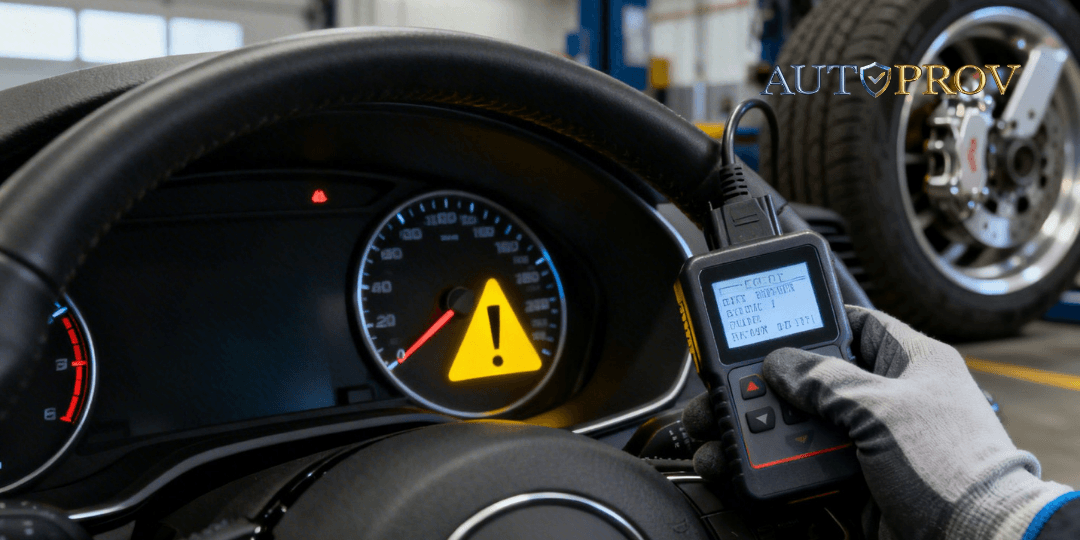
An illuminated exclamation mark on the dashboard is one of the first signals a motor trade professional assesses when evaluating a vehicle. It’s a critical data point: it could indicate a simple fix like low tyre pressure, or it could be the first sign of a brake system fault capable of erasing any potential margin. Establishing the root cause quickly is fundamental to understanding a vehicle's true condition and its accurate trade valuation.
Decoding the Exclamation Mark: A Trader's Initial Assessment

During a vehicle appraisal, a dashboard warning light is a crucial piece of intelligence. The exclamation mark demands immediate attention, and interpreting its likely meaning is key to making an accurate on-the-spot valuation.
A retail customer may simply book the vehicle into a workshop, but a trade buyer must instantly weigh the probable cause against its impact on the vehicle's value. This initial assessment dictates the entire negotiation.
Common Triggers and Their Trade Implications
The symbol's specific design—often within a triangle, circle, or tyre shape—provides the first significant clue. While a diagnostic scanner is required for a definitive diagnosis, an experienced eye can make a reasonable initial assessment based on the visual cue and any accompanying lights.
This table provides a summary of common meanings and their implications for a trade buyer.
Common Exclamation Mark Warnings and Their Trade Implications
This table serves as a quick reference to help distinguish a minor issue from a potential deal-breaker.
Warning Symbol (Description) Common Meaning Potential Risk for Traders Exclamation Mark in a U-Shape Tyre Pressure Monitoring System (TPMS). Indicates one or more tyres are significantly under-inflated, or a fault exists within the TPMS itself. Low risk if only tyre inflation is required. Higher risk if a sensor is faulty, which can be an unexpectedly costly and time-consuming repair. Red Exclamation Mark in a Circle Brake System Fault. A critical warning. It could signify low brake fluid, a handbrake issue, or a significant failure within the braking system. Extremely high risk. A red brake warning renders a vehicle unroadworthy and points to potentially substantial repair costs. A clear red flag. Yellow Exclamation Mark in a Triangle General or Master Warning. A catch-all indicator. It signals a detected fault not covered by a more specific symbol. Varies from low to high risk. It could be minor but often accompanies another warning or points to an underlying electronic fault. Requires an immediate diagnostic scan. The context and colour are critical. A yellow light is a warning; a red one signifies a critical issue requiring immediate action.
For any motor trade professional, this single light directly challenges a vehicle's 'ready-to-retail' status. It raises immediate questions about its maintenance history, undisclosed repair costs, and issues that a basic vehicle history check will not reveal.
Ignoring these signals constitutes a significant business risk. A simple TPMS fault might require only tyre inflation. A brake system light, however, could indicate repairs that will absorb the entire profit margin.
To obtain a definitive answer, particularly for the ambiguous master warning light, using a diagnostic scanner is essential. You can learn more about how to use an OBD-2 reader to retrieve specific fault codes. This quick diagnostic step helps differentiate a minor inconvenience from a major system fault, enabling a more thorough investigation into the vehicle’s provenance and overall condition.
The Tyre Pressure Monitoring System (TPMS) Warning

The Tyre Pressure Monitoring System (TPMS) warning—the U-shaped symbol with a central exclamation mark—is the most frequent reason for this light's appearance. Its commonality can lead to the assumption it is a minor issue, likely resolved by inflating the tyres. For a trade buyer, this assumption can be a costly error.
A persistent TPMS light often indicates a system malfunction rather than just low pressure. A single faulty sensor, perhaps damaged during a tyre change or due to age-related failure, is sufficient to trigger the warning. While replacing one sensor is manageable, the cost of replacing multiple units can quickly accumulate, directly impacting the profit margin.
Differentiating a Simple Fix from a System Fault
During an appraisal, the first task is to determine whether the issue is simple tyre pressure or a more complex system fault. A visual inspection is the starting point. Are the tyres visibly deflated? Are they mismatched budget brands? Mismatched, low-quality tyres are a significant red flag, suggesting a history of minimal-spend maintenance.
This initial glance is crucial. If tyre pressures are correct but the warning light remains illuminated, a hardware fault is highly probable.
- Low Pressure: The best-case scenario. An air compressor provides the solution, but a slow puncture should be investigated.
- Sensor Fault: The most likely cause of a persistent light. Each sensor has a battery with a typical lifespan of 5-7 years.
- TPMS Module Failure: Less common but a more expensive repair. This involves a fault in the main control unit, requiring specialist diagnostics.
A persistent TPMS light should be interpreted as a potential indicator of neglect. If the previous owner did not address a known, persistent warning, what other, less obvious, maintenance has been overlooked? This is where understanding the vehicle's provenance becomes critical.
Broader Implications for Vehicle Condition
A seemingly minor fault like this directly affects whether a vehicle is ‘ready-to-retail’. An illuminated TPMS light is an immediate MOT failure, necessitating workshop time and expense before the vehicle can be offered for sale. This is more than a repair bill; it is a data point. When this information is combined with a vehicle provenance check, concerning patterns can emerge. For example, does the TPMS warning correlate with MOT advisories for tyre wear?
Connecting these data points is what separates a sound acquisition from a poor one. It helps to clarify whether you are buying a well-maintained car with a simple fault or inheriting a legacy of inadequate upkeep. Investigating the history behind even minor warnings is a fundamental part of managing motor trade risk. You can learn more about how to check car recalls and other vital historical data to build a complete picture of a vehicle's past. This process transforms a simple warning light into valuable trade intelligence.
Brake System Warnings: A Critical Safety Alert

While a TPMS light is common and often easily rectified, a red exclamation mark inside a circle represents a far more serious issue. This symbol is the universal indicator for a brake system fault, immediately elevating the situation from a minor concern to a critical safety alert.
For any trader, this light is a non-negotiable red flag, indicating immediate roadworthiness issues, unknown repair costs, and significant liability risk. A brake fault makes a vehicle unsafe to operate. Ignoring it is not just poor business practice; it is a serious risk to reputation and safety.
Immediate On-the-Spot Checks for Traders
Upon spotting this light during an appraisal, several quick physical checks can provide essential context before an offer is considered. These initial steps help gauge the potential severity of the problem.
First, open the bonnet and inspect the brake fluid reservoir. A fluid level at or below the minimum mark often indicates one of two issues: a leak in the system, or severely worn brake pads that have caused the caliper pistons to extend, drawing more fluid from the reservoir.
Next, observe the dashboard for other warning lights. The presence of ABS (Anti-lock Braking System) or ESC (Electronic Stability Control) lights alongside the main brake warning often signals a more complex and costly electronic fault, such as a failed ABS pump or a faulty wheel speed sensor, rather than a simple hydraulic issue.
Linking Warnings to a Deeper History
A brake warning light is rarely an isolated event. It is typically the culmination of long-term wear, and its origins can often be traced through a comprehensive vehicle history check. Scrutinising the MOT history, for instance, might reveal a pattern of advisories for items like worn brake discs or corroded pipes.
A single warning light indicates a vehicle's current problem. Cross-referencing it with past MOT reports and ownership patterns reveals its history, helping to distinguish between a one-off failure and a pattern of neglect.
This is where a professional dealer vehicle check is indispensable. A vehicle with a brake fault that also has a history of repeated MOT advisories on brake components represents a high-risk acquisition. This kind of insight into a vehicle's reliability data is essential for assessing the true condition of a potential purchase. You can discover more insights about vehicle reliability on wecovr.com.
A complete understanding is essential for risk assessment. Worn brake components are a common issue, and you can get a better idea of the costs involved by reading our guide on brake disc replacement. This allows for accurate factoring of potential repair costs into the valuation, protecting your margin from a critical safety failure.
Interpreting Vague Signals from the Master Warning Light
The yellow triangle containing an exclamation mark is one of the most problematic lights to appear on a dashboard. Known as the master warning light, it is a catch-all for dozens of potential issues, ranging from the trivial to the catastrophic.
For a trader, this light represents pure uncertainty. Unlike a specific brake or TPMS light that provides a starting point for diagnosis, this one offers no initial clues. It demands one course of action: an immediate diagnostic scan with an OBD-II reader. Acquiring a vehicle with this light illuminated without a diagnosis is a significant gamble.
From Minor Sensors to Major System Failures
Often, the master warning light indicates that a secondary, less critical fault has been logged in the vehicle's ECU. However, it can also be the first sign of a more significant problem that does not have its own dedicated warning symbol.
The list of potential causes is extensive:
- Minor sensor failures, such as a fault with a parking sensor or an exterior light bulb.
- Powertrain issues that could involve the engine management or automatic transmission controls.
- Hybrid or EV system alerts not covered by more specific dashboard indicators.
- Stability control system faults, which could compromise the vehicle's handling.
While an exclamation mark can often point to specific things like low brake fluid, a master warning can sometimes hint at more widespread engine trouble. Knowing the common petrol in diesel car symptoms, for example, can be useful when you’re trying to diagnose a vague warning signal. The sheer range of possibilities makes a professional diagnosis absolutely essential before committing to a purchase.
Factoring Uncertainty into Your Valuation
Purchasing a vehicle with this light active without a diagnostic scan is a direct risk to capital and reputation. The primary rule for traders is to factor this profound uncertainty into any valuation and negotiation.
An undiagnosed master warning light should be treated as a worst-case scenario until proven otherwise. The potential for hidden, high-cost repairs to powertrain or transmission systems means the valuation must reflect this elevated risk profile.
When a seller claims, "It's probably just a sensor," this should be disregarded. Without a fault code from a diagnostic tool, you are buying blind. This light instantly transforms a simple appraisal into a complex risk assessment, highlighting why thorough dealer vehicle checks and a cautious approach are non-negotiable for any vehicle with such a vague but potentially serious warning.
Connecting the Warning Light to Vehicle Provenance
An exclamation mark on the dashboard is more than a technical fault; it is a question. For an experienced trader, it is a single clue in a vehicle's history. The key task is to determine its true significance. Does this warning align with the vehicle’s documented history, or does it hint at a deeper pattern of neglect?
This is the point where analysis must move beyond a simple fault code to genuine vehicle provenance. This is an essential step for managing motor trade risk. A persistent warning light is rarely an isolated incident. It is often the latest symptom of a long-term issue, revealing patterns that can only be identified by investigating the vehicle’s background. This context transforms a dashboard light from a potential repair cost into a powerful valuation insight.
Looking Beyond the Fault Code
Consider a vehicle displaying a brake system warning. A quick check confirms low brake fluid. This might seem like a simple fix. However, what if a detailed vehicle provenance check reveals three owners in the last 18 months? This ownership velocity is a major red flag. It suggests a recurring—and likely expensive—problem that previous owners were keen to pass on.
Here are common scenarios where a vehicle's history reveals the full story:
- Persistent TPMS Fault: Does the light align with a patchy MOT history showing advisories for tyre wear or mismatched brands? This points to a history of minimal-spend maintenance, not just a one-off sensor failure.
- Brake System Alert: Is this warning on a vehicle with a record of failing its MOT on brake efficiency or corroded pipes? This suggests a chronic issue rather than a simple need for new pads.
- Master Warning Light: When this appears alongside a history of frequent, short-term ownership, it strongly indicates a known, complex fault being passed from owner to owner.
A dashboard warning tells you what is wrong now. A comprehensive used car history report tells you why. Connecting these two points is fundamental to making a sound and profitable buying decision.
Using Intelligence to Assess Risk
Standard dealer vehicle checks are useful but often lack this deeper layer of intelligence. They can identify if a vehicle is stolen or a write-off, but they do not typically analyse ownership velocity or flag patterns of neglect. This is why a more advanced approach to vehicle intelligence is crucial for sourcing stock in the UK market.
While the market for UK car history check services is broad, trade professionals require more than the basic data offered to consumers. You can explore a variety of UK vehicle check providers on carowl.co.uk to see just how different the levels of information can be.
By using tools developed specifically for the motor trade, you can identify these risk signals before committing capital. A vehicle provenance report from AutoProv helps you place that warning light in its proper context, turning it into a clear signal of whether you are looking at a simple repair or a chronically problematic vehicle that will impact both your margin and your reputation.
Actionable Checklist for Appraising a Vehicle with a Warning Light
An exclamation mark on the dashboard can determine the outcome of a deal, turning a potentially profitable unit into a liability. When one is present during an appraisal, a structured plan is needed to differentiate a minor fault from a major financial risk.
This is not about guesswork. It is a methodical process for motor trade professionals to diagnose the issue, protect their margin, and make an informed decision.
Step 1: Identify and Document
First, identify the exact warning symbol and its colour. A red warning is a stop signal—it requires immediate and serious investigation. An amber or yellow warning is a caution, indicating a fault that needs attention but may not be immediately critical.
Take a clear photograph of the entire instrument cluster, capturing any other illuminated lights. Multiple warnings are often linked, pointing to a more complex electrical or system-wide fault.
Step 2: Physical Inspection (Tyres and Fluids)
With the warning identified, conduct quick on-the-spot checks to see if physical evidence corroborates the digital warning.
For a TPMS light, inspect all four tyres. Are any obviously deflated? Are there mismatched brands and ages? This is a classic sign of budget-conscious ownership. For a brake warning, open the bonnet and check the brake fluid reservoir. A low level likely indicates either a leak or pads worn down to their backing plates—both require immediate rectification.
This diagram illustrates how a single warning light should trigger a much deeper investigation into the vehicle's true history and value.

A mechanical fault is just one part of the assessment. It must be contextualised with the vehicle's complete history to understand its true implication for your business.
Step 3: Connect the Fault to the Vehicle’s History
A warning light lacks context on its own. It must be cross-referenced with the vehicle’s past, starting with the MOT history.
Does a brake fault on the dashboard correspond with advisories for corroded brake pipes or worn discs on the last MOT? This simple check helps determine if you are dealing with a new issue or a chronic problem the previous owner has ignored. One is a repair cost; the other is a potential post-sale liability.
Step 4: Question the Seller and Calculate Potential Costs
It is now time for direct questions. How long has the light been on? Has any attempt been made to diagnose it or implement a temporary fix? The responses provide valuable insight into the vehicle's maintenance.
Based on the available information, calculate a worst-case scenario for repair costs. A persistent warning light will always reduce a vehicle's value, so it is vital to know how to calculate diminished value to ensure your offer is realistic and protects your profit.
Step 5: Conduct a Full Provenance Check
This is the final, critical step. A full vehicle provenance check investigates the vehicle’s background, revealing ownership patterns and historical red flags that provide the complete story behind the warning light.
A dashboard warning is a signal to dig deeper. For a comprehensive guide on physical vehicle checks, refer to our ultimate used car inspection checklist for trade buyers.
Frequently Asked Questions for Motor Traders
Here are concise, trade-focused answers to common questions regarding dashboard exclamation marks, designed to help you manage risk and protect your margin.
Can I reset a dashboard warning light before selling a vehicle?
No. Clearing a fault code without rectifying the underlying issue is poor practice. It undermines professional reputation and creates a high probability of a post-sale dispute or a claim under the Consumer Rights Act.
If the fault is safety-critical, such as a brake system error, significant liability issues arise. The correct professional approach is to diagnose and repair the root cause. This ensures the vehicle is safe, the sale is transparent, and reputational damage is avoided.
How much should I reduce my offer for a vehicle with this light on?
The value adjustment depends entirely on the specific fault. A simple low tyre pressure warning may require no price adjustment.
However, a brake system fault or an undiagnosed master warning light is different. Potential repairs could amount to hundreds, or even thousands, of pounds. Until a technician has formally diagnosed the problem, you should always factor a 'worst-case scenario' repair cost into your valuation to mitigate financial risk.
Does a warning light appear on a standard history check?
No, and this is a critical distinction. A standard vehicle history check UK traders use will not report on a vehicle's current dashboard status or live fault codes. It may show historical MOT failures related to the brakes, for example, but it provides no insight into the vehicle's condition at the point of appraisal.
This is why a thorough physical inspection, combined with an advanced vehicle provenance check, is essential. It allows you to connect historical data from the used car history report with the vehicle's present state, giving you a complete picture of your motor trade risk.
A persistent warning light is a key indicator of a vehicle's true history. To understand the full story behind the alert and make smarter, more profitable acquisition decisions, you need trade-focused intelligence. AutoProv provides the vehicle provenance intelligence to uncover risks that others miss. Find out more at https://autoprov.ai.
Frequently Asked Questions
AI-Generated Content Notice
This article was created with the assistance of artificial intelligence technology. While we strive for accuracy, the information provided should be considered for general informational purposes only and should not be relied upon as professional automotive, legal, or financial advice. We recommend verifying any information with qualified professionals or official sources before making important decisions. AutoProv accepts no liability for any consequences resulting from the use of this information.
From our AI insights
- The Impact of EV Service Records on Resale Value
Discover how electric vehicle service records affect resale value and buyer confidence in the UK market.
- The Importance of Tyre Verification for UK Motor Traders
Discover why verifying tyre specs is crucial for UK traders to ensure safety and compliance.
- Decoding CO2 Emissions: A Trader's Guide
Learn how traders can verify CO2 data using factory build sheets to prevent disputes.
Related Articles

The Importance of Car Maintenance and Provenance Checks
Discover why regular car maintenance and proper provenance checks are essential for vehicle quality and longevity.

Essential Car Maintenance Tips for UK Drivers
Discover vital car maintenance tips to keep your vehicle roadworthy and compliant in the UK.

How Much Is a Car Service? Complete UK Price Guide
Trying to pin down exactly "how much is a car service?" can feel a bit like asking "how long is a piece of string?". Prices vary quite a bit, but to give you a ballpark figure, an interim service will usually set you back around £100 to get started. A more thorough full service often begins at £180, while a major service for many cars can easily top £300.
Published by AutoProv
Your trusted source for vehicle intelligence