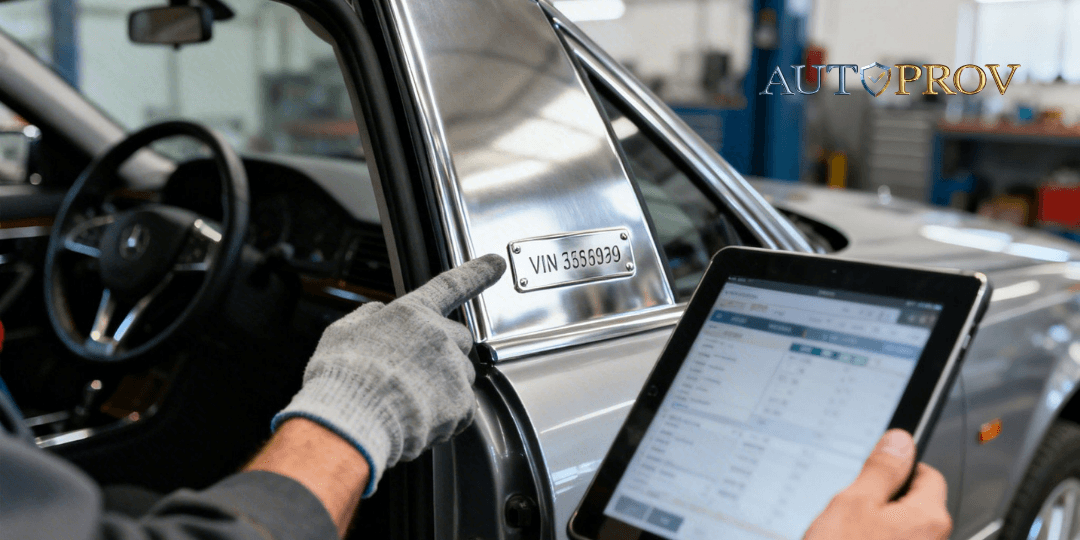
For any professional in the UK motor trade, the Vehicle Identification Number (VIN) is the absolute bedrock of a vehicle’s identity. While a registration plate can be changed or personalised, the VIN is stamped for life. Misidentifying this number is not a minor administrative error; it can lead to significant financial loss and reputational damage. This guide provides trade-critical details for finding and verifying a vehicle's VIN, a fundamental part of professional due diligence.
Why The VIN Is A Trader’s Most Crucial Asset
The VIN should be considered the single key that unlocks a vehicle's true, unedited history. It is what allows a dealer to accurately assess risk before committing capital. Its importance cannot be overstated—it is the foundation of every vehicle history check, valuation, and provenance analysis you will conduct.
Unlike a registration mark, which can be altered, the VIN is permanent. Stamped onto the vehicle at the point of manufacture, this 17-character code has been the standard in the UK since 1983 under ISO 3779. It encodes everything from the manufacturer and model specifications to a unique serial number.
This permanence is precisely why it is the only reliable identifier for investigating a vehicle’s official records.
The Foundation of Vehicle Provenance Intelligence
Understanding the distinction between a registration number and a VIN is fundamental for any professional buyer. A car’s provenance—its entire documented history of ownership, maintenance, and significant events—is anchored to its VIN. A standard registration lookup can easily miss the critical context that only a deep dive into the VIN's history can reveal. You can get a full analysis in our guide on what a VIN is and why it's so important for trade professionals.
A vehicle's registration can suggest who it appears to be today. The VIN reveals everything it has ever been. For a motor trader, ignoring the VIN is akin to buying a property without checking the Land Registry—a blind gamble.
Where To Find The VIN: A Practical Guide
First, you must physically locate the VIN on the vehicle. The number should be present in multiple locations, and a crucial part of your initial appraisal is confirming that they all match perfectly. Any mismatch is an immediate red flag requiring investigation.
Here is a quick-reference table for the most common locations to check during an initial vehicle appraisal.
Primary VIN Locations At a Glance
Location Type Common Placement What to Look For Dashboard Driver's side, visible through the windscreen from outside. A metal plate riveted to the dashboard. Check for evidence of tampering. Door Jam Inside the driver's side B-pillar (the post between the doors). A sticker or plate with the VIN, weights, and paint code. Engine Bay Stamped directly onto the bulkhead (firewall) or inner wing. A physically stamped number. Look for signs of grinding or welding. Boot/Spare Wheel Under the boot carpet or near the spare wheel well. A stamped number or a sticker, depending on the manufacturer. Always compare the physical VINs on the vehicle to the number listed on documentation, such as the V5C logbook and service history. Any discrepancy must be investigated before considering an offer.
Beyond A Basic History Check
This process of finding and verifying the VIN is your first line of defence against acquiring problematic stock. A simple mismatch between the VIN on the car and the one on the V5C is an immediate full stop.
This initial check alone can prevent you from:
- Inadvertently purchasing a stolen or cloned vehicle.
- Investing in a car with a hidden past, such as an undeclared insurance write-off.
- Facing legal and financial fallout from retailing a vehicle with a compromised identity.
The ability to quickly find and cross-reference a vehicle's identification number is a non-negotiable skill. It is what separates speculative buyers from professional traders who prioritise risk management. Mastering this simple first step sets the stage for every intelligent, data-driven acquisition.
Your Systematic On-Vehicle VIN Inspection Process
A thorough physical inspection is your first, and most important, line of defence. While a vehicle provenance check is essential, it is useless if the VIN you run does not actually belong to the vehicle in front of you. A repeatable, systematic process for finding the Vehicle Identification Number in multiple locations is required.
This is not about a cursory look at the windscreen plate. It is about a methodical check that builds confidence in the vehicle's identity before you commit funds. This is your opportunity to spot physical red flags that no documentation will ever reveal.
The core principle is simple: check the vehicle, check the documents, and ensure they match.

This is a multi-step validation process designed to guarantee consistency across every available source.
Beyond The Windscreen Plate
The most obvious VIN is on the small metal plate visible through the windscreen, usually on the passenger side in the UK. This is always your starting point, but relying on it alone is a critical error. It is the easiest plate for a criminal to tamper with or replace.
Your physical inspection must go deeper. You need to find the same number stamped directly onto the vehicle’s structure.
The Door Jamb and B-Pillar Sticker
Next, examine the driver’s side door jamb. Open the door and look for the manufacturer’s sticker, which is usually affixed to the B-pillar. This sticker contains a wealth of information.
- Vehicle Weights: The gross vehicle weight (GVW) and axle weights.
- Paint Code: The official code for the factory paint colour.
- The VIN: This must be an exact match to the number on the windscreen plate.
On a commercial vehicle like a Ford Transit, for example, this sticker is perfect for confirming the original specification. If the VIN here does not match, it could indicate the door has been replaced, which should prompt questions about potential accident damage.
A mismatched B-pillar sticker is a significant red flag. It might point to a poor-quality repair, but it could signify something far more serious, such as an attempt to hide the identity of a stolen or written-off vehicle. It should never be ignored.
Under The Bonnet Structural Stamps
Now it is time to find the VINs that are physically part of the vehicle's body. These are much harder to fake convincingly and provide a more reliable confirmation of the vehicle’s identity.
Open the bonnet and search for a VIN stamped directly onto a structural component. The most common locations include:
- The Bulkhead (Firewall): The metal wall separating the engine bay from the cabin.
- The Suspension Turret: The top of the strut mounting, on either the driver or passenger side.
- The Chassis Rail: Along the vehicle's main frame, often on the offside (driver’s side).
On a popular trade vehicle like a BMW 3 Series, you will almost always find a clear stamp on the offside suspension turret. The key is not just to find the number, but to inspect the quality of the stamp itself. You are looking for even character depth, a consistent font, and no signs of grinding, welding, or fresh paint nearby.
Checking The Boot and Interior
Finally, extend your search inside the car and into the boot. Manufacturers often place additional, redundant VINs in these less obvious areas.
Lift the boot carpet and check the floor pan, paying close attention to the area around the spare wheel well. On many Volkswagen Audi Group (VAG) models, you might find a paper sticker here that duplicates all the information from the B-pillar sticker, including the VIN and a full list of factory-fitted options.
Another location worth checking is under the front seats. A VIN may be stamped into the floor pan, which you can see by sliding the seat fully back. It will not be present on every model, but building the habit of checking makes your appraisal process more robust. Every match you find builds a more solid case for the vehicle's legitimacy. For more trade-specific tips, our ultimate used car inspection checklist provides greater detail.
This systematic search, moving from easily visible plates to hard-stamped structural numbers, is a non-negotiable part of professional due diligence. It is the physical evidence that validates any subsequent digital checks.
Cross-Referencing The VIN Across Official Paperwork
You have located the VINs stamped on the vehicle. This is a solid start, but it is only half the process. The next step is to connect the physical vehicle to its paper trail, an area where many costly mistakes are made.
Your task is to find the VIN on every piece of available documentation. A discrepancy of even a single character between the vehicle and its documents constitutes a major red flag. This is not a box-ticking exercise; it is fundamental risk management. A perfect match builds confidence, whereas a mismatch is a clear signal to stop the deal immediately.
The V5C Logbook: The Primary Source of Truth
The V5C registration certificate (logbook) is the cornerstone of a vehicle's identity in the UK. This is your first and most important point of reference.
Examine the V5C and go directly to Section 4, which is labelled ‘VIN/Chassis/Frame No.’. Compare this, character for character, with the VIN you found on the dashboard or chassis. There is zero room for error. A single incorrect digit is not a typo; it is a serious problem until proven otherwise.
While inspecting the V5C, assess the document itself. Is the DVLA watermark present? Does the paper feel correct? Look for spelling mistakes or unusual formatting, which are classic signs of a forgery.
Scrutinising MOT and Service Records
After the V5C, the MOT and service history are your next best resources for corroborating the vehicle’s identity. These documents help build a timeline, where you are looking for absolute consistency.
- MOT Certificates: Whether a paper certificate or an online history report, the VIN will be displayed prominently. Ensure it matches the V5C and the vehicle. A different VIN on an older MOT could indicate a plate transfer, a clerical error, or something more sinister.
- Service History: A genuine service book or a set of invoices should always have the VIN recorded. Garages log this information for a reason. A consistent VIN recorded by different workshops over many years is an excellent sign. If the VIN is missing or you spot different versions across invoices, it is cause for concern.
This is where professional judgement is key. A single typo on a service invoice from five years ago may be an honest mistake. However, if the most recent MOT has a different VIN from the V5C, it is a showstopper. You require a cast-iron explanation before proceeding. Our guide on how to prove ownership of a car offers useful context.
Finance Agreements and Other Documents
If the seller has paperwork for a finance agreement, this is another valuable source for verification. Finance companies are meticulous. The VIN on their agreement must match the V5C and the vehicle perfectly. Any discrepancy could mean the finance is tied to a completely different car—a risk you cannot afford to take.
In the UK used car market, this is precisely why VIN-based searches using DVLA-integrated tools are no longer a 'nice-to-have' but an essential part of motor trade risk management. DVSA data shows that 1 in 10 used vehicles inspected have a mileage discrepancy. This is why forensic-level insight, anchored to the permanent VIN, is critical for any dealer. You can explore official government figures in the comprehensive statistical datasets.
A vehicle’s paper trail tells a story. Your job is to act as the editor, reading between the lines and ensuring every chapter—from the V5C to the latest service invoice—is consistent. If the story does not add up, walk away.
By methodically finding and comparing the VIN across every available document, you build a robust and defensible case for the vehicle’s identity. It is a disciplined habit that distinguishes professional traders.
How To Spot VIN Tampering And Discrepancies
Simply finding the VINs on a vehicle and its paperwork is not enough; that is merely the starting point for due diligence. The real skill lies in knowing how to spot when a number has been altered or faked.
A cloned, stolen, or 'cut-and-shut' vehicle can often be identified at this early stage, long before you have invested in a full used car history report. You just need to know the tell-tale signs.

Developing a sharp eye for fraud is a powerful defence. The clues are often subtle, but once you learn what to look for, they become obvious. This is about moving beyond simply matching characters to reading the physical evidence in front of you.
Scrutinising The VIN Plate and Sticker
Always start with the most visible VINs—the plate on the dashboard and the sticker on the B-pillar. Because they are easy to access, they are the most common targets for criminals.
Forget just reading the number. Look at how it is presented.
- Rivets and Fixings: Factory VIN plates use specific, uniform rivets. If you see non-standard fasteners, signs of glue, or scratches around the edges where a plate has been pried off, it is an immediate cause for concern.
- Sticker Integrity: The B-pillar sticker should be perfectly smooth and aligned. Check for peeling, bubbling, or wrinkles that suggest it has been lifted and re-applied. This is a classic sign of a clumsy cover-up.
- Font and Alignment: Genuine VINs are stamped with machine precision. Every character is perfectly spaced, uniform in depth, and uses the same font. Be immediately suspicious of any digits that look off-centre, are not pressed as deeply, or seem inconsistent with the others.
Even a minor inconsistency here is your cue to dig deeper. Fraudsters rely on traders being in a hurry and overlooking these details.
Inspecting Stamped Chassis Numbers
The VINs stamped directly onto the vehicle’s chassis or bulkhead are much harder to alter without leaving a trace, making them your most reliable point of truth. Tampering here almost always leaves behind evidence.
When you find the stamped VIN, do not just read it. Inspect the entire area around it, using a torch if necessary. You are hunting for:
- Grind Marks: Any scratches or abrasion marks on the metal near the VIN are a major red flag. It suggests the original number was ground off before a new one was stamped.
- Signs of Welding: A fresh patch of welding or an unusually thick lump of underseal near the chassis number is highly suspect. Criminals may cut out the VIN from a stolen car and weld in a section from a legitimate, written-off wreck.
- Fresh Paint: A small, localised patch of new paint over or around the VIN is a classic trick to hide welding or grinding. Factory paint is flawless; a mismatched spot demands extreme caution.
- Character Irregularities: Stamping a new VIN by hand is incredibly difficult to get perfect. Look for uneven depths, inconsistent spacing, or characters that are not aligned vertically.
These physical checks are your best on-the-ground defence against vehicle cloning. For a deeper look into this threat, it is worth reading our guide on how to protect your dealership from car cloning fraud.
Common VIN Tampering Red Flags
This table summarises what you should see versus the common red flags that signal a problem.
Inspection Point Legitimate Appearance Potential Tampering Signs VIN Plate Rivets Uniform, manufacturer-specific fasteners. Clean, no tool marks. Mismatched rivets, pop rivets, glue residue, or scratch marks. B-Pillar Sticker Smooth, perfectly aligned, no air bubbles or peeling. Creases, bubbles, peeling edges, evidence of being re-stuck. VIN Characters Perfectly uniform font, spacing, and depth. Machine-stamped precision. Inconsistent font, uneven spacing, varied depth between characters. Chassis Metal Smooth, factory-finished metal around the stamped VIN. Grind marks, scratches, or evidence of metal being filed down. Welding No welds near the VIN area. Smooth, continuous metal. Patches of fresh welding, unusual seams, or distorted metal. Paintwork Consistent factory paint finish across the entire area. A localised patch of fresh paint or unusually thick underseal. Think of this as your quick-scan checklist. Spotting even one of these signs means you must stop and investigate further. Do not let a seller rush you through these vital physical checks.
A vehicle that returns a marker on the Police National Computer (PNC) as stolen, or has a VIN flagged by high-quality dealer vehicle checks, should be considered toxic stock. The legal and financial consequences of handling such a vehicle, even unknowingly, can be catastrophic for a dealership.
Why Even Minor Discrepancies Matter
In the motor trade, there is no such thing as a "small" VIN discrepancy. A single digit that does not match between the V5C and the chassis is not a typo—it is a symptom of a larger, and potentially very expensive, problem. It could be the thread that unravels a sophisticated fraud.
Treat every appraisal as a forensic examination. By systematically checking every VIN and meticulously inspecting for tampering, you protect your capital and your reputation. This hands-on, evidence-based approach is fundamental to buying intelligently.
Using The VIN For Advanced Provenance Intelligence
Once you have a legitimate 17-character VIN—and have verified it matches across the vehicle and its paperwork—you are ready to conduct a proper analysis. This is not just about running a quick history check; it is about unlocking trade-level vehicle provenance intelligence.
The VIN is your key to digging far deeper than a simple VRM lookup ever could. For any serious motor trader, this is where you move beyond guesswork and start making acquisition decisions backed by solid evidence. It is how you protect your margin, reputation, and business.

With the VIN, you can turn a string of characters into actionable insight that directly impacts your bottom line.
Moving Beyond Standard History Reports
A standard history report is a reasonable starting point, but it is often insufficient for professional needs. These basic checks can flag major issues like a Category S/N marker, police interest, or outstanding finance. However, they frequently miss the subtle patterns and risk signals that indicate a vehicle you should not have on your forecourt.
This is where professional vehicle provenance analysis becomes critical. It is about connecting the dots to understand the full story of a vehicle. A correct VIN allows a trade-focused platform to pull in and cross-reference data from dozens of official and exclusive sources.
This builds a complete intelligence file, drawing from:
- DVLA & DVA Records: To track keeper changes and V5C issue dates.
- Full MOT History: Every pass, fail, and advisory from day one.
- Insurance Databases: To uncover total loss events that may have been concealed.
- Mileage Data Feeds: Pulling readings from MOTs, service records, and previous sales listings.
- Trade-Exclusive Datasets: Information on where and when the car was previously sold within the trade.
A system like AutoProv fuses this information together, building a much clearer and more detailed picture of a car's past than you would get from a basic check.
Identifying Complex Risk Signals With The VIN
The real power of a VIN-led check is its ability to spot complex risks that a registration number lookup can easily miss—especially if the plates have been changed. These are the red flags that impact a vehicle's value and make it difficult to retail.
A powerful dealer vehicle checks platform uses the VIN to hunt for specific, tell-tale signs of trouble.
Significant Mileage Anomalies This goes far beyond a standard mileage check UK service. By mapping out every recorded mileage point, you can instantly spot discrepancies that indicate potential clocking. A vehicle showing 80,000 miles at its MOT in March but then 75,000 miles on a service invoice in June is a classic red flag.
Rapid Ownership Changes (Short-Cycling) A car that has had three keepers in six months is almost always a liability. This pattern, known as 'short-cycling' in the trade, is a common tactic used to hide a major fault, conceal its history as a high-use ex-rental car, or launder a cloned identity through multiple owners. A VIN-based timeline makes this activity impossible to hide.
Undisclosed Write-Offs It happens more often than you think. A vehicle is declared a total loss by an insurer, but it is repaired and returned to the road without the V5C being updated. A basic check might not catch this, but a proper provenance check cross-references insurance industry records against the VIN to expose that hidden history.
A vehicle's provenance is the sum of its history, not just the absence of red flags on a basic check. Short-term ownership, inconsistent mileage, and gaps in history are all critical risk signals that impact a car's true value and your ability to retail it cleanly.
Using the VIN means you are assessing the vehicle itself, not just its current registration plate. As any experienced trader knows, a private plate can hide a vehicle's age and obscure its past, but it cannot hide the story locked within its VIN. You can see how these details come together in a comprehensive vehicle provenance report designed specifically for trade use.
Ultimately, taking a few minutes to find and correctly use the VIN is what separates a gamble from a calculated business decision. It is the definitive step in managing motor trade risk and ensuring the stock you buy is profitable, safe, and exactly as it is represented.
Common VIN Questions From The Motor Trade
Even for seasoned professionals, the finer points of Vehicle Identification Numbers can present challenges. Regulations evolve, exceptions exist, and what you see on the forecourt does not always align with the paperwork.
Here are direct answers to the most common VIN questions from dealers, traders, and buyers across the UK. This serves as a quick-reference guide to clarify grey areas and strengthen your risk management processes.
Can Two Vehicles Have The Same VIN?
Unequivocally, no. The purpose of the 17-character VIN system, standard since 1981, is to give every vehicle a unique identifier. There are no exceptions or overlaps.
If you encounter two vehicles with an identical VIN, you have uncovered serious fraud. This is a classic indicator of vehicle cloning, where a criminal has copied a legitimate VIN onto a stolen or compromised vehicle. One is a fake, and both should be treated as toxic assets. Stop the transaction immediately and investigate further.
What If The VIN Is Shorter or Longer Than 17 Characters?
On any vehicle built after 1981, a VIN that is not exactly 17 characters long is a major red flag. Full stop. It is either a significant error on the V5C or, more likely, a deliberate attempt to hide the vehicle's real identity. Modern cars and LCVs do not have non-standard VINs.
The only exception is with classic and pre-1981 vehicles. Before this period, manufacturers used their own shorter chassis or serial numbers which do not follow the 17-character global standard. For these older vehicles, provenance and the paper trail become even more critical as a simple VIN check is not applicable.
A non-standard VIN on a modern vehicle should be treated as a deal-breaker. It points to either a fundamental error in the vehicle's documentation or, more worringly, a fraudulent attempt to obscure its true history. Do not proceed without a complete and verified explanation.
Is The VIN The Same As The Chassis Number?
For any modern vehicle, the terms VIN and chassis number are used interchangeably. The 17-character VIN is the number physically stamped onto the vehicle's chassis or frame, making it the official chassis number.
However, on pre-1981 vehicles, the 'chassis number' is a unique serial number assigned by the manufacturer before the global VIN standard was adopted. So, while a modern car's VIN is its chassis number, a classic car's chassis number is not a VIN. This is a small but vital distinction when stocking classic or historic vehicles.
Why Do Some VINs Contain Letters That Look Like Numbers?
To prevent transcription errors, the VIN standard deliberately excludes the letters I, O, and Q. This is to avoid confusion with the numbers 1 and 0.
Therefore, if you see what appears to be the letter 'O' in a VIN, it is always the number zero (0). This detail is crucial for accuracy. One wrong character entered into a dealer vehicle checks platform can pull up the wrong vehicle's history or fail the search entirely, leaving you blind to the risks in the vehicle you are assessing. Always double-check every digit and letter before initiating a search.
At AutoProv, we translate the VIN into clear, actionable trade vehicle intelligence. Our platform is built for UK motor trade professionals, focusing on the complex risk signals that standard checks miss, such as ownership patterns and mileage anomalies. Protect your margin and buy with confidence. Discover how at https://autoprov.ai.
Frequently Asked Questions
AI-Generated Content Notice
This article was created with the assistance of artificial intelligence technology. While we strive for accuracy, the information provided should be considered for general informational purposes only and should not be relied upon as professional automotive, legal, or financial advice. We recommend verifying any information with qualified professionals or official sources before making important decisions. AutoProv accepts no liability for any consequences resulting from the use of this information.
From our AI insights
- Navigating ULEZ Compliance for Used Car Dealers
A deep dive into ensuring your used car stock meets ULEZ standards, avoiding costly fines.
- Mastering Paint Verification with VIN Decoding
Learn how UK traders verify original paint using VIN decoding and provenance data.
- Understanding VIN Decoding: Avoid Misleading Imports
Learn how VIN decoding reveals vehicle origins and specs, preventing import pitfalls.
Related Articles

Car Specs by Reg: Instantly Find Vehicle Details & MOT History
Trying to find the full car specs by reg? In the UK, that little number plate is the key to unlocking a huge amount of information about a vehicle. From the exact engine size and CO2 emissions to its MOT history and tax status, it's all tied to the registration.

How to Check Previous Owners of a Car in the UK
Before you even start thinking about how to check the previous owners of a car, you need to get your head around why it's so important. This isn't just about being nosy; it’s a non-negotiable step that protects you from serious financial headaches and safety risks lurking under a shiny bonnet.

How to Check Service History in the UK
Think of a car's service history as its detailed CV, not just some dusty folder in the glovebox. To check service history is to get the real story behind a vehicle, digging into everything from its routine oil changes to any major surgery it's had. For any savvy car buyer in the UK, this record is the single most important document you can get your hands on.
Published by AutoProv
Your trusted source for vehicle intelligence