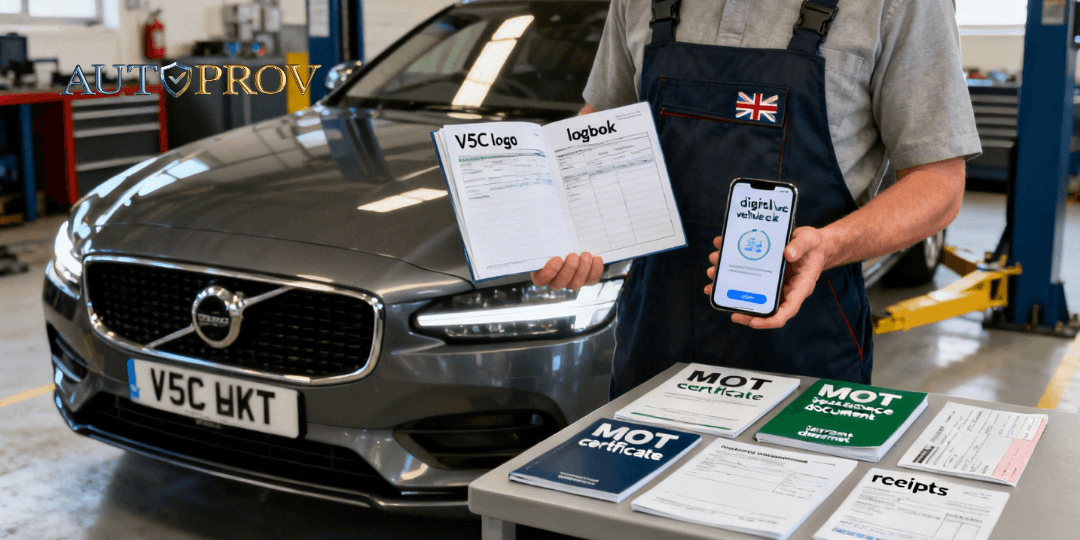
For any motor trade professional, establishing correct vehicle ownership goes far beyond a cursory glance at the V5C. It is a core component of effective risk management. True proof of legal title is not found in a single document; it is a complete picture built from multiple, verified data sources. This guide explains how to move beyond basic checks to properly protect your capital and make smarter buying decisions.
Proving Car Ownership Beyond The V5C

In the motor trade, verifying vehicle ownership is the bedrock of every transaction. While the V5C logbook is the primary registration document, treating it as definitive proof of ownership is a significant business risk. Errors or fraud in the ownership chain can lead to financial loss, legal disputes, and reputational damage.
An incomplete or questionable ownership trail can conceal numerous issues, from outstanding finance and undisclosed write-offs to outright theft. For a dealer, the consequences of acquiring such a vehicle are invariably costly and disruptive.
The Central Role of the V5C Document
The V5C, issued by the Driver and Vehicle Licensing Agency (DVLA), officially identifies the registered keeper. This is the person or entity legally responsible for the vehicle. It is critical to understand that the V5C is not proof of legal ownership. It is, however, the non-negotiable starting point for any professional due diligence.
With over 41 million licensed vehicles on UK roads, the volume of transactions creates ample opportunity for both fraud and administrative errors. In the trade, it is estimated that discrepancies or issues with V5C documents contribute to a significant percentage of post-sale disputes, often resulting in financial losses.
A common error is to assume the registered keeper is the legal owner. An experienced trader verifies every document and cross-references its details against other data sources. This diligence is what separates a profitable acquisition from a problem vehicle.
Building a Complete Picture of Ownership
To robustly prove ownership, a dealer must assemble and cross-reference multiple pieces of evidence. This process confirms the seller's legitimacy and provides a clear, objective view of the vehicle's provenance.
This table outlines the core documents and records required to establish a vehicle's true ownership history.
Core Documents for Verifying Vehicle Ownership
Document/Record What It Proves Critical Verification Point V5C Logbook Identifies the official registered keeper and vehicle details. Match the seller's ID, vehicle VIN, and inspect for signs of forgery. Proof of Purchase Establishes the seller's link to the vehicle (e.g., bill of sale). Ensures the person selling the vehicle has a legitimate claim to it. Supporting ID Verifies the seller's identity (e.g., driving licence, passport). Does the name and address on the ID correspond exactly with the V5C? Service & MOT History Provides a maintenance timeline and corroborates mileage. Identify gaps in service or mileage anomalies that require explanation. These core components represent your first line of defence:
- The V5C Logbook: Scrutinise for authenticity. All details must match the vehicle and the seller's provided identification.
- Proof of Purchase: A valid bill of sale or invoice from when the current seller acquired the car. This demonstrates their chain of title.
- Supporting Identification: Always check the seller's ID against the details on the V5C. Any mismatch is a significant red flag requiring immediate clarification.
- Service History: Maintenance records should align with the ownership timeline and mileage readings. Gaps or inconsistencies are warning signs of potential issues.
By treating ownership verification as a crucial part of your risk assessment, you move from simple compliance to active capital protection. This comprehensive approach is essential for making informed buying decisions. For further detail, see our guide on how to perform a DVLA vehicle owner check.
Forensic Analysis of the V5C Logbook

The V5C logbook is not ultimate proof of ownership, but it is the single most important document in day-to-day trade buying and your primary line of defence. A cursory glance is insufficient; every V5C must be treated with professional scepticism until its legitimacy is confirmed.
The initial check is physical. Genuine V5Cs incorporate several security features that are difficult to replicate accurately.
- Paper Quality and Watermark: The document has a specific weight and texture, unlike standard office paper. When held to a light source, a 'DVL' watermark should be visible in a repeating pattern.
- Colour and Typography: The distinctive red colour of the document should be consistent. Pay close attention to the printed keeper details. Any variation in font, alignment, or text colour can indicate digital alteration.
Examining the Data
Once satisfied with the physical document, a detailed data examination is required. Every field on the V5C is a data point in the vehicle's provenance. You are looking for inconsistencies that challenge the vehicle's presented history.
The primary task is to match the Vehicle Identification Number (VIN) on the V5C with the physical VIN on the car. Check all conventional locations—the base of the windscreen, the B-pillar sticker, and under the bonnet. A mismatch is a non-negotiable red flag indicating a fundamental problem.
Next, focus on the registered keeper's details. Does the address on the V5C correspond with the seller's driving licence or a recent utility bill? If a seller presents a V5C registered to a different address or name, a credible explanation and supporting evidence are required.
Be cautious of sellers who become evasive when their ID does not match the logbook. While legitimate reasons exist, such as a recent house move, pressure to rush a deal without proper verification almost always signals a high-risk vehicle.
The New Keeper Slip and DVLA Compliance
A thorough understanding of the V5C process is essential for regulatory compliance. When acquiring a vehicle into stock, the seller must sign and date section 6 (the yellow slip, previously section 9) to confirm the sale to a motor trader.
Your next action must be to notify the DVLA online that you have taken the vehicle into stock. This updates the official record immediately. The small green V5C/2 ‘new keeper’ slip is for the subsequent retail buyer's temporary use.
If there is no V5C, the risk increases exponentially. Do not purchase a vehicle without one. The correct procedure is to insist the seller applies for a duplicate from the DVLA. This simple step often exposes underlying ownership disputes or fraudulent activity.
A deep understanding of this document is crucial. For a refresher, read what a V5C document is in our quick guide. This forensic approach turns a piece of paper into powerful trade vehicle intelligence.
Using Digital Records to Verify Ownership Claims
Physical paperwork is the starting point, but a vehicle's true history is often revealed in its digital footprint. Digital records allow you to corroborate a seller's claims or uncover details they have omitted. For an astute trader, what is not disclosed is often more significant than what is.
These digital checks are not a box-ticking exercise; they are an active search for discrepancies between the presented paperwork and the vehicle's recorded history.
Cross-Referencing MOT and Tax Status
The first step is to use the DVLA’s online service to verify a vehicle’s tax and MOT status. This free, instant check confirms its legal roadworthiness and provides expiry dates.
However, the real value for a trade buyer lies deeper. A long period of SORN (Statutory Off Road Notification) that the seller failed to mention is a major red flag. It could indicate an undisclosed major mechanical issue or a lengthy repair following an incident.
The digital record is objective. If a seller claims a car has been in "light, regular use" but the DVLA and MOT history show it was off the road for ten months, you have uncovered a critical piece of information that changes the context of the potential acquisition.
Analysing Mileage History and Ownership Timelines
The MOT history is a crucial tool for mileage analysis. Scrutinise the recorded mileage at every test, looking for logical progression and consistency.
Two key anomalies require attention:
- Sudden Drops: A sharp, unexplained decrease in mileage between tests is a clear indicator of mileage fraud ('clocking') and a deal-breaker.
- Low Usage Gaps: Unusually low mileage between MOTs can signal that the vehicle has been idle for long periods, which can lead to its own set of mechanical problems.
- Data Anomalies: Pay close attention to advisory notes and failure items. A recurring advisory for the same component suggests a persistent issue and a lack of proper maintenance.
Constructing this digital picture gives you the confidence to challenge the physical evidence and the seller’s narrative. For more on this, our guide on how to perform a free UK VIN number check is a valuable resource.
This process can be automated. Advanced trade vehicle intelligence platforms like AutoProv perform this analysis instantly, flagging inconsistencies and high-risk ownership patterns to provide a clear risk profile before you commit to a purchase.
Beyond Basic Checks: The Role of Provenance Intelligence
Standard checks on the V5C and MOT history are no longer sufficient. They provide a snapshot, but to truly mitigate risk, you must analyse the vehicle's entire lifecycle. This is the domain of vehicle provenance intelligence.
Provenance analysis is about identifying patterns that standard checks miss—subtle signals in how a vehicle has been bought, sold, and maintained. These patterns are often the strongest indicators of hidden, high-cost problems.
The digital records from DVLA, MOT history, and SORN status provide the raw data for this deeper analysis.

The real skill lies in connecting the dots between these disparate data sets to uncover the vehicle's true story.
Identifying Red Flags in a Vehicle's Timeline
This is where provenance intelligence delivers its value. You are searching for anomalies in the ownership timeline that lack commercial logic. These are the tell-tale signs of significant motor trade risk.
Key patterns to watch for include:
- Rapid Ownership Cycles (Ownership Velocity): A car changing hands multiple times in a short period—for example, three keepers in less than 12 months—is a major red flag. It often indicates a persistent, difficult-to-diagnose fault that owners are passing on.
- Immediate Resale: When a vehicle is acquired and then immediately offered for sale again within weeks, you must question the motive. This is a common pattern in cloned vehicle fraud or when attempting to dispose of a car with known issues before they become apparent.
- Anomalous Geographical Movements: A series of keepers in disparate parts of the UK can be a tactic to obscure a vehicle’s history, such as a major accident or a theft and recovery event.
A standard used car history report often lacks this context. It may confirm the number of previous keepers but will not flag the velocity of those changes, which is where the real risk is often hidden.
True confidence in a vehicle's title comes not just from the name on the current V5C, but from understanding the complete ownership story and questioning any chapter that seems anomalous.
The Power of Provenance Intelligence
Manually piecing together this timeline for every potential vehicle is impractical. This is where a dedicated trade vehicle intelligence platform becomes an indispensable tool. By analysing patterns across millions of vehicle records, these systems can instantly flag a high-risk ownership history.
Data from the UK government's vehicle licensing statistics and market analysis indicates that inconsistencies in DVLA and MOT data appear in a significant percentage of used cars. More importantly, short-term ownership patterns are linked to a substantially higher risk of fraud.
A comparison highlights the difference between a standard check and provenance intelligence.
Standard Check vs Provenance Intelligence
Risk Factor Standard Vehicle Check Provenance Intelligence (e.g., AutoProv) Ownership Velocity Confirms number of keepers. Flags rapid, sequential keeper changes as a high-risk indicator. Geographical History Shows current keeper location. Identifies unusual geographical keeper movements used to obscure history. Hidden Faults May show MOT advisories. Correlates rapid resale with persistent, unresolved faults. Cloning Risk Confirms VIN/V5C match. Spots patterns like immediate resale after acquisition, a key cloning indicator. Tools like AutoProv are designed to detect these patterns across all 41 million licensed vehicles in the UK, helping you avoid risks that basic reports would never identify. This shifts your buying strategy from reactive to preventative. Instead of discovering a problem after you have committed capital, you see the warning signs before making a bid. To understand what a full report contains, see our Ultimate Guide to a Car Provenance Report UK. It is about using intelligent data to protect your margin.
Navigating Ownership Discrepancies and When to Walk Away
Even with robust processes, you will encounter vehicles where the story is inconsistent. A missing service record, a V5C address that doesn't match the seller's ID, or a weak explanation for a rapid change of keeper—these are the moments that test a trader's commercial judgement.
The initial response should be to ask direct, professional questions. Calmly point out the discrepancy: "I've noted the address on the V5C differs from your driving licence; could you clarify this for me?" or "The MOT history indicates the vehicle was off-road for six months last year; could you provide more information about that?" The seller's reaction is often as revealing as their answer.
Seeking Evidence, Not Confrontation
If the seller provides a plausible explanation, you must request evidence to support it. This is not being difficult; it is professional due diligence. Verbal assurances are worthless when capital is at risk.
Depending on the red flag, you might request:
- Original Purchase Invoice: The bill of sale from when they acquired the car helps confirm their connection to it and verifies the purchase date, which is critical when assessing ownership velocity.
- Service Invoices: If the service book is incomplete, ask for the actual garage invoices. A proper invoice will include the vehicle's registration and VIN, providing another layer of verification.
- Proof of Address: For a V5C mismatch due to a recent move, a current utility bill or bank statement can resolve the issue immediately.
A genuine seller with nothing to hide will typically cooperate. Hesitation, hostility, or elaborate excuses are significant warning signs that elevate the risk profile of the deal. For guidance on structuring these requests professionally, our dispute response builder offers useful templates.
The most profitable decision in the motor trade is often knowing when to walk away. A deal that feels wrong almost always is. Your professional judgement, backed by data, is one of your most valuable assets.
Making the Final Call: Risk vs Reward
Every acquisition carries a degree of risk. Your job is to assess whether the potential profit justifies that risk. A minor, easily explained discrepancy on a low-value part-exchange is one matter. A series of red flags on a high-value premium vehicle is entirely different.
Ask yourself: what is the worst-case scenario? If this vehicle proves to be stolen, cloned, or has a major undisclosed fault, can the business absorb the financial and reputational impact? Sometimes, the margin simply is not worth the potential liability.
Should an ownership dispute escalate legally, your detailed documentation is your primary defence. In the rare cases requiring legal intervention, knowing correct procedures for filing court documents is important.
This is where comprehensive vehicle provenance intelligence provides the confidence to make these difficult decisions. When a platform like AutoProv flags multiple risk indicators—such as short-term ownership combined with mileage anomalies—it provides the objective, data-driven evidence needed to justify walking away. This protects your capital for a cleaner, more profitable vehicle you can acquire with confidence.
Frequently Asked Questions for Motor Traders
Even experienced traders encounter situations that test their processes. Here are concise answers to common and complex questions regarding vehicle ownership in the motor trade.
Is a V5C Absolute Proof of Ownership?
No. This is a critical point of misunderstanding in the UK motor trade. The V5C logbook explicitly states that it is not proof of legal ownership.
The document's purpose is to identify the registered keeper—the person or entity responsible for vehicle tax, MOT, and responding to traffic offences. While the keeper is often the owner, this cannot be assumed. Legal ownership is established through a combination of documents, including a bill of sale or purchase invoice, supported by a V5C and a clean provenance history showing no outstanding encumbrances like hire purchase agreements.
What if the Seller Is Not the Registered Keeper?
This is a major red flag that requires immediate and careful investigation. There are very few legitimate reasons for this scenario. A dealer selling a vehicle on consignment is a possibility, but they would have a clear, written agreement in place.
If you encounter this situation, demand a clear, logical, and evidenced explanation.
- Obtain a written, signed declaration from the seller explaining their authority to sell.
- Request photo ID from both the seller and the registered keeper named on the V5C.
- Verify that all names and addresses correspond and that the explanation is credible.
If the seller becomes evasive, attempts to rush the transaction, or the story is overly complex, the most prudent action is to walk away. The risk of fraud or an ownership dispute is too high.
A common explanation is, “I’m selling it for a friend.” Without verifiable proof that connects the seller to the registered keeper and confirms their authority to sell, you are exposing your business to serious financial and legal risk.
How Do I Handle a Lost or Missing V5C?
The only safe course of action is to decline to purchase the vehicle. Insist that the registered keeper applies for a duplicate V5C from the DVLA. This can be done online and typically takes around five working days.
A seller who pressures you to buy without the logbook, promising to "post it on later," is presenting a significant risk. A missing V5C can conceal anything from an unresolved ownership dispute or outstanding finance to the vehicle being stolen. Awaiting the official replacement document is a non-negotiable step to protect your capital.
For motor traders, maintaining accurate records for every transaction is vital. A reliable tool like a dedicated receipt generator can be invaluable for creating clear, professional records of purchase, which serve as crucial supporting evidence.
At AutoProv, we provide UK motor traders with the advanced vehicle provenance intelligence needed to answer these questions with confidence. Our platform analyses ownership timelines and historical data, uncovering hidden risks that a simple document check will always miss. We help you build a clear, complete picture of every vehicle before you commit. Buy smarter and protect your capital with AutoProv.
Frequently Asked Questions
AI-Generated Content Notice
This article was created with the assistance of artificial intelligence technology. While we strive for accuracy, the information provided should be considered for general informational purposes only and should not be relied upon as professional automotive, legal, or financial advice. We recommend verifying any information with qualified professionals or official sources before making important decisions. AutoProv accepts no liability for any consequences resulting from the use of this information.
From our AI insights
- Navigating UK Grey Imports: A Trader's Guide
Understand the complexities and opportunities of UK grey imports for savvy motor traders.
- Navigating Private Plate Challenges in UK Vehicle Checks
Learn how private plates affect UK vehicle checks and how traders verify provenance and spot cloning risks.
- Navigating VIN Checks Post-Brexit: What UK Traders Need to Know
Discover how Brexit impacts VIN checks for UK traders and the crucial data to review.
Related Articles

Essential Vehicle Checks Before Buying a Used Car
Learn essential checks to ensure your used car purchase is safe and sound in the UK market.

Why a Provenance Check is Essential for Used Car Buyers
Ensure your used car is a smart investment by understanding the importance of a provenance check and how AutoProv can help.
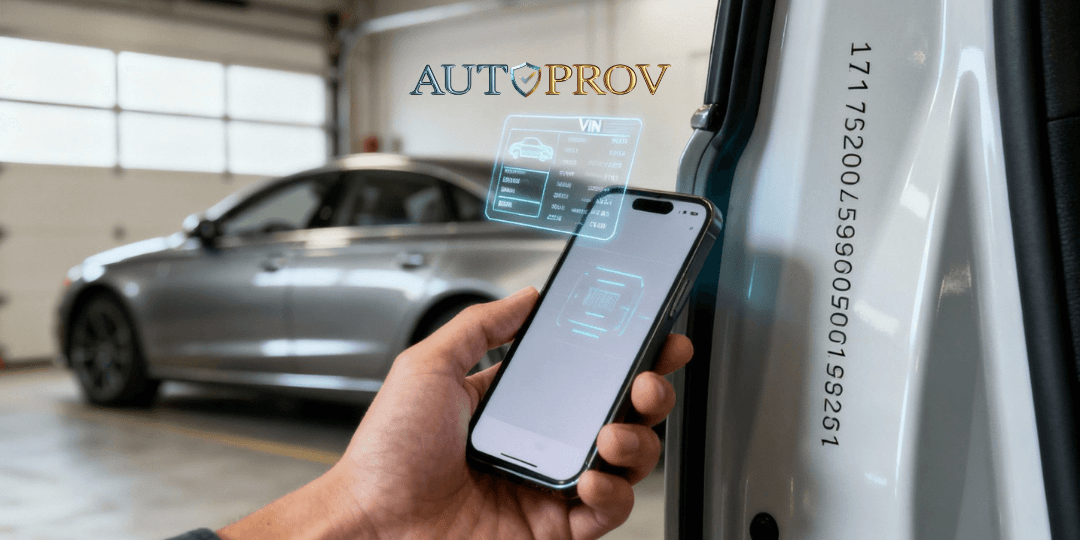
A Guide to Vehicle Check with VIN Number
A vehicle check with vin number is easily the most important thing you can do before buying a used car. Think of it as your first line of defence—a quick, simple step that pulls back the curtain on a vehicle's past, protecting you from expensive mistakes, legal headaches, and downright dangerous cars.
Published by AutoProv
Your trusted source for vehicle intelligence