
You're at the auction yard with a shortlist in hand, and the lot that looks most tempting is an ex-council van with a clean-looking catalogue note and a decent starting price. That's exactly the kind of stock that can work well for a dealer, but only if you treat government auction vehicles as a provenance exercise first and a bidding exercise second. The label sounds straightforward, yet the risk sits in what the listing doesn't tell you.
Standard vehicle history check UK tools can help, but they're rarely enough on their own for dealer vehicle checks. Public-sector disposal is fragmented, the usage profile varies sharply by authority, and the paperwork trail can be cleaner than the asset itself. For traders buying at speed, the edge comes from reading the vehicle's background properly, then pricing the risk instead of guessing at it.
Table of Contents
- Understanding What Government Auction Vehicles Actually Are
- The category is broader than most buyers think
- Why one label hides very different risk profiles
- Pre-Bid Due Diligence and Vehicle Verification
- Start with identity, not price
- Use the MOT trail as a risk map
- Red Flags and Risk Signals in Ex-Government Stock
- Mileage and keeper patterns matter
- Use context to interpret abuse and wear
- Auction Mechanics and Bidding Strategy
- Why structure changes price
- Set your ceiling before the auction starts
- Integrating Provenance Intelligence into Your Buying Workflow
- Move checks to the point of decision
- Build a vehicle biography, not a pass or fail
- Post-Sale Legal and Administrative Steps
- Paperwork, collection and disclosure gaps
- Retail prep after a public-sector purchase
- Building a Sustainable Government Vehicle Sourcing Strategy
- Turn due diligence into repeatable buying discipline
Understanding What Government Auction Vehicles Actually Are
A dealer sees an ex-council Transit at auction, a tidy-looking diesel with a plausible service file and a price that feels workable. The temptation is to treat it as a straightforward used car history report win, but that's where traders get caught out. Government auction vehicles aren't a single class of stock, they're a collection of disposal routes with very different provenance trails.
The category is broader than most buyers think
In the UK, public-sector vehicle disposal is split across bodies rather than handled through one central marketplace, so the phrase government auction vehicles covers far more than one neat lane of stock. A council van, a police car, a seized asset and an insolvency sale can all be auctioned, but the paper trail, inspection rights and warranty assumptions won't be the same. The fragmented nature of public-sector vehicle disposal is exactly why standard catalogue descriptions can be misleading.
The trade consequence is simple. An ex-fleet car with an orderly maintenance trail is one proposition, while a vehicle that has moved through enforcement or seizure channels is another. The second may still be retailable, but it needs more scrutiny around ownership timeline, condition and any enforcement context before it gets anywhere near a forecourt.

A clean-looking public-sector listing tells you very little on its own. The asset's real story sits in the registration trail, the use pattern and the way it left service.
Why one label hides very different risk profiles
The best way to think about the category is by usage rather than badge. A vehicle that has spent its life in council service may have seen repeated stop-start urban work, kerb strikes and heavy loading. A police vehicle may have a very different wear pattern, and a seized asset can carry a short redemption history that changes how you read the file.
That's why traders should separate fleet disposals, enforcement sales and public-sector surplus before they even think about bidding. Each route creates different questions about prior use, disclosure, and whether the listing's description matches the car's actual condition. A basic history check can confirm a vehicle exists in the record, but it won't tell you how severe the duty cycle was.
The EV and hybrid side needs extra caution too. As more authorities move towards lower-emission fleets, traders are likely to see more electrified stock pass through auction channels, and that means checking battery health, charging compatibility and prior-use severity rather than assuming lower mileage equals lower risk. For a useful trade comparison on specialist stock handling, Twin Cities expediting truck advice is a sensible read because it reinforces the same point, commercial vehicles have to be judged by work history, not label alone.
For a dealer group building a sourcing policy, a practical starting point is to use a dedicated trade resource such as AutoProv's trade-only auction guide, then treat each lot as a provenance file, not a bargain hunt. That mindset keeps you from over-trusting the “ex-government” label.
Pre-Bid Due Diligence and Vehicle Verification
The first mistake traders make is pricing the vehicle before they've verified its identity. With public-sector stock, the right sequence is identity, usage, then value. If you reverse that order, the catalogue price starts to anchor your judgement and you end up justifying a bad buy.
Start with identity, not price
The pre-bid workflow should begin by checking the V5C logbook details against the physical vehicle identity. Confirm the registration number, then cross-check the engine and chassis numbers against the papers and the vehicle itself. That step sounds basic, but it's the point where paperwork errors, identity swaps and administrative gaps often surface.
A government fleet disposal specification requires bidders to verify the registration papers against the engine and chassis, and to determine whether the vehicle is a runner or non-runner through technical diagnosis before pricing it. That's the right order for trade buyers too. If a vehicle doesn't match its documents cleanly, the rest of the file becomes less reliable and the market value should be adjusted accordingly.
A sound dealer process usually looks like this:
- Match the V5C first. If the paperwork and physical identity don't line up, stop and resolve that before you look at retail margin.
- Check the operational status. Don't assume a vehicle listed as fleet stock still drives, starts or charges properly.
- Test the pricing basis. Value the vehicle on actual condition, not on the fact that it once sat in a managed fleet.
For a tighter buying process, this 10-minute vehicle intelligence checklist for auction buyers is a useful framework because it forces you to decide fast without skipping the fundamentals.
Use the MOT trail as a risk map
The MOT trail is one of the quickest ways to see whether the vehicle's story is tidy or patchy. Look for gaps, repeated failures on the same component and any changes in mileage progression that don't make sense against the stated use. You're not just checking pass or fail, you're reading the shape of the vehicle's life.
That matters because a council van or enforcement vehicle can have a seemingly neat exterior and still hide structural wear, neglected repairs or incomplete documentation. A short service file is not the same thing as a low-risk file. In many cases, the strongest buying signal is consistency across the registration record, MOT trail and visible condition.
Practical rule: if the logbook, MOT trail and body condition don't tell the same story, price the vehicle as a risk item, not as stock.
If the record suggests a disposal or scrappage history, this DVLA-focused vehicle scrapped guide helps frame how disposal signals should be interpreted alongside the physical inspection. The goal is to leave the yard with a clean, defensible valuation basis, not just a winning bid.
Red Flags and Risk Signals in Ex-Government Stock
A motor trade buyer doesn't need every public-sector vehicle to be spotless. What matters is spotting the signals that tell you which ones deserve a deeper walk-away threshold. The key is to read the pattern, not just the headline description.
Mileage and keeper patterns matter
Mileage discrepancies are one of the clearest warning signs in any mileage check UK workflow, and they're especially important in ex-government stock because the vehicle may have changed hands inside a public body, then moved into auction channels quickly. Short-term ownership, rapid resale activity and keeper changes close together all deserve attention. Those patterns can point to administrative churn, enforcement movement or a vehicle that's been passed on before the full story was captured.
The bigger context matters here too. The DVLA recorded 40.9 million licensed vehicles on UK roads at the end of 2024, which is why provenance checking matters so much, government vehicles are a very small subset of a very large national parc. That scale makes it easy for anomalies to hide in plain sight, especially when a vehicle's public-sector background is treated as a reassurance rather than a risk flag. DVLA-related vehicle parc context is useful here only as a reminder of scale, not as a substitute for proper vehicle-level checking.
Use context to interpret abuse and wear
Ex-police vehicles, for example, can carry high-speed, high-load or intensive stop-start duty that won't show up in a basic write-off check. Council vehicles working in dense urban areas may have accelerated wear on suspension, brakes and clutches. Seized assets can also carry awkward ownership context, where the legal history is less about accident damage and more about enforcement timing and redemption rights.
That's why trade buyers should read the vehicle as a usage story. A vehicle registered to multiple authorities in quick succession, or one with repeated failures on the same component, needs a harder look than a simple condition grade suggests. The point is not to avoid ex-government stock, it's to avoid treating all ex-government stock as if it carries the same risk.
A clean catalogue note often reflects auction administration, not mechanical reality. The vehicle itself still has to pass a proper trade inspection.
For wholesalers and dealer groups, the right response is a provenance-led filter rather than a binary yes or no. If the ownership pattern is odd, the mileage progression is inconsistent, or the MOT trail reads like a series of repairs around the same fault, the lot should be re-priced or rejected. That discipline protects gross and keeps weak stock off the forecourt.
Auction Mechanics and Bidding Strategy
Government and public-sector auctions reward discipline, not enthusiasm. The car you want is rarely the one you should chase, because final price is shaped by how the sale is structured as much as by what's under the bonnet. Traders who ignore auction design end up paying retail money for wholesale risk.
Why structure changes price
Classic government-auction research identifies lot size, opening bid, bid increment and auction duration as the four controllable levers that materially affect proceeds. Separate auction analysis also shows that bidder participation and reserve-price design can move the final number in a meaningful way, with some schemes requiring at least two bids at or above reserve before the sale completes. That's the kind of detail that explains why the same model can clear at very different prices depending on format and audience.
For dealers, the practical takeaway is that catalogue value is only the starting point. A tightly structured lot with strong bidder turnout can drift above your comfort zone fast, while a thinner field or less aggressive reserve design may leave room for a better buy. The market is not setting a single fair price, it's setting a price inside a specific auction design.
Set your ceiling before the auction starts
A sensible bidding process starts with a provenance-adjusted ceiling, not a wishful catalogue comparison. Work back from the likely retail outcome, then subtract the cost of any uncertainty you've found in the paperwork, usage pattern or condition. If the lot has unclear history, the ceiling needs to come down, not up.
Use this simple trade filter:
- Open with the paperwork risk. If the identity trail isn't clean, the bid ceiling should drop immediately.
- Add the condition cost. Non-runners, bodywork faults and charging issues on EVs all belong in the valuation, not in post-sale regret.
- Check the auction charges. Buyer's premium and VAT can turn a borderline buy into a weak one very quickly.
When bidding gets heated, walk away. That sounds obvious, but it's where many good traders lose discipline. These auction buying tips are worth keeping in your buying pack because they reinforce the same commercial rule, the best bid is the one that still leaves you a margin after reconditioning, admin and risk adjustment.
Integrating Provenance Intelligence into Your Buying Workflow
Basic history checks were built to answer consumer questions quickly. Trade buyers need something more demanding, a way to connect ownership timeline, mileage pattern and event history into a single buying decision. That's where trade vehicle intelligence changes the process from reactive checking to commercial underwriting.
Move checks to the point of decision
The most effective workflow is to run provenance checks before you commit capital, not after you've mentally bought the car. That means using the data while you still have the freedom to walk away or re-price the lot. Once the hammer falls, the value of the report becomes much lower if you've already decided the vehicle will fit the forecourt.
Platforms such as AutoProv fit here because they focus on contextual risk indicators, not just pass or fail outputs. In practical terms, that means looking at ownership timelines, mileage patterns and other risk signals together rather than as separate fragments. For a detailed critique of the limits of standard checks, why traditional provenance checks are no longer enough for professional traders makes the commercial gap clear.
Build a vehicle biography, not a pass or fail
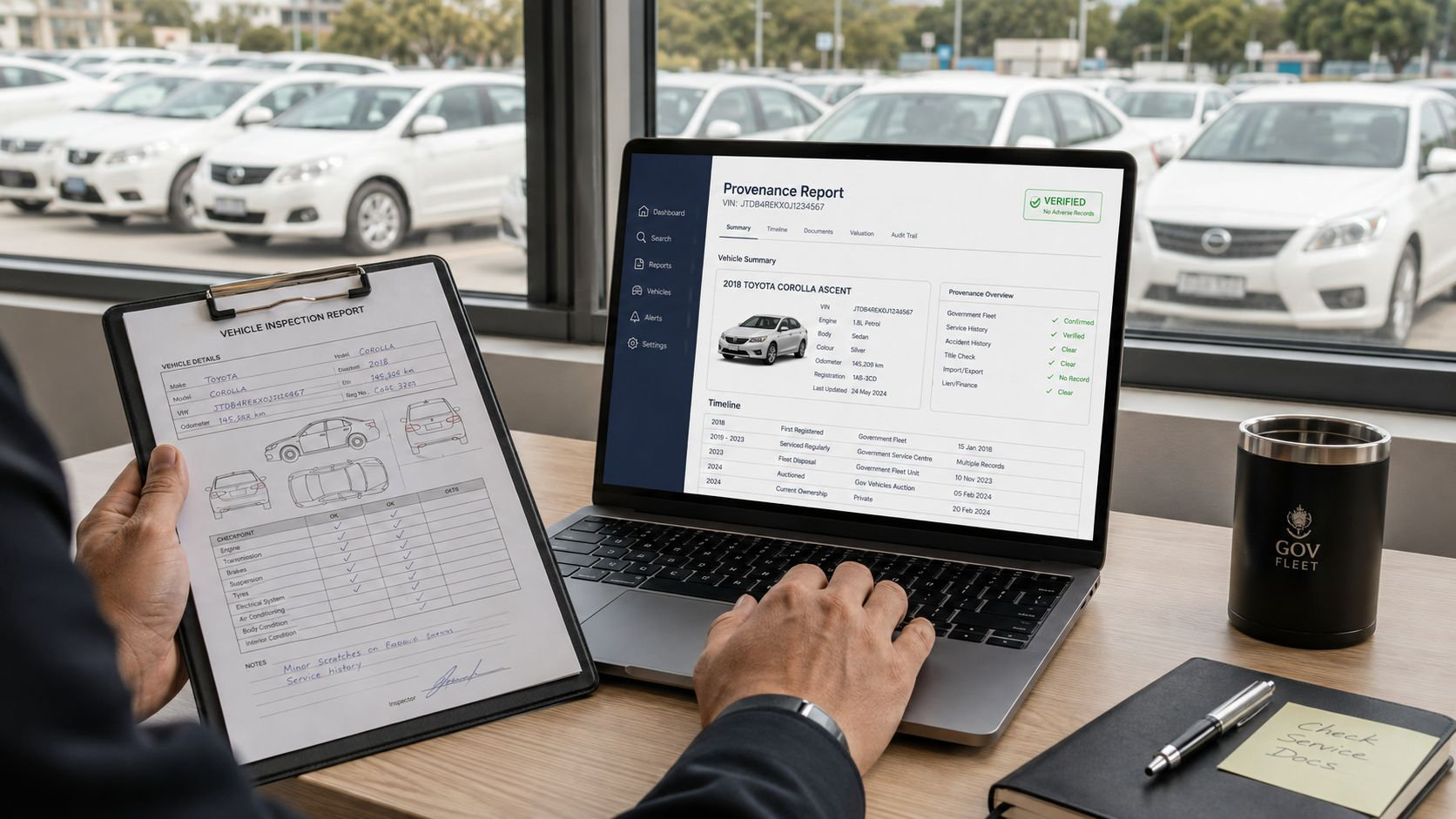
A useful provenance workflow cross-references DVLA records, MOT history and relevant enforcement or disposal signals to build a vehicle biography. That biography should answer the questions a buyer needs to know, who used it, how long they kept it, whether the mileage progression makes sense and whether any stage in the lifecycle looks compressed or unusual.
Trade insight: a good report doesn't just tell you whether to buy, it tells you how hard to price the risk if you do buy.
That's where the commercial value sits. If the ownership trail is short and the mileage pattern is inconsistent, the vehicle may still be viable, but your offer should reflect the uncertainty. If the timeline is stable and the record is coherent, you've got a stronger basis for margin discipline and stocking confidence.
The aim isn't to replace the buyer. It's to give the buyer a sharper decision point. When provenance intelligence is embedded into the buying workflow, the dealership group spends less time cleaning up avoidable surprises and more time choosing stock that fits its risk appetite.
Post-Sale Legal and Administrative Steps
Winning the bid is not the finish line. Once a government auction vehicle is allocated to you, the admin trail needs to be handled cleanly or the benefit of the buy can disappear into delays, disputes and avoidable compliance work. The process has to be managed as part of acquisition, not as a separate afterthought.
Paperwork, collection and disclosure gaps
Start by making sure the ownership transfer is lined up properly with DVLA requirements and that the V5C is complete. If the logbook is missing or incomplete, don't assume the issue will sort itself out at collection. The paperwork gap needs to be resolved against the vehicle's identity and the auction house's release process.
Some public-sector vehicles also come with holding or administrative complications that weren't obvious from the listing. That's why collection should be tied to a clear document check and a last-look inspection, particularly if the vehicle's condition differs from the catalogue description. If the lot is being sold through a controlled access system, a reference such as programmatic gate control for fleets is relevant because the same access logic often sits behind how fleets are released, tracked and verified.
Retail prep after a public-sector purchase
Once the vehicle is in your possession, prepare it as you would any other retail unit, but with extra attention to the gaps that public-sector disposal can leave behind. That means any unresolved documentation issues, condition disclosures and compliance checks need to be closed before the vehicle goes on sale. If the vehicle has a mixed or incomplete history, your stock file needs to reflect that properly.
The main retail question is not whether the car came from government service, it's whether it now meets your usual standards before customer handover. The Consumer Rights Act 2015 still matters, so a weak pre-sale repair record or a sloppy disclosure can become expensive later. Good traders protect themselves by dealing with the admin correctly on day one and by refusing to retail anything that still carries unresolved provenance ambiguity.
Building a Sustainable Government Vehicle Sourcing Strategy
The dealers who do well with government auction vehicles don't chase every lot. They build a repeatable filter. That filter starts with provenance quality, then moves to condition, then to bidding discipline and post-sale admin.
Turn due diligence into repeatable buying discipline
A sustainable sourcing strategy usually looks like this in practice.
- Pre-auction research. Check the registration trail, MOT pattern and ownership timeline before the sale.
- Bid-day limits. Set a ceiling based on risk-adjusted resale value, not on how cheap the lot looks.
- Post-purchase audit. Match paperwork, condition and release documents before the vehicle enters retail prep.
That approach pays off because ex-government stock is not good or bad, it's variable. Some units are low-risk and can be strong trade buys. Others carry hidden wear, administrative complexity or a provenance trail that doesn't support the asking price.
The commercial advantage comes from saying no more often. Dealers who consistently buy on evidence instead of optimism protect margin, reduce disputes and keep forecourt stock cleaner. In a market where vehicle history check UK tools are necessary but not sufficient, the edge belongs to traders who treat provenance as a working part of stock acquisition rather than a box-tick.
If you want to tighten your auction buying process, use AutoProv to add ownership, mileage and risk context before you bid. Visit AutoProv and review how trade-focused provenance intelligence can help your team assess government auction vehicles with more confidence at the point of purchase.
Frequently Asked Questions
AI-Generated Content Notice
This article was created with the assistance of artificial intelligence technology. While we strive for accuracy, the information provided should be considered for general informational purposes only and should not be relied upon as professional automotive, legal, or financial advice. We recommend verifying any information with qualified professionals or official sources before making important decisions. AutoProv accepts no liability for any consequences resulting from the use of this information.
From our AI insights
- Mastering Paint Code Checks: Detecting Hidden Car Repairs
Discover how to use paint code verification to identify hidden car repairs and ensure a smarter purchase.
- UK Part-Exchange Checks: Protecting Dealer Margins
Explore essential part-exchange checks for UK dealers to safeguard profit margins, including provenance and finance verification.
- Why Every Keeper Matters: Insights for UK Car Traders
Understand the importance of checking previous keepers for UK motor trade compliance and risk management.
Related Articles

Your Ultimate Guide to Buying a Used Car in the UK
Navigate the UK used car market with confidence using our comprehensive buying guide. Tips, checks, and AutoProv Provenance insights included.

Difference Between MOT and Service: What You Need to Know
An MOT is a mandatory legal inspection that every car on UK roads needs to pass.Think of it as the government's way of ensuring your vehicle meets the absolute minimum safety and environmental standards to be considered roadworthy. A service, on the other hand, is a completely different beast. It's the proactive maintenance routine recommended by the people who built your car, designed to keep it running smoothly and catch problems before they start. In short, an MOT is a pass-or-fail exam required by law. A service is a comprehensive health plan for your car.

Your Ultimate Used Car Inspection Checklist
A solid used car inspection checklist is the single most powerful tool you have to avoid buying a lemon. It gives you a methodical way to look past the shiny paint and assess a car's real condition, helping you spot hidden problems and get a fair price before you shake hands on the deal.
Published by AutoProv
Your trusted source for vehicle intelligence