Before acquiring any potential stock, a professional motor trader must combine swift, free public data checks with a comprehensive used car history report. Initial steps should include running the vehicle registration through the DVLA's online service and scrutinising its MOT history for anomalies. This provides a crucial baseline before committing to a full vehicle provenance check.
Your Essential First Line of Defence Against Stolen Vehicles
In the motor trade, acquiring a stolen vehicle is not merely a financial write-off; it represents a significant blow to a dealership's reputation and can lead to serious legal complications. As criminal methods become more sophisticated, the used car market remains a prime target, making a robust screening process a non-negotiable part of operations. This requires more than a single check; it demands a multi-layered due diligence workflow at the point of decision, before capital is committed to potential stock.
Your first line of defence should always involve leveraging publicly available, official data sources. These initial steps are designed to efficiently filter out obvious high-risk vehicles, allowing you to focus deeper provenance intelligence on assets that appear legitimate.
Start With Publicly Available Data
The DVLA's vehicle information checker and the government's MOT history service are the foundational tools for this first-pass analysis. When assessing a vehicle, the objective is to identify red flags indicative of a compromised identity:
- Recent V5C Issue Date: A logbook issued within the last few days or weeks is a significant warning sign. It could indicate that a fraudulent duplicate has been obtained to dispose of the vehicle rapidly before it is officially flagged as stolen.
- MOT History Gaps: A forensic review of the MOT record is essential. Unexplained gaps or inconsistencies, such as a vehicle being off the road for an extended period before suddenly being offered for sale, could suggest it was stolen and stored before being reintroduced to the market.
This simple workflow is the starting point every trader should employ to gain an initial understanding of a vehicle's legitimacy.

This straightforward, three-stage approach ensures you cover the basic registration details, historical usage patterns, and deeper risk signals before considering an acquisition.
A proactive approach is fundamental to managing risk in the motor trade. Filtering out potentially stolen vehicles at the earliest opportunity protects your capital, your time, and your business's integrity. These initial checks are not a formality; they are your first and most critical defence.
To gain a broader perspective on protecting your business, exploring wider fraud prevention strategies for businesses in the UK can offer valuable insights.
However, while these preliminary steps are effective for an initial assessment, they only provide a surface-level view. Professional dealer vehicle checks require deeper provenance intelligence to construct the complete picture. You can find out more in our guide on 8 essential car fraud prevention tips UK professionals need in 2025. This is where a dedicated trade vehicle intelligence platform like AutoProv becomes essential, aggregating the data required to expose risks that basic checks will invariably miss.
For quick reference, here is an initial checklist every trader should use before committing to a full provenance deep-dive.
Stolen Vehicle Check At a Glance
Check Type What to Look For Why It Matters for Traders DVLA Vehicle Check V5C issue date, keeper history, colour changes. A recently issued V5C is a classic red flag for a cloned or stolen vehicle. MOT History Review Unexplained gaps, recurring advisories, mileage inconsistencies. Gaps can indicate the vehicle was off-road (potentially stolen) and mileage drops point to clocking. Physical VIN Match Compare the V5C, windscreen, and chassis VINs. Mismatched VINs are a clear indicator that the vehicle's identity has been tampered with. Seller's Demeanour Is the seller applying pressure? Do they possess credible identification? High-pressure sales tactics or a lack of appropriate ID should be treated as immediate risk signals. This table is not exhaustive but provides a solid framework. If a vehicle fails on any of these points, it is a strong signal to either walk away or proceed with extreme caution and a full professional check.
The Evolving Threat of Vehicle Theft
The methodology of vehicle theft in the UK has fundamentally changed. What was once often opportunistic has evolved into a sophisticated, organised criminal enterprise that feeds directly into the used car market. For motor trade professionals, this means the risk of acquiring a stolen vehicle is no longer a remote possibility but a daily operational threat to your bottom line.
Understanding the scale of the problem is the first step toward protecting your dealership.
The statistics are stark. Recent data from Co-op Insurance revealed that vehicle thefts in England and Wales surpassed 80,000 in the first nine months of the year alone. This represents an 11% increase on the previous year, equating to a vehicle being stolen approximately every 4.9 minutes. You can read the full report on these theft figures to see the full picture. This is not just a law enforcement issue; it creates a significant supply chain problem for the trade, as a large portion of these stolen vehicles are laundered directly back into circulation.
The True Cost of Stolen Stock to Your Business
Acquiring a stolen vehicle, even inadvertently, triggers a cascade of issues that can cause serious damage to a dealership. The most immediate impact is financial. When a vehicle is identified as stolen, it is seized and returned to its legal owner or their insurer. Your entire investment is lost instantly.
The consequences, however, extend further:
- Reputational Damage: Selling a compromised vehicle, even unknowingly, can destroy the trust built over years. In the motor trade, reputation is a core asset that can be lost in a single transaction.
- Legal and Compliance Burdens: A stolen vehicle on your forecourt invites scrutiny from the police and other official bodies. The time, stress, and resources consumed in managing the fallout are a significant drain.
- Wasted Time and Capital: Every hour your team spends preparing, marketing, and managing a vehicle that is ultimately seized is an hour that could have been invested in legitimate, profitable stock.
These are not just abstract risks; they are the commercial realities that make basic, surface-level checks insufficient for any professional buyer.
How Criminals Deceive Standard Checks
The criminals orchestrating these thefts are not amateurs. They understand the system's vulnerabilities and have perfected methods to provide a stolen vehicle with a convincing, yet entirely fraudulent, identity. Their objective is to make an asset appear legitimate just long enough to pass it on to an unsuspecting trade buyer.
The challenge for dealers today is that criminals are not just stealing cars—they are stealing identities. They cloak stolen vehicles in a layer of legitimacy specifically designed to bypass outdated, superficial checks. Advanced vehicle provenance analysis is required to see through this deception.
Techniques like VIN swapping are prevalent. Criminals will take the Vehicle Identification Number from a legitimate vehicle—often a write-off sourced from a salvage yard—and transplant it onto a stolen one. They are also adept at document forgery, creating counterfeit V5C logbooks that appear authentic on first inspection.
This is precisely where a simple used car history report can fall short. While it is a vital first step, it may not flag the subtle anomalies that point to sophisticated fraud. For instance, a basic check might fail to correlate the date of the last V5C issue with other risk factors—a critical signal that professional dealer vehicle checks are designed to detect.
This is why a deeper level of trade vehicle intelligence, such as that provided by AutoProv, is now essential. It connects disparate data points to reveal patterns of motor trade risk that are otherwise invisible.
Conducting Comprehensive Provenance and Data Checks
A standard history check is no longer sufficient. To operate safely in today's used car market, traders must go beyond a surface-level report. The key is to interpret the narrative told by multiple, authoritative data sources. This is where a professional vehicle provenance check distinguishes the diligent trader from the exposed one.
Effective risk assessment is not about finding a single red flag. It is about identifying minor inconsistencies across different datasets that, when aggregated, form a compelling high-risk profile.
Beyond the Basics: Police and Insurance Checks
While initial DVLA and MOT checks provide a foundation, true intelligence for identifying stolen vehicles comes from trade-specific data sources. These databases track vehicles involved in theft and insurance claims, offering critical information that is not publicly available.
Two of the most important registers to query are:
- The Police National Computer (PNC): This is the definitive source for active stolen vehicle reports. A clear PNC check is a non-negotiable component of any professional dealer vehicle checks, confirming no 'stolen' marker exists against the vehicle's record.
- Motor Insurance Anti-Fraud and Theft Register (MIAFTR): Primarily used for tracking insurance write-offs, MIAFTR is crucial. Criminals frequently use written-off vehicles (Category S or N) as identity donors for cloned vehicles. A check here reveals if a car has been declared a total loss, a common precursor to its VIN being used on a stolen vehicle.
Cross-referencing these sources is vital. A vehicle may not yet appear on the PNC if recently stolen, but its history could present other warning signs that warrant extreme caution.
The core of effective motor trade risk management lies in data aggregation and interpretation. A clean PNC report is essential, but it is only one piece of the puzzle. The real skill is connecting data points from different sources to identify patterns that others miss.
Interpreting DVLA Records for Subtle Risk Signals
The DVLA's own records contain a wealth of information that can indicate a vehicle's questionable past. Beyond simply confirming the make and model, a professional analysis delves into ownership patterns and document history, which are often where the first signs of fraud emerge.
The V5C document's history is a critical area to scrutinise. Key indicators include:
- Recent V5C Issue Date: A logbook issued just days or weeks before a sale is a classic red flag. It is a common tactic used by thieves who have obtained a fraudulent duplicate to dispose of the vehicle before its stolen status is officially recorded.
- Rapid Ownership Changes: A vehicle that has passed through multiple keepers in a very short period should raise immediate concerns. This pattern of 'short-term ownership' is often used to launder a stolen vehicle through the trade, obscuring its history and making it harder to trace.
These signals require context. A single recent V5C issue is not definitive proof of theft, but when combined with other factors, it builds a compelling case for heightened risk. It is this deeper analysis that differentiates a basic check from true trade vehicle intelligence. To gain a better understanding of these checks, you can find more information in our dedicated article on a free UK VIN number check.
With thefts on the rise, this level of diligence is essential. According to recent DVLA data, a staggering 23,189 cars were stolen between January and July alone. And while manufacturers like Land Rover are improving security, common models like the Ford Fiesta are still prime targets, reinforcing why you have to verify provenance with extreme care. Discover more insights about these theft figures and targeted models.
The Power of Aggregated Vehicle Intelligence
Attempting to manually check the PNC, MIAFTR, DVLA, and MOT history for every potential acquisition is not just inefficient; it is a recipe for human error. It is far too easy to miss a critical risk signal in one dataset when under pressure to secure stock. Verifying legal documentation is part of these checks, and while resources like an Application for Texas Title or Registration Template exist for other jurisdictions, the UK process hinges on robust data verification.
This is where professional vehicle intelligence platforms like AutoProv demonstrate their value. By aggregating and analysing these disparate datasets in real-time, they can instantly flag anomalies that would take hours to uncover manually. An integrated platform automatically cross-references ownership timelines with insurance records and police reports, delivering a unified, easy-to-interpret view of a vehicle's history. This consolidated approach transforms raw data into actionable intelligence, enabling faster, smarter, and significantly safer buying decisions.
The Critical Role of Physical Vehicle Inspections
Data provides a significant part of a vehicle's story, but it is never the complete picture. When identifying stolen vehicles, a thorough physical inspection is entirely non-negotiable. Sophisticated criminals are adept at altering a car's identity, and the evidence is often hidden in plain sight—for those who know what to look for.
This hands-on appraisal is your primary defence against a professionally cloned or VIN-swapped vehicle. It is where your due diligence transitions from the screen to the metal, providing the opportunity to confirm that the information in the used car history report aligns with the physical reality of the asset. This process is less about general condition and more about forensic examination.

Conducting a Meticulous VIN Check
The Vehicle Identification Number (VIN) is the car's unique fingerprint, and its verification is the absolute cornerstone of any physical check. A common tactic for criminals is to steal a vehicle, then find a legitimate (often written-off) vehicle of the same model and colour to "clone." They use the identity of the legitimate vehicle to give the stolen one a new lease of life.
Your responsibility is to identify the inconsistencies.
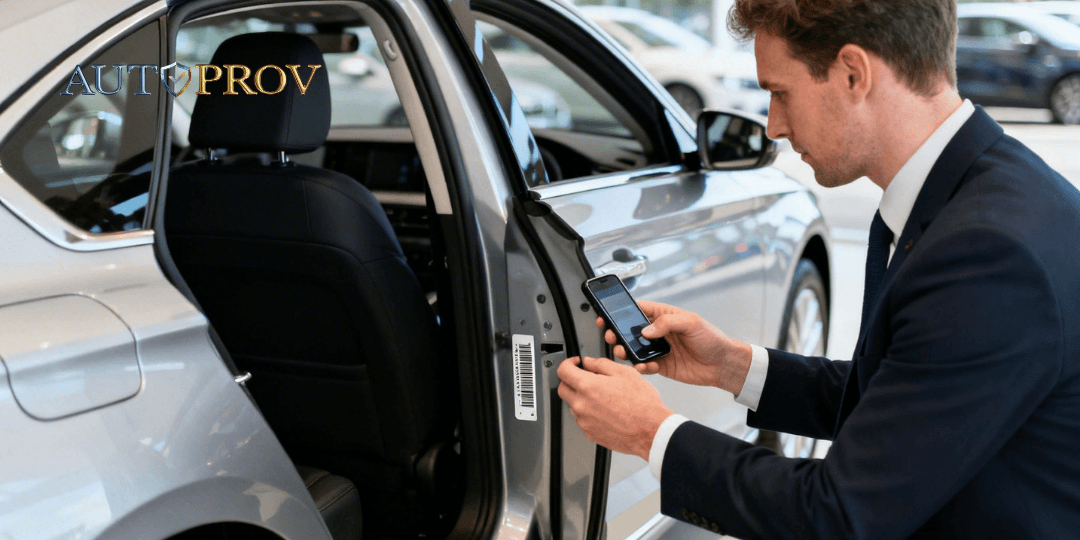
Never rely on a single VIN. You must methodically compare the VIN listed on the V5C Registration Certificate with every instance of it on the vehicle itself. Key locations include:
- Dashboard VIN Plate: This is the most visible plate, viewed through the windscreen. Confirm it is securely riveted and shows no signs of being tampered with or replaced. Look for scratches around the edges.
- Chassis Stamp: This is often stamped directly into the metal of the engine bay, on the slam panel, or sometimes in a footwell. It should be clean, clear, and perfectly consistent in font and depth. Any waviness or uneven stamping is a major red flag.
- Door Jamb Sticker: Most modern vehicles have a sticker on the driver or passenger-side B-pillar containing the VIN and other manufacturing data. Ensure this sticker is intact and has not been tampered with or removed.
If any of these VINs are missing, appear tampered with, or—most importantly—do not match each other and the V5C perfectly, you should consider the vehicle extremely high-risk and walk away.
Identifying Signs of Tampering and Theft
Beyond the VIN, a skilled trader can identify other physical clues that point towards a dubious past. Criminals often work hastily, leaving subtle but telling evidence of a vehicle's true origin. A comprehensive appraisal is vital, and you can learn more about what to check in our guide, Your Ultimate Used Car Inspection Checklist.
Physical evidence rarely lies. While data can be manipulated, it is much harder for criminals to perfectly replicate factory-quality VIN stamps, window etchings, and manufacturer stickers under pressure. A methodical eye is your best tool for uncovering fraud.
During your appraisal, pay close attention to the following areas. The table below outlines what to look for versus common red flags.
Physical Inspection Red Flags
Area of Inspection What a Legitimate Vehicle Looks Like Potential Red Flag or Sign of Tampering VIN Plates & Stamps Cleanly stamped or riveted, with a consistent font and no signs of alteration. The surrounding area is undisturbed. Scratches around the plate, mismatched rivets, or a VIN that appears to have been ground down and re-stamped. Window Etchings The last few digits of the VIN are professionally etched into all major glass panels, matching the chassis VIN. Missing etchings, or etchings that do not match the V5C and chassis VIN, suggest glass has been replaced. Door Locks & Ignition Locks operate smoothly with the correct key. The ignition barrel and surrounding trim are undamaged and fit snugly. Obvious damage, scratches, or tool marks around door locks or the ignition barrel, indicating forced entry. Number Plates Plates are from a reputable supplier (often with the dealer's name) and are securely fitted. Flimsy, unbranded plates or plates that show signs of being frequently swapped can be a warning sign. The most effective approach is always two-pronged. Combine these crucial physical checks with robust trade vehicle intelligence from a platform like AutoProv to create a formidable barrier against fraud. The data check raises the initial questions, and the physical inspection provides the definitive answers. This ensures your buying decisions are based on a complete and verified picture of the vehicle, significantly reducing your motor trade risk.
Your Protocol for Handling a Suspected Stolen Vehicle
Identifying a potentially stolen vehicle on your premises or during a viewing is a high-stakes situation that requires a calm, professional, and legally sound response. Your actions in the subsequent moments are critical for protecting your business from financial loss and legal jeopardy, while fulfilling your duty to report a potential crime.
The primary rule is simple: do not proceed with the transaction.
If the vehicle is not yet on your property, politely terminate the interaction. If it is already at your dealership, a more delicate approach is required. Do not confront the seller or make accusations. Your priority is to de-escalate, ensure safety, and gather information without exacerbating the situation.
Immediate Actions and Reporting
Once your data checks or physical inspection raise major red flags, you must act decisively. The correct course of action is not to investigate further yourself, but to involve the proper authorities.
Your first call should be to the police. In a non-emergency where there is no immediate threat, use the 101 non-emergency number. However, if you feel the situation could become confrontational, or if the seller is still present and becoming aggressive, do not hesitate to call 999.
A professional trader’s responsibility ends at identifying and reporting suspicion. Engaging with a potentially criminal seller poses an unacceptable risk to personal safety and the business. Your duty is to report, not to investigate or intervene.
When you speak with the police, provide clear, concise information to help them assess the situation quickly.
Collating and Presenting Evidence
To support your police report, you should maintain a structured log of your findings. This documentation not only assists law enforcement but also serves as your proof of due diligence, which is vital for protecting your business.
Your evidence log should include:
- Vehicle Details: The full registration number and the Vehicle Identification Number (VIN).
- Seller Information: Note any details you have on the seller—their name, contact number, and any identification they may have provided.
- Your Checks: Keep a record of the checks you performed. Note the specific discrepancies that raised suspicion, whether it was a mismatched VIN, a suspiciously recent V5C issue date, or signs of physical tampering.
- Timeline of Events: A simple log of when the vehicle arrived, when checks were conducted, and when the authorities were contacted provides a clear, professional record.
Having this information organised demonstrates professionalism and helps the police act more effectively. It proves you followed a robust process for managing motor trade risk. While the legalities can be complex, a clear process is a trader's best defence. For a deeper dive into ownership verification, our guide on the DVLA vehicle owner check for UK buyers is a useful resource.
By adopting a clear protocol, you can turn a high-risk scenario into a manageable process. This structured approach, supported by detailed dealer vehicle checks, minimises your exposure and reinforces your reputation as a diligent, trustworthy trader.
Leveraging Trade Intelligence Tools for Risk Mitigation
In the fast-paced environment of the motor trade, decisions must be both swift and accurate. Attempting to manually collate and analyse data from the DVLA, MOT history, the PNC, and insurance databases for every potential acquisition is not just inefficient—it is a recipe for costly errors. This is where platforms designed specifically for the trade provide a significant competitive advantage.
These systems perform the heavy lifting, aggregating critical information from disparate official sources into a single, easy-to-interpret vehicle provenance report. This allows you to spend less time collecting data and more time making informed decisions.

Uncovering Hidden Risks
The true value of these tools extends beyond data presentation; it lies in intelligence. They employ algorithms to detect anomalous patterns that often signal a vehicle is being moved through the trade for illicit reasons. This is what separates a basic used car history report from genuine trade vehicle intelligence.
These platforms are configured to flag classic risk indicators, including:
- Rapid Resale Patterns: A vehicle bought and sold multiple times in a short window is a classic sign of laundering.
- Short-Term Ownership Cycles: Similar to rapid resales, frequent keeper changes can be an attempt to obscure a vehicle's true history.
- Data Mismatches: The system can instantly identify subtle discrepancies between DVLA records and insurance data that might be missed in a manual review.
This proactive risk identification is vital, especially with vehicle crime on the rise. Police forces reported approximately 60,900 car thefts in a single year, a 12.8% increase. This equates to over 1,100 vehicles being stolen every week. The most common targets, such as the Ford Fiesta and VW Golf, are everyday vehicles that thieves attempt to reintroduce quickly into the used market. You can read more about the latest UK car theft trends.
By embedding an expert risk assessment tool like AutoProv into your buying process, you are not just acquiring a history check. You are integrating a layer of intelligence that actively searches for the tell-tale signs of motor trade risk.
Incorporating a dedicated solution into your workflow fundamentally changes your risk posture. It embeds expert risk assessment into every acquisition decision, ensuring every vehicle undergoes the same deep level of scrutiny. A comprehensive AutoProv vehicle provenance report provides the clarity needed to make faster, more confident, and significantly safer buying decisions, protecting both your capital and your reputation.
Frequently Asked Questions
What is the single most important document to verify?
The V5C Registration Certificate is without doubt the most critical document. You must verify that the VIN on the document perfectly matches the VINs on the vehicle itself. There can be no discrepancies.
A crucial trade tip is to closely inspect the 'Date of last V5C issued'. A very recent date is a major red flag, as it can indicate that a fraudster has obtained a duplicate to sell the vehicle quickly before its stolen status is officially recorded.
If a vehicle history check comes back clear, am I fully protected?
Not necessarily. A 'clear' report is a vital piece of due diligence, but it is a snapshot in time. A vehicle could be stolen but not yet officially recorded on the Police National Computer (PNC).
This is precisely why a multi-layered approach to your dealer vehicle checks is so important. By combining a clear data check with a meticulous physical inspection of all VINs and looking for signs of tampering, you build a much more robust defence for your business.
Can I be held liable if I unknowingly buy and sell a stolen vehicle?
Yes. If a vehicle you have acquired is later identified as stolen, the police will seize it and return it to the rightful owner or their insurance company. You will lose the vehicle and the capital invested in it.
Furthermore, selling a stolen vehicle—even without knowledge—can expose you to civil liability and cause significant reputational damage.
Your strongest defence is demonstrating robust due diligence. Maintaining a detailed record of professional checks, including a comprehensive vehicle provenance report, can help mitigate the legal and financial impact by proving you took all reasonable steps to verify the vehicle's legitimacy.
At AutoProv, we provide the advanced vehicle history and risk intelligence the UK motor trade needs to make safer, more informed buying decisions. Our platform goes beyond standard reports to uncover the hidden risks in a vehicle's past, helping you protect your capital and your reputation. Discover how to strengthen your due diligence at https://autoprov.ai.
Frequently Asked Questions
AI-Generated Content Notice
This article was created with the assistance of artificial intelligence technology. While we strive for accuracy, the information provided should be considered for general informational purposes only and should not be relied upon as professional automotive, legal, or financial advice. We recommend verifying any information with qualified professionals or official sources before making important decisions. AutoProv accepts no liability for any consequences resulting from the use of this information.
From our AI insights
- Auction Pitfalls: Avoiding Costly Mistakes
Navigate UK car auctions with confidence by avoiding finance, write-off, and mileage risks.
- Mastering Paint Code Checks: Detecting Hidden Car Repairs
Discover how to use paint code verification to identify hidden car repairs and ensure a smarter purchase.
- UK Part-Exchange Checks: Protecting Dealer Margins
Explore essential part-exchange checks for UK dealers to safeguard profit margins, including provenance and finance verification.
Related Articles

Your Ultimate Guide to Buying a Used Car in the UK
Navigate the UK used car market with confidence using our comprehensive buying guide. Tips, checks, and AutoProv Provenance insights included.

Difference Between MOT and Service: What You Need to Know
An MOT is a mandatory legal inspection that every car on UK roads needs to pass.Think of it as the government's way of ensuring your vehicle meets the absolute minimum safety and environmental standards to be considered roadworthy. A service, on the other hand, is a completely different beast. It's the proactive maintenance routine recommended by the people who built your car, designed to keep it running smoothly and catch problems before they start. In short, an MOT is a pass-or-fail exam required by law. A service is a comprehensive health plan for your car.
Your Ultimate Used Car Inspection Checklist
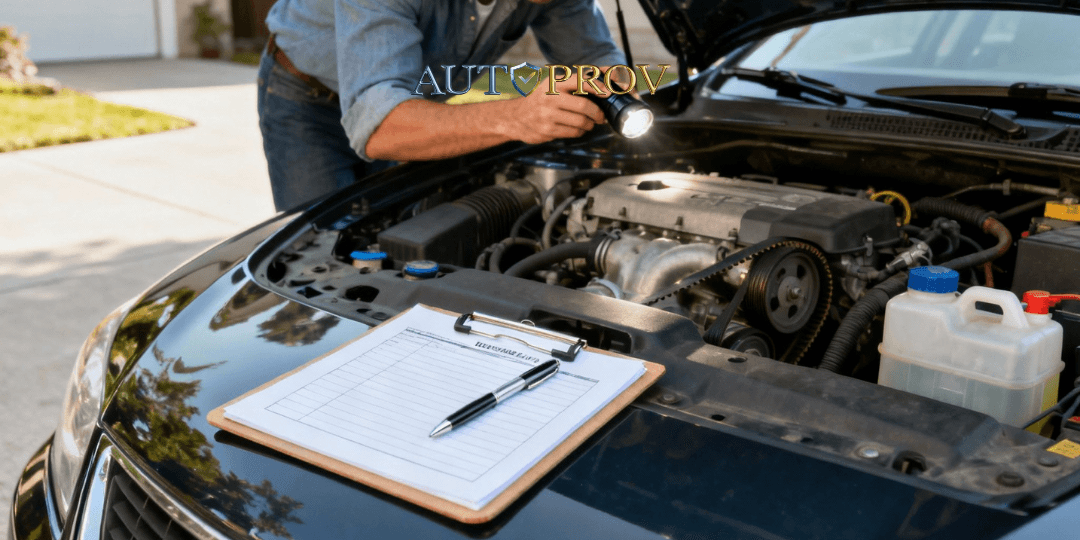
A solid used car inspection checklist is the single most powerful tool you have to avoid buying a lemon. It gives you a methodical way to look past the shiny paint and assess a car's real condition, helping you spot hidden problems and get a fair price before you shake hands on the deal.
Published by AutoProv
Your trusted source for vehicle intelligence